

 Water damage drying
 Fire & smoke cleanup
 Mold remediation
 Storm response
 Sewage cleanup
 Reconstruction
Free visual inspection and a written scope of work before any mitigation begins - photos, moisture readings, and drying logs go in your claim file
The scope we write is the scope we bill. Anything new gets shown to you, in writing, before we touch it.
Get your free estimateFast, Reliable Mold Remediation Across Grand Terrace
Mold remediation in Grand Terrace typically runs $1,800 to $6,500 depending on how far the moisture has traveled and whether containment is needed on finished living space. Most hillside homes here need a slope-drainage assessment before any tear-out starts, because the water that feeds the mold usually comes from runoff, not a burst pipe. Our crew knows Blue Mountain Drive, the terraced streets off Barton Road, and the older tract pockets near the I-215 side of town. If you’re seeing discoloration on a garage wall or a musty smell in a lower-level bedroom, call (833) 589-5317 and we’ll get someone out to Grand Terrace to map the moisture and give you a written scope before any work begins.
Why Dry Line Water Damage Is Grand Terrace’s Preferred Mold Remediation Company
Grand Terrace’s housing stock is mostly mid-century to 1970s-80s single-family tract homes on terraced hillside lots, plus a mobile-home park near the river side. Those slab-on-grade foundations with original plumbing mean slow leaks and slope-related moisture are the common call, and they require a specific kind of remediation. We’re an IICRC-certified operation, which means our process follows the restoration industry’s most rigorous third-party standard for training and methodology, not a checklist we wrote ourselves. Glen Pacheco built Dry Line Water Damage around the idea that moisture mapping comes first, containment second, and demolition only when the framing actually needs it. We also hold membership in the Restoration Industry Association (RIA), bound by a published code of ethics and ongoing professional development requirements. That matters when you’re deciding who to let into a wall cavity in your Grand Terrace home.
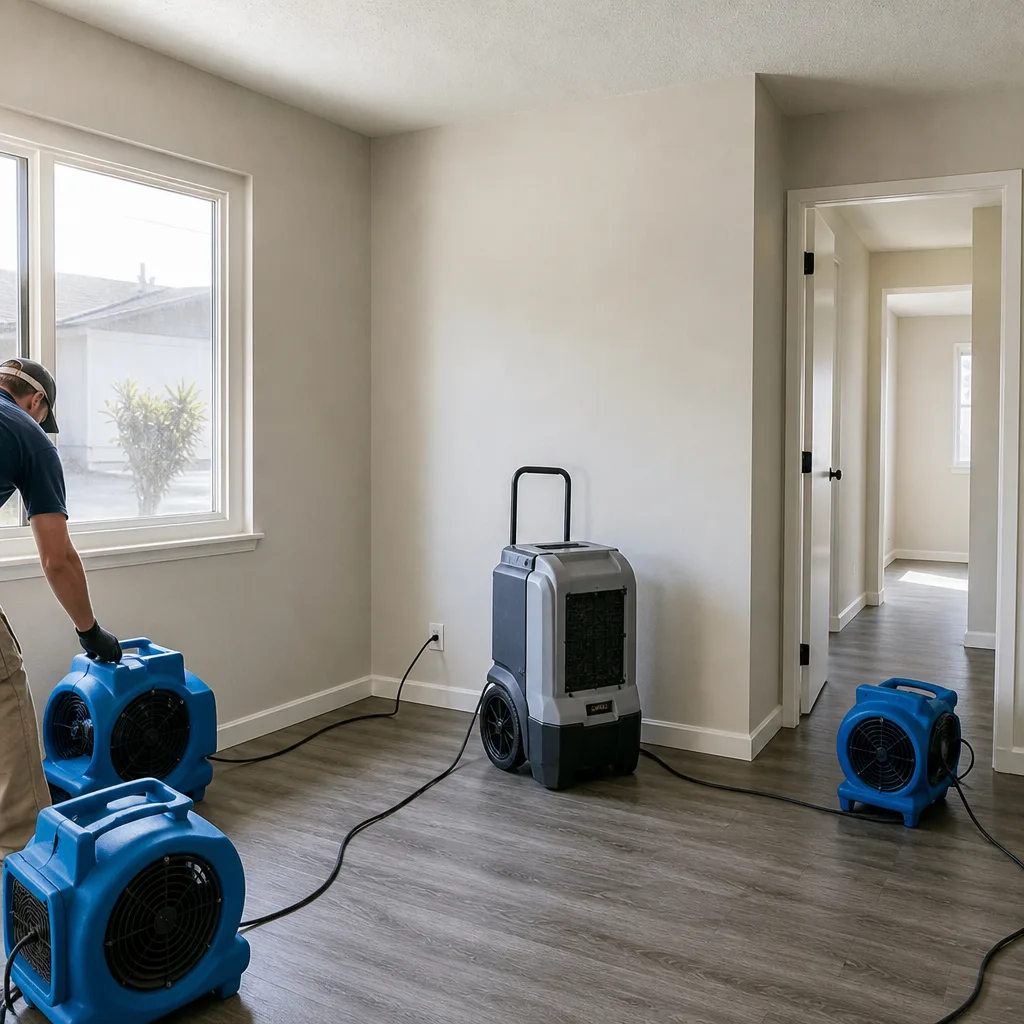
Our Mold Remediation team runs the same Dri-Eaz and Phoenix dehumidifiers and Injectidry structural-drying systems that large-loss commercial contractors use. When we work in Grand Terrace, we’re looking at hillside drainage patterns before we touch drywall. That’s not something a generalist handyman operation is set up to do. One crew, full scope: water, mold, and fire damage handled without subcontracting or handoff gaps. If the mold traces back to a water intrusion, we fix both the source and the damage under the same roof, so you’re not coordinating between vendors who point fingers at each other.
Restoration work we handle
Black Mold Removal in Grand Terrace
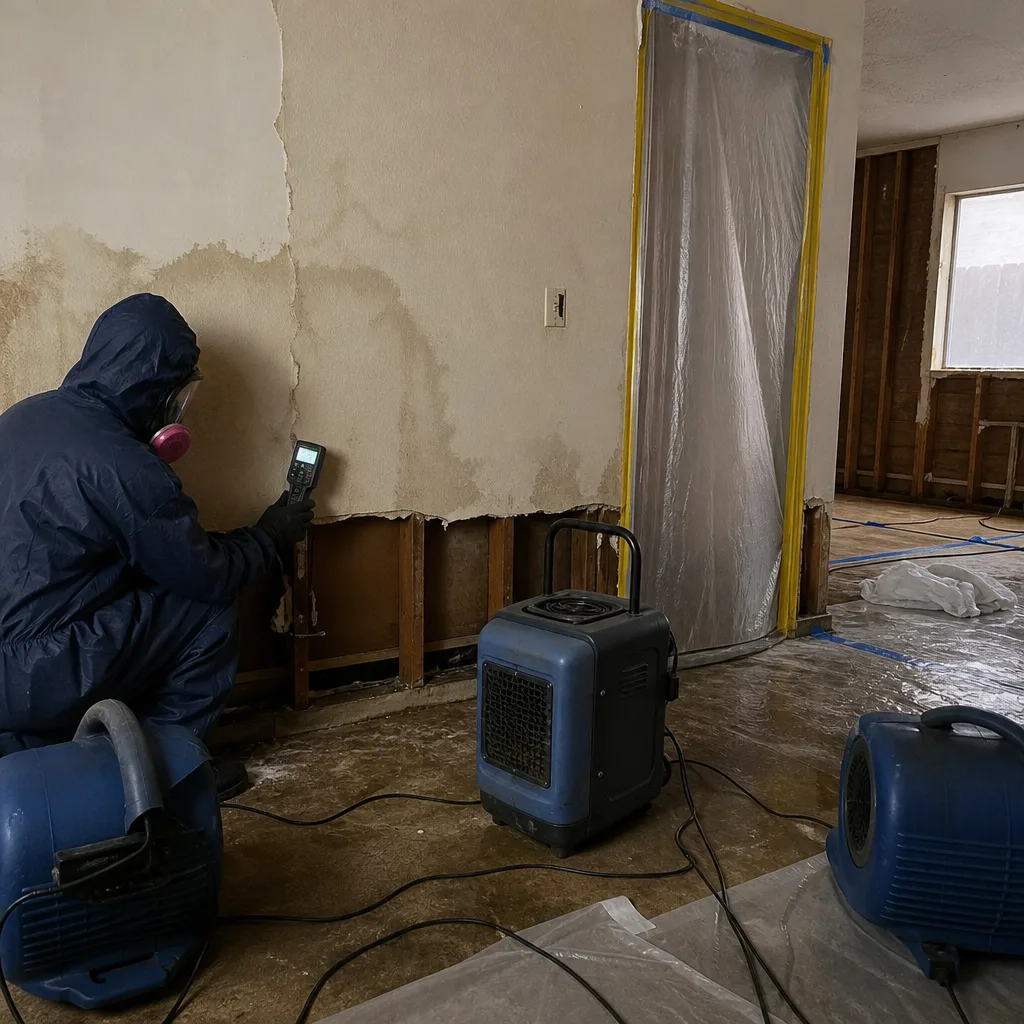
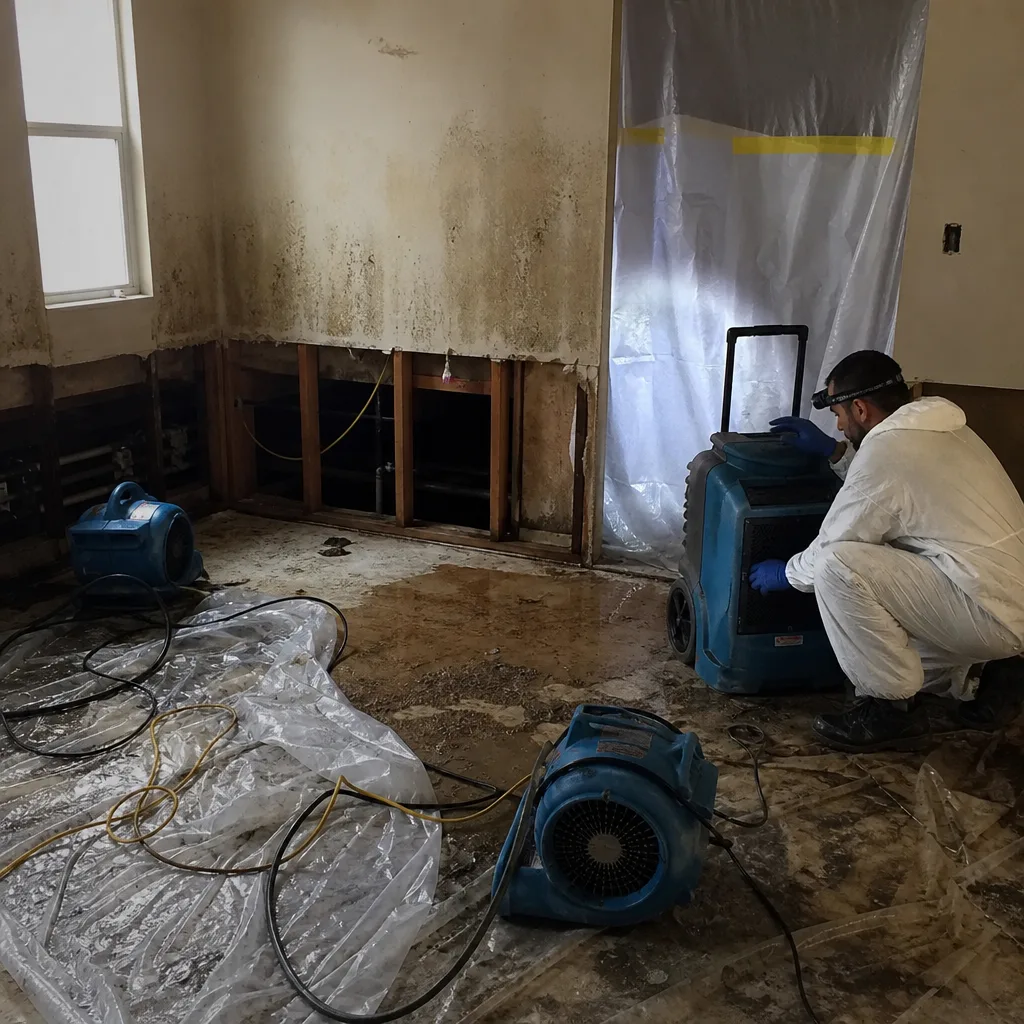
Black Mold Removal in Grand Terrace usually means Stachybotrys growth on wall cavities or sill plates that have been wet for weeks or months, often from slope-directed water wicking into uphill-facing garage slabs or original sill plates. We see it most often on the lower level of split-level homes off Blue Mountain Drive and on canyon-edge lots where runoff channels under fences and patios. Black mold removal here starts with moisture mapping, not demolition. We establish containment, run negative air pressure, remove affected material, treat the framing with antimicrobial agents, and log moisture readings daily until the assembly reads dry.
Containment and Drying Protocol
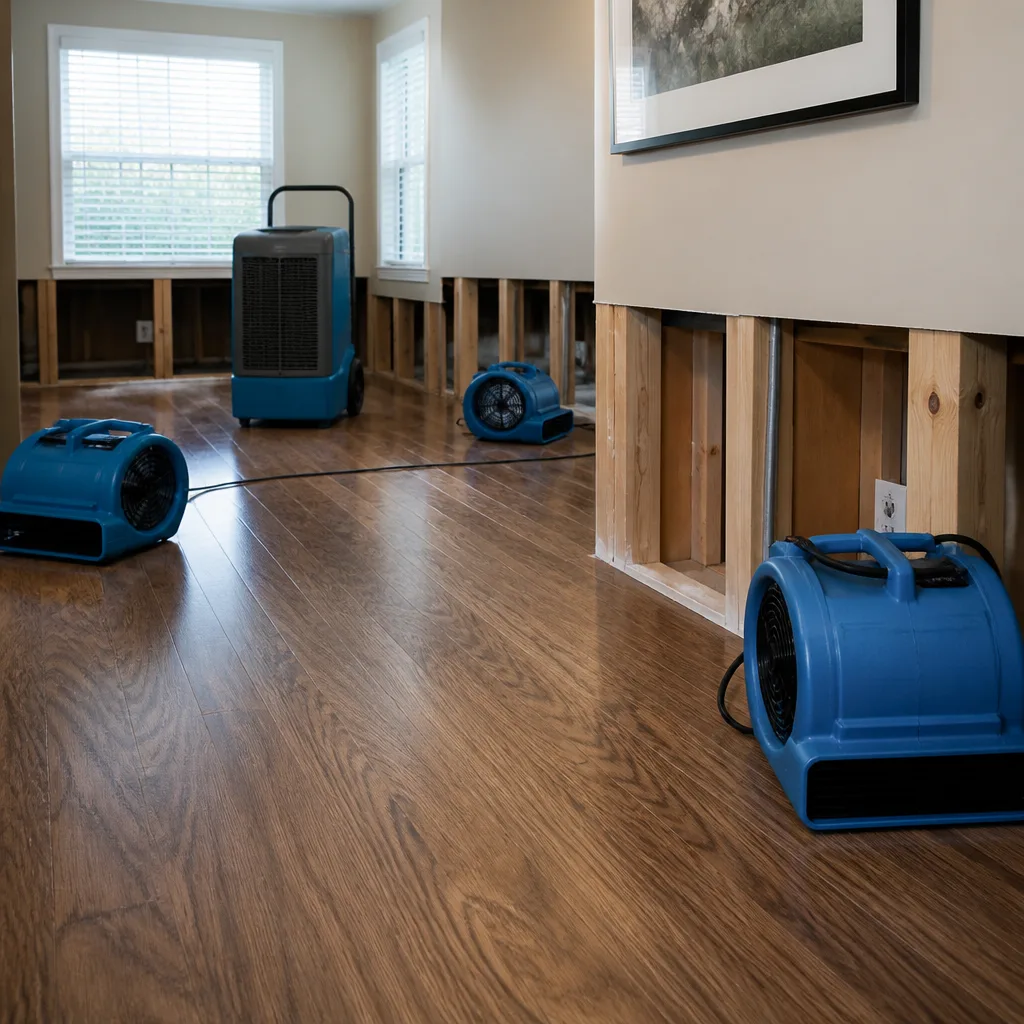
We set up sealed containment zones with negative air pressure so spores don’t migrate to clean rooms while we work. Injectidry mats get placed directly against wet wall cavities and slab edges, pulling moisture out without unnecessary drywall removal. Every reading gets documented, because your adjuster will want to see the numbers.
When to Leave the Drywall Alone
In older Grand Terrace homes, original drywall can often be saved if we get to it before fungal growth penetrates the gypsum core. We check moisture content, surface growth, and framing condition before recommending tear-out. If the paper face is intact and moisture levels are dropping, we dry in place and treat the framing.
Mold Removal Contractor in Grand Terrace
A Mold Removal Contractor in Grand Terrace should diagnose the water path before quoting the tear-out. That’s where our process starts on every hillside job. We’re looking at slope runoff, uphill-facing slabs, and original plumbing before we ever open a wall. Typical mold removal in this city runs $1,500 to $4,800 for a contained bathroom or closet job, and $5,000 to $12,000 when the growth spans multiple rooms or requires full-scale containment with structural drying.
Documented Dry Standard
We don’t stop when the stain is gone. We stop when moisture readings on the framing, sill plate, and drywall match pre-loss or dry-standard levels. That’s what documented dry means, and it’s the difference between a mold job that holds and one that comes back after the next winter storm.
Working With Your Adjuster
If the mold traces back to a covered water event, we photograph everything, log daily readings, and speak your adjuster’s language. Direct insurance billing and photo-documented assessments mean you’re not scrambling to explain line items. We coordinate with the adjuster directly on Grand Terrace claims.

Trusted Brands We Service in Grand Terrace
Our Grand Terrace jobs run on Phoenix dehumidifiers, XPOWER air movers, and Injectidry structural-drying systems. These are commercial-grade machines built for the same large-loss restoration work we do. Because we’re based out of Fontana, we carry common parts and consumables for these systems locally, which means shorter turnaround when a drying chamber needs a new filter or a hose assembly mid-job. We service our own gear between jobs, so the equipment shows up in Grand Terrace ready to run, not limping.
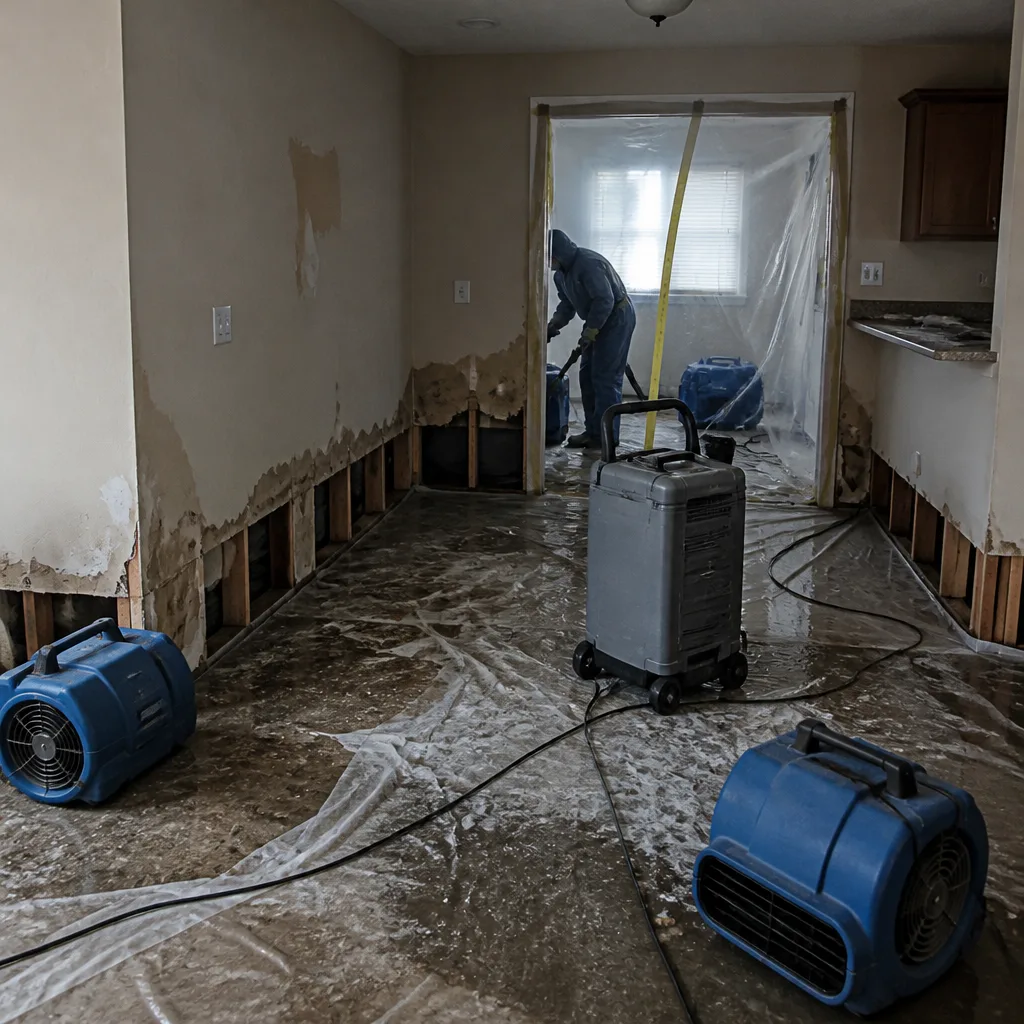
See the difference
 Before
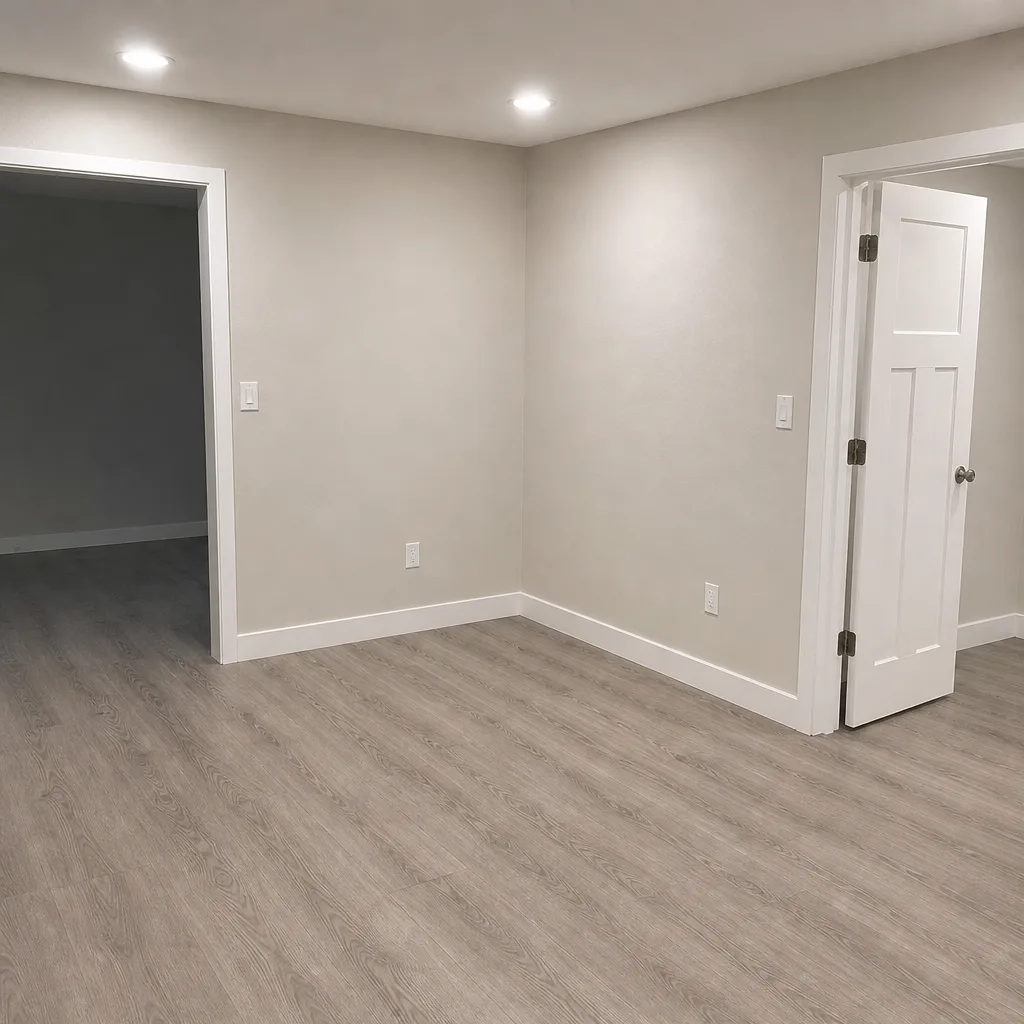 After
 Before
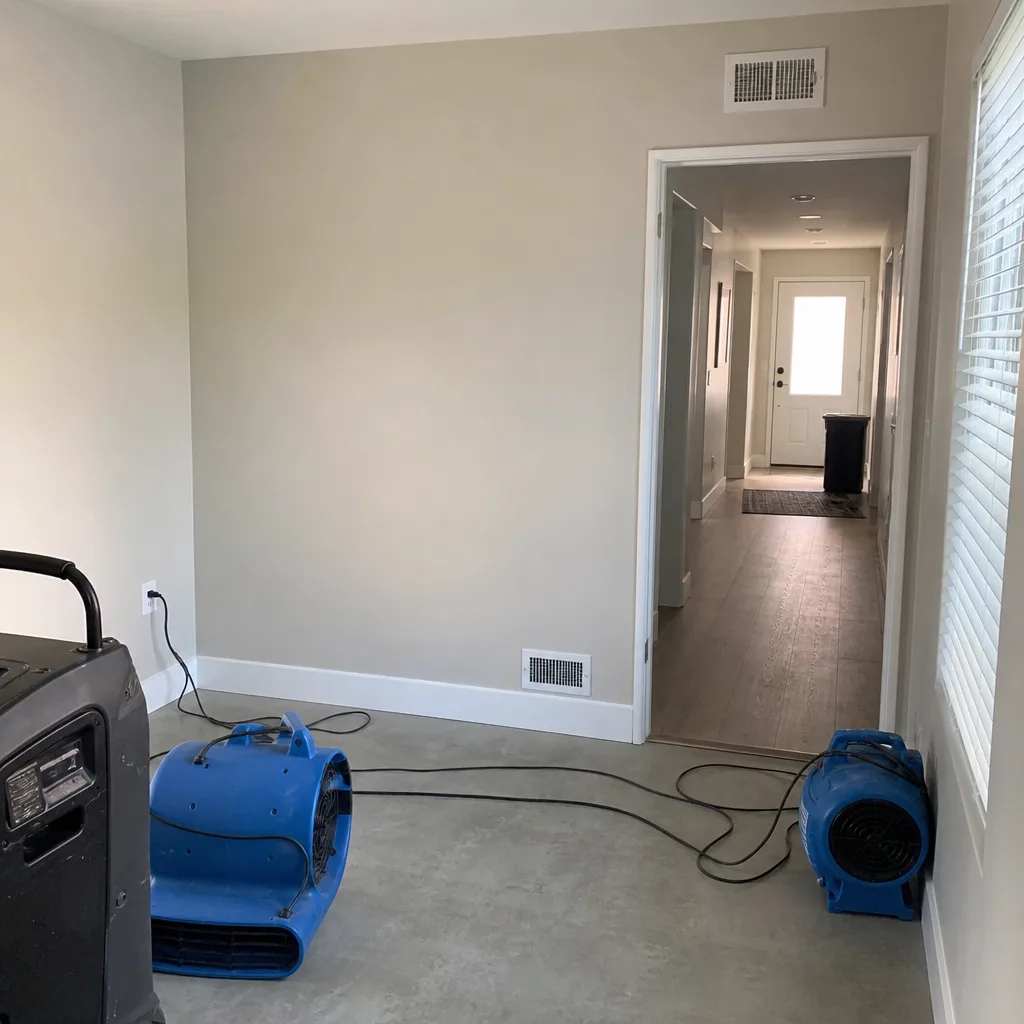 After
 Before
 After
Common Mold Remediation Problems We See in Grand Terrace Homes
- Slope-directed water wicking into uphill-facing garage slabs. Water runs down the grade and pools against the slab edge, where original sill plates absorb it for years before mold blooms behind finished walls. We map grade drainage before any containment goes up.
- Post-fire debris flow from Blue Mountain. After a burn scar, even a light rain can send muddy water against canyon-edge foundations. This seasonal trigger means homes that were dry for years suddenly show elevated moisture readings along the foundation line.
- Original plumbing in 1970s tract homes. Cast iron drain lines and aging copper supply lines fail slowly, often inside slab penetrations. The leak shows up as mold on a lower-level wall weeks after it starts.
- Recurrence after surface cleaning. If the water path isn’t addressed, mold returns after every winter storm. Surface cleaning without drainage correction is the most common reason Grand Terrace homeowners call us a second time.
Pricing for Mold Remediation in Grand Terrace, CA
Here’s what we see across Grand Terrace jobs:
- Contained bathroom or closet mold removal: $1,500 – $3,200
- Single-room black mold remediation with structural drying: $2,800 – $5,500
- Multi-room or crawl space mold remediation: $5,000 – $12,000
- Mold inspection and moisture mapping only: $350 – $650
Slope-drainage correction, if needed, is scoped separately and varies based on the grade and foundation configuration. Every job gets a written scope before we start, so you know exactly what you’re paying for. Call (833) 589-5317 for a free estimate in Grand Terrace.
We Also Serve Cities Near Grand Terrace
Dry Line Water Damage serves Mold Remediation in Grand Terrace plus the surrounding communities of Highgrove, Colton, Loma Linda, and Rubidoux. If you’re in one of those cities and dealing with a moisture issue, the same crew and equipment respond. Call (833) 589-5317 and we’ll route someone to your area.
Serving Grand Terrace, CA — Our Local Coverage Area
We’re based in the Grand Terrace area and know this community well. Use the map below to see our service coverage — if you’re nearby, we can almost certainly help.
FAQs About Mold Remediation in Grand Terrace
Because the water path that feeds the mold hasn’t been addressed. In Grand Terrace’s terraced lots, that usually means slope runoff channeling against an uphill-facing slab or original sill plate. Cleaning the visible mold without redirecting drainage or drying the assembly means it regrows after the next storm. We diagnose grade drainage and map moisture first, then remediate. If mold keeps returning, call (833) 589-5317 for a slope-specific assessment.
Mold can begin colonizing within 24 to 48 hours in warm conditions, and Grand Terrace’s inland climate means interior wall cavities stay warm enough for that to happen year-round. Once moisture sits behind baseboards or under sill plates, growth starts fast. The key is drying within that window. We run commercial-grade dehumidifiers and Injectidry mats to pull moisture out before colonies spread.
Category 1 is clean water like a supply line leak. Category 2 is contaminated gray water from appliance overflows or sump pump failures. Category 3 is black water carrying sewage or floodwater, like what post-fire debris flow from Blue Mountain can push against foundations. The category determines how much material must be removed and what antimicrobial protocols apply. We classify the water source on every job in Grand Terrace before quoting the scope.
Not always. If the mold is on the surface and the gypsum core is still intact, Injectidry mats can dry the cavity in place while we treat the framing. On a terraced street off Blue Mountain Drive, we saved a full lower-level wall this way once we redirected the exterior drainage. Tear-out only happens when fungal growth has penetrated the paper face or the drywall is crumbling. That judgment comes after moisture mapping, not from a quick visual look.
After a burn scar, hydrophobic soil on steep lots sheds water instead of absorbing it, so light rain can send muddy water against foundations that were previously dry. This means homes with no mold history suddenly show elevated moisture along canyon-edge foundation lines. We treat debris-flow runoff as a Category 2 or 3 water event depending on contamination, and we scope containment accordingly. If you’re near the Blue Mountain burn area, call (833) 589-5317 and ask for a post-rain moisture check.
Written by Glen Pacheco, Owner at Dry Line Water Damage, serving Grand Terrace with IICRC-certified mold remediation.