

 Water damage drying
 Fire & smoke cleanup
 Mold remediation
 Storm response
 Sewage cleanup
 Reconstruction
Free visual inspection and a written scope of work before any mitigation begins - photos, moisture readings, and drying logs go in your claim file
The scope we write is the scope we bill. Anything new gets shown to you, in writing, before we touch it.
Get your free estimateFast, Reliable Mold Remediation Across Indian Wells
Mold remediation in Indian Wells typically costs $1,800 – $6,500 depending on containment size and affected materials, and most jobs in 92210 can be scheduled within 48 – 72 hours. If you’ve spotted dark staining on drywall, caught a musty odor in a guest casita, or your property manager just flagged moisture readings at a vacant second home, that’s a call to us at (833) 589-5317. We work throughout Indian Wells, from gated communities near the Indian Wells Golf Resort to older custom builds off Highway 111, and we understand the specific failure patterns this desert climate creates. The sooner containment goes up, the less of your custom millwork, stone, and cabinetry ends up in a demolition pile.
Why Dry Line Water Damage Is Indian Wells’s Preferred Mold Remediation Company
Our team has worked in Indian Wells long enough to know that mold problems here rarely announce themselves the way they do in coastal cities. A home in La Quinta might show ceiling staining after a rainstorm; an Indian Wells property can harbor active fungal growth inside a stucco wall for months, fed by a buried drip line, with zero visible evidence indoors. That’s why our Mold Remediation process starts with moisture mapping and thermal imaging, not just visual inspection. We look for what’s wet, then we trace where the water came from. Glen Pacheco built this company around that discipline: find the source, document the scope, dry it to a measurable standard, and treat the materials that need treating.
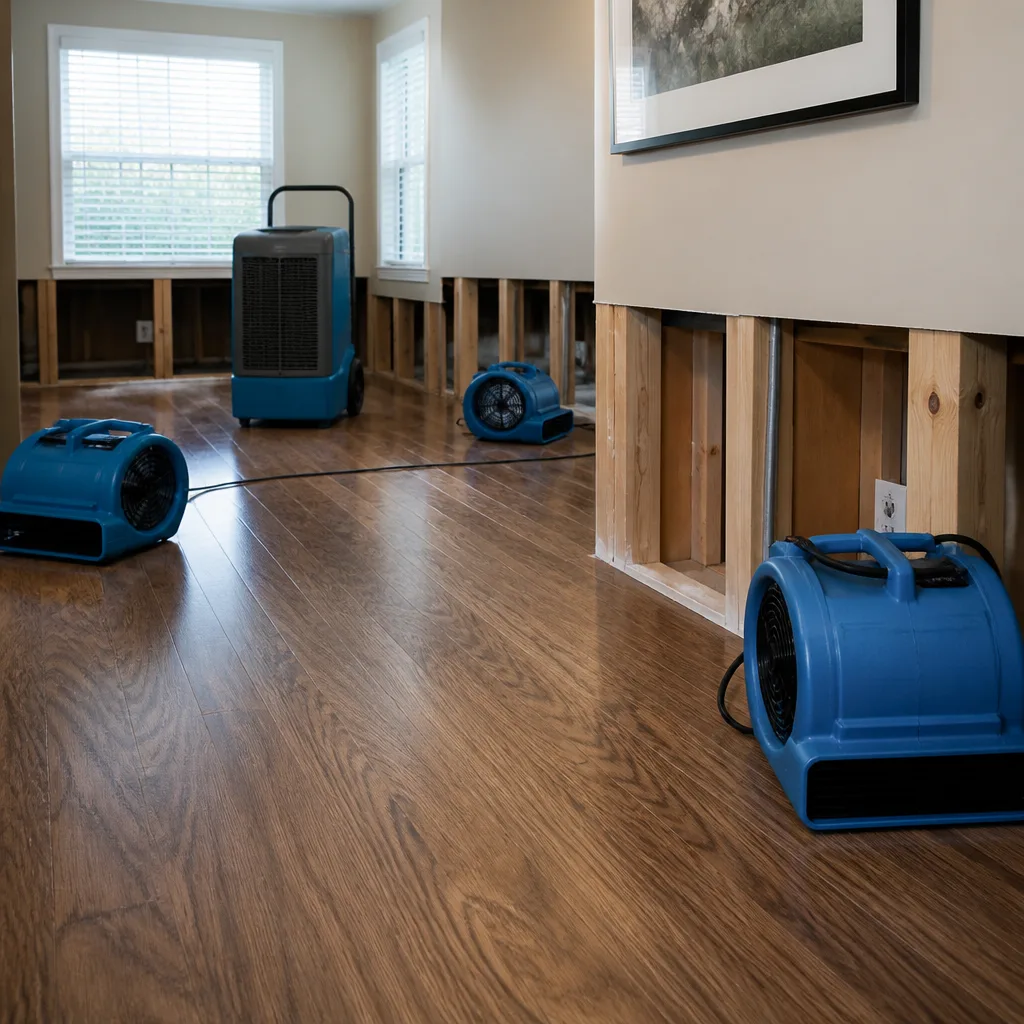
Indian Wells homeowners and property managers come to us because we’re an IICRC-certified operation, not a generalist handyman crew that added mold to its list of services. We run Dri-Eaz dehumidifiers, Phoenix air movers, and Injectidry structural drying systems that pull moisture from wall cavities and under custom flooring without ripping everything apart. That equipment matters. Consumer-grade machines dry the air in a room. Our systems dry the materials inside the wall, under the tile, and behind the baseboard, documented with daily moisture readings. For a second-home owner in Connecticut or Vancouver, that documentation is how you know the problem is actually solved from 2,000 miles away.
Restoration work we handle
Black Mold Removal in Indian Wells
Black Mold Removal in Indian Wells homes usually runs $2,400 – $7,000 for a contained area like a casita, utility room, or water closet where Stachybotrys has colonized water-damaged drywall or cabinetry. The cost reflects what the job actually involves here: putting up containment under negative air pressure, removing affected gypsum and insulation, treating the framing with EPA-registered antimicrobials, and then rebuilding to match your existing finish. In a city where even secondary bathrooms have custom stone and designer fixtures, Black Mold Removal means protecting the parts of the home that aren’t contaminated while we work on the part that is.
Containment and Pressure Differentials
We treat mold as a contaminant, not a stain. In an open-plan Indian Wells great room, running an air scrubber without proper containment spreads spores into clean airspace and forces a much larger remediation than the original problem. Our crews establish negative air pressure inside the containment zone, verify it with a manometer, and keep it that way until the final clearance testing comes back.
After Remediation: Clearance and Documentation
Black mold removal in Indian Wells isn’t finished when the affected drywall is cut out. We take post-remediation air and surface samples, compare them to an exterior baseline, and only then clear the containment. That clearance report goes to you, your property manager, and the HOA architectural committee if they require it.
Mold Removal Contractor in Indian Wells
A Mold Removal Contractor in Indian Wells should show up with more than a spray bottle and an ozone machine. Our crews arrive with commercial-grade Dri-Eaz dehumidifiers, Phoenix air movers, HEPA-filtered negative air machines, and enough moisture meters to log readings at every station before, during, and after the job. For Indian Wells work specifically, that equipment gets paired with one more thing: the understanding that most of these homes are overseen by property managers and out-of-town owners who need to see the scope in writing before we start cutting.
Written Scope, Verified Before We Start
We won’t open a wall in an Indian Wells home until the property manager or owner has signed off on a written scope of work. That document shows exactly what will be removed, what will be dried in place, what will be treated, and where the containment boundary sits. It protects you from scope creep and protects us from doing work someone didn’t authorize.
Moisture Mapping and Source Identification
Before we recommend any demolition, we map moisture across the affected area with pin and pinless meters. In a 1970s stucco home off Eldorado Drive, a wet baseboard might trace three feet up the wall, or it might trace to a leaking irrigation valve box outside. Finding the source first means mold remediation happens once, not twice.
Trusted Brands We Service in Indian Wells
Our remediation equipment comes from manufacturers that restoration contractors actually use on large commercial losses: Phoenix air movers, Dri-Eaz dehumidifiers and LGRs, XPOWER fans for aggressive airflow, and Injectidry systems for drying inside walls and under finished floors without removing them. We stock HEPA filters, EPA-registered antimicrobials, and enough spare parts to run a multi-day drying job without losing a shift. For Indian Wells clients, that means a crew doesn’t have to pause a remediation because a dehumidifier failed and the nearest rental desk is an hour away. The equipment stays running, the drying logs stay consistent, and your containment comes down sooner.
Common Mold Remediation Problems We See in Indian Wells Homes
- Buried drip-line leaks saturating stucco and foundations. In Indian Wells, the most common hidden mold source isn’t a roof leak but buried drip irrigation. Pinhole leaks in desert-landscaping lines feed moisture into stucco exterior walls and foundation slabs for months, with no visible sign until mold appears on interior drywall or a musty odor spreads through the casita.
- Vacant second homes multiplying the timeline. A property that sits empty from May to October gives a small water intrusion months to develop into a full fungal colonization. By the time a property manager’s quarterly walkthrough finds the smell, the damage is often inside the wall cavity, not just on the surface.
- Monsoon-driven roof and window leaks in flat and low-slope homes. July through September brings sudden downpours that find every weakness in flat tile roofs and aging weep systems. When those leaks land in a home built in the 1980s, they saturate insulation and top plates that should have dried decades ago.
- HOA architectural review constraints on remediation scope. Many Indian Wells communities require restoration work, including rebuilding after mold remediation, to go through an architectural review process. Starting demolition before that approval forces a redo when the board wants different materials or a different finish spec on rebuilt walls.
See the difference
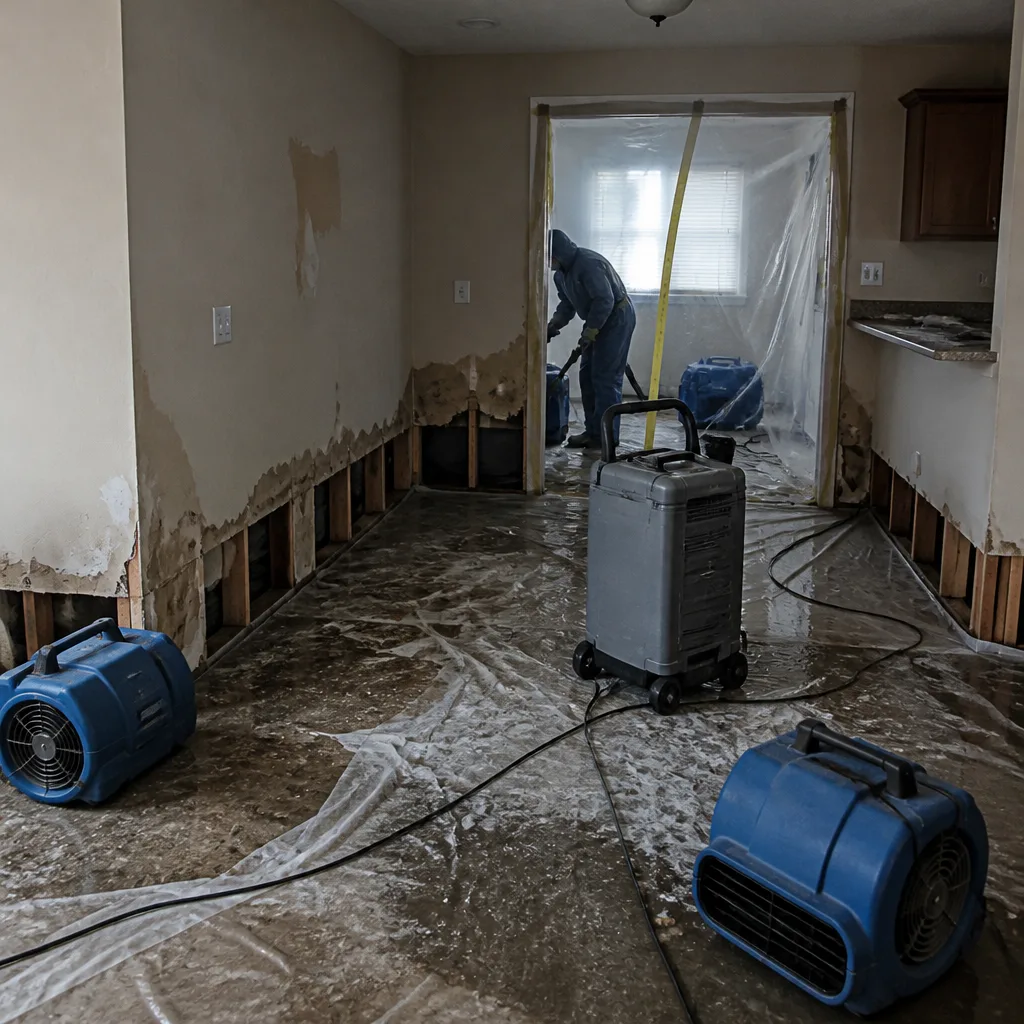 Before
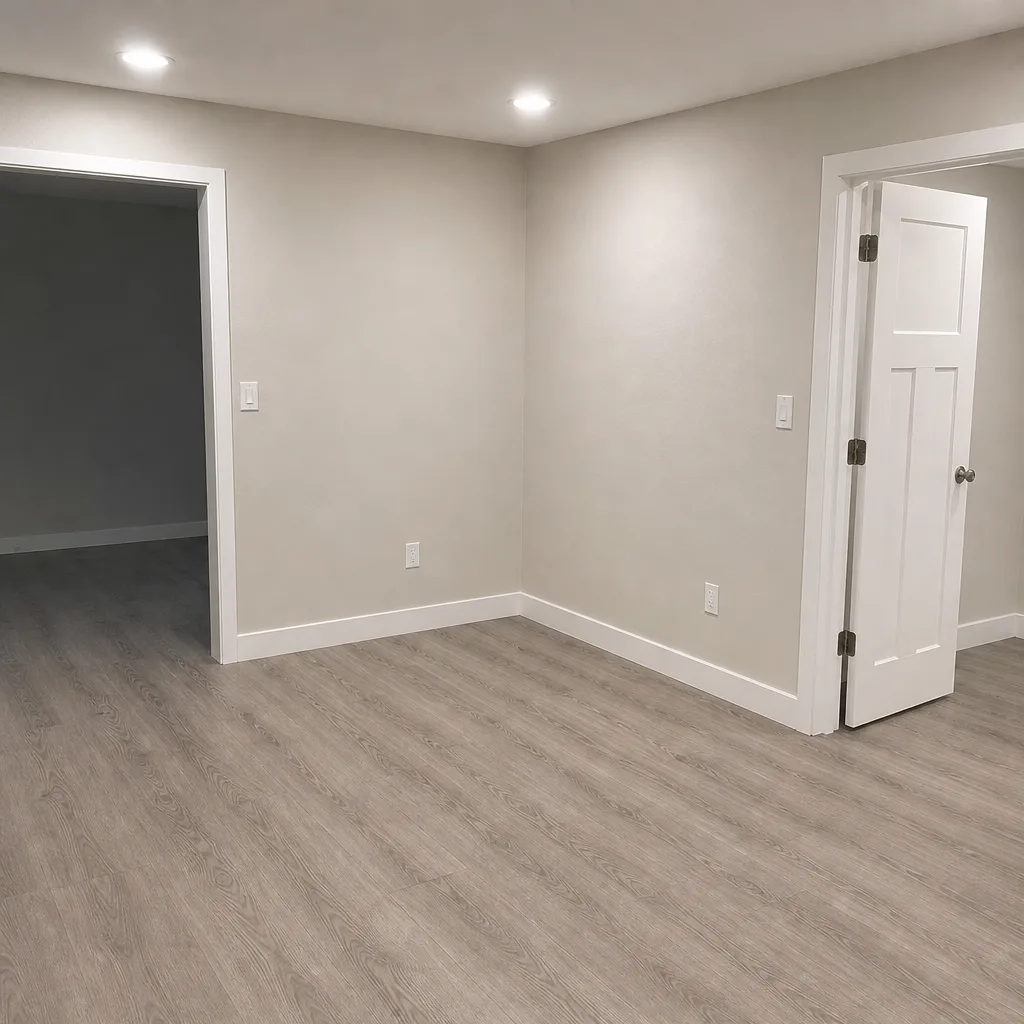 After
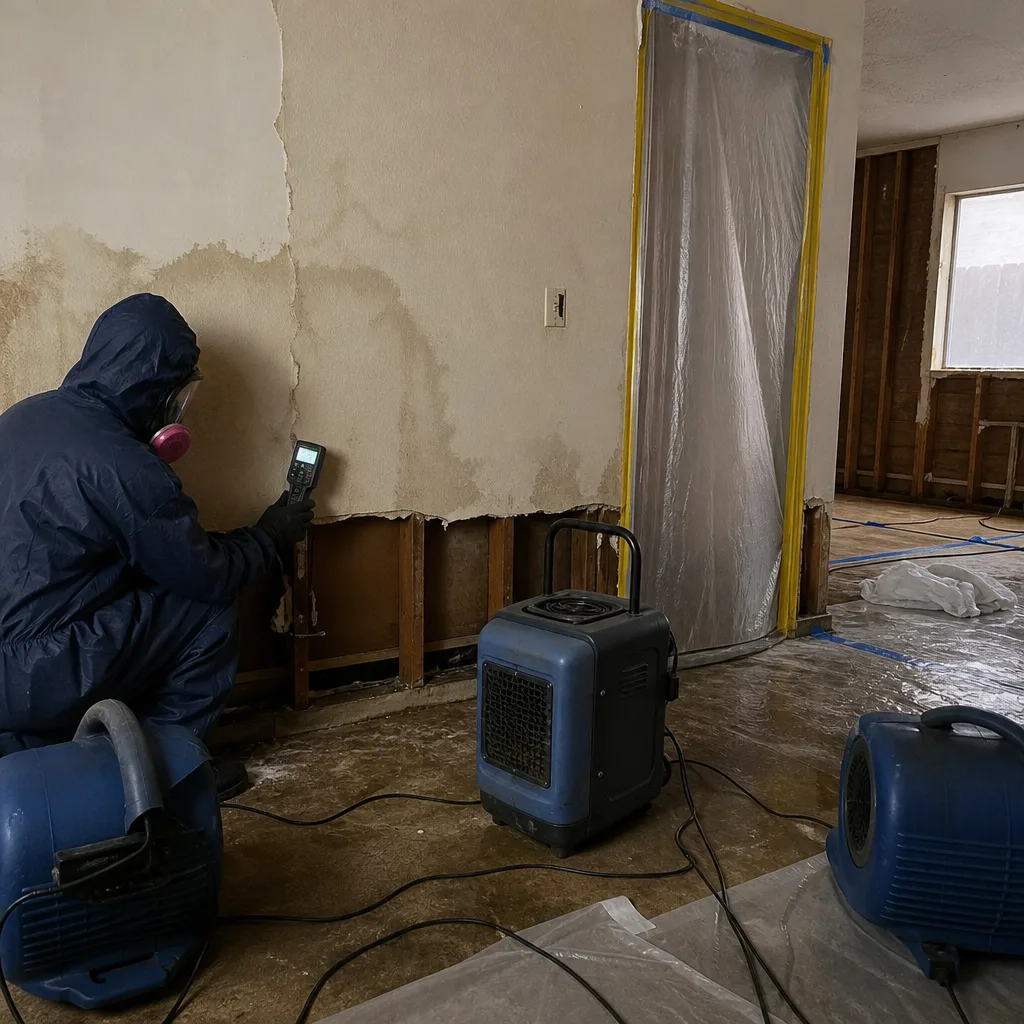 Before
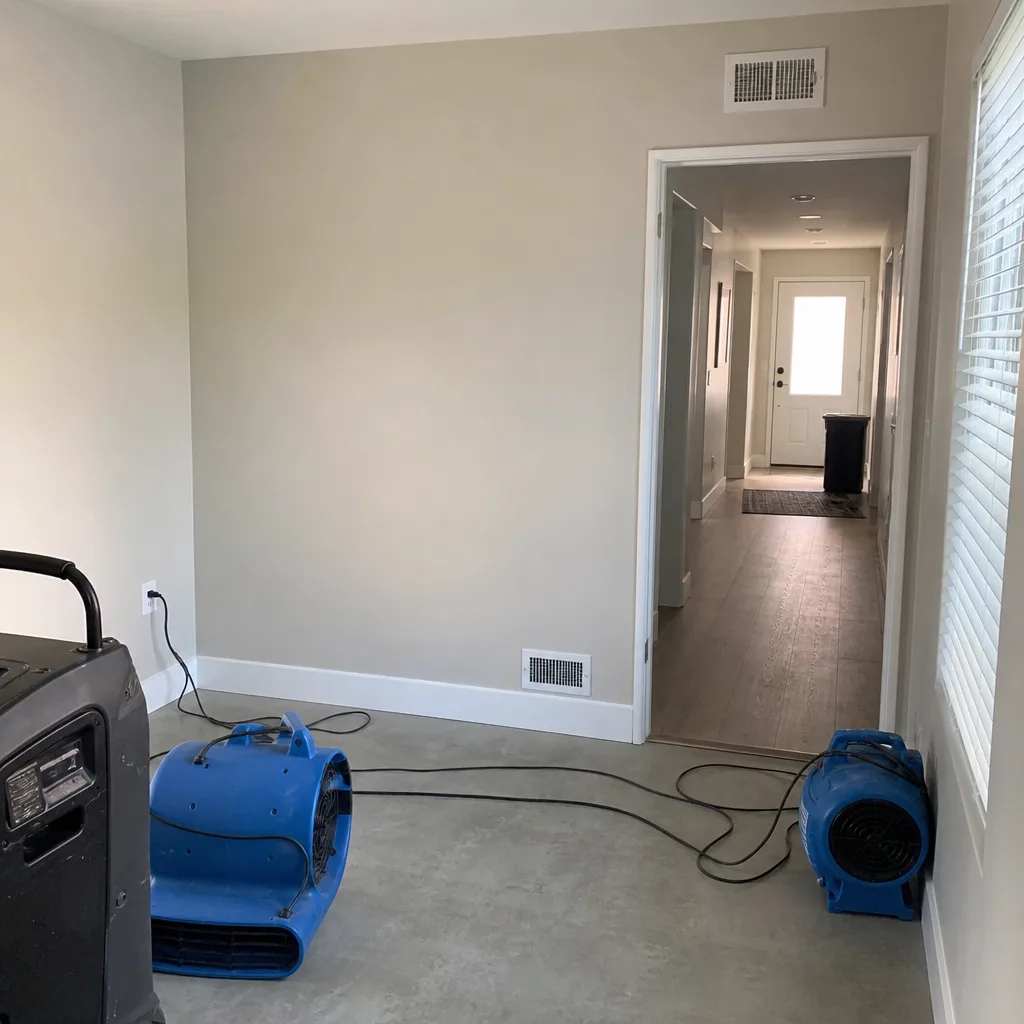 After
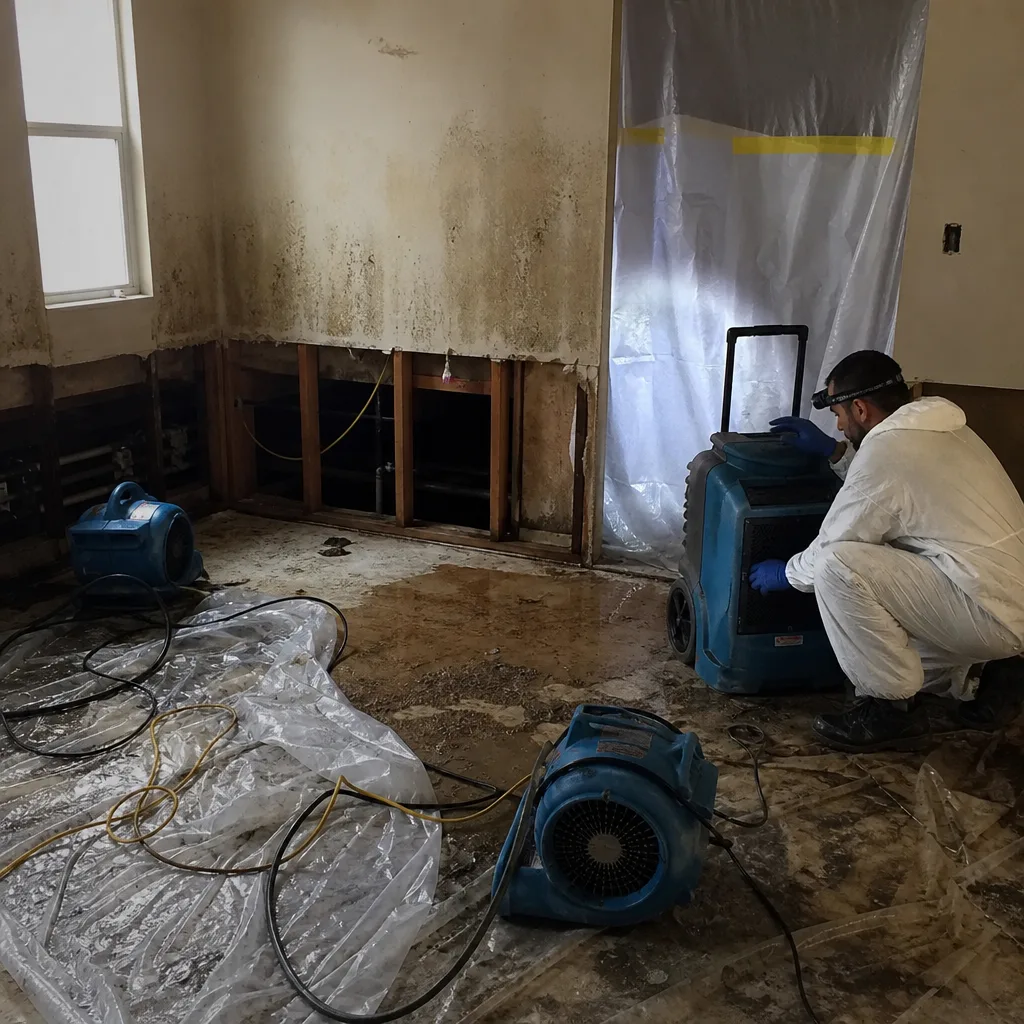 Before
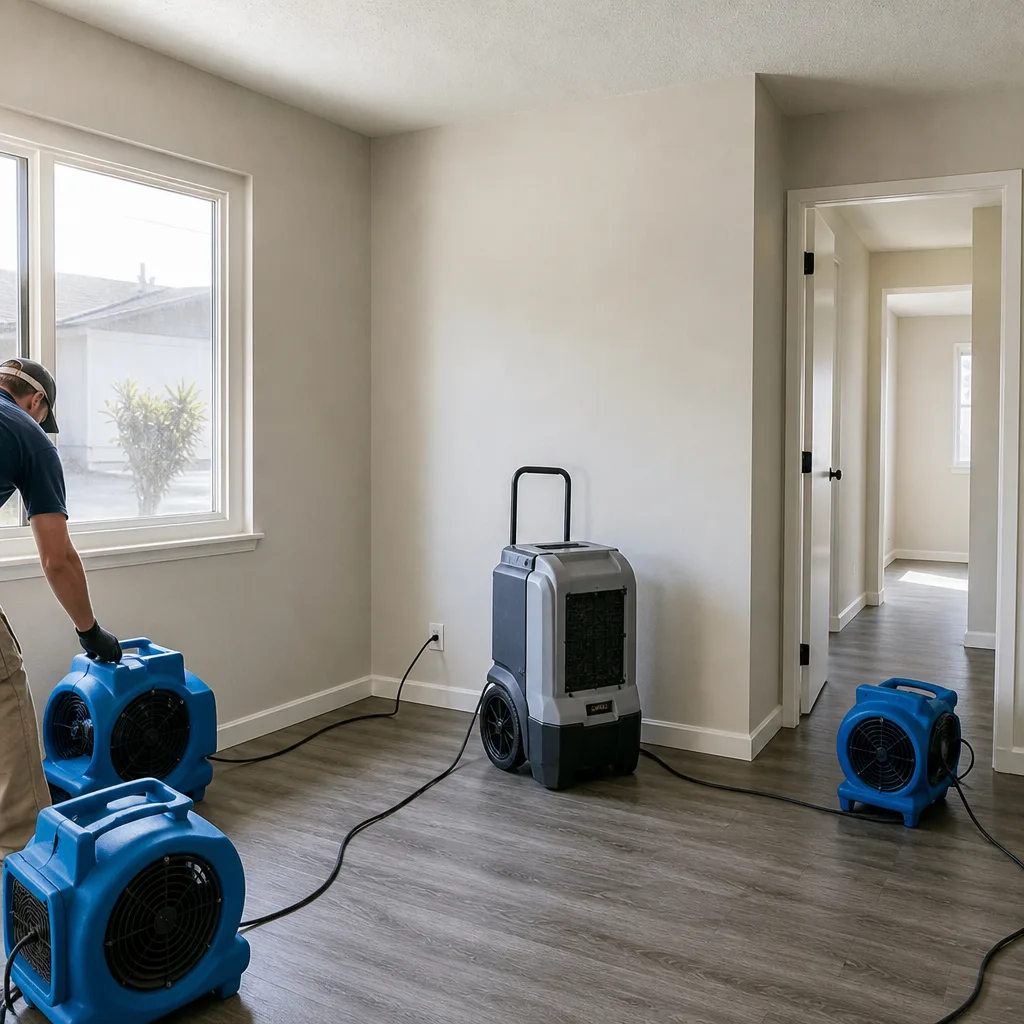 After
Pricing for Mold Remediation in Indian Wells, CA
Mold remediation in Indian Wells generally spans three bands: small contained areas with surface growth on drywall or trim run $1,800 – $3,200; moderate jobs involving one affected room plus some structural drying land between $3,500 – $5,500; and large multi-room remediations with full containment, negative air, and custom-finish rebuilding run $6,000 – $9,500. Variance comes from the size of containment, the volume of affected material, whether Injectidry drying can save custom flooring instead of replacing it, and whether the HOA requires specific materials for rebuild. We provide a written scope before any work starts, and we’ll walk you through what’s covered and what’s not. Call (833) 589-5317 for an exact quote, estimates are free.

Key Takeaways:
- Most Indian Wells mold problems start with buried drip-line irrigation leaks, not roof failures.
- Vacant second homes let small leaks develop into major mold for months undetected.
- Containment and negative air pressure are non-negotiable in open-plan custom homes.
- Written scope and HOA coordination are part of the job, not an add-on.
- Typical remediation in Indian Wells runs $1,800 – $9,500 depending on scope.
We Also Serve Cities Near Indian Wells
Our crews regularly run Mold Remediation in Indian Wells and the surrounding desert communities, including Palm Desert, La Quinta, Bermuda Dunes, and Rancho Mirage. The failure patterns shift slightly as you move through these cities, but the requirement is the same: find the water, dry the structure, document everything. If you’re managing properties across the Coachella Valley, one call covers the desert region.
Serving Indian Wells, CA — Our Local Coverage Area
We’re based in the Indian Wells area and know this community well. Use the map below to see our service coverage — if you’re nearby, we can almost certainly help.
FAQs About Mold Remediation in Indian Wells
Indian Wells has a higher concentration of second homes and vacation rentals that sit vacant for months, and its extreme summer heat dries visible surfaces quickly while moisture keeps feeding wall cavities from hidden sources like buried drip lines. Mold grows behind the stucco or inside the framing where no one sees it until a quarterly property-manager visit or a returning owner catches the smell.
Call (833) 589-5317 if a property manager flagged moisture or you smell something musty after returning to a vacant home. We’ll map it before we touch anything.
Yes, and it’s the most common source we trace in 92210. A pinhole leak in a drip line buried near the foundation can saturate the stucco and the bottom plate of a wall for months with no pooling or visible wetness outside. The moisture wicks through the wall assembly, creates conditions for fungal growth inside the cavity, and only becomes visible when staining pushes through interior drywall or you notice a persistent earthy odor. We were called to a vacant second home off Washington Street after the property manager’s quarterly walkthrough found a musty smell in a guest casita; moisture mapping traced it not to the roof but to a pinhole leak in a buried drip line that had been saturating the stucco wall for weeks. We set containment, ran Injectidry and Dri-Eaz equipment for structural drying, applied antimicrobial treatment to the affected framing, and logged daily moisture readings on drying logs for the out-of-town owner and the HOA’s architectural review. We documented pre-loss condition throughout so the owner could see exactly what was wet before we started, then walked the property manager through the scope of work before reinstalling the custom baseboard and casing.
If you suspect an irrigation line near the house, call (833) 589-5317. We’ll trace it before it turns into a bigger loss.
Mold colonization can begin within 24 to 48 hours on wet drywall, insulation, and wood in Indian Wells’s warm indoor conditions, even with the desert’s low outdoor humidity. The fastest realistic mitigation is same-day extraction and air movement. If water has been sitting for longer than 72 hours, mold is likely already active and the job shifts from water damage restoration into remediation with containment. For monsoon-driven leaks in July through September, don’t wait for the wall to dry on its own. Call (833) 589-5317 and get a crew moving.
Yes. Indian Wells has a lot of HOAs and most of them require restoration work that touches exteriors, stucco, or visible finishes to go through an architectural review before rebuild begins. We prepare the documents, write the scope in the format the board wants, and coordinate directly with your property manager so the out-of-town owner doesn’t have to manage approval logistics from a different time zone. Glen Pacheco’s team treats the HOA process as part of the remediation schedule, not an afterthought. Call (833) 589-5317 and we’ll handle the coordination.
Category 3 water means grossly contaminated water, the kind you’d get from a sewage backup, an exterior flood, or standing water that’s been sitting long enough to support bacterial growth. It changes the remediation because any porous material that absorbed Category 3 water has to be removed, not just dried. Carpeting, padding, drywall, and insulation in the affected zone need to come out. Hard surfaces get cleaned, then treated with EPA-registered antimicrobials, then verified with clearance testing before rebuilding. In Indian Wells, a monsoon-fed flash flood that gets into a lower-level casita or garage would classify as Category 3.
Call (833) 589-5317 if you’re unsure what category your water damage falls into. We’ll tell you straight and scope it correctly.
Get Mold Remediation in Indian Wells Started Today
If you’ve got visible mold, a musty odor, a flagged moisture reading, or a property manager who’s raising alarms about a vacant home in Indian Wells, call Dry Line Water Damage at (833) 589-5317. We’ll schedule a walkthrough, map the moisture, and give you a written scope with honest pricing before any work begins. No pressure, no vague reassurances. Just the documentation, the equipment, and the IICRC-certified process that gets Indian Wells homes back to a documented dry, safe standard.
Written by Glen Pacheco, Owner at Dry Line Water Damage, serving Indian Wells and the Coachella Valley.