


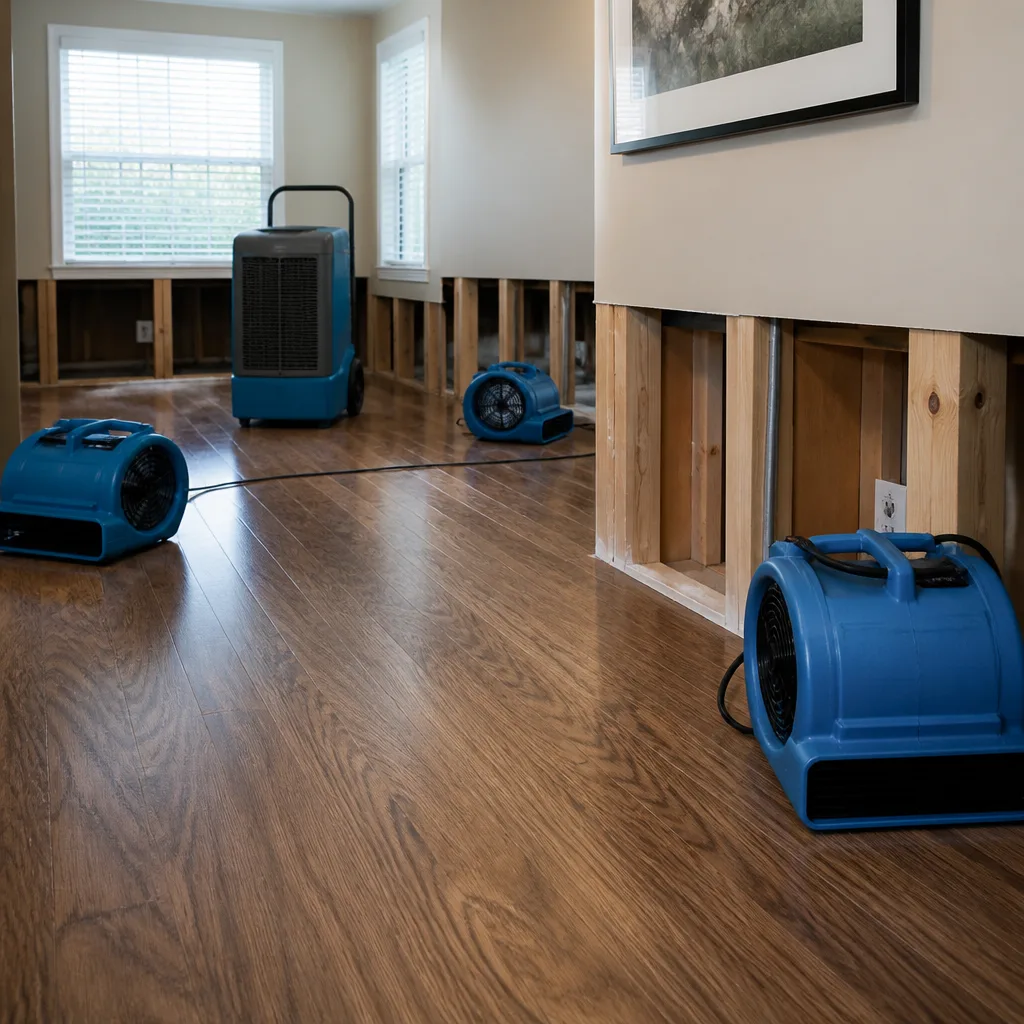
 Water damage drying
 Fire & smoke cleanup
 Mold remediation
 Storm response
 Sewage cleanup
 Reconstruction
Free visual inspection and a written scope of work before any mitigation begins - photos, moisture readings, and drying logs go in your claim file
The scope we write is the scope we bill. Anything new gets shown to you, in writing, before we touch it.
Get your free estimateFast, Reliable Mold Remediation Across Lakeland Village
Mold remediation in Lakeland Village typically costs $1,800 – $6,500 depending on how far the growth has spread and whether the moisture source is still active. Most jobs we handle in the 92530 ZIP code are done within three to five days, from the first containment setup to the final clearance documentation. If you’ve spotted dark staining on a wall, smelled something that won’t go away, or just found water where it shouldn’t be, call (833) 589-5317 and we’ll get a tech out to look at it.
We work the west shore of Lake Elsinore constantly. Lakeland Village’s lakefront cabins weren’t built with modern moisture management in mind, and the hillside homes above them catch runoff that older drainage systems can’t always handle. That’s the reality of this town, and our process is built around it. No vague reassurances. A written scope, documented moisture readings, and a clear plan before the first piece of equipment gets unloaded.
Why Dry Line Water Damage Is Lakeland Village’s Preferred Mold Remediation Company
Glen Pacheco leads our crews with a simple rule: the structure isn’t clean until the numbers say it is. Moisture meters, not eyes, decide when a job is done. That matters in Lakeland Village because the real problem is usually underneath the house, not on the wall where you first noticed it.
We’re an IICRC-certified operation. That’s the restoration industry’s third-party standard for training and process, not a self-issued credential. Our techs follow the S520 standard for mold remediation, which means containment, air scrubbing, and source correction happen in a specific sequence every time. We also hold membership in the Restoration Industry Association, bound by a published code of ethics that governs how we document and communicate scope. Glen has built the team around one principle: one crew, full scope. Water, mold, and fire damage fall under the same roof, so there’s no handoff between vendors and no gap where responsibility disappears.
We’ve worked up and down Grand Avenue, along Lakeshore Drive, and into the hillside tracts off McVicar Street. Homeowners here know each other, and when a neighbor’s crawlspace gets remediated properly, the phone rings. Our reputation in Lakeland Village comes from showing the homeowner the moisture log after every visit, not just handing over an invoice.
Restoration work we handle
Mold Inspection in Lakeland Village
Mold Inspection in Lakeland Village starts with the crawlspace, not the room where you saw the stain. In the 1940s – 70s lakefront cabins along the west shore, original plumbing runs beneath pier-and-beam floors, and a slow seeping galvanized supply line can feed mold for weeks before a single spot appears inside the living space. A proper inspection means pulling the access panel, reading moisture levels in the joists and subfloor, and tracking the source before anyone talks about treatment.
Homeowners in Lakeland Village typically call for an inspection when they notice a persistent musty odor that gets worse with the lake fog, when a home sale is in progress, or after a winter storm that left water pooling against the foundation. Inspection costs in this area generally run $300 – $600 depending on how many areas need testing and whether air samples are required.
Crawlspace and Foundation Assessment
Pier-and-beam foundations create a specific failure pattern we see every wet season here. Water moves under the house, evaporates into the crawlspace air, and condenses on cool wood surfaces. We inspect the full subfloor perimeter, not just the area near the access hatch. Moisture mapping shows exactly where the problem starts.
Air Quality and Moisture Source Tracking
When the source isn’t obvious visually, we use moisture meters and thermal imaging to trace it. In stucco hillside homes, the culprit is often a drainage issue directing rainwater against the exterior wall. In older cabins, it’s more often a plumbing leak or condensation from trapped humidity. Knowing which one you’re dealing with changes the entire remediation plan.
Mold Removal Specialist in Lakeland Village
Mold Removal Specialist work in Lakeland Village usually means dealing with original wood framing that homeowners are terrified to lose. Our approach to a 1950s lakefront cabin is different from a 1990s tract home on the hillside. The older the framing, the more important it is to dry it properly rather than cut it out. That’s where the Injectidry and Dri-Eaz equipment earns its keep.
Mold removal in Lakeland Village homes typically costs $1,500 – $4,500 for contained areas up to about 100 square feet. Larger structural jobs, like full crawlspace remediation under a lakefront cottage, run $5,000 – $12,000 because of the access work and the amount of framing that needs treatment. Every job gets a written scope before work starts, so you know exactly what’s being done and what it costs.

Structural Drying Without Unnecessary Demolition
We run Injectidry mats on the subfloor above a contaminated crawlspace, pulling moisture through the material rather than ripping it out. That preserves original oak subflooring and the tongue-and-groove boards you can’t replace for anything close to a reasonable price. Dri-Eaz dehumidifiers handle the air volume while XPOWER air movers keep flow moving through the contained space. The structure dries, the mold dies, and the floor stays.
Containment and Antimicrobial Treatment
In a pier-and-beam home, containment isn’t optional. Opening the access panel and running air movers without a sealed barrier just pushes spores up into the living space. We set up negative air pressure, scrub the air with HEPA filtration, and apply antimicrobial treatment only after the moisture source is corrected. Treating mold without fixing the leak is washing a dirty window in the rain.
Trusted Brands We Service in Lakeland Village
We run the same brands on Lakeland Village jobs that large-loss commercial restoration contractors use: Dri-Eaz dehumidifiers, Phoenix air movers, XPOWER blowers, B-Air extraction, and Injectidry structural drying systems. These aren’t rental-counter machines. They’re commercial-grade units built for continuous operation in contained spaces. Because we stock parts and filters locally in the Fontana shop, our crews can get what they need to a Lakeland Village address without waiting on a freight delivery. That matters when a crawlspace is wet and the next rain is six days out.
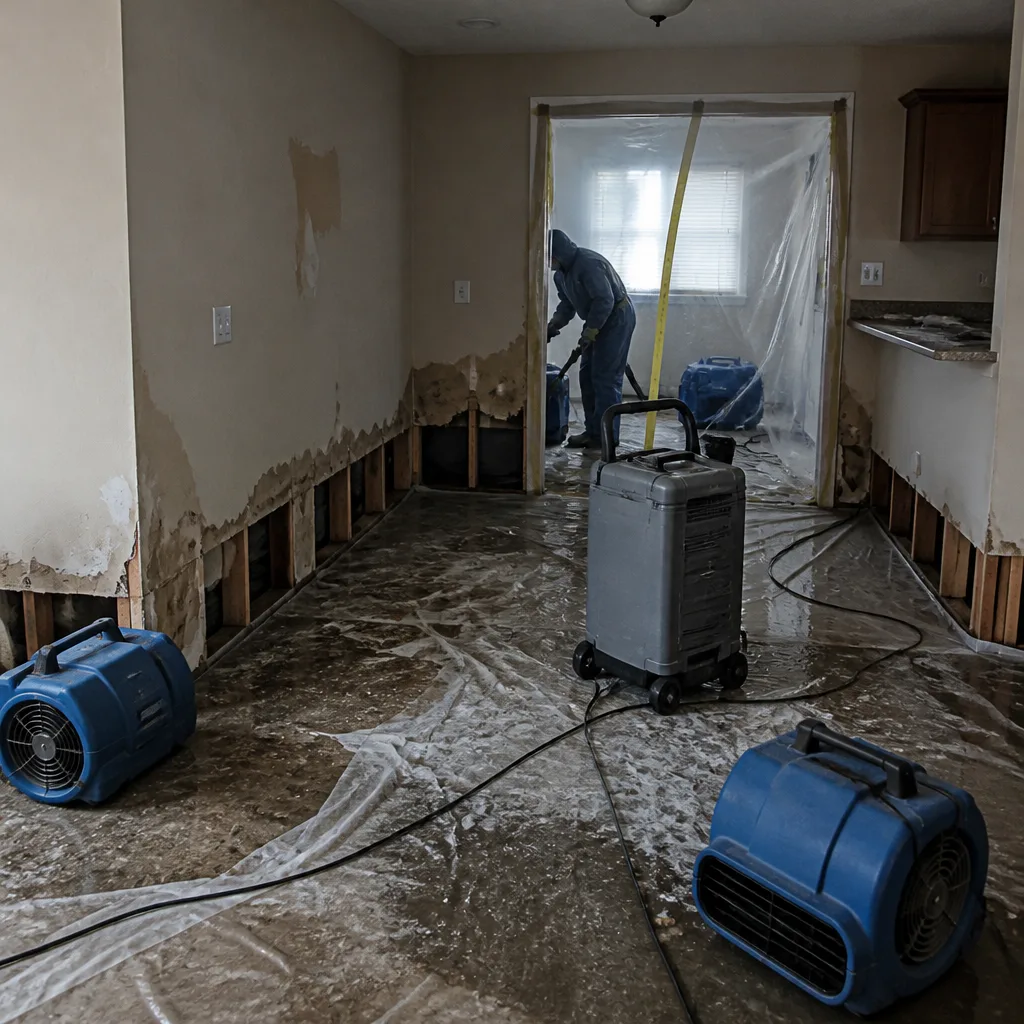
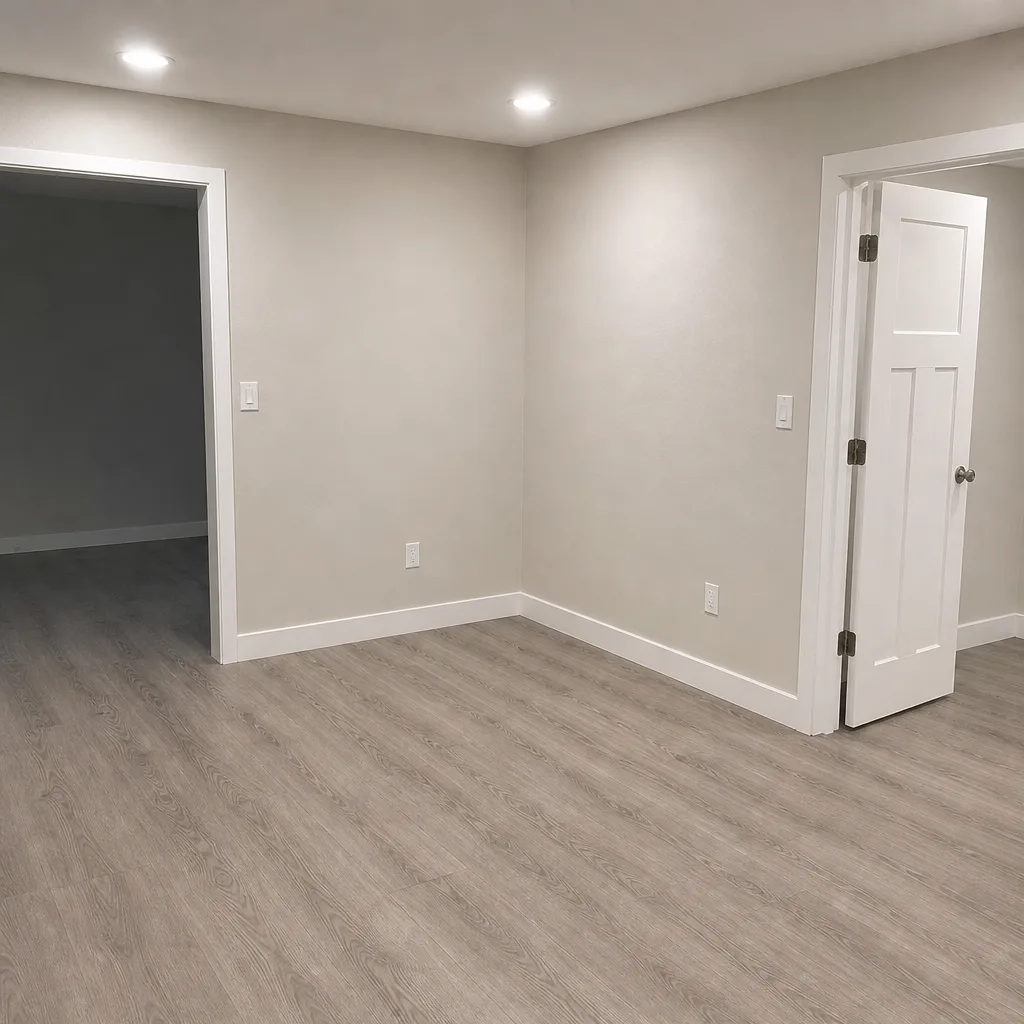
See the difference
 Before
 After
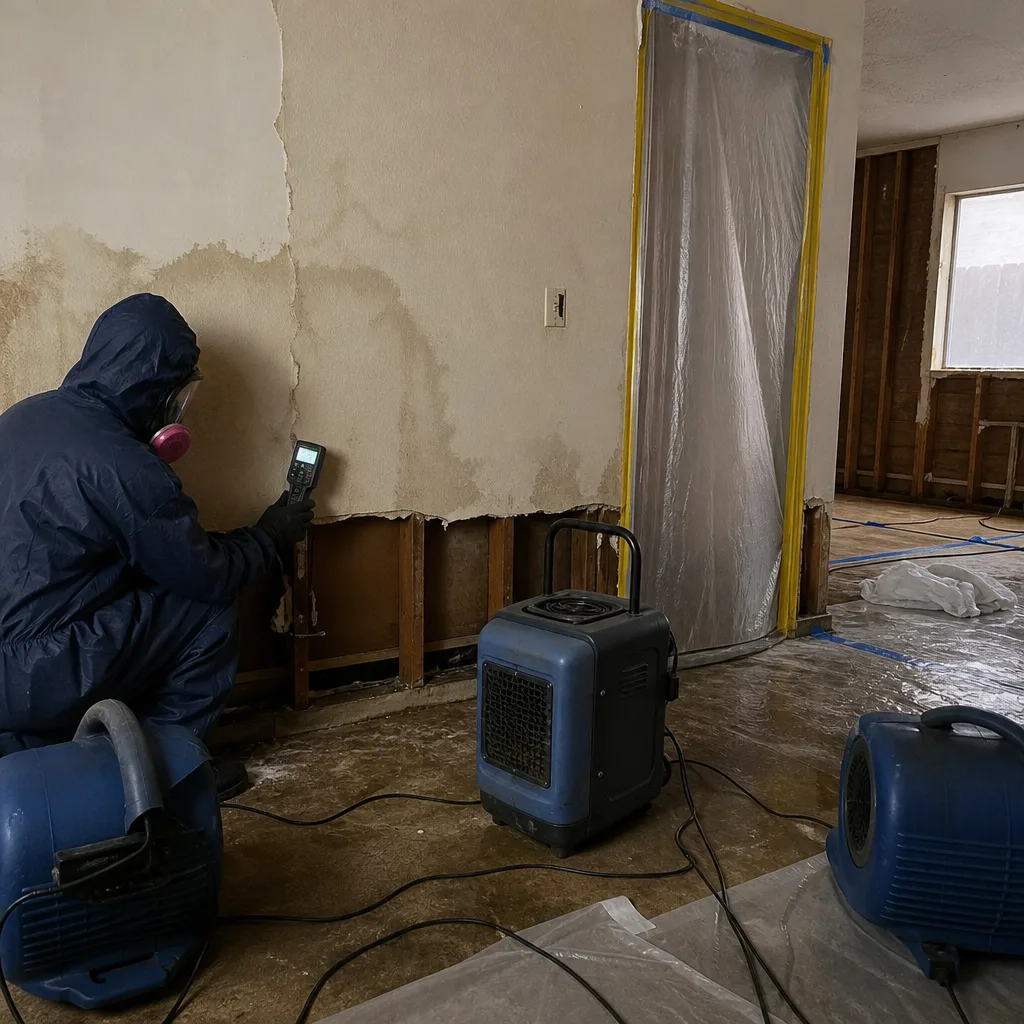 Before
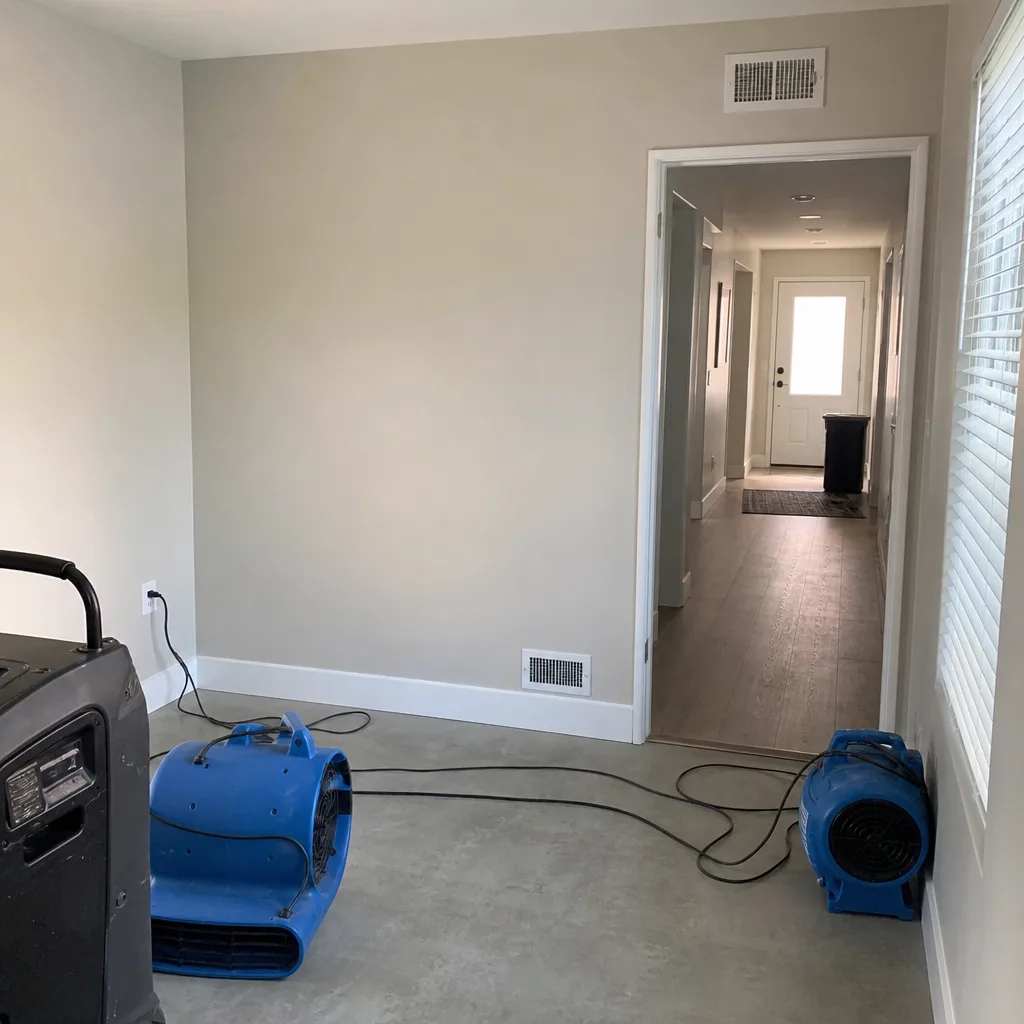 After
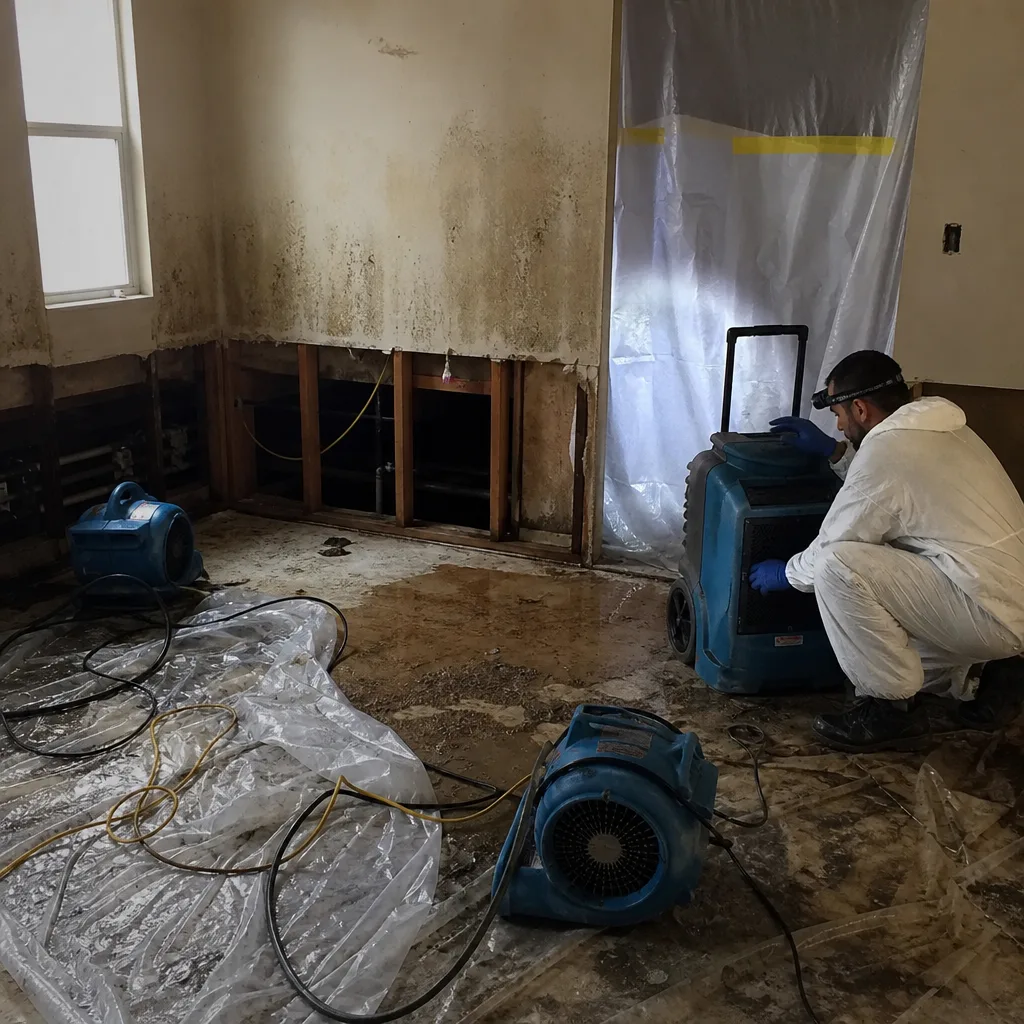 Before
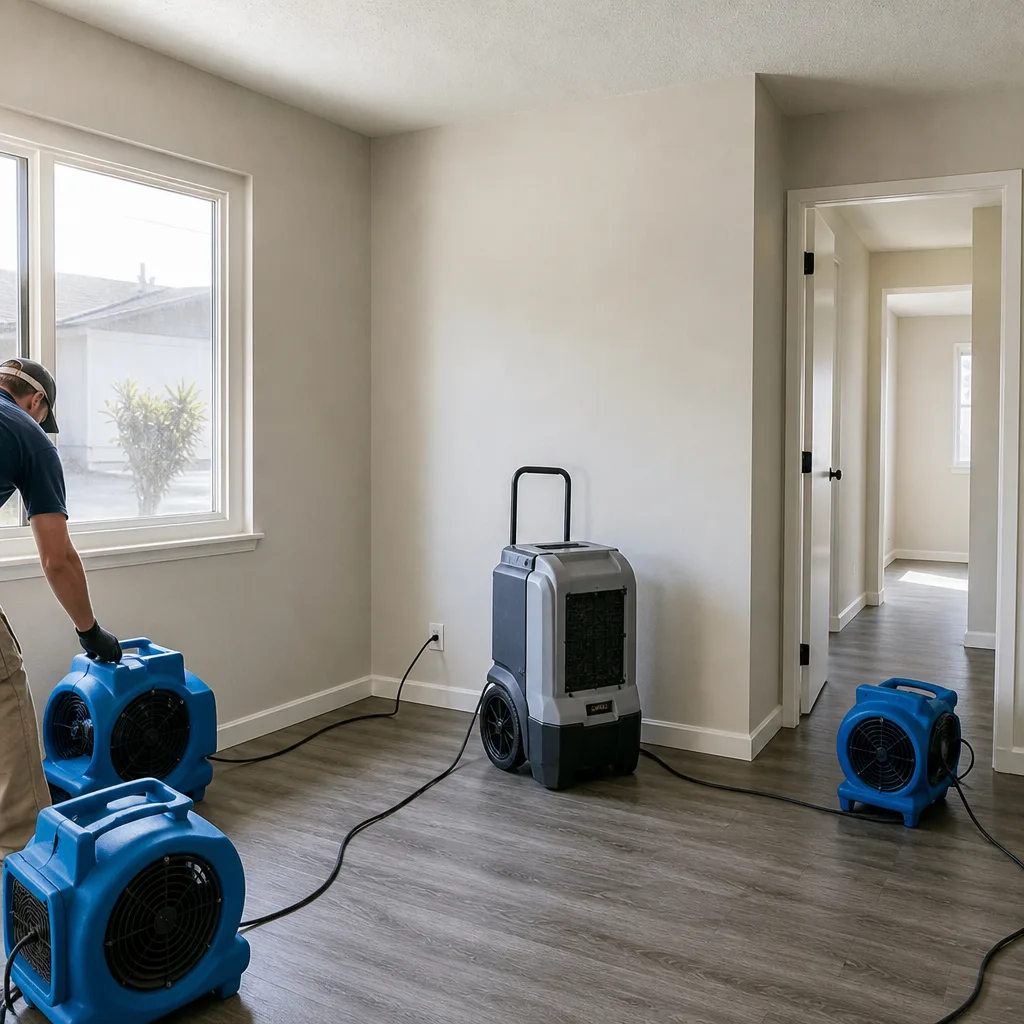 After
Common Mold Remediation Problems We See in Lakeland Village Homes
- Legacy plumbing seeping under pier-and-beam floors. The original galvanized supply lines in 1940s – 60s lakefront cabins corrode slowly and leak into the crawlspace for weeks before anything shows inside. By the time a homeowner smells it, the framing is already saturated and mold is well established.
- Drainage issues on hillside lots. The streets above the lake send water down driveways during winter storms, and older drainage systems channel it straight against foundations. That water pools, wicks into stucco, and sets up mold behind the wall cavity where no one sees it until the drywall stains.
- Skipping containment in older homes. Pier-and-beam cabins have open air paths between the crawlspace and the living space. A contractor who “treats” the crawlspace without sealing it off just spreads spores through the whole house. We see the aftermath of this constantly.
- Moisture trapped in sun-exposed stucco. Lakeland Village’s hot, dry summers bake exterior walls, but the cool, damp winters soak them. When stucco has hairline cracks and water gets in behind it, the summer heat turns the wall cavity into a sealed oven that breeds mold you can’t see from either side.
Pricing for Mold Remediation in Lakeland Village, CA
A typical crawlspace mold remediation in a Lakeland Village lakefront cabin runs $3,500 – $8,000 depending on square footage and how much framing needs treatment. Isolated wall cavity jobs in stucco hillside homes usually land between $1,800 and $3,200. Full-home remediation with multiple affected areas, common after a winter rain event that flooded several rooms, ranges $8,000 – $15,000 for homes under 2,500 square feet.
What changes the price? The size of the affected area, whether the moisture source is still active, how much demo is actually necessary, and whether air samples need to be sent to a lab for clearance testing. Call (833) 589-5317 for a free estimate. The quote comes in writing and it doesn’t change unless we find something in the walls that no one could have seen from the outside.
We Also Serve Cities Near Lakeland Village
Our crews cover the full west shore of Lake Elsinore and the surrounding hills. Beyond Mold Remediation in Lakeland Village, we handle regular jobs in Sedco Hills, Canyon Lake, Meadowbrook, and Wildomar. If you’re in one of those communities and dealing with a crawlspace that won’t dry out or a musty smell that showed up after last winter, call the same number: (833) 589-5317. The same IICRC-certified process applies, and our Mold Remediation team covers the entire service area as one crew.
Serving Lakeland Village, CA — Our Local Coverage Area
We’re based in the Lakeland Village area and know this community well. Use the map below to see our service coverage — if you’re nearby, we can almost certainly help.
FAQs About Mold Remediation in Lakeland Village
Mold can begin growing within 48 to 72 hours of water intrusion if the moisture isn’t addressed. In Lakeland Village’s lakefront cabins, the crawlspace environment speeds this up: the soil under a pier-and-beam foundation stays damp from lake proximity, and winter rain soaks it further. The combination of warm air and trapped moisture means mold is often already visible on joists within five days of a storm. If you suspect water got under your house, call (833) 589-5317 now. Waiting a week makes a $3,000 job into a $7,000 one.
The inspection covers three zones: the exterior drainage paths, the interior wall cavities, and the crawlspace or foundation perimeter. On hillside Lakeland Village homes, we pay close attention to where runoff flows during rain and whether grading directs water toward the structure. Inside, we run moisture meters along baseboards, pull outlet covers to read wall cavities, and open the crawlspace access to inspect framing. You get a written report with moisture readings, photos, and a recommended scope of work. Inspection is the cheapest part of remediation and the most important.
Yes, and we do it regularly. The key is drying the wood thoroughly before treatment, not replacing it. Original old-growth framing in Lakeland Village cabins is denser and more rot-resistant than modern lumber, and it’s worth preserving. We use Injectidry mats to pull moisture through the subfloor, Dri-Eaz dehumidifiers to dry the air around the framing, and HEPA sanding followed by antimicrobial application on the wood surface. As long as the framing isn’t structurally compromised, it stays.
Pier-and-beam foundations put your living space directly above an open-air cavity that connects to the outside through vents. Any mold in that cavity affects the air you breathe inside, and any moisture under the house can wick up into the floors above. Remediation requires full containment of the crawlspace, not just treating the visible mold. We seal the access, create negative air pressure, and dry the entire subfloor system before treating anything. Skipping this step is why so many homeowners end up with mold returning the next winter.
Call us before you start poking at it. Stucco holds moisture differently than siding or wood, and mold that appears on an interior wall after a storm usually means water got into the wall cavity through a crack or a failed seal around a window or roofline. That water is still back there. We’ll find the entry point, open only what needs to be opened, dry the cavity with targeted equipment, and repair the exterior penetration so it doesn’t happen again. The remediation quote includes identifying and correcting the water entry point, because treating the mold without fixing the leak is how you end up doing this twice. Call (833) 589-5317 for a free estimate.
Written by Glen Pacheco, Owner at Dry Line Water Damage, serving Lakeland Village and the Lake Elsinore area since 2010.