


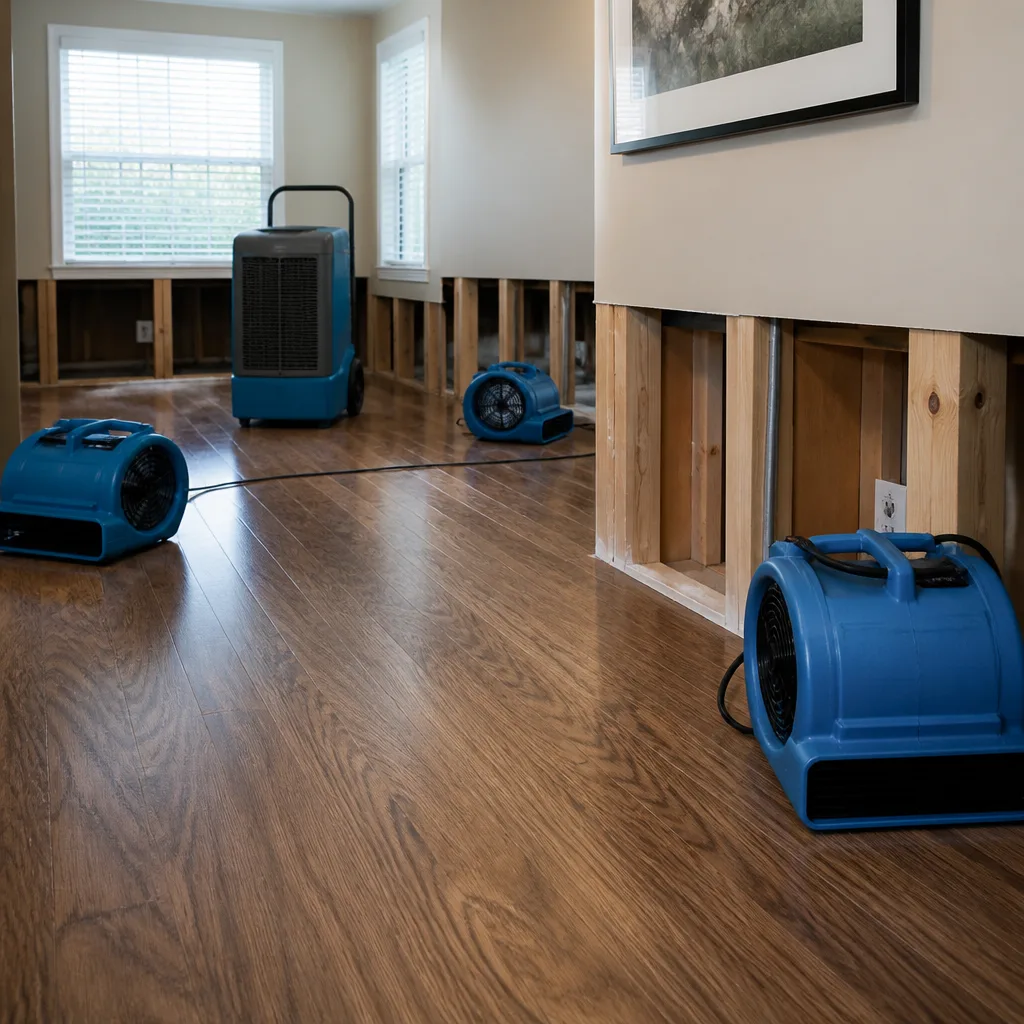
 Water damage drying
 Fire & smoke cleanup
 Mold remediation
 Storm response
 Sewage cleanup
 Reconstruction
Free visual inspection and a written scope of work before any mitigation begins - photos, moisture readings, and drying logs go in your claim file
The scope we write is the scope we bill. Anything new gets shown to you, in writing, before we touch it.
Get your free estimateFast, Reliable Mold Remediation Across March Air Force Base
Mold remediation in March Air Force Base typically runs $1,800 – $4,500 for a standard containment and tear-out and is usually scoped in writing before any work begins. We know this because we’ve worked inside the original 1940s wood-frame housing here long enough to recognize what grows behind a bathroom wall when a galvanized line finally lets go. If you’re dealing with visible mold or a musty smell you can’t source, call us at (833) 589-5317. We’ll bring moisture meters, thermal imaging, and a process built around one thing: returning your unit to a documented dry, safe standard.
March Air Force Base isn’t a typical Inland Empire suburb. It’s an active military installation where housing ranges from original WWII-era barracks to mid-century tract homes, and that changes how mold work gets scoped. The 92551 zip code has its own rhythm, its own building history, and its own set of rules about what can and can’t be disturbed during remediation. We learned those rules by doing the work, not by reading about them.
Why Dry Line Water Damage Is March Air Force Base’s Preferred Mold Remediation Company
Glen Pacheco built Dry Line Water Damage around a simple observation: most restoration companies show up with consumer-grade equipment and hope for the best. We don’t. Every Mold Remediation job we run uses the same Dri-Eaz dehumidifiers, Phoenix air movers, and Injectidry structural-drying systems that large-loss commercial contractors deploy. That’s not a marketing line. That’s what you’ll see on your floor, in your wall cavities, and on the drying logs we hand over.
Our reputation on base comes from doing the unglamorous parts right. Containment set before tear-out. Negative air pressure maintained. Moisture readings taken at the start, logged every day, and compared against pre-loss conditions at the end. When a housing manager or a homeowner needs to show a command that the job was done to an objective standard, our documentation stands up. We’re an IICRC-certified operation, which means the process follows a published, third-party standard rather than whatever the crew feels like that day.
We also understand that mold work inside March Air Force Base often runs through insurance. You file a claim, an adjuster calls, and suddenly you need photo documentation, moisture maps, and cause-of-loss reports. We do that every week. Our team coordinates directly with adjusters, provides the paperwork they ask for, and makes sure nobody has to chase us for a drying log.
Restoration work we handle
Mold Removal Specialist in March Air Force Base
A Mold Removal Specialist in March Air Force Base handles what a general handyman shouldn’t touch: contained demolition, antimicrobial treatment of framing, and physical removal of colonized materials under negative air pressure. That’s what we do when the mold is visible, whether it’s a three-foot patch behind a bathroom vanity or a full ceiling collapse in an original 1940s barracks unit. Standard mold removal here runs $1,500 – $3,500 depending on square footage, and smaller isolated jobs can go lower.
1940s Framing Needs a Different Tear-Out
Most of the housing around the 92551 area was built when the base stood up during WWII. The studs are true dimensional lumber, the cavities are open, and the wiring is often knob-and-tube. When we open a wall with mold, we’re careful with what’s inside because that framing may carry historic preservation value. The tear-out gets slower; the drying gets more targeted.
Galvanized Pipes and Hidden Moisture
Galvanized plumbing from the 1940s fails from the inside out. You’ll see staining on the outside of a pipe, but the real problem is pinhole leaks inside a wall cavity that never fully dry. By the time mold shows on the drywall, the framing behind it has been wet for weeks. That’s why our Mold Removal Specialist process always starts with moisture mapping, not just a visual walkthrough.
Black Mold Removal in March Air Force Base
Black mold removal in March Air Force Base demands a stricter containment protocol because the stakes are higher and the air inside a closed 1940s wall cavity doesn’t move. When we get called for black mold, we assume the spore load is already elevated in the unit. Full containment goes up, HEPA-filtered negative air gets established, and only then does the tear-out start. Black mold remediation here typically runs $2,500 – $5,500, with the higher end reserved for multi-room contamination or plumbing failures that kept feeding the colony for months.
HEPA Filtration and Air Quality Restoration
Black mold spores settle everywhere. After physical removal, we scrub the air with HEPA filtration and run air sampling where needed to confirm the unit is clear. That’s the only way to hand a family or a housing manager a space that’s actually safe to occupy, not just one that looks better.

When the Source Is a Slow Leak, Not a Flood
Black mold in March Air Force Base housing rarely comes from one dramatic event. It’s usually a pinhole in a galvanized supply line or a failed wax ring that’s been weeping for six months. Our job is to find the water source, stop it, then remove every bit of colonization. Skipping the source turns a mold job into a recurring expense.
Trusted Brands We Service in March Air Force Base
Our fleet is built around Dri-Eaz and Phoenix dehumidification, XPOWER air movers, and Injectidry systems for drying inside wall and floor cavities without tearing out every square foot of original material. For March Air Force Base customers, that matters because the 1940s framing in these units is often worth preserving, both for historic reasons and because old-growth Douglas fir is stronger than anything you’d replace it with today. We keep the consumables and common replacement parts for these systems stocked in our Fontana facility, so a unit on base isn’t waiting three days for a part when containment is already up.
See the difference
 Before
 After
 Before
 After
 Before
 After
Common Mold Remediation Problems We See in March Air Force Base Homes
- Knob-and-tube wiring in the same cavity as mold. When we open a 1940s wall, we often find original knob-and-tube wiring running through the stud bay. That changes tear-out speed, safety protocol, and sometimes electrical scope, because the base’s safety codes require inspection before we proceed.
- Galvanized pipes that fail from the inside. What looks like a small stain on the drywall is usually a pinhole leak that’s been running for weeks. We don’t treat the mold; we treat the moisture that caused it.
- Historic preservation review stalling a standard tear-out. A contractor who doesn’t know the base’s dual review process will pull drywall before approval and then can’t touch the original framing or finishes. That stalls containment while the wet material keeps growing mold past the 24-to-48-hour window.
- Firefighting water after a Santa Ana wind smoke event. Smoke and ash from wildfires get treated as a surface problem, but the hidden damage is the water used to protect the structure. That moisture sits in 1940s wood framing and never gets a moisture reading, so mold shows up six months later.
Pricing for Mold Remediation in March Air Force Base, CA
Here are straight numbers for the March Air Force Base market. A small, contained mold removal job in a bathroom or under a sink runs $1,500 – $2,500. A full black mold containment with multi-room tear-out runs $2,500 – $5,500. A crawl space treatment with moisture and humidity control typically lands between $1,800 and $3,000, depending on access and square footage. Mold inspection and air quality testing runs $350 – $600. Every quote includes a written scope before work starts, so you know exactly what’s coming out, what stays, and what the drying target is. Call (833) 589-5317 for a free estimate; we’ll walk the unit with you and give you numbers that hold.
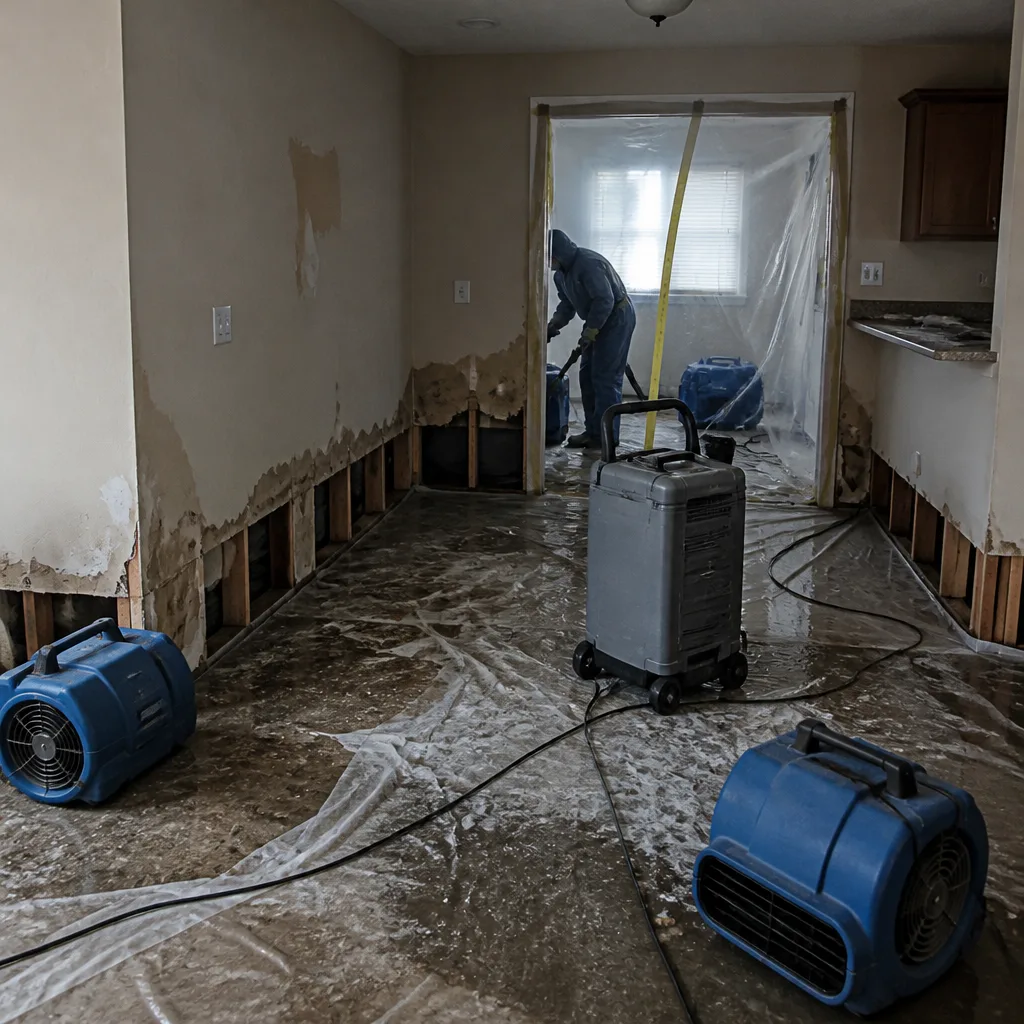
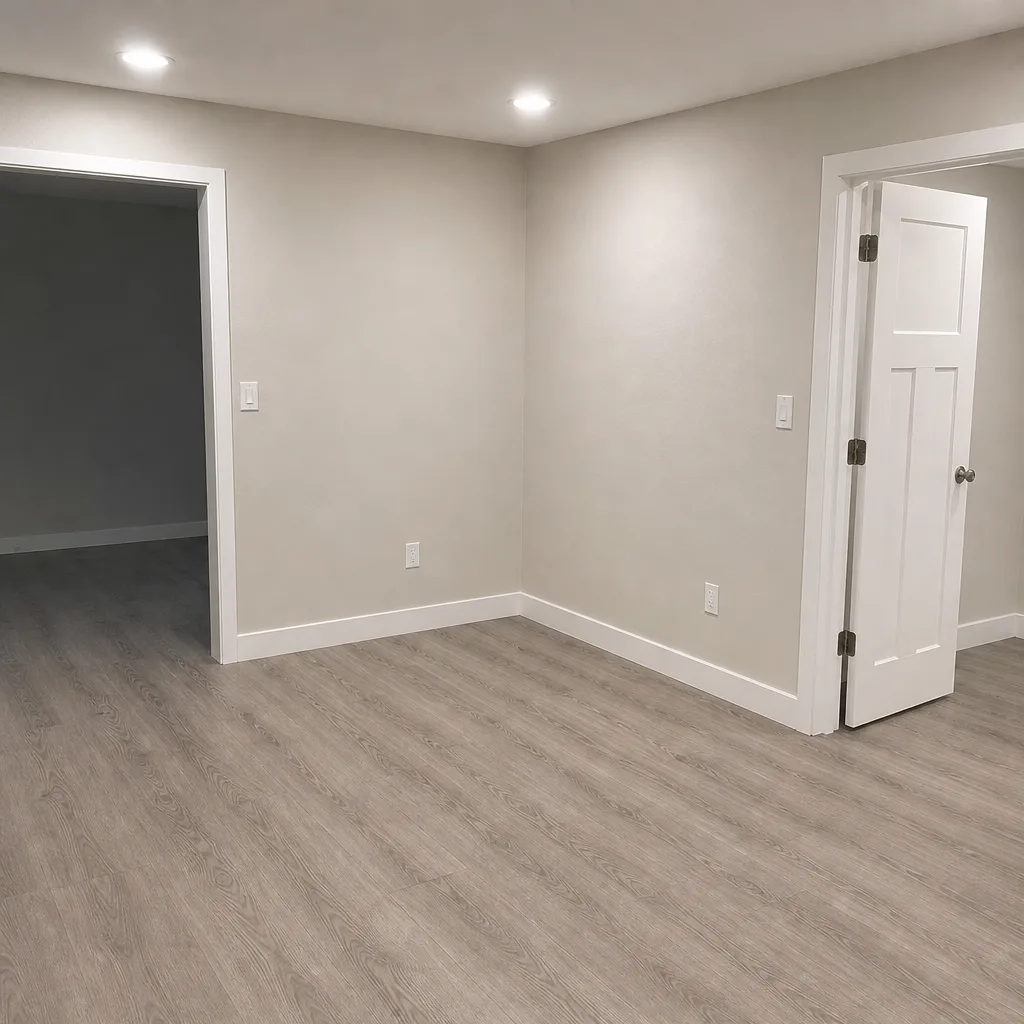
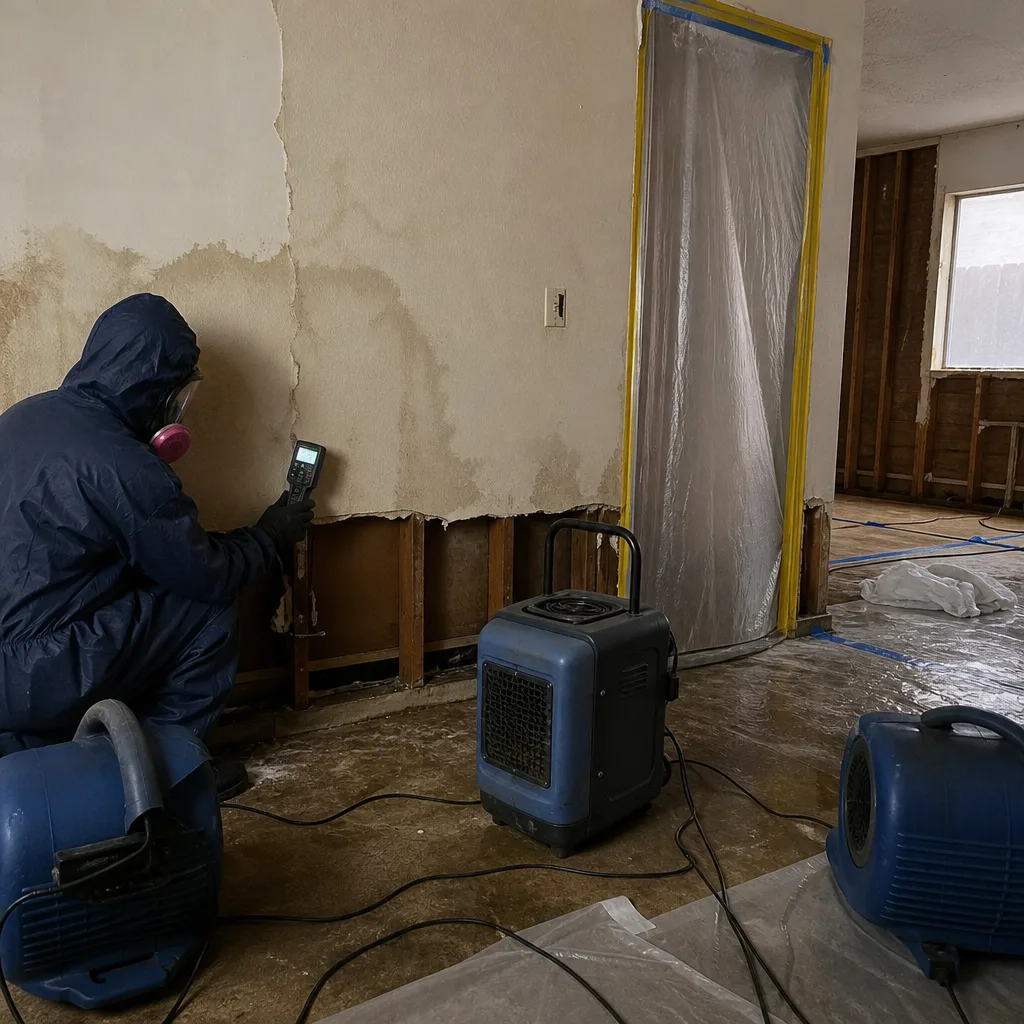
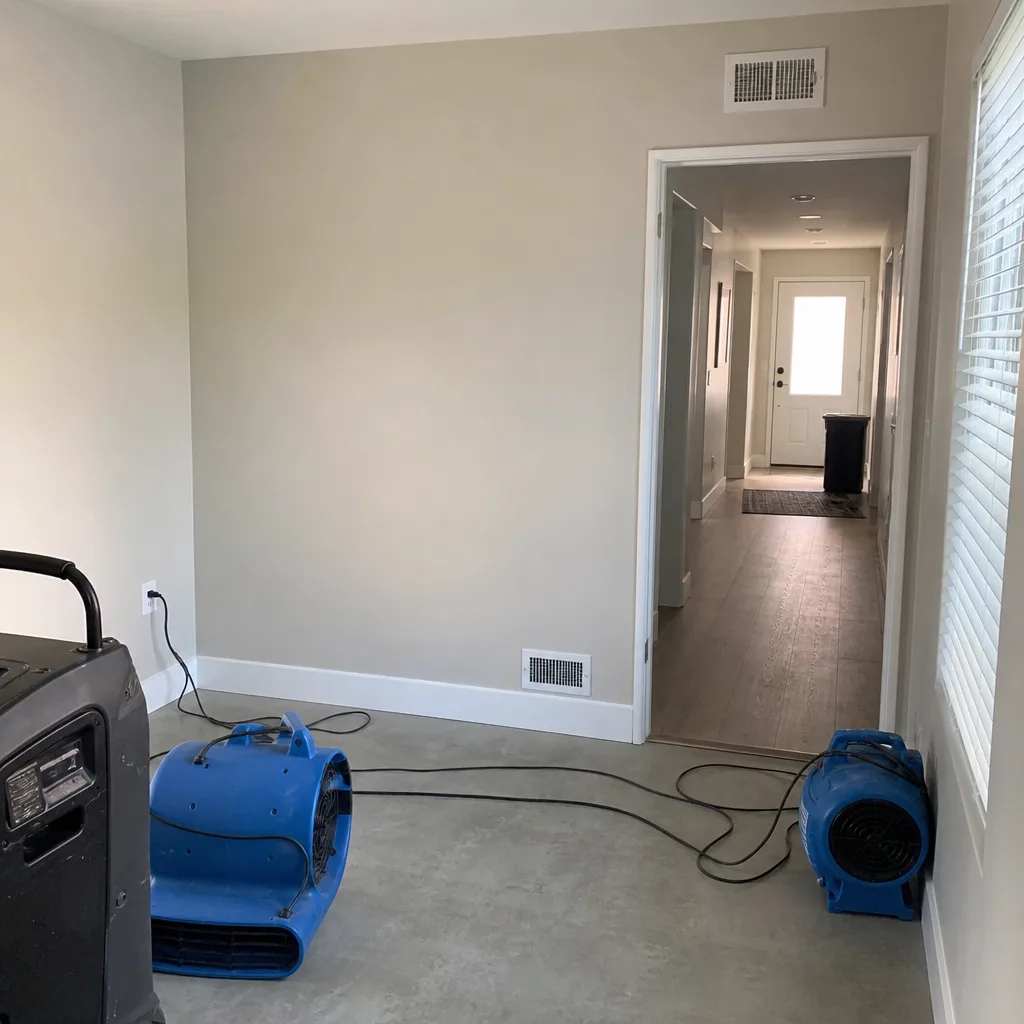
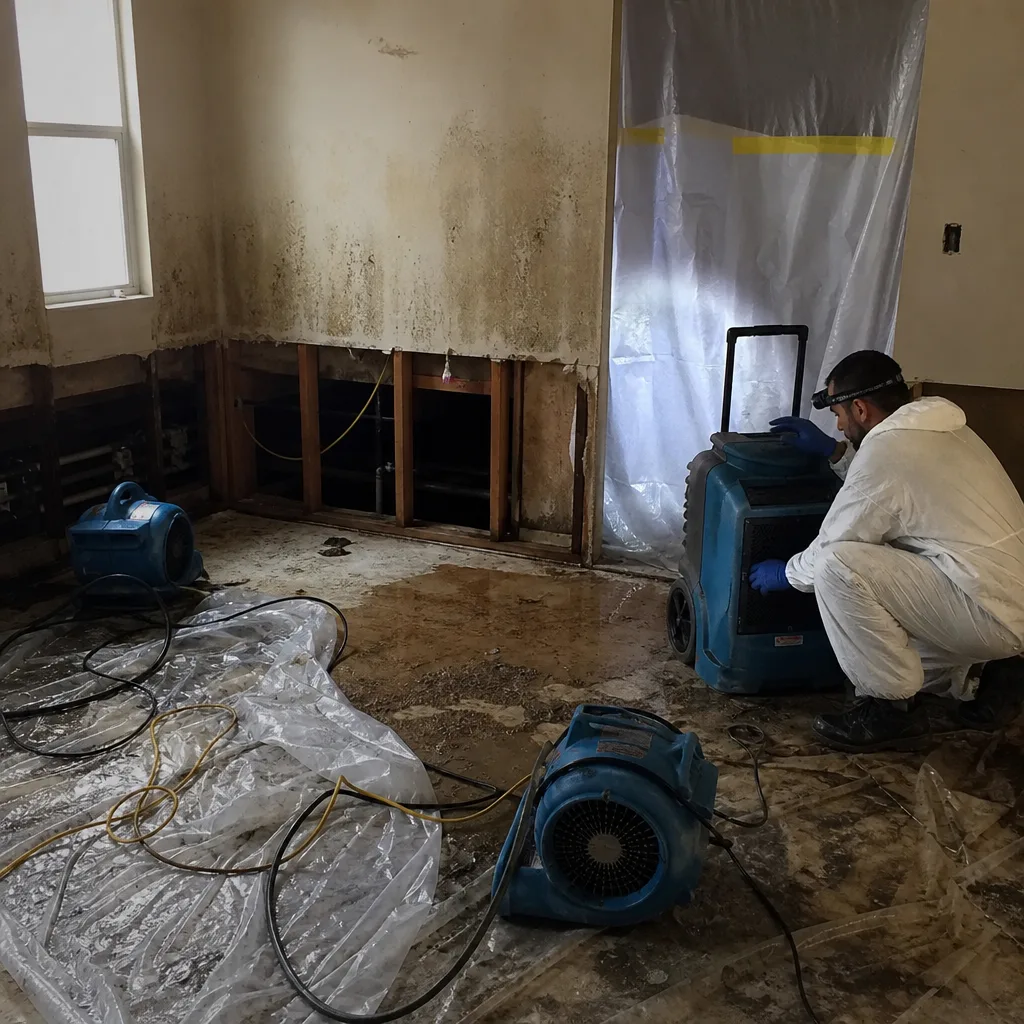
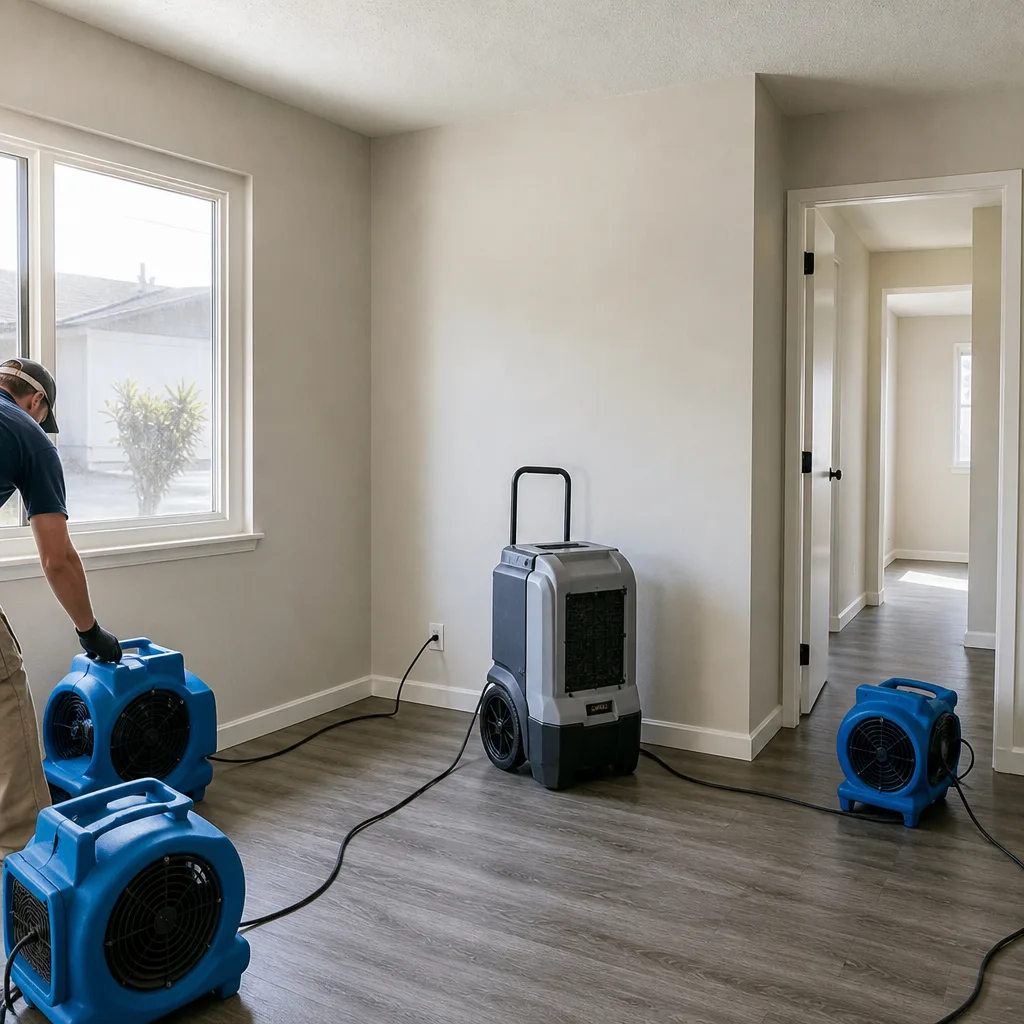
We were called to a unit in the 92551 military housing area after a galvanized supply line let go behind a bathroom wall. Moisture mapping with our meters showed category 1 water that had sat long enough to turn the drywall green-black. Our crew set containment, pulled the saturated drywall, ran Injectidry into the open stud bays, and paired Dri-Eaz dehumidification with XPOWER air movers while an antimicrobial treatment went on the framing. We kept the original 1940s studs in place to satisfy the base’s historic preservation review. The drying logs documented every moisture reading back to pre-loss condition for the command’s sign-off.
We Also Serve Cities Near March Air Force Base
Dry Line Water Damage works throughout the Inland Empire. If you’re in Moreno Valley, Woodcrest, Perris, or Good Hope, our Mold Remediation in March Air Force Base team covers your area with the same equipment and the same IICRC-certified process. Same crew, same standard, same documentation.
Serving March Air Force Base, CA — Our Local Coverage Area
We’re based in the March Air Force Base area and know this community well. Use the map below to see our service coverage — if you’re nearby, we can almost certainly help.
FAQs About Mold Remediation in March Air Force Base
Mold can start colonizing within 24 to 48 hours when water sits in a warm, closed wall cavity, and the original 1940s wood-frame housing in March Air Force Base makes that window shorter because the cavities are uninsulated and the lumber is dry enough to wick moisture aggressively. A slow pinhole leak that’s been running for a week often shows visible mold by the time you notice the stain. Call (833) 589-5317 the day you find water, not the day you see black spots.
Because the base’s housing stock carries both military safety codes and historic preservation guidelines, so a remediation scope here has to account for knob-and-tube wiring, galvanized plumbing, and original framing that can’t simply be replaced with modern lumber. A contractor who skips that dual review stalls the job mid-mitigation, and the wet materials keep growing mold while everyone waits for approval. That’s avoidable with a crew that knows the base’s process.
No, because the dry air accelerates wood deterioration and makes pipe bursts more likely during cold snaps, and the real mold problem is moisture trapped inside wall cavities, not ambient humidity. March Air Force Base sits in a semi-arid climate, but a pinhole leak inside a 1940s stud bay doesn’t care how dry the air outside is. The cavity stays wet, and mold grows.
Yes, because the water used to protect structures during a Santa Ana wind-driven fire gets wicked into 1940s wood framing and never gets a moisture reading if the job is treated as a surface smoke cleanup. Six months later, mold appears inside the wall. We always moisture-map after any firefighting water contact on base, even if the visible damage looks like smoke and ash only.
We start with moisture mapping and visual inspection, then set containment and negative air pressure, remove colonized materials, treat framing with antimicrobial, dry the stud bays with Injectidry and Dri-Eaz equipment, and finally confirm the unit is back to documented dry with drying logs. The whole process is scoped in writing before we start, and we coordinate with your adjuster and the base’s preservation review as needed. Call (833) 589-5317 to schedule a walkthrough.
Written by Glen Pacheco, Owner at Dry Line Water Damage, serving March Air Force Base and the Inland Empire since day one.