

 Water damage drying
 Fire & smoke cleanup
 Mold remediation
 Storm response
 Sewage cleanup
 Reconstruction
Free visual inspection and a written scope of work before any mitigation begins - photos, moisture readings, and drying logs go in your claim file
The scope we write is the scope we bill. Anything new gets shown to you, in writing, before we touch it.
Get your free estimateFast, Reliable Water Damage Restoration Across Anaheim
Water damage restoration in Anaheim typically costs $1,800 to $6,500 depending on the scope, with emergency water extraction alone running $450 to $1,200. Most Anaheim jobs can be started within 60 to 90 minutes of your call. If water is pooling or wicking into drywall right now, call (833) 589-5317 and we’ll get a certified crew en route.
Our team has worked Anaheim’s 92801, 92804, 92805, and 92812 zip codes for years, and we know the difference between a 1958 slab-on-grade rancher in West Anaheim and a mid-rise unit in the Platinum Triangle. That matters when you’re deciding how aggressive to be with demolition, how long to leave equipment running, and what to tell your adjuster. Glen Pacheco built Dry Line Water Damage around a simple idea: document everything, dry to a measurable standard, and never open a wall you didn’t need to open.
Why Dry Line Water Damage Is Anaheim’s Preferred Water Damage Restoration Company
We are an IICRC-certified operation, which means our drying protocols follow the restoration industry’s most rigorous third-party standard. Not a self-issued badge. The same certification set commercial large-loss contractors are held to, applied to your Anaheim living room.
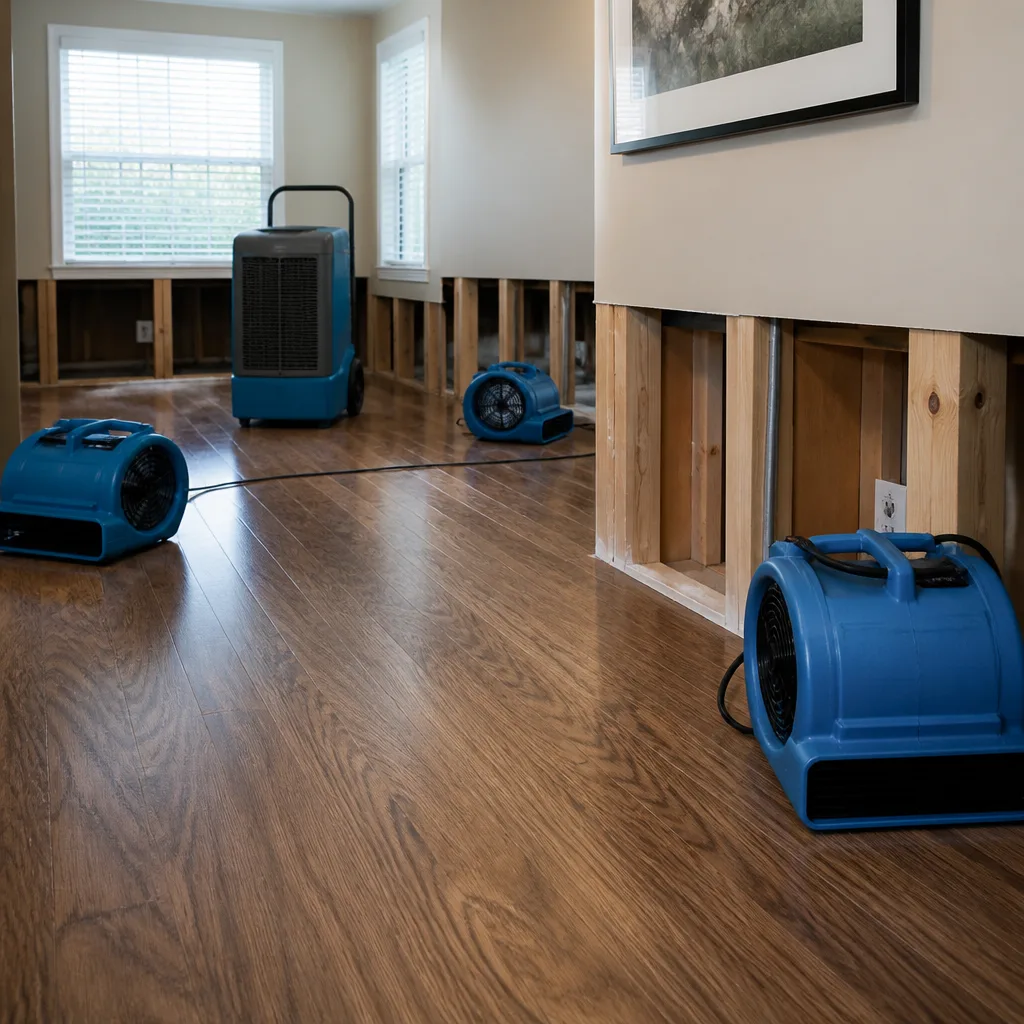
Our equipment list reads like a commercial restoration yard: Dri-Eaz dehumidifiers, Phoenix air movers, XPOWER axial fans, and Injectidry structural drying systems that reach moisture trapped inside wall cavities without tearing out every sheet of drywall. Anaheim homeowners regularly tell us they didn’t know drying could be this targeted. Glen’s crews map the actual moisture spread with thermal imaging and hygrometers, then place equipment exactly where the readings say it belongs, not where it’s easiest to park a fan.
One crew covers water, mold, and fire. When a slow supply line leak in a 1960s ranch has been feeding mold inside a wall cavity, you don’t need three vendors pointing fingers. You need one accountable team that can extract, dry, remediate, and document the whole scope. That’s how we work across Anaheim, and it’s why property managers around the resort corridor keep our number saved.
Restoration work we handle
Flood Damage Restoration in Anaheim
Flood Damage Restoration in Anaheim almost always begins the same way: a winter storm overwhelms aging flashing or a patio cover gives way, and suddenly water is running down an interior wall in a 1962 tract home. In Anaheim’s semi-arid climate, those intense rain events are spaced far enough apart that caulking and roofing seals dry out, crack, and fail all at once when the first real storm hits. We extract standing water, remove saturated carpet or pad, set commercial dehumidifiers and air movers, and monitor daily with moisture meters until the structure reads dry, not just the surface.
Costs for flood damage restoration in Anaheim generally fall between $2,200 and $7,500 depending on how far the water traveled and what it soaked. Water that ran from a failed patio cover down into a slab-on-grade family room usually costs more than a contained entryway intrusion because of what hides under the flooring. Every job starts with a written scope, photo documentation for your adjuster, and an honest conversation about what needs to come out versus what can be dried in place.
Structural Drying Without Tear-Out
When flood water leaks into wall cavities, the default move used to be gutting everything to the studs. We use Injectidry panels to pull moisture out through small access points instead. Floors, walls, and cavities get dried to documented moisture-content targets, and you keep your baseboards and drywall whenever it’s safe to do so.
Category 2 and 3 Water Handling
Flood water from a failed patio cover is usually Category 1 or 2 depending on what it picks up on the way in. If the intrusion happened in a garage or utility area with chemicals or sewage contact, that’s Category 3 and the protocol changes entirely: more containment, antimicrobial application, and disposable material removal. Anaheim homes with attached garages and older floor drains see this more often than people expect.
Water Damage Cleanup in Anaheim
Water Damage Cleanup in Anaheim means getting from a soaked property to a documented dry state without losing weeks of your life to the process. Most Anaheim cleanup jobs run $1,200 to $4,800 when we’re dealing with a single source like a failed supply line, an overflowing tub in a vacation rental, or a water heater that let go in the garage. The variation comes from what got wet: laminate in a 1959 rancher wicks moisture differently than tile over a concrete slab in a newer Platinum Triangle unit.
We extract first, always with truck-mounted or portable extraction units sized to the job. Then we set airflow and dehumidification, and we log moisture readings daily until the structure hits documented dry standards. You get the logs. Your adjuster gets the logs. There’s no argument later about whether it was actually dry because the numbers are in writing from day one.

Resort-Rental Turnover Work
Vacation-rental managers around the Disneyland corridor call us with a specific problem: a guest overflowed a tub at 2 a.m. and water ran through the ceiling into the unit below. In Anaheim’s tourism economy, the clock is doubled. You’re not just mitigating water; you’re protecting a booking calendar and a platform rating. We work around housekeeping schedules, dry in place where possible to avoid demo, and provide claim-ready documentation for Airbnb or VRBO.
Post-Cleanup Antimicrobial Application
Dry is not always enough. After extraction and structural drying, we treat affected surfaces with an EPA-registered antimicrobial to prevent mold from taking hold, especially in Anaheim’s older stucco homes where wall cavities hold humidity long after the visible surface feels dry. This is standard on our water damage cleanup jobs, not an upsell.
Trusted Brands We Service in Anaheim
We run Dri-Eaz and Phoenix dehumidifiers because they’re what commercial large-loss contractors use, and Anaheim homes deserve the same equipment. XPOWER air movers round out the fleet for focused airflow on tight spaces like closets and under-cabinet cavities. Because we stock parts and filters for these systems locally, we’re not waiting on a rental counter if something needs a mid-job swap. For Anaheim customers, that translates to shorter dry times and fewer return visits, which matters when you’re coordinating with an adjuster who wants the file closed.
See the difference
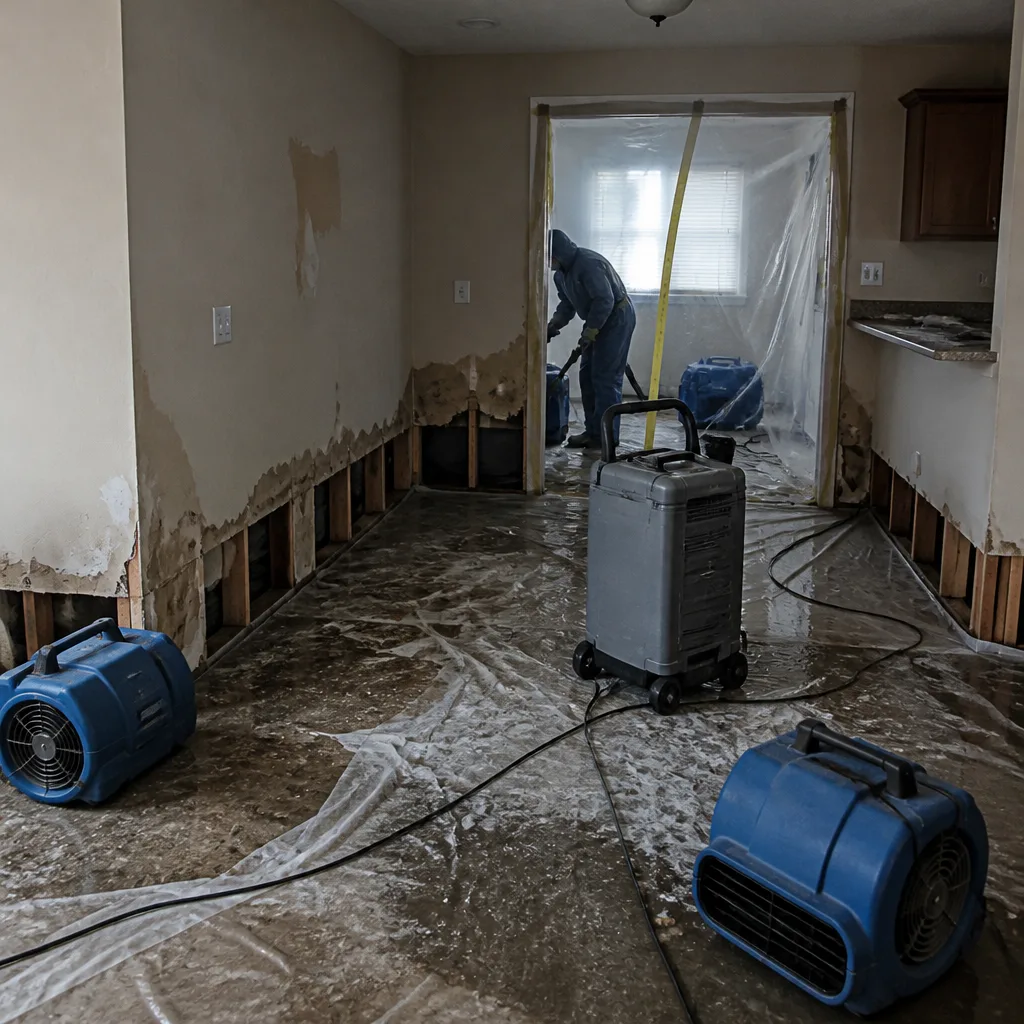 Before
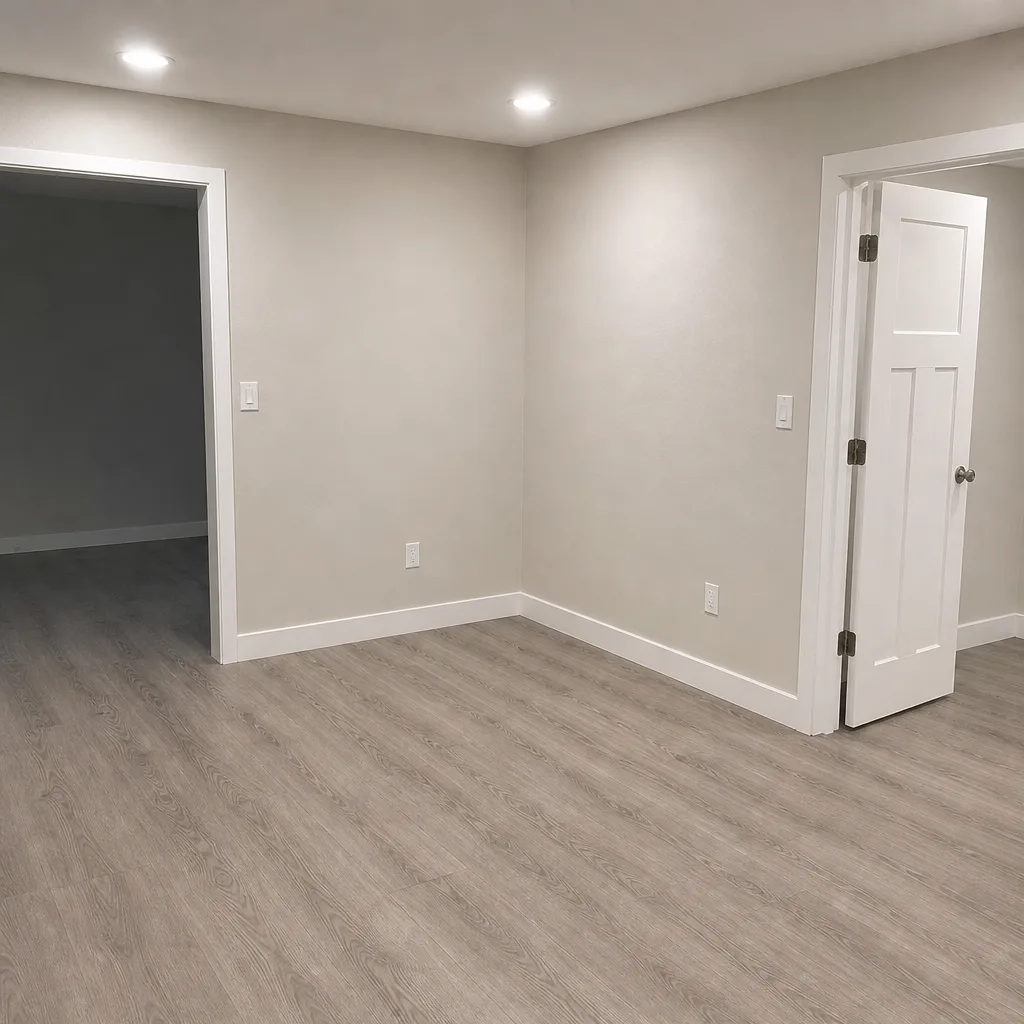 After
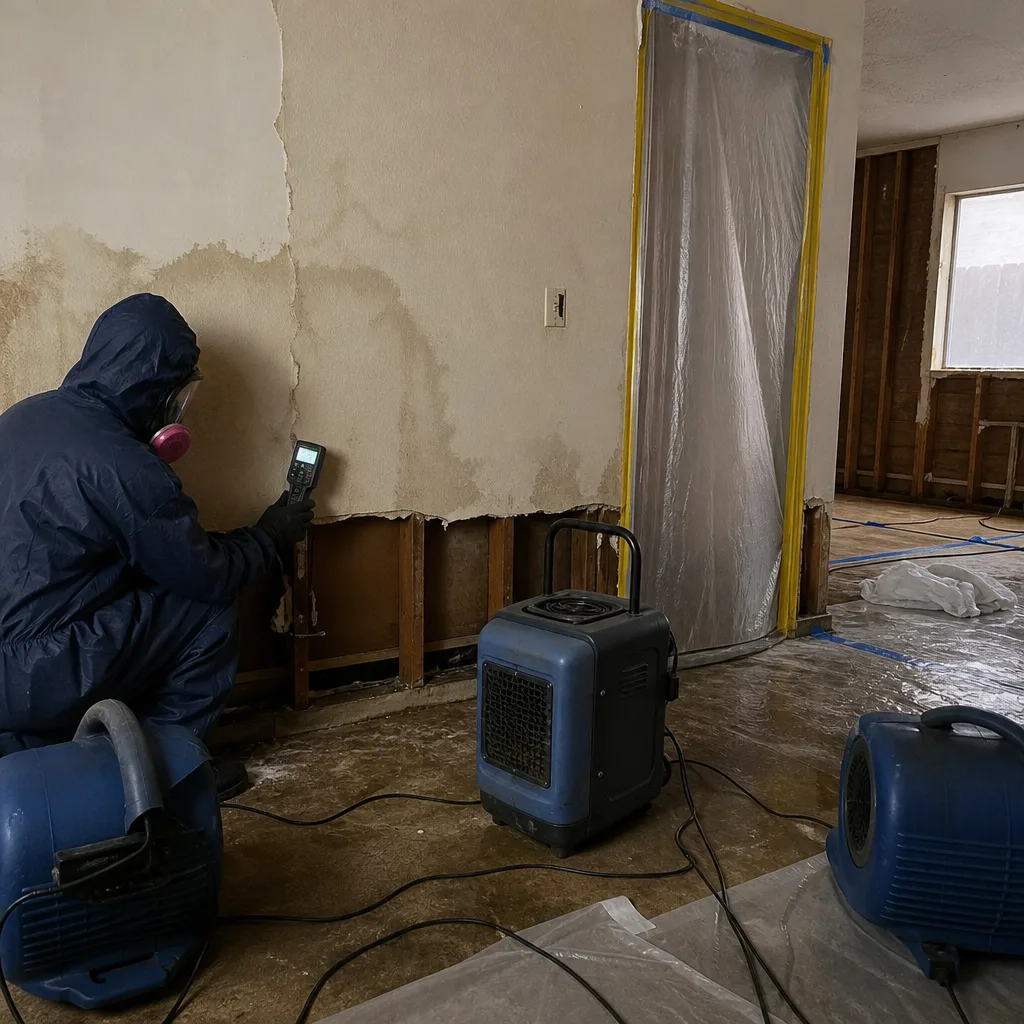 Before
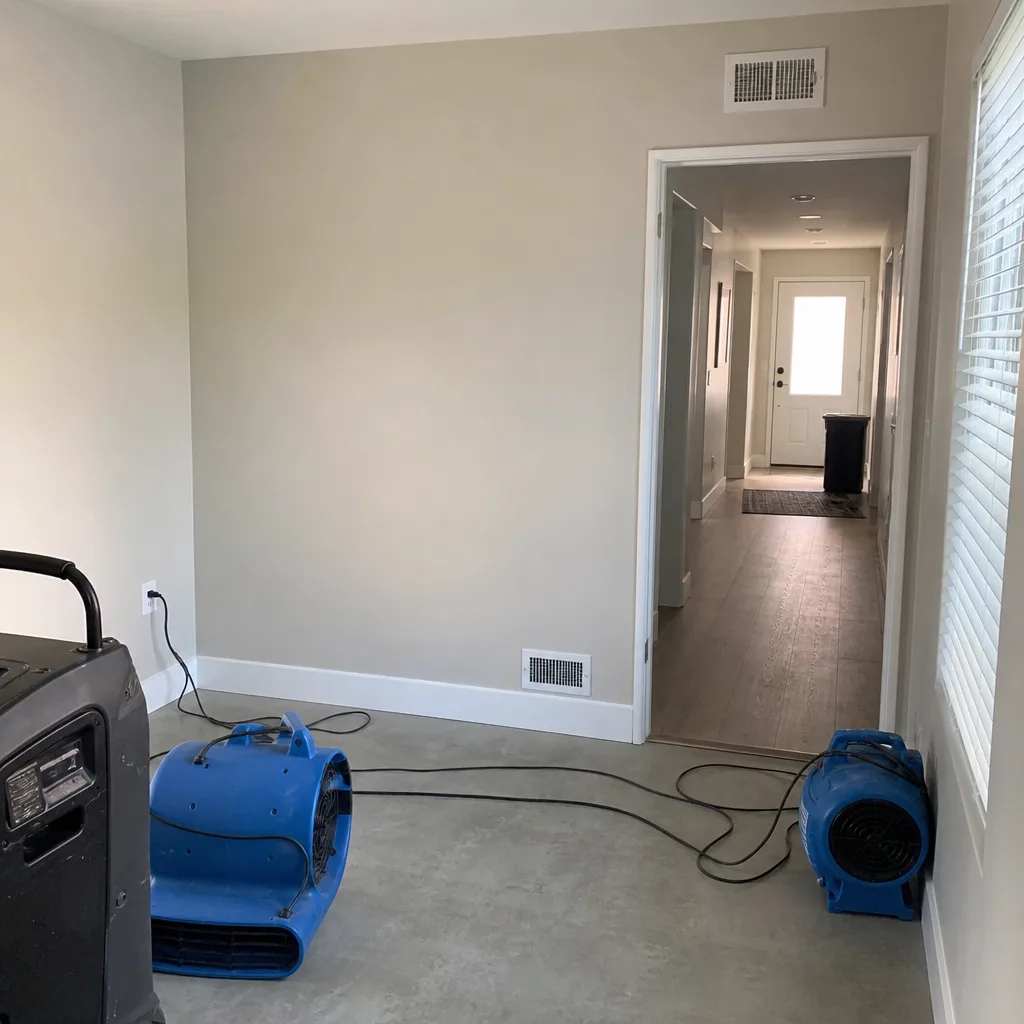 After
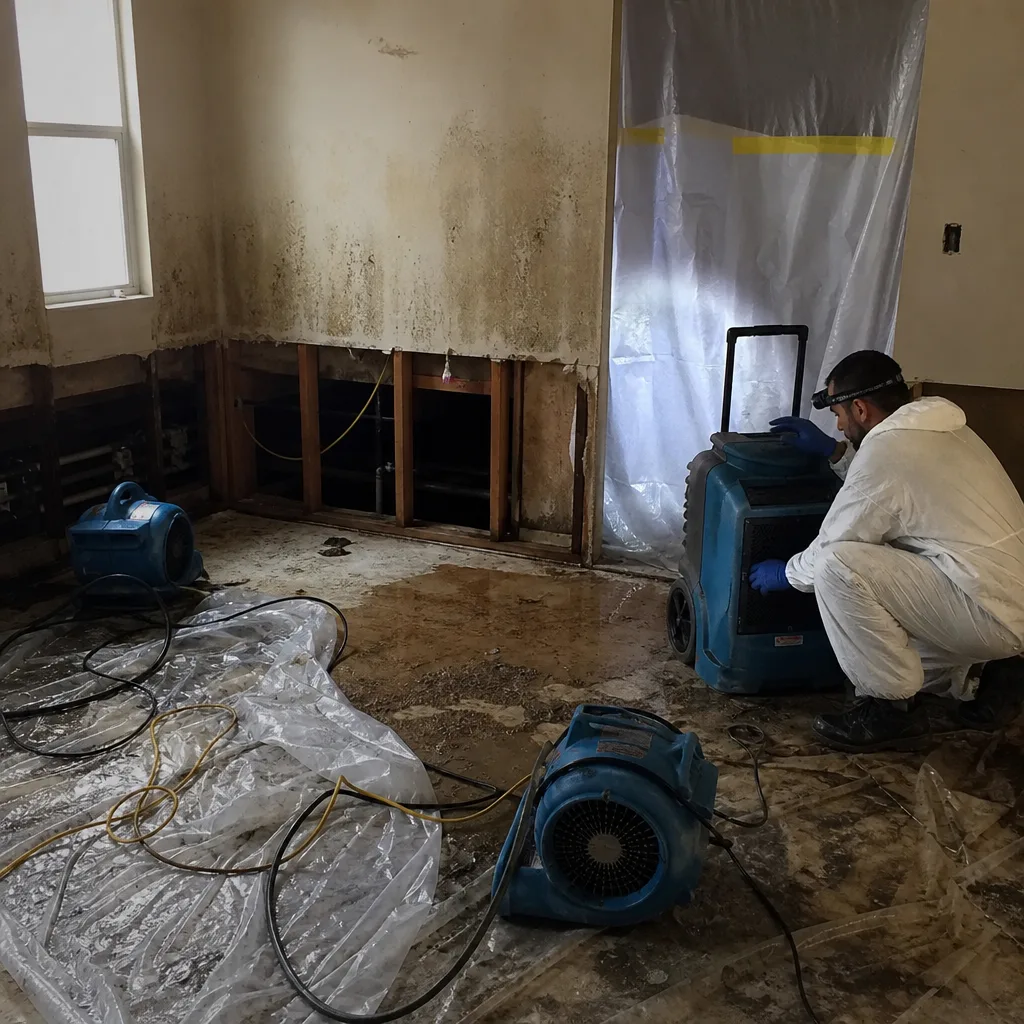 Before
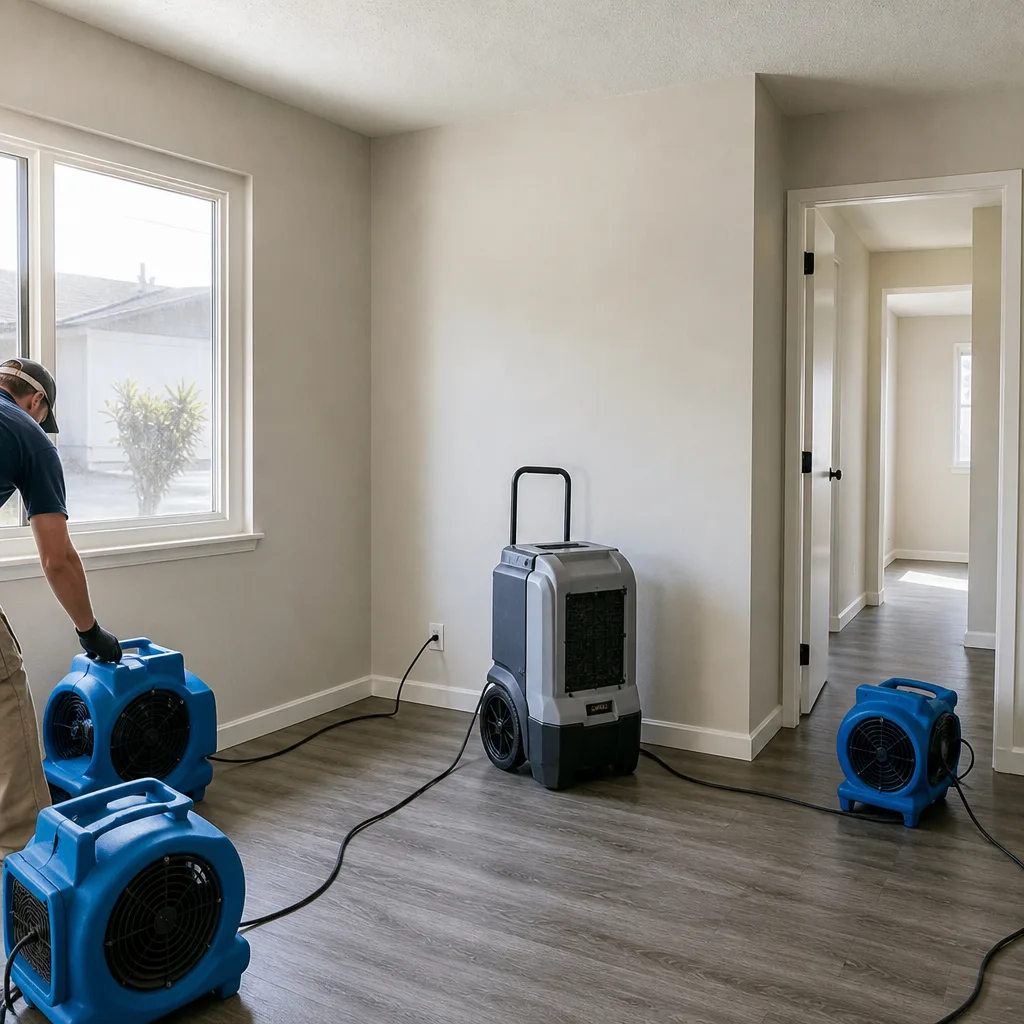 After
Common Water Damage Restoration Problems We See in Anaheim Homes
- Pinhole leaks in original galvanized plumbing. Homes built in Anaheim’s 1950s and 1960s tract era often still have galvanized supply lines. These corrode from the inside out, fail as pinholes, and leak behind walls or under slab floors without a single visible sign until mold or flooring failure appears.
- Slab-on-grade moisture migration hiding from visual inspection. Anaheim’s older neighborhoods are heavy with slab foundations. When a leak develops under a slab, water moves laterally under flooring and into wall baseplates. Without thermal imaging and moisture mapping, you’ll miss it until the damage is structural.
- Stucco exteriors trapping moisture in wall cavities. Stucco is common across Anaheim, and it’s excellent at hiding water intrusion. A failed window flashing or a cracked stucco seam lets water in, and the stucco holds it there, turning a small leak into a slow-growing mold source inside the wall.
- Resort-area vacation rentals with delayed reporting. Property managers near the Anaheim Resort sometimes try to handle a guest-caused leak themselves to avoid platform penalties. By the time we’re called, Category 1 water has sat for 48 hours and become Category 2, expanding the scope and the claim.
Pricing for Water Damage Restoration in Anaheim, CA
Emergency water extraction in Anaheim runs $450 to $1,200 for a standard single-room job. Full water damage cleanup with structural drying typically lands between $1,800 and $4,800. Flood damage restoration where structural materials, flooring, or multiple rooms are involved ranges from $2,200 to $7,500. What drives cost: how much water, what category it is, whether slab penetration or stucco cavity drying is required, and how long the water sat before our crew arrived. Call (833) 589-5317 for a free, no-pressure estimate. We walk the property, map the moisture, and give you a written number before any work starts.
We Also Serve Cities Near Anaheim
Our service area covers Anaheim and the surrounding communities including Fullerton, Placentia, Orange, and Villa Park. If you’re in one of those cities and dealing with a burst pipe or a slab leak, the same IICRC-certified process applies. One call gets the full Water Damage Restoration team dispatched to your location.
Serving Anaheim, CA — Our Local Coverage Area
We’re based in the Anaheim area and know this community well. Use the map below to see our service coverage — if you’re nearby, we can almost certainly help.
FAQs About Water Damage Restoration in Anaheim
Look for a recurring musty smell in one room, slightly bowed baseboards, warm spots on flooring, or a water bill that creeps up without explanation. But the honest answer is you usually can’t know without moisture mapping. Galvanized pinholes in slab-on-grade Anaheim homes leak inside walls and under floors for weeks before any visible sign appears. We use thermal imaging and moisture meters to find and document exactly where the water went, then dry it in place where possible. Call (833) 589-5317 for a moisture assessment. Better to catch it before mold does.
Category 1 is clean water from a supply line or tub overflow. Category 2 is contaminated water that’s been sitting or picked up soaps and chemicals, like a dishwasher discharge or an overflow that ran across a floor. Category 3 is grossly contaminated, like sewage or flood water that entered from outside. The category dictates what gets thrown out versus what can be dried, and it directly affects your insurance claim. In older Anaheim homes where water runs through garage slabs before entering living space, we frequently see Category 1 become Category 2 by the time we arrive.
We can typically have a crew on-site in Anaheim’s resort corridor within 60 to 90 minutes, and yes, we document for Airbnb, VRBO, and short-term rental platform claims every week. Photos, moisture logs, drying charts, and a clear scope of work. We also coordinate with your housekeeping and turnover schedule so the unit can be re-listed as soon as the structure is documented dry. Call (833) 589-5317 and tell us you’re a vacation-rental manager; we’ll prioritize the job.
Because Anaheim’s dry air fools people into thinking moisture is evaporating on its own. Inside a wall cavity or under a slab, it isn’t. HVAC systems and irrigation keep humidity inside wall voids high, and stucco exteriors trap it there. A slow pinhole leak in a 1960s Anaheim home can support mold growth at the same rate as a humid coastal city once the water is inside the building envelope. That’s why drying to documented moisture targets, not just surface touch, is the standard we hold.
Stucco hides what’s happening behind it. Water intrusion through a failed window flashing or a cracked stucco seam often travels down the interior side of the wall cavity, wetting insulation and drywall without leaving a mark on the outside. Our restoration process for stucco Anaheim homes includes checking for hidden cavity moisture even when the exterior looks fine, because by the time it shows outside, the inside has usually been wet for a long time.
Written by Glen Pacheco, Owner at Dry Line Water Damage, serving Anaheim since 2012.