

 Water damage drying
 Fire & smoke cleanup
 Mold remediation
 Storm response
 Sewage cleanup
 Reconstruction
Free visual inspection and a written scope of work before any mitigation begins - photos, moisture readings, and drying logs go in your claim file
The scope we write is the scope we bill. Anything new gets shown to you, in writing, before we touch it.
Get your free estimateFast, Reliable Water Damage Restoration Across Brea
When water is moving through a Brea home, the first 24 hours decide how much of the house gets saved. At Dry Line Water Damage, we respond to water losses across 92821, 92822, and 92823 with IICRC-certified crews, commercial-grade Dri-Eaz and Phoenix drying systems, and a written moisture-mapping plan before a single piece of equipment gets plugged in. If you’ve got standing water, a slab leak, or muddy runoff pushing into a garage off the foothills, call (833) 589-5317 and we’ll get a crew headed your way.
We know this town’s water damage has two faces. Homes up against Carbon Canyon and the northern ridges take sheet flow and debris off the hills after a hard storm. Valley-floor ranch homes from the 1950s through 1970s fail from the inside, when galvanized supply lines and cast iron drains finally give out. Different side of town, different extraction plan. That local read is why Brea homeowners and property managers call us first.
We’re a Water Damage Restoration company built on documented drying, not visual guesses. Every job gets moisture readings logged against a pre-loss condition target, so you know the framing, the drywall, and the subfloor are actually dry, not just dry-looking.
Why Dry Line Water Damage Is Brea’s Preferred Water Damage Restoration Company
Brea’s housing stock doesn’t respond to water damage the way a newer tract community does. Older ranch homes here have original drywall, single-pane windows, and plumbing that’s been in the ground longer than most of the people living above it. Newer hillside customs have finished lower levels, below-grade garages, and expensive materials that deserve drying in place rather than demolition. We’ve worked both ends of that spectrum, and the work starts with figuring out which one you’re standing in.
Our crews are IICRC-certified, which matters more than any franchise name. It means the extraction, the antimicrobial application, the drying chamber setup, and the final moisture verification were all done to a third-party standard, not a company’s internal checklist. When an insurance adjuster reviews the file, that certification carries weight.
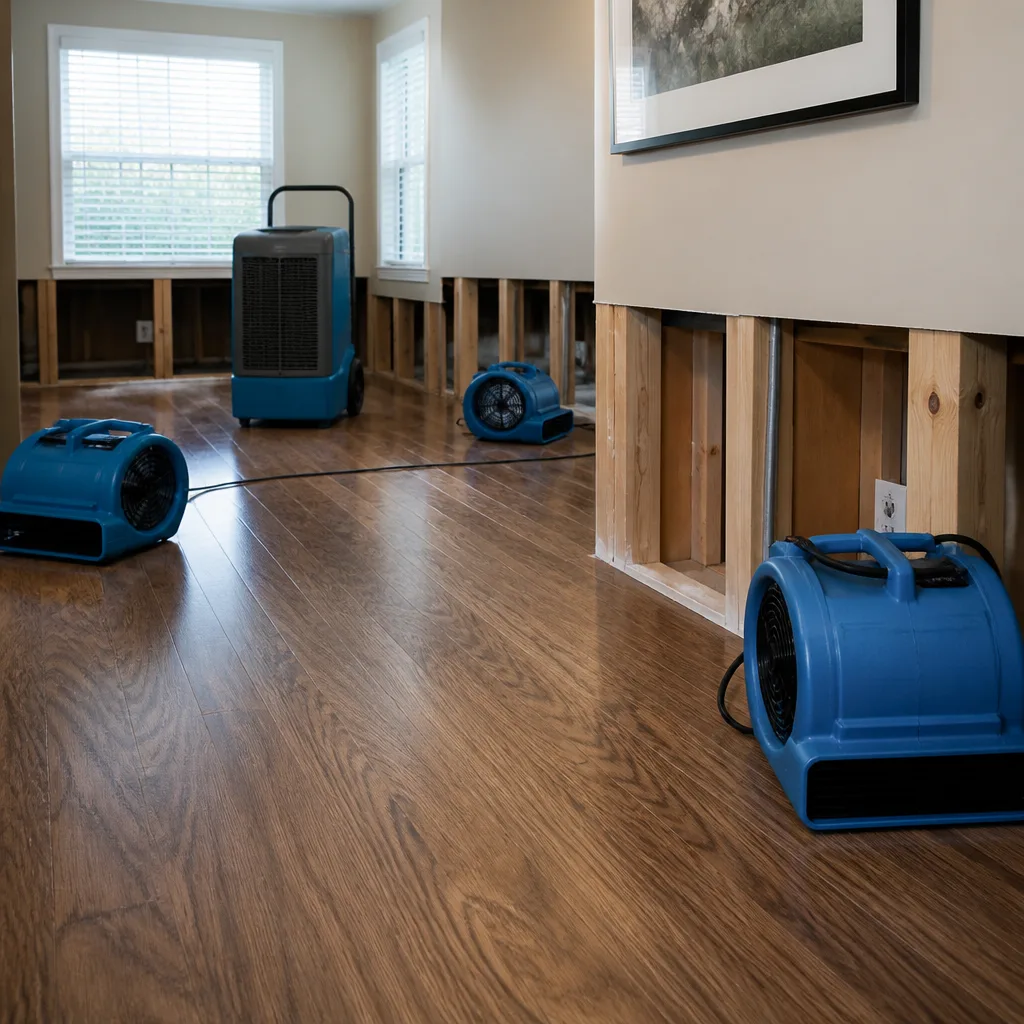
We run Injectidry structural drying systems on Brea jobs where wall cavities and ceiling bays are holding moisture the surface won’t show. That system pulls water out from inside the assembly without tearing everything open, which protects custom finishes and keeps the scope of reconstruction as small as it can honestly be. On the commercial-grade side, our Dri-Eaz dehumidifiers and Phoenix air movers are the same machines large-loss contractors run on hotels and office buildings, not the rental-counter units that struggle to drop grains in a wet California living room.
The operation is led by Glen Pacheco, and the standard he set is simple: document everything, dry it to a measurable target, and keep one crew accountable across water, mold, and fire scopes. No handoffs, no finger-pointing between vendors. One crew, full scope.
Restoration work we handle
Emergency Water Removal in Brea
Emergency Water Removal in Brea means shutting off the source, extracting standing water, and pulling moisture out of the building materials before mold has a chance to establish. When a slab leak soaks the bedroom flooring in a 92821 ranch home at 2 a.m., or a hillside 92823 property takes category 2 runoff through the garage, the call is the same: get here now, get the water out, and get a drying plan on paper. Most emergency extraction in Brea runs $400 to $900 for the immediate response, depending on the size of the affected area and how much water is standing. Deeper structural drying with professional equipment adds to that, which we’ll outline in a written scope before we start the next phase.
Hillside Runoff and Sheet Flow
In north and east Brea near Carbon Canyon, muddy water following a heavy storm doesn’t just stand in the garage. It carries silt, ash, and whatever it picked up on the hills which makes it category 2 water, not clean water. That matters because the drywall and framing it touches need different handling than a clean supply-line leak.
Older Ranch Home Decay
In the valley-floor tracts, the water usually comes from a pipe that’s been failing quietly. When galvanized supply lines or cast iron drain pipes finally breach, the water migrates into wall cavities and under slab flooring days or weeks before anyone sees a stain. Our moisture mapping reads those hidden pockets before we commit to an extraction and drying sequence.
Flood Damage Restoration in Brea
Flood Damage Restoration in Brea typically follows one of two events: atmospheric-river rain pushing runoff off the foothills into downhill subdivisions, or a major interior plumbing failure that drops water through multiple levels. Either way, the first step is the same: stop the water, extract it, and map the moisture so nothing gets missed. A flood cleanup in Brea with extraction, drying, and light demo usually falls in the $1,800 to $4,500 range for a typical single-room loss. Multi-room and multi-level losses run higher, and we’ll put the exact number in writing before work starts.

Garage and Lower-Level Flooding
Homes in the 92823 hills and along the northern edge of town carry a specific risk: below-grade garages and finished lower levels act as collection points when storm runoff moves downhill. We set containment, remove the water, run category 2 water protocols on affected framing, and monitor daily readings until everything reaches a documented dry standard.
Plumbing Failure Floods
When a cast iron drain line gives way under a 1960s ranch home in 92821 or 92822, the water often floods the lowest point of the house first: the slab, then the flooring, then the base of the walls. We extract, cut only the drywall that absorbed water past recovery, and dry the frame in place using the Injectidry system where it’ll keep the demo scope down.
Trusted Brands We Service in Brea
We stock parts and maintain relationships with local suppliers serving Brea so we’re not waiting on shipping when your job needs a specialized fitting or a replacement component. The equipment on your job will be Dri-Eaz dehumidifiers, Phoenix air movers, XPOWER fans, B-Air scrubbers, and Injectidry structural drying systems, all maintained to manufacturer spec. These aren’t consumer-grade machines. They’re the same brands restoration contractors run on commercial and large-loss jobs, and they’re the reason a Brea home hits its drying target in days instead of weeks.
Common Water Damage Restoration Problems We See in Brea Homes
- Treating hillside runoff as clean water. Muddy sheet flow off the Chino Hills and Puente Hills foothills is category 2 water. It carries silt, contaminants, and organic material, and drying the drywall it touched instead of removing it sets up a mold problem in the wall cavity. We classify the water correctly before we write the scope.
- Hidden moisture in 1950s-70s ranch homes. Original drywall and single-pane windows in Brea’s older tracts mean water moves through wall cavities in ways that don’t show on the surface. A slab leak can soak the base of a wall for weeks while the visible face stays dry to the touch. Our moisture meters find it.
- Skipped drying logs on multi-level hillside homes. Custom homes near Carbon Canyon with finished lower levels hold water in the framing while the finished floor reads dry. Without daily moisture readings logged against a pre-loss target, that lower level gets covered back up with wet wood behind it.
- Galvanized and cast iron plumbing failures. Brea’s original 1950s-70s ranch homes were built with galvanized supply lines and cast iron drains that have now exceeded their service life. When they go, they go suddenly, and the water spreads through the slab and into the walls faster than most homeowners expect. We’re familiar with how these older systems fail, and that feeds directly into how we scope the extraction.
See the difference
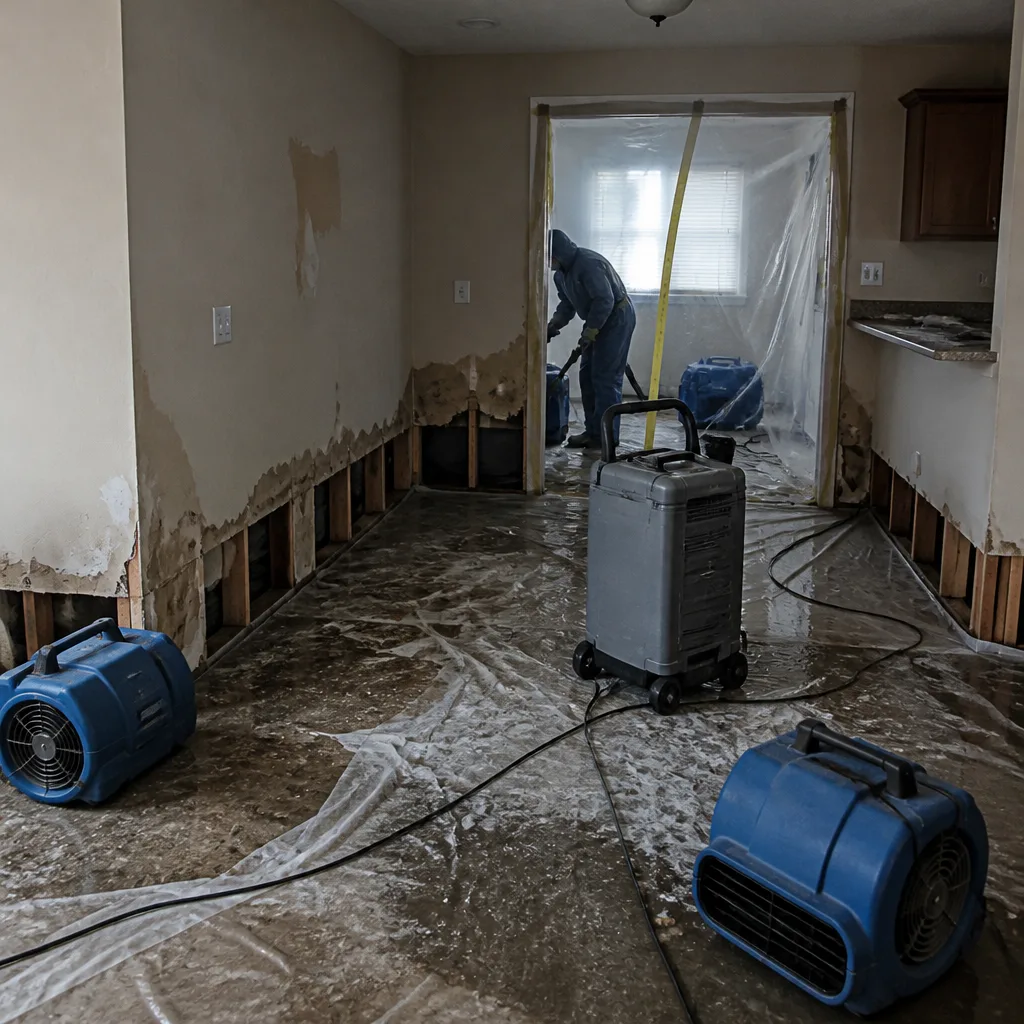 Before
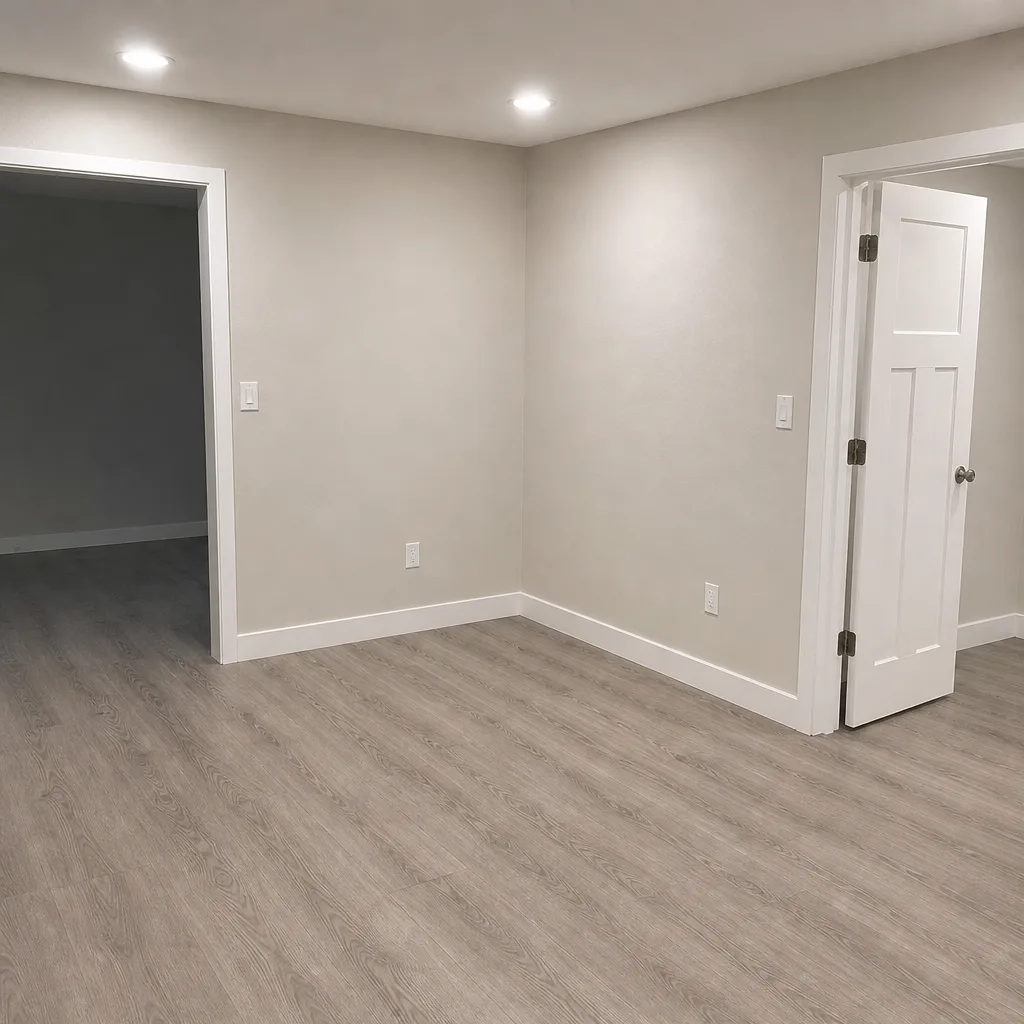 After
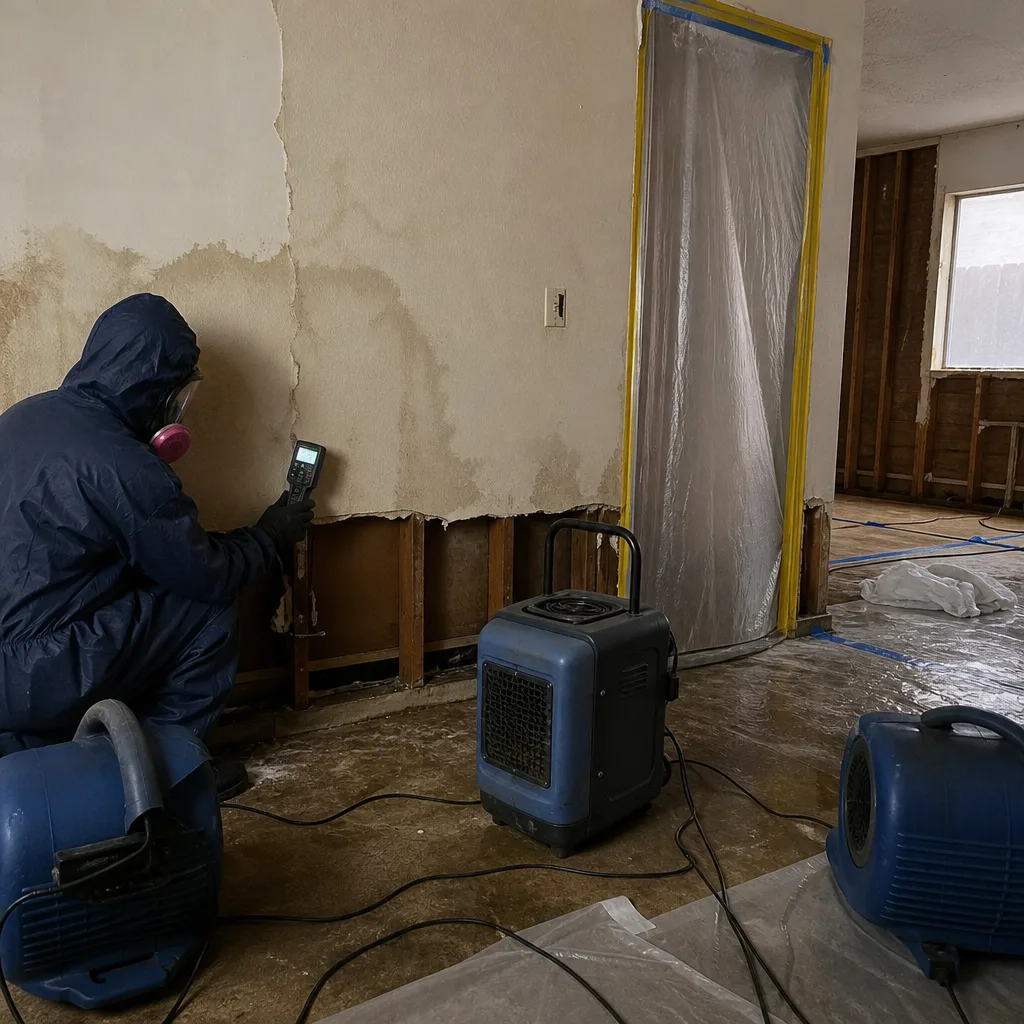 Before
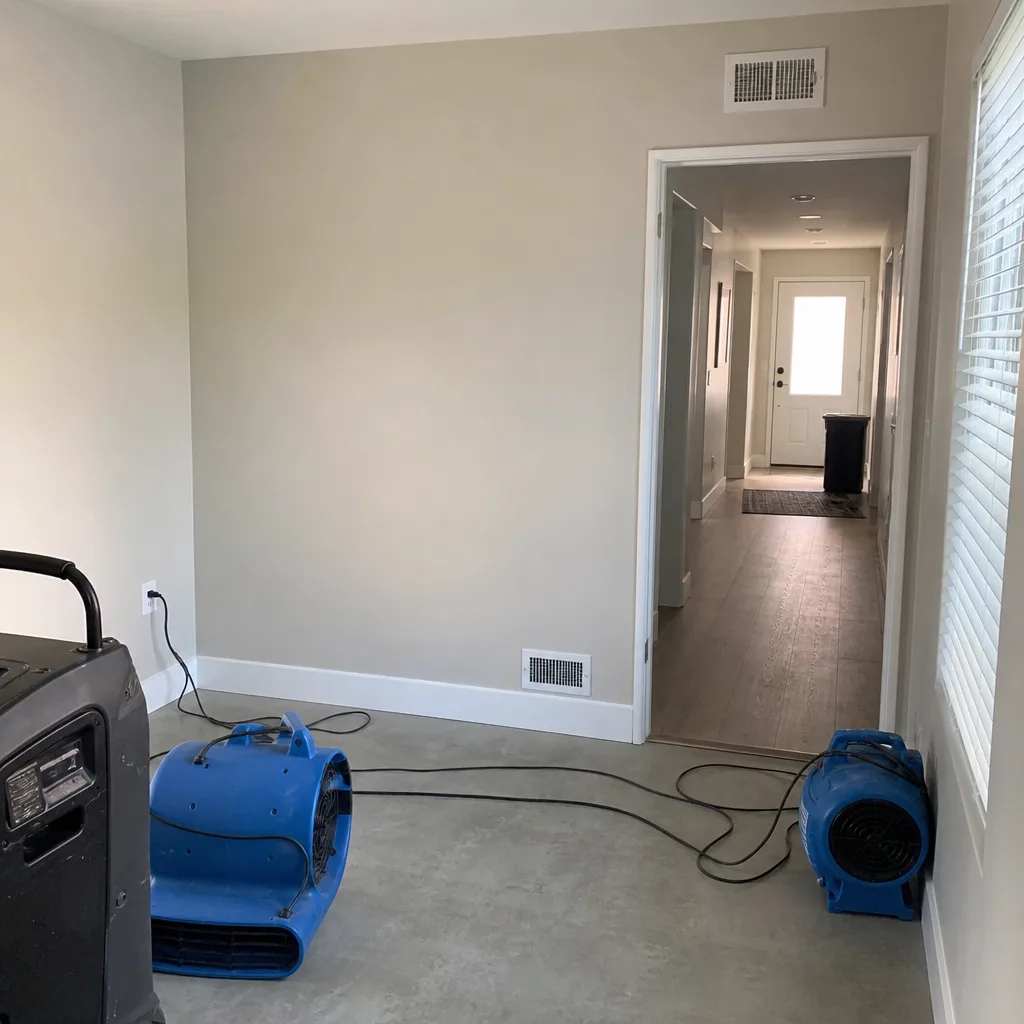 After
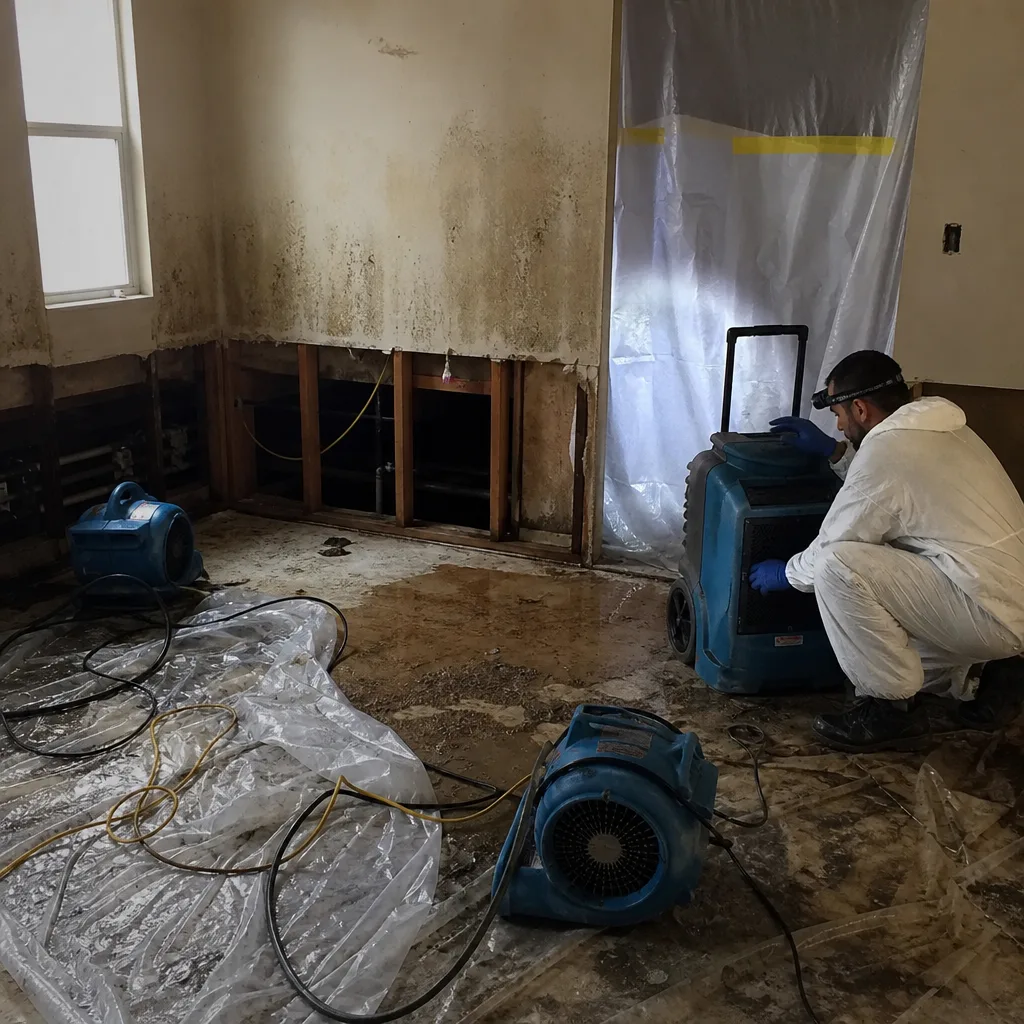 Before
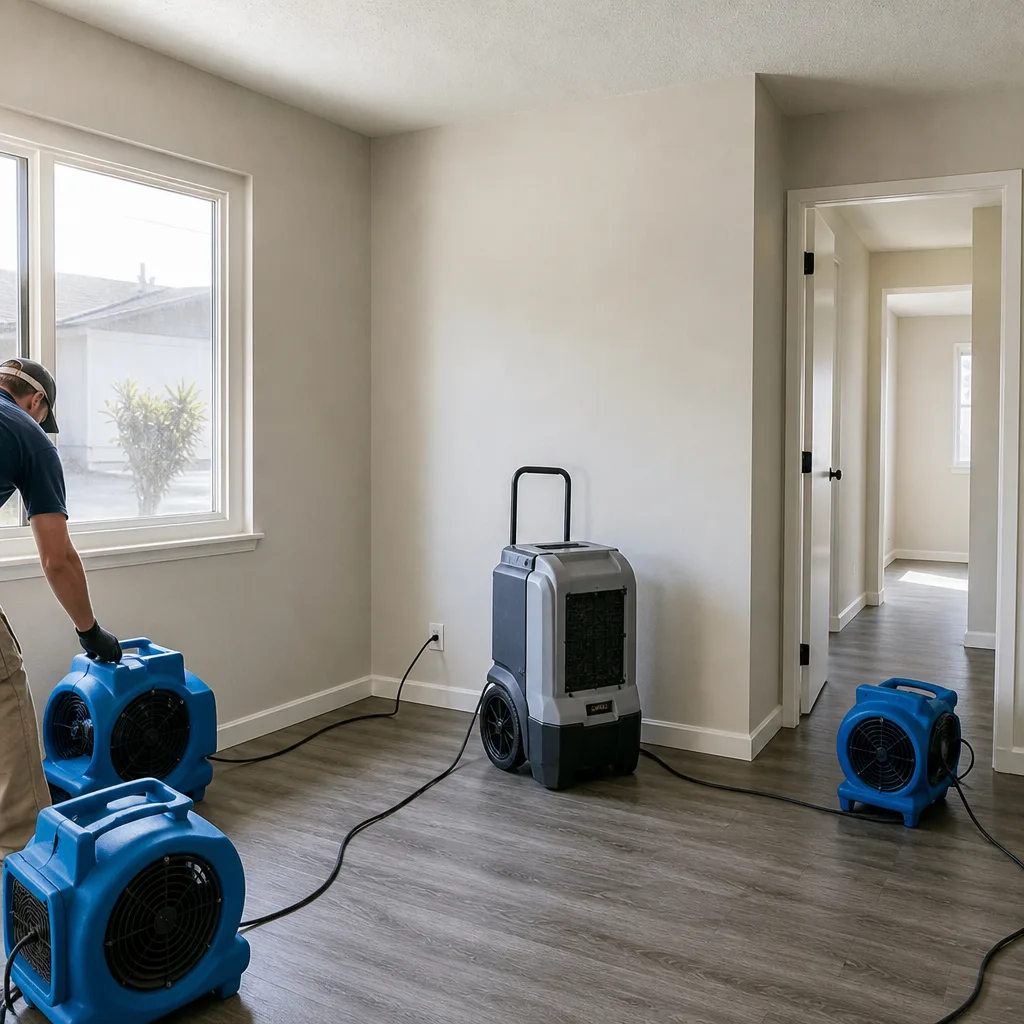 After
Pricing for Water Damage Restoration in Brea, CA
Water damage restoration in Brea spans a real range, and the number depends on the water category, the affected square footage, and how much demolition is actually required. Emergency extraction and water removal for a single room typically runs $400 to $900. Full flood cleanup with drying, antimicrobial treatment, and light demo in Brea usually falls between $1,800 and $4,500, and often applies toward your insurance deductible when the loss is covered. Severe multi-level losses, especially hillside customs where custom finishes need drying in place, can exceed that. We provide a written scope with exact line items before any work begins, and every estimate is free. Call (833) 589-5317 to get a number for your specific situation.
We Also Serve Cities Near Brea
If your property sits just outside Brea’s city limits, we cover the surrounding communities too. That includes Placentia, Fullerton, Yorba Linda, and La Habra, all within a short drive for our crews. If you’re in one of those areas and dealing with water damage, our Brea team can still get there quickly and bring the same IICRC-certified process and commercial drying equipment with them. Call and we’ll tell you straight how fast we can be on site.
Serving Brea, CA — Our Local Coverage Area
We’re based in the Brea area and know this community well. Use the map below to see our service coverage — if you’re nearby, we can almost certainly help.
FAQs About Water Damage Restoration in Brea
Mold can start establishing in Brea homes within 24 to 48 hours when building materials stay wet, especially in the warm inland conditions Brea gets during late summer and fall. That’s why we prioritize extraction and drying equipment setup within the first day, not just a visual check. If you’ve had water sitting longer than 48 hours, call (833) 589-5317 and we’ll get a moisture map going immediately.
No. Runoff from the Chino Hills and Puente Hills slopes carries silt, ash, and organic material, which classifies it as category 2 water under IICRC standards. The drywall and framing it touches need antimicrobial treatment and often partial removal, not just drying. Treating it as clean water is the most common mistake we correct on Brea jobs.
Original drywall, single-pane windows, and slab foundations in Brea’s 1950s-70s ranch homes let water migrate through wall cavities and under flooring in ways newer construction doesn’t, so moisture sits hidden where only meters can find it. Hillside custom homes, by contrast, often have finished lower levels and below-grade garages that collect water downhill and hold it in the framing. Matching the drying plan to the construction era is how we hit documented dry faster and with less demo.
We run Dri-Eaz dehumidifiers, Phoenix air movers, XPOWER and B-Air blowers, and Injectidry structural drying systems on Brea jobs. These are commercial-grade machines built for large-loss restoration work, not rental-counter equipment. When your home needs wall-cavity drying without tearing out custom finishes, the Injectidry system is what does it.
Yes, in almost every claim your adjuster will ask for a documented scope: water category, affected area, moisture readings before and during drying, and a line-item estimate. We provide all of that, we coordinate directly with your adjuster, and we photograph every phase. That documentation is what gets your claim approved at the correct scope instead of argued down. Call (833) 589-5317 and we’ll get the file started.
Call Dry Line Water Damage for Water Damage Restoration in Brea
If you’re seeing standing water, a spreading stain, or the smell of trapped moisture in a Brea home, don’t wait for it to become a mold problem. Call (833) 589-5317 for a free estimate. We’ll tell you what’s happening, what it costs to fix it, and whether the drying can be done in place or if material needs to come out. You’ll get a written scope before work starts, and you’ll get a documented dry standard when it’s done. That’s the only way we’d leave it.
Written by Glen Pacheco, Owner at Dry Line Water Damage, serving Brea. IICRC-certified, RIA member, and an equipment-serious restoration operation that dries to a documented standard, not a guess.