

 Water damage drying
 Fire & smoke cleanup
 Mold remediation
 Storm response
 Sewage cleanup
 Reconstruction
Free visual inspection and a written scope of work before any mitigation begins - photos, moisture readings, and drying logs go in your claim file
The scope we write is the scope we bill. Anything new gets shown to you, in writing, before we touch it.
Get your free estimateFast, Reliable Water Damage Restoration Across Calimesa
If you’re facing standing water, a soaked ceiling, or a slow leak that’s been seeping into drywall for days, here’s the straight answer: water damage restoration in Calimesa typically runs $1,800 – $5,400 for a standard single-room mitigation and dry-out, while a flooded basement or slab leak can push $6,000 – $14,000 depending on how far the water migrated. Most jobs we handle in the 92320 area are fully dried and documented within 3 – 5 days. Call (833) 589-5317 and we’ll have a certified crew on the road to Calimesa immediately.
We work in Calimesa regularly, and we know the difference between a tract home off Sandalwood Drive and a manufactured home on a half-acre lot with its own well. That local knowledge changes how we stage equipment, where we look for hidden moisture, and how we document the job for your insurance adjuster. Our Water Damage Restoration team is IICRC-certified and carries the same Dri-Eaz and Phoenix equipment you’d see on a commercial large-loss job, not rental-shop gear.
Why Dry Line Water Damage Is Calimesa’s Preferred Water Damage Restoration Company
Calimesa homeowners and property managers call us because we treat semi-rural properties as their own category of restoration work. A ranch home on septic with a failing well pump is not the same job as a condo unit in Redlands. We understand the difference, and our drying plans reflect it. Glen Pacheco, who leads our operation, has built this company around one principle: dry to a documented standard, not to a visual guess.
Being IICRC-certified matters here. It means our technicians follow the restoration industry’s written Standard of Care for water damage, which covers everything from initial classification of the water category to final moisture-content readings. We’re also members of the Restoration Industry Association, which holds us to a published code of ethics. When an adjuster asks for drying logs, photo documentation, or a psychrometric record, we hand over a file that actually supports the claim.
Calimesa’s mix of housing stock, especially the older ranch homes and manufactured units, means we see failures that generic restoration franchises misdiagnose. We carry thermal imaging cameras and moisture meters on every truck to trace migration paths under slab and behind walls. That’s the difference between drying the visible puddle and drying the house.
Restoration work we handle
Water Mitigation in Calimesa
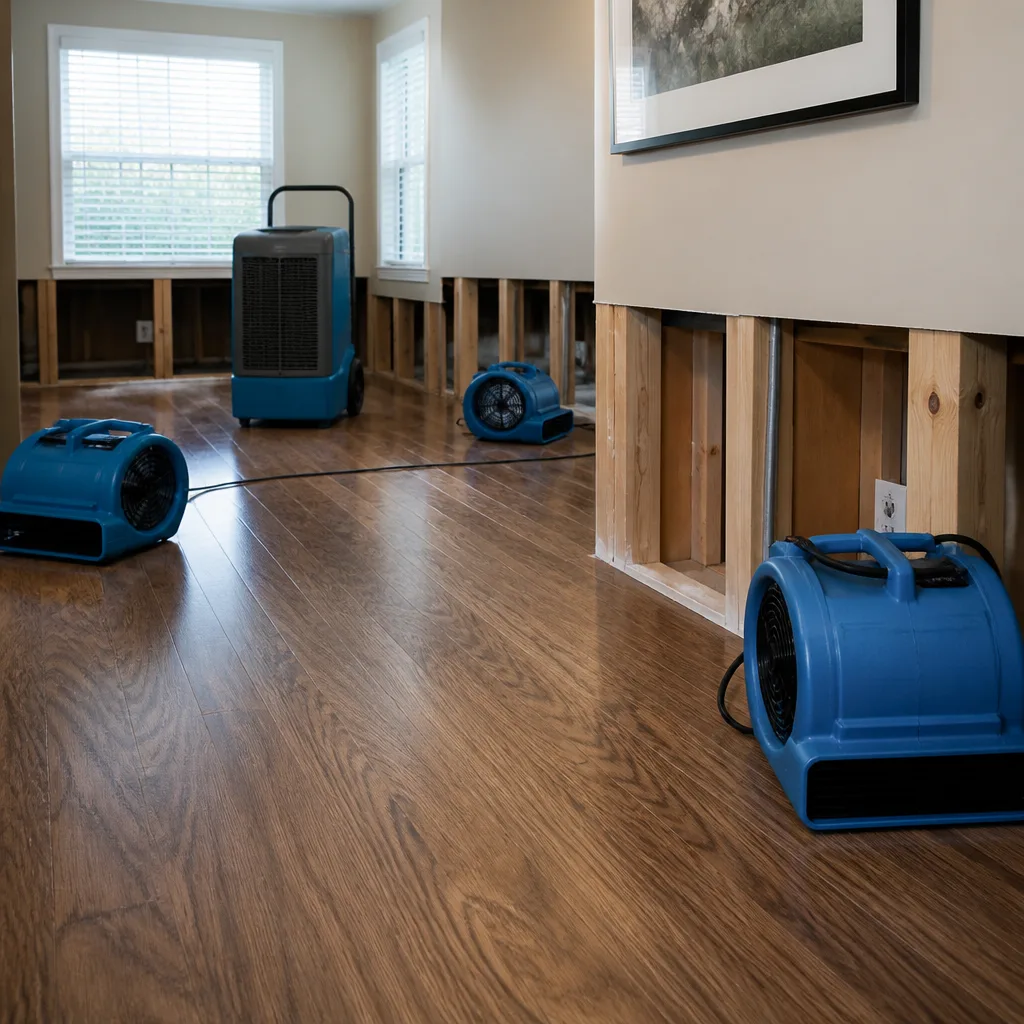
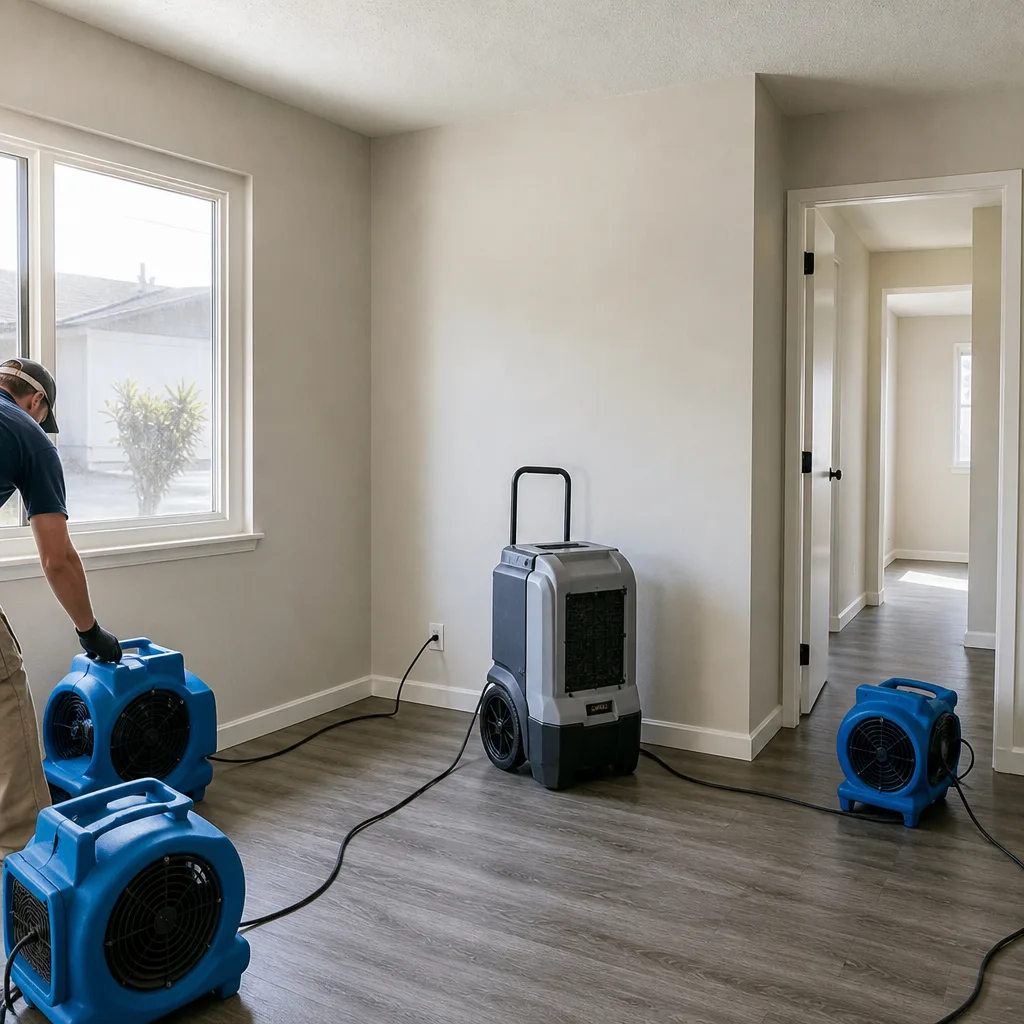
Water Mitigation in Calimesa is the urgent, structural part of the job: stopping the source, extracting standing water, setting containment, and running commercial air movers and dehumidifiers until building materials reach their dry standard. The goal is not to make it look dry. The goal is to return wood, drywall, and concrete to a measurable moisture content that won’t support mold growth or hidden deterioration.
For Calimesa specifically, mitigation often turns into a longer job than homeowners expect because water moves differently through single-story slab construction and manufactured-home sub-floor cavities. A water mitigation scope in Calimesa commonly runs $2,200 – $6,800, with more involved slab-jobs rising from there.
Why Calimesa Well Systems Change the Math
A failed well pump or saturated pressure tank can feed groundwater into a home for hours or days before anyone notices. By the time we arrive, the water has often wicked under slab and into wall cavities, going from a Category 1 clean-water event to a Category 3 situation.
We map that migration with thermal imaging and moisture meters before we place a single air mover. On uneven lots, we hand-carry hose runs and stage equipment on gravel pads so the drying setup doesn’t undermine itself.
Documenting Moisture So Insurance Covers the Full Scope
Our drying logs show initial moisture readings, daily extraction totals, and final dry-standard numbers for each affected material. That documentation is what allows your adjuster to approve the full mitigation scope instead of arguing that things looked dry enough.
In Calimesa, where a large share of losses are well-sourced or septic-related, that documentation is the difference between a covered claim and a dispute.
Flooded Basement in Calimesa
A Flooded Basement in Calimesa is rarely a simple pump-out job. Many homes here sit on sloping lots where groundwater from the San Gorgonio Pass’s seasonal rains pools against foundation walls, or where a failed sump or well pressure tank dumps water into a below-grade space. Extraction, structural drying, and antimicrobial treatment for affected framing are all part of the scope.
Flooded basement restoration in Calimesa typically lands between $3,500 and $9,000, depending on whether the foundation is poured concrete or block, and whether water reached finished living space or just the utility area. We always test the water source. If it’s groundwater or septic-sourced, we treat it as Category 3, which changes the containment and antimicrobial protocol.

Recovering a Basement Fast Without Tearing Out Everything
Where Injectidry is appropriate, we can dry wall cavities and under-floor spaces through small access points rather than cutting out entire wall sections. That’s less material removal, a smaller repair scope afterward, and a claim that closes faster.
Our Injectidry structural-drying systems push dry air into enclosed cavities while our Phoenix dehumidifiers pull moisture from the open air, a combination that returns homes to their dry standard days faster than consumer fans ever could.
Why We Run Containment in Almost Every Calimesa Basement
Because so many Calimesa properties are on septic, a flooded basement often pulls in water you absolutely don’t want airborne. We set up containment before we move wet material, so mold spores and bacteria don’t migrate into the rest of the house.
That’s not optional on these jobs. It’s part of doing mitigation to the IICRC standard.
Trusted Brands We Service in Calimesa
We run Dri-Eaz and Phoenix dehumidifiers and air movers on Calimesa jobs because these are the commercial-grade machines restoration contractors use on hospitals, schools, and large-loss projects. They’re not the machines you rent from a hardware store with a forklift and a prayer. We also deploy Injectidry systems for hard-to-reach cavities and XPOWER and B-Air air movers where the job calls for them. Our team is factory-trained on all of the equipment we run, and we stock replacement filters, hoses, and accessories on our trucks so we’re not waiting on shipped parts when your home is already open to the air. Calimesa customers get the same equipment and process we’d use on a 30-unit apartment building, scaled to a ranch home or manufactured home lot.
See the difference
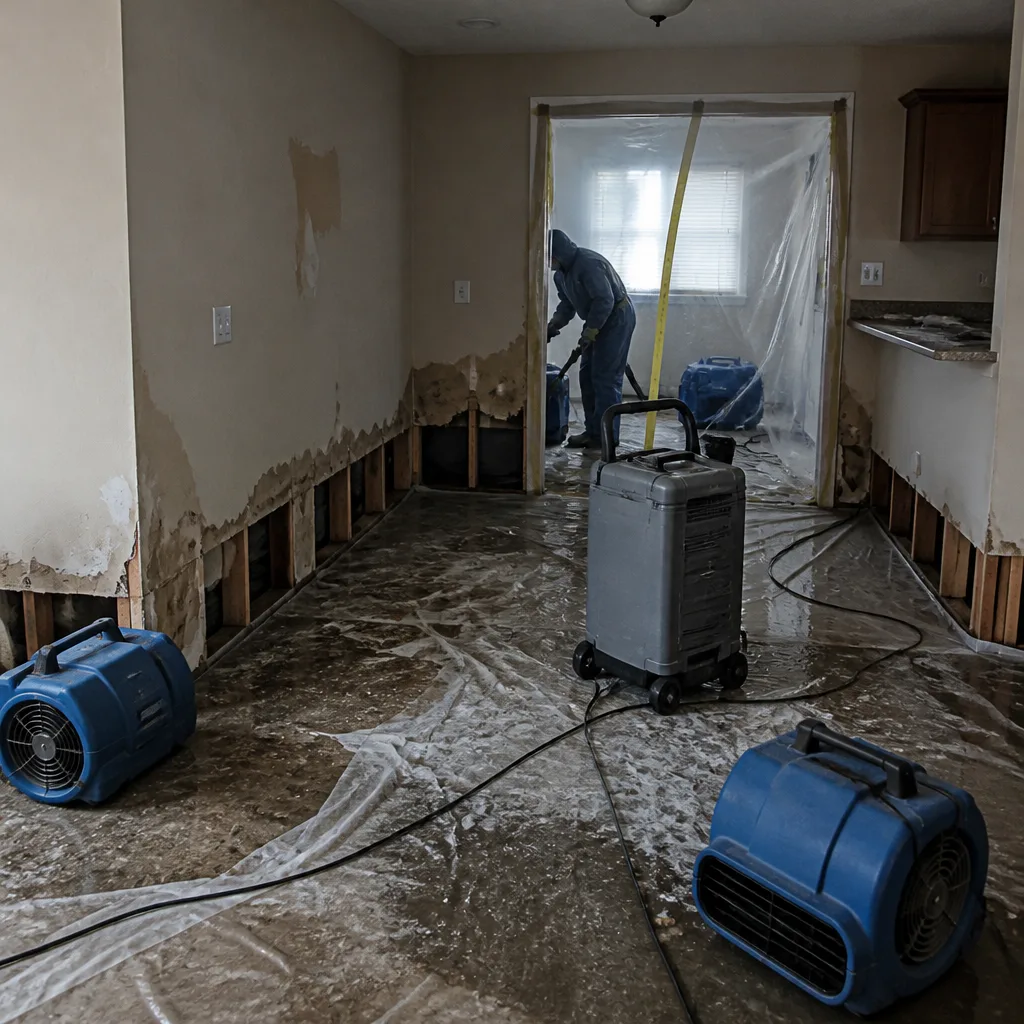 Before
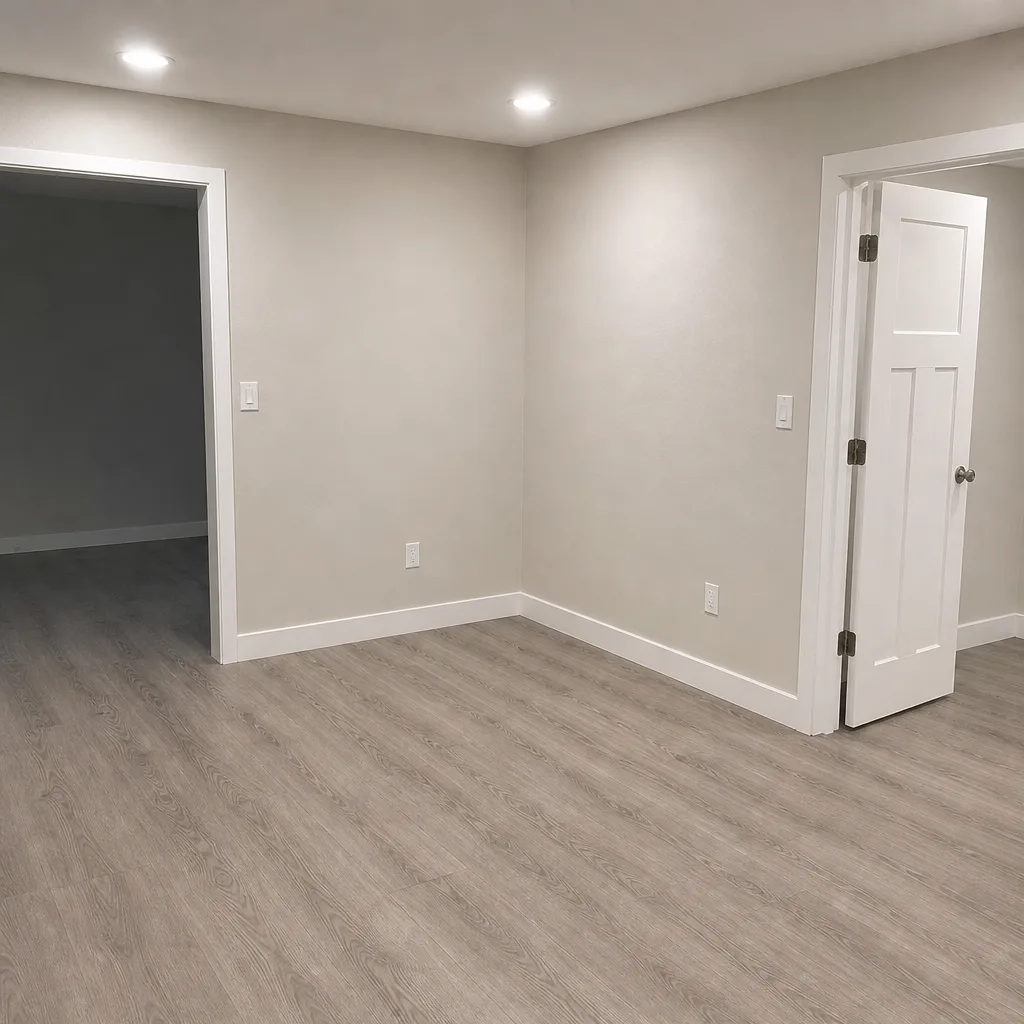 After
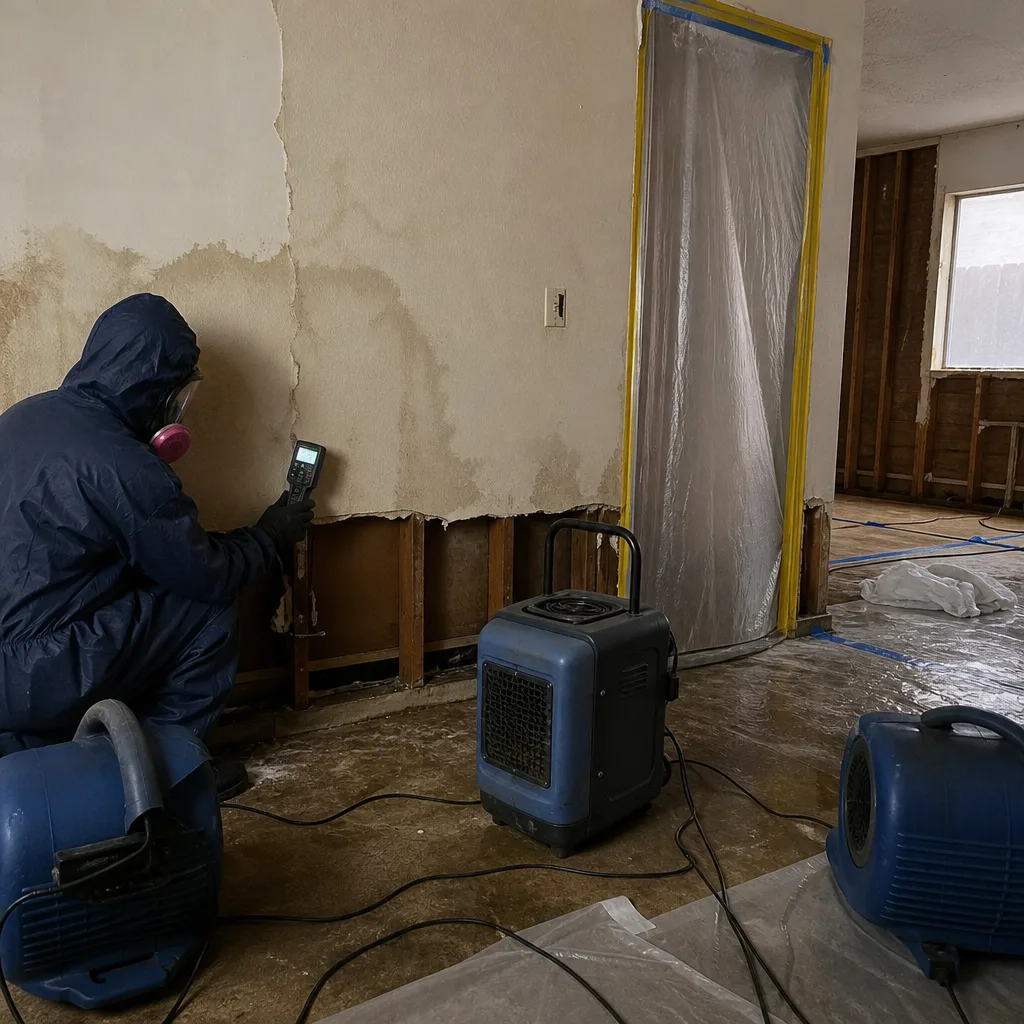 Before
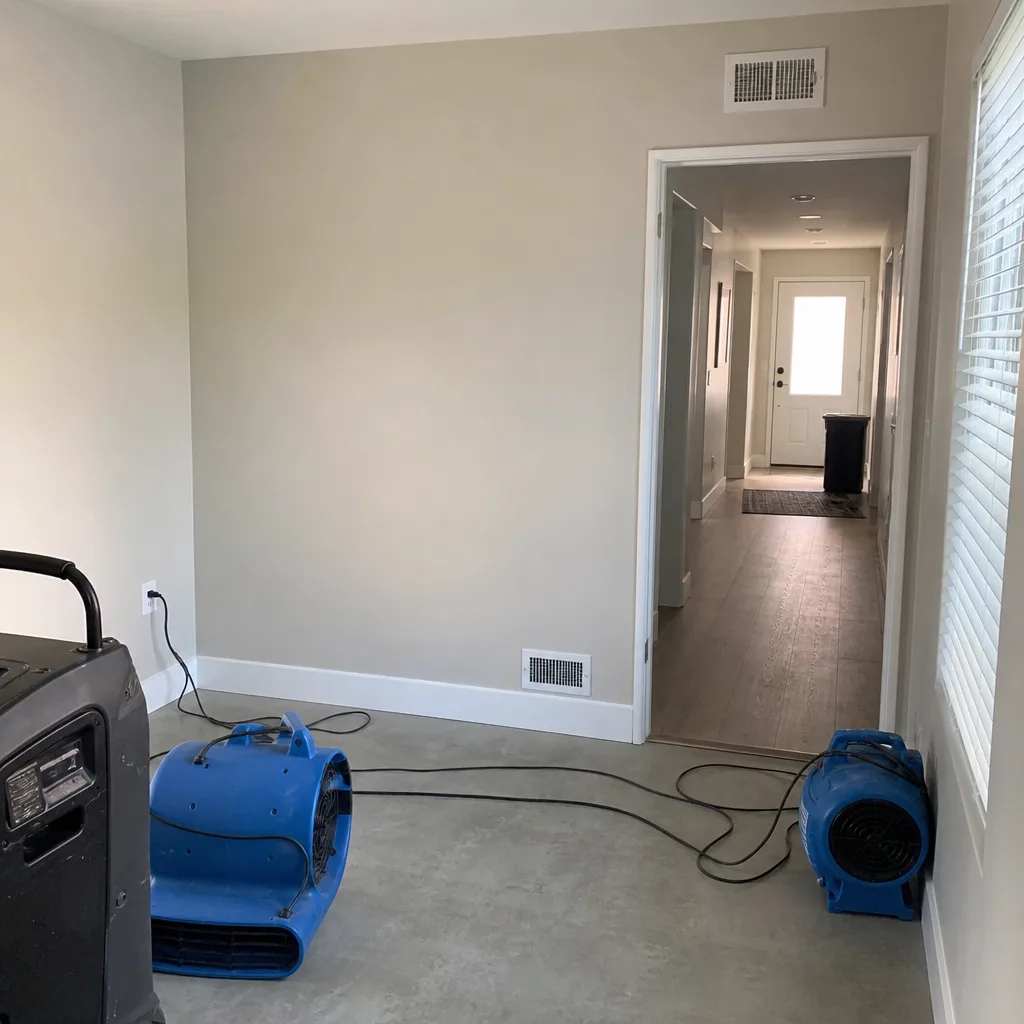 After
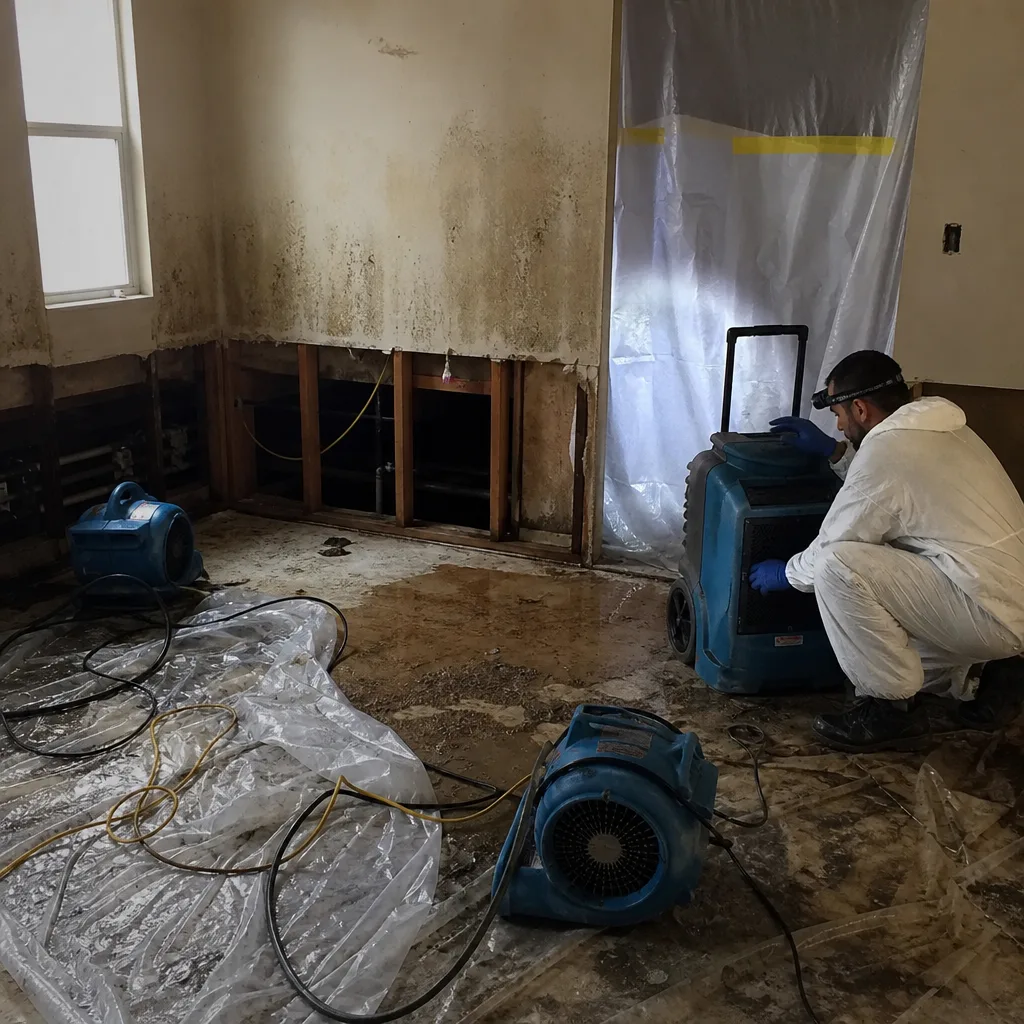 Before
 After
Common Water Damage Restoration Problems We See in Calimesa Homes
- Well-sourced Category 3 water mislabeled as clean water: A leaking well pressure tank or saturated septic line pushes contaminated groundwater into the home, and if the first responder treats it as Category 1, the antimicrobial step gets skipped and the home is not actually safe to occupy. We test the source before we classify anything.
- Moisture migration under slab in older ranch homes: Single-story slab construction is common in Calimesa, and water from a well pump failure or a supply line leak can travel under the slab for feet before it shows up at a baseboard. Thermal imaging is the only way to find the full migration path without unnecessary demolition.
- Septic fields and uneven lots breaking the drying setup: If air movers are set on sloped ground or on top of a leach field, the drying pattern is uneven and the house doesn’t actually reach dry standard. We stage equipment on leveling pads and keep hose runs off the septic area.
- Santa Ana wind damage turning into water intrusion weeks later: Wind tears a small section of roofing or flashing, and the first real rain sends water through the opening into attic insulation and wall cavities. By the time the homeowner notices the ceiling stain, the roof damage is weeks old and the water has spread. We trace the migration back to the source, not just the stain.
Pricing for Water Damage Restoration in Calimesa, CA
What should you actually budget? In Calimesa, emergency water extraction alone runs $900 – $2,500. Full structural drying and dehumidification for a single room lands between $1,800 and $5,000. Flooded basements with septic-related contamination typically run $3,500 – $9,000. Burst pipe restoration on a ranch home often sits in the $2,000 – $6,500 range depending on how many rooms the water reached. Ceiling and roof leak water damage usually costs $1,200 – $4,200 when the intrusion is caught early. The biggest cost drivers are the water category, how far moisture migrated under slab or into wall cavities, and whether the source is well or septic-related. Call (833) 589-5317 and we’ll give you a straight estimate, not a sales pitch.
We Also Serve Cities Near Calimesa
Our crews regularly handle water damage calls in Calimesa and the surrounding communities. We also serve Yucaipa, Mentone, Redlands, and Banning, where the housing mix and water sources change enough that a one-size-fits-all approach fails. If you’re close to Calimesa but just over a city line, we still respond the same day.
Serving Calimesa, CA — Our Local Coverage Area
We’re based in the Calimesa area and know this community well. Use the map below to see our service coverage — if you’re nearby, we can almost certainly help.
FAQs About Water Damage Restoration in Calimesa
Yes, it changes the job. We treat well-sourced water as potentially Category 3 unless testing shows otherwise, because well water and septic-saturated groundwater carry bacteria and organic material that municipal water does not. That means we run full antimicrobial protocols and more aggressive containment. Call (833) 589-5317 and tell us your home is on a well, and we’ll plan the assessment accordingly.
Mold can begin colonizing in 24 to 48 hours under Calimesa’s hot, dry late-summer conditions, and even faster in wall cavities where the air is trapped and warm. In the fall, after the first rains on burn-scarred hillsides, that timeline shrinks as indoor humidity stays higher. The faster extraction starts, the less likely you are to need a full mold remediation scope later.
Yes. Ash and smoke particles that blew through attic vents and HVAC systems settle into insulation and ductwork, and when the first rain hits, that ash turns into an acidic slurry that accelerates staining and corrosion. If your home had a wind event followed by water intrusion, we’ll check for ash contamination as part of the water damage scope, because the two problems compound each other. We handle water damage, mold, and fire damage under one roof, so we don’t hand you off to a second company when we find smoke residue inside a water-damaged wall cavity.
We do. Every Calimesa job gets a daily drying log with initial and ongoing moisture readings, extraction totals, and final dry-standard numbers for each affected material. That’s what adjusters need to approve the full scope without weeks of back and forth. If you’re filing a claim, tell us from the start and we’ll structure the documentation to match what your carrier expects from a restoration contractor.
Category 1 is clean water from a supply line or rain. Category 2 is contaminated water that has been sitting long enough to grow bacteria. Category 3 is grossly contaminated water from septic, sewage, or standing groundwater. It matters in Calimesa because so many homes here are on septic and wells, and what looks like a simple leak is often Category 3. Treating Category 3 as Category 1 skips the antimicrobial and containment steps, and leaves a house that will smell and fail. We classify every job by testing the source, not by guessing.
Written by Glen Pacheco, Owner at Dry Line Water Damage, serving Calimesa since 2018.