

 Water damage drying
 Fire & smoke cleanup
 Mold remediation
 Storm response
 Sewage cleanup
 Reconstruction
Free visual inspection and a written scope of work before any mitigation begins - photos, moisture readings, and drying logs go in your claim file
The scope we write is the scope we bill. Anything new gets shown to you, in writing, before we touch it.
Get your free estimateFast, Reliable Water Damage Restoration Across Corona
Water damage restoration in Corona, CA typically costs between $2,800 and $7,400 for a complete dry-out, with emergency water extraction alone running $450 to $1,200 depending on the size of the affected area and how long the water has been standing. Most Corona homes we’re called to can be stabilized within the first 24 hours, with full structural drying documented over three to five days. Our Water Damage Restoration team runs IICRC-certified processes from the first moisture reading to the final drying log.
If you’re dealing with an active leak or standing water in Corona right now, call (833) 589-5317. We dispatch crews to Corona from Fontana and know the neighborhoods, the housing stock, and the specific ways water finds its way into homes here.
Why Dry Line Water Damage Is Corona’s Preferred Water Damage Restoration Company
Corona is its own animal. Between the Santa Ana wind corridor, the hillside tracts along Foothill Parkway, and the older stucco neighborhoods in 92879 and 92882, the failure modes we see here aren’t the same ones you’d find in Eastvale or Norco. Our crews have worked enough Corona losses to know what a wind-driven door-seal leak looks like before the drywall even tells you. That local pattern recognition is why homeowners and property managers in Corona call us instead of a generalist outfit.
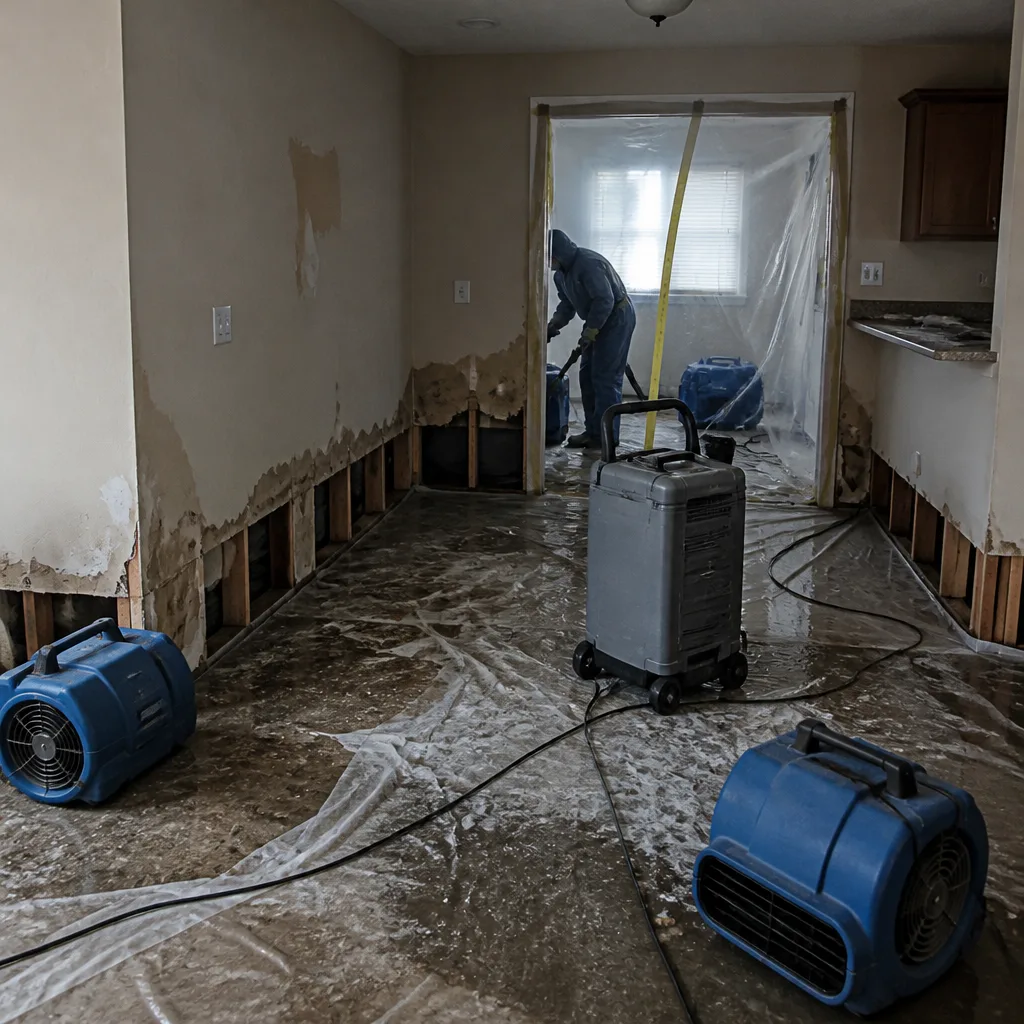
We’re an IICRC-certified operation, which means our drying plans follow a written, externally audited standard. Not a checklist we made up. When we set containment and place a Phoenix or Dri-Eaz dehumidifier in a Corona living room, we’re logging readings that hold up when an adjuster reviews them. The documentation matters. Glen Pacheco runs our crews with a simple rule: if the moisture map doesn’t show the cavity is dry, the job isn’t done.
Corona homeowners tell us the same thing after a loss: they didn’t realize how much of the damage was behind the drywall until someone mapped it. We find what the water found. That’s the whole job.
Restoration work we handle
Emergency Water Removal in Corona
Emergency water removal in Corona usually means a supply line let go in a 1990s home off Green River Road, or a water heater gave out in a garage in 92880. The first step is always extraction; standing water keeps migrating into baseboards, cabinetry, and subfloor as long as it sits. In Corona’s older 92879 tracts, where original cast-iron and galvanized plumbing is common, a “small” leak under the kitchen sink is often a slab leak that has been running for weeks before the flooring shows it. Extraction is just the opening move.
Water removal in Corona runs $450 to $1,200 for a standard single-room response, more if water has spread across multiple rooms or into a slab depression. The extraction itself usually takes two to four hours. Drying is a separate phase, not a same-day afterthought. Call (833) 589-5317 as soon as you see or hear water; every hour it sits, the scope grows.
Slab Leak Response
In the older Corona core, especially 92879 and 92882, a wet carpet in the hallway or a warm tile floor often traces back to a pinhole or split in the original plumbing. We extract first, then run a hydrostatic or moisture probe to find where the water is actually coming from. Drying the visible carpet without locating the source just means we’ll be back in two weeks with the same wet patch, and worse.
Containment and Structural Drying
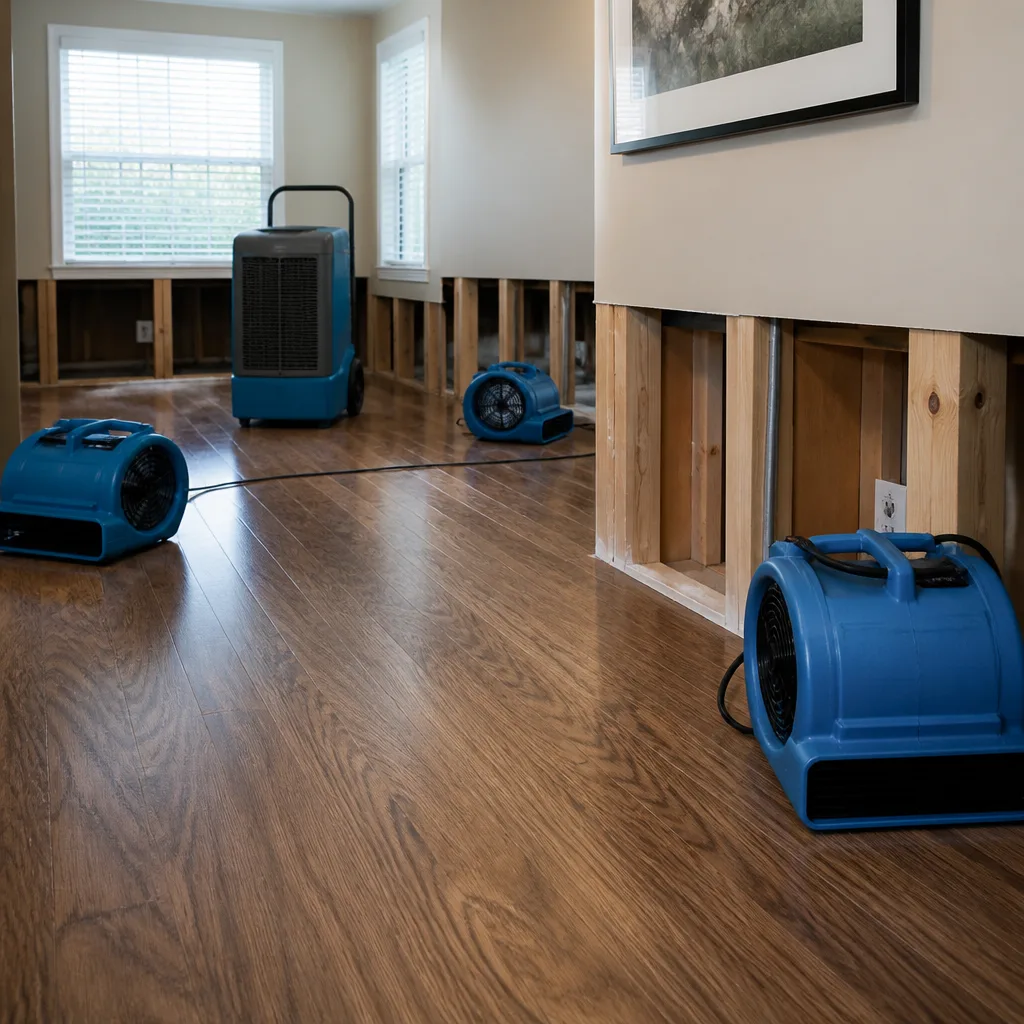
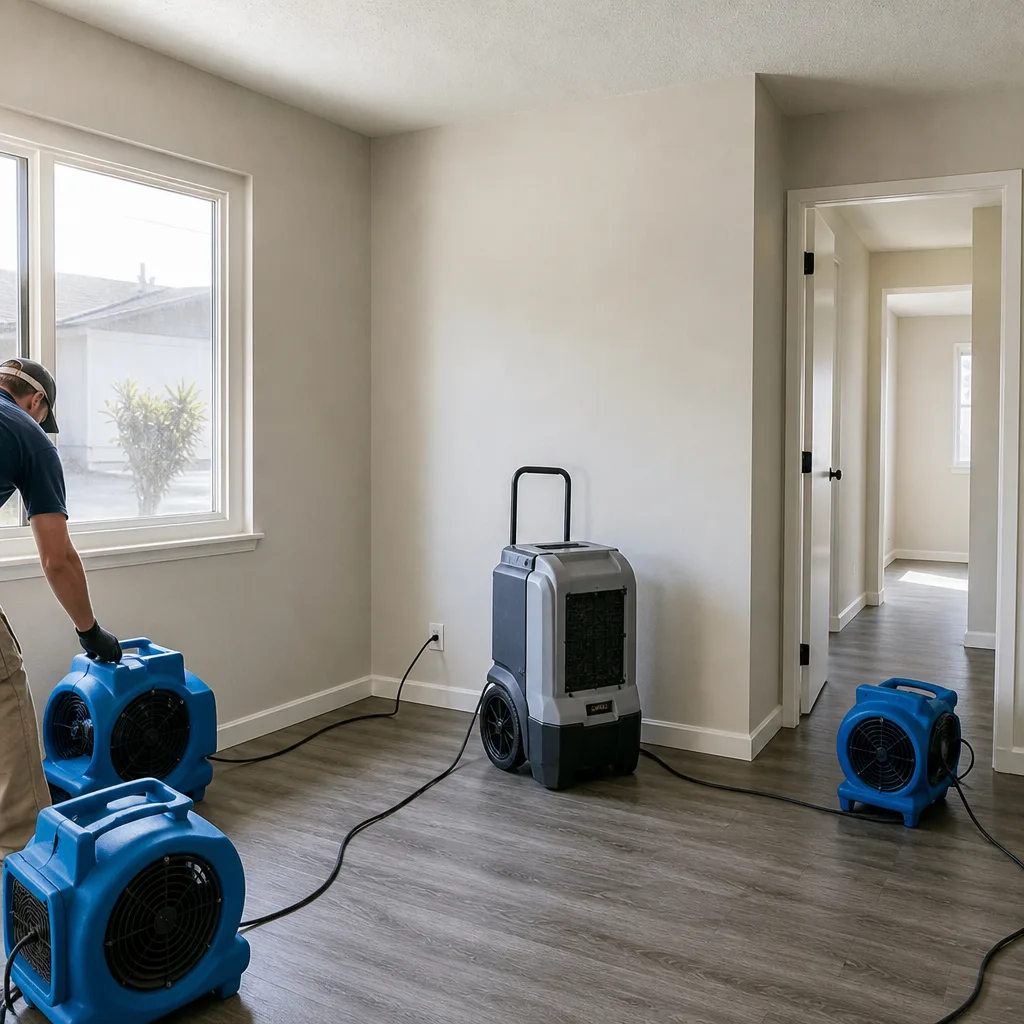
Once extraction is done, we set containment, place air movers and a commercial dehumidifier, and start logging moisture readings every 12 to 24 hours. In Corona’s hillside homes in 92883, we pay extra attention to ceiling cavities and wall plates, because wind-driven rain tends to travel sideways, not just straight down. A Phoenix dehumidifier pulling six gallons an hour beats a rental unit pulling two every time.
Flood Damage Restoration in Corona
Flood damage restoration in Corona is a different job than a simple plumbing leak. Winter rains push flash flooding through the Santa Ana River corridor and the local washes, and homes in 92880 and lower portions of 92878 and 92879 can see muddy water enter through door thresholds, garage slabs, and crawlspace vents. That water carries sediment, organics, and bacteria. It’s not a clean-water loss, and we treat it as such. A Category 2 or 3 flood loss in Corona requires extraction, antimicrobial treatment, and often selective demolition of saturated drywall and insulation before drying can even begin.
Flood damage restoration in Corona typically runs $3,500 to $8,000 depending on how much contaminated material has to come out and how much structural space needs to dry. We document everything for your claim with photos, moisture maps, and drying logs; if your adjuster asks why a wall was cut, the readings justify it. That’s the difference between a documented scope and an argument with an insurance carrier.

Category 2 and 3 Water Handling
When floodwater has been on the street or through a wash, we treat it as contaminated. That means PPE, containment, HEPA air scrubbing if needed, and antimicrobial application on affected framing. We don’t “dry it and paint over it.” Corona homeowners deserve to know what the water carried in, and our moisture logs and treatment records show exactly what we did about it.
Fire Suppression Water and Post-Storm Intrusion
After a fire event in the canyons near 92883, or after a wind storm pushes rain through a failed door seal on Foothill Parkway, we often find homes with both soot and standing water in the same claim. These are not the same problem. We separate the water-damage scope from the smoke-ash scope, and we document both lines so the insurance picture stays clean.
Trusted Brands We Service in Corona
We run Dri-Eaz and Phoenix dehumidifiers and air movers, the same commercial-grade equipment large-loss restoration contractors use on apartment complexes and commercial buildings. For cavity drying, we use Injectidry systems that pull moisture from inside walls and under flooring without unnecessary demolition; that saves Corona homeowners tile, trim, and cabinet runs that a tear-out would destroy. Being IICRC-certified means our equipment usage follows a published standard, not a hunch. And as an RIA member, we operate under a code of ethics tied to the restoration industry’s best practices. When a Corona adjuster sees Dri-Eaz equipment and an IICRC drying log, the claim moves faster.
See the difference
 Before
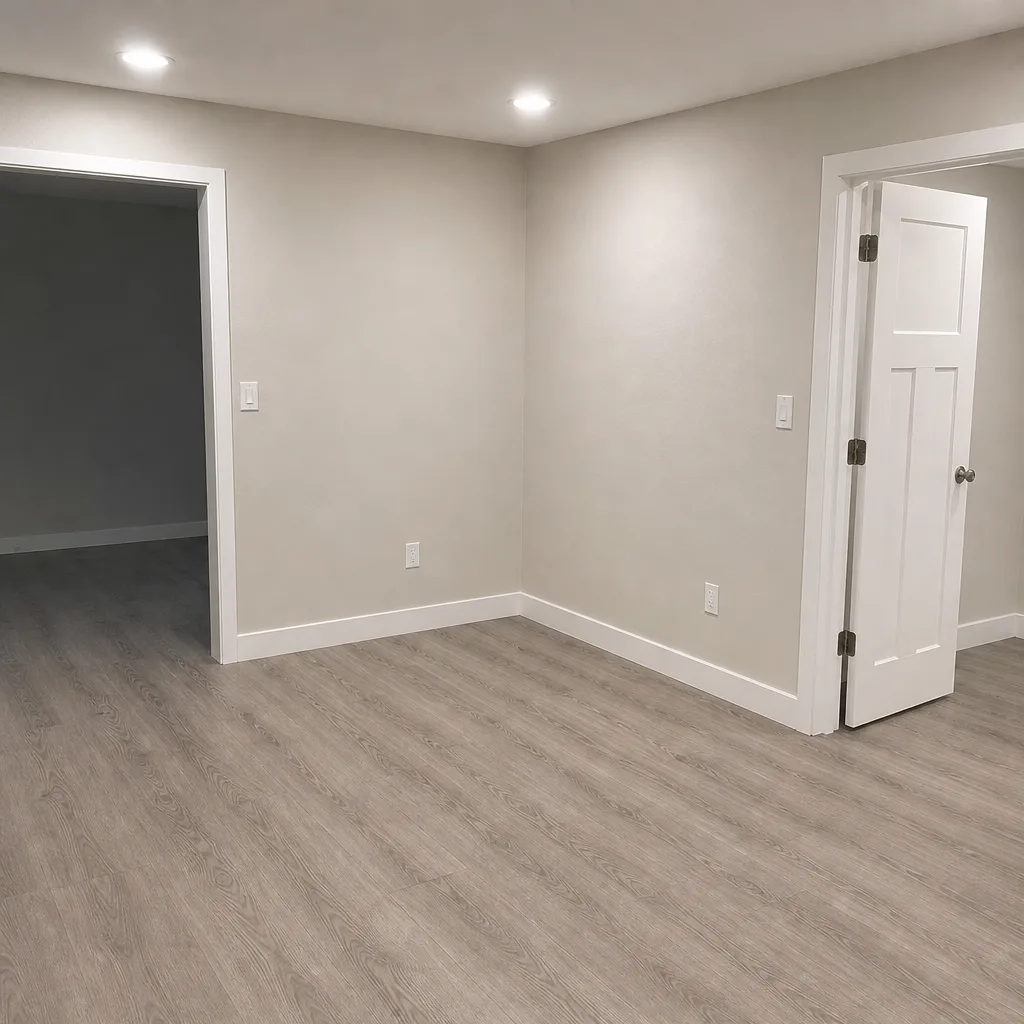 After
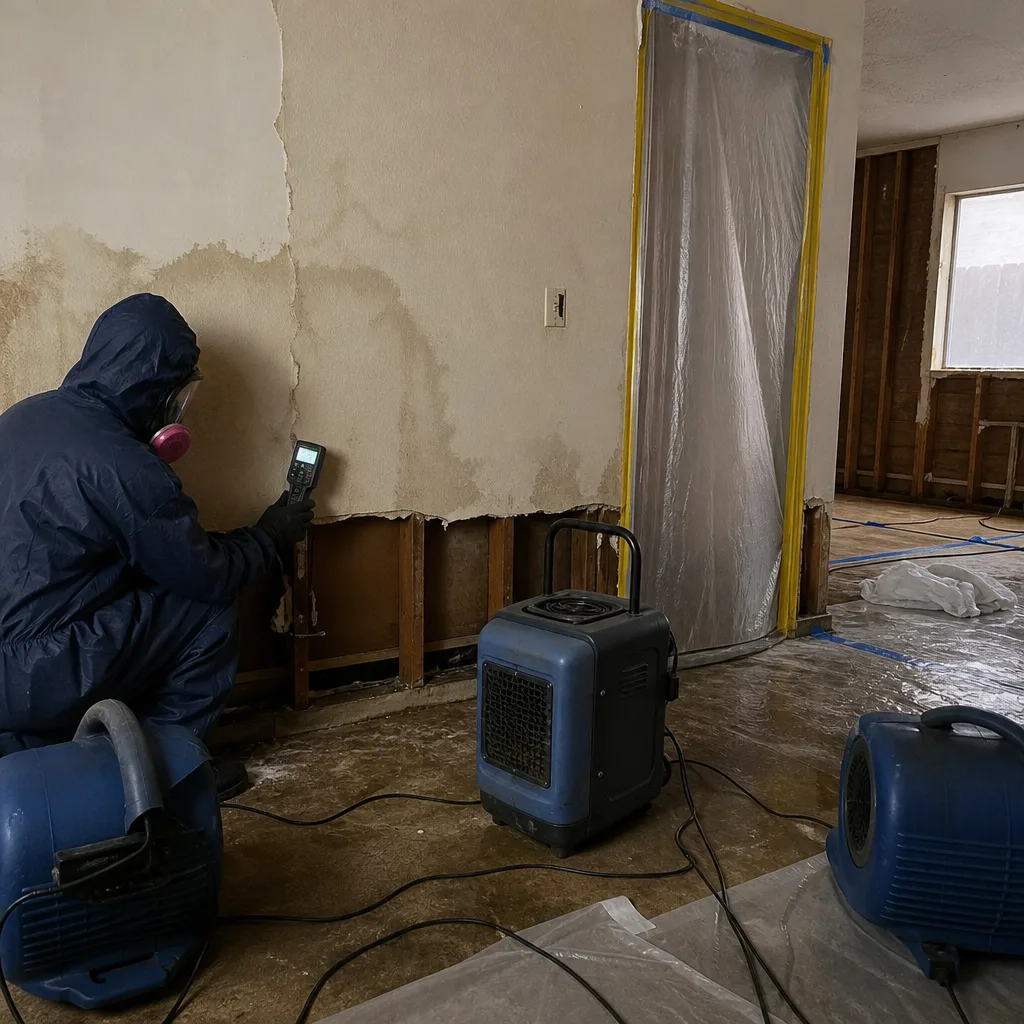 Before
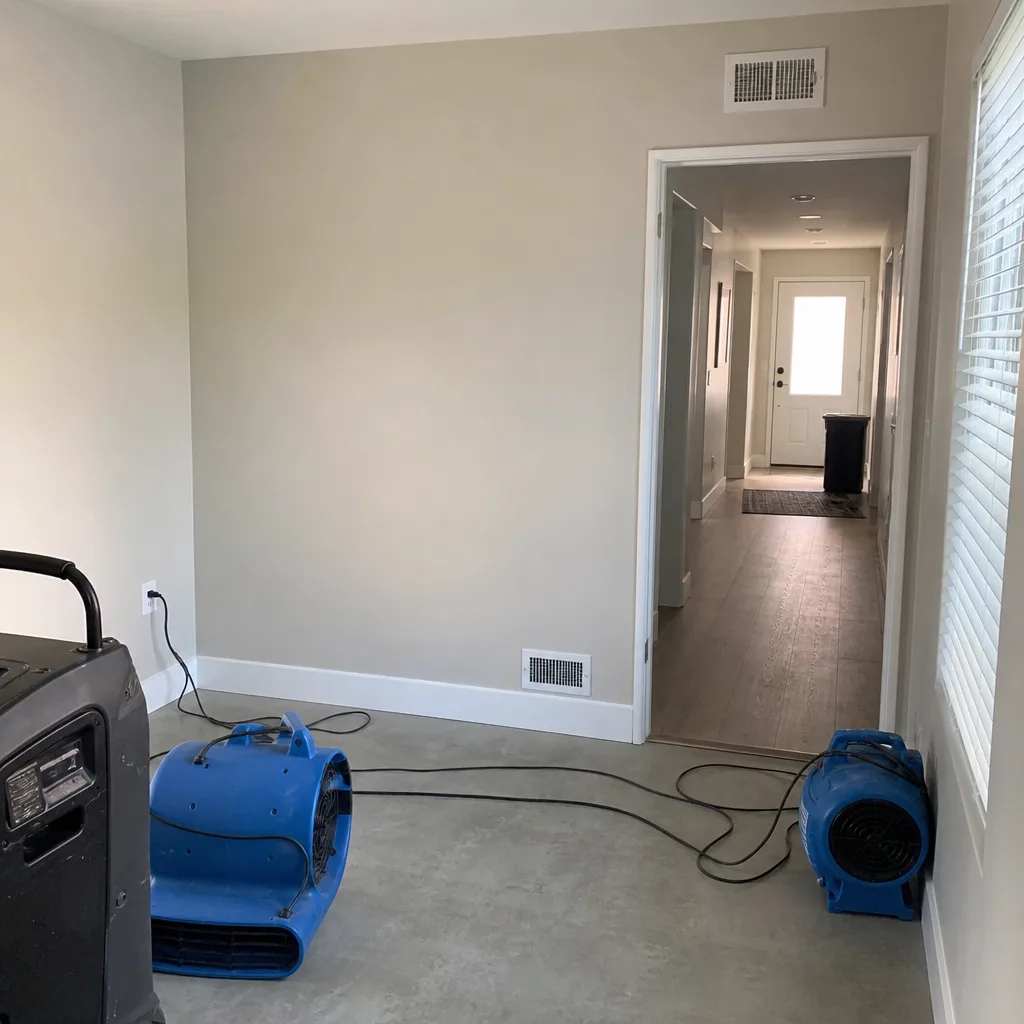 After
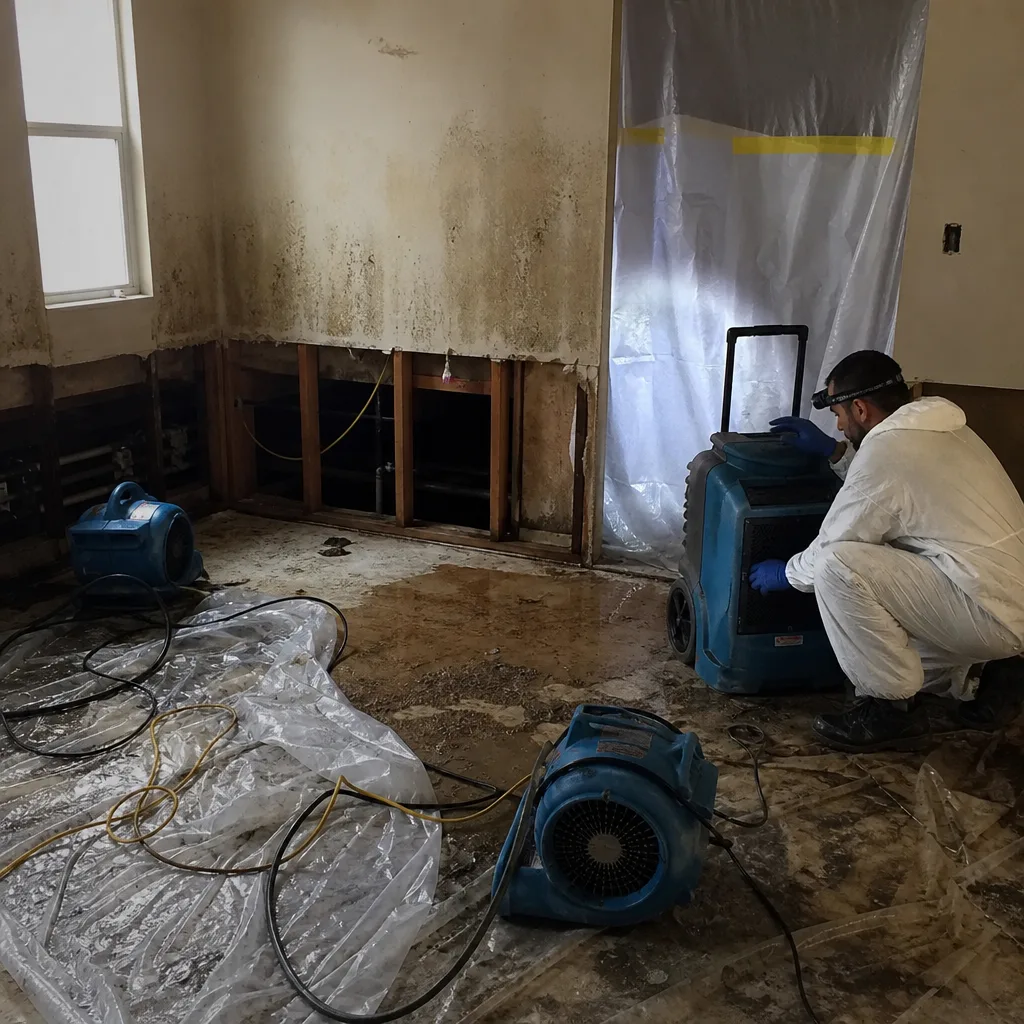 Before
 After
Common Water Damage Restoration Problems We See in Corona Homes
- Slab leaks in older 92879 and 92882 stucco tracts. Original cast-iron and galvanized supply lines corrode and split under the slab, and the water wicks up through the flooring before anyone notices. By the time we’re called, the moisture has usually spread into the next room.
- Wind-driven door-seal failures in 92883 hillside homes. Santa Ana winds force rain sideways into worn thresholds and sliding-door tracks. We see the same jamb leak on the same house after nearly every major wind event because no one verified the door’s wind rating or replaced the seal.
- Ceiling cavity saturation after tile-roof underlayment breaches. When wind lifts a tile or blows water under a ridge cap, the underlayment channels water sideways into the ceiling cavity. The drywall looks fine for days, then sags. Our moisture probes find it before the ceiling does.
- Garage-stored valuables caught by post-fire moisture claims. Canyon-adjacent homeowners in 92883 often use garages as makeshift fireproof storage. When suppression water or storm water gets in, the damaged items are rarely structural; they’re sentimental. Documenting them is part of the restoration scope, and many homeowners miss it until it’s too late to claim.
Pricing for Water Damage Restoration in Corona, CA
Corona pricing tracks close to the Riverside County average, but two local factors move the number. First, hillside homes in 92883 cost more to dry because we’re working multi-level, cavity-prone floorplans with tile roofs and two-story layouts. Second, older slab homes in 92879 and 92882 often need source repair coordination, which adds plumbing scope before drying finishes. A standard single-room extraction and dry-out in Corona runs $2,800 to $4,200. A multi-room flood loss with selective demolition and containment runs $4,500 to $8,000. If the loss is post-fire suppression or Category 3 floodwater, add antimicrobial treatment and possible pack-out to the scope. We give written scope before work starts, and we bill directly to insurance on approved claims. Call (833) 589-5317 for a free estimate; we’ll tell you what the readings say before we ever touch a wall.
We Also Serve Cities Near Corona
Our crews regularly cover water damage jobs in Home Gardens, El Cerrito Corona, Eastvale, and Norco, in addition to our primary service area in Fontana. If you’re on the edge of Corona and unsure whether you’re in our range, call (833) 589-5317 and we’ll tell you straight.
Serving Corona, CA — Our Local Coverage Area
We’re based in the Corona area and know this community well. Use the map below to see our service coverage — if you’re nearby, we can almost certainly help.
FAQs About Water Damage Restoration in Corona
A wind-rated door with a maintained threshold seal is what keeps Santa Ana wind-driven rain from entering a 92883 hillside home through the jamb, and a worn seal is the most common water-intrusion point we find after a wind event. If the door was never wind-rated for the exposure, replacing the threshold or door is part of the permanent fix, and we’ll flag it in the scope so you’re not drying the same wall every season. Call (833) 589-5317 and we’ll check the door while we map the moisture.
Whether smoke- and heat-damaged contents in a Corona garage are covered depends on your policy’s contents coverage and the documented pre-loss condition, but we routinely work with adjusters to itemize and photograph those items as part of the claim. This is exactly the kind of loss that gets underreported because homeowners focus on structural damage. We’ll create a documented pack-out and condition record so nothing sentimental gets lost in the scope.
A slab leak means the water source is under the flooring, so we don’t just extract the visible water; we locate the source and map the moisture migration path across the slab before setting equipment. Drying without fixing the source produces a dry carpet and a wet slab, and the readings will never stabilize. We coordinate with the plumber and run drying logs until the slab stops contributing moisture.
Yes, and we treat every Corona water loss as time-sensitive because mold can establish in saturated drywall within 24 to 48 hours, especially in the warm interior temperatures common during Corona’s hot season. That’s why we dispatch extraction crews quickly and begin antimicrobial treatment where materials have already gone Category 2. Call (833) 589-5317 immediately if water has been standing for more than a few hours.
Corona enforces California Building Code wind-load requirements for exterior door and panel replacements, and hillside exposures in 92883 often require wind-rated assemblies with proper anchoring and flashing. We defer to a licensed contractor for the actual replacement, but we document the damaged assembly and the water intrusion path so the repair scope is specific, not cosmetic. If the door was already under-rated, that’s part of the claim conversation.
Written by Glen Pacheco, Owner at Dry Line Water Damage, serving Corona and surrounding communities with IICRC-certified water damage restoration.
If you’re in Corona and water is where it shouldn’t be, call (833) 589-5317 now. We’ll walk you through what to do in the next 15 minutes, then get a crew moving.