

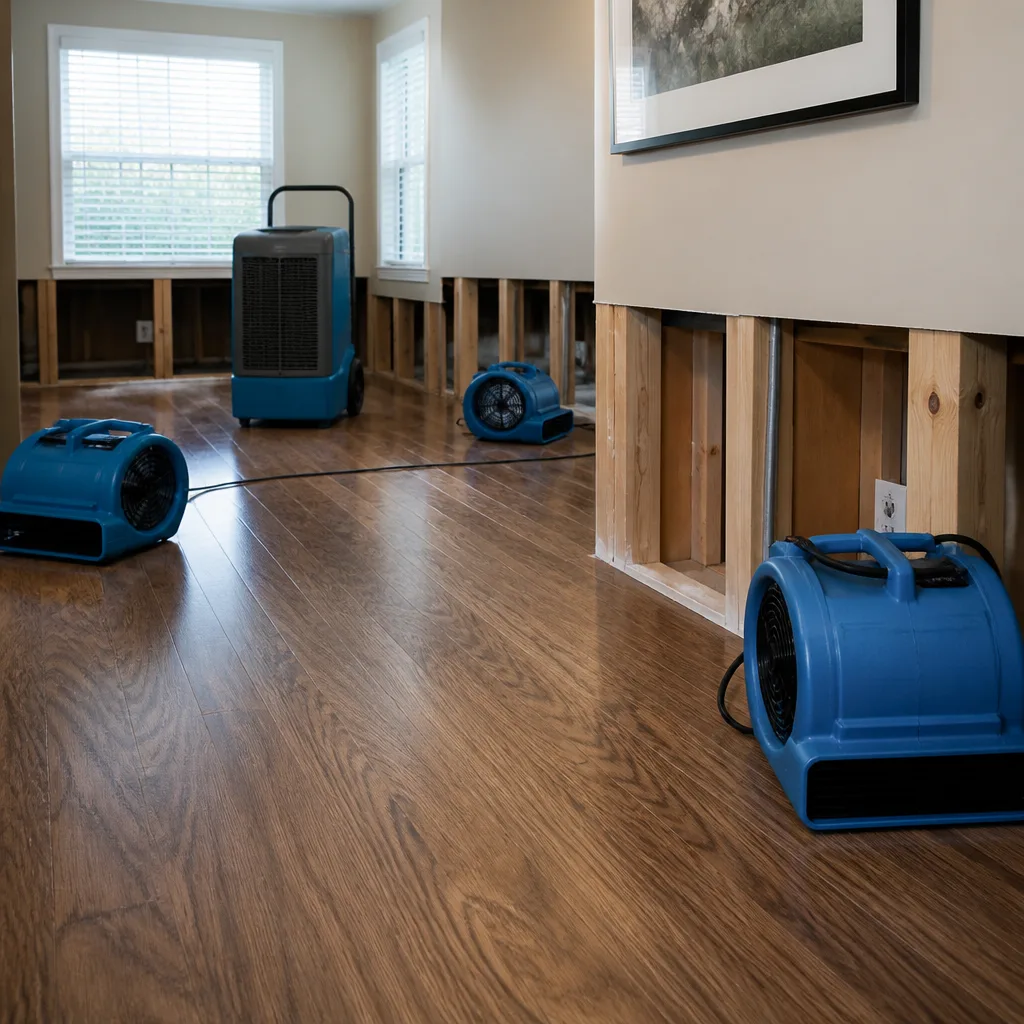
 Water damage drying
 Fire & smoke cleanup
 Mold remediation
 Storm response
 Sewage cleanup
 Reconstruction
Free visual inspection and a written scope of work before any mitigation begins - photos, moisture readings, and drying logs go in your claim file
The scope we write is the scope we bill. Anything new gets shown to you, in writing, before we touch it.
Get your free estimateDirect Answer: What Water Damage Restoration in Crestline Actually Costs and How Fast It Moves
Water damage restoration in Crestline typically runs between $2,800 and $14,500 depending on how long water has been sitting, how much of the cabin’s subfloor is involved, and whether mold has taken hold. Most Crestline jobs we handle fall into two buckets: a fast-extraction cleanup for a recent pipe burst ($2,800 – $5,500) or a full structural-drying and rebuild project for a second home that sat wet for weeks ($7,200 – $14,500+). Call (833) 589-5317 for a documented, line-item scope before any work begins – estimates are free, and we never start mitigation without a written plan.
Fast, Reliable Water Damage Restoration Across Crestline
If you’ve just walked into a Crestline cabin and found water where it shouldn’t be, you’re not the first owner to face this. Freeze damage in the San Bernardino Mountains operates on its own timetable. A pipe splits in January. Nobody hears it. By the time you drive up for the weekend or a property manager checks on your rental, water has been running through the crawlspace for weeks. That’s the pattern we respond to most in the 92325 zip code, and it’s why our water extraction and drying protocols treat every Crestline job as a potential Category 3 loss until proven otherwise. We know the roads – Highway 18, Lake Gregory Drive, the switchbacks into Valley of Enchantment – and we stage equipment so we can roll to Crestline without delay. Call (833) 589-5317 the moment you suspect a leak. Minutes matter less than you think when water’s been running for days, but moisture mapping the full extent before demolition matters more.
Restoration work we handle
Why Dry Line Water Damage Is Crestline’s Preferred Water Damage Restoration Company
Crestline homeowners and property managers call us because we treat mountain water damage differently than valley water damage. A San Bernardino restoration crew might handle a slab leak on flat ground. We handle unheated crawlspaces under pier-and-beam cabins, steep lots where access is tight, and vacation homes where the damage is discovered long after the water stopped flowing. Our IICRC-certified process means every drying plan is documented – moisture readings before, during, and after – so you’re not relying on a tech’s assurance that the walls “feel dry.” We show you the numbers.
Property managers who handle multiple Crestline rentals keep our number saved because we’re consistent. Same crew, same equipment, same documentation standard every time. That matters when you’re coordinating with an insurance adjuster who has questions about the drying log. We’ve been doing this in the mountains long enough to know which cabins have original pine flooring worth saving and which ones need a strip-and-replace. That judgment call changes the invoice by thousands, and it’s exactly where a Water Damage Restoration crew with IICRC training earns its fee. Glen Pacheco built this operation around one principle: dry it right, document everything, and never cut a floor joist you could have saved.
Water Extraction in Crestline
Water extraction in Crestline is a different job than the same service in the flatlands. The cabins here sit on varied foundation systems – some on concrete, many on pier-and-beam with open earth below – and water travels differently in each. We don’t roll in with a single strategy. A leak from a split supply line near Lake Gregory might pool in one room while saturating the subfloor six feet away, and our techs map that migration path with moisture meters before extraction begins. Most Crestline water extraction jobs run $800 – $2,200 for the extraction phase alone, with structural drying billed separately based on the affected square footage.
We use truck-mounted extraction where the lot allows and portable XPOWER and B-Air units when a steep driveway or tight cabin layout rules out the big rigs. That’s the reality of working in a mountain-resort community – not every property has a clear path to the front door.
Subfloor and Crawlspace Extraction
Unheated crawlspaces are the most common hidden water reservoir in Crestline cabins. Standing water under a pier-and-beam floor keeps wicking moisture upward long after the visible surface looks dry. Our extraction process includes removing standing water from the crawlspace itself, not just the finished rooms above. We then place air movers and dehumidifiers strategically to pull moisture out of the joist cavities before any mold has a chance to develop.
When Category 3 Water Changes the Scope
If water sat for more than 48-72 hours, or if the source involved anything beyond clean supply water, the extraction step becomes a Category 3 remediation. That means containment, antimicrobial treatment, and removal of porous materials like carpet and drywall that can’t be dried to a safe standard. We see this constantly in Crestline vacation homes where no one was present to catch the leak early.
Emergency Water Removal in Crestline
Emergency water removal in Crestline usually means one of two calls: a burst pipe mid-winter in a cabin someone was actually living in, or a property manager discovering a water problem that started days or weeks earlier. The first scenario is urgent because water is still flowing. The second is arguably worse because the water has already done its damage. We respond to both with the same first step: stop the source, extract the water, and map every path it traveled. Emergency water removal in Crestline generally runs $900 – $2,600 depending on how many rooms are involved and whether we’re extracting from a crawlspace. If the water has been sitting long enough to soak through subflooring, expect the full scope – including structural drying – to climb from there.
We don’t promise same-hour arrival for every Crestline call, because we don’t staff a dispatch desk that’s paid to tell you what you want to hear. What we do promise is that the person who arrives has the right equipment, knows what a freeze-damaged pipe looks like, and will document the water’s actual path instead of guessing.
Winter Freeze-Burst Response
Cold snaps at 4,500 to 5,000 feet split copper and PEX supply lines in unlucky ways. The pipe breaks behind a washing machine, inside an uninsulated wall cavity, or under a sink in a home where the heat was set to “away.” By the time anyone notices, the leak has been running through the structure, often following the path of least resistance down into the crawlspace. Our winter response includes checking every upstream and downstream fixture, because one split often means pressure damage to nearby joints that haven’t failed yet.

Post-Fire Debris Flow Water Removal
Burn scars above Valley of Enchantment have changed how water moves during winter rain events. Mud and ash-laden runoff enters homes faster than clean rainwater, and standard extraction equipment can clog on silt if a tech isn’t paying attention. Our crews know to pre-filter or use trash pumps for heavy debris loads before switching to fine extraction, then run moisture mapping twice – once after obvious water removal and again after silt is cleared. Missing that second reading leaves hidden saturation in wall cavities, and that’s how a debris-flow loss turns into a mold problem months after the insurance claim closed.
Trusted Brands We Service in Crestline
Every mountain cabin we’re called to has its own mix of old plumbing, past renovations, and unexpected framing decisions. We don’t service a single brand of plumbing or water heater – we service the structure itself, regardless of what failed. That said, we’re used to working around Crestline’s typical setup: older galvanized and copper supply lines mixed with newer PEX from partial remodels, water heaters tucked into tight utility closets, and sump pumps that were never designed for debris-flow events. If your cabin’s water damage came from a failed appliance or a plumbing component, our job is water removal and structural drying, not fixing the appliance itself. We’ll tell you if the source needs a plumber, an electrician, or a roofer, and we’ll document what we found for your insurance claim. We keep our trailer stocked for Crestline conditions: XPOWER air movers, B-Air dehumidifiers, and Injectidry panels for the tight spaces between floor joists.
See the difference
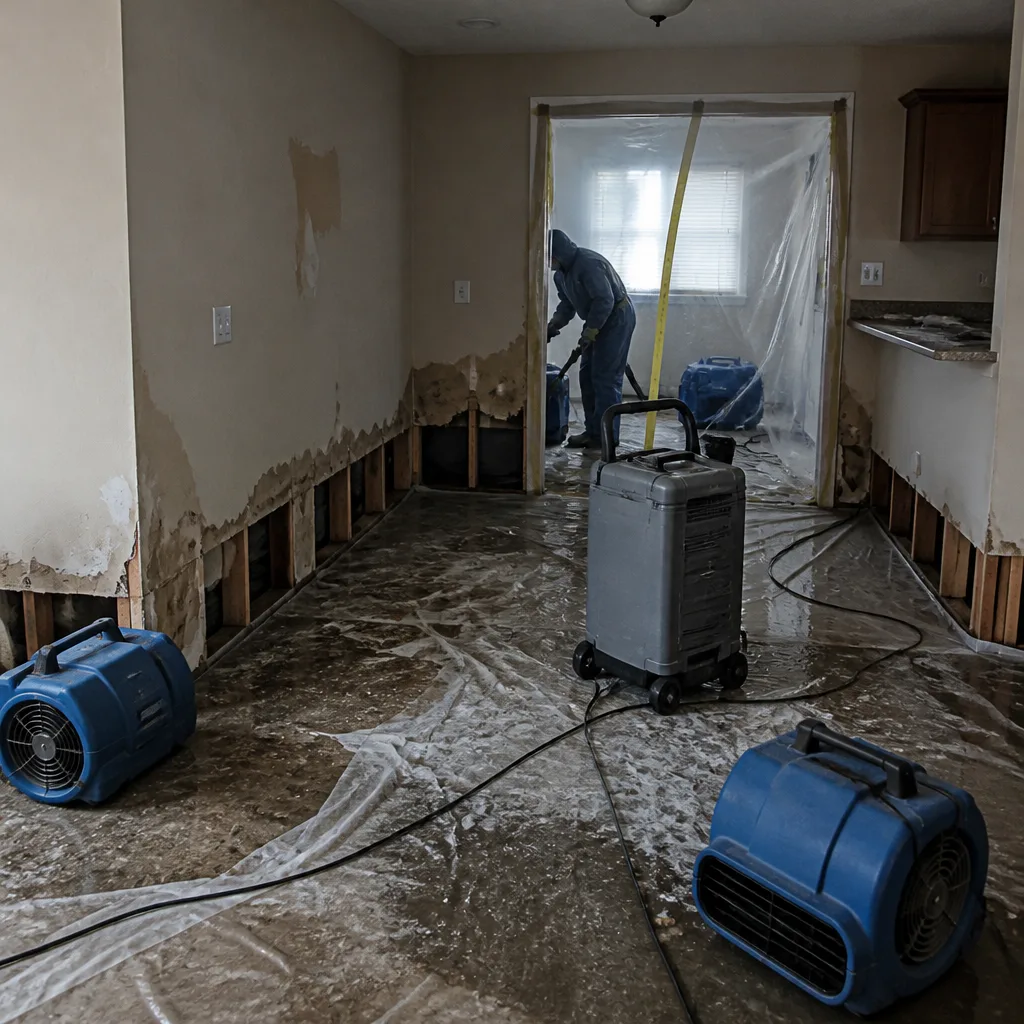 Before
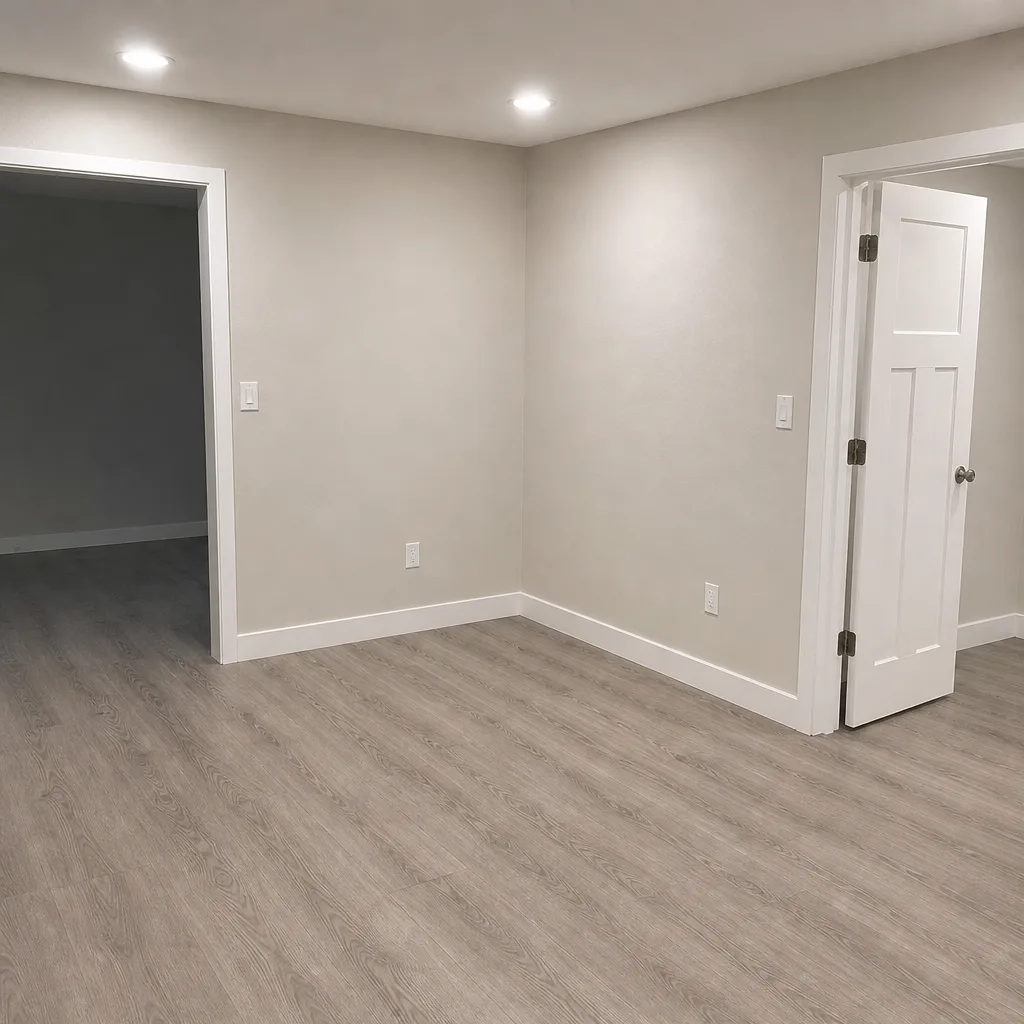 After
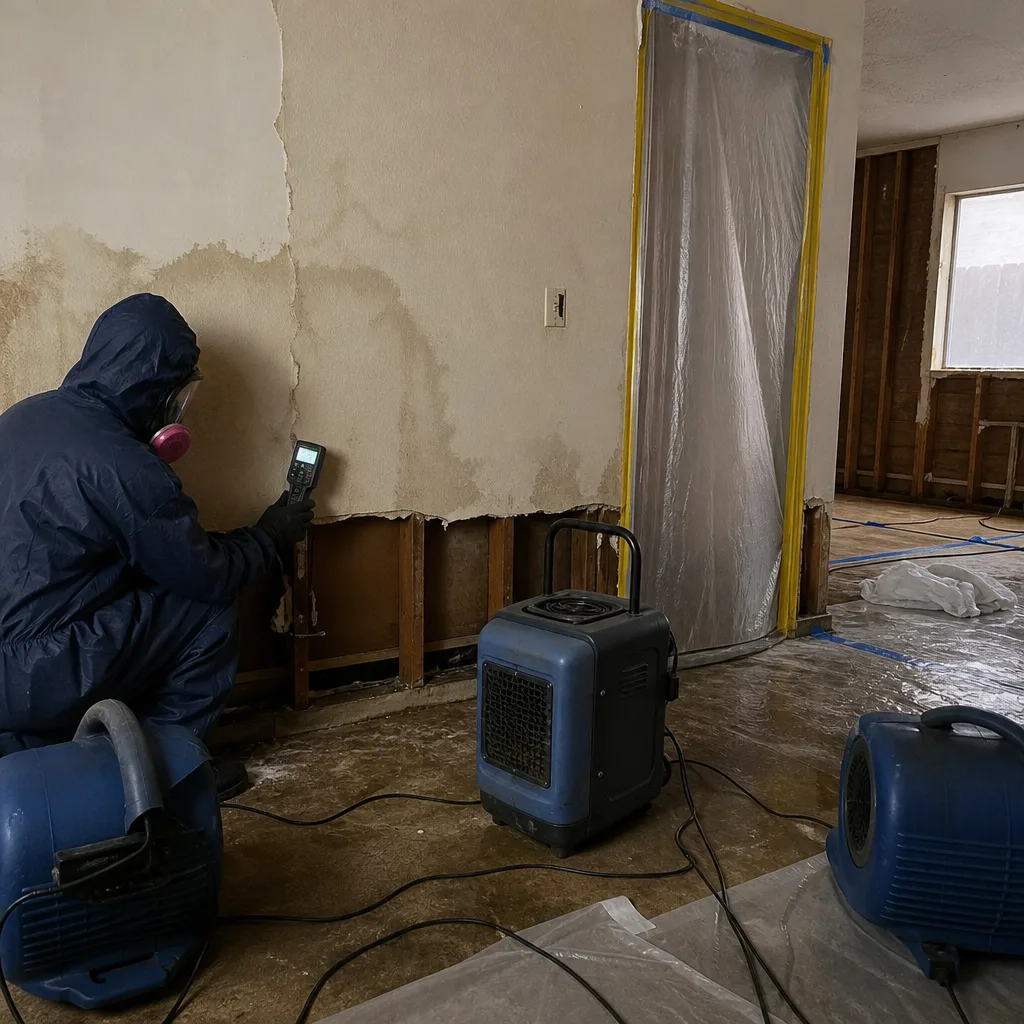 Before
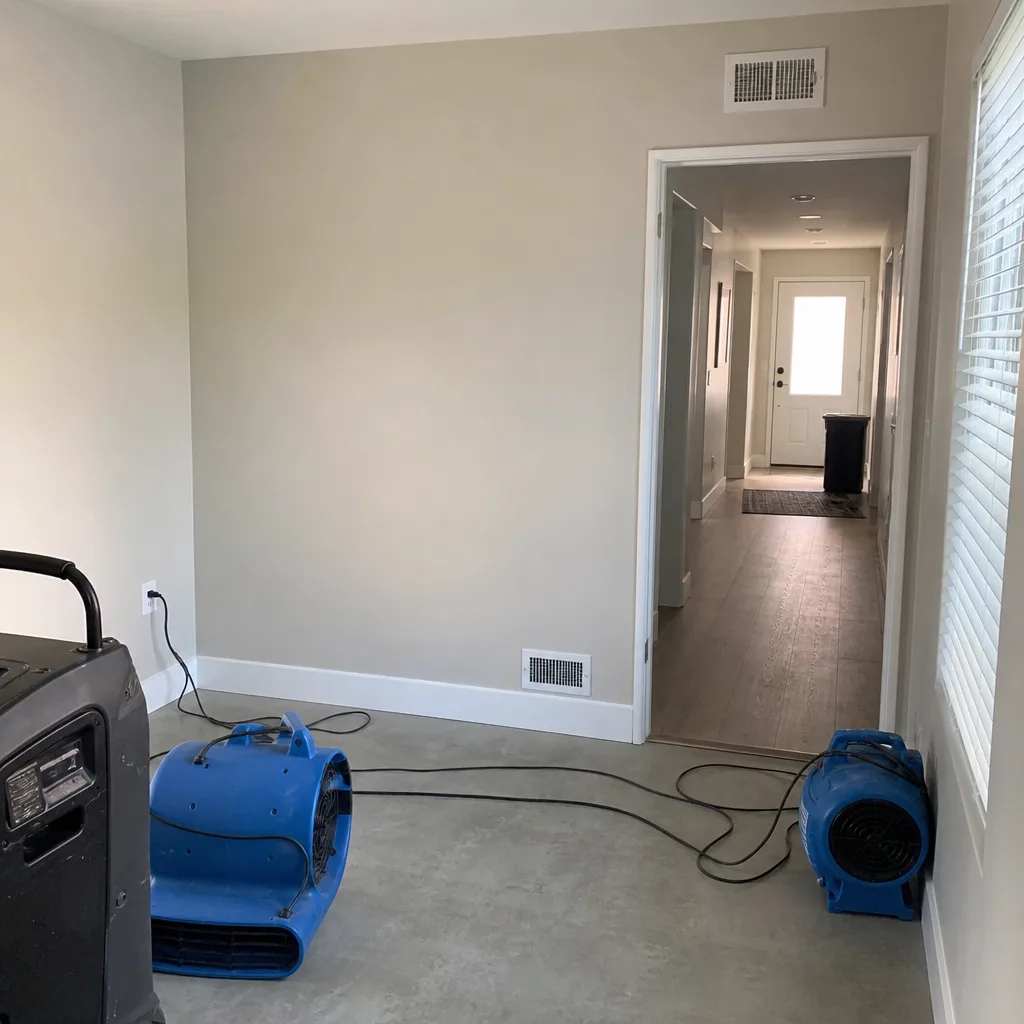 After
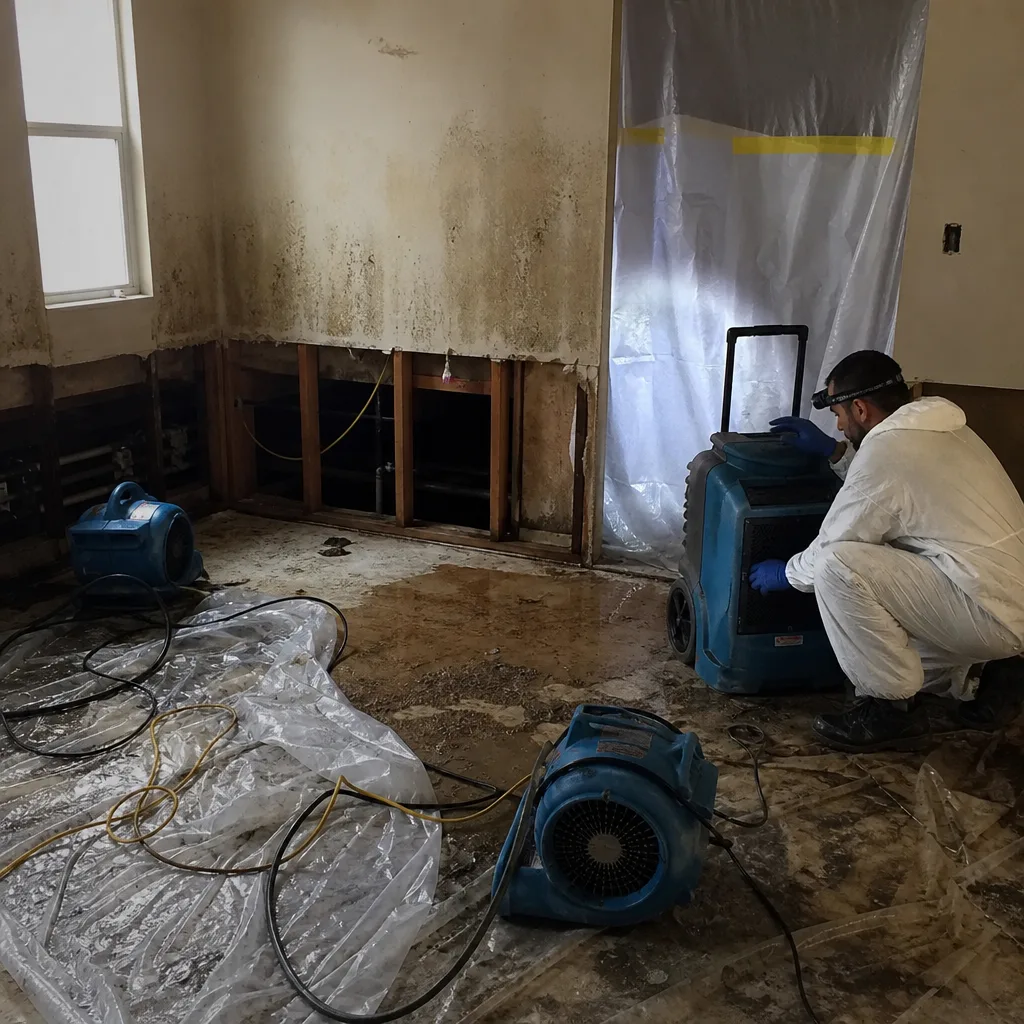 Before
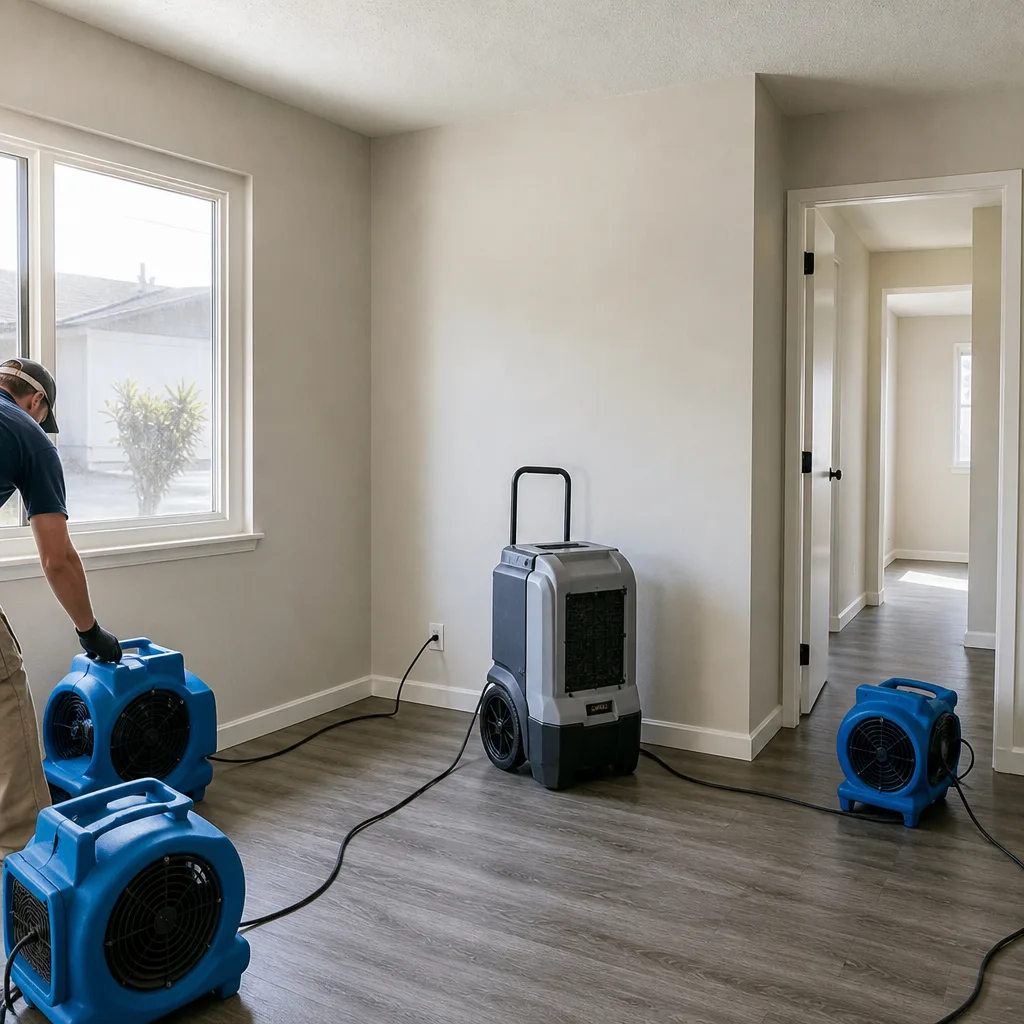 After
Common Water Damage Restoration Problems We See in Crestline Homes
- Freeze-damaged pipes in unoccupied cabins. A split supply line in an unheated crawlspace can run for weeks before anyone notices. By the time owners return, Category 1 clean water has turned into a Category 3 biohazard, and the restore scope triples.
- Ice-dam leaks mistaken for plumbing failures. Snow loads on older roofs melt and refreeze at the eaves, forcing water under flashing and into wall cavities. We’ve seen adjusters deny claims because the source looked like a roof issue when it was actually an ice dam, so we document the condition of the roof line during every winter water loss.
- Pier-and-beam subfloor saturation. Water leaking into a crawlspace soaks joists, subflooring, and insulation from below. Surface extraction won’t fix it. Without proper structural drying, the subfloor stays wet for weeks and the musty smell returns even after visible water is gone. Injectidry panels pull moisture directly from the joist bays without ripping up the flooring.
- Silt-clogged extraction after debris flows. Post-fire runoff from the burn scars above Lake Gregory brings silt, ash, and debris into homes. A tech with only a standard extraction wand will clog the unit and walk away leaving water where the debris settled. Our crews pre-filter heavy sediment loads, then re-moisten and re-extract to get the fines out of porous surfaces.
Pricing for Water Damage Restoration in Crestline, CA
Here’s what you’re looking at, honestly. Water extraction on a single-room leak with no hidden saturation: $800 – $1,900. Structural drying with dehumidifiers and air movers for two to three affected rooms: $2,200 – $4,800. A full Category 3 mitigation – extraction, containment, antimicrobial treatment, removal of saturated drywall and carpet, plus drying: $6,500 – $14,500 and up, depending on whether we’re pulling permits and rebuilding. Factors that push a Crestline job toward the higher end: steep lots that make equipment staging slower, crawlspaces that need confined-space drying, and second homes where damage sat unnoticed for weeks. Every job starts with a free on-site estimate and a written scope. Call (833) 589-5317 to schedule one. If you’re watching water spread right now, call anyway – the phone is answered by a person who can talk you through the first steps.
We Also Serve Cities Near Crestline
Our crews work up and down the San Bernardino Mountains and into the foothills below. The same IICRC-certified process we use in Crestline applies whether we’re in Lake Arrowhead handling a burst pipe in a lakeside cabin, in Highland drying out a slab leak, in San Bernardino doing a Category 3 mitigation, or in Muscoy pumping out a flooded basement. One call covers the whole area. The equipment comes from the same truck either way.
Serving Crestline, CA — Our Local Coverage Area
We’re based in the Crestline area and know this community well. Use the map below to see our service coverage — if you’re nearby, we can almost certainly help.
FAQs About Water Damage Restoration in Crestline
Mold can begin forming within 48 to 72 hours of a water loss, especially in warmer months when mountain temperatures climb into the 70s and 80s during the day. In unheated or poorly ventilated crawlspaces, that timeline can compress even further. If your Crestline cabin has been wet for more than two days, assume mold is active somewhere and call for a professional assessment rather than relying on surface drying.
Category 1 water comes from a clean source like a supply line or a faucet. Category 3 water is grossly contaminated – sewage, floodwater, or water that sat long enough to grow bacteria and mold. The distinction matters because Category 3 requires containment, antimicrobial treatment, and removal of porous materials that Category 1 damage might allow us to dry in place. A supply-line leak that sat for two weeks in an empty cabin is no longer Category 1. We treat every prolonged leak in Crestline as potentially Category 3 until moisture mapping and air sampling tell us otherwise. Call (833) 589-5317 and we’ll tell you what category you’re actually dealing with.
Yes. Many Crestline cabins have extremely steep driveways or no driveway access at all, with homes built into the slope so the crawlspace is only reachable from one side. We use portable extraction units when we can’t get a truck-mounted system close enough, and our techs have worked in crawlspaces with less than 18 inches of clearance. Equipment staging takes longer on these lots, but the drying standard doesn’t change – we still hit the same moisture-content targets before we call it done.
We dry it from below, not above. Water that soaked through flooring and into the joist cavities won’t evaporate quickly enough with surface air movers alone. We access the crawlspace, remove any standing water, and set up containment to create a controlled drying environment. Then we place air movers to push air through the joist bays and, where the flooring is worth saving, run Injectidry panels that pull moisture out of the wood from the top side without pulling up the floor. We take moisture readings daily and don’t remove equipment until the numbers show the subfloor is back to its pre-loss baseline.
Call us to perform a moisture assessment before you start opening walls or pulling up carpet. If the water’s been running for days or weeks, the immediate risk isn’t just the visible puddle – it’s what has migrated into the subfloor, wall cavities, and insulation. Untrained probing can spread dust and mold spores through the cabin and make the loss worse. If you find active water, shut off the main supply and call (833) 589-5317. We’ll inspect, map the moisture, and give you a written scope before doing any cutting. If nothing’s wet, we’ll tell you that, too, and you’ll have a baseline for the future.
Not if the water has been present for more than a day. Consumer dehumidifiers and box fans can handle condensation-level moisture. They cannot dry saturated drywall, subflooring, or insulation. Half-dried drywall feels dry to the touch on the surface while staying wet inside the paper facing, and that’s where mold starts. Our equipment moves air at volumes and in directions that rental units can’t match. That’s not sales talk – it’s the difference between hitting a moisture-content target and just moving wet air around. Call (833) 589-5317 and we’ll come out and tell you whether your situation is DIY-recoverable or needs professional drying. If it’s the former, we’ll say so.
What To Do Right Now if Your Crestline Home Is Flooding
Turn off your water at the main shutoff if the source is a burst pipe. If water is coming through the roof or flowing in from debris-flow runoff, don’t enter standing water unless you’re certain there’s no electrical hazard. Move valuables if it’s safe, but don’t spend an hour hauling furniture while water keeps saturating the subfloor. Call (833) 589-5317. We’ll walk you through the immediate steps over the phone, tell you what to do while we’re en route, and give you a realistic arrival window for Crestline given current road conditions on Highway 18 and the side routes. The first hour matters, but what matters more is that the drying starts correctly when help arrives.
Written by Glen Pacheco, Owner at Dry Line Water Damage, serving Crestline and the San Bernardino Mountains with IICRC-certified restoration crews since 2005.