

 Water damage drying
 Fire & smoke cleanup
 Mold remediation
 Storm response
 Sewage cleanup
 Reconstruction
Free visual inspection and a written scope of work before any mitigation begins - photos, moisture readings, and drying logs go in your claim file
The scope we write is the scope we bill. Anything new gets shown to you, in writing, before we touch it.
Get your free estimateFast, Reliable Water Damage Restoration Across Desert Edge
Water damage restoration in Desert Edge usually costs between $1,800 and $6,500 for a typical monsoon intrusion or slab flood, and the work that matters most happens in the first 48 hours. We’re Dry Line Water Damage, an IICRC-certified restoration crew with the equipment and the local experience to dry a Desert Edge home to a documented standard, not just a surface that looks dry. If water is moving through your house right now, call (833) 589-5317. If you’re still assessing the damage, read on and you’ll understand exactly what we’d do and why.
Why Dry Line Water Damage Is Desert Edge’s Preferred Water Damage Restoration Company
Desert Edge sits at the wind-swept western edge of the Coachella Valley, where homes deal with a combination most restoration techs from Los Angeles or Riverside simply don’t train for: monsoon sheet-flooding that carries sand and silt, plus extreme wind events that drive water sideways into walls. Our crews work here year-round. We know the stucco-over-frame construction, the flat and low-slope roofs, and the slab-on-grade foundations that dominate Desert Edge’s housing stock. We also know that after a storm, a wall cavity that reads dry on a pin-type meter can still be saturated behind the stucco, because sand-packed cavities fool moisture readings. That local knowledge changes how we scope every job.
We’re led by Glen Pacheco, and the crew is IICRC-certified, which means our drying process follows the restoration industry’s most recognized standard. The same certification that matters to an insurance adjuster in San Bernardino matters in Desert Edge, because it means documentation, daily moisture logs, and a drying plan built around measurable targets rather than guesses. Homeowners in Desert Edge call us because we show up with Dri-Eaz dehumidifiers and Phoenix air movers, not the kind of rental equipment you’d pick up at a hardware store. And because we carry Injectidry structural-drying systems, we can often dry the inside of a wet wall without tearing out the whole stucco exterior. That saves hours of reconstruction and thousands of dollars. The bulk of our Water Damage Restoration work in this part of Riverside County involves exactly that: finding water the surface inspection missed and pulling it out of the assembly.
We’re members of the Restoration Industry Association, which holds us to a published code of ethics and ongoing professional development. That matters when you’re deciding who to let into your house at 11 p.m. after a ceiling started dripping.
Restoration work we handle
Water Damage Cleanup in Desert Edge
Water Damage Cleanup in Desert Edge is rarely just mopping up a puddle. Monsoon floods carry fine desert silt, and wind-driven rain forces grit into window frames, roof seams, and wall cracks. Cleanup here means extracting water, removing silt-laden debris, and then checking the surfaces and cavities that sand conceals. The goal is a documented dry standard, because in Desert Edge’s extreme heat, a wall that looks dry on the surface can stay wet inside for weeks, and that’s where structural problems begin.
Most cleanup jobs in Desert Edge run $1,800 to $4,200 for a contained intrusion like a burst supply line, a leaking water heater, or a roof leak contained to one room. Monsoon flood events that move water across multiple rooms or into wall cavities typically land between $4,000 and $6,500 once extraction, structural drying, and repairs are scoped.
What We Actually Do During Cleanup
We start with extraction. Pulling standing water off a slab-on-grade floor within the first hours stops it from wicking under baseboards and into the bottom plate of framed walls. Then we remove the silt. Desert Edge flood water isn’t clean; it carries sand, clay, and whatever it picked up crossing a ranchette. That grit packs into corners, under millwork, and against stucco reveals. If left in place, it holds moisture against framing and drywall for months.
Once the visible water and debris are gone, we map the moisture. This isn’t a single reading with a pin meter. We check slab edges, wall cavities, roof insulation, and under cabinetry. In Desert Edge, we specifically look for sand-packed cavities because that’s where surface-dry stucco hides saturated interior framing.
When a Desert Edge Homeowner Needs Cleanup
Anytime water crosses the threshold and soaks into porous material. A soaked carpet, wet drywall, swollen baseboards, or water under kitchen cabinets all qualify. The dry air here means a small spill on tile will evaporate in a day, which makes it tempting to skip cleanup. The trap is that evaporation on the surface is not the same as drying inside the assembly. A wall cavity or slab edge can hold moisture for weeks while the stucco and tile look bone dry.
Emergency Water Damage Restoration in Desert Edge
Emergency Water Damage Restoration in Desert Edge is what happens when water is actively entering or spreading. A roof seam that let go during a monsoon, a supply line that burst overnight, water pouring through a flat-roof penetration, or a drainage failure that pushed sheet-flood water into the house. The emergency phase is about stopping the source, extracting standing water, and setting up drying equipment fast enough that the damage stops growing. We respond to Desert Edge and the surrounding area directly; this page’s service area includes ZIP code 92240 and the unincorporated roads that wind through the western valley.
For emergency work in Desert Edge, expect $2,500 to $5,500 for the emergency phase alone, extraction through initial drying setup. Roof leak emergencies tied to monsoon wind damage often trend higher because the water travels through multiple cavities before anyone notices. The emergency phase does not include full reconstruction, which we scope separately, in writing, after the drying plan hits its targets.
How an Emergency Response Works Here
We arrive, stop the water at its source if it’s still running, and start extraction immediately. On a slab-on-grade Desert Edge home, we focus on the slab edge and wall base first, because that’s where water goes before it climbs. Then we look up. In this climate, a ceiling stain after a wind event often means the roof assembly above it is holding water, and the stain is just the lowest point of a soaked insulation path.

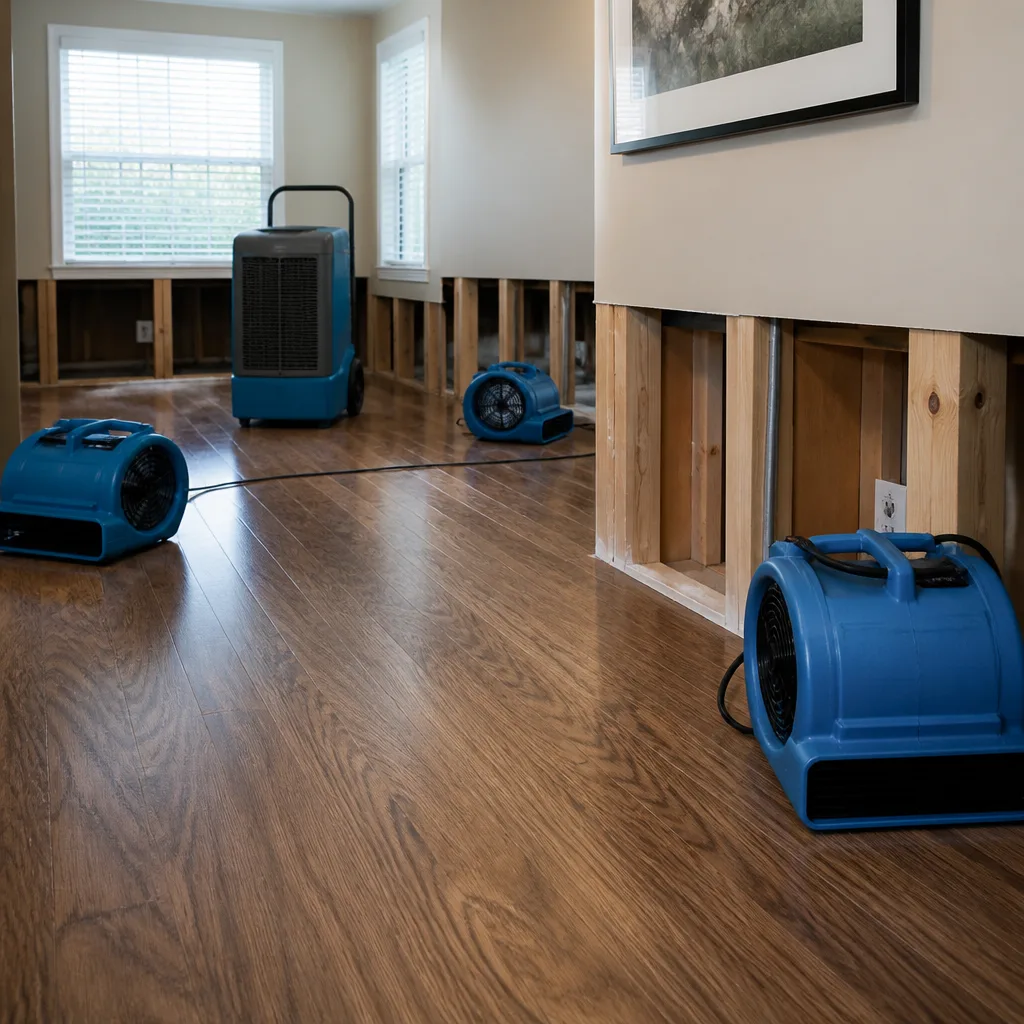
The drying equipment goes in the same visit. Phoenix air movers and Dri-Eaz dehumidifiers create a controlled environment, and if we’re dealing with a saturated stucco-over-frame wall, Injectidry systems pull air through the cavity itself. Daily moisture readings go into a log. You get a copy, and if an adjuster is involved, they get one too.
Exterior Intrusion is the Desert Edge Difference
After a big storm here, the first visible damage is often a pile of silt where flood water pooled. But the real problem is what the wind drove into roof seams, window penetrations, and stucco cracks before the rain even stopped. We inspect the outside as aggressively as the inside, because in Desert Edge the leak that shows up as a small wall stain on Tuesday may have been wet insulation and saturated framing since Sunday night.
Trusted Brands We Service in Desert Edge
We service all major equipment and restoration brands, and we stock parts for the systems most common in Desert Edge’s mid-to-late-20th-century housing stock. That means when we’re setting up a structural drying plan on a stucco-over-frame ranchette, we’re not waiting on a supply house in Palm Springs for Injectidry manifolds or replacement filters for our Dri-Eaz dehumidifiers. The same applies to the B-Air air movers we run across slab floors. Because we keep our equipment and parts inventory tuned to this specific market, we can start the drying plan on the first visit instead of running a partial response and hoping the rest of the equipment arrives tomorrow. In this heat, that one-day difference changes the scope.
See the difference
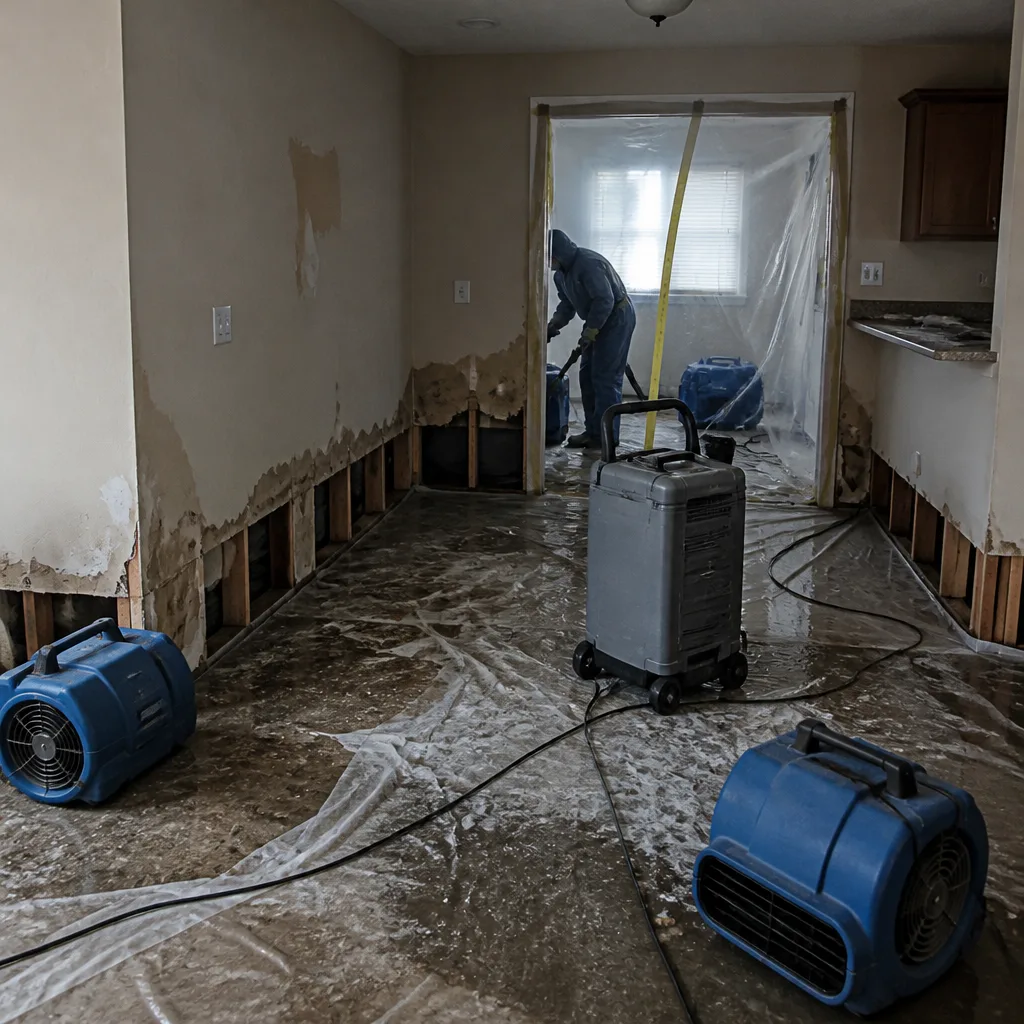 Before
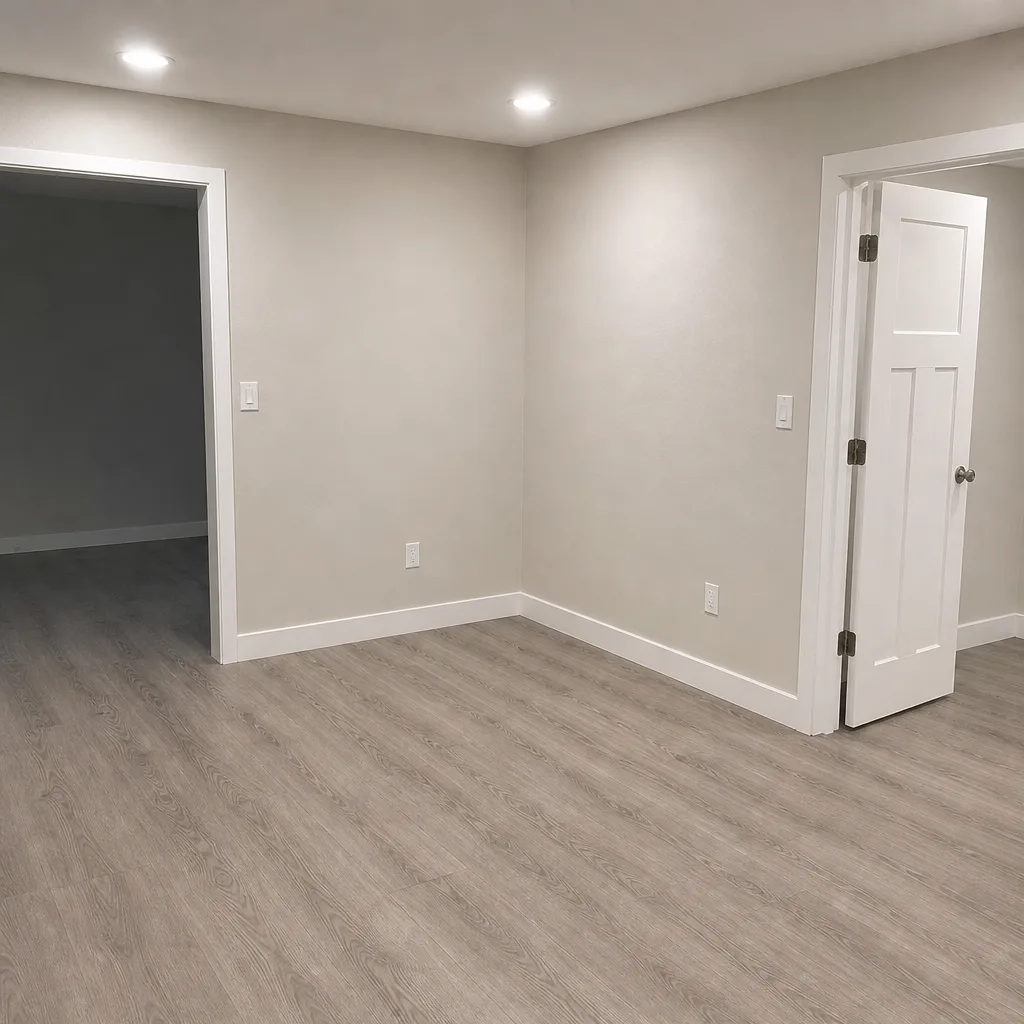 After
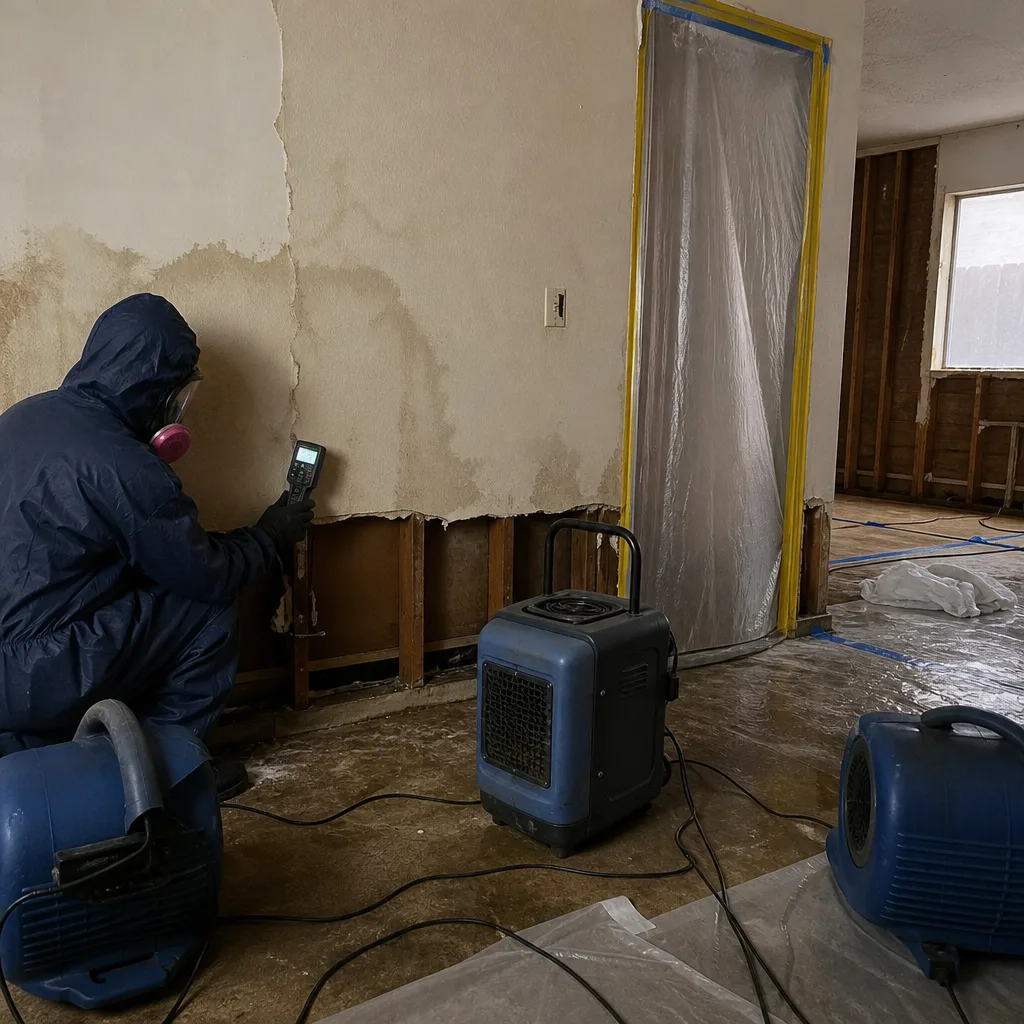 Before
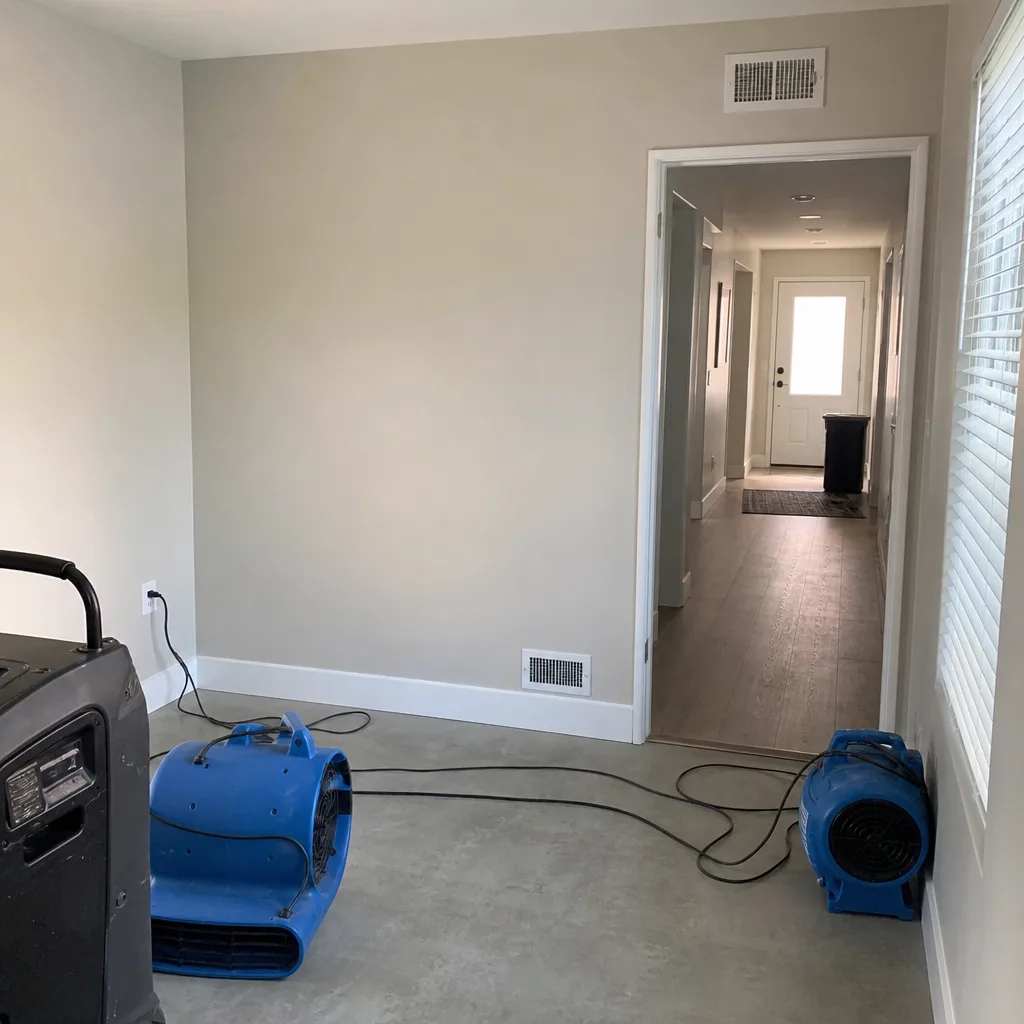 After
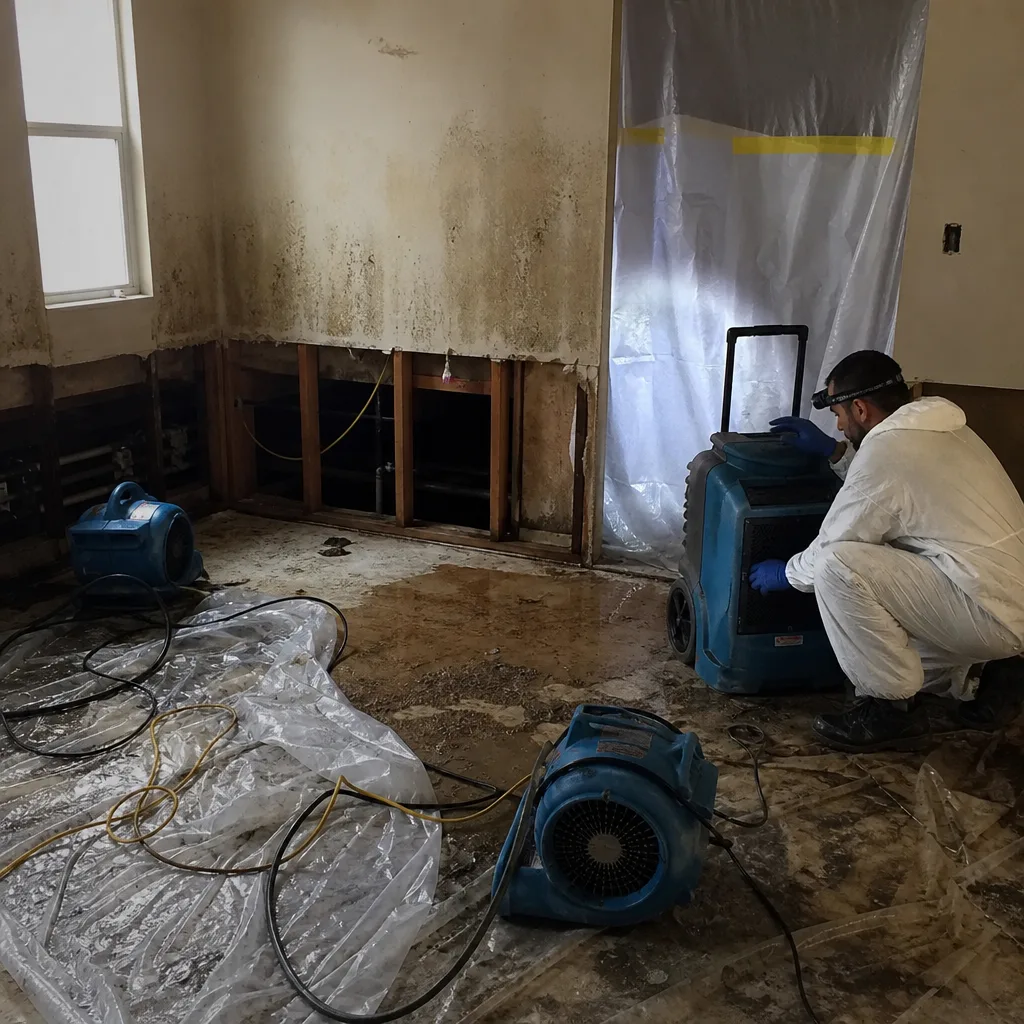 Before
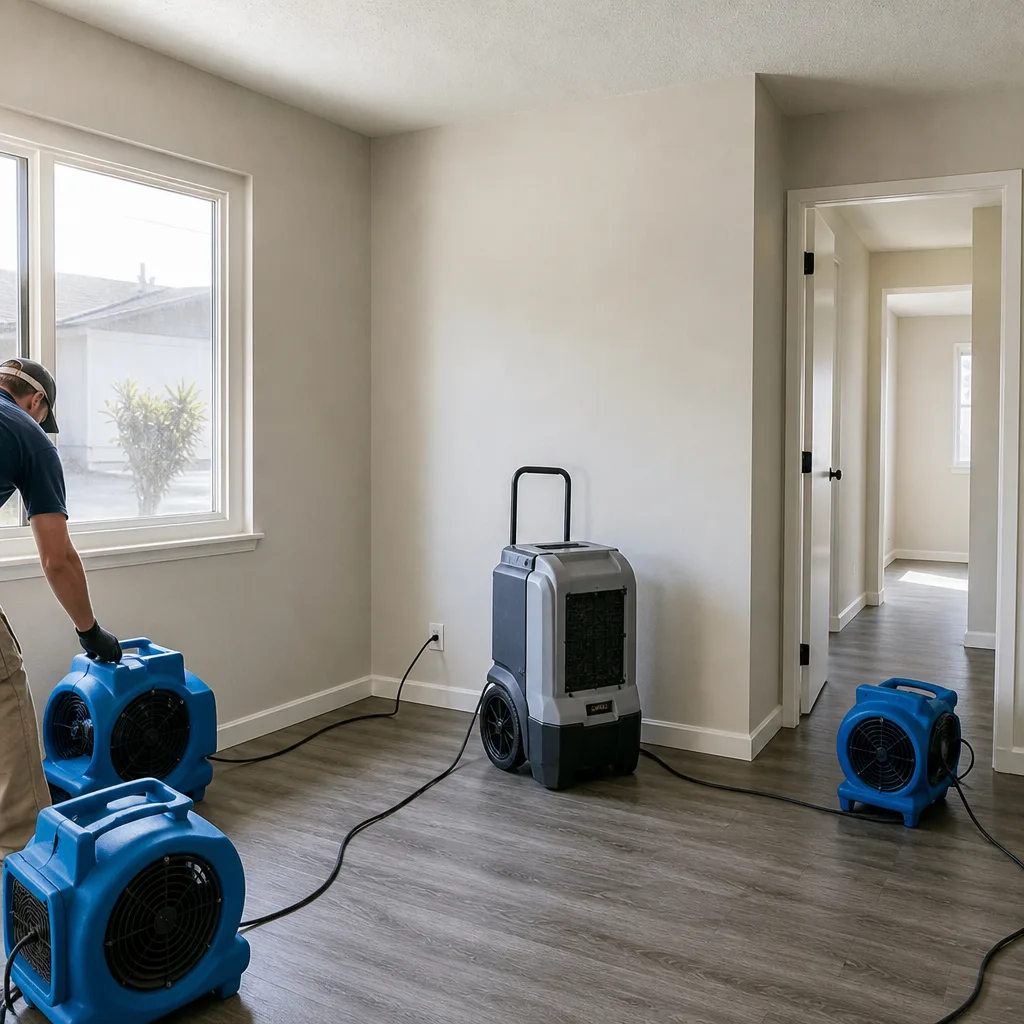 After
Common Water Damage Restoration Problems We See in Desert Edge Homes
- Silt-packed wall cavities that read dry on the surface. Monsoon flood water carries sand and clay into stucco-over-frame walls, and that debris holds moisture deep inside. A pin-type moisture reading on the stucco face often misses the problem entirely, which is why we probe wall cavities and check for sand accumulation during every Desert Edge water response.
- Flat and low-slope roof seams failing after wind events. Desert Edge’s extreme wind blasts debris across roof surfaces and peels the edges of seams and flashing. Sheet-flood water then moves into the roof assembly, soaking insulation and framing far from the visible stain on your ceiling.
- Slab-edge wicking on homes built before modern moisture barriers. Many Desert Edge homes sit on slab-on-grade foundations with limited or compromised vapor barriers. Flood water that pools against the exterior wall wicks under the slab edge and into the interior wall base, then dries slowly from the inside out.
- Efflorescence on stucco that homeowners mistake for cosmetic staining. In coastal California, water intrusion usually shows up as mold. In Desert Edge, the dry air often prevents mold from taking hold quickly, so the telltale sign is white mineral deposits called efflorescence on the stucco face. It means water has been moving through the wall and evaporating, leaving salt behind. It’s not just a stain; it’s evidence of a wet cavity.
Pricing for Water Damage Restoration in Desert Edge, CA
Here’s what homeowners in Desert Edge realistically pay. A contained leak, like a burst angle stop under a bathroom sink or a water heater that failed in the garage, usually runs $1,800 to $3,200 including extraction, drying, and minor repairs. A monsoon roof leak that has soaked insulation and a ceiling assembly lands between $3,500 and $5,500. Full flash-flood intrusion across a slab-on-grade home with multiple affected rooms and silt in the wall cavities runs $5,000 to $6,800 or more depending on how much reconstruction is needed after drying. The variables are how fast it’s caught, whether silt got into the wall cavities, and whether the roof assembly took wind-driven water. Every estimate we give in Desert Edge is free, and it’s in writing with a clear scope of work before anything is signed. Call (833) 589-5317 and we’ll send a certified tech out to give you real numbers.
We Also Serve Cities Near Desert Edge
Our Desert Edge coverage includes the unincorporated properties along the western valley edge and the small communities nearby. We respond across ZIP code 92240 and regularly work in Garnet, Desert Hot Springs, Morongo Valley, and Palm Springs. If you’re in one of those areas and dealing with water intrusion, the same certified crews and the same equipment show up. The dispatch number is the same too: (833) 589-5317.
Serving Desert Edge, CA — Our Local Coverage Area
We’re based in the Desert Edge area and know this community well. Use the map below to see our service coverage — if you’re nearby, we can almost certainly help.
FAQs About Water Damage Restoration in Desert Edge
The white powder is efflorescence, and it means water has been moving through the stucco wall and evaporating at the surface, leaving mineral salts behind. In Desert Edge’s hot, dry air, evaporation happens fast enough that mold often doesn’t get a foothold, so the leak announces itself as mineral deposits instead of discoloration. The wall cavity behind that powder may still be wet or silt-packed. Call (833) 589-5317 for an inspection before the stucco starts cracking.
Within the first 24 to 48 hours, and ideally much sooner. Slab-on-grade construction means flood water that pools against the exterior wall starts wicking under the slab edge and into the wall base within hours. Once water is inside a wall cavity, drying it out takes days instead of hours and costs more in reconstruction. Same day is always better.
Yes. Sand driven by monsoon winds gets into the same cracks and seams that water uses, and it packs into wall cavities. That silt holds moisture against framing long after the surface stucco dries, and it also throws off moisture meters. We physically inspect wall cavities for sand intrusion on every Desert Edge slab-on-grade response, then decide how much cavity access the drying plan needs. Call us at (833) 589-5317 if you suspect sand got into your walls along with the water.
Because in Desert Edge, a wind event pushes sand, gravel, and plant debris into roof seams, stucco cracks, and wall penetrations, and water follows the same path. A moisture reading on the interior surface can come back normal while the wall cavity is still holding water behind packed sand. We check the physical condition of roof assemblies and wall interiors, then use moisture readings as one data point, not the whole answer.
In most cases, yes. Our Injectidry structural-drying systems pull air through the wall cavity itself, so we can often dry saturated framing and insulation without removing the entire stucco exterior. This works on the stucco-over-frame construction common in Desert Edge. If the assembly is too far gone or the silt load is too heavy, we’ll open only what’s necessary and explain why. But demolition is not the default; documented drying is.
If water is moving through your Desert Edge home right now, don’t wait for the surface to dry and hope the problem went away. It usually didn’t; it just moved deeper. Call (833) 589-5317 for a free estimate and a written scope of work from a certified crew that knows exactly how water behaves in this climate.
Written by Glen Pacheco, Owner at Dry Line Water Damage, serving Desert Edge and the Coachella Valley.