

 Water damage drying
 Fire & smoke cleanup
 Mold remediation
 Storm response
 Sewage cleanup
 Reconstruction
Free visual inspection and a written scope of work before any mitigation begins - photos, moisture readings, and drying logs go in your claim file
The scope we write is the scope we bill. Anything new gets shown to you, in writing, before we touch it.
Get your free estimateFast, Reliable Water Damage Restoration Across Desert Hot Springs
Water damage in Desert Hot Springs rarely announces itself the way homeowners expect. It’s not usually a dramatic monsoon flood. More often, it’s a pinhole leak in an original copper supply line that’s been quietly corroded for decades by the city’s hard, sulfurous geothermal water, or a wind-driven stucco breach that’s been letting moisture into a wall cavity since the last San Gorgonio blow. By the time you see the stain on the drywall, the damage behind it has been compounding for weeks or months.
We’re Water Damage Restoration specialists who work in the 92240 and 92241 ZIP codes every week, and we understand the specific ways water attacks homes here. From burst pipes in aging stucco-on-frame houses near Miracle Hill to flooded basements in the older hot-springs neighborhoods, our IICRC-certified crews respond with commercial-grade drying systems and a process built around documentation. If you’re standing in water or watching a ceiling stain spread, call (833) 589-5317 now. We’ll walk you through what to do in the next ten minutes and get a crew headed your way.
Why Dry Line Water Damage Is Desert Hot Springs’s Preferred Water Damage Restoration Company
Desert Hot Springs presents a restoration problem that generic water damage franchises don’t train for. The water chemistry here is different than in Palm Springs, the wind loads are different than in Cathedral City, and the housing stock has its own failure profile. Our crews know the 1960s through 1980s stucco-on-frame homes along Dillon Road and around the hot-springs resort clusters. They’ve seen the original galvanized supply lines, the early copper that’s now paper-thin from decades of mineral corrosion, and the flat and low-slope roofs that leak differently after a windstorm than they do after a rain.
Customers in Desert Hot Springs consistently point to one thing about working with us: we show up with equipment that matches the scale of the problem, not a couple of rental fans. Our Phoenix and Injectidry systems run on the same platforms used on commercial large-loss jobs. We document moisture readings before, during, and after drying, so when your adjuster asks for evidence, you’re not left arguing with a verbal assurance. The work is done to a documented dry standard, not a visual guess. And because Glen Pacheco has built this company around water, mold, and fire restoration under one roof, you’re not coordinating three vendors while your walls stay wet.
Restoration work we handle
Flooded Basement in Desert Hot Springs
A flooded basement in Desert Hot Springs is a different animal than the same problem in a wetter climate. Homes in the 92240 ZIP code that were built in the 1960s and 1970s often have basement or sub-grade rooms that were never designed with modern drainage or waterproofing in mind, and when a water heater fails or a supply line lets go, that space fills fast. A flooded basement here typically runs $1,200 to $3,800 for full extraction, drying, and sanitization, depending on how much finished space is affected and how long the water has been sitting. Homes with finished basements and saturated carpet pad on the lower end versus those with extensive drywall and baseboard damage on the higher end.
What full extraction involves here
We start with submersible pump extraction, then move to truck-mounted extraction for carpets and hard floors. For Desert Hot Springs basements, dust intrusion from wind events means the water is rarely clean even if it started as a supply line leak. We treat it accordingly, with antimicrobial application before drying begins. Injectidry panels and mats get moisture out of slab edges and wall cavities without cutting out every piece of drywall.
When a homeowner should not wait
The extreme desert heat accelerates mold growth in a wet basement because the space stays damp while the air around it stays hot. If water has been standing more than 24 hours, the likelihood of secondary damage rises sharply. Call (833) 589-5317 if you see water on a basement floor, smell a musty odor that wasn’t there before, or notice baseboards starting to swell. We’ll tell you over the phone whether you need a full extraction or can manage the first steps yourself.
Water Extraction in Desert Hot Springs
Water Extraction in Desert Hot Springs homes usually starts with a hidden problem: a corroded copper fitting behind a bathroom wall, a water heater that’s been leaking into the platform for weeks, or a roof edge that lost tiles in the wind and let water track into the ceiling cavity. Extraction in the 92241 area typically runs $800 to $2,500 for a single room, and $2,500 to $6,000 for multi-room intrusions, with the final number driven by how much material must be removed and how long the water has been in contact with framing.
Extraction methods by surface type
For carpet over concrete slab, we use weighted extraction tools to pull water from both the carpet and the pad, then float the carpet with air movers if the pad can be saved. For water under vinyl plank or laminate, the flooring usually has to come up to get to the trapped moisture. For tile on slab, extraction is mostly about water removal and dehumidification, since the tile itself won’t hold water but the grout lines and slab will.
Why extraction alone isn’t enough
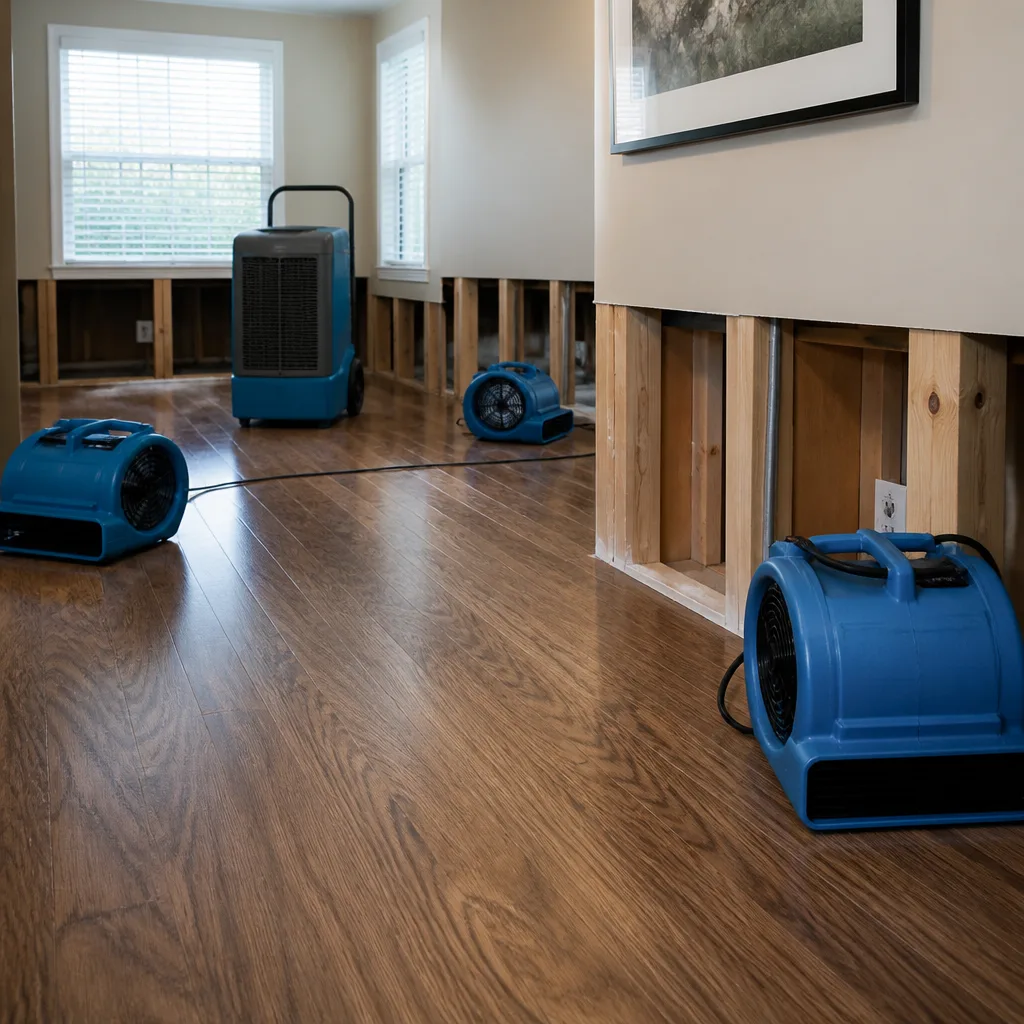
Extraction removes standing water. It does not dry the building assembly. In Desert Hot Springs’s low-humidity environment, this creates a trap: the surface looks dry within a day, but moisture inside walls and slab cores is still rising into the air. That’s why we pair every extraction with structural drying, using moisture mapping to find what’s still wet and Dri-Eaz dehumidifiers to pull it out. If someone tells you a wet room is dry because the carpet feels dry to the touch, get a second opinion.
Trusted Brands We Service in Desert Hot Springs
We work on homes with all major plumbing and appliance brands, and we understand how Desert Hot Springs water interacts with each of them. Rheem and Bradford White water heaters are common here, and we’ve replaced enough corroded fittings on them to know the failure patterns by model family. Moen and Delta supply lines appear regularly in the older 92240 housing stock, and our local parts suppliers carry the specific fittings and valve cartridges for these legacy systems. We don’t make you wait a week for parts while the drywall keeps wicking. Our trucks carry common plumbing repair components, and for appliance failures we coordinate directly with your supplier so extraction and drying start while the replacement is on order. That speed matters when every day of standing water adds to the repair scope.
Common Water Damage Restoration Problems We See in Desert Hot Springs Homes
- Pinhole leaks in original copper supply lines. The sulfurous geothermal water that makes Desert Hot Springs famous is also what eats copper from the inside out. By the time water shows up on a ceiling or wall, the pipe has often been leaking for months.
- Wind-driven stucco breaches on 1960s-80s homes. The San Gorgonio Pass winds sandblast stucco over the years, opening hairline cracks that let driving rain and dust into wall cavities. Interior moisture readings can read normal while the cavity behind the stucco stays wet.
- Water heater failures in older manufactured and mobile homes. Many homes in the 92241 ZIP code rely on water heaters that are past their design service life, and the hard water accelerates internal corrosion at the fittings and tank seams. A failed heater in a manufactured home often floods the entire floor plan before anyone notices.
- Flat and low-slope roof leaks after wind events. Shingles and membrane edges lift in the sustained San Gorgonio winds, creating entry points that only leak when a rare desert rain arrives. By then, the decking beneath has already been wicking for months.
See the difference
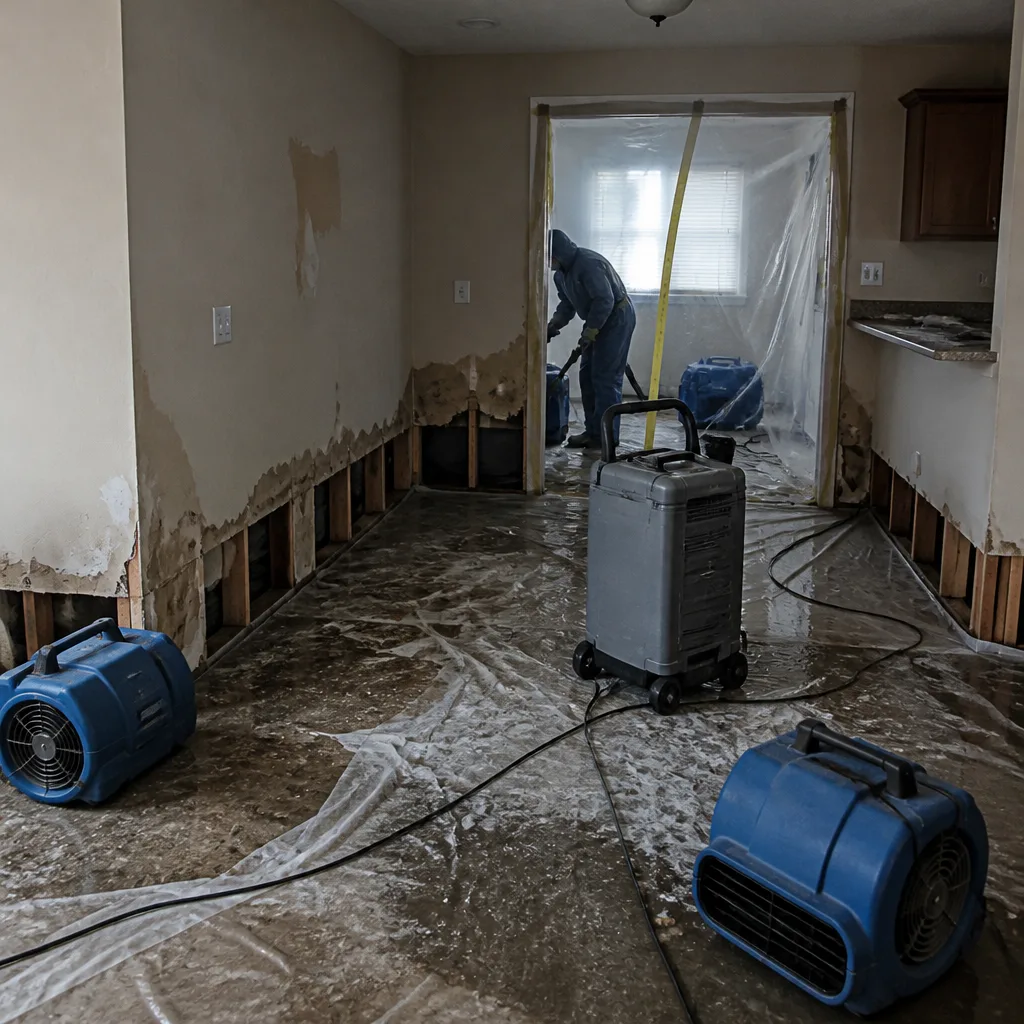 Before
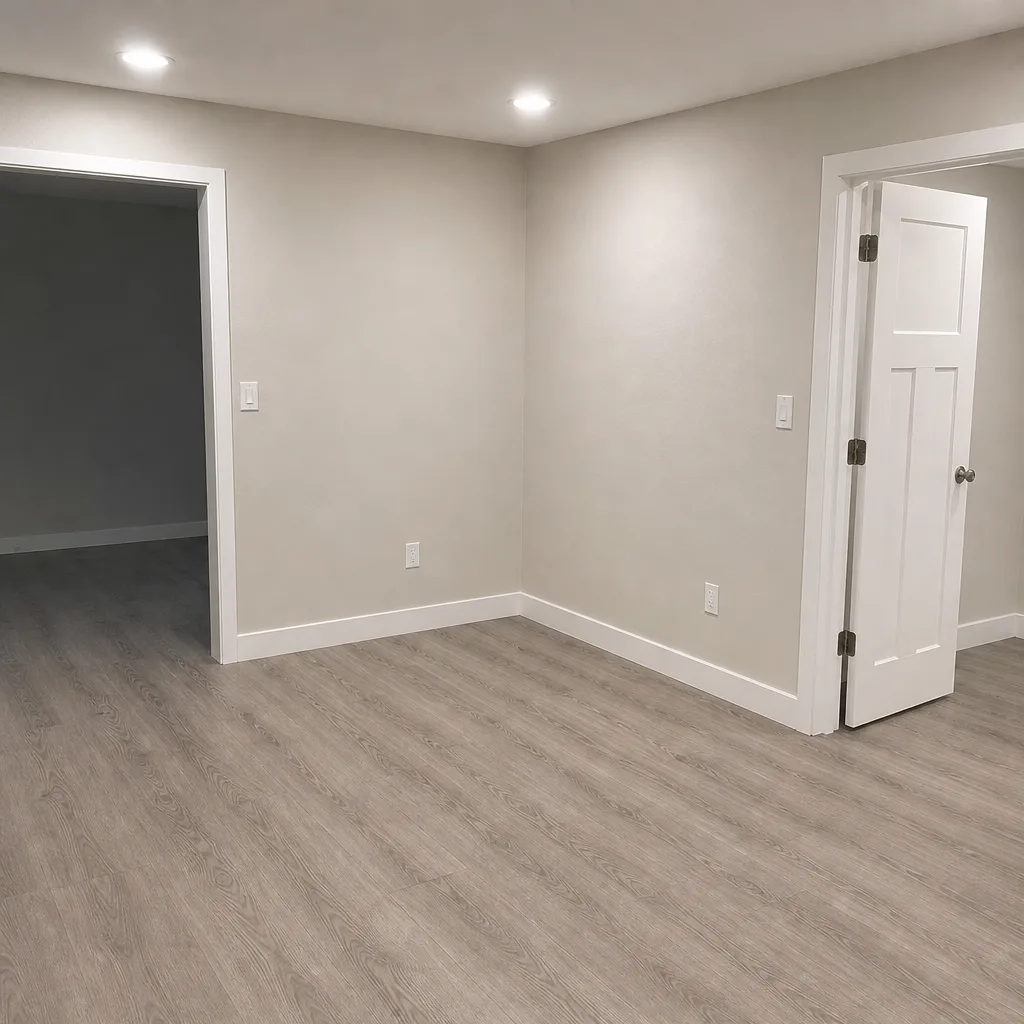 After
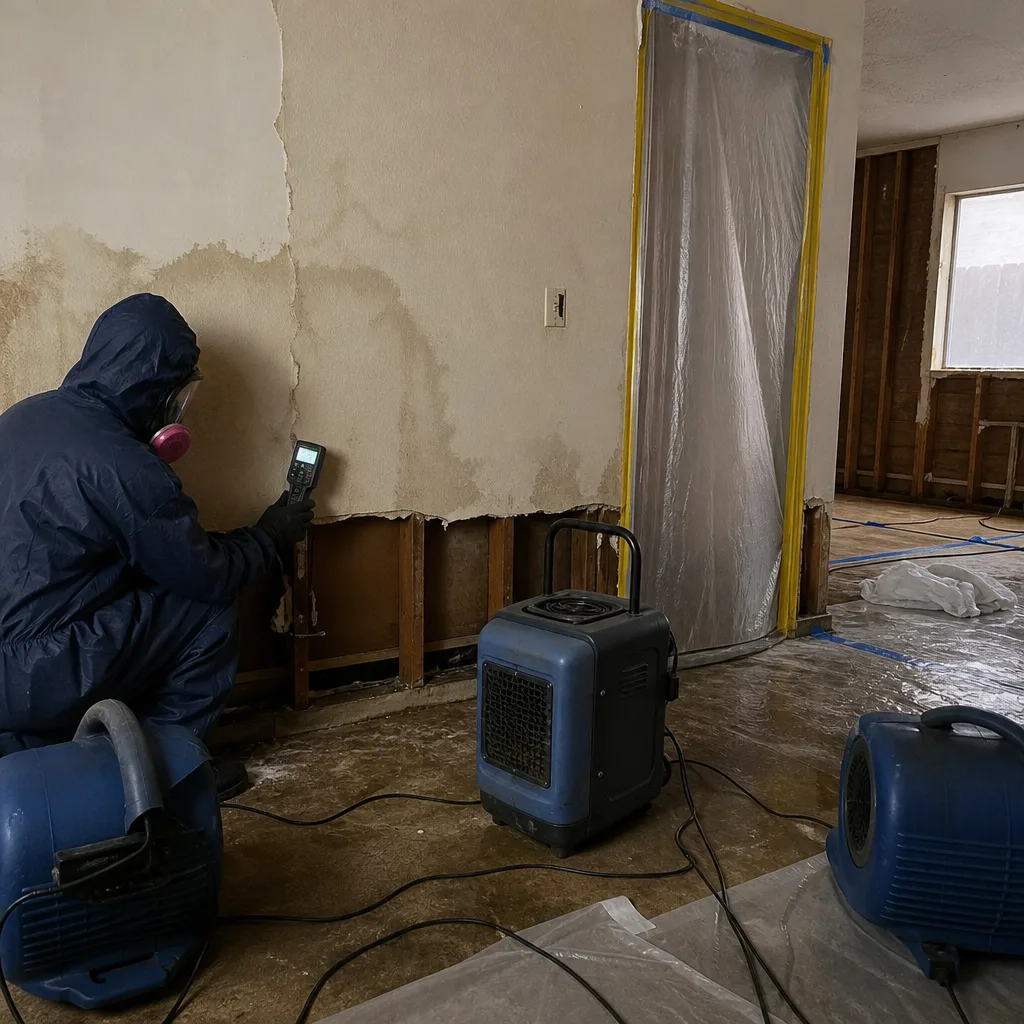 Before
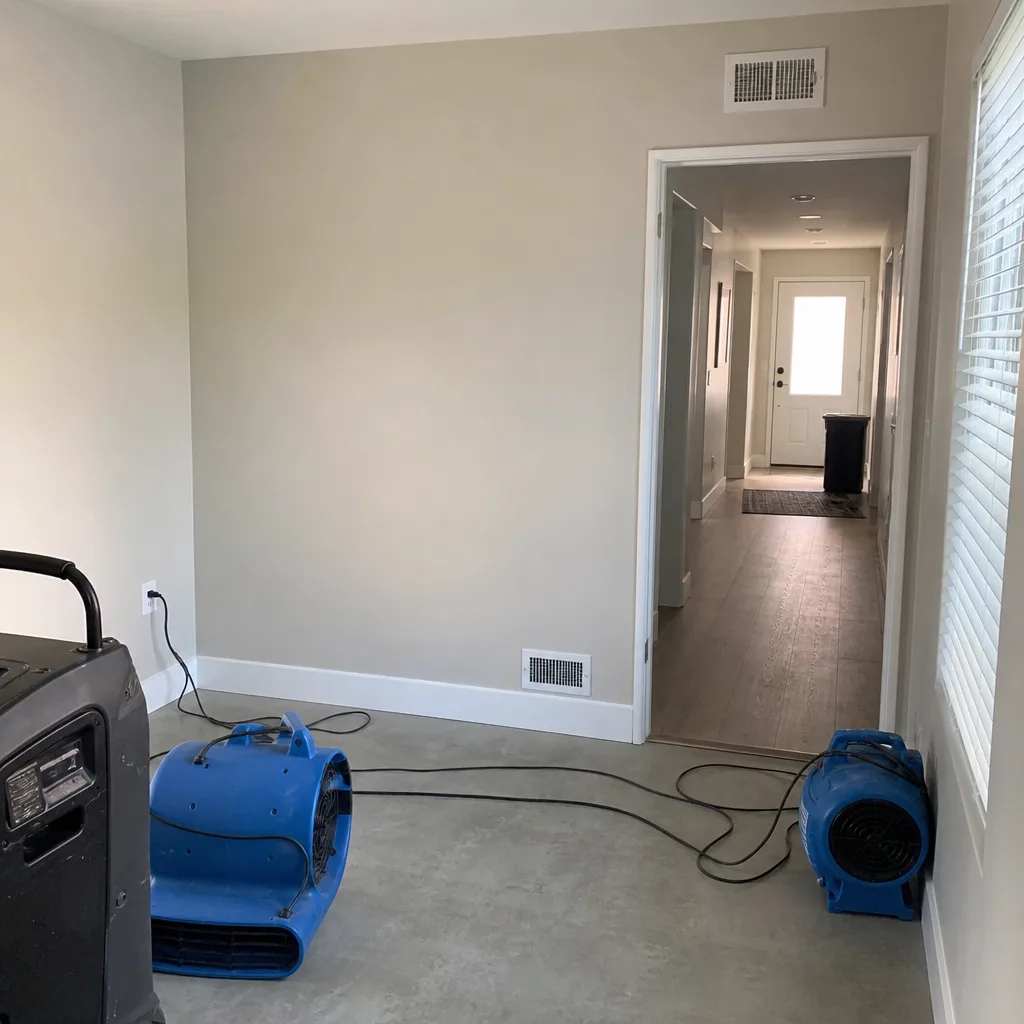 After
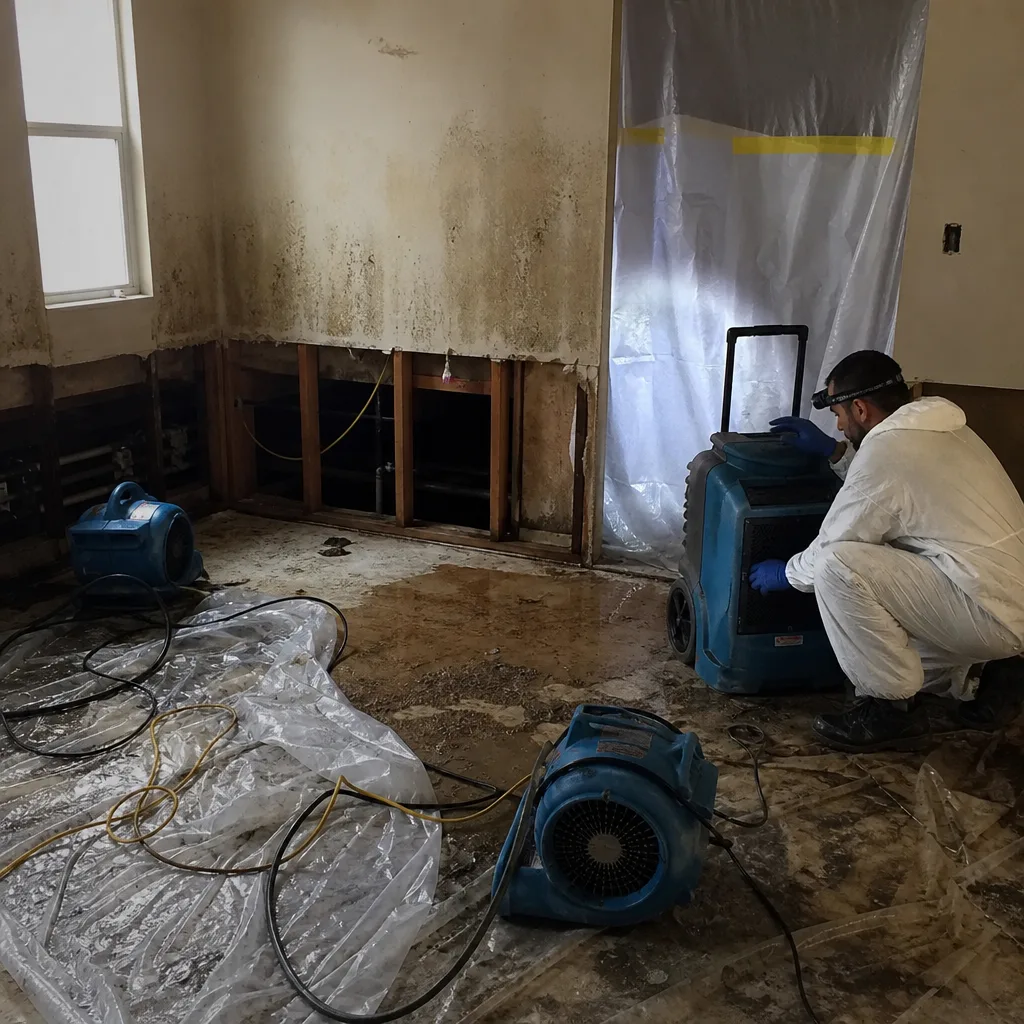 Before
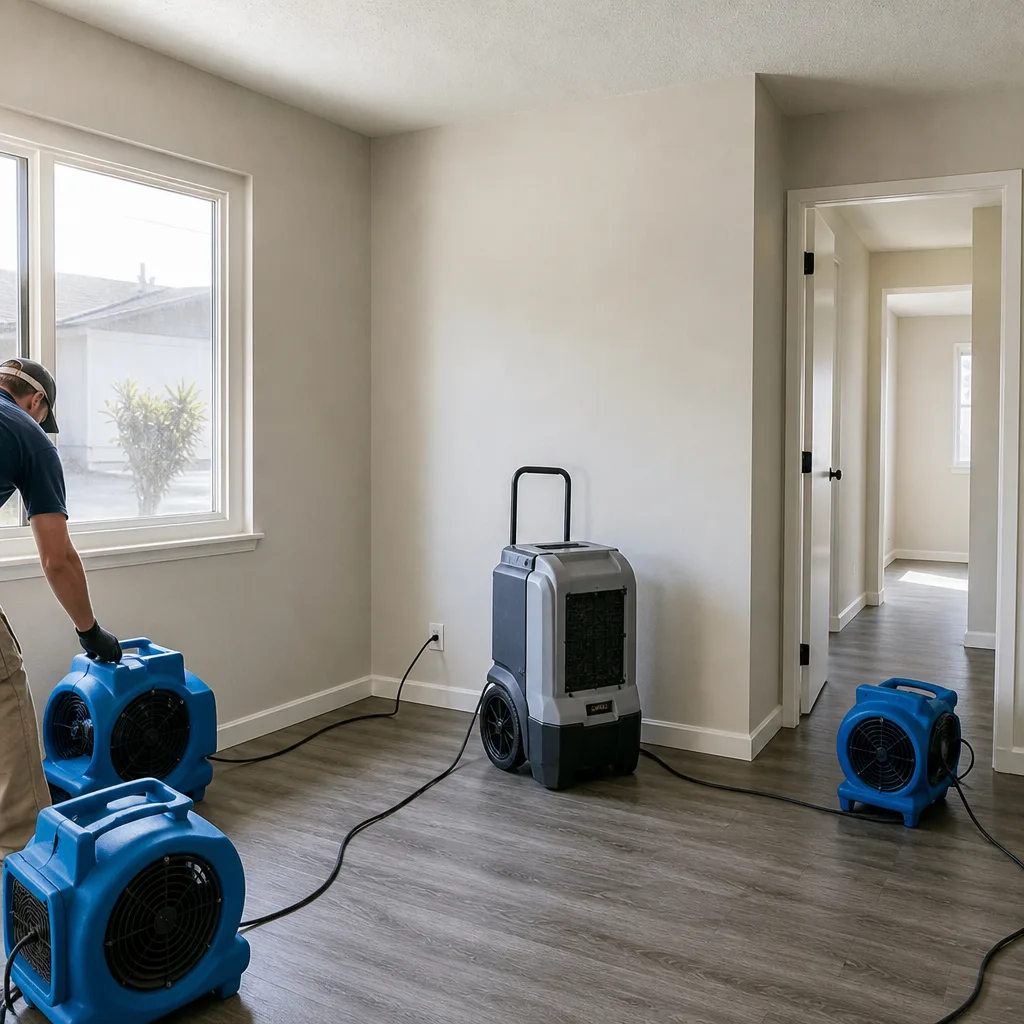 After
Pricing for Water Damage Restoration in Desert Hot Springs, CA
We Also Serve Cities Near Desert Hot Springs
Beyond our regular work across Desert Hot Springs, our crews respond to water damage in Desert Edge, Sky Valley, Garnet, and Thousand Palms. The same IICRC-certified process, fully stocked extraction and drying equipment, and documentation standards apply. If you’re in one of those communities and calling around for Desert Hot Springs restoration help, we’ll get to you with the same crew and the same equipment we run here.
Serving Desert Hot Springs, CA — Our Local Coverage Area
We’re based in the Desert Hot Springs area and know this community well. Use the map below to see our service coverage — if you’re nearby, we can almost certainly help.

FAQs About Water Damage Restoration in Desert Hot Springs
Why does water damage in Desert Hot Springs often involve corroded pipes rather than storms?
Because the city’s geothermal aquifer delivers hard, sulfurous water that chemically attacks copper and galvanized plumbing from the inside. In the 92240 and 92241 ZIP codes, the majority of water damage we respond to starts as a pinhole leak or a failed fitting, not a weather event. The corrosion is slow and silent until the pipe finally breaches, at which point water has usually been escaping into a wall or floor cavity for weeks. If your home was built before 1990 and still has original supply lines, the odds of a hidden leak are higher than you’d think. Call (833) 589-5317 and we’ll help you assess what you’re looking at before it becomes a full-scale extraction.
How does the San Gorgonio wind affect water damage restoration here?
The sustained winds from the San Gorgonio Pass create entry points for water that wouldn’t exist in a calmer climate. Wind-driven rain breaches cracked stucco and lifted roof edges, feeding moisture into wall cavities and ceiling decks. We routinely find that a home with interior moisture readings in the normal range still has a wet cavity behind a windward-facing wall, which means we have to inspect closer and map moisture more deliberately than a standard restoration process would. If a windstorm just passed through and you’re seeing new stains or a musty smell, don’t assume it will dry out on its own. In Desert Hot Springs, it often won’t.
Can you dry out a flooded basement in Desert Hot Springs given the extreme heat?
Yes, and the heat actually helps us dry faster, but it also creates a false sense of security. The surface layer dries so quickly that a homeowner thinks the problem is solved, while the slab and wall assemblies below are still saturated. We use Phoenix and Dri-Eaz dehumidifiers to control the drying rate, and we verify with moisture readings at multiple depths before we call a job done. A typical flooded basement here with full extraction and structural drying can be dry in three to five days, provided we get to it within the first 48 hours. After that, the drying window stretches and material removal becomes more likely.
What category of water is typical in Desert Hot Springs water damage?
Most supply line bursts and water heater leaks in Desert Hot Springs homes fall into category 1 or category 2. Category 1 is clean water from a supply line that hasn’t contacted contaminants. Category 2 is gray water that has mixed with dust, soil, or household chemicals, which is common here because wind-driven dust gets into wall cavities and floor systems. We treat every intrusion with a category assessment documented in our report, and we apply antimicrobial treatment where category 2 conditions exist. That documentation is what your adjuster needs to approve the full scope without back-and-forth.
Do older mobile homes in Desert Hot Springs require special water extraction methods?
They require a different approach to containment and structural assessment. Older manufactured homes in the 92241 ZIP code often have particleboard subfloors and skirting that hides moisture, and the plumbing runs through tight floor cavities that are hard to access without cutting access panels. We use Injectidry mats and targeted dehumidification to pull moisture from those cavities without ripping out the entire floor, which saves the original flooring whenever possible. The key is getting to the water before the particleboard swells past the point of salvage. If you’re in a manufactured home and you suspect a leak, call (833) 589-5317 immediately. Once the subfloor fails, the repair scope expands dramatically.
Call Dry Line Water Damage for Water Damage Restoration in Desert Hot Springs
If you’re dealing with water damage in Desert Hot Springs, call (833) 589-5317 now. We’ll walk you through the first steps, tell you what to expect on cost, and dispatch an IICRC-certified crew with commercial-grade drying equipment to your door. Glen Pacheco has built this company on one principle: document everything, dry to a measurable standard, and never leave a homeowner guessing whether the job was actually done right. From the older hot-springs neighborhoods to the newer tracts pushing east, we know the homes, the water, and the wind that shape restoration work here. Call now and let’s get your home dry.
Written by Glen Pacheco, Owner at Dry Line Water Damage, serving Desert Hot Springs and the Coachella Valley since 2018.