

 Water damage drying
 Fire & smoke cleanup
 Mold remediation
 Storm response
 Sewage cleanup
 Reconstruction
Free visual inspection and a written scope of work before any mitigation begins - photos, moisture readings, and drying logs go in your claim file
The scope we write is the scope we bill. Anything new gets shown to you, in writing, before we touch it.
Get your free estimateFast, Reliable Water Damage Restoration Across Garden Grove
Water damage restoration in Garden Grove usually involves hidden moisture, not just standing water. The city’s 1950s – 70s slab-on-grade tract homes and mid-century apartments hold water in places you can’t see: under original oak floors, behind 1960s drywall, inside wall cavities fed by pinhole copper leaks. Our IICRC-certified crew responds to Garden Grove calls throughout the day and night, with commercial-grade drying systems deployed fast to stop the damage from spreading. If water is moving through your home right now, call (833) 589-5317 and we’ll start the assessment over the phone while a crew heads your way.
Why Dry Line Water Damage Is Garden Grove’s Preferred Water Damage Restoration Company
Garden Grove homeowners call us because the damage in these homes rarely announces itself. A supply-line pinhole behind a 1962 hall bath can weep for weeks before the first dark spot appears on a baseboard. By then, water has migrated under the slab, into adjoining rooms, up the drywall. We know what that looks like and where to look for it. Our techs use moisture mapping before they move a single piece of furniture, and they document every reading. When your adjuster asks why the scope includes the adjacent bedroom, the photos and the moisture logs answer for you.
We’re not a franchise operation cycling through a call center. Glen Pacheco leads this operation, and the standards he set – IICRC-certified process, injectable structural drying through Injectidry systems, and a three-discipline water-mold-fire skillset under one crew – were built for exactly the kind of losses Garden Grove’s housing stock produces. RIA membership keeps us accountable to a published code of ethics, not just our own word. Reviews from Garden Grove customers consistently note the same thing: the tech explained what he was doing, he showed the readings, and the drying was verified before the equipment left.
Key takeaways: IICRC-certified process on every job. Injectidry structural drying that reaches moisture inside walls and floors without unnecessary demolition. Dri-Eaz and Phoenix equipment, the same gear used on large commercial losses. One crew for water, mold, and fire – no handoff gaps when the water event turns into a mold question six weeks later.
Restoration work we handle
Water Damage Cleanup in Garden Grove
Water Damage Cleanup in Garden Grove means dealing with water that has already migrated, not just water you can see. In a 1957 Rancho-style home on a 92843 side street, a toilet supply line that fails at 2 a.m. soaks the bathroom, moves under the door into the hall, and settles into the slab’s low spots. Extraction is the first hour. The real work is the next four to six days: containment, controlled airflow, and monitored dehumidification until the materials read dry, not just feel dry. Typical cleanup jobs in Garden Grove run $1,200 – $3,400 depending on the square footage affected and whether flooring or drywall removal is needed. A small bathroom overflow with fast response lands around the lower end; a supply-line break that went unnoticed overnight pushes toward the upper range.
Slab-Aware Drying
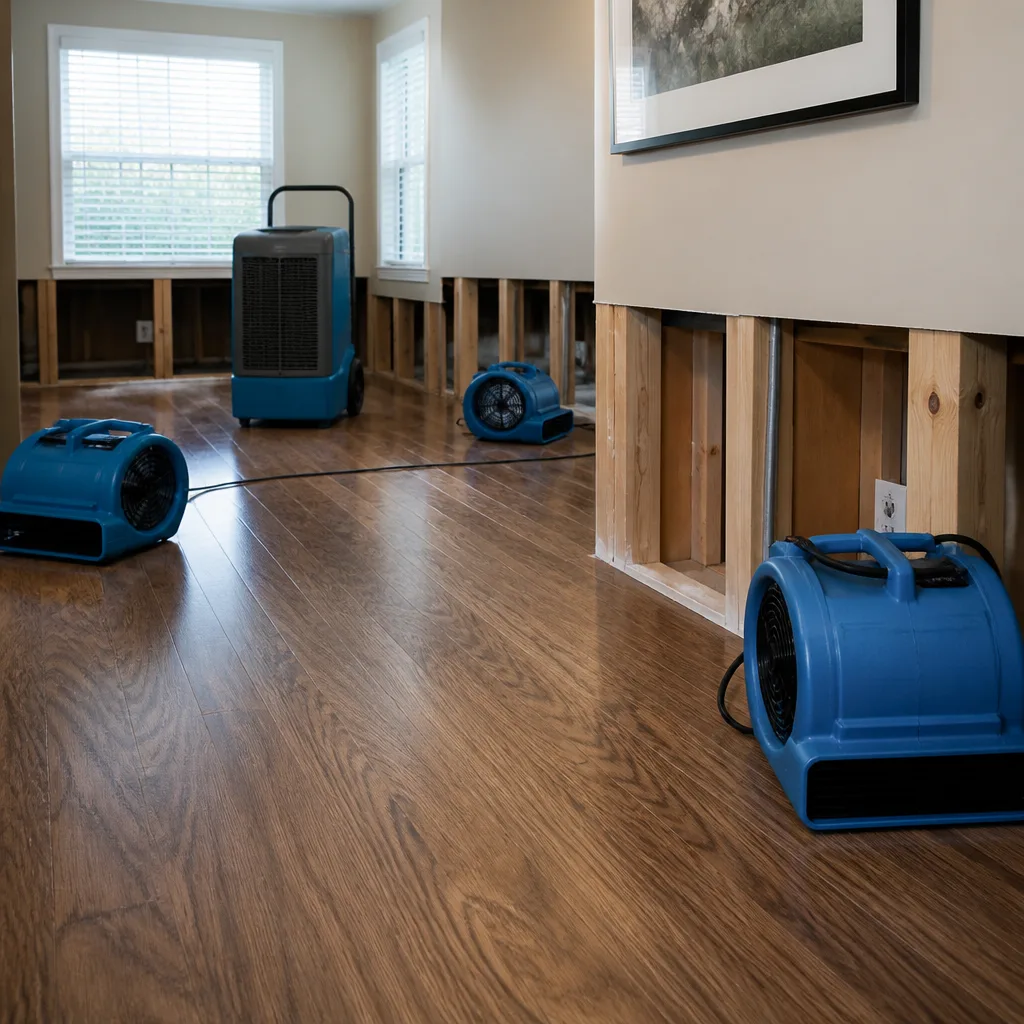
Slab-on-grade construction changes the drying math. Water under a 1960s floor can’t fall through to a crawl space – it sits against concrete, wicking outward. Our crews use Dri-Eaz air movers in conjunction with floor-mat drying systems that pull moisture up and out through the flooring material itself. Moisture readings are logged twice daily until the numbers plateau at a documented dry standard. That’s what “documented dry” means: a record you can hand to your insurance company, not an opinion.
Cleanup Without Unnecessary Demolition
We cut out only what cannot be saved. Injectidry systems push dry air into wall cavities through small access points, often avoiding the pull-and-replace approach that turns a $2,000 water cleanup into a $12,000 rebuild. Garden Grove homes built before 1980 often have solid, old-growth framing that dries well when the approach is right. The goal is preservation where it’s safe, removal where it’s required.
Emergency Water Damage Restoration in Garden Grove
Emergency Water Damage Restoration in Garden Grove is about stopping an active event before it becomes a mold event. The window that matters in this climate is the first 24 to 48 hours, particularly after an intense winter storm or a summer supply-line failure. Semi-arid Southern California doesn’t get many rain days, but when the rain comes, it falls on low-slope and flat roof sections that have been baking in the sun for 40 or 50 years. Roof penetrations fail, water enters the attic, and the clock starts. Emergency response in Garden Grove typically includes extraction, containment setup, and initial drying placement within hours of the first call. Expect emergency water restoration to run $2,400 – $5,600 for a typical single-room-plus-adjacent-space loss, with larger multi-room events running higher based on the extent of equipment and monitoring needed.
Low-Slope Roof Intrusions
A roof leak on a 1968 Garden Grove duplex sends water into the wall cavity long before it shows on the ceiling. By the time the homeowner sees the stain, insulation is soaked, the drywall is wicking, and mold spores have had time to activate. Our emergency response for roof intrusions starts with locating the true wet area – not just the visual stain – then setting containment and drying before the air in the attic gets a chance to spread spores through the living space.
Pinhole Copper Leaks
Original copper supply lines under slabs are a known failure mode in Garden Grove’s housing stock. The leak may not be visible for weeks. What you notice is warped flooring, a persistent musty smell, or a water bill that jumped for no obvious reason. Emergency restoration for slab leaks includes shutting the water at the source, tracing the migration with moisture mapping, and deploying a drying plan that accounts for how water moves through a slab-on-grade home, not just the room where the pipe broke.

Trusted Brands We Service in Garden Grove
Garden Grove homes from the 1950s through the 1970s carry specific hardware and material needs, and our crews arrive prepared for the equipment those systems demand. On the drying side, we run XPOWER low-profile air movers and B-Air dehumidifiers alongside our larger Dri-Eaz and Phoenix units – the same commercial-grade platforms used on big commercial losses, sized down intelligently for tight Garden Grove closets, hall baths, and small apartment units. Injectidry panels let us dry in place where the framing is sound. When you call for water restoration, the truck that shows up carries gear chosen for your type of structure, not whatever was loaded last. We understand the service window for older supply lines, gate valves, and low-slope roof details because we work on them here constantly.
Common Water Damage Restoration Problems We See in Garden Grove Homes
- Original slab-on-grade copper supply lines. Pinhole leaks develop behind walls and under floors, invisible for weeks while water wicks up through the concrete and into flooring and drywall. By the time the owner notices, the drying scope has already expanded beyond the leak point.
- Low-slope and flat roof penetrations. Skylights, plumbing vents, and HVAC penetrations on 1960s and 1970s roofs fail during intense winter rains, sending water into attic insulation and wall cavities. The attic stays damp long after the rain stops, extending the drying window.
- Low-ventilation attics trapping humidity. Many of Garden Grove’s older homes have minimal attic airflow, so summer roof leaks create pockets of high humidity that promote mold on sheathing and framing. This requires contained drying rather than simple extraction, especially when the leak went unnoticed through a hot, dry stretch.
- Original 1950s – 70s building materials that hold water differently. Dense plaster walls, old-growth framing, and original oak flooring absorb and release moisture on a different schedule than modern materials. Overdrying under those conditions can crack plaster and split wood; underdrying leaves the structure vulnerable. Control matters more than speed.
See the difference
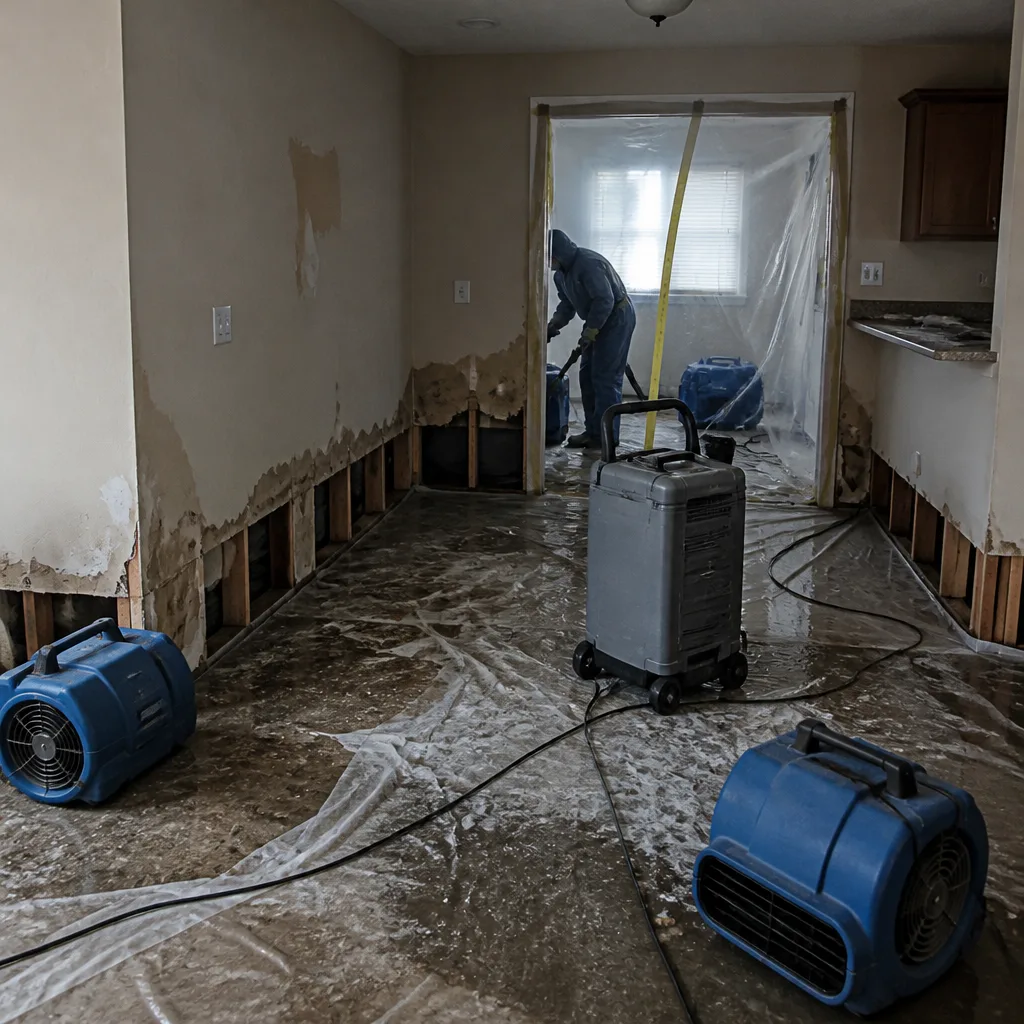 Before
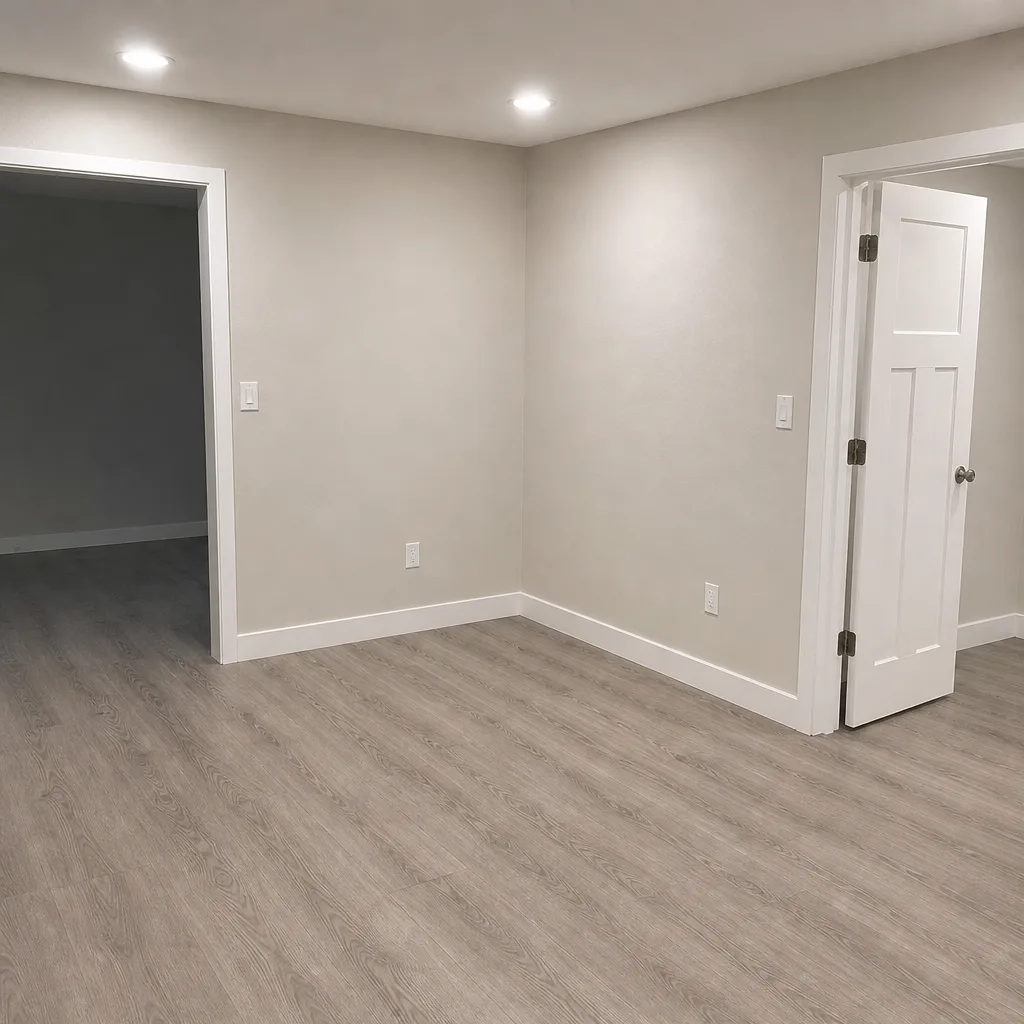 After
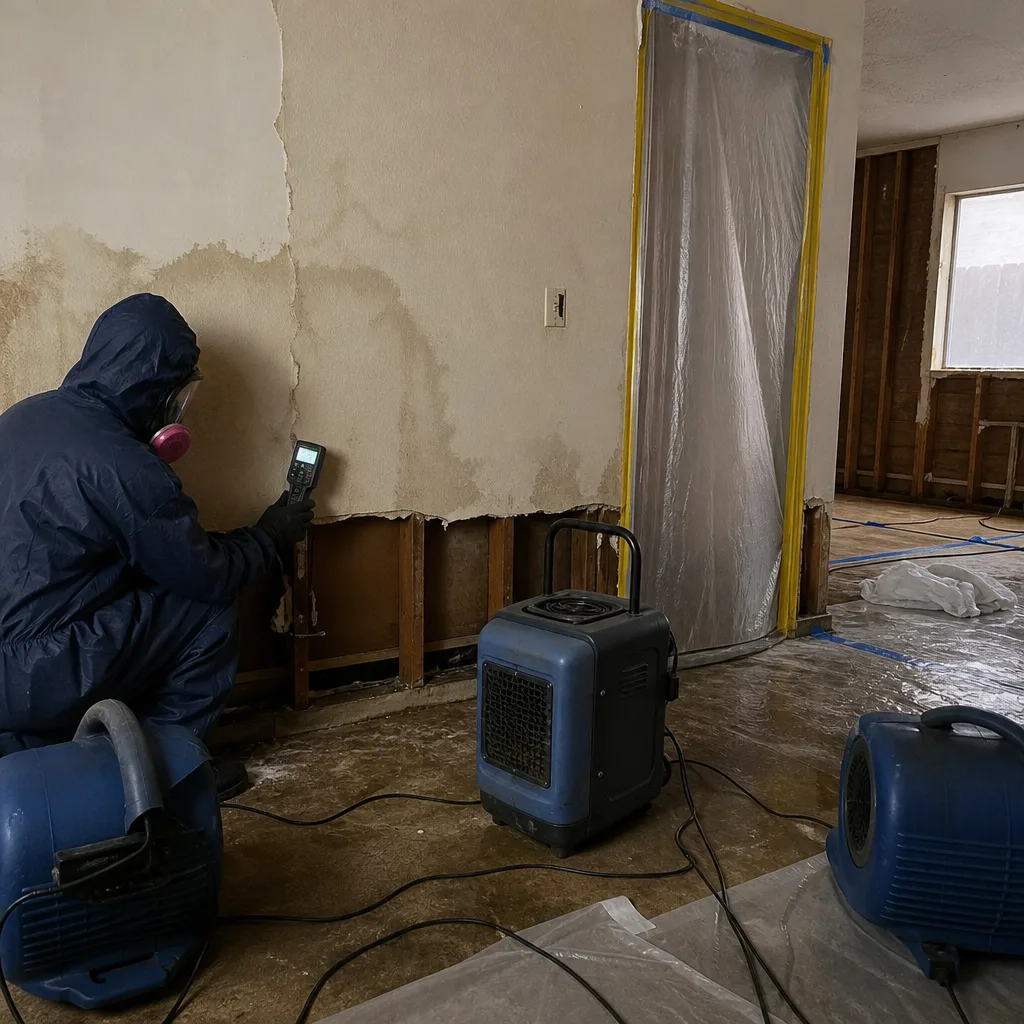 Before
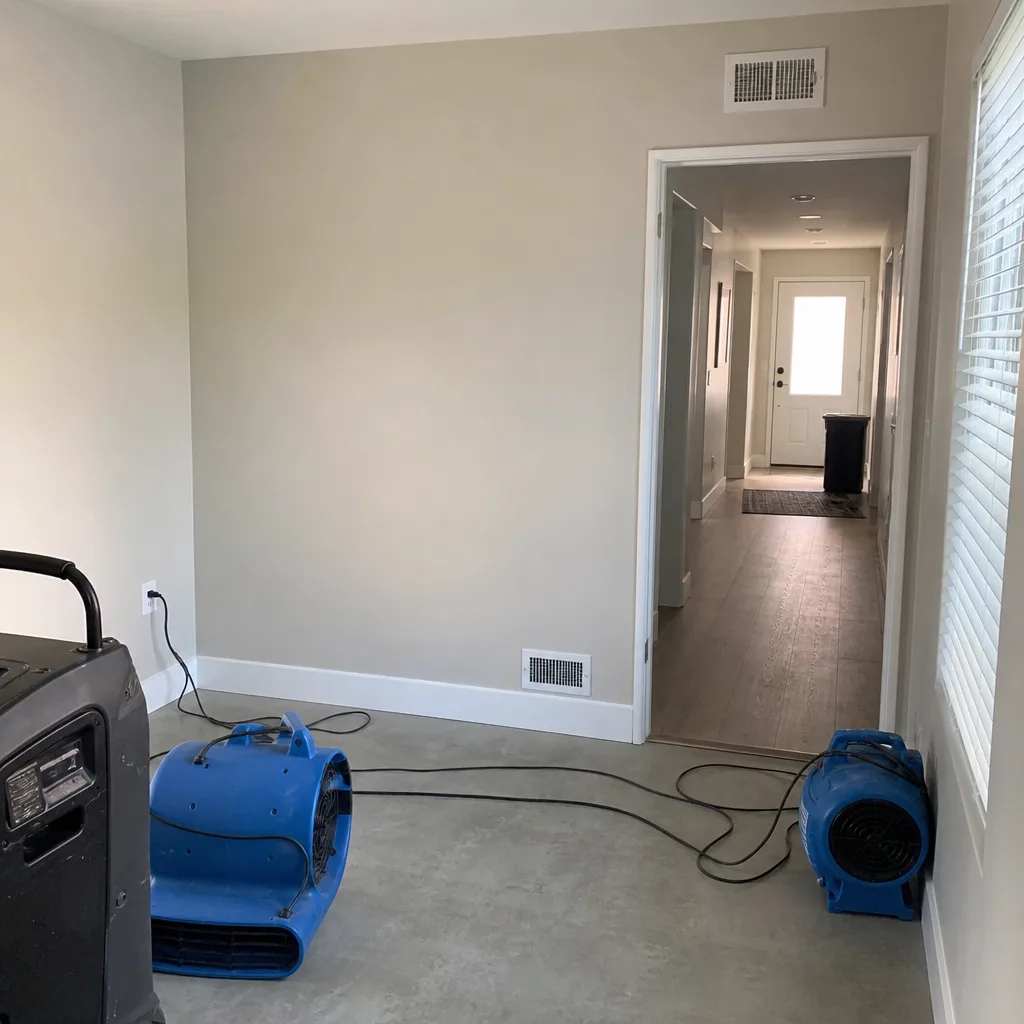 After
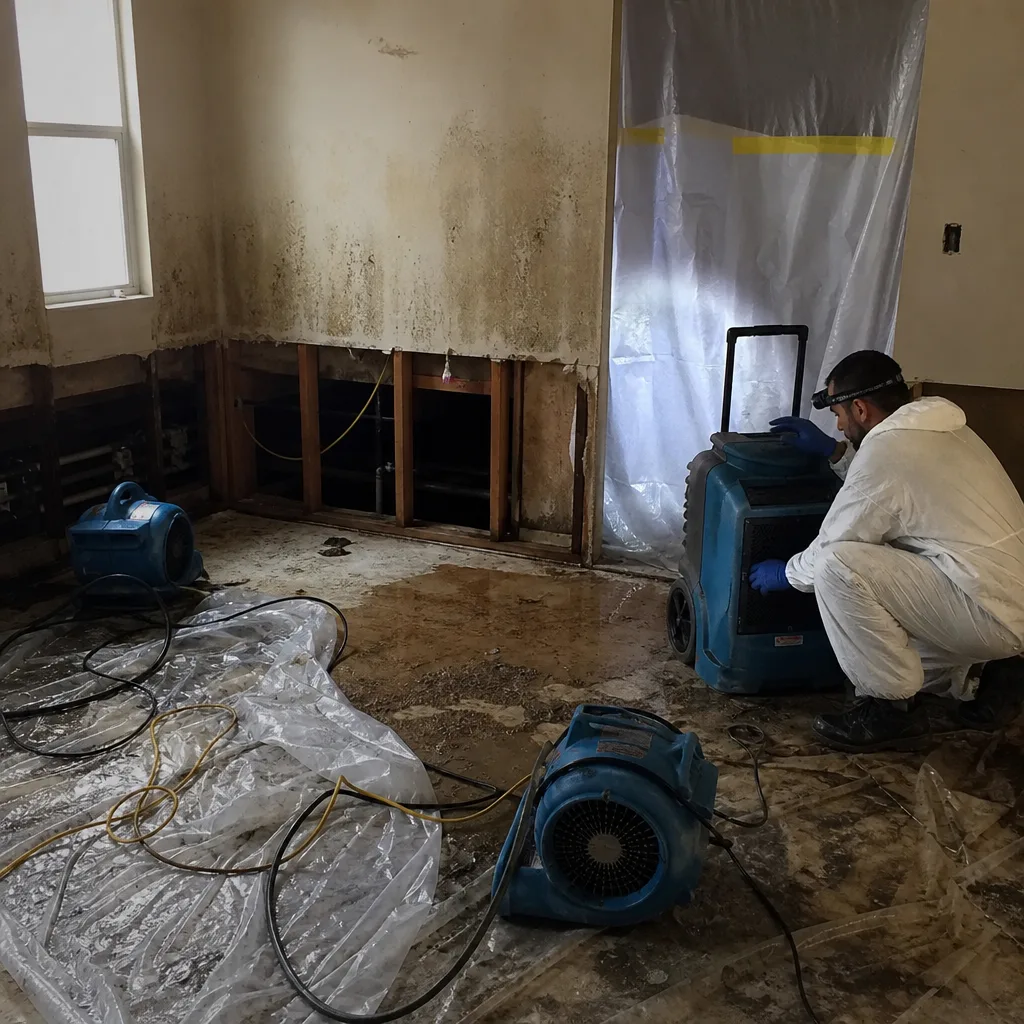 Before
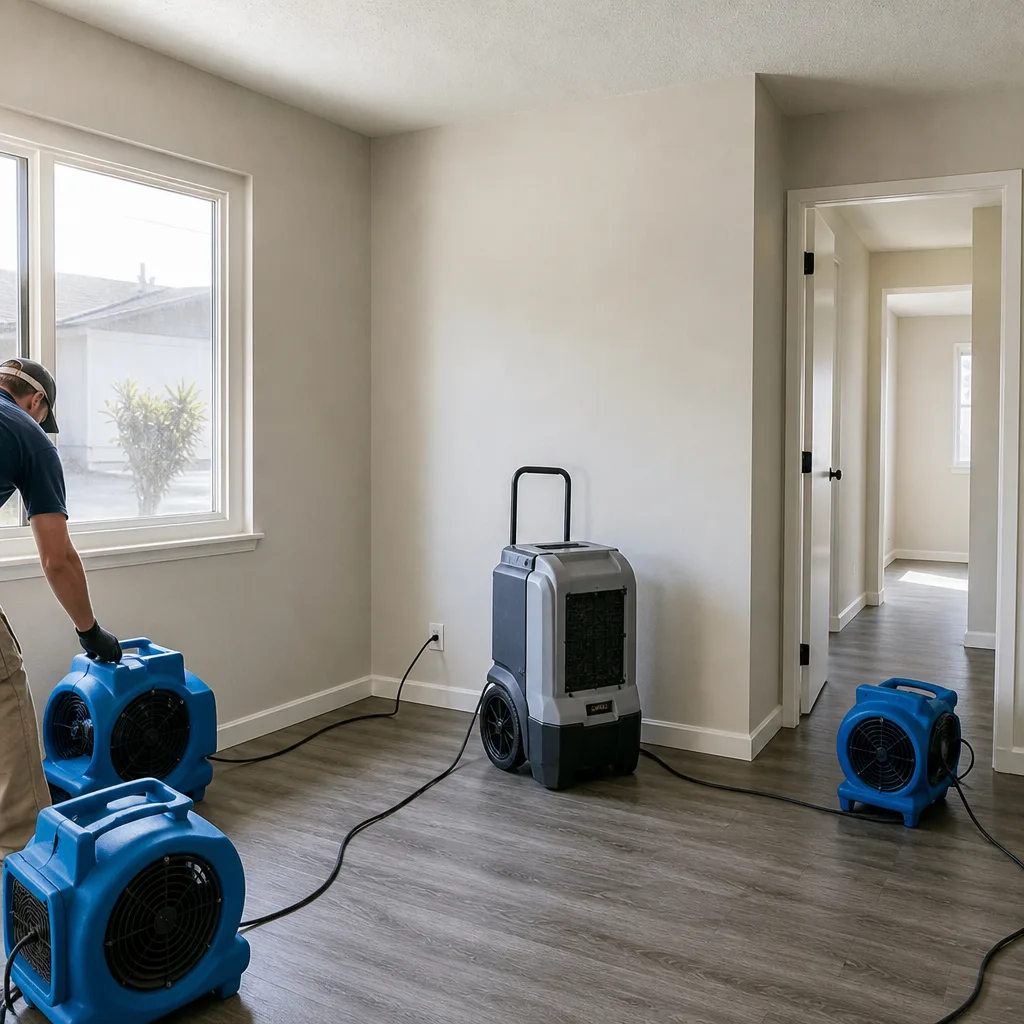 After
Pricing for Water Damage Restoration in Garden Grove, CA
Water damage restoration in Garden Grove typically runs between $1,200 and $5,600 for most residential jobs, with the spread driven by the water’s path, not just its source. A small clean-water cleanup in a single bathroom lands on the lower end. A slab leak that migrated under flooring into an adjacent bedroom runs toward the upper end because of the equipment days and monitoring involved. Roof-intrusion losses with attic insulation replacement fall in the $3,000 – $6,500 range. Every estimate is written, with the scope broken down by line item, and we walk you through it before any work starts. Insurance documentation is included at no extra charge. Call (833) 589-5317 for a free assessment and a number you can plan around.
We Also Serve Cities Near Garden Grove
Beyond Garden Grove, our crews regularly respond throughout northwest Orange County, including Water Damage Restoration in Garden Grove neighbors like Stanton, Westminster, Midway City, and Cypress. If your property sits near the Garden Grove border in one of those areas, the same crew, the same equipment, and the same documentation standards apply. Call (833) 589-5317 and we’ll confirm coverage while you’re still on the phone.
Serving Garden Grove, CA — Our Local Coverage Area
We’re based in the Garden Grove area and know this community well. Use the map below to see our service coverage — if you’re nearby, we can almost certainly help.
FAQs About Water Damage Restoration in Garden Grove
You’ll often notice warped or discolored flooring, a persistent musty smell with no visible source, or a higher-than-normal water bill before you ever see standing water, and any of those in a 1960s Garden Grove home is enough reason to call for moisture mapping. Our techs pin down the source and the full migration path with documented moisture readings, then give you a written scope for drying and repair before any equipment is set. Call (833) 589-5317 if something feels off; a slab leak only gets more expensive the longer it runs uninterrupted.
In Garden Grove’s hot, dry summer conditions, mold spore activity can begin inside 24 to 48 hours after water touches organic material, but it develops differently than in a muggy Gulf Coast climate – the heat accelerates spore germination in the attic while surface areas dry quickly, which is why the hidden ceiling cavity is the real risk. The safest move is to start drying the affected cavity immediately, and to document everything in case your insurance adjuster wants to see the pre-existing condition of the roof before the repair. Call (833) 589-5317 and we’ll assess the attic and wall cavity, not just the stain on the ceiling.
Category 1 is clean water from a supply line or a tub overflow; Category 2 is contaminated water from a washing machine or dishwasher discharge; Category 3 carries sewage, floodwater, or bacteria from a toilet backup or outside intrusion. The category determines the level of removal and disinfection required, and in Garden Grove’s slab-on-grade homes, Category 2 or 3 water that has seeped under flooring may require removing more material because the concrete holds moisture and contaminants. Our IICRC-certified process follows the category classification strictly, because cutting corners on a Category 3 drydown means living with a health risk you can’t see. Call (833) 589-5317 and we’ll classify the loss correctly on our first visit.
Slab-on-grade construction means there’s no crawl space below the floor for water to drain into, so water that gets under flooring sits against the concrete and wicks outward into adjoining spaces. Drying a Garden Grove slab home requires floor-mat drying systems that pull moisture up through the flooring, plus longer equipment runs than a raised-foundation house would need. We set up the equipment, log moisture readings daily, and pull the gear only when the numbers prove the structure is dry, not when it looks dry. For a 1950s Garden Grove tract home, that process saves the original oak floors whenever the material can be saved. Call (833) 589-5317 to get moisture readings in writing, not by feel.
Yes, we generate a documentation package on every job, including photo records, daily moisture logs, equipment run times, and a written scope that matches what your insurance adjuster needs to process the claim. In Garden Grove’s older housing stock, the insurance company often wants proof that the water damage wasn’t pre-existing neglect, and our documentation shows the loss date, the source, and the drying progress in a way that supports your claim. We coordinate directly with adjusters, schedule mitigation visits around their availability, and keep the photo records organized for fast review. Call (833) 589-5317 and we’ll get a claim-ready package started before the adjuster even arrives.
Contact Dry Line Water Damage in Garden Grove
If you’re dealing with water damage in Garden Grove, the next step is a phone call. We’ll ask a few questions about what you’re seeing, give you a straight answer about what to do right now, and dispatch a crew if the situation calls for it. Estimates are free, the scope is written before any work begins, and the drying is documented to an IICRC-certified standard. Call (833) 589-5317 now and get a real person who has actually run this kind of job in Garden Grove.
Written by Glen Pacheco, Owner at Dry Line Water Damage, serving Garden Grove with IICRC-certified restoration services.