

 Water damage drying
 Fire & smoke cleanup
 Mold remediation
 Storm response
 Sewage cleanup
 Reconstruction
Free visual inspection and a written scope of work before any mitigation begins - photos, moisture readings, and drying logs go in your claim file
The scope we write is the scope we bill. Anything new gets shown to you, in writing, before we touch it.
Get your free estimateFast, Reliable Water Damage Restoration Across Garnet
Water damage in Garnet doesn’t look like it does in other parts of California. Here, a home can go months without seeing rain, then take on several inches of muddy water in under an hour when a monsoon cell stalls over the foothills. We’re Dry Line Water Damage, and we’ve seen that exact scenario enough times to know what it does to Garnet’s older stucco homes and slab-on-grade floors. Our crews run IICRC-certified processes and commercial-grade drying systems to get your property to a documented dry standard, not just surface-dry. If you’ve got water where it shouldn’t be, call (833) 589-5317 now. The longer sediment-laden water sits in the heat, the more it wicks into places you can’t see.
Why Dry Line Water Damage Is Garnet’s Preferred Water Damage Restoration Company
Garnet homeowners don’t have many restoration companies that understand the desert. We do. The homes out here were mostly built between the 1950s and 1990s, and that construction profile shapes everything about how we approach a water loss. Stucco exteriors hide moisture movement. Slab-on-grade foundations mean water travels horizontally under flooring before you ever see it on a wall. Those aren’t generic observations, they’re the starting point for our moisture mapping on every Garnet job.
Glen Pacheco leads our operation, and he’s built Dry Line Water Damage around one thing: doing restoration work with the same equipment and documentation standards that insurance adjusters see on large commercial losses. Our Water Damage Restoration team carries Dri-Eaz and Phoenix gear, not rental-shop dehumidifiers. We document every moisture reading, every drying log entry, and every treatment step so there’s a written record when you’re dealing with a claim. Our standing with the Restoration Industry Association matters in Garnet because a monsoon flood here often involves category 2 or 3 water, and the standards for handling that correctly are not optional. Homeowners across the 92258 zip code call us because we know what the sediment does, and we act before it becomes a bigger problem.
Restoration work we handle
Water Extraction in Garnet
Water extraction in Garnet means pulling out water that’s full of something you don’t want in your house: fine desert silt, sand, and sometimes rock carried down from the foothills. In a typical Garnet home, this starts after a flash flood pushes water through a garage doorway or under an exterior door, leaving an inch or two of gritty water across concrete and flooring. In Garnet, water extraction typically runs $1,500 to $3,800 for a single-room flood, and $4,500 to $9,500 when multiple rooms and a garage are involved. The sediment load drives the labor, because that grit has to be removed before drying equipment goes in. Leaving it behind causes abrasion on flooring and keeps dust recirculating through the air for months.
Sediment-Heavy Extraction Sequence
The first pass on a Garnet flood uses extraction units sized for debris, not just clean water. We pump the bulk water, then hand-pull the heavier sediment that would destroy a standard hose line. After the visible water is gone, we lift flooring at the edges to check whether the slab has absorbed moisture, which is common when stucco walls and slab construction held the water in place for hours before we arrived.
Post-Extraction Moisture Mapping
On a slab-on-grade Garnet home, the surface can read dry while the stucco two feet up the wall is holding 40% moisture content. That’s why we run moisture mapping after extraction, not just on the floor but up the lower wall cavity. The arid desert air fools a lot of property owners into thinking the job is done. It isn’t. We log those readings as the baseline for our drying plan.
Emergency Water Removal in Garnet
Emergency water removal in Garnet usually means a monsoon debris flow or a failed supply line that’s been pumping water through a house nobody was home to catch. We dispatch to Garnet from Fontana, and our standard response puts a crew on the road immediately when a caller in the 92258 area reports standing water. Emergency water removal in Garnet typically runs $2,200 to $6,800 for a monsoon flood cleanup that includes extraction, sediment removal, and initial drying equipment placement. A burst pipe inside a wall cavity often spans a similar range because the water has had time to spread before it’s discovered. The faster we get extraction started, the less chance the water wicks up stucco walls and into drywall cavities.
Category 2 and 3 Flash Flood Water
Monsoon floodwater around Garnet is not the same as a clean burst-pipe leak. The water picks up whatever it touches on its way down from the foothills: soil, animal waste, road debris, and desert plant material. We treat it as potentially contaminated from the first call and set up containment where needed to keep the debris and dust from blowing through the rest of the house.
Same-Day Equipment Deployment
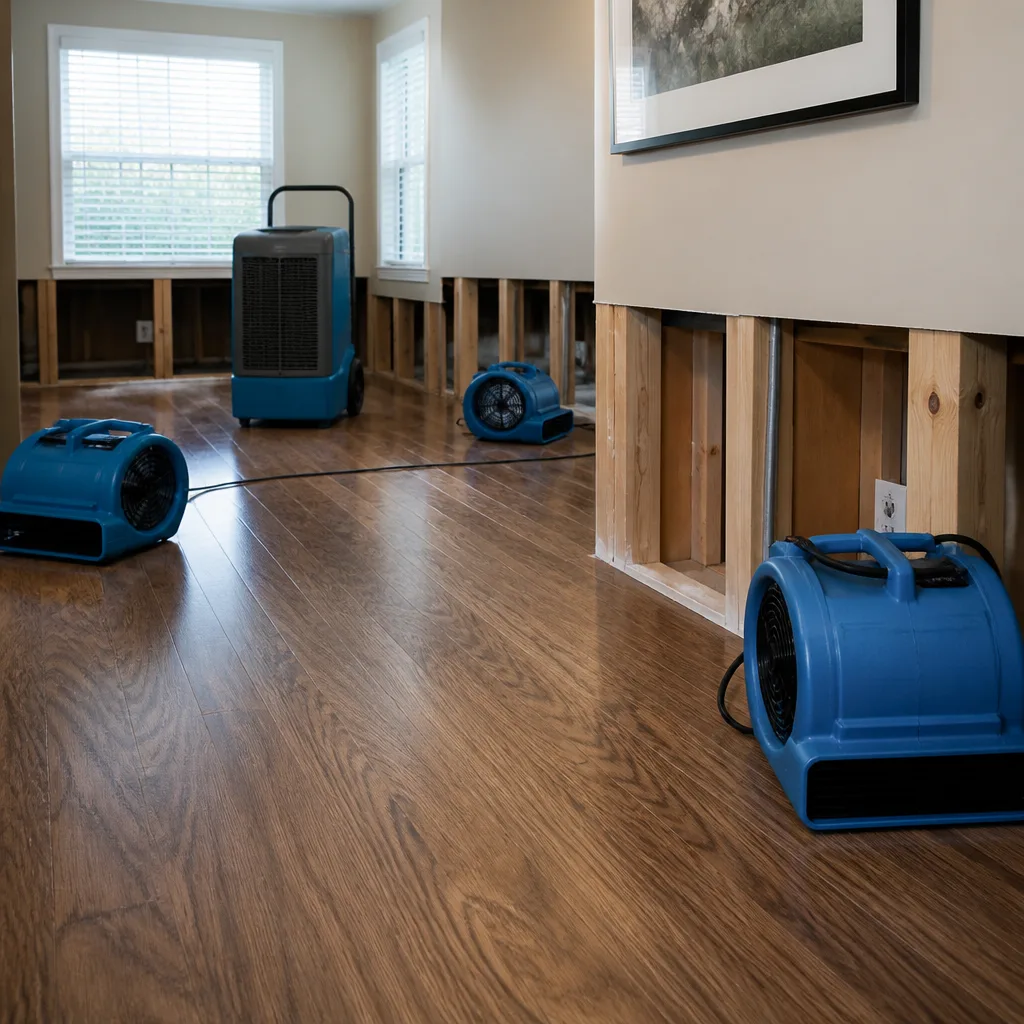
Once extraction is done, we position Phoenix dehumidifiers and Dri-Eaz air movers that same day. Garnet’s summer heat works in our favor for ambient drying, but hidden cavities still need forced air movement and dehumidification to prevent what we call surface-dry, wall-wet conditions. The equipment runs continuously and we log readings until we hit a documented dry standard.

Trusted Brands We Service in Garnet
Garnet homeowners ask us all the time whether we can work with what’s already in the house, whether that’s a specific flooring type or an older wall assembly. We work with every major flooring and building material you’d find in a mid-century-to-1990s desert home, from vinyl sheet over slab to ceramic tile, carpet over concrete, and drywall-over-stucco wall assemblies. Our restoration process is built for the way Garnet homes are actually constructed, not for a generic suburban blueprint. And because we’re an Water Damage Restoration in Garnet specialist, we understand what the local housing stock demands from the first call.
See the difference
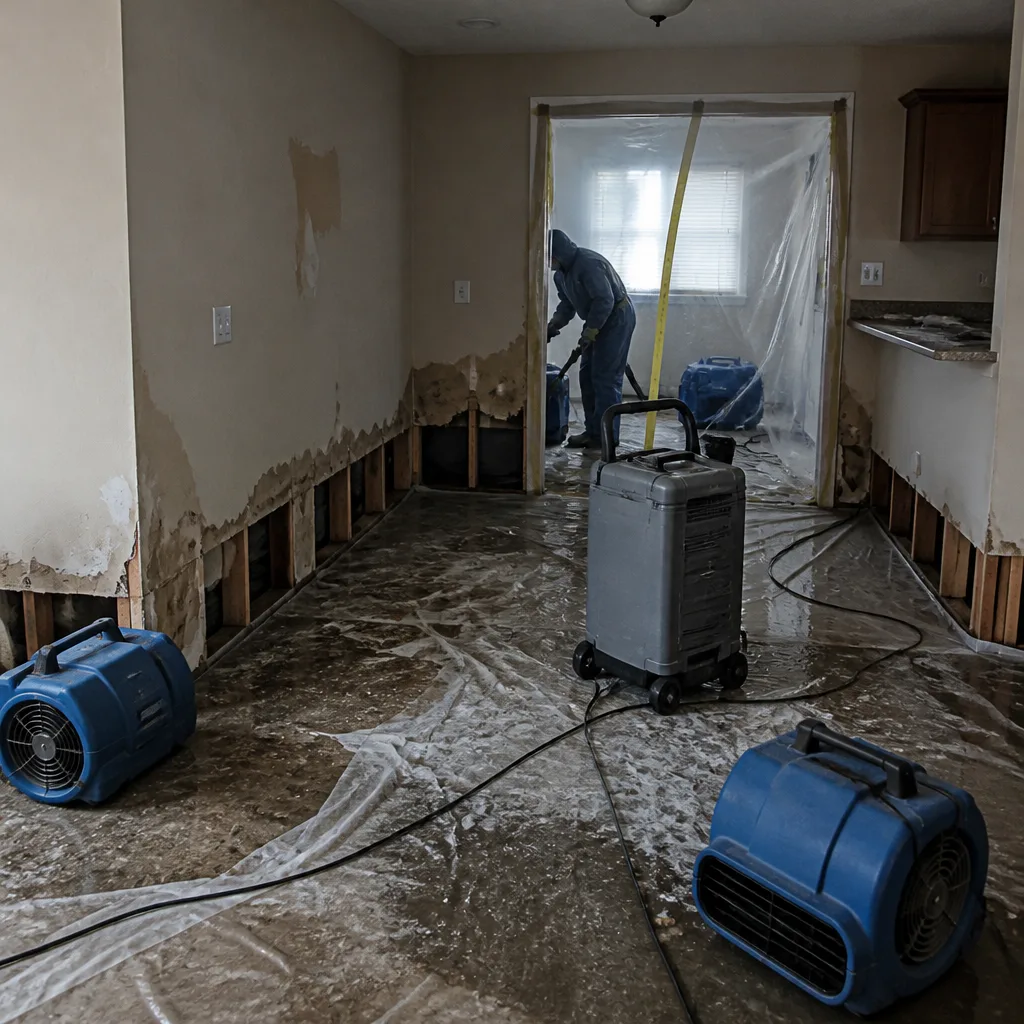 Before
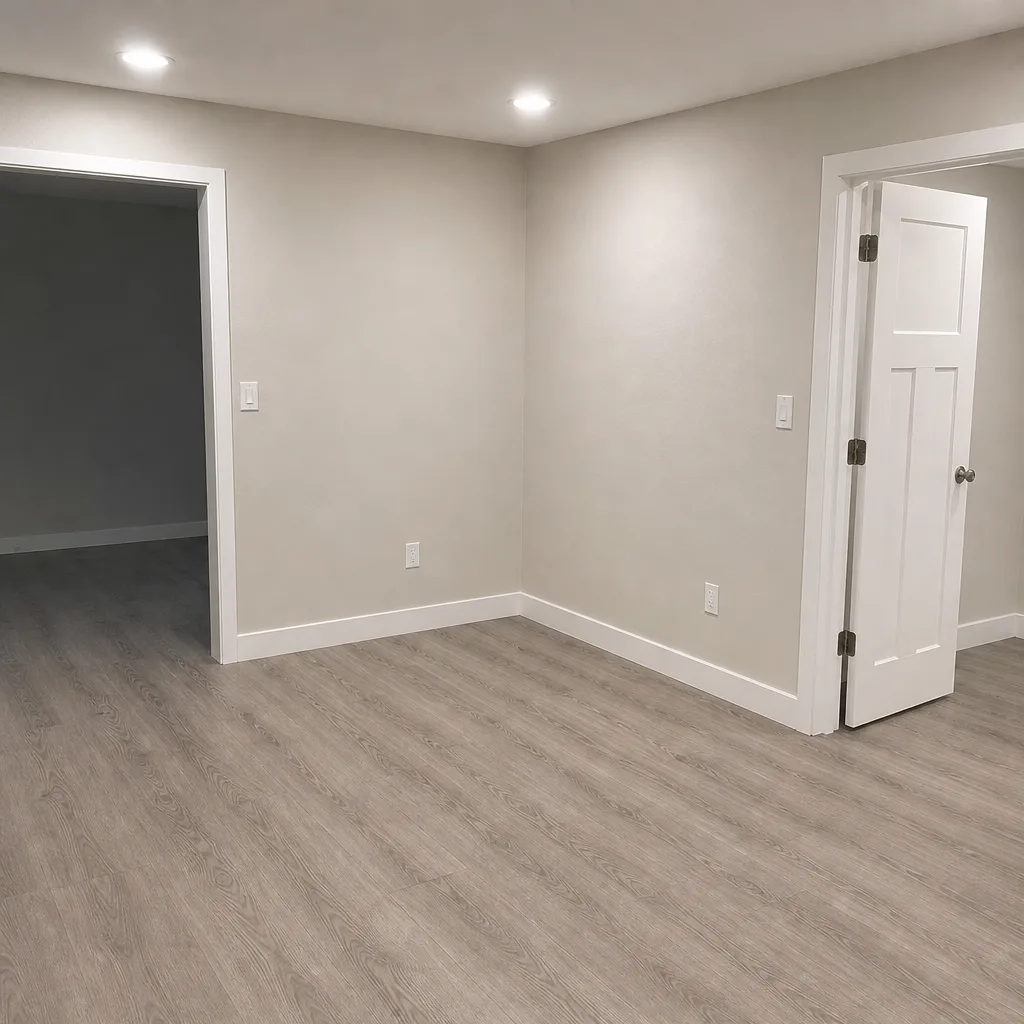 After
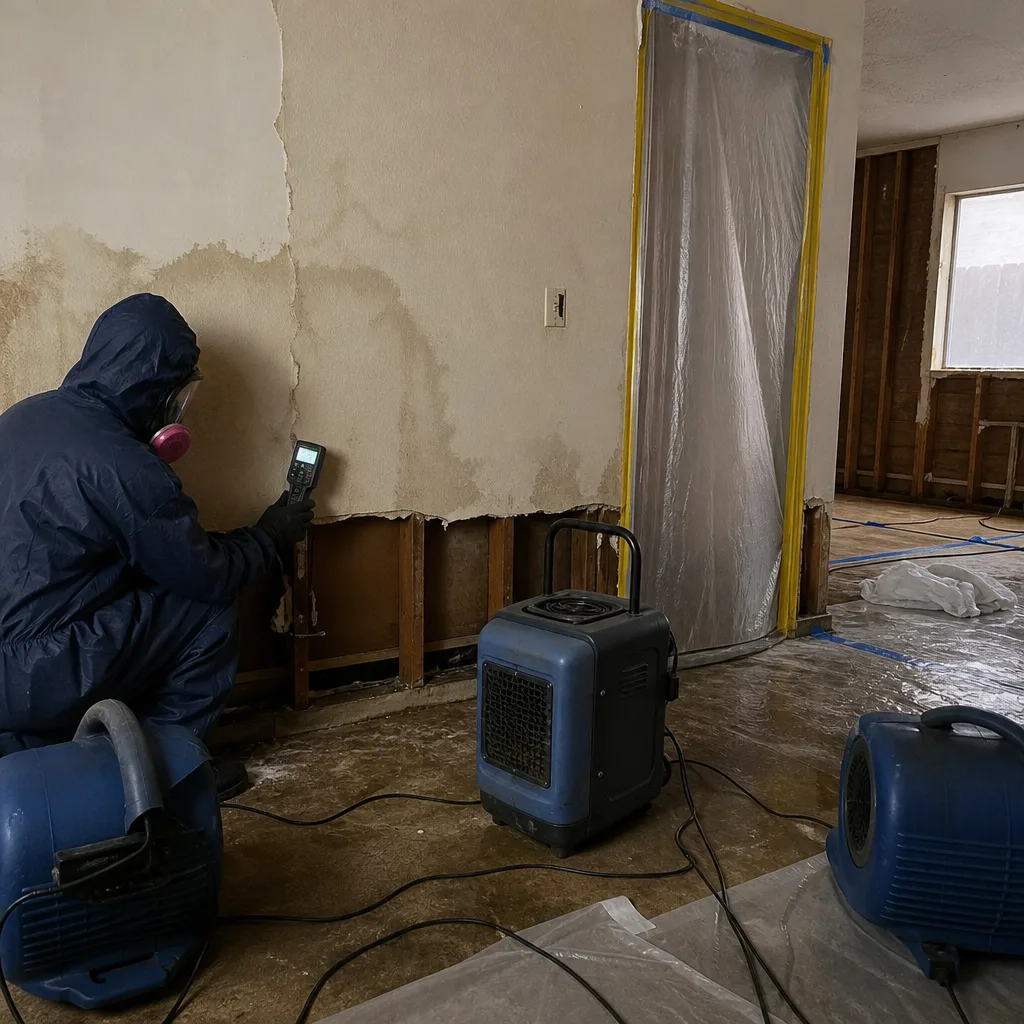 Before
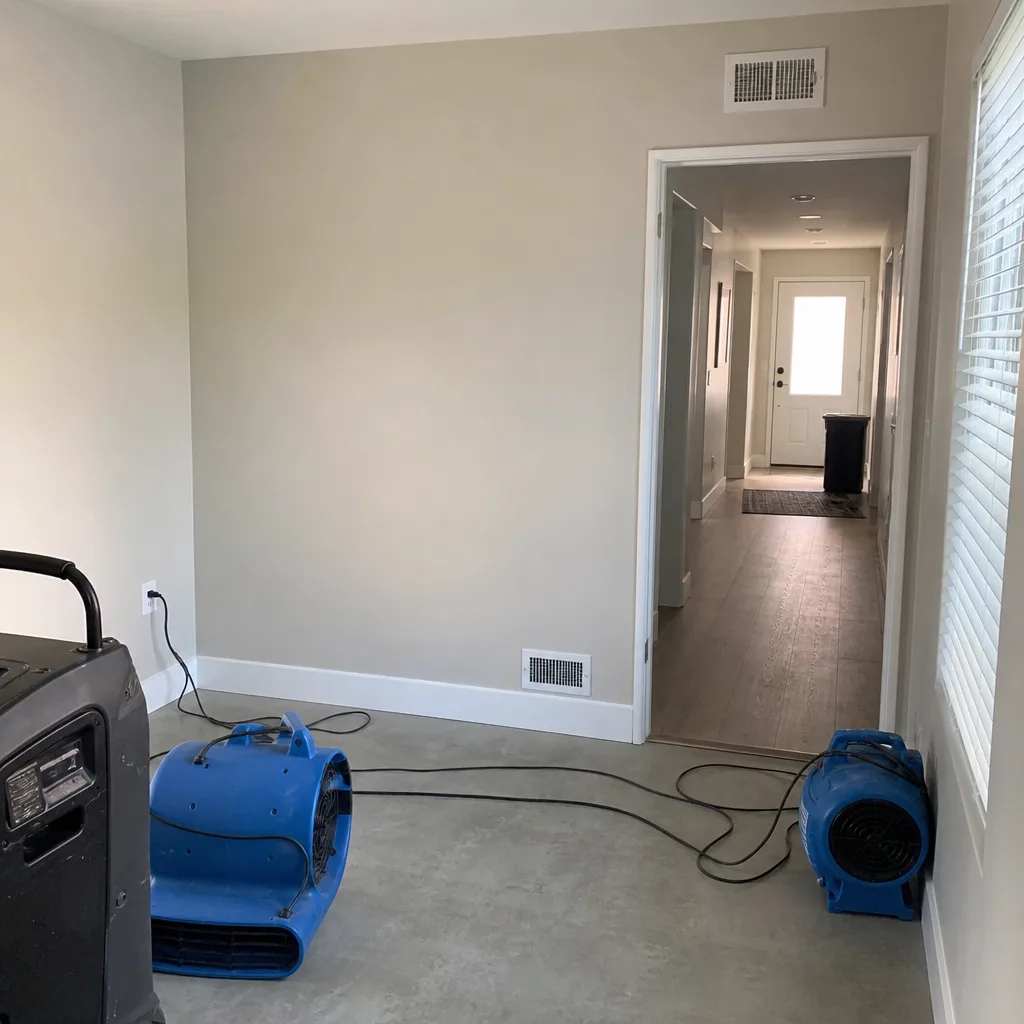 After
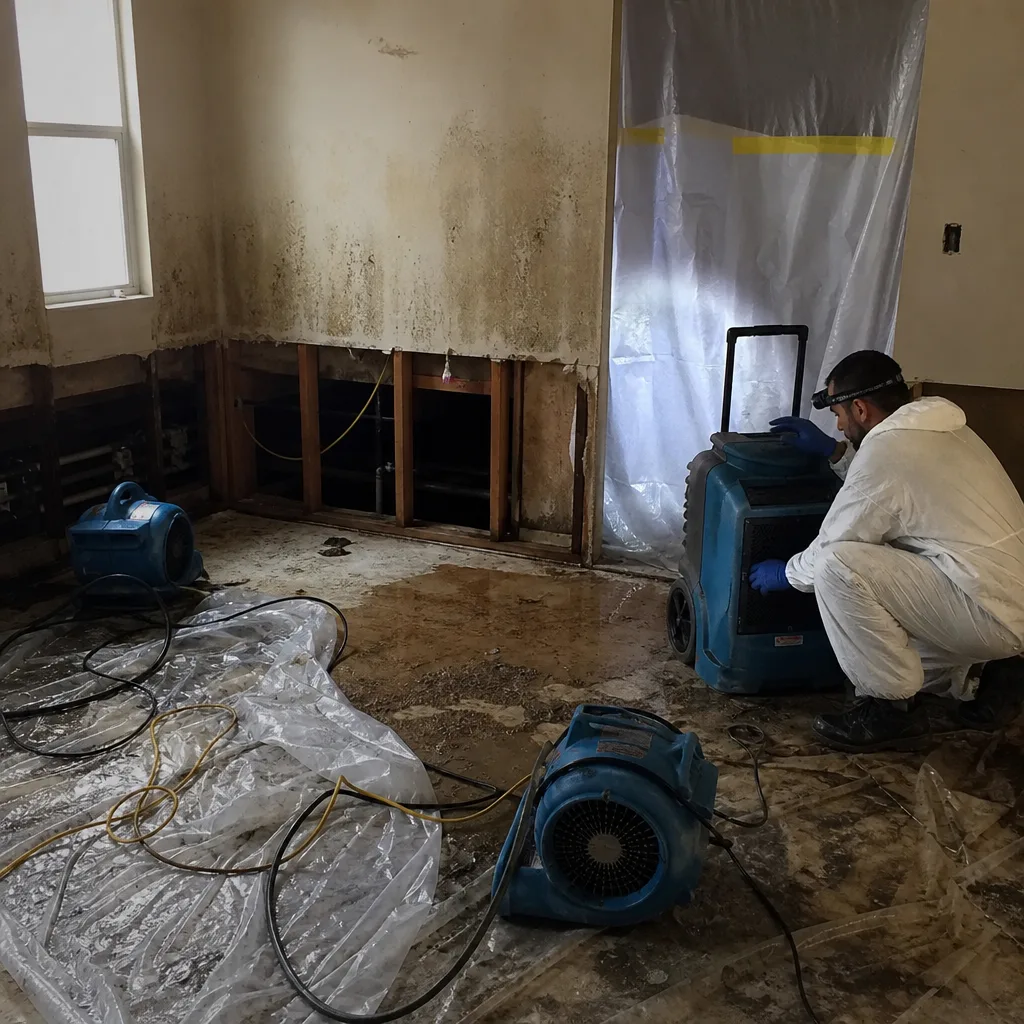 Before
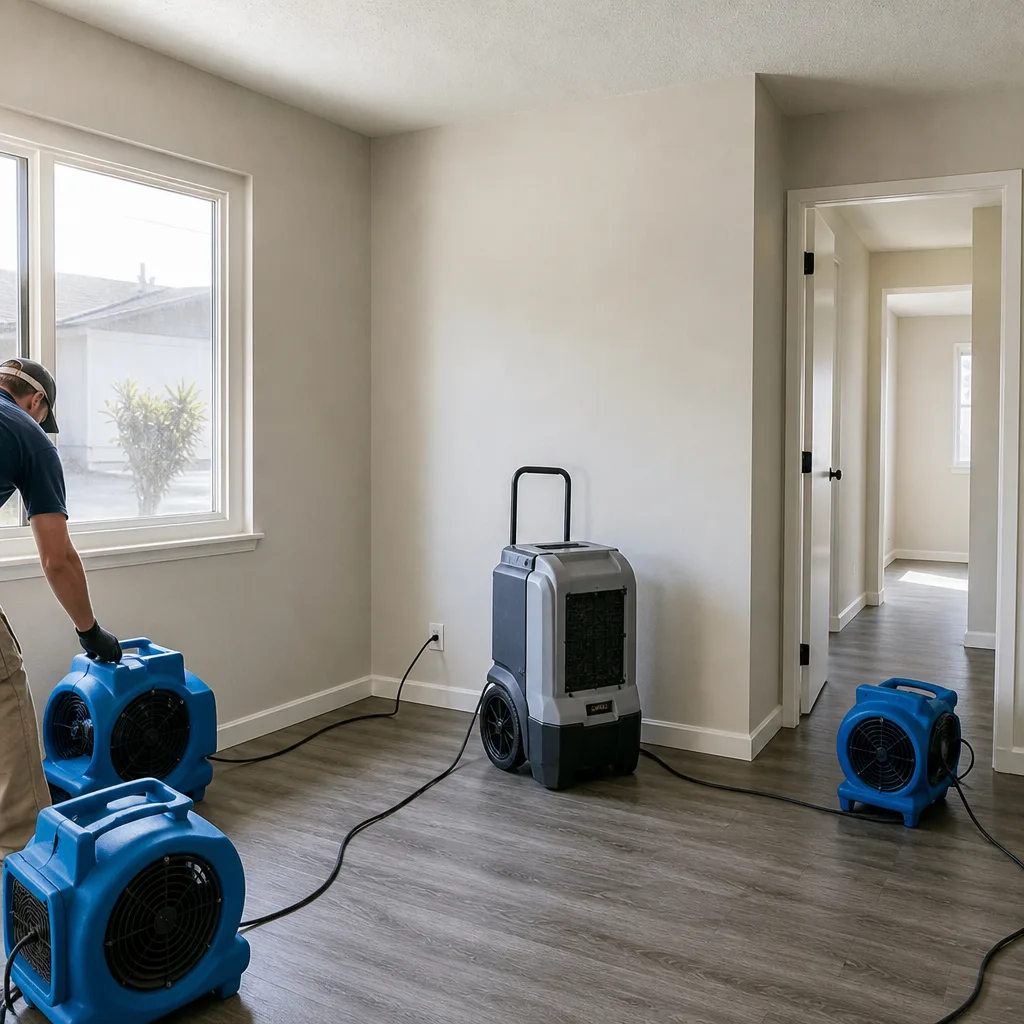 After
Common Water Damage Restoration Problems We See in Garnet Homes
- Sediment-laden water left under slab-on-grade flooring. Monsoon floodwater looks calm on the surface but carries fine silt that settles into seams and under baseboards. If it isn’t extracted completely, homeowners end up with grit permanently embedded in flooring and recurrent dust problems.
- Stucco walls wicking moisture upward invisibly. Garnet’s stucco-clad homes hide water movement. What starts as a soaked garage floor can climb two feet up a stucco wall before the drywall even shows a stain. Moisture mapping is the only way to find it early.
- Desert dust recirculating after a flood. Fine desert dust from a debris flow doesn’t just dry and disappear. It becomes airborne and irritates lungs for months unless a thorough post-extraction cleaning and antimicrobial treatment is part of the job.
- Original plumbing in older Garnet homes letting go. Many homes in the 92258 zip code still connect to original copper or galvanized supply lines. Root intrusion and corrosion can cause slow leaks behind walls that go unnoticed in the dry air until mold appears. That hidden leak needs structural drying after repair, not just a patch and paint.
Pricing for Water Damage Restoration in Garnet, CA
You deserve real numbers, so here they are. A single-room extraction and drying job in Garnet runs $1,500 to $3,800. A monsoon flood involving a garage and adjoining hallway typically lands between $2,800 and $6,500. Full-home floods from a burst supply line or roof failure range from $5,000 to $12,000 or more depending on how far water traveled through slab-on-grade flooring and stucco walls. The factors that move the price in Garnet are sediment load, whether category 2 or 3 water is present, how far moisture wicked up stucco before anyone noticed, and whether a pack-out is needed to protect contents from dust and humidity. We provide a written scope before any equipment goes in, and we document every reading so you and your adjuster know exactly what we found. For a free estimate, call (833) 589-5317.
We Also Serve Cities Near Garnet
Dry Line Water Damage serves Garnet and the surrounding desert communities, including Desert Edge, Desert Hot Springs, Palm Springs, and Morongo Valley. If your property sits along the Highway 62 corridor or in the foothill neighborhoods that run through these desert communities, we’re the crew that knows the terrain, the construction styles, and how water behaves in this climate. One call to (833) 589-5317 gets the right team headed your way.
Serving Garnet, CA — Our Local Coverage Area
We’re based in the Garnet area and know this community well. Use the map below to see our service coverage — if you’re nearby, we can almost certainly help.
FAQs About Water Damage Restoration in Garnet
Mold can begin forming within 24 to 48 hours in Garnet’s high-heat, humid-pocket conditions, even when the visible water has evaporated. The danger isn’t the surface, it’s the hidden moisture trapped in stucco wall cavities and under slab-on-grade flooring where the desert air doesn’t reach. In Garnet’s specific climate, that warm, damp, dark space is exactly what mold needs to start, which is why we prioritize moisture mapping and dehumidification within the first day. Call (833) 589-5317 as soon as you see standing water or smell must after a storm.
Yes, it is treated as category 2 or 3 water, meaning it carries contaminants from soil, road runoff, and desert debris, and requires different safety and extraction protocols than the clean water from a broken supply line. In Garnet, that means we set up containment barriers, use sediment-specific extraction, and apply antimicrobial treatments after drying. A burst pipe in Garnet can sometimes be category 1 water if addressed quickly, but once it sits, it degrades into category 2. We verify the water class on site and document it for your insurance claim.
Water hides because Garnet’s stucco exteriors and concrete slab foundations allow moisture to move horizontally and vertically without showing visible damage until it’s extensive. A stucco wall reads dry on the outside while the inner layers are saturated, and a slab floor can feel dry on the surface while moisture travels beneath the flooring to the far side of the room. The arid climate dries the surface quickly, so you don’t see the classic water stains other regions get. That’s why we rely on moisture meters and thermal imaging rather than visual inspection.
We run Phoenix and Dri-Eaz dehumidifiers plus high-volume air movers, the same commercial-grade equipment used on large-loss restoration projects around the country. This is not the kind of equipment you’d rent from a hardware store. Our drying system is calibrated to Garnet’s specific heat and aridity: high ambient temperatures work for us on open surfaces, but the equipment has to work harder to pull moisture from wall cavities and under-floor spaces where humid pockets persist. We also use Injectidry systems when water has traveled into wall cavities, letting us dry structural spaces without unnecessary demolition of your Garnet home.
Many Garnet flash flood jobs do need a pack-out because the fine desert dust and sediment that comes with floodwater will settle into furniture, clothing, and stored items. If we leave contents in place, that grit abrades surfaces for months and keeps recirculating into the air every time you walk past. We pack out, clean, and store salvageable contents while the structural drying happens, then return them once the home meets a documented dry standard. For a full scope on your specific situation, call (833) 589-5317 and we’ll walk you through it.
Written by Glen Pacheco, Owner at Dry Line Water Damage, serving Garnet and the surrounding desert communities with IICRC-certified restoration process since day one.