

 Water damage drying
 Fire & smoke cleanup
 Mold remediation
 Storm response
 Sewage cleanup
 Reconstruction
Free visual inspection and a written scope of work before any mitigation begins - photos, moisture readings, and drying logs go in your claim file
The scope we write is the scope we bill. Anything new gets shown to you, in writing, before we touch it.
Get your free estimateFast, Reliable Water Damage Restoration Across Highland
Water damage restoration in Highland usually needs to happen within hours, not days. The homes here face a particular pattern we see over and over: Santa Ana winds drive rain through cracked stucco and worn roof penetrations, then monsoon season sends ash-laden runoff off the foothills into the same walls and floors. Our Water Damage Restoration crew covers all of Highland’s 92346 zip code with IICRC-certified process and commercial-grade drying equipment. If water is pooling in your living room or soaking through a ceiling right now, call (833) 589-5317 and we’ll start the conversation while our trucks get ready to move.
Why Dry Line Water Damage Is Highland’s Preferred Water Damage Restoration Company
Highland property owners call us because we show up with Dri-Eaz dehumidifiers and XPOWER air movers on the first truck, not the second. Glen Pacheco built this company around three disciplines under one roof: water, mold, and fire. That matters when a wind-driven rain event soaks drywall and then tests positive for microbial growth weeks later. You don’t want to coordinate two vendors and argue about who owns what part of the loss.
We’ve worked on Highland’s mid-century tract homes long enough to know what the walls look like behind the stucco. 1960s construction with original galvanized supply lines means a slow pinhole leak can run behind a baseboard for weeks before anyone notices. Moisture mapping with thermal imaging and probing against the slab is standard on our jobs here, not an upsell. When we pull back wet carpet in Highland, we’re checking the tack strip, the pad, and the subfloor pocket along the exterior wall because that’s where wind-driven moisture hides.
Our response to Highland from our Fontana location is measured in the time it takes to reach the 210 or the 330, depending on where you are. Foothill-area streets off Greenspot Road and Base Line take a few extra minutes compared to homes near Victoria Avenue. Either way, we treat Highland as our home market, not a service-area afterthought. The customers who leave reviews mention our written moisture logs and the daily readings they got while structural drying ran its course.
Restoration work we handle
Water Mitigation in Highland
Water mitigation in Highland is the first-stage work that stops active water from spreading and begins pulling moisture from materials before demolition decisions get made. When a supply line bursts in a Highland home on Greenspot Road or a water heater lets go near Base Line, the clock starts immediately. Category 1 clean water can become a mold problem within 24 to 48 hours if concealed wall cavities stay damp. Our mitigation process in Highland runs from extraction through structural drying, with documented daily readings so you and your adjuster see exactly where the moisture content started and where it ended. A typical water mitigation job in Highland for a single-room supply line failure with containment, extraction, and three to five days of drying runs $2,800 to $5,600. Larger multi-room events with slab penetration drying push into the $6,000 to $11,000 range.
Containment and Extraction
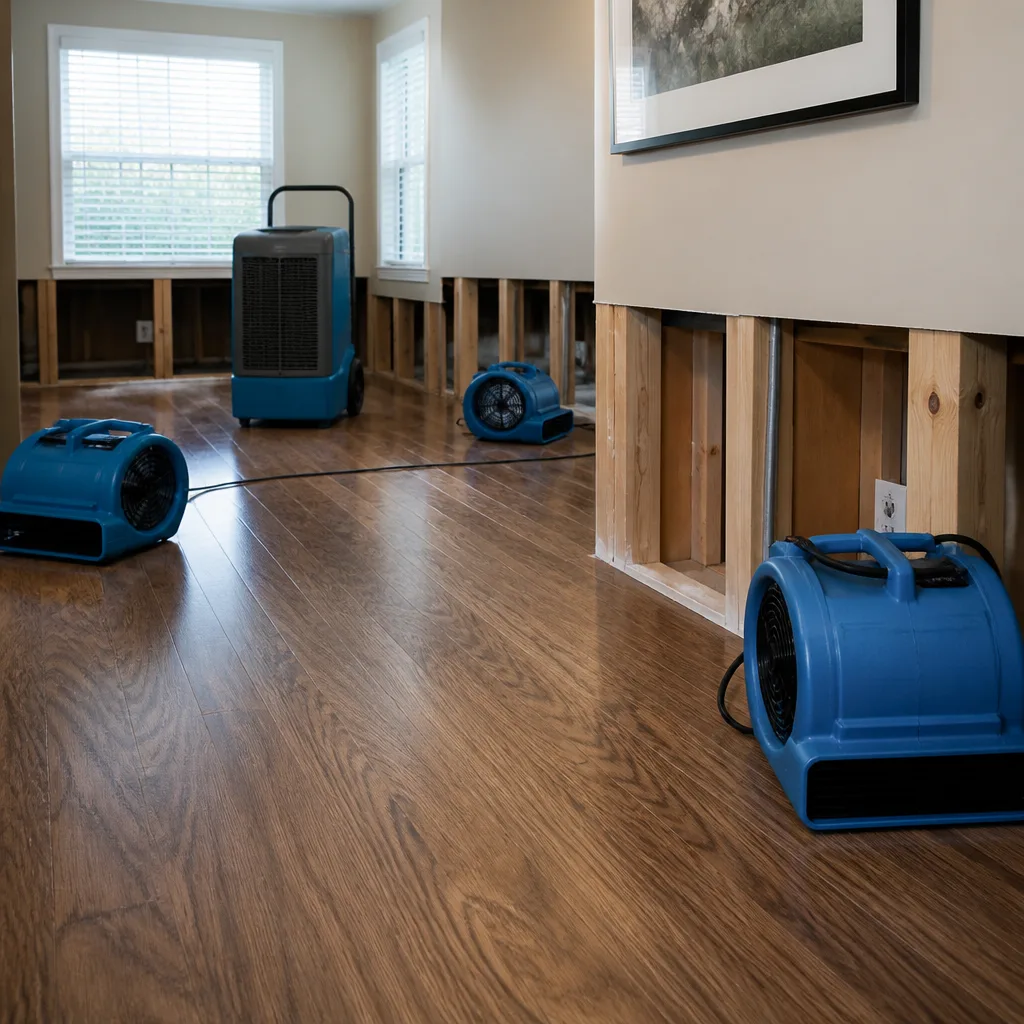
We set negative air containment when water has migrated into walls or when we’re pulling saturated drywall that could release dust or spores. Extraction starts with truck-mounted or portable extractors pulling standing water from carpet, pad, and hard surfaces. After that, Injectidry panels go into wall and floor cavities to pull moisture from places you cannot see, which reduces the amount of drywall we need to cut.
Daily Moisture Logging
Every Highland mitigation job gets a moisture map baseline and daily documented readings. The numbers go to you and the adjuster. Dry is a number, not an opinion.
Flooded Basement in Highland
Flooded basement work in Highland usually means either a slab-level split-level lower floor or a true below-grade basement in older foothill construction, and either way the water is sitting against foundation concrete. Homes in Highland built into the slope above Greenspot Road or off Church Street can have daylight basements that collect runoff during monsoon downpours. Ash and mud from recent burn scars means the water is rarely clean. Flooded basement extraction in Highland with contaminated water, carpet and pad removal, baseboard pulls, antimicrobial treatment, and structural drying typically runs $3,500 to $7,500 depending on square footage and how far the water climbed. A clean-water sump failure or water heater release in a finished basement runs lower, around $2,200 to $4,800 for full mitigation.
Ash-Laden Floodwater Handling
Post-monsoon floodwater in Highland carries debris from the San Bernardino foothills. When it’s contaminated, we treat it as Category 3: porous materials come out, surfaces get antimicrobial treatment, and we document every removal for your insurance file.
Slab-Edge Water Migration
In Highland’s slab-on-grade tract homes, floodwater doesn’t always sit in one room. It runs along the concrete subfloor under walls and into closets on the opposite side of the house. We map that migration before touching drywall so the containment plan covers the real perimeter, not just the visible puddle.

Trusted Brands We Service in Highland
Highland homeowners often ask whether the equipment we bring matches what their adjuster expects from a large-loss restoration contractor. It does. We run a fleet of Dri-Eaz and Phoenix dehumidifiers, XPOWER and B-Air air movers, and Injectidry structural drying panels that pull moisture from enclosed cavities without cutting everything open. Because we service our own equipment and maintain a deep inventory of filters, panels, and parts, we’re not waiting on a rental counter when a Highland job needs another dehumidifier the same afternoon. That equipment readiness shortens the time from first call to set-up at homes throughout Highland’s 92346 zip code.
Common Water Damage Restoration Problems We See in Highland Homes
- Santa Ana wind-driven roof and stucco intrusion: 60 to 80 mph downslope wind events force rain through cracked stucco, poorly flashed roof penetrations, and worn composition shingles. The water ends up in attic insulation and wall cavities, and the visible ceiling stain is often smaller than the actual wet area.
- Monsoon floodwater contaminated with ash and mud: Highland properties near recent burn scars get runoff carrying fine sediment and combustion byproducts. This water requires Category 3 handling, not standard extraction, and porous materials like carpet pad and drywall typically come out.
- Slow leaks from original galvanized supply lines: Many Highland homes built from the 1950s through the 1980s still have galvanized pipes that corrode at the threaded joints and pinhole behind walls. These leaks run silently along slab edges until baseboards swell or laminate buckles.
- Concealed moisture in slab-foundation floor systems: Slab homes hide water under sheet vinyl, laminate, and carpet for longer than raised-foundation homes because there’s no crawlspace to show the leak. Moisture mapping and drying logs catch what visual inspection misses.
See the difference
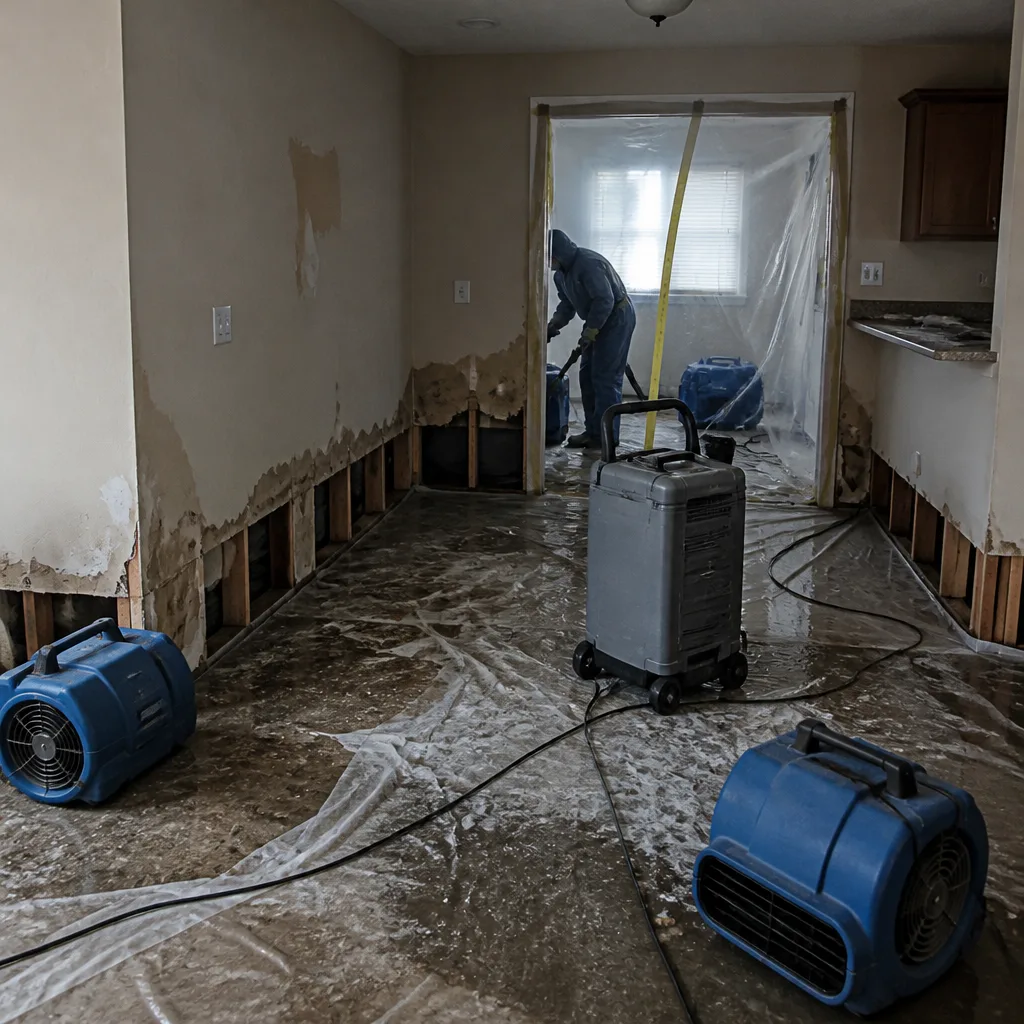 Before
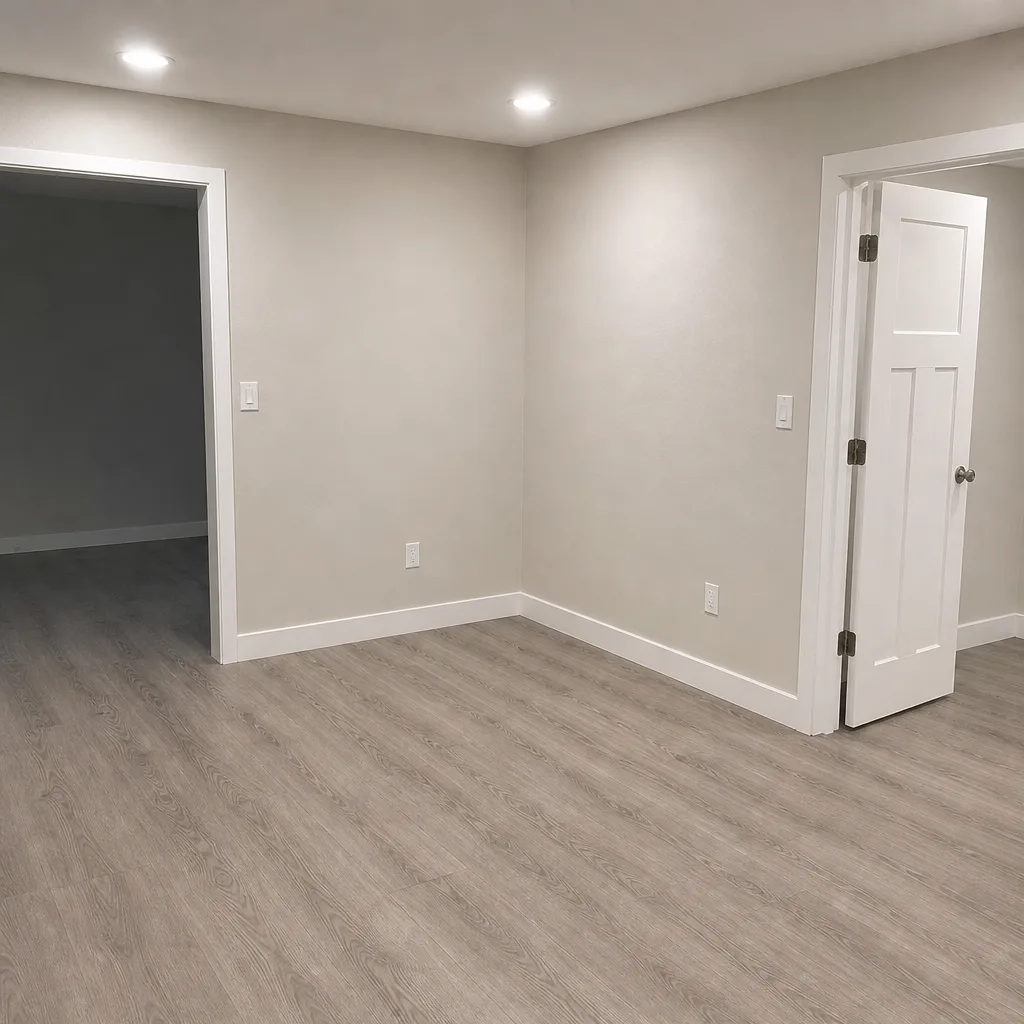 After
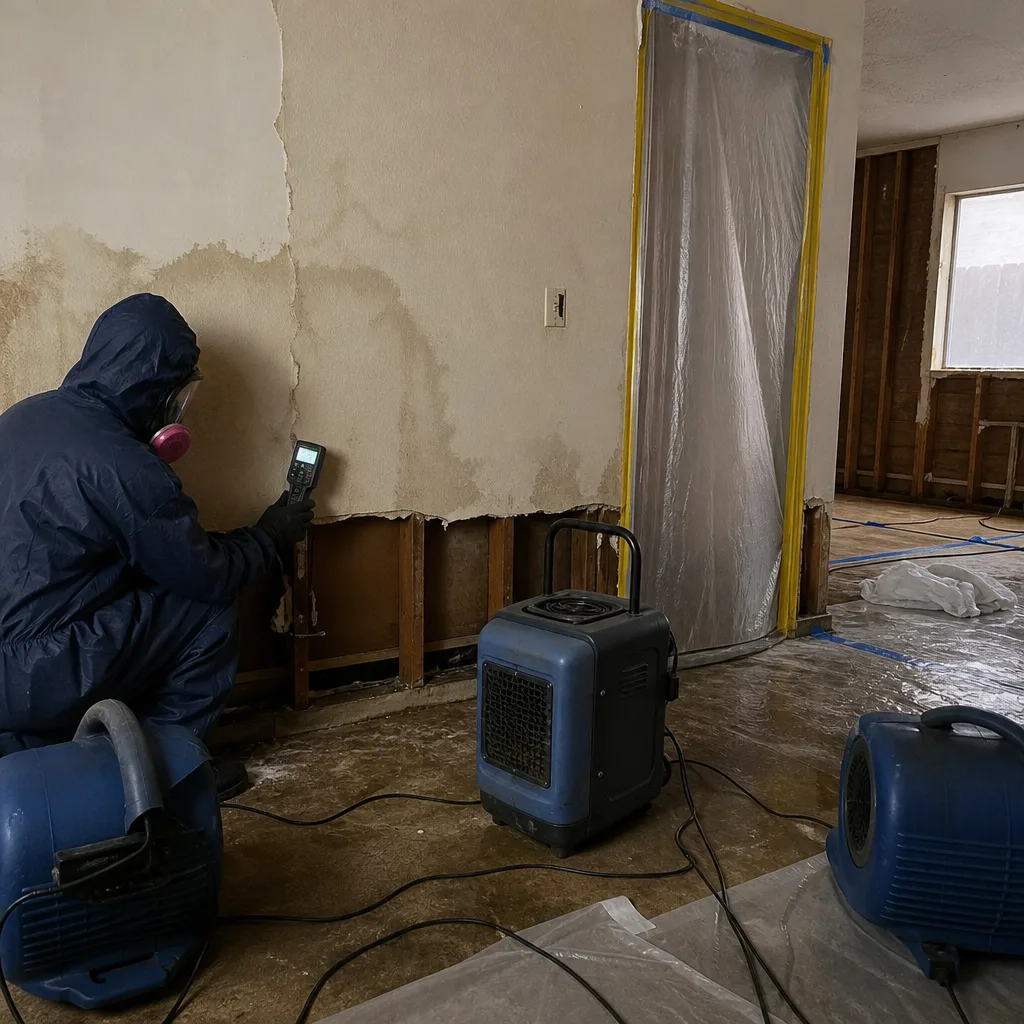 Before
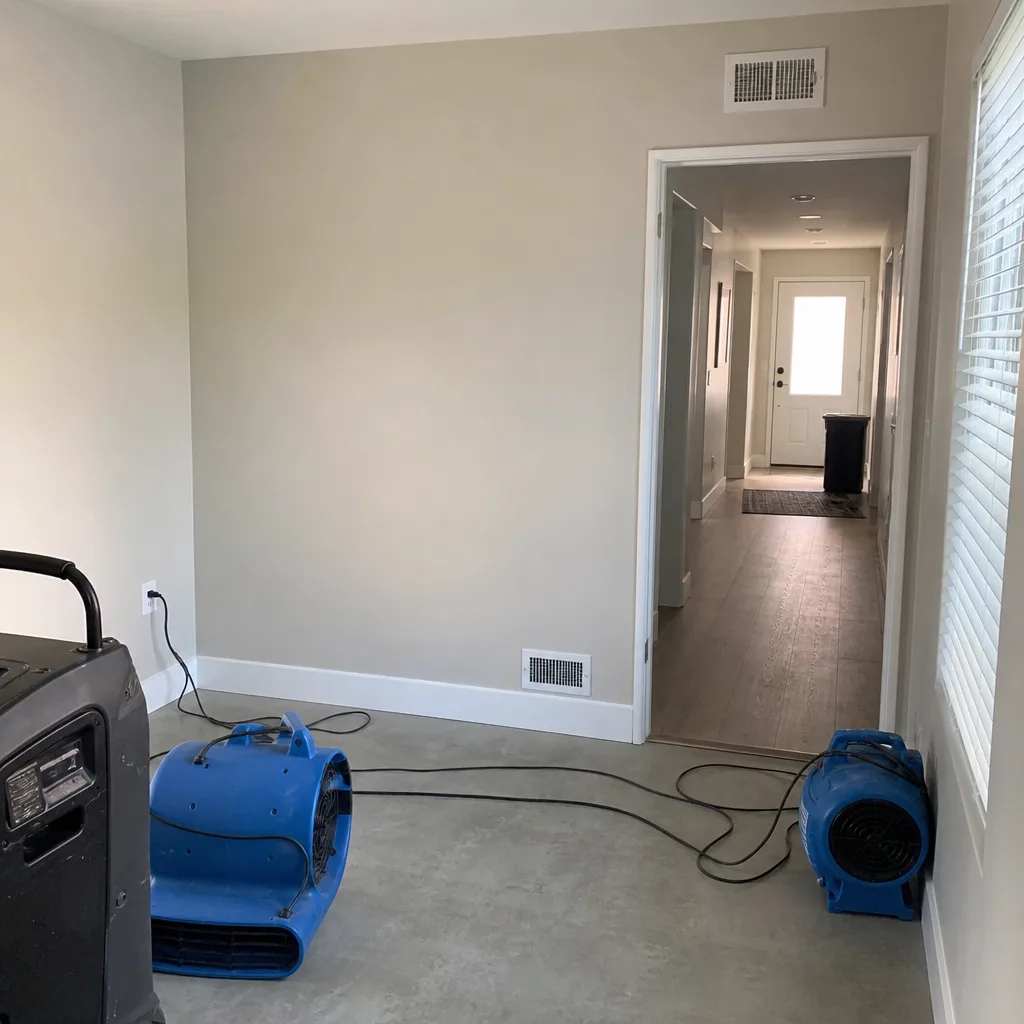 After
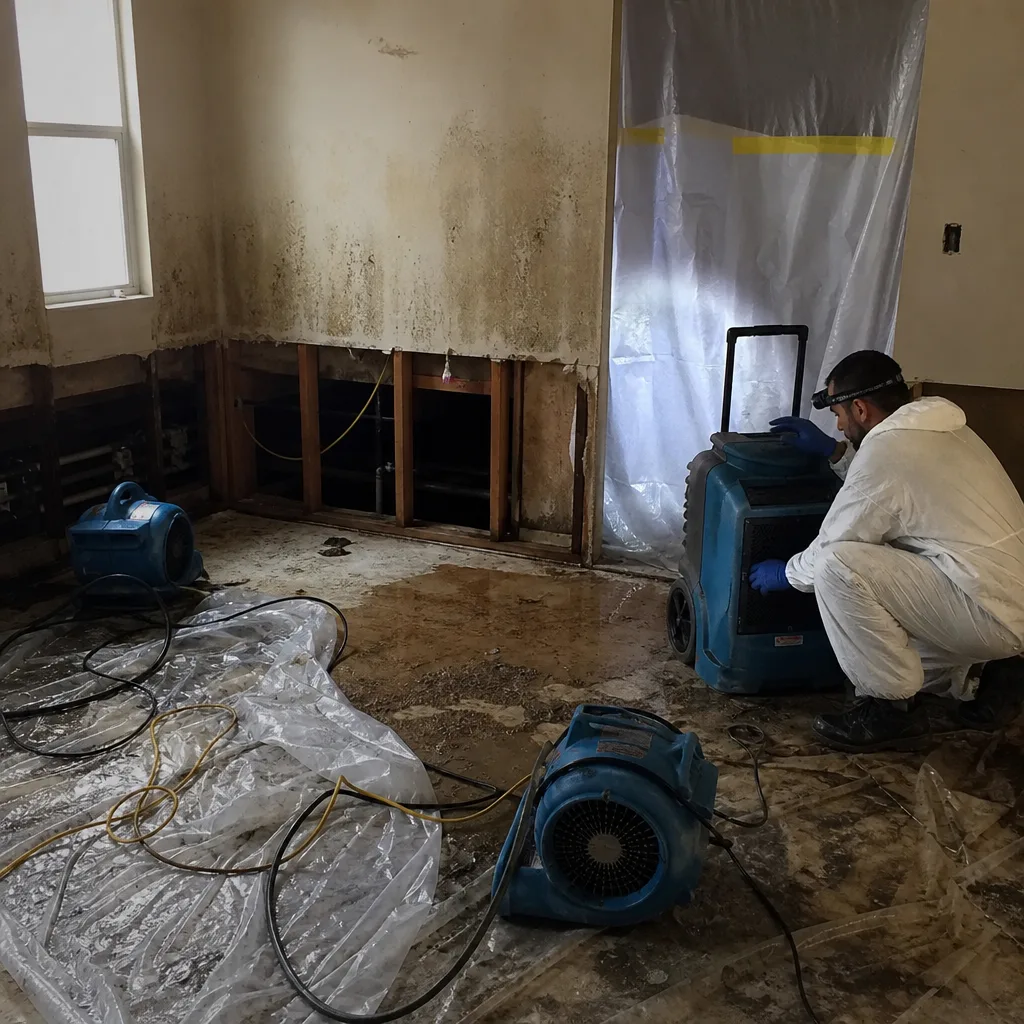 Before
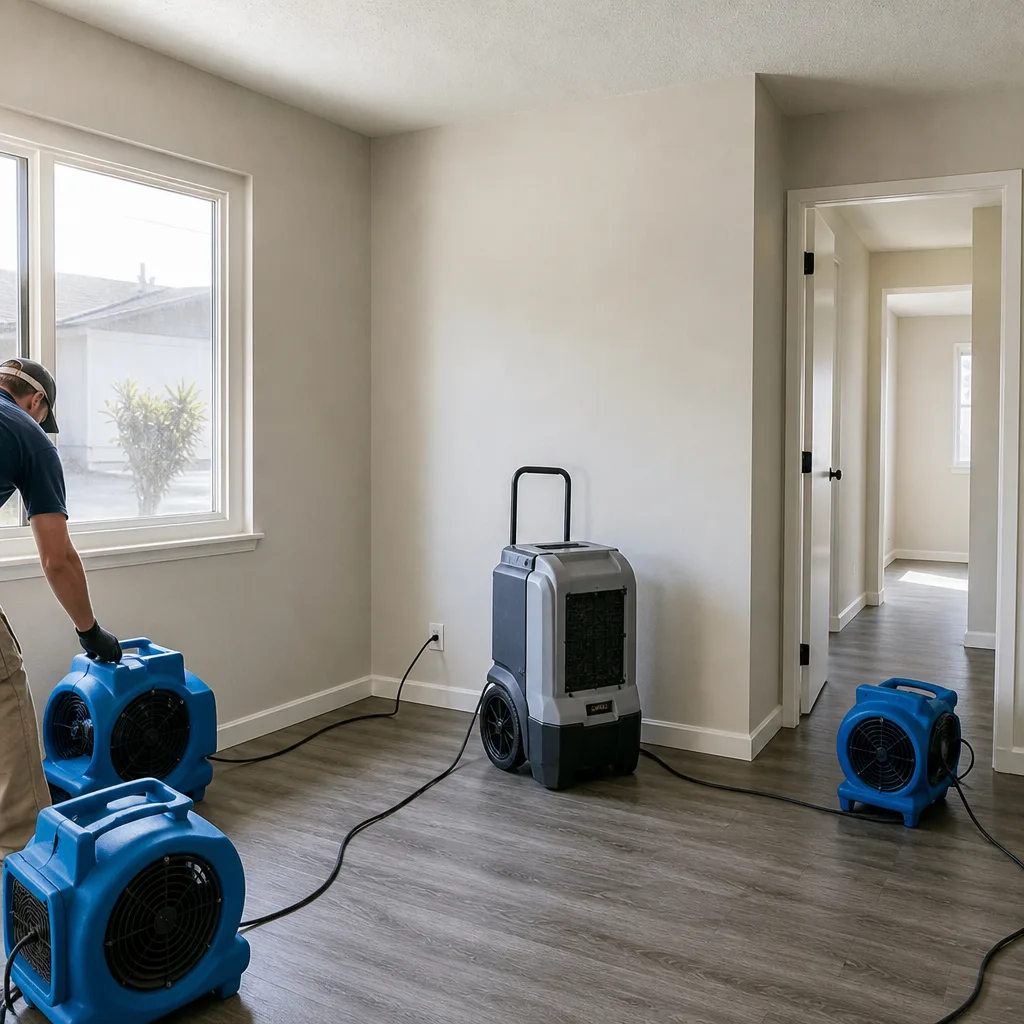 After
Pricing for Water Damage Restoration in Highland, CA
Water damage restoration pricing in Highland runs on a cost-plus-materials-and-equipment model that adjusters recognize. Emergency water extraction with basic containment starts around $1,200 to $2,500 for a single room. Full structural drying with Injectidry panels and daily monitoring on a two-to-three-room loss runs $4,000 to $8,000. Flood cleanup with Category 3 water, including decontamination, demolition, and drying, commonly lands between $5,500 and $12,000 for Highland homes. Factors that move your number: square footage of wet material, ceiling height, how long water sat before we arrived, and whether the loss reaches cabinetry or built-ins. Estimates are free, in writing, and we walk your adjuster through the same scope. Call (833) 589-5317 to schedule a site visit in Highland.
We Also Serve Cities Near Highland
Our crews work throughout the San Bernardino Valley and Inland Empire with the same IICRC-certified process and equipment. In addition to Water Damage Restoration in Highland, we cover San Bernardino, Muscoy, Redlands, and Loma Linda. If you own property in multiple cities or manage rentals across the valley, one accountable team handles the full loss scope.
Serving Highland, CA — Our Local Coverage Area
We’re based in the Highland area and know this community well. Use the map below to see our service coverage — if you’re nearby, we can almost certainly help.
FAQs About Water Damage Restoration in Highland
Santa Ana winds in Highland push wind-driven rain through small openings in stucco, roof flashing, and window frames that normal rainfall never penetrates. We routinely find saturated attic insulation and wet wall cavities in Highland homes after a 60 mph wind event even when the ceiling shows no visible stain. The fix requires containment, forced-air drying, and moisture mapping to find where the water actually went, not just where it dripped.
Monsoon floodwater in Highland often carries ash, mud, and debris from the burned foothills of the San Bernardino Mountains, which means it’s contaminated water requiring Category 3 handling rather than routine extraction. Porous materials like carpet pad and unpainted drywall typically get removed, and surfaces receive antimicrobial treatment. We document the contamination in writing and photos for your insurance claim.
Mold can begin colonizing wet drywall, insulation, and other porous materials within 24 to 48 hours, and Highland’s warm indoor temperatures during summer and early fall accelerate that timeframe. The safest response is to get extraction and dehumidification running within the first day of the loss. If microbial growth is already visible, our mold remediation discipline works under the same roof as the drying crew, so there’s no handoff gap.
Yes, because original galvanized supply lines in Highland’s 1950s-to-1980s tract homes often fail at threaded joints and pinhole slowly behind walls and along slab edges. During a restoration job, we check supply lines near the wet area for corrosion and weakness, because a second failure on the same run is common once the first leak appears. We note what we find so you can decide whether to repair only the active leak or address aging pipe sections before another loss.
Yes, and many Highland properties need exactly that sequence. Santa Ana-season rain intrusion dries out and cracks stucco and roofing, then monsoon-season storms send surface runoff into the same compromised areas. Our water damage crew handles the intrusion drying with structural equipment, while floodwater from burn scars gets Category 3 decontamination under the same scope. For the fire-related aspects of a loss, our fire damage restoration team coordinates directly so you’re never managing two vendors. Call (833) 589-5317 and we’ll tell you what the property actually needs.
Contact Dry Line Water Damage in Highland
If water is active in your Highland home right now, call (833) 589-5317 before you touch anything else. Glen Pacheco and our IICRC-certified crew cover all of Highland, from the foothill-edge streets off Greenspot Road to the flats near Base Line and Victoria Avenue. We arrive with the same Dri-Eaz, Phoenix, and Injectidry systems that large-loss commercial restoration contractors run, set up containment, start extraction, and hand you a written scope and daily moisture logs. One crew, full scope, documented dry. Free estimates, direct adjuster coordination, and no coordination gaps between water, mold, and fire work.
Written by Glen Pacheco, Owner at Dry Line Water Damage, serving Highland and the Inland Empire with IICRC-certified water, mold, and fire restoration.