

 Water damage drying
 Fire & smoke cleanup
 Mold remediation
 Storm response
 Sewage cleanup
 Reconstruction
Free visual inspection and a written scope of work before any mitigation begins - photos, moisture readings, and drying logs go in your claim file
The scope we write is the scope we bill. Anything new gets shown to you, in writing, before we touch it.
Get your free estimateFast, Reliable Water Damage Restoration Across March Air Force Base
If you’re dealing with a burst pipe, flooding, or hidden moisture in March Air Force Base, the first 24 hours determine whether you face a cleanup or a reconstruction. Water damage restoration in March Air Force Base typically runs $1,800 to $6,500 for a standard room-sized loss, and the crews who understand this base’s 1940s wood-frame buildings are the ones who can actually dry them without tearing out original materials. That’s what our team does. We’re Dry Line Water Damage, led by Glen Pacheco, and our IICRC-certified technicians have worked on aging barracks, mid-century housing, and everything in between here. If water is spreading through your home right now, call (833) 589-5317 and we’ll start mapping the moisture while you’re still on the phone with your insurance company.
Why Dry Line Water Damage Is March Air Force Base’s Preferred Water Damage Restoration Company
Most restoration companies treat March Air Force Base like any other Inland Empire zip code. We don’t, because the job isn’t the same. The original 1940s wood-frame barracks and housing on base have galvanized pipes, knob-and-tube wiring, and plaster walls that hold water differently than drywall in a 2005 Moreno Valley tract home. Our Water Damage Restoration team has spent enough hours inside these structures to know where water hides and how to dry it without violating military safety codes or historic preservation limits.
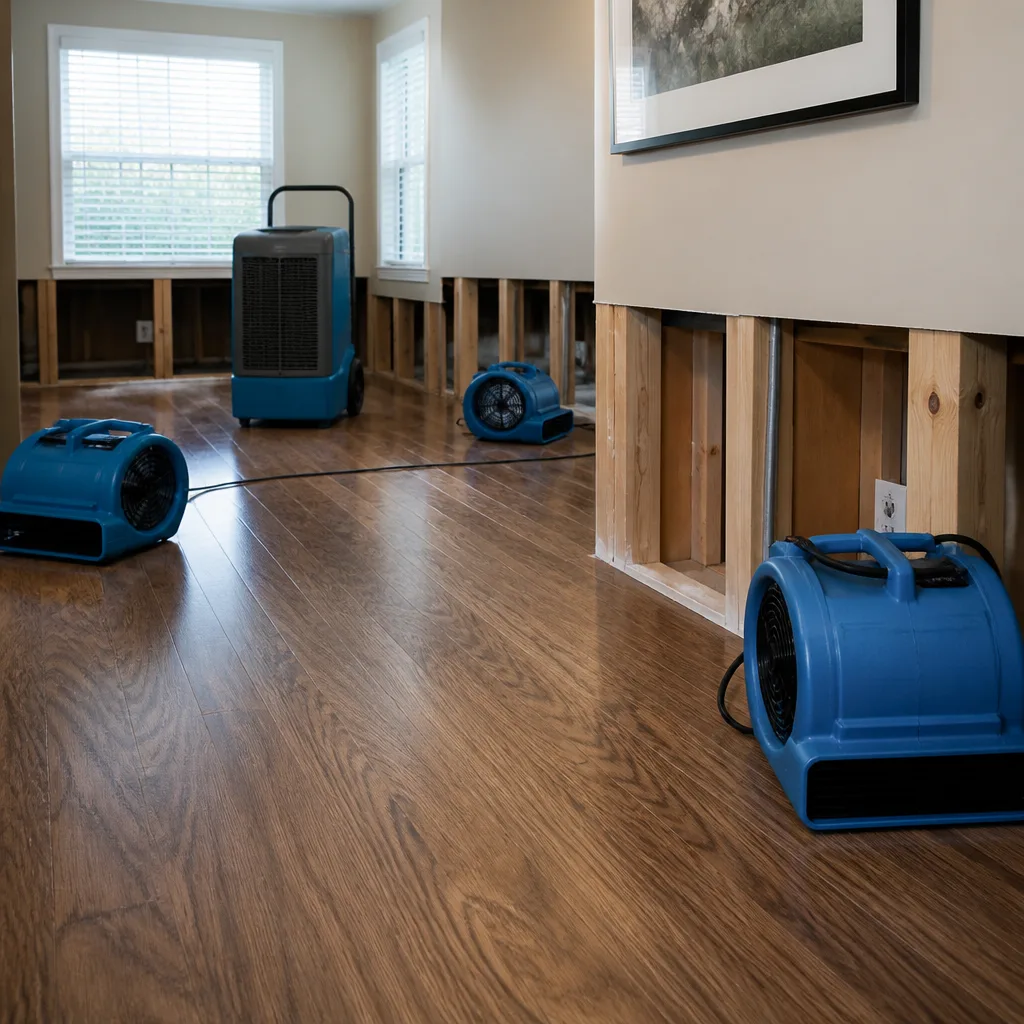
March Air Force Base homeowners call us because we bring commercial-grade equipment, not rental-shop fans. Our fleet includes Dri-Eaz and Phoenix dehumidifiers and XPOWER air movers, the same machines used on large-loss commercial jobs. We also run Injectidry structural-drying systems that pull moisture from wall cavities and floor assemblies without unnecessary demolition. When you’re dealing with a 1943 plaster wall that can’t be replaced with a Home Depot sheetrock panel, that matters.
Glen Pacheco built this operation around one idea: document everything, dry to a measurable standard, and don’t make a homeowner fight their adjuster for proof. We provide photo documentation, moisture maps, and drying logs on every job in March Air Force Base. That’s why property managers on base and homeowners in the 92551 area keep our number in their phones.
Restoration work we handle
Water Extraction in March Air Force Base
Water extraction in March Air Force Base usually means pulling standing water out of a room where a galvanized pipe let go or a water heater failed, and it’s the first thing we do because every hour of standing water pushes moisture deeper into wood subflooring and plaster. A typical extraction runs $400 to $1,200 depending on square footage and how much water is pooled. Our crew arrives with truck-mounted and portable extraction units rated for hundreds of gallons, not the carpet-cleaning wands a handyman brings. On base, we also coordinate access and safety protocols before we put a single machine inside.
Truck-Mounted Extraction For Faster Water Removal
We use high-volume extraction equipment that removes water at a rate residential-grade machines can’t match. In a March Air Force Base barracks with original wood floors, speed matters more than anywhere else because those boards swell fast and cup within hours. Getting the bulk water out quickly keeps the drying phase shorter and the restoration scope smaller.
Flooring And Subfloor Water Removal
Standing water doesn’t just sit on top of flooring, it works its way beneath hardwood, tile, and carpet into the subfloor. We check for trapped water under flooring on every March Air Force Base job, using moisture meters to confirm what’s wet before we decide whether a floor can be saved. The goal is extraction without unnecessary tear-out, especially where original flooring is still intact.
Emergency Water Removal in March Air Force Base
Emergency water removal in March Air Force Base is what happens when a supply line bursts at 2 a.m. or a washing machine floods a hallway while you’re at work, and it’s the service that stops a $900 mitigation from becoming a $14,000 rebuild. A true emergency extraction in this area typically runs $1,000 to $2,800 for the initial response, extraction, and equipment setup, with final cost tied to how far the water traveled. We answer our phones around the clock because water does not wait for business hours on a military installation or anywhere else.
After-Hours Response For Sudden Pipe Bursts
We’ve taken calls from March Air Force Base residents at 11 p.m. with water pouring through a ceiling. By the time the sun comes up, our crew has extracted the standing water, placed containment, and started air movers. The first few hours are when you prevent secondary damage like warped hardwood, soaked insulation, and the mold that starts inside wall cavities within a day or two.
Category 1 Water That Turns Category 3
Clean water from a burst pipe stays clean only if you move fast. Leave it sitting in a 1940s wood-frame building for 48 hours and it becomes a contaminated mess. Emergency water removal is about preserving the category of the water so remediation stays straightforward and your insurance claim stays simple. On base, where military housing rules and historic building guidelines already add complexity, speed is the simplest way to avoid a bigger problem.

Trusted Brands We Service in March Air Force Base
We run XPOWER and B-Air air movers, Dri-Eaz and Phoenix dehumidifiers, and Injectidry panel-drying and structural-drying systems on March Air Force Base jobs. These are the brands large-loss restoration contractors use, not the consumer-grade equipment sold at big-box stores. It matters because a professional dehumidifier pulls three to five times the moisture per day of a rental unit, and that gap shows up in drying time and final results. We stock common replacement parts and filters for our own equipment, so a failed fan or clogged filter doesn’t slow down a March ARB job by a day. Our March Air Force Base customers don’t wait on parts shipments when their walls are open and wet.
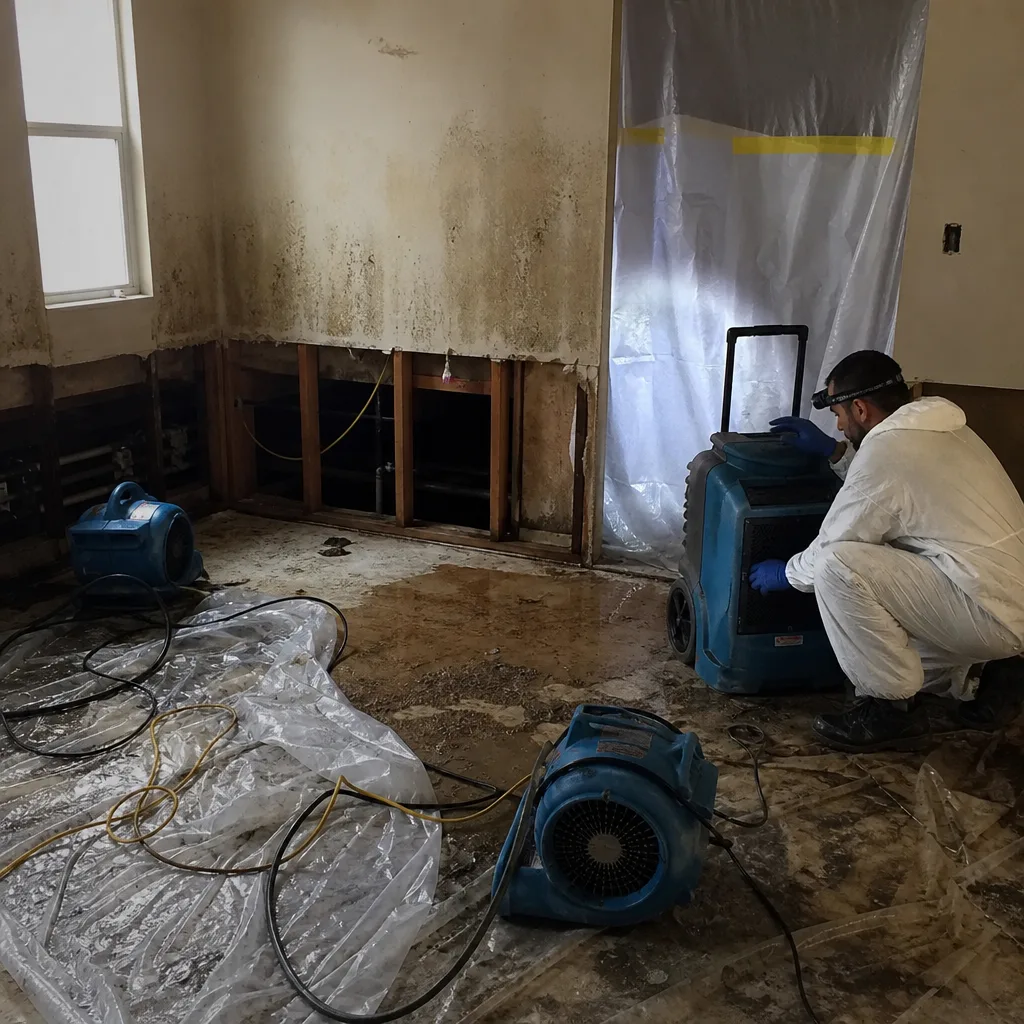
See the difference
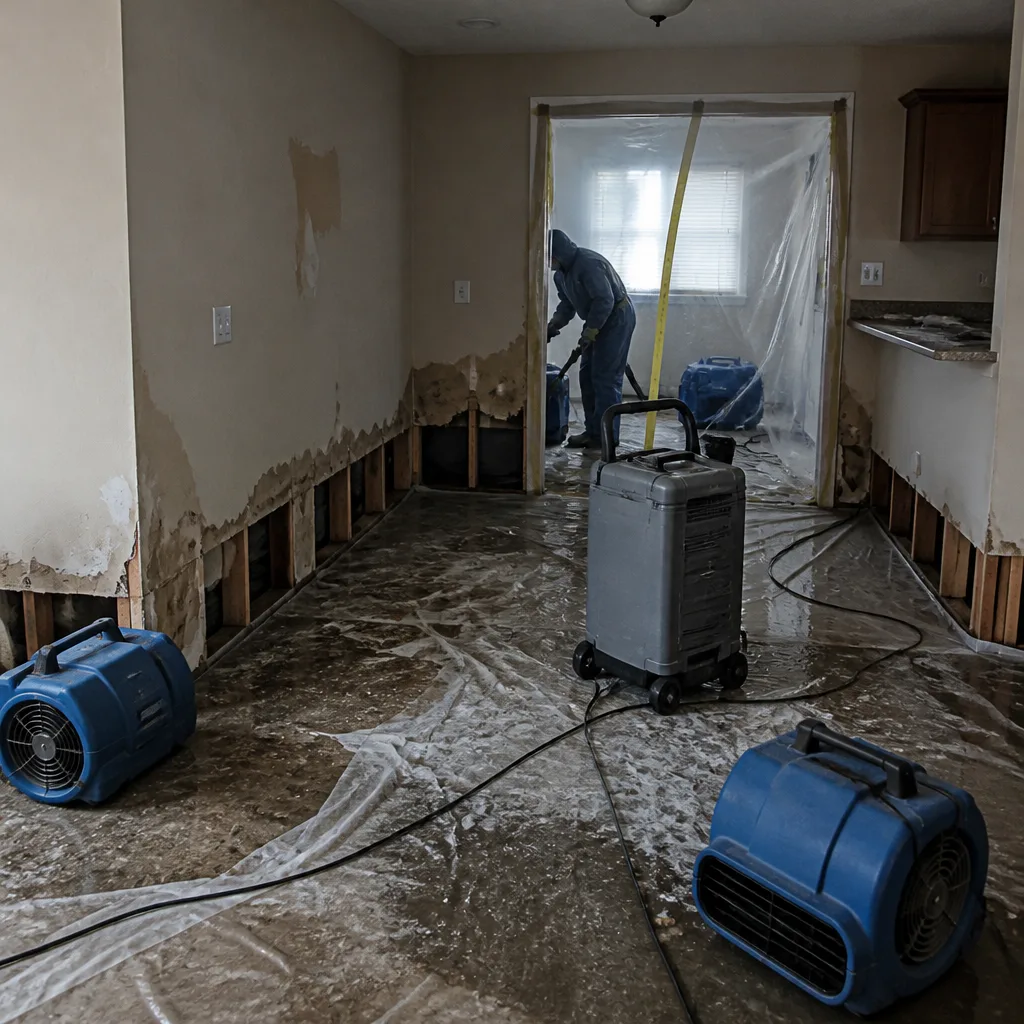 Before
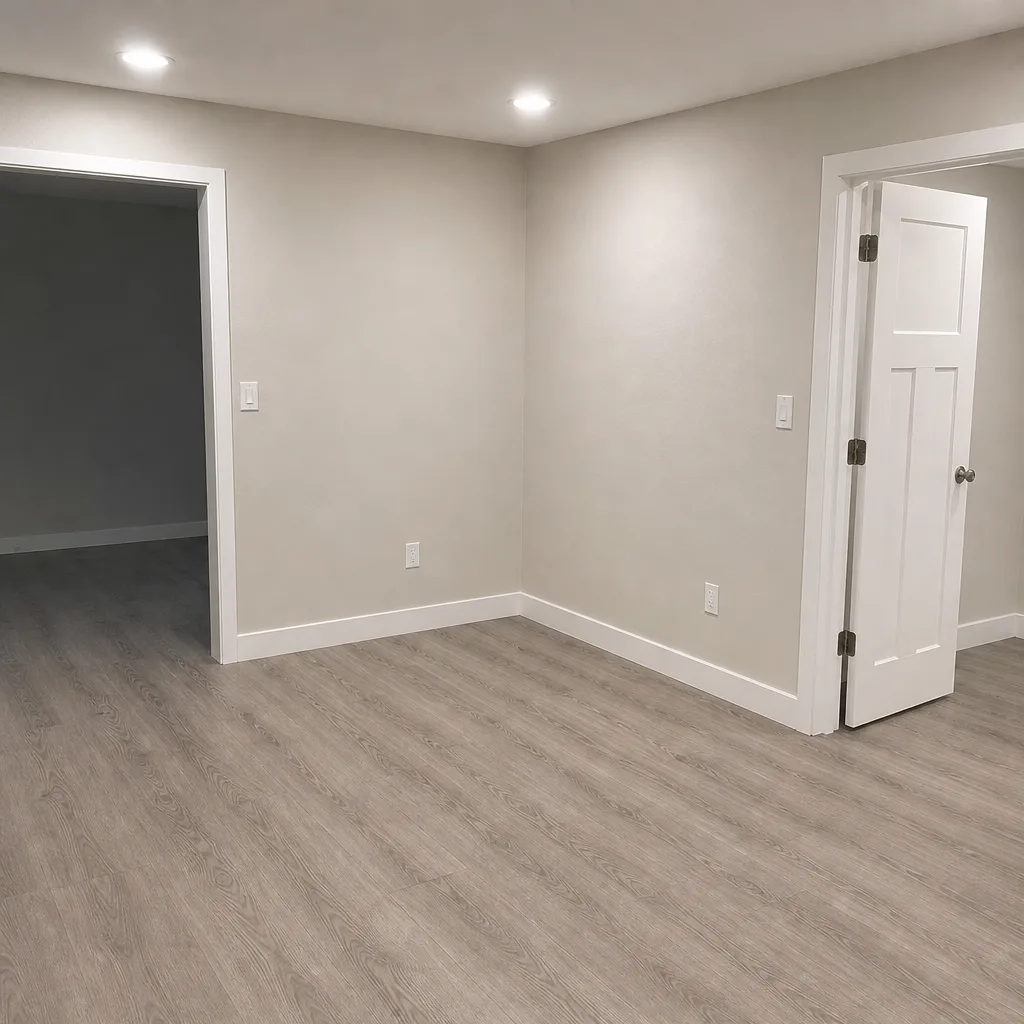 After
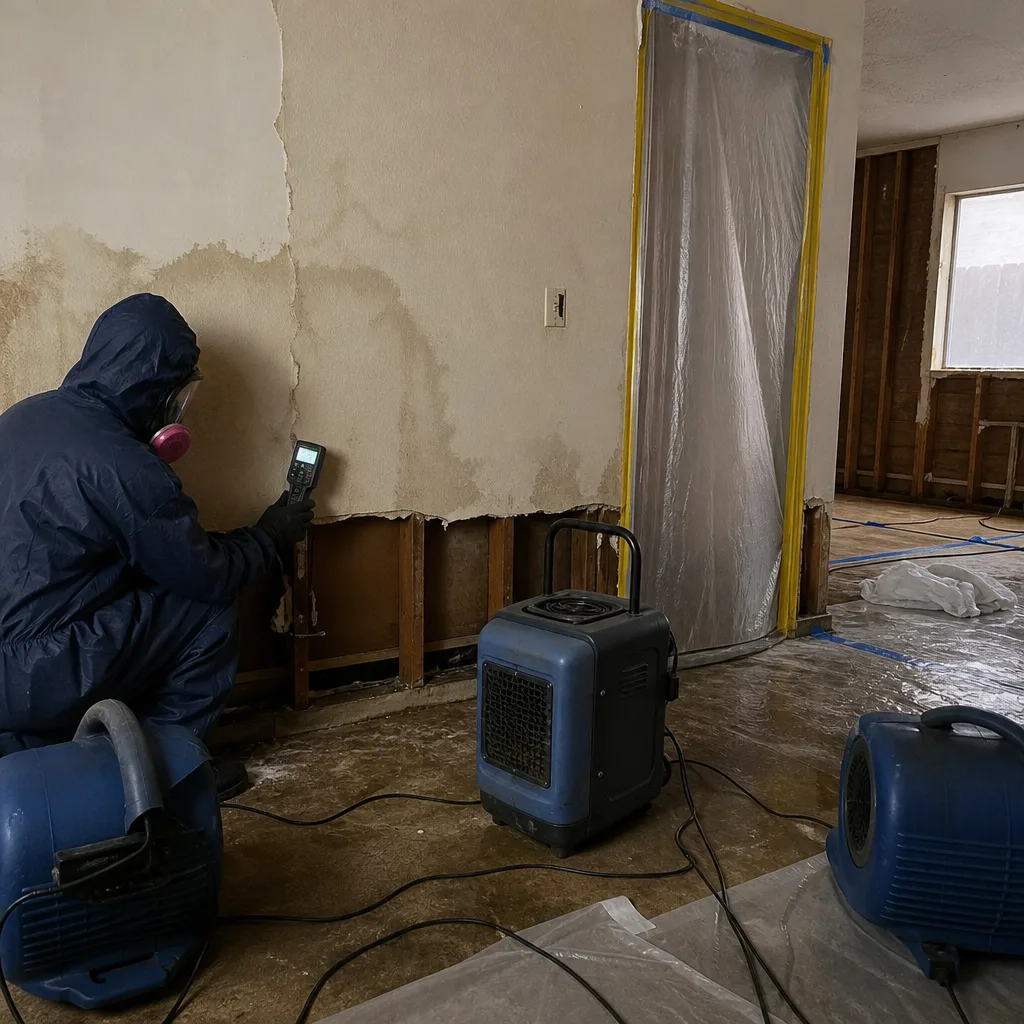 Before
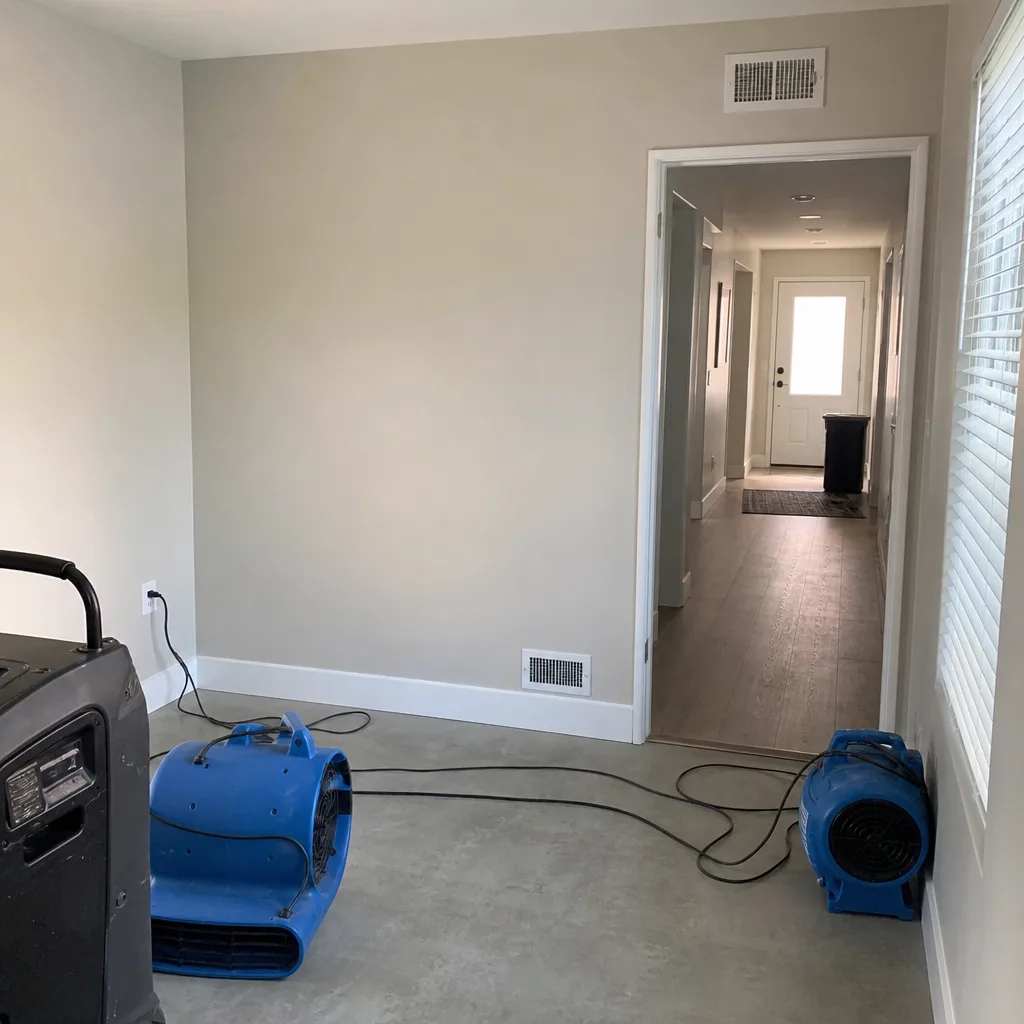 After
 Before
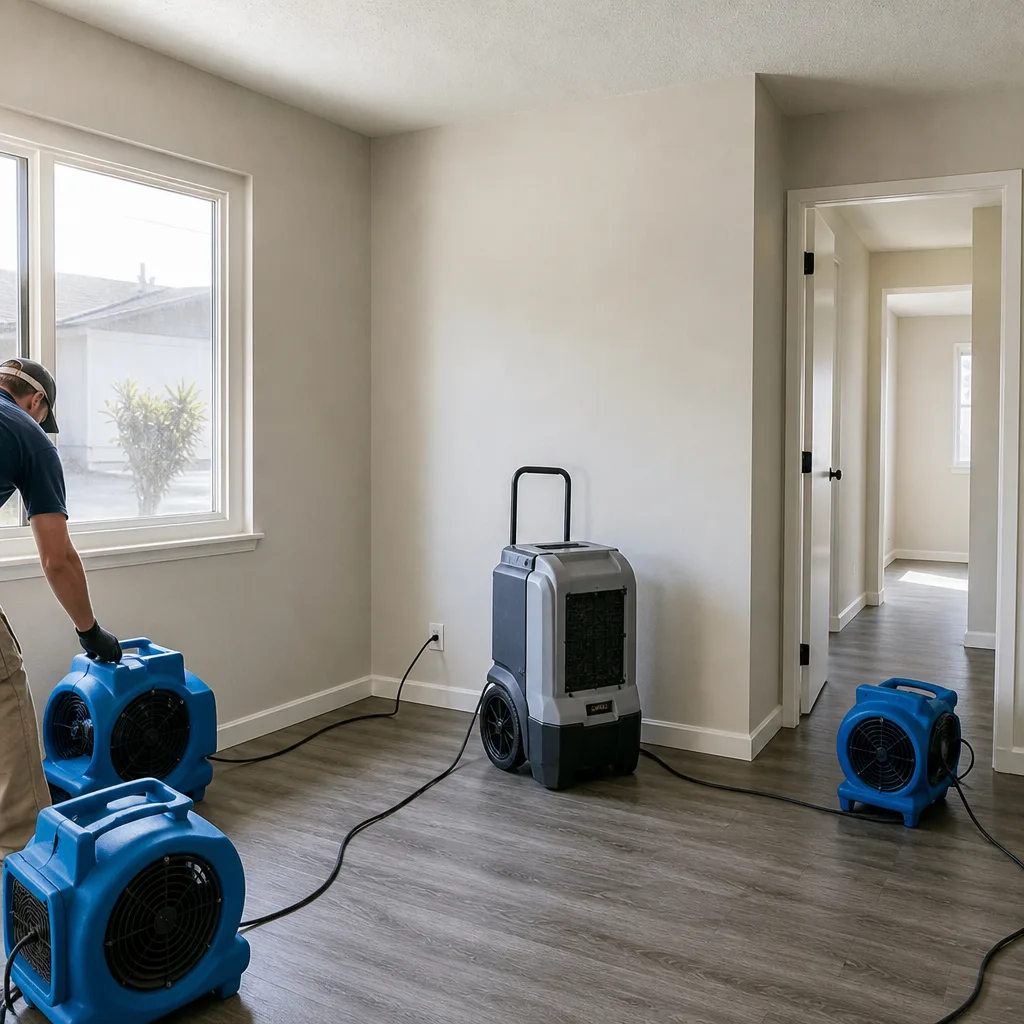 After
Common Water Damage Restoration Problems We See in March Air Force Base Homes
- Galvanized pipe failures in original 1940s barracks: These steel pipes corrode from the inside out and eventually burst, often near a joint or elbow. We’ve seen category 1 water from a single failed fitting saturate original plaster walls and run into knob-and-tube wiring chases within an hour.
- Hidden moisture behind plaster and lath walls: Water migrates through old plaster differently than drywall. It follows framing, pools in odd spots, and hides behind baseboards. Without moisture mapping, a contractor can declare the room dry while mold starts inside the wall cavity.
- Knob-and-tube wiring complicating every step: Drying a wall with active knob-and-tube wiring requires care that generic restoration crews don’t know to take. We coordinate with base safety requirements and document conditions before, during, and after drying.
- Historic preservation limits on materials: You can’t just rip out a 1943 plaster wall and hang new drywall on some base buildings. The right approach is targeted structural drying that brings moisture content down without destroying original materials, and that’s exactly what our Injectidry systems do.
Pricing for Water Damage Restoration in March Air Force Base, CA
Water damage restoration in March Air Force Base has a different cost profile than newer parts of the Inland Empire because the housing stock is older and the access protocols add time. A small pipe-burst cleanup in a bathroom or laundry room typically runs $1,500 to $3,500. A full room flood with structural drying, containment, and antimicrobial treatment lands between $3,000 and $7,000. Whole-floor events in larger barracks or houses can push past $10,000, especially when original materials require specialized drying rather than replacement. The variables that move the number are square footage, water category, how long the water sat before we arrived, and whether we can save original flooring and plaster. We give you a written scope before work starts, with photo documentation for your adjuster. Call (833) 589-5317 for a free estimate, and we’ll give you a real number, not a vague range you can’t budget against.
We Also Serve Cities Near March Air Force Base
Our service area extends from the base through Water Damage Restoration in March Air Force Base and into the surrounding cities. We regularly work in Moreno Valley, Woodcrest, Perris, and Good Hope, handling everything from burst pipes in 1950s tract homes to flood cleanup in newer subdivisions. If you’re nearby and dealing with active water or hidden moisture, call (833) 589-5317 and we’ll route a crew to you quickly.
Serving March Air Force Base, CA — Our Local Coverage Area
We’re based in the March Air Force Base area and know this community well. Use the map below to see our service coverage — if you’re nearby, we can almost certainly help.
FAQs About Water Damage Restoration in March Air Force Base
Restoration on the original 1940s wood-frame barracks and housing differs because those buildings often still have knob-and-tube wiring, galvanized pipes, and plaster walls that require careful moisture mapping and targeted structural drying instead of standard demolition and replacement. Military safety codes and historic preservation guidelines also mean access decisions and material-removal limits must be coordinated in ways that don’t apply to a typical Moreno Valley tract home. A restoration company that treats a 1943 barracks like a 2005 stucco house will miss moisture in legacy wall cavities and may remove original materials that could have been saved. Call (833) 589-5317 if you’re dealing with water damage in an older base building and want a crew that understands both the structure and the protocol.
Shut off the main water valve first, then cut power to any wet area where water may have reached wiring, especially in older buildings with knob-and-tube systems. If you’re on the installation proper, follow base reporting protocols for maintenance emergencies. Then call us at (833) 589-5317. In a 1940s building with galvanized pipes, the burst is rarely a one-time event, the pipe is failing from internal corrosion, and adjacent sections may be next. We’ll extract the standing water, map moisture migration, and document everything for your insurance file while coordinating any required base access approvals.
Yes. That’s the core advantage of the Injectidry systems we run in March Air Force Base, which use panel drying and floor-mat technology to pull moisture from wall cavities and floor assemblies while the original plaster, lath, and flooring stay in place. In many 1940s structures, the original materials are irreplaceable, and removal would trigger historic preservation issues and higher rebuild costs. We take moisture readings throughout the drying process and document a measurable dry standard in the drying logs, so there’s no guesswork about whether the walls are actually dry. If you’ve been told the only fix is tearing out original walls, call (833) 589-5317 for a second opinion before you sign anything.
Santa Ana winds and wildfire smoke add a second layer of contamination to a water-damaged building because smoke particles and ash can infiltrate open wall cavities and porous materials during the drying process. In March Air Force Base, where seasonal Santa Anas drive dry, ash-laden air through the region, we may adjust containment and air-scrubbing procedures on a water job if active smoke or recent ash deposits are present. The dry air also accelerates evaporation, which can create a false sense of progress while deeper materials remain wet. That’s why our drying plans always rely on moisture meters and documented readings, not how the surface looks or feels.
We use Dri-Eaz and Phoenix dehumidifiers, XPOWER and B-Air air movers, and Injectidry structural-drying systems on March ARB water damage jobs. These are commercial-grade machines built for continuous operation on large-loss projects, not consumer rental equipment. A professional dehumidifier removes several times more moisture per day than a home unit, which shortens drying time and reduces the window for mold. In older base buildings with thick plaster and original wood, that drying capacity is the difference between saving a wall and replacing it. Call (833) 589-5317 and we’ll bring the right equipment for your building’s actual construction, not a generic setup off the truck.
Contact Dry Line Water Damage today. We serve March Air Force Base and the surrounding 92551 area with IICRC-certified water damage restoration, structural drying, and full documentation for your insurance claim. Led by Glen Pacheco, our team has the equipment and the experience to handle the base’s older housing stock properly. Call (833) 589-5317 for a free estimate.
Written by Glen Pacheco, Owner at Dry Line Water Damage, serving March Air Force Base and the Inland Empire with IICRC-certified restoration since [year].