

 Water damage drying
 Fire & smoke cleanup
 Mold remediation
 Storm response
 Sewage cleanup
 Reconstruction
Free visual inspection and a written scope of work before any mitigation begins - photos, moisture readings, and drying logs go in your claim file
The scope we write is the scope we bill. Anything new gets shown to you, in writing, before we touch it.
Get your free estimateFast, Reliable Water Damage Restoration Across Orange
Water damage restoration in Orange typically runs $2,100 – $6,800 for a full structural drying and repair scope, with emergency extraction starting around $450 – $900 for the first rooms. In Old Towne Orange, where pre-1940 plaster, hardwood, and pier-and-beam construction dominate, the real cost driver isn’t the water you can see, it’s what’s wicked behind the plaster and under the floorboards. Our crews know Orange’s split housing stock: the Craftsman bungalows off the Plaza, the 1950s – 1970s ranch tracts in the 92863 and 92864 zip codes, and the newer infill scattered between. If you need a crew in Orange right now, call (833) 589-5317.
Why Dry Line Water Damage Is Orange’s Preferred Water Damage Restoration Company
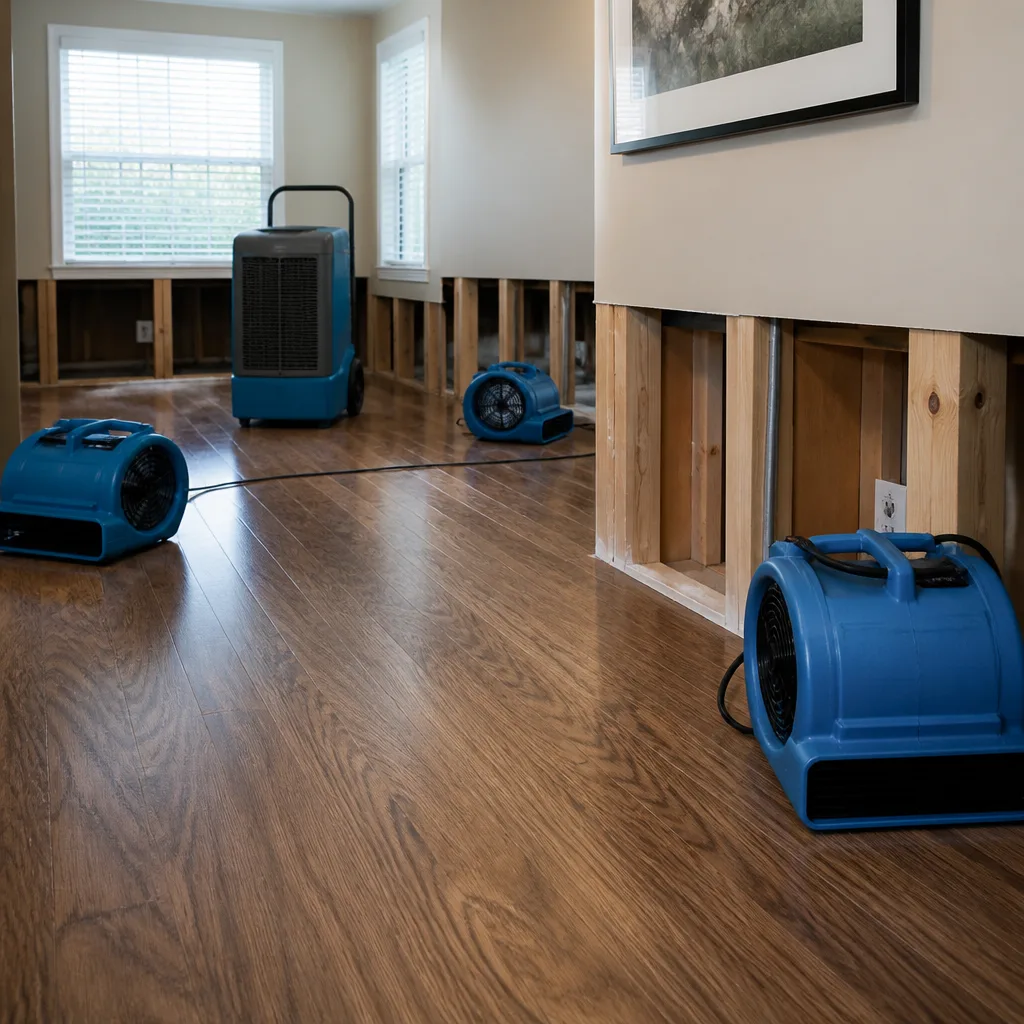
Dry Line Water Damage isn’t a generalist. We’re an IICRC-certified operation, which means the drying, extraction, and documentation processes we use in Orange follow the restoration industry’s most rigorous third-party training standard, not whatever was easiest to sell. Glen Pacheco built this company around the equipment and process that large-loss insurance restoration contractors use: Dri-Eaz dehumidifiers, Phoenix air movers, and Injectidry structural-drying systems that pull moisture from inside walls and cavities without ripping them open. For Orange homeowners whose properties sit in a historic-preservation review zone, that last part matters more than anything. You can’t gut a Spanish Colonial wall off the Plaza and call it a day.
We’re also an RIA member, bound by a published code of ethics that covers how restoration contractors handle claims documentation, moisture readings, and scope of work. When an adjuster questions a drying log, our documentation holds up. That’s the difference between a contractor who shows up with a fan and a crew that returns your home to a documented dry standard.
Response to Orange from our Fontana base is measured in minutes, not hours, though we won’t quote a number we can’t stand behind. What we can say is that we keep a live dispatch line and equipment staged for exactly the kind of mid-week slab leak or Sunday sewer backup the older neighborhoods in Orange produce. Reviews from Orange customers consistently point to the same details: drying logs you can actually read, equipment that’s commercial-grade rather than rental-counter, and a team that speaks insurance. That’s the standard, and we don’t drop it for smaller jobs.
Restoration work we handle
Water Damage Cleanup in Orange
Water Damage Cleanup in Orange is the physical work of removing standing water, extracting saturated materials, and setting up the drying environment before hidden moisture does structural damage. In this city, that work almost always begins with a question: what era is the house? A 1925 Craftsman near the Plaza needs a different extraction approach than a 1968 ranch in the 92862 zip code, because the older home’s plaster and original hardwood absorb water differently than gypsum board and carpet over slab. Our crews run moisture mapping before and after extraction, so the scope is based on readings, not guesses.
Extraction and Containment
Standing water gets pulled with truck-mounted extraction, then containment is set where needed to isolate the wet zone. In older Orange homes, we’re careful about containment and equipment placement because the original flooring and millwork can’t be replaced like laminate. Category 2 water from a failed supply line or appliance demands antimicrobial application, and in a pier-and-beam house, that means getting under the floor to the subfloor, not just treating the surface.
Drying and Documentation
Commercial-grade dehumidifiers and air movers go in, with daily moisture readings logged against the initial baseline. For Orange properties under historic-preservation review, those logs are what allow drying instead of demolition. A typical cleanup in Orange runs $1,200 – $3,400 depending on the number of affected rooms and whether subfloor or wall cavities are involved.
Emergency Water Damage Restoration in Orange
Emergency Water Damage Restoration in Orange means a failure that can’t wait: a burst supply line at 2 a.m., a cast-iron drain collapse during an atmospheric-river storm, or a sewer backup creeping into finished living space. In this city, the highest-volume emergency calls we see are slab leaks and hidden wall moisture in the 1950s – 1970s ranch homes that line the streets south of Chapman and west of Tustin Avenue. The water is often not dramatic. It’s a pinhole leak that’s been saturating a wall cavity for weeks. That quiet water is the one that escalates.
After-Hours Response
We answer the phone. That’s the first thing. A live person, not a recording, takes the call from Orange, asks the right questions about water source and affected areas, and dispatches a crew with the right equipment for the housing stock they’ll face. A crew sent to a 1970s ranch with drywall doesn’t need the same tools as one sent to a 1915 Craftsman with plaster, and we stage accordingly.
Stopping the Clock
Mold starts in the 24 – 48 hour window in Orange, particularly during the warm, dry months when a hidden wall leak creates its own humidity pocket behind plaster or drywall. Emergency extraction and drying in Orange typically runs $450 – $900 for the first affected zone, with full structural drying scopes reaching $2,500 – $6,800 depending on square footage and construction era. The faster water stops moving through the structure, the smaller the eventual repair scope.

Trusted Brands We Service in Orange
We run Dri-Eaz and Phoenix equipment on Orange jobs. Those are the brands the large-loss restoration contractors use, not the plastic rental units from a big-box store, and they matter because they produce the documented drying curves adjusters actually accept. For the older homes in Old Towne Orange, we deploy Injectidry systems that pull moisture from inside lath-and-plaster walls and original hardwood floors without unnecessary demolition. When a historic Craftsman off the Plaza has water behind a wall, the worst thing you can do is open that wall because a playbook said so. Injectidry lets us dry in place and protect the original materials that give the house its character. Local parts access for common fixture and minor material needs in Orange keeps turnaround tighter, though no two water losses are the same.
See the difference
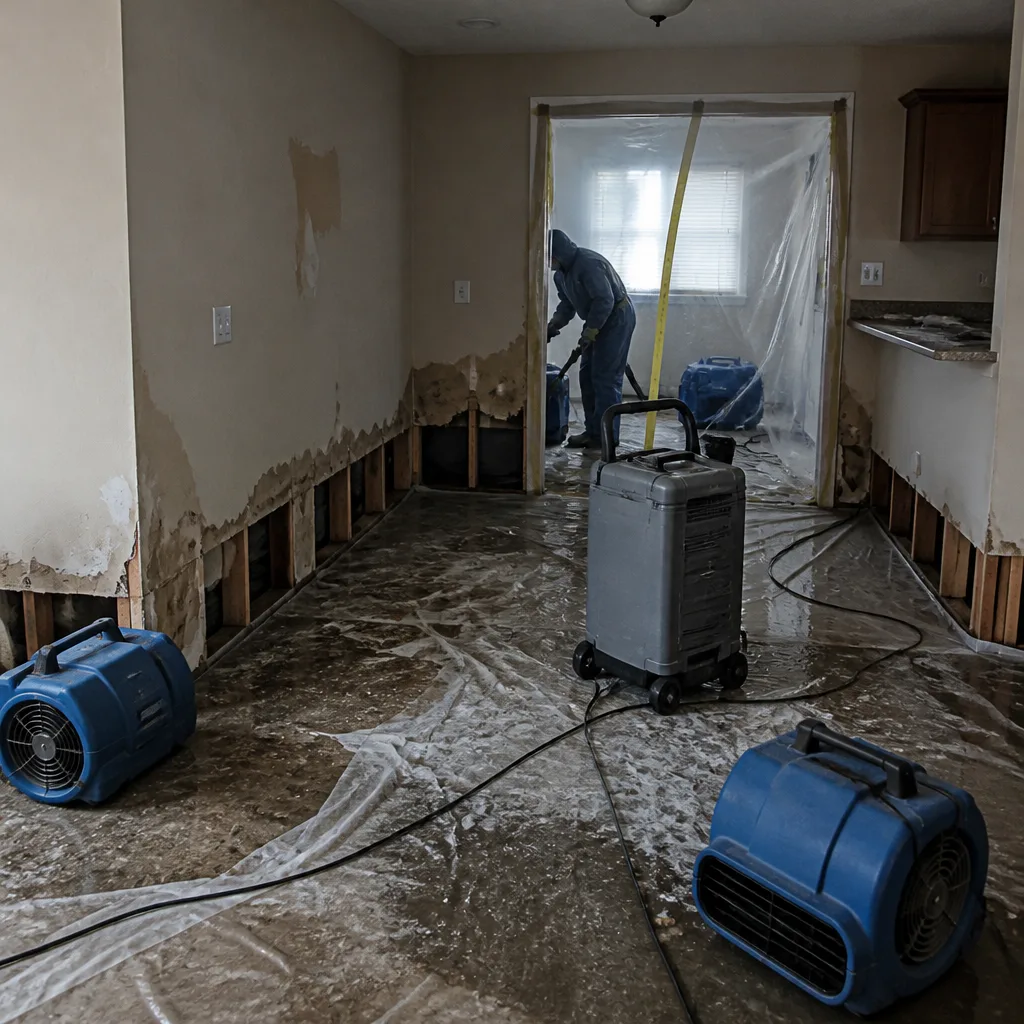 Before
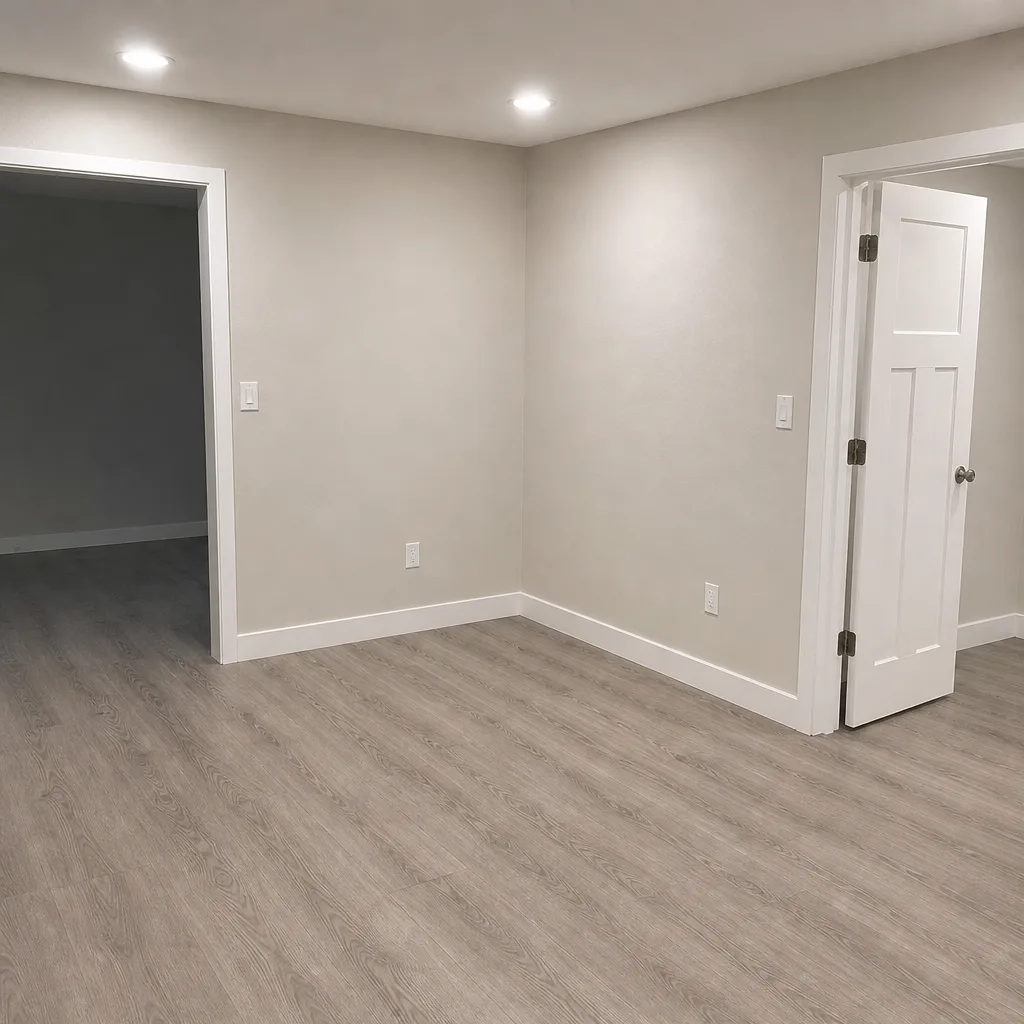 After
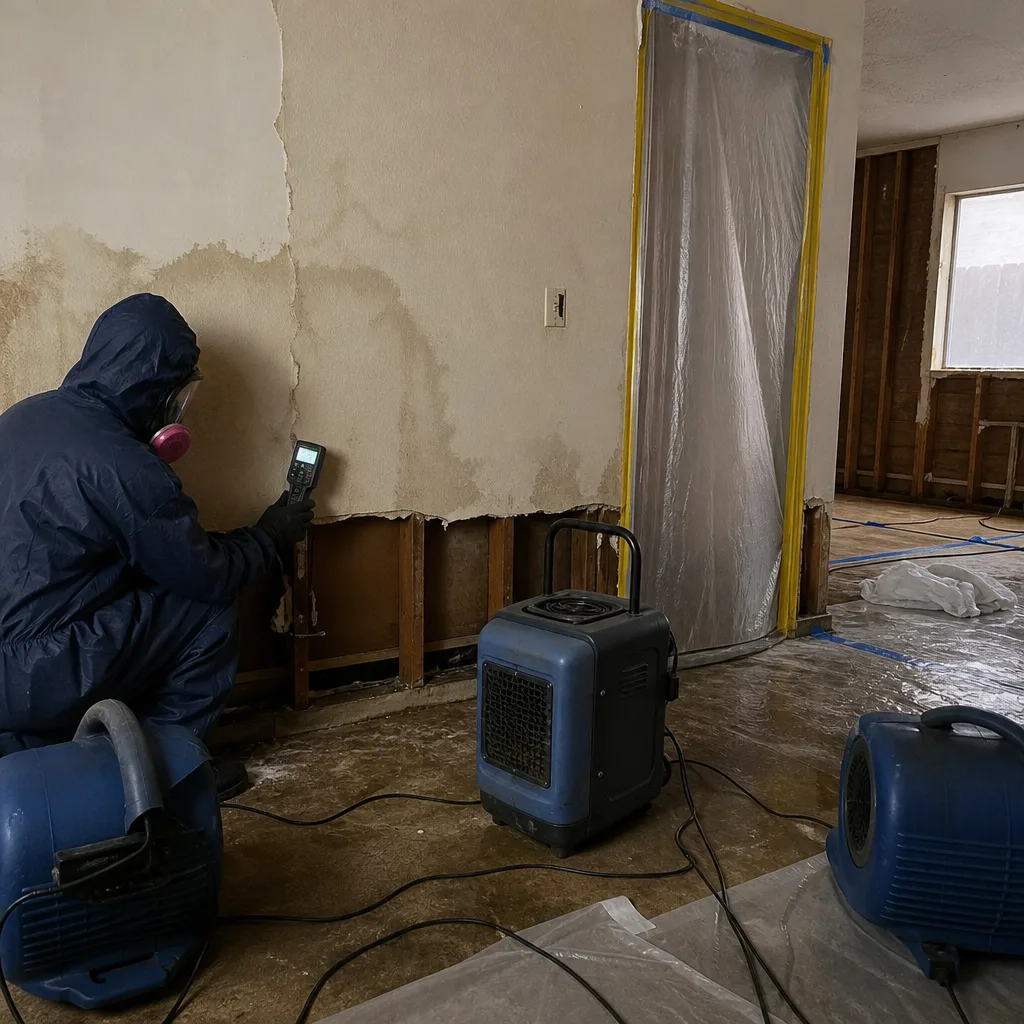 Before
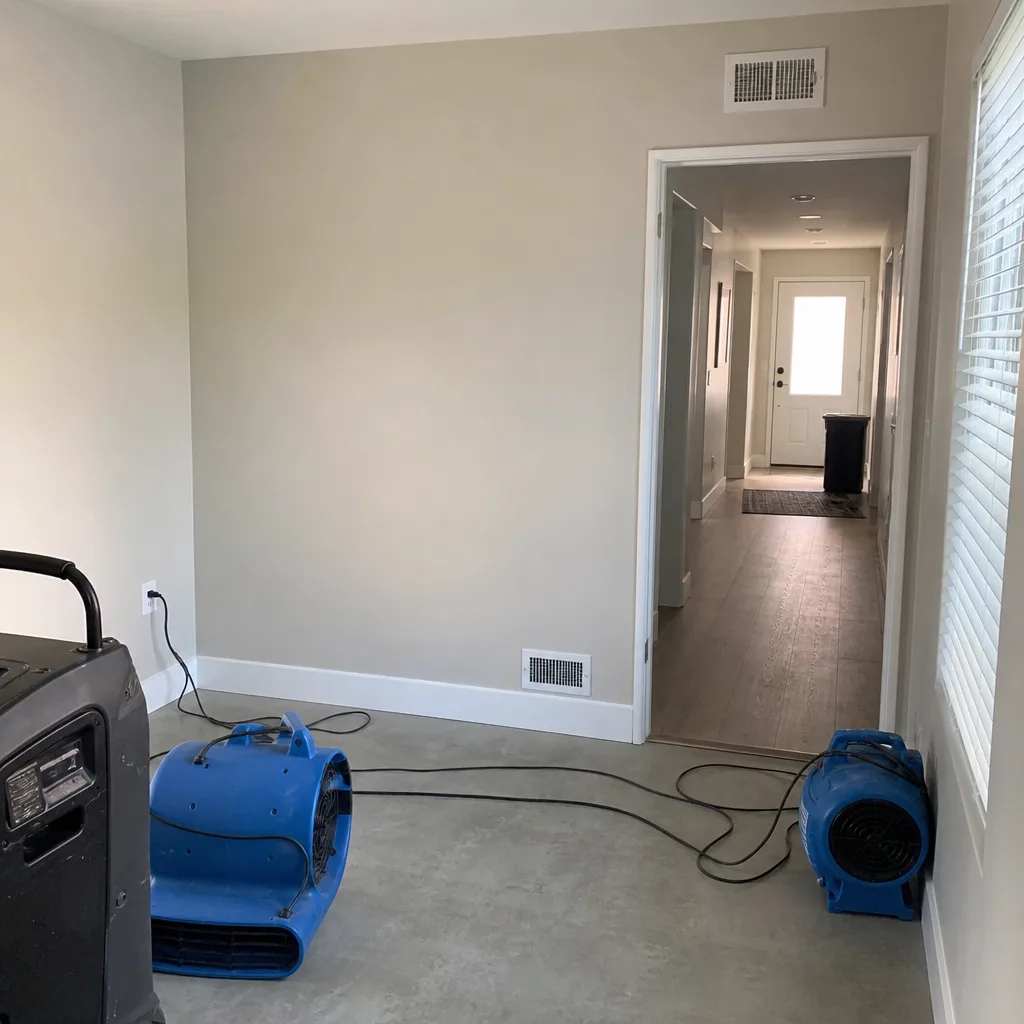 After
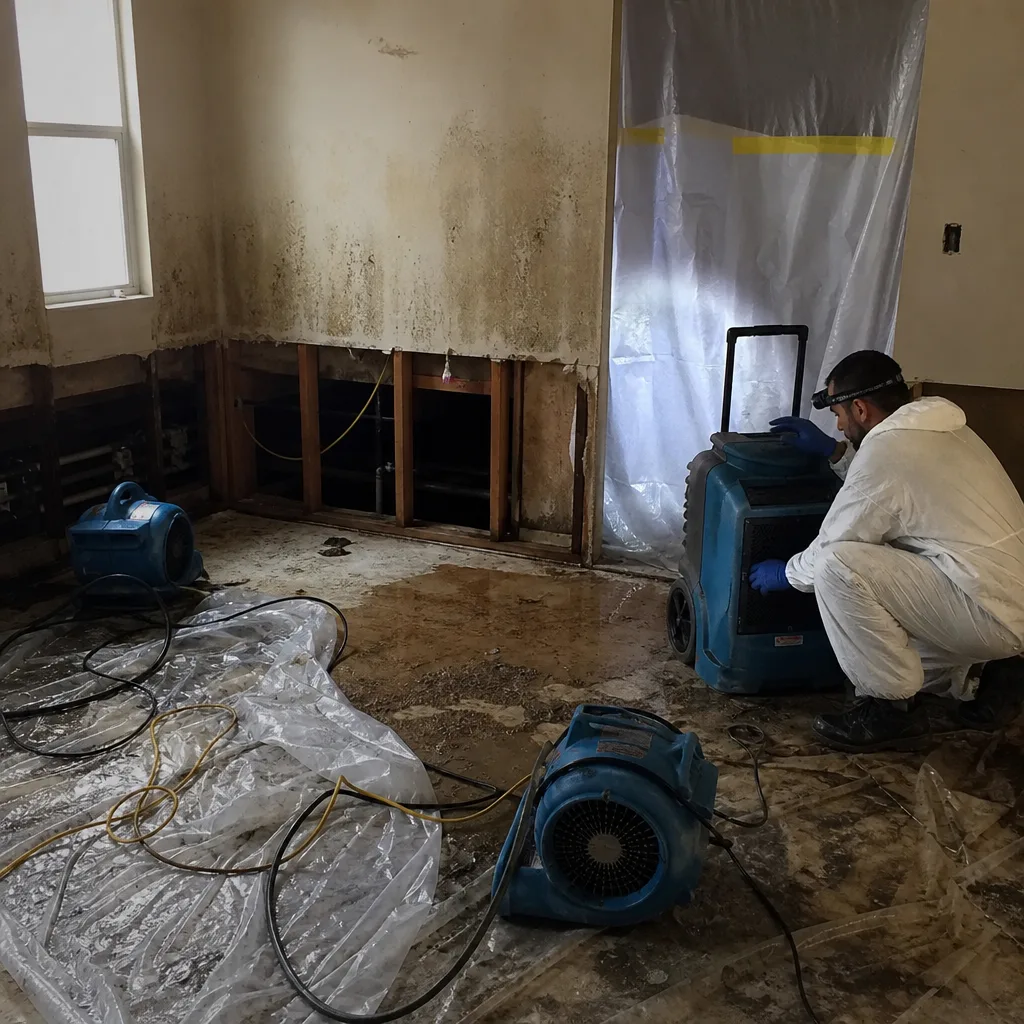 Before
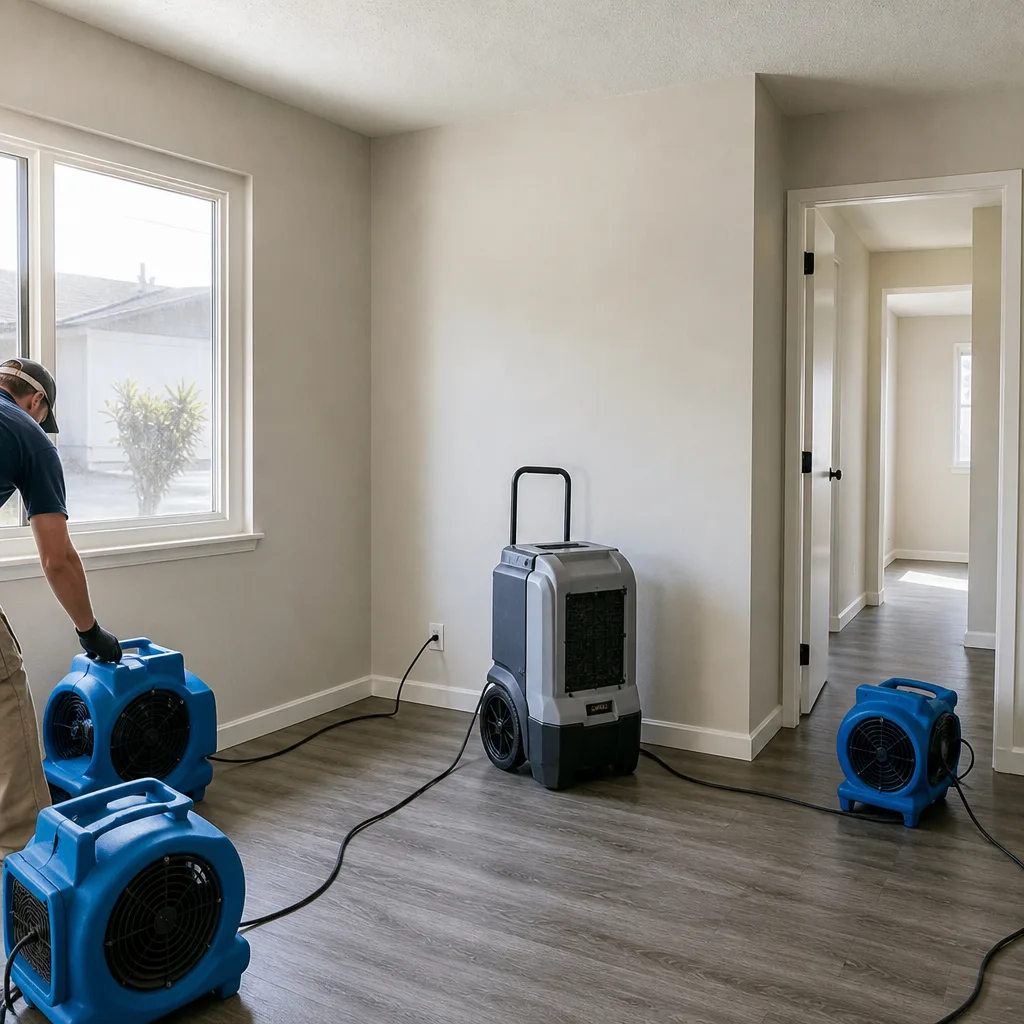 After
Common Water Damage Restoration Problems We See in Orange Homes
- Hidden wall moisture behind plaster in pre-1940 homes. Galvanized supply lines and cast-iron drains in Old Towne Orange fail from the inside out, so a soft, stained patch or a musty smell is often just the visible edge of a much larger wet cavity. Moisture mapping catches what eyes can’t.
- Subfloor saturation in pier-and-beam Craftsman bungalows. Category 2 water from a slow supply leak creeps under original hardwood and into the subfloor before anyone notices. If you only extract what’s visible, the floor swells and the repair scope explodes.
- Hidden wall moisture in 1950s – 1970s ranch homes. The stucco-and-drywall tract stock in the 92863 and 92864 zip codes wicks water into framing and insulation before moisture readings spike. Assuming the visible stain is the whole loss is the most expensive mistake an Orange homeowner can make.
- Santa Ana wind and wildfire-smoke intrusion. The hot, dry fall winds push ash and smoke into attics and HVAC systems, and when the rare atmospheric-river storm follows, overwhelmed older roofing and drainage put water exactly where the smoke intrusion already compromised insulation. It’s a boom-bust pattern unique to this part of Orange County.
Pricing for Water Damage Restoration in Orange, CA
Standalone water extraction for a single room in Orange runs $450 – $900. Water damage cleanup with drying equipment and moisture monitoring lands between $1,200 – $3,400 for typical single-zone losses. A full structural drying scope across multiple rooms, especially in older construction with plaster and original flooring, runs $2,500 – $6,800. What moves the number: the era of the house, whether subfloor or wall cavities are involved, the water category, and whether historic-preservation review limits what can be replaced. We give written scopes before work starts. Estimates in Orange are free. Call (833) 589-5317 for an exact number based on your house, not a regional average.
We Also Serve Cities Near Orange
Beyond Orange proper, our crews cover Villa Park, North Tustin, Tustin, and Anaheim. If you’re in one of those areas and need Water Damage Restoration, the same IICRC-certified process and commercial-grade equipment applies. We know the border streets and the way the housing stock shifts between Orange and its neighbors, and we plan each job accordingly.
Serving Orange, CA — Our Local Coverage Area
We’re based in the Orange area and know this community well. Use the map below to see our service coverage — if you’re nearby, we can almost certainly help.
FAQs About Water Damage Restoration in Orange
Yes, in most cases. We use Injectidry structural-drying systems that pull moisture from inside lath-and-plaster walls and original hardwood without opening them, which is exactly what historic-preservation review in Old Towne Orange requires. The plaster’s original keying and the hardwood’s patina stay intact. If the wall must come open, we scope the repair to match original materials and detailing, not tract-home drywall.
Mold can begin within 24 – 48 hours in the warm, enclosed wall cavities of an Orange ranch home, especially during the dry inland months when a slow slab leak creates its own humidity pocket. That’s why we treat any hidden water loss in the 92862, 92863, or 92864 zip codes as a same-day or next-day extraction call with containment and antimicrobial application where the water category requires it. Call (833) 589-5317 to get a crew moving.
Category 2 water, which includes sewer backups and sump failures, gets extracted and the saturated porous materials get removed, because drying alone won’t leave a safe, documented-dry environment. In Orange homes, that often means removing and replacing affected carpet, pad, and drywall sections while preserving original plaster and hardwood where the subfloor isn’t saturated. The scope is always written and documented for your insurance file.
We do, and this is where most contractors stumble. A pre-1940 Craftsman around the Plaza gets moisture-mapped and dried with an eye toward preservation review and original materials; a 1960s ranch gets the tract-home protocol with drywall and framing. Older Orange homes also hide more water behind galvanized supply and cast-iron drain failures, so we start from readings, not assumptions. One crew, full scope, no handoff.
A scope of work from us includes the water category, the affected rooms and square footage, the equipment we’ll deploy, the drying goals with target moisture readings, and what gets dried versus what gets removed. We document pre-loss condition with photos, so if your Orange home has original millwork or plaster under historic review, the adjuster sees exactly what was there before the water moved through it. You get the scope in writing before work starts. Call (833) 589-5317 for a free estimate.
If you’re dealing with water where it shouldn’t be in Orange, the fastest way to get the right crew is a phone call. Reach us at (833) 589-5317 for a free estimate, and we’ll walk you through what’s wet, what’s salvageable, and what the next 24 hours need to look like.
Written by Glen Pacheco, Owner at Dry Line Water Damage, serving Orange since 2012.