


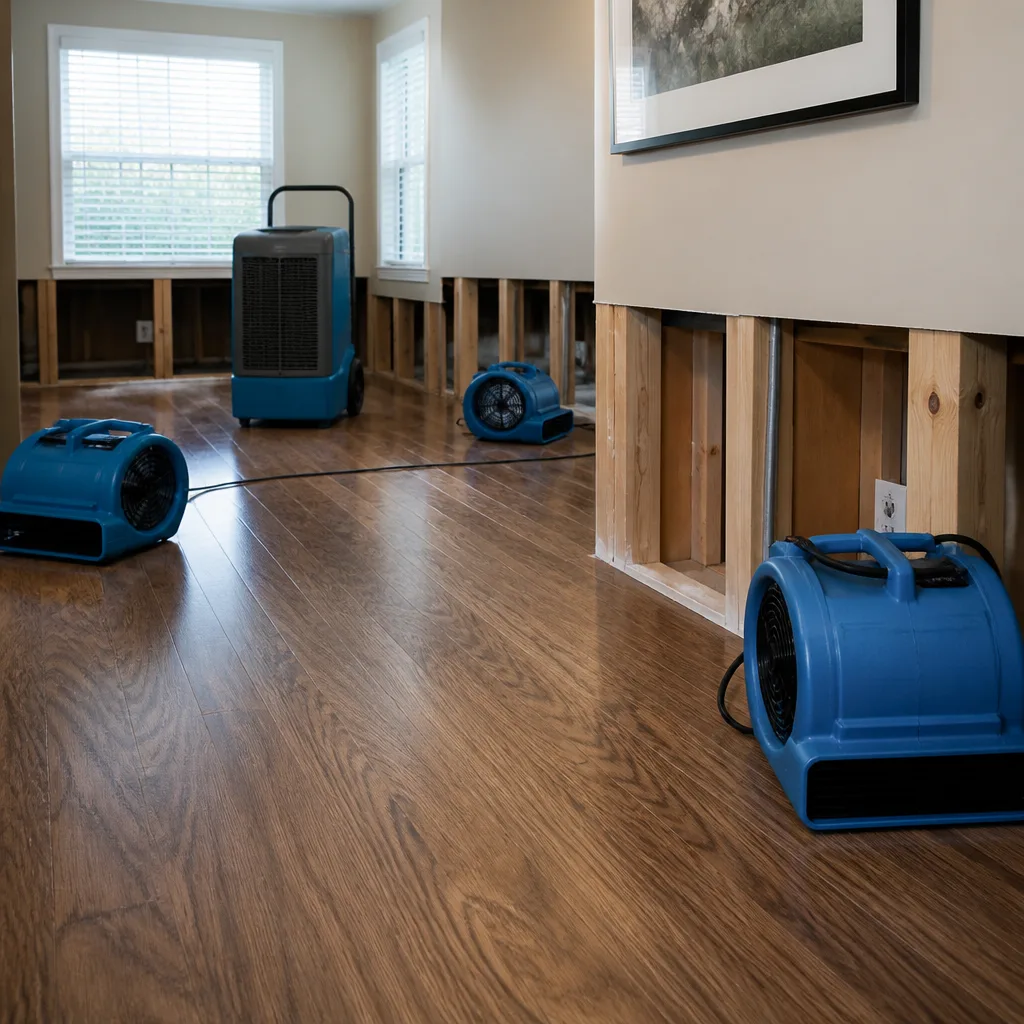
 Water damage drying
 Fire & smoke cleanup
 Mold remediation
 Storm response
 Sewage cleanup
 Reconstruction
Free visual inspection and a written scope of work before any mitigation begins - photos, moisture readings, and drying logs go in your claim file
The scope we write is the scope we bill. Anything new gets shown to you, in writing, before we touch it.
Get your free estimateFast, Reliable Water Damage Restoration Across Running Springs
Water damage restoration in Running Springs typically costs $1,800 – $6,500 depending on the scope, and the first question is almost never how much water is on the floor. It’s where the water is still coming from. At 6,000 feet, a frozen crawlspace supply line in a vacant cabin will keep feeding water down the slope long after the interior looks dry. Our IICRC-certified crews start with moisture mapping and source control before extraction, because the leak that’s still active matters more than the puddle it left. Call (833) 589-5317 and we’ll walk you through what we’re seeing and what comes next.
We work throughout the 92382 zip code, from the switchbacks off Highway 18 down to the cabins along Highway 330. Mountain roads change everything about restoration work. Equipment that would arrive in a flatland market in an hour takes longer when the chain-control signs are up, which is why our crews carry what they need and don’t wait on a distant warehouse. When a Running Springs homeowner calls us about water running down a hillside, they’re getting a crew that knows the difference between a slab foundation in Mentone and a pier-and-beam crawlspace in Running Springs. That distinction drives the entire drying plan.
Why Dry Line Water Damage Is Running Springs’s Preferred Water Damage Restoration Company
Running Springs is a community where word travels, and we’ve earned most of our mountain work the old way: a neighbor saw our van, or an adjuster told a property owner who to call. Homeowners here are skeptical of big franchise operations that show up from down the hill with consumer-grade fans and a list of upcharges. Our Water Damage Restoration approach is built around documented drying standards, not visual guesses, and that matters when an insurance adjuster is reviewing the scope of work.
The housing stock up here demands a different skillset. Wood-sided A-frames, mid-century cabins on pier-and-beam foundations, unheated crawlspaces with frozen supply lines: these are not tract-home water losses. Glen Pacheco has built Dry Line Water Damage around the principle that a restoration crew should understand the structure before it ever unrolls a hose. Our IICRC-certified process means every extraction, drying decision, and demolition recommendation follows an external industry standard, not whatever’s most convenient. For homeowners and property managers in Running Springs, that translates into a scope of work that holds up to adjuster scrutiny.
We also carry the equipment that actually changes outcomes. Injectidry structural drying systems reach moisture trapped inside wall cavities and under subflooring without ripping out finished surfaces. That’s not a marketing bullet. On a Running Springs cabin with original wood paneling, tearing out walls to dry framing means a reconstruction bill the owner never wanted. Injectidry lets us dry in place, log the moisture readings, and show the adjuster the numbers. That’s the difference between a claim that closes clean and one that drags into spring.
Restoration work we handle
Water Mitigation in Running Springs
Water mitigation in Running Springs is the first and most consequential phase of any water loss. It means stopping the source, containing the affected area, extracting standing water, and beginning structural drying before mold gets a foothold. In a mountain climate, mitigation often starts outside the living space: a frozen supply line in an unheated crawlspace, snowmelt running against a foundation, or an ice dam backing water under the roof decking. The goal is to stabilize the property fast so secondary damage stops compounding.
Extraction and Source Control
Before we move a piece of furniture, we identify where the water is coming from and whether it’s category 1, 2, or 3. A clean supply line break is category 1. Water that has sat in a crawlspace for two weeks and picked up soil and rodent waste is category 3. The category dictates what gets removed, what gets treated, and what gets disposed. In Running Springs, we regularly see category 3 in cabins that sat vacant through a freeze-thaw cycle.
Structural Drying with Measured Results
Surface drying is not structural drying. We use Dri-Eaz air movers, Phoenix dehumidifiers, and when the framing or subfloor is wet, Injectidry systems that pull moisture from inside assemblies. Every day we take moisture readings and log them. The structure is dry when the numbers say it’s dry, not when the drywall feels dry to the touch. A typical water mitigation job in Running Springs runs $1,800 – $4,200 depending on affected square footage and whether walls or crawlspaces need specialized drying.
Flooded Basement in Running Springs
A flooded basement in Running Springs is rarely a traditional basement. Most mountain homes here sit on pier-and-beam foundations with crawlspaces, or on slabs with a lower-level living space cut into the slope. When snowmelt or a broken line floods that lower level, the water doesn’t pool the way it does in a flatland basement. It runs. Through subflooring, down the slope, into the ground under the house. That’s why our first step on any flooded basement call up here is moisture mapping to find where the water actually went.
Lower-Level and Crawlspace Extraction
Getting water out of a flooded lower level in a mountain home often means working in tight, cold, awkward spaces. Crawlspace access on Running Springs cabins can be under a deck, behind skirting, or down a slope that’s still half-frozen. Our crews carry low-profile pumps and extraction wands built for exactly these conditions. We remove the standing water, then we assess whether the framing, insulation, and vapor barrier underneath need drying or replacement.

Drying and Documentation
After extraction, the real work begins. We set containment where the affected area is large enough to justify it, place commercial-grade dehumidifiers and air movers, and begin daily moisture logging. For a flooded lower level in Running Springs, the typical restoration range is $2,200 – $6,500. The biggest cost driver is usually what’s underneath the floor, not the floor itself. We document everything for the adjuster, including photos, moisture readings before and after, and a written scope of what we found and what we did.
Trusted Brands We Service in Running Springs
We work on every type of equipment and structure found in Running Springs, from older mountain cabins to newer custom builds. Our restoration process is built around brand-name equipment that commercial large-loss contractors use, and we stock the consumables most often needed on mountain jobs. Dri-Eaz dehumidifiers and air movers, Phoenix drying systems, and Injectidry structural drying panels are part of our standard fleet. B-Air units cover secondary drying and containment needs on larger losses. The point is simple: when an adjuster asks what equipment was used, we have a documented answer that means something. For Running Springs property owners, that means the claim moves faster and the drying is verifiable.
See the difference
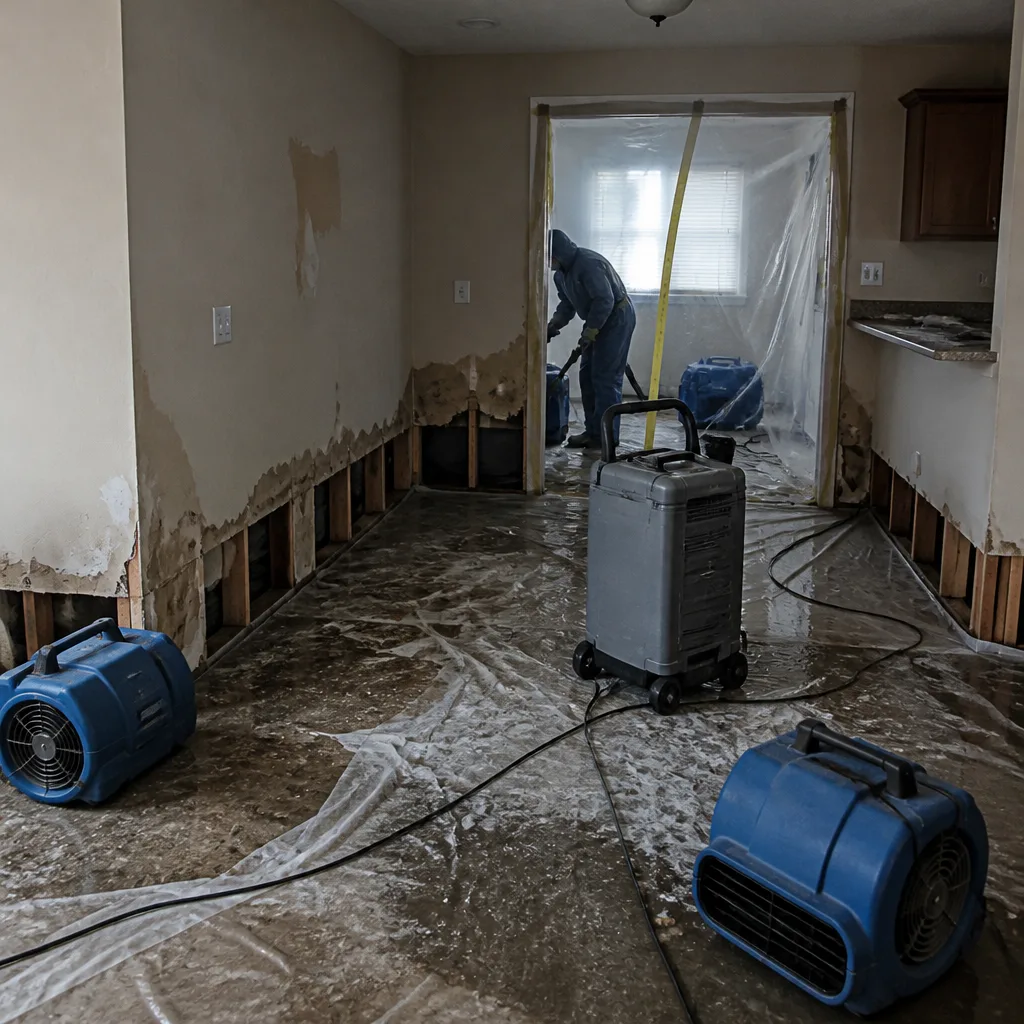 Before
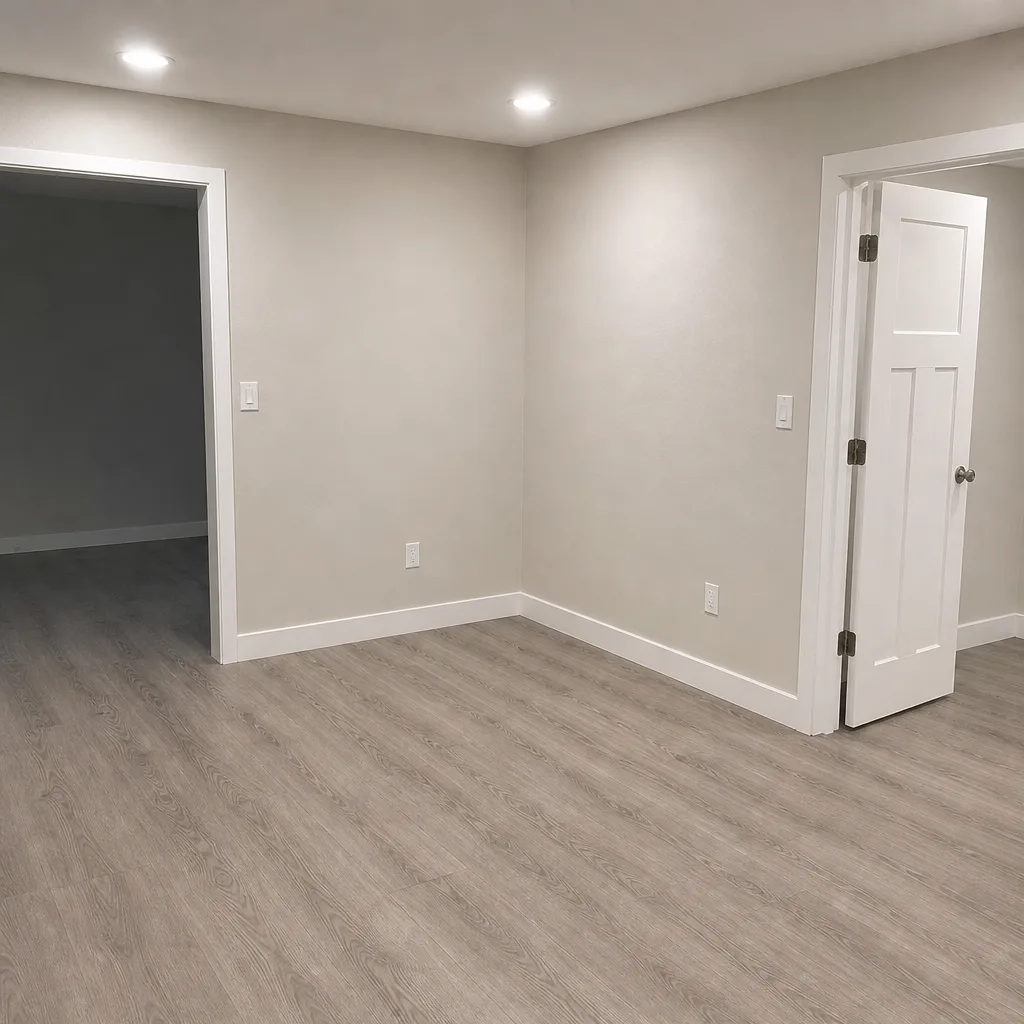 After
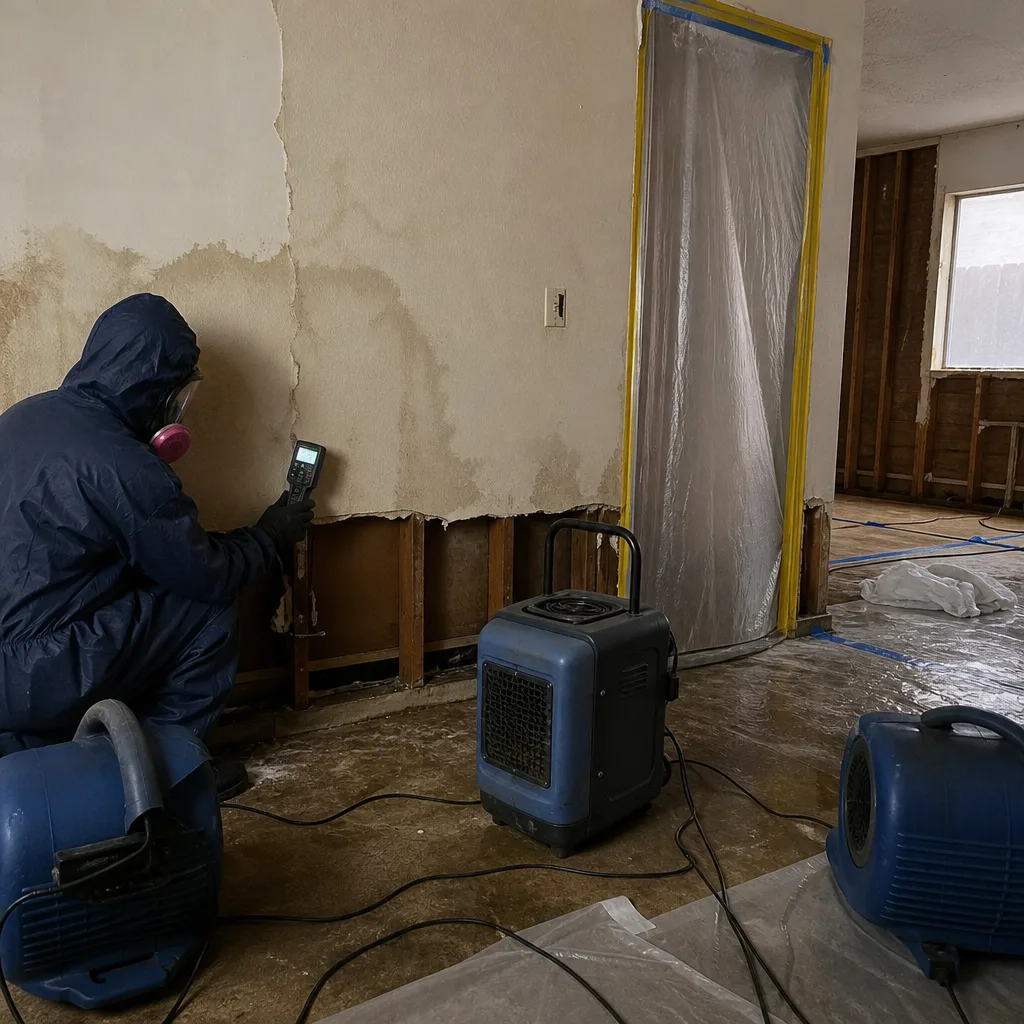 Before
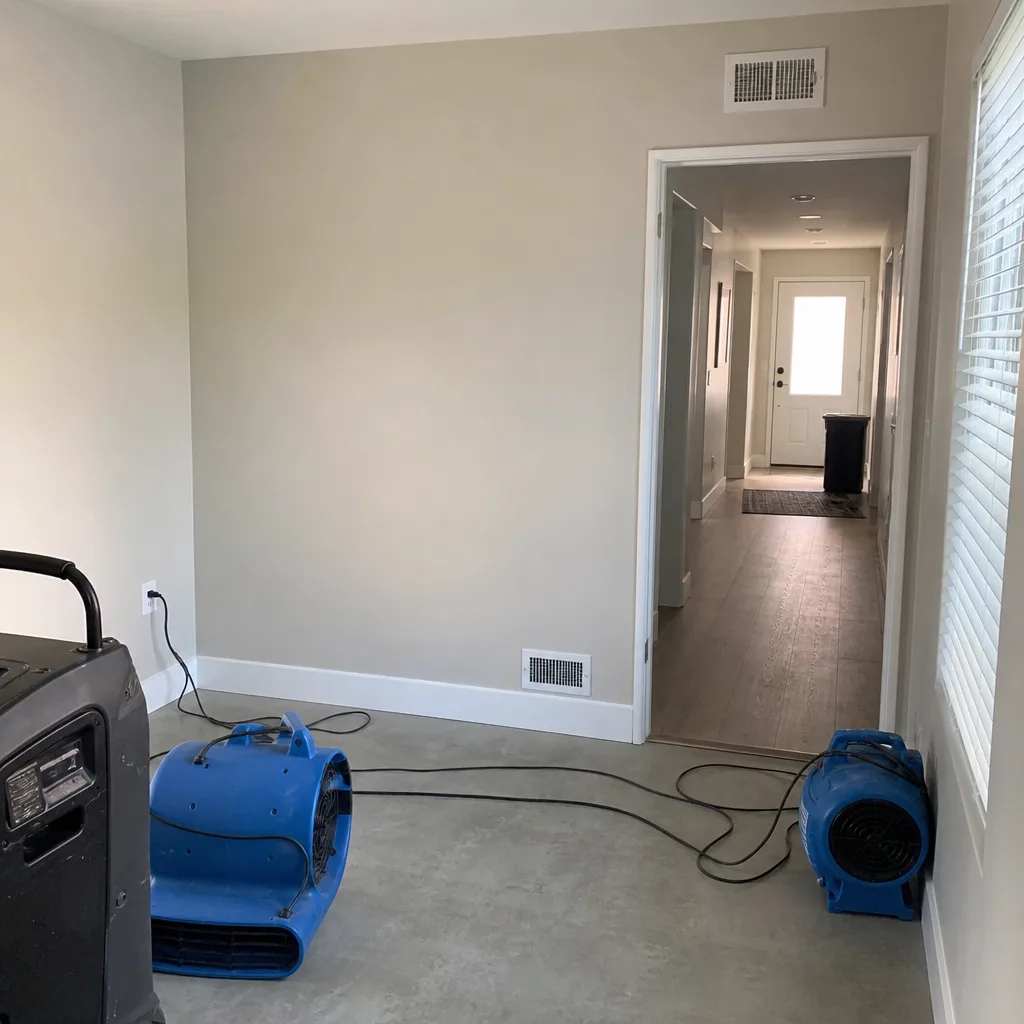 After
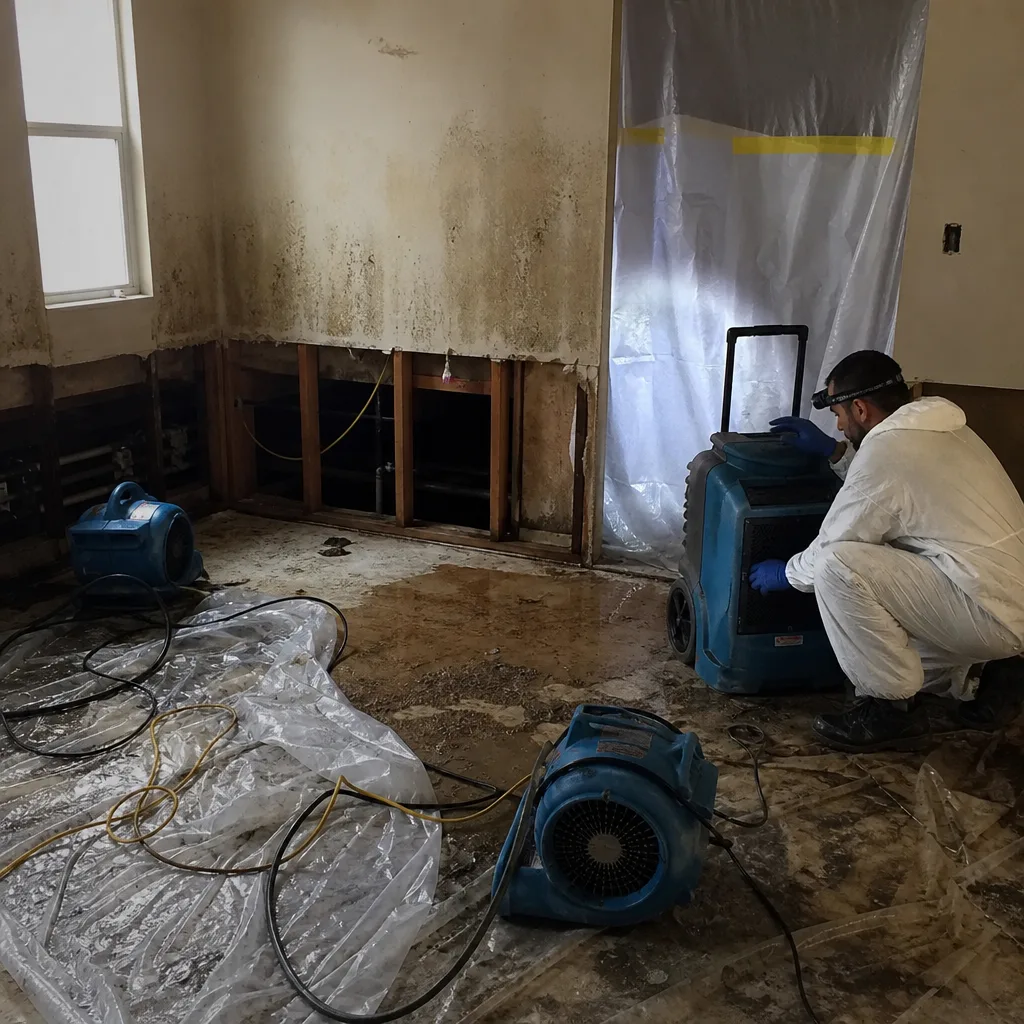 Before
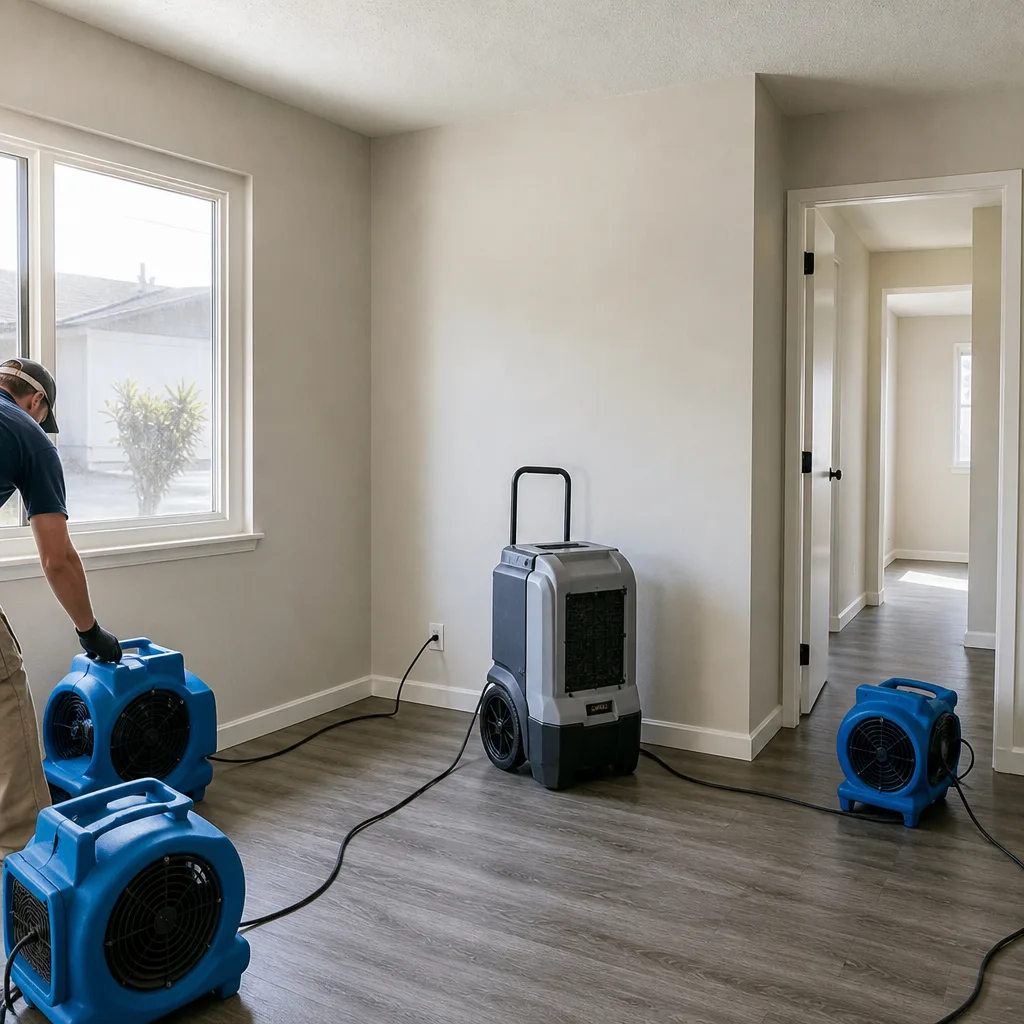 After
Common Water Damage Restoration Problems We See in Running Springs Homes
- Frozen crawlspace supply lines in vacant cabins. The most common winter call we get. A cabin sits empty for two weeks, the heat is off or set too low, and a supply line in the unheated crawlspace freezes and splits. No one notices until snowmelt or a neighbor spots water running down the slope. By the time we arrive, the category 3 water has been running for days.
- Ice dam intrusion into attic and ceiling assemblies. Heavy snowpack on a roof with inadequate insulation melts from the underside, refreezes at the eaves, and backs water up under the shingles. The first sign is often a water stain on a ceiling or a soft spot in the drywall. The damage is usually far larger inside the ceiling cavity than the stain suggests.
- Delayed response due to mountain road conditions. When Highway 18 is chain-controlled or 330 is closed, equipment and dumpsters don’t move. Crews that aren’t self-sufficient leave standing water where it sits. That lost time matters because wet drywall and framing in a heated interior hit the 24-to-48-hour mold window fast.
- Improper drying of pier-and-beam foundations. A flatland crew will extract visible interior water and call it done. What they miss is the split line still feeding water under the house, the wet insulation packed in the floor joists, and the moisture wicking up through the subfloor. We find those misses regularly on homes where someone “already dried it.”
Pricing for Water Damage Restoration in Running Springs, CA
Running Springs water damage restoration pricing falls into clear buckets. Emergency water extraction alone runs $800 – $2,200. Full water mitigation with structural drying on a typical single-room loss ranges $1,800 – $4,200. A flooded lower level or crawlspace with category 3 water and required containment runs $2,200 – $6,500. Larger losses involving multiple rooms, insulation replacement, and antimicrobial treatment on framing push toward $6,500 and beyond. The factors that move the number are affected square footage, water category, whether walls or subflooring need Injectidry drying, and the amount of demolition required. We don’t charge for estimates, and every scope is written before work begins. Call (833) 589-5317 for a specific number on your loss.
We Also Serve Cities Near Running Springs
Dry Line Water Damage serves Water Damage Restoration in Running Springs and the surrounding mountain and foothill communities, including Lake Arrowhead, Crestline, Highland, and Mentone. The access, housing stock, and failure modes differ from city to city, and our crews adjust accordingly. If you’re in a nearby community and dealing with a water loss, the same IICRC-certified process applies. Call us and we’ll get a crew headed your way.
Serving Running Springs, CA — Our Local Coverage Area
We’re based in the Running Springs area and know this community well. Use the map below to see our service coverage — if you’re nearby, we can almost certainly help.
FAQs About Water Damage Restoration in Running Springs
Frozen pipes in Running Springs cabins cause more damage because they split in unheated crawlspaces where no one is watching. A pipe inside the living space usually breaks where someone hears it and shuts the water off within minutes. A crawlspace supply line in a vacant cabin splits silently, then runs for days or weeks. The water saturates the ground, wicks into floor joists and subflooring, and often flows down the slope behind the foundation where it stays hidden until structural damage is already advanced. This is the single most common scenario we handle in the 92382 zip code. If you suspect a frozen line or see water where it shouldn’t be, call (833) 589-5317 and we’ll moisture-map the entire affected area, not just the visible puddle.
Mold growth on wet drywall and framing can begin within 24 to 48 hours when interior temperatures are warm enough. A Running Springs attic in winter is usually cold enough to slow things down, but the moment that water reaches the heated living space, those conditions change. We’ve seen active mold growth in ceiling cavities within three to four days of an ice-dam intrusion. That’s why the response on these calls matters as much as the extraction method. We set containment, dry the assembly with dehumidifiers, and treat wet framing with antimicrobial agents where the moisture history warrants it. If you see a ceiling stain after a snow event, don’t wait to see if it dries on its own. Call us and we’ll assess it.
Yes, a Running Springs crawlspace can be dried in winter, but it requires the right equipment and the right technique. Cold air holds less moisture, so standard drying is slower. That’s why we use Phoenix desiccant dehumidifiers, which work effectively in low-temperature environments where refrigerant dehumidifiers struggle. We also use Injectidry panels and mat systems that pull moisture directly from wet framing and subflooring rather than relying entirely on air exchange. The drying log tells us when the wood is back to pre-loss moisture content. It takes longer in January than it does in July, which is exactly why quick surface drying in winter up here is a red flag. The structure needs the time and the right gear.
Yes. Running Springs sits in a wildfire-prone area, and when a home has both smoke or ash intrusion and a water loss, the restoration scope gets more complicated. Ash and soot are contaminants, and if they mix with standing water, the water’s category can be affected. More commonly, we handle a home where a wildfire event caused smoke intrusion months earlier, then a winter water loss reactivates concerns about what’s in the wall cavities and insulation. The restoration plan has to account for both. Our crews are cross-trained across water, mold, and fire damage, so we don’t hand the job off when one loss reveals another. One crew, full scope, with documentation that covers both issues for the adjuster.
Typical mitigation in Running Springs takes three to seven days of active drying, but road conditions can stretch the timeline. When Highway 18 is chain-controlled or Highway 330 is closed, equipment that normally arrives in hours takes longer. That’s why our crews are staged for mountain work and carry what they need on the truck rather than waiting on a dispatch from down the hill. We also plan for the access problem in advance: a cabin off a snow-packed side road gets a different drying plan than a home on a maintained street. The key is starting mitigation immediately, even if the full drying setup takes another day. Water that sits for 48 hours has already begun growing mold. Call (833) 589-5317 as soon as you know there’s a problem, because in Running Springs, lost time is lost building material. Estimates are free, and we’ll tell you exactly what you’re looking at before any work begins.
Written by Glen Pacheco, Owner at Dry Line Water Damage, serving Running Springs and the San Bernardino Mountains.