

 Water damage drying
 Fire & smoke cleanup
 Mold remediation
 Storm response
 Sewage cleanup
 Reconstruction
Free visual inspection and a written scope of work before any mitigation begins - photos, moisture readings, and drying logs go in your claim file
The scope we write is the scope we bill. Anything new gets shown to you, in writing, before we touch it.
Get your free estimateFast, Reliable Water Damage Restoration Across San Joaquin Hills
Water damage restoration in San Joaquin Hills typically costs $2,500 – $7,200 for a standard room or garage flood, and emergency extraction usually starts at $400 – $900. In this canyon-ridge community, the damage rarely follows the textbook. Homes built into steep slopes face post-fire debris flows, lateral moisture migration through stucco walls, and flooded lower-level garages when rain finally comes after a Santa Ana cycle. Our Water Damage Restoration team knows exactly what those failure modes look like, because we’ve worked through them on properties across the 92657 ZIP, from The Summit down to the canyon-edge lots off Newport Coast Drive. Call (833) 589-5317 and we’ll have a crew rolling toward San Joaquin Hills.
Why Dry Line Water Damage Is San Joaquin Hills’s Preferred Water Damage Restoration Company
Glen Pacheco leads our IICRC-certified operation, and he’s built the kind of restoration crew that property managers in San Joaquin Hills call when they need the job documented to an insurance adjuster’s standard, not just dried on the surface. We carry Dri-Eaz and Phoenix commercial-grade extraction and dehumidification equipment, the same machines used on large-loss commercial jobs, and we run Injectidry structural drying systems that pull moisture from inside stucco wall cavities without tearing everything apart. That matters here, where multi-level Mediterranean-style homes built in the 1980s through 2000s have wall assemblies that trap water laterally between floors. We’re also a Restoration Industry Association member, which means our process follows a published code of ethics and the industry’s best practice standards, not whatever shortcut looked good in the moment.
What residents and property managers across San Joaquin Hills tell us they value most is that one crew handles the full scope. Water damage, mold that follows a missed drying target, fire damage from an ember intrusion: those are three disciplines under our roof, not three vendors pointing fingers. When a claim involves post-fire water intrusion and the adjuster needs moisture logs, photo documentation, and a clear scope of work, we produce exactly that. Glen and his team have spent enough time on hillside properties in the 92657 ZIP to know that a garage flood on a steep driveway is never a simple pump-out.
Restoration work we handle
Emergency Water Damage Restoration in San Joaquin Hills
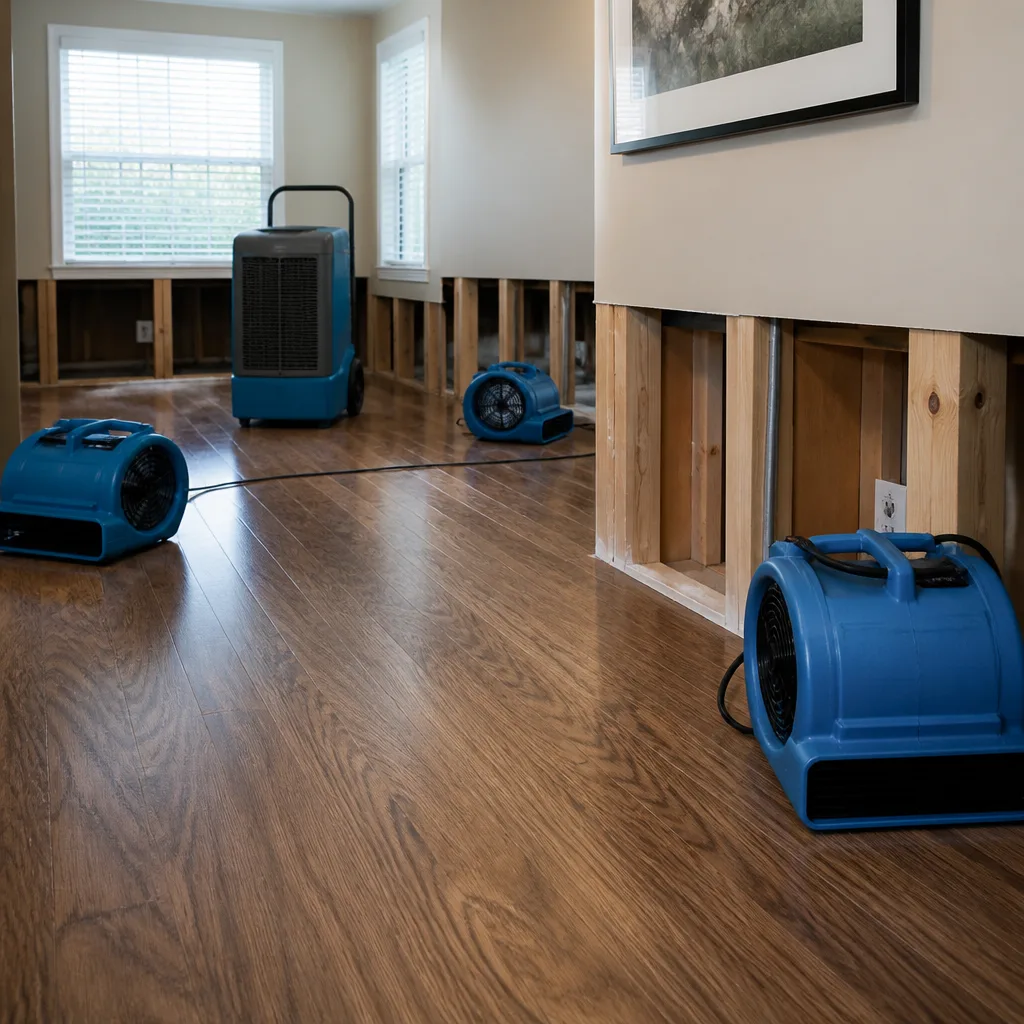
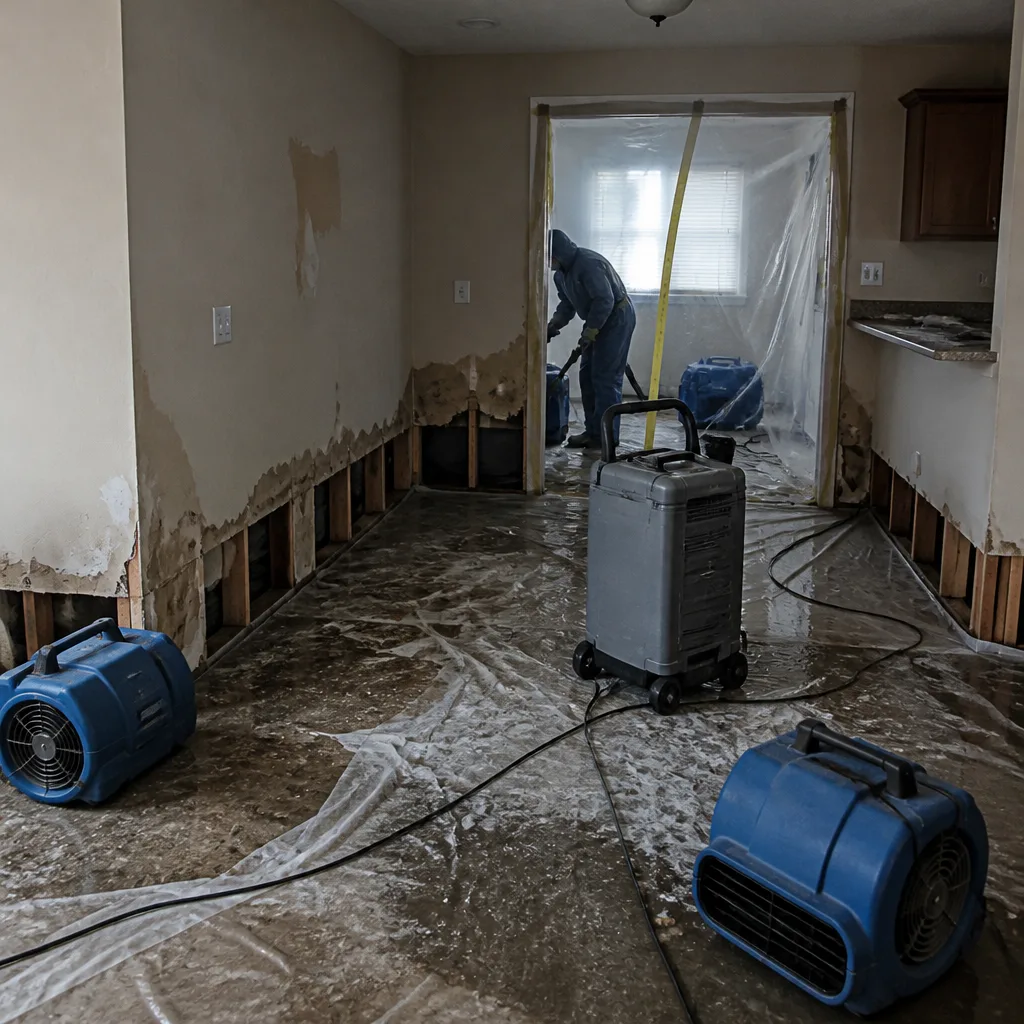
Emergency Water Damage Restoration in San Joaquin Hills means getting extraction equipment and containment set up before wicking moves water from a flooded lower level into the structural framing above. In this community, the trigger is often not a failed supply line but a post-fire rain event: after the Santa Ana wind cycle embeds embers and then rain finally hits, water sheets off canyon-edge lots and overwhelms garage door thresholds, driveway drains, and basement entries. Our crew responds to these calls with Dri-Eaz extraction units, sets up negative air containment, and starts plotting moisture migration paths within the first hour on site.
Extraction and Containment on Hillside Lots
Water on a sloped property doesn’t pool where it landed. It runs downhill, which means a flooded garage in a home off Bonita Canyon Drive can send water into a lower-level bedroom or utility chase behind it. We map the slope, the floor transitions, and the wall assembly before we start pulling water, so the extraction plan follows gravity instead of guessing at it. Expect emergency extraction in San Joaquin Hills to run $400 – $900 for a single-room event, with larger garage floods or multi-room spreads going higher based on water volume and contamination level.
Post-Fire Debris Flow Response
Water that comes off a burned hillside is rarely clean. It carries ash, soil, charred vegetation, and whatever was on the slope above the property. That’s category 2 water by industry definition, which means antimicrobial treatment on every affected surface before drying begins. Our crews are trained to recognize this pattern in San Joaquin Hills, where we’ve seen homeowners assume a garage flood was simple rainwater when the actual moisture source was a debris flow from an upslope burn scar. Treating that water as clean is a costly mistake.
Water Damage Repair in San Joaquin Hills
Water Damage Repair in San Joaquin Hills addresses the structural consequences after extraction is complete: delaminated baseboards, saturated drywall wicking moisture upward, stucco exteriors holding water in concealed cavities, and tile-roof penetrations from ember-driven fire damage that later admit rainwater. Repair work here typically runs $1,800 – $5,500 depending on how far the water traveled through a multi-level floor plan, plus material costs when Mediterranean-style finishes like Saltillo tile or custom millwork need replacement. We provide a written scope before any repair work starts, so you know exactly what’s getting cut out, what’s getting dried in place, and what documentation goes to your adjuster.
Structural Drying Without Unnecessary Demolition
Injectidry systems are the difference between a small repair and a full gut on many San Joaquin Hills homes. A stucco wall with water trapped between the exterior cladding and the interior drywall can often be dried in place using vacuum panel drying with daily moisture readings. We’ve used this approach on properties from Newport Crest down through the lower canyon neighborhoods, avoiding demolition that would require matching custom plaster textures and repainting entire rooms. The process is slower than tearing everything out, but the documented dry standard is the same, and the repair scope is dramatically smaller.
Lower-Level Flood Repair and Finish Restoration
When water floods a lower-level garage or basement on a steep lot, the repairs often involve more than drywall. Framing plates wick ground-level moisture, concrete slabs hold water in cracks, and garage door tracks corrode after prolonged exposure. We coordinate the water damage scope with your existing contractors or handle the full repair in-house, and we photograph every stage for the claim file. For homeowners working through an insurance adjuster after a post-fire flood, that documentation is the difference between a covered repair and an out-of-pocket surprise.
Trusted Brands We Service in San Joaquin Hills
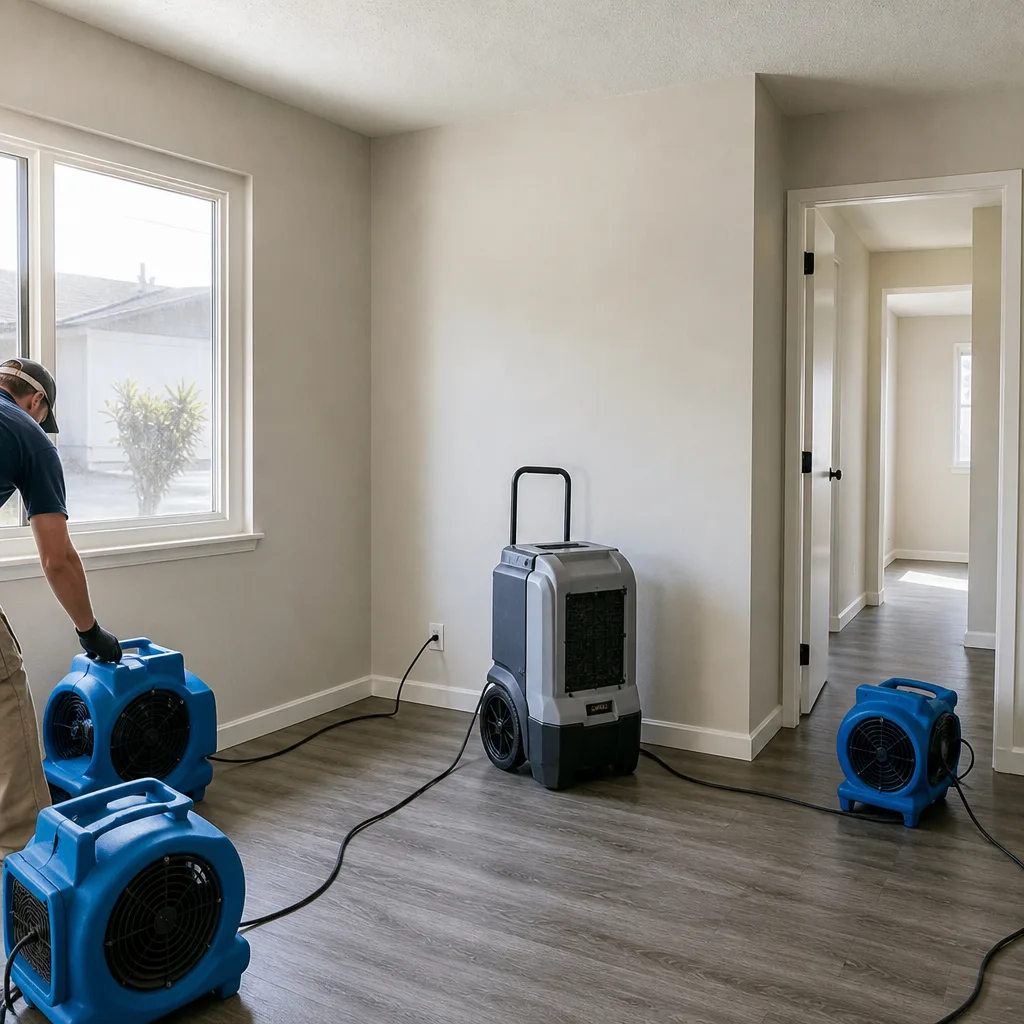
Our crews maintain Dri-Eaz extraction units, Phoenix dehumidifiers, XPOWER air movers, B-Air drying fans, and Injectidry panel systems on the truck, calibrated and ready for San Joaquin Hills jobs. We don’t use consumer-rental equipment or improvised setups. When a property manager calls about a flooded lower level off Newport Coast Drive, the equipment that shows up is the same commercial-grade gear used on large-loss restoration projects. We keep spare parts and consumables stocked specifically for the wall assemblies and floor plans common in 1980s-2000s Mediterranean construction, so turnaround on San Joaquin Hills repairs doesn’t stall waiting on a supplier.
See the difference
 Before
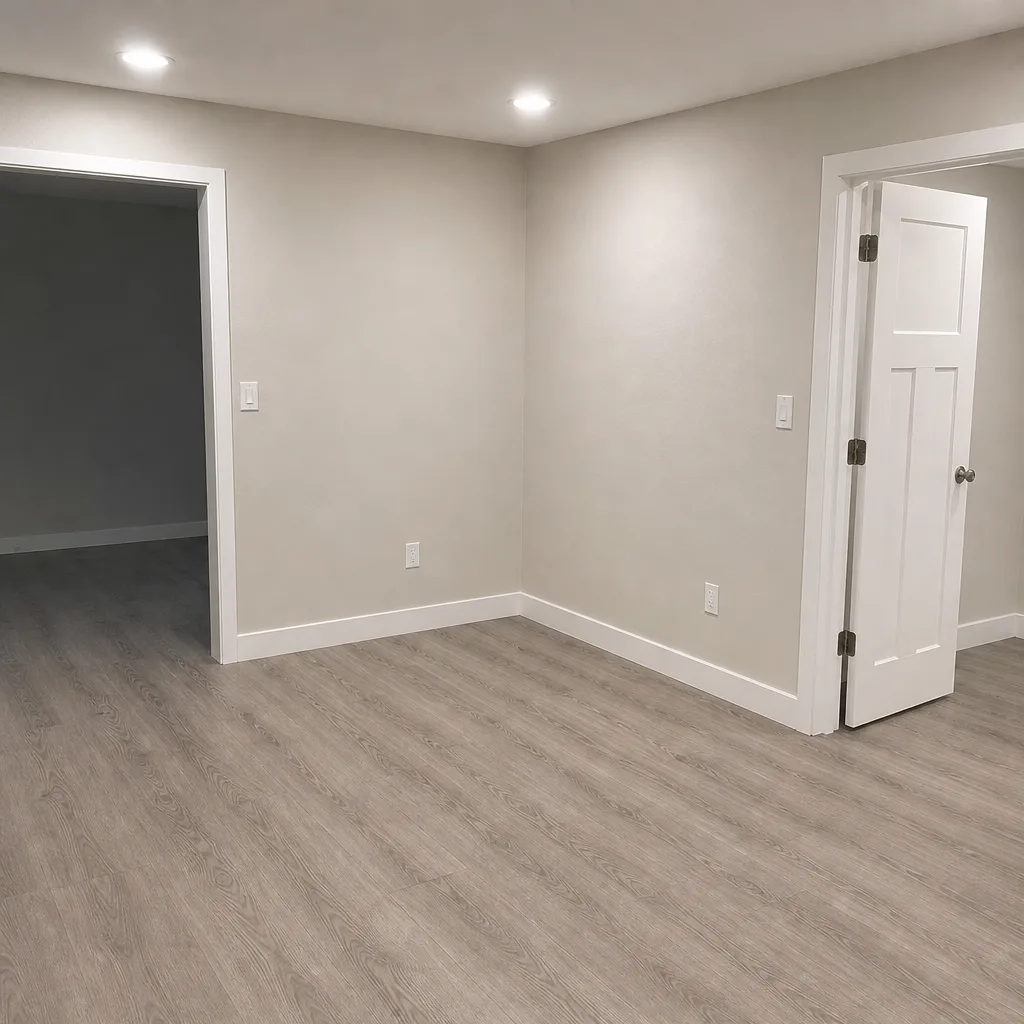 After
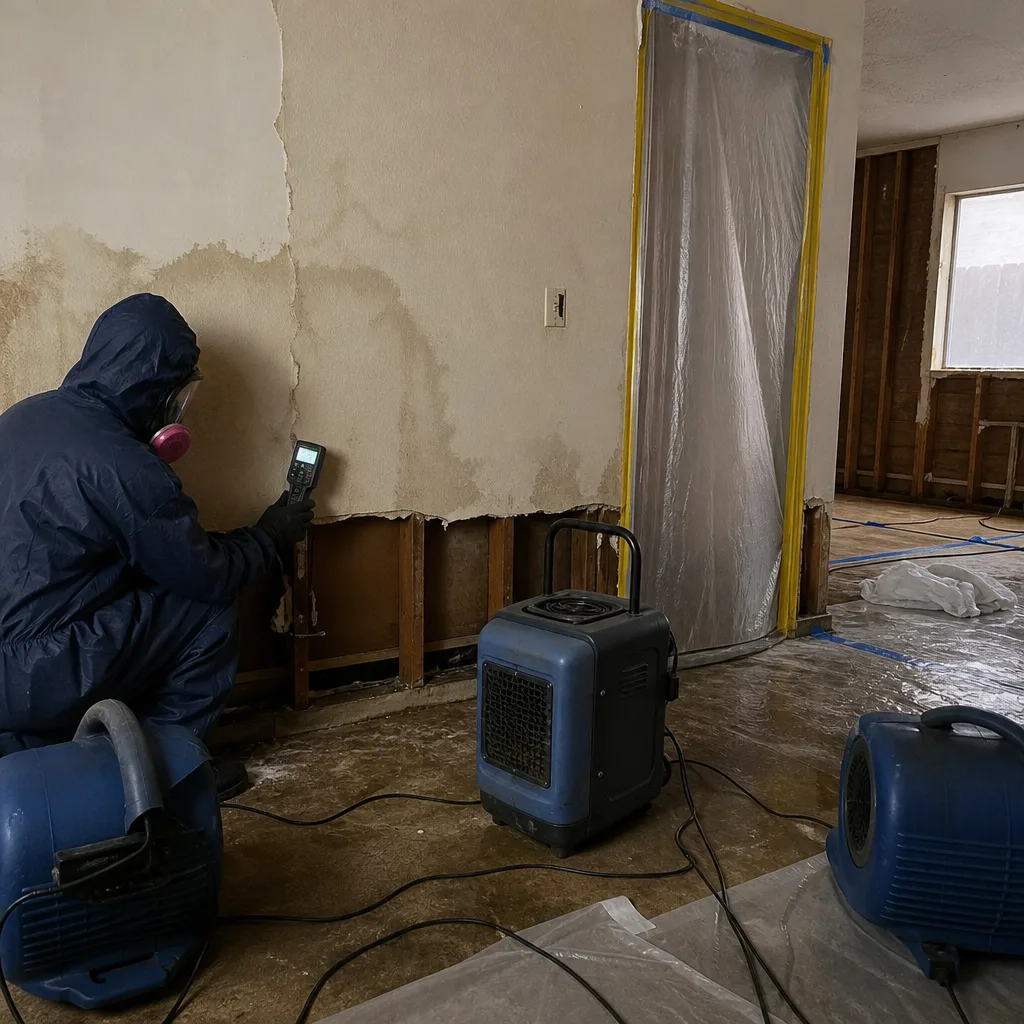 Before
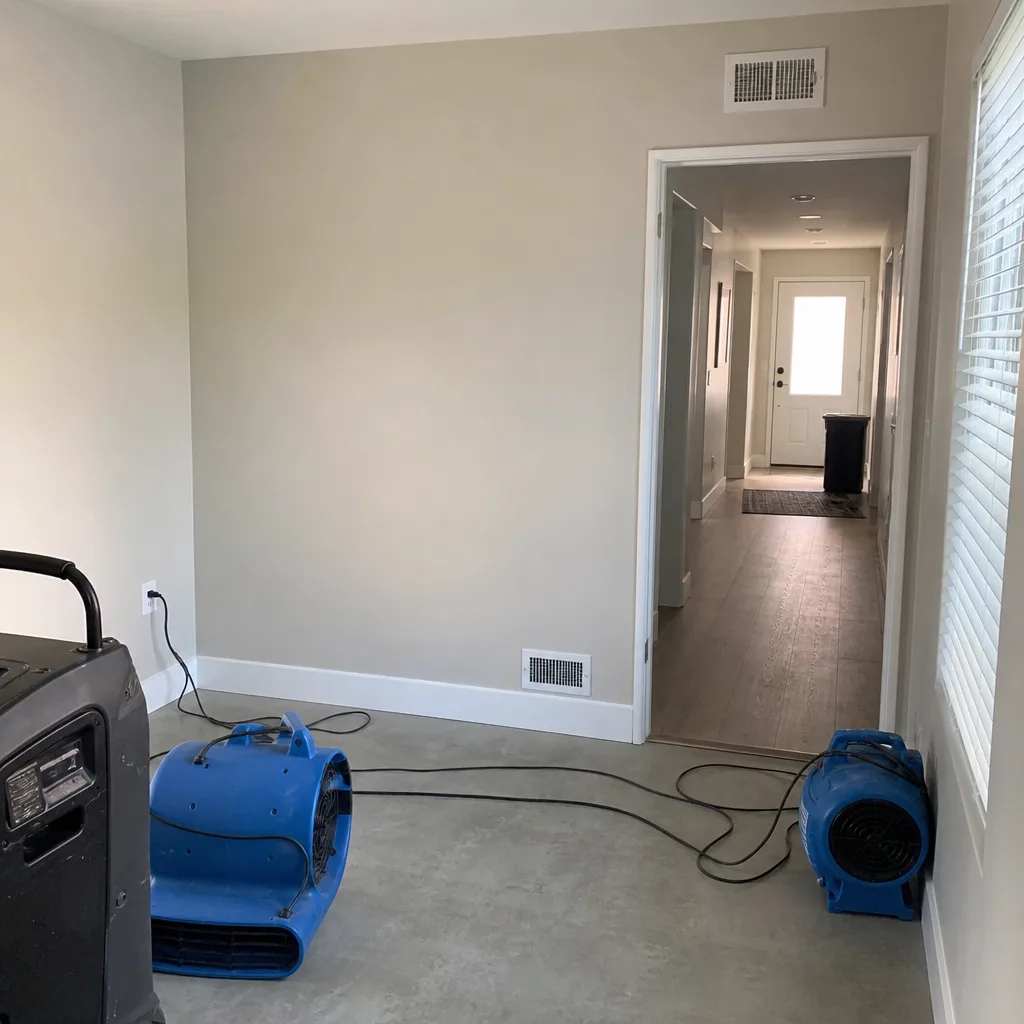 After
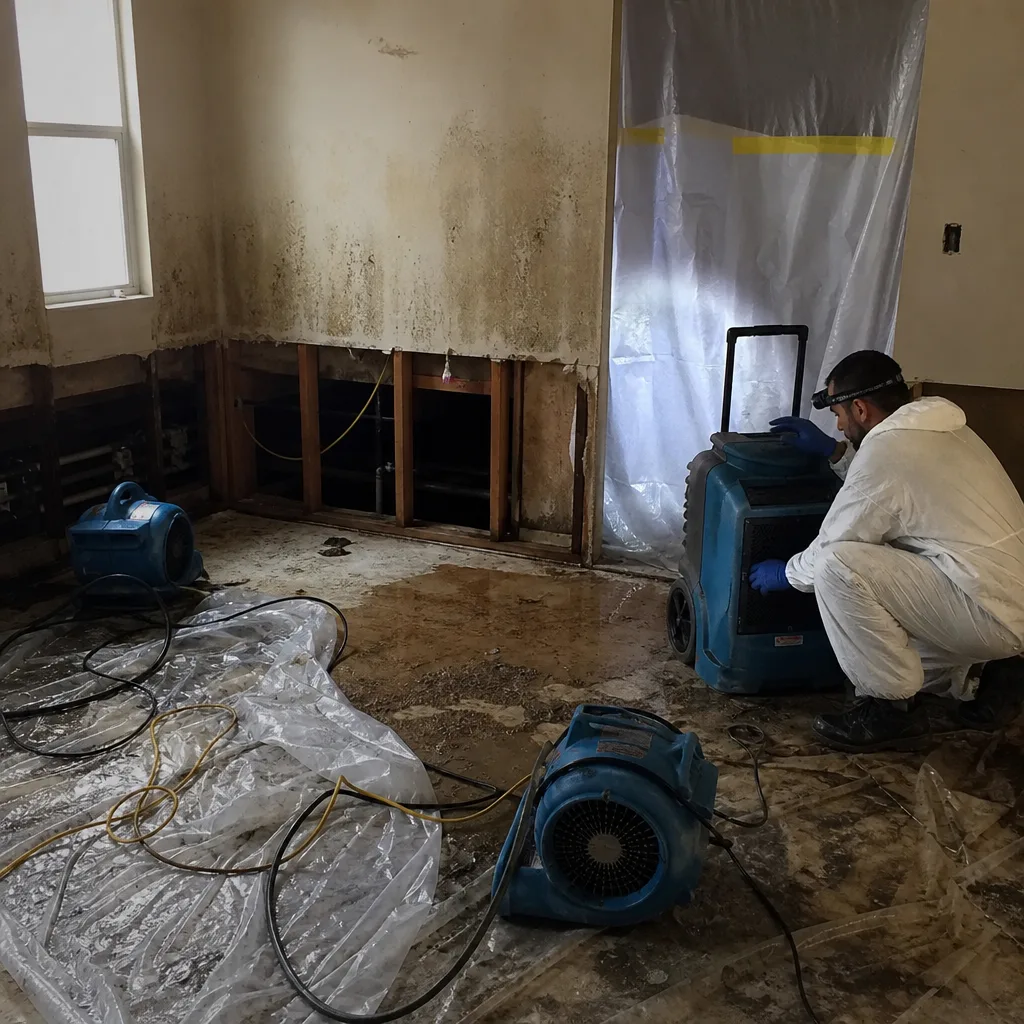 Before
 After
Common Water Damage Restoration Problems We See in San Joaquin Hills Homes
- Ember-driven roof and attic intrusions mistaken for plumbing leaks. After a Santa Ana wind event, tile roof penetrations and attic vents can admit embers that smolder into structural damage, and the water that follows the next rain appears randomly. Homeowners assume a pipe failed. It didn’t. The roof assembly did, and the water damage pattern tells us that if we look at the right surfaces.
- Lateral wicking through multi-level stucco walls. Water from a hillside runoff event or a garage flood travels between floors, not just vertically. A moisture map on a three-level home near The Summit often shows water moving sideways through chases and rim joists before it ever shows up on the ceiling below.
- Category 2 water from post-fire debris flows treated as clean rainwater. Ash, soil, and charred material in standing water means antimicrobial treatment is required before drying begins. Skipping it leaves mold and bacteria in wall cavities that later smell and cause health complaints.
- Steep driveways and canyon-edge lots that concentrate runoff. A driveway that drops 10 feet over 40 feet of run collects water from the entire upper slope and delivers it all to the garage door threshold in minutes. Standard residential drainage often can’t handle it, and the lower level takes the water.
Pricing for Water Damage Restoration in San Joaquin Hills, CA
We Also Serve Cities Near San Joaquin Hills
Our crews work throughout the adjacent Orange County communities. You’ll find us handling water damage restoration in San Joaquin Hills and the surrounding areas, including Aliso Viejo, Newport Beach, Laguna Beach, and Irvine. Many of our San Joaquin Hills clients own rental or investment properties in those cities, and we manage restoration across the full portfolio.
Serving San Joaquin Hills, CA — Our Local Coverage Area
We’re based in the San Joaquin Hills area and know this community well. Use the map below to see our service coverage — if you’re nearby, we can almost certainly help.

FAQs About Water Damage Restoration in San Joaquin Hills
How quickly can mold grow after water damage in a San Joaquin Hills home?
Mold typically begins establishing within 24 – 48 hours of water intrusion on organic surfaces like drywall and wood, and San Joaquin Hills’s mild coastal temperatures keep that window at the shorter end year-round. For category 2 water from post-fire debris flows, the organic load from ash and soil accelerates growth further. We recommend extraction and drying setup on the same day you see standing water. Call (833) 589-5317 and we’ll get a crew moving.
What makes water damage restoration in San Joaquin Hills different from other Orange County cities?
The slope-driven terrain and fire-adjacent geography change the source and behavior of water damage entirely. In flat inland cities, water pools where it lands. In San Joaquin Hills, it channels down driveways, through garage thresholds, and laterally through stucco wall cavities. Add post-fire debris flows from burned upslope terrain, and you get water that’s dirtier, moves faster, and hides in more places. Our process accounts for that from the first moisture map.
How do you handle water extraction from a flooded lower-level garage on a steep slope?
We start by mapping the slope and the garage’s drainage path, then set extraction points at the lowest corner where gravity concentrates the water. Dri-Eaz extraction units pull the standing water, containment goes up, and we check the adjoining wall assemblies for wicking before drying begins. Lower-level garages in San Joaquin Hills almost always send water into the adjacent living space, so we scope the wall cavities even if the drywall looks untouched.
What is the difference between category 1, 2, and 3 water, and why does it matter for my home?
Category 1 is clean water from a supply line or rain before it contacts surfaces. Category 2 contains contamination: ash, soil, detergent, or minor biological matter, and it requires antimicrobial treatment before drying. Category 3 is grossly contaminated with sewage, or a debris flow with high organic load, and it requires full containment, disposal of porous materials, and aggressive disinfection. In San Joaquin Hills, post-fire runoff is almost always category 2 or 3, even when it looks like plain muddy water. Treating it as category 1 leaves contamination in your wall cavities.
Do you provide documentation for insurance claims after a post-fire flood?
Yes. Every job includes photo documentation of the source, daily moisture readings, equipment logs, and a written scope of work. We speak directly with your adjuster and provide the same documentation format the major carriers request for water damage claims in the 92657 ZIP. For property owners in San Joaquin Hills working through a complex post-fire claim, our documentation is built to hold up to adjuster review. Call (833) 589-5317 and we’ll walk you through what the claim package includes before we start.
Written by Glen Pacheco, Owner at Dry Line Water Damage, serving San Joaquin Hills and the surrounding Orange County communities.