

 Water damage drying
 Fire & smoke cleanup
 Mold remediation
 Storm response
 Sewage cleanup
 Reconstruction
Free visual inspection and a written scope of work before any mitigation begins - photos, moisture readings, and drying logs go in your claim file
The scope we write is the scope we bill. Anything new gets shown to you, in writing, before we touch it.
Get your free estimateFast, Reliable Water Damage Restoration Across Sunnyslope
Water damage in Sunnyslope moves fast, and so do we. A burst pipe or flash-flood intrusion can saturate drywall, wick through slab-on-grade flooring, and start feeding mold within 48 hours. Our IICRC-certified crews know the 92509 housing stock: 1950s stucco tract homes off Mission Boulevard, older rural parcels on larger lots, and newer infill along the 60 corridor. When you call (833) 589-5317, you reach a restoration team that understands Sunnyslope’s specific risk profile: wind-driven ash intrusion one month, river-corridor flooding the next. We arrive with commercial-grade Dri-Eaz and XPOWER equipment, not consumer rental gear, and we document every moisture reading before, during, and after the job.
Here’s the direct answer to what most Sunnyslope homeowners need to know: water extraction and structural drying in Sunnyslope typically costs between $2,800 and $7,500 for a single-room event, with full-home flood restoration running $12,000 to $35,000 depending on square footage and saturation depth. Those are honest ranges for this market. We’ll pin down an exact number with a free on-site assessment, not a phone guess.
Why Sunnyslope Homeowners Call Dry Line Water Damage First
We’re not a franchise churning through volume. Dry Line Water Damage is an IICRC-certified operation led by Glen Pacheco, and the work we do in Sunnyslope follows the same documented process we’d use on a commercial large-loss job. That means labeled equipment placement, recorded drying logs, and a written scope of work before anything gets torn out. Homeowners along the Santa Ana River corridor deal with water events that don’t fit a template. A slab foundation channels water into flooring and drywall instead of a basement. A Santa Ana wind event pushes ash into attic spaces and HVAC returns. A sudden winter storm overwhelms drainage in low-lying pockets near Rubidoux and Glen Avon. We’ve handled all of them.
Glen Pacheco built this company around a simple standard: the job isn’t finished when the surfaces look dry. It’s finished when moisture readings document dry. That matters in Sunnyslope, where the difference between a quick extraction and proper structural drying shows up months later as warped flooring or mold behind baseboards.
Restoration work we handle
Flooded Basement in Sunnyslope
“Flooded Basement in Sunnyslope” is a phrase we hear, but here’s the honest local reality: most homes in 92509 don’t have basements. What they have are slab-on-grade foundations that behave worse in a flood. When water breaches a door seal or pours through a wind-driven window, it has nowhere to go but across the slab, under the flooring, and up into the drywall. That’s why flooded basement calls in Sunnyslope usually turn out to be ground-level water intrusion from failed seals, overwhelmed drainage, or storm runoff channeled against the foundation. The fix is the same discipline: get the water out, map the moisture, dry the structure, and document everything. A typical ground-level flood event in a Sunnyslope single-story tract home runs $3,200 to $8,500 including extraction, drying, and antimicrobial treatment on saturated framing.
Slab Foundation Water Removal
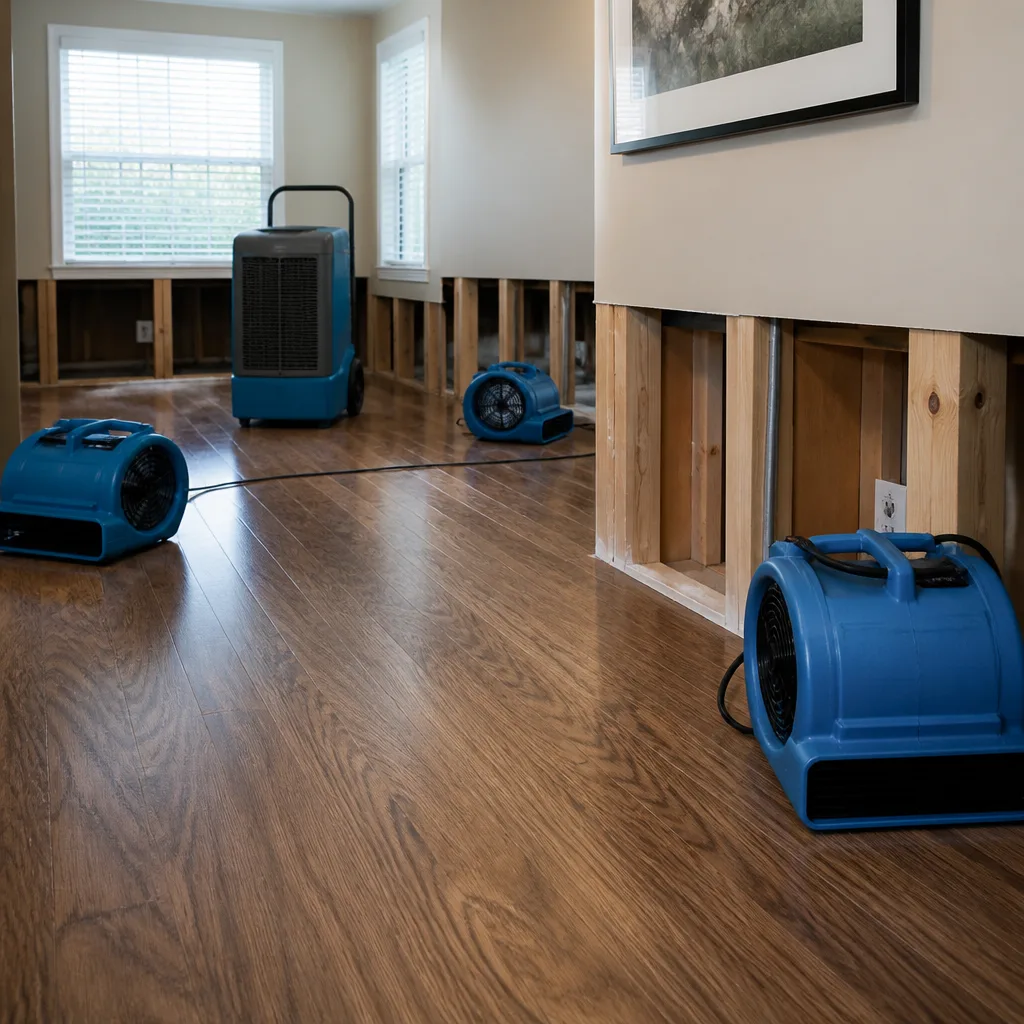
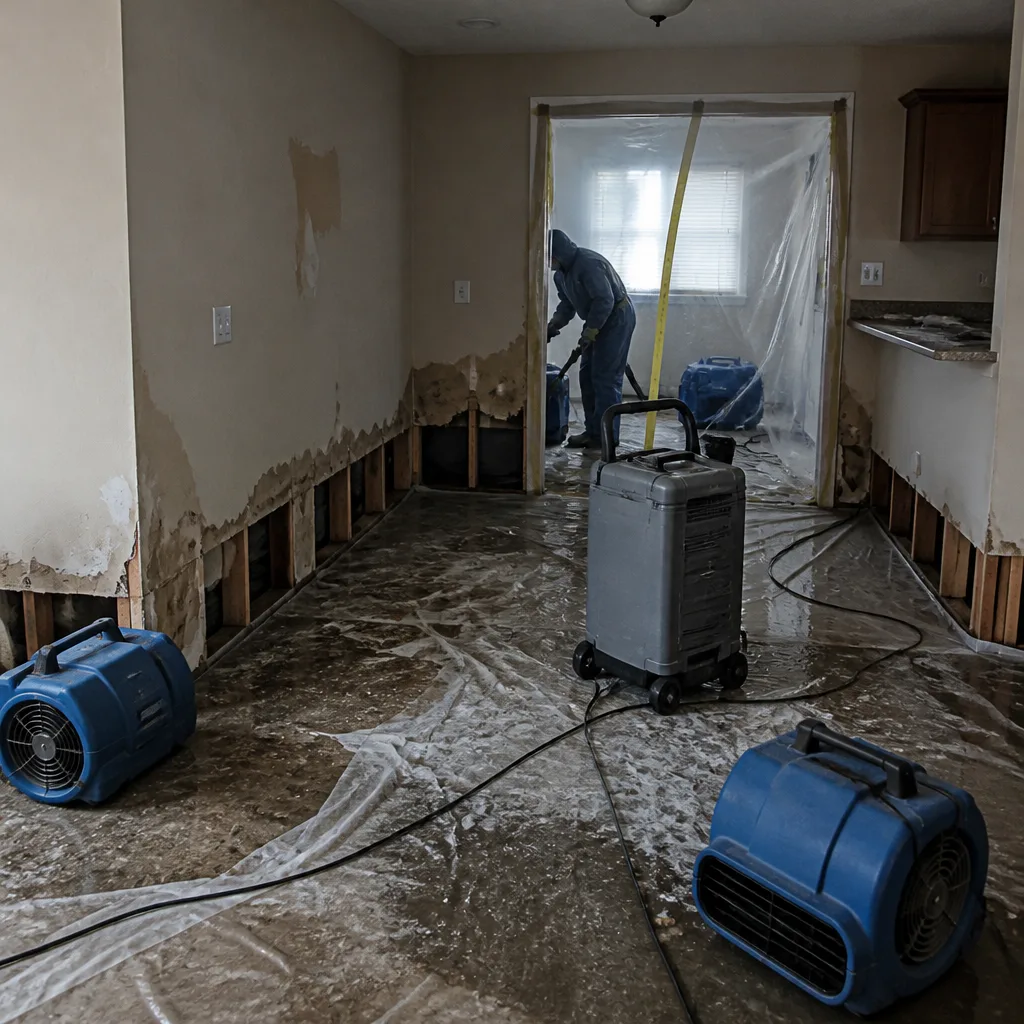
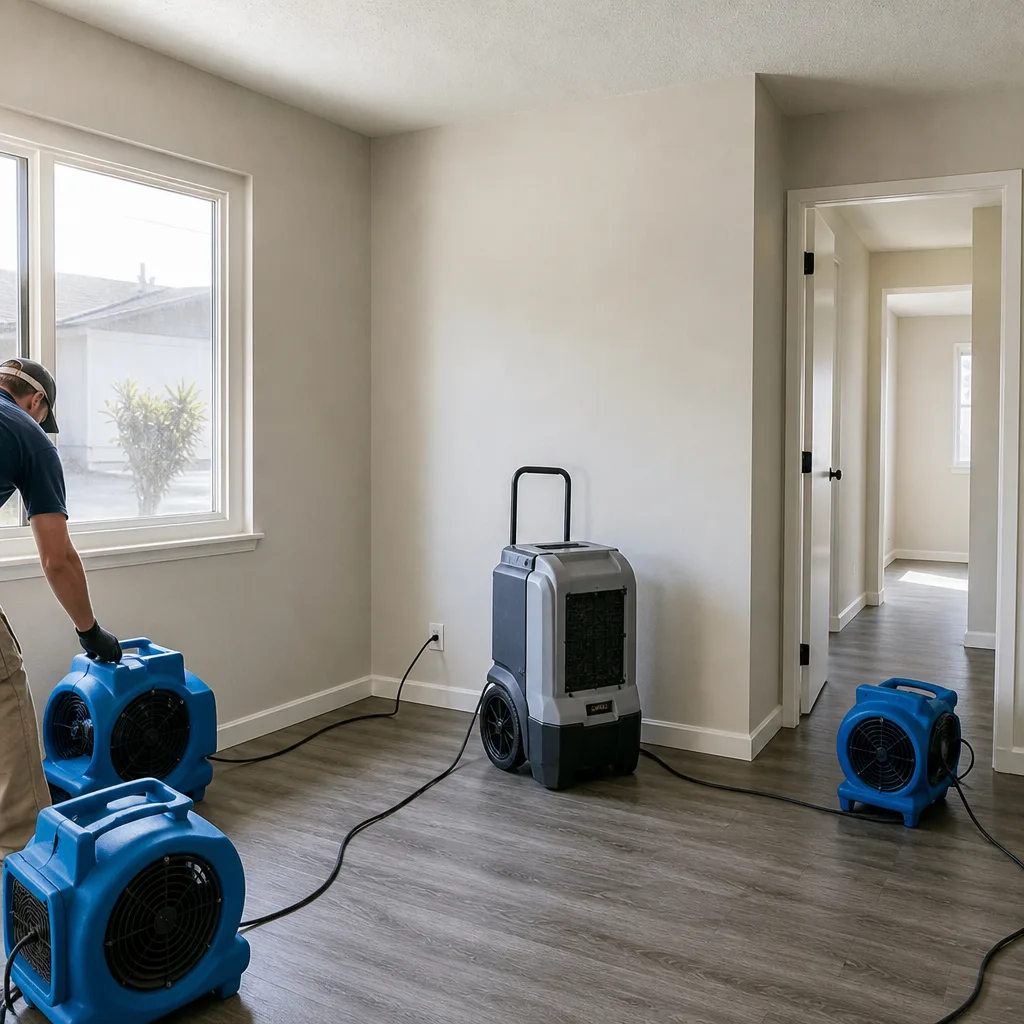
Water on a slab doesn’t drain away. It saturates carpet pad, wicks into engineered flooring, and climbs drywall from the bottom plate upward. We lift affected flooring, set XPOWER air movers at low-profile angles to get air moving across the slab, and place Dri-Eaz dehumidifiers to pull moisture out before it migrates further.
Drying Behind Baseboards Without Demolition
Slab homes hide moisture behind baseboards and in wall cavities. Our Injectidry system pushes dry air into those enclosed spaces through small access points, so we can dry framing in place instead of cutting out every affected wall section. Fewer demolition cuts means lower rebuild costs and less dust in your house.
Water Extraction in Sunnyslope
Water extraction in Sunnyslope starts with the right question: where is the water coming from, and where is it going? If a supply line failed inside the house, we shut it down and extract. If storm runoff came under a garage door off Mission Boulevard, we trace the intrusion path and address the seal failure that let it in. The extraction itself uses truck-mounted and portable extraction units matched to the depth of standing water. After a fast winter storm, we’re typically on site in Sunnyslope within a few hours of the call, starting extraction before water migrates further through walls and flooring. An emergency water extraction call with dry-out in a standard sized living room runs $1,800 to $4,200 in this market, before any rebuild or finish work.
Mapping Moisture Before It Spreads
We don’t guess where water went. Our techs use moisture meters and thermal imaging to map the full saturation footprint, including areas that look dry. Water travels along subfloor seams and bottom plates before it shows up on a wall. If we only extracted the visible puddle, we’d hand you a drying plan that misses half the damage. We map it all, because a missed wet pocket in a Sunnyslope slab home becomes a mold colony in two to three days.
Documented Drying for Insurance Files
If you’re filing a claim, the adjuster wants proof: initial loss photos, moisture readings at setup, daily drying logs, and final verification. We document all of it. Dry Line Water Damage speaks the adjuster’s language, because many of our Sunnyslope jobs involve direct coordination with carriers on flood and wind-related water claims.
Trusted Brands We Service in Sunnyslope
When a water event hits a Sunnyslope home, the equipment we bring is the same gear used on commercial and large-loss restoration jobs. We run a fleet of Dri-Eaz dehumidifiers and air movers, Phoenix units for high-heat structural drying, XPOWER extraction and air circulation tools, and Injectidry systems for cavity and under-floor drying. We keep replacement parts and consumables in our Fontana facility, a straight shot down the 60 from Sunnyslope, so a failed float switch or a clogged pump doesn’t stall a drying job. Equipment brand matters because drying doesn’t happen by feel: it happens by psychrometric measurement and calculated air exchange. That’s the standard we hold, and it’s the standard your home gets.

Common Water Damage Restoration Problems We See in Sunnyslope Homes
- Door seal failure after Santa Ana winds. Wind-driven rain works its way past worn-out weatherstripping and door sweeps, especially on older tract homes facing the Jurupa Hills. The water soaks subfloor and drywall before anyone notices a puddle. We fix the water damage first, then flag the seal that needs attention so it doesn’t happen again.
- Ash and smoke residue complicating water extraction. A fire event in the nearby wildland interface pushes fine ash into attic vents and HVAC returns. Then a storm comes, water enters, and the ash becomes a wet slurry that contaminates insulation and ductwork. This dual-threat pattern is specific to the Sunnyslope corridor, and we address both contaminants in one scope.
- Flash-flood water against slab foundations. Low-lying areas near the Santa Ana River corridor drain poorly in sudden storms. Without a sump pump, water pools against the foundation and wicks into flooring. Most Sunnyslope slab homes weren’t built with the drainage improvements we recommend as part of a restoration plan.
- Older rural property outbuildings. Sunnyslope still has older parcels with detached structures and aging plumbing, not just tract homes. A failed water heater or burst line in a converted garage or utility building needs the same structural drying discipline as the main house, and we scope both in one assessment.
See the difference
 Before
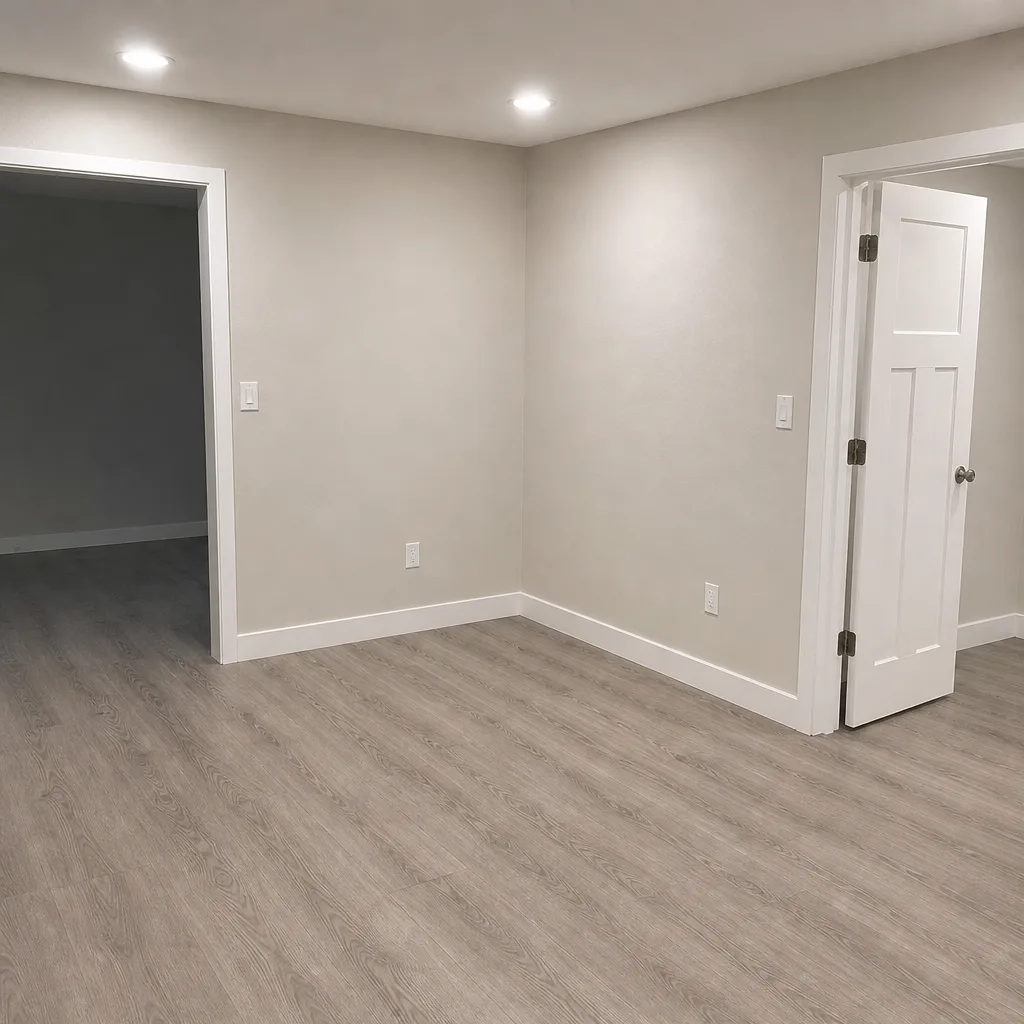 After
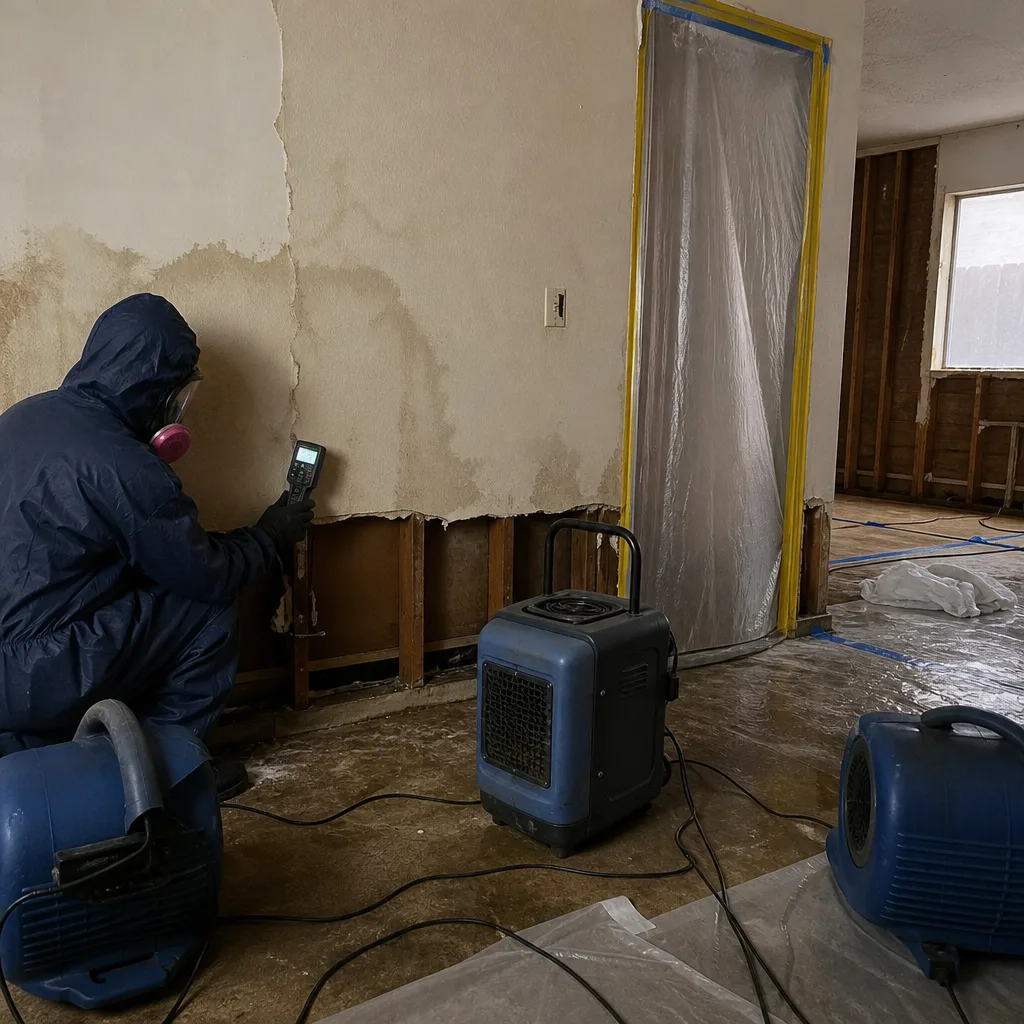 Before
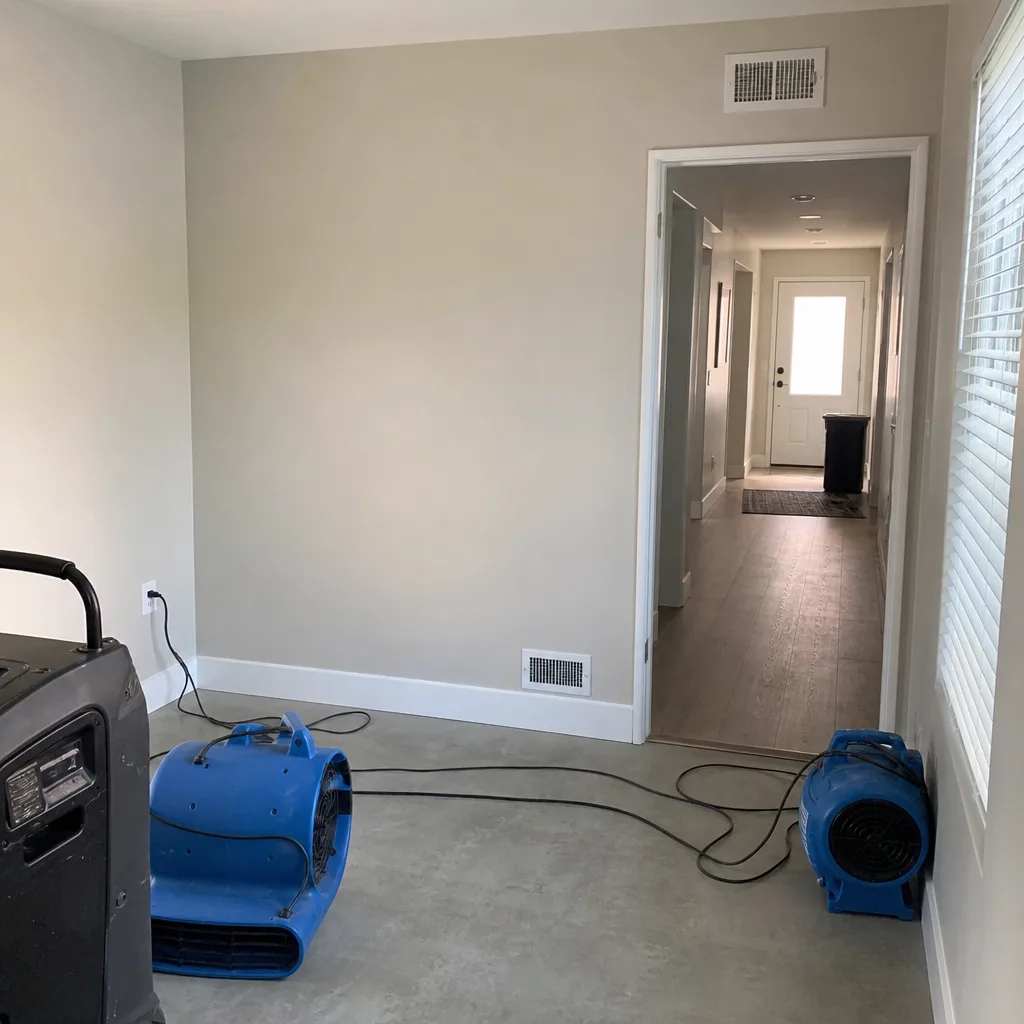 After
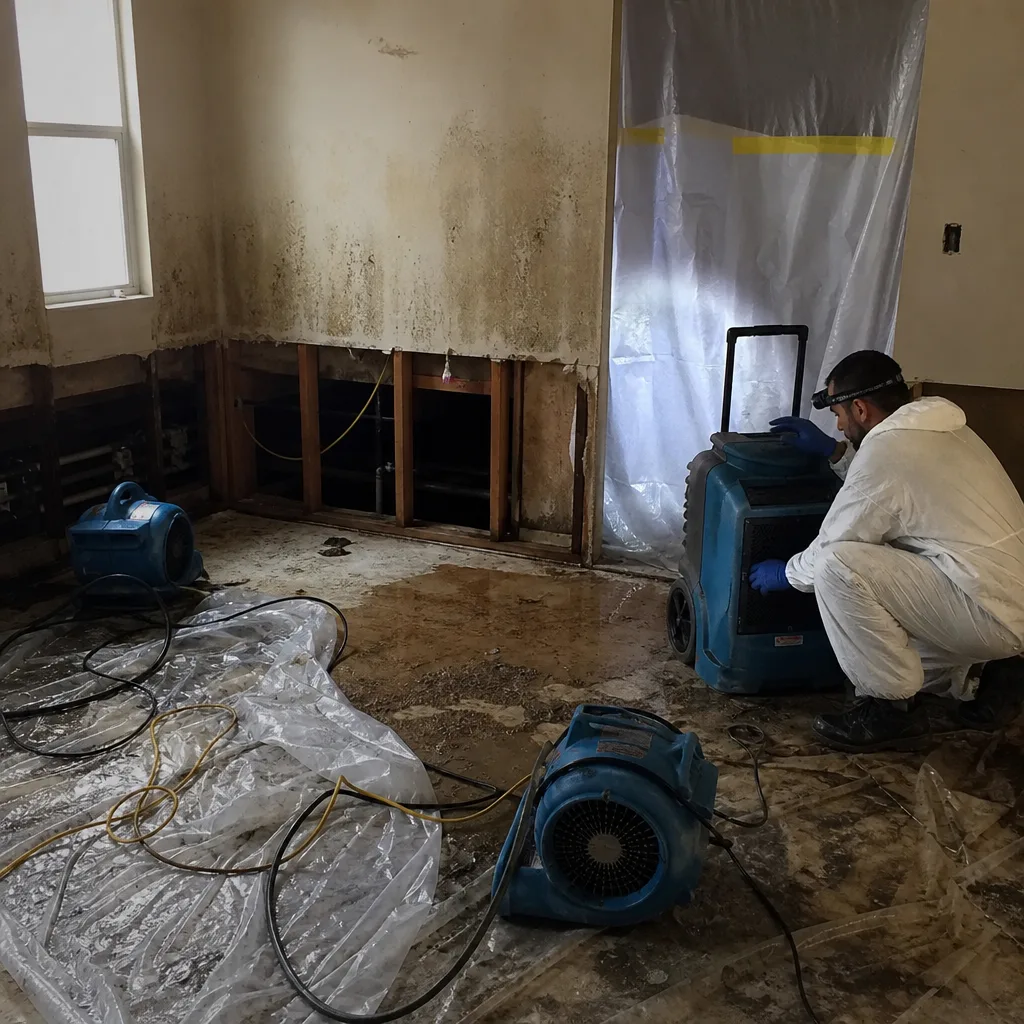 Before
 After
Pricing for Water Damage Restoration in Sunnyslope, CA
Here’s what we tell Sunnyslope homeowners, transparently, before anyone signs anything. Emergency water extraction with drying in a single room runs $1,800 to $4,200. Structural drying across multiple rooms or a hallway runs $3,200 to $8,500. Full-home flood restoration in 92509, where slab foundations channel water across large continuous flooring areas, runs $12,000 to $35,000 including extraction, drying, antimicrobial treatment, and demolition of unsalvageable materials. The factors that move your number: how deep the water pooled, whether flooring absorbs or resists, how far moisture wicked up drywall, and whether ash or sewage contamination is present. Estimate is free. We’ll come out, assess, and give you a written number.
| Sunnyslope Water Damage Service | Typical Price Range |
|---|---|
| Single-room water extraction + drying | $1,800 – $4,200 |
| Multi-room structural drying | $3,200 – $8,500 |
| Full-home flood restoration | $12,000 – $35,000 |
| Injectidry cavity drying (per affected wall/ceiling area) | $700 – $2,000 |
We Also Serve Cities Near Sunnyslope
Our crews work throughout the Jurupa Valley corridor and western Riverside County. Along with Water Damage Restoration in Sunnyslope, we serve homes in Glen Avon, Pedley, Rubidoux, and Riverside. If your property sits near the boundary line or you manage units in multiple nearby communities, one call covers the whole scope. We dispatch from Fontana, which puts us within a short drive of every 92509 neighborhood.
Serving Sunnyslope, CA — Our Local Coverage Area
We’re based in the Sunnyslope area and know this community well. Use the map below to see our service coverage — if you’re nearby, we can almost certainly help.
FAQs About Water Damage Restoration in Sunnyslope
Mold can begin growing within 48 to 72 hours after water intrusion in Sunnyslope’s warm climate, and our semi-arid heat can actually accelerate drying on the surface while moisture remains trapped in wall cavities and subfloor, so mold growth often starts in hidden spaces before you see or smell it. We treat saturated framing with antimicrobial products during initial response, not as an afterthought, and document drying conditions daily to interrupt the window where mold takes hold. Call (833) 589-5317 the day you see water; every hour matters.
Santa Ana winds create two water-related failure modes in Sunnyslope: wind-driven rain penetration through degraded door seals and window flashing, plus post-event ash accumulation that later becomes a moisture-trapping contaminant when rain returns. The wind itself doesn’t cause the water damage directly; it exposes weaknesses in the building envelope that let rain in at angles the structure wasn’t designed to shed. If your garage floor or entryway feels damp after a wind event, call us before the next storm turns it into a full intrusion.
Most Sunnyslope homes do not have basements; the 92509 housing stock sits on slab-on-grade foundations, which means “basement flooding” here is really ground-level water intrusion across the slab that wicks into flooring and drywall. Slab construction actually makes water travel faster across a continuous floor plane, and hidden moisture behind baseboards is harder to detect without a moisture meter. We assess slab homes differently than pier-and-beam or basement homes, because the drying strategy changes.
We treat ash contamination as part of the water damage scope in Sunnyslope, not a separate job, because wet ash becomes corrosive and biologically active when mixed with water from a later storm or pipe failure. Our crews remove contaminated insulation, clean HVAC returns and duct interiors where wind-driven ash accumulates, and run HEPA-filtered air scrubbers during structural drying. Water Damage Restoration technicians who don’t address ash contamination leave behind a residue that reactivates with humidity. Then a separate mold vendor gets called in, and you pay twice. We scoped it once.
We use Dri-Eaz dehumidifiers and air movers, Phoenix drying units, XPOWER extraction and air circulation equipment, and Injectidry systems for enclosed cavity drying, which is the same equipment lineup used on commercial large-loss restoration jobs. These are not consumer-grade rental machines; they’re built for continuous operation under demanding restoration conditions. If someone shows up to your Sunnyslope flood with two box fans and a rental carpet cleaner, you’ve hired the wrong crew.
How Sunnyslope’s Flood-and-Fire Duality Changes Water Damage Restoration
Here’s what makes Sunnyslope different from any other city we serve. This is not a coastal climate with marine fog, and it’s not a mountain zone with snowmelt. Sunnyslope sits at the edge of the Santa Ana River floodplain and the foothills of the Jurupa Hills, which means the area faces two opposing water-damage drivers in the same year. In fall and early winter, Santa Ana winds push fine ash and smoke into attic spaces, HVAC ductwork, and door tracks. That residue is dry when it settles. Then winter storms come through, and suddenly the ash becomes wet, heavy, and acidic, while flash-flood runoff overwhelms drainage in low-lying streets near the river corridor. The slab-on-grade homes in 92509 have no basement to hold that water; it travels across the slab and climbs every porous surface. A restoration crew working in Sunnyslope has to deal with both conditions at once: contaminated ash in the air system and flood water on the floor. One without the other is an incomplete scope. That’s the information most restoration guides miss, because most guides are written generically. This one isn’t.
After a winter storm sent water under the garage door of a 1960s stucco tract home off Mission Boulevard, our crew extracted standing water with XPOWER units, mapped moisture in the drywall, and set up Dri-Eaz air movers and dehumidifiers for structural drying. We documented pre-loss condition with moisture readings and drying logs, then applied antimicrobial treatment to the saturated framing to prevent mold growth. The homeowner had ignored a door seal that failed during a prior wind event. We fixed the seal as part of the scope so the next storm didn’t repeat the same damage. That’s the difference between restoration and just cleaning up after the fact.
Call Dry Line Water Damage at (833) 589-5317 for a free estimate. We’ll come to your Sunnyslope property, assess the full scope including any ash or contamination issues, and give you a written number before any work starts. Glen Pacheco runs this company to one standard: documented dry, every time.
Written by Glen Pacheco, Owner at Dry Line Water Damage, serving Sunnyslope and the Jurupa Valley since our founding.