

 Water damage drying
 Fire & smoke cleanup
 Mold remediation
 Storm response
 Sewage cleanup
 Reconstruction
Free visual inspection and a written scope of work before any mitigation begins - photos, moisture readings, and drying logs go in your claim file
The scope we write is the scope we bill. Anything new gets shown to you, in writing, before we touch it.
Get your free estimateFast, Reliable Water Damage Restoration Across Wrightwood
Water damage restoration in Wrightwood typically costs $2,400 – $6,800 for a full structural drying and repair scope, and the work rarely waits. What’s different about this mountain town is that a freeze can split a supply line in a vacant cabin and run for weeks before anyone knows. We’ve responded to that exact call enough times to know Wrightwood’s housing stock, its access roads, and its freeze-thaw cycle better than most. If you’re standing in water right now or just found a ceiling stain that wasn’t there last week, call (833) 589-5317. We’ll tell you what you’re actually looking at and what it takes to get your place documented dry.
Why Dry Line Water Damage Is Wrightwood’s Preferred Water Damage Restoration Company
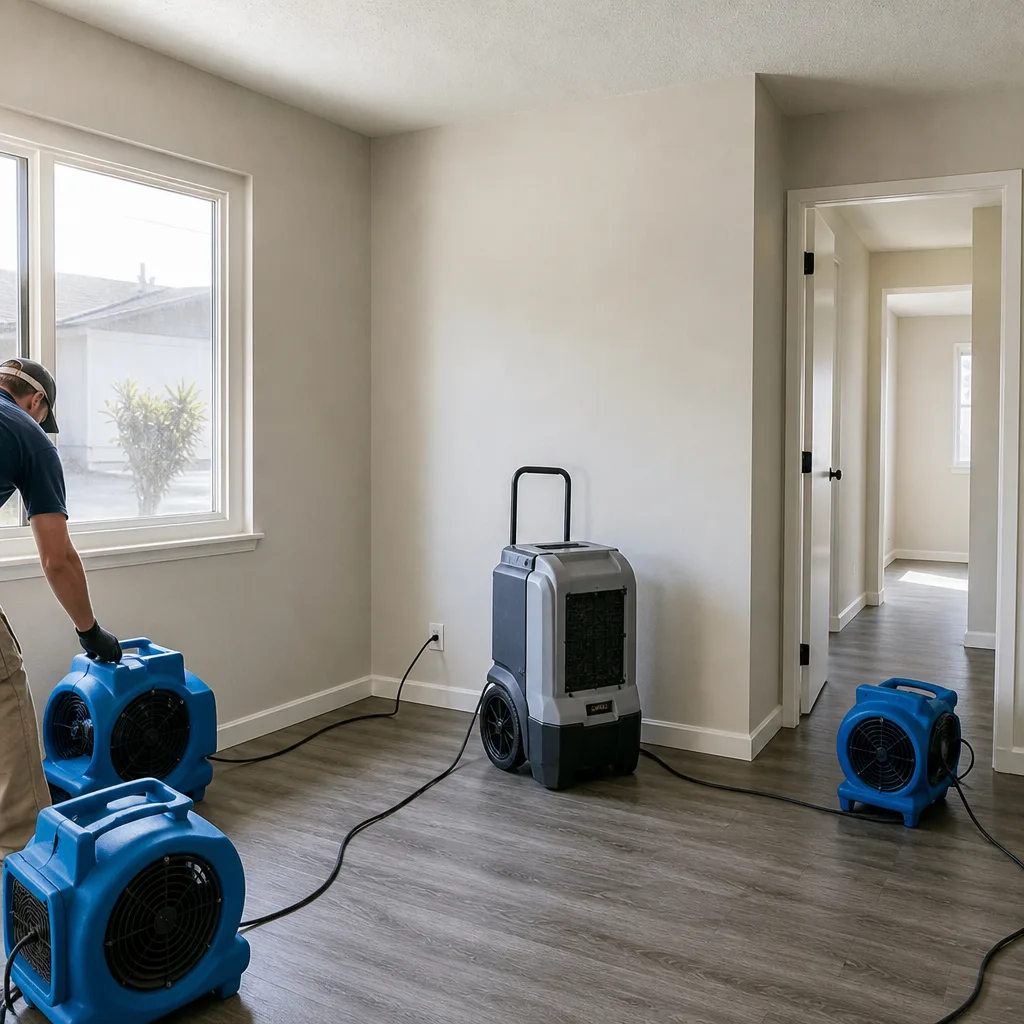
Wrightwood homeowners keep calling us because we bring the same IICRC-certified process and commercial drying systems to a 1930s cabin on a dirt road that we’d bring to a commercial large-loss job down the hill. That’s the standard Glen Pacheco built this operation around. No consumer-rental dehumidifiers from a hardware store. No guesswork about whether the subfloor is actually dry. Our techs use moisture mapping, document every reading, and hand you drying logs your adjuster can actually use.
We know how a pier-and-beam cabin near the Wrightwood Country Club behaves when snowmelt finds its way into the crawl space. We know why a vaulted ceiling in a 1970s A-frame hides a roof leak until the drywall gives way. Local knowledge isn’t a marketing line for us. It’s the difference between drying a house properly and leaving a vapor-compromised joist bay to rot silently until next spring.
Response to Wrightwood matters. Highway 2 and the 138 corridor aren’t a problem for our Phoenix and XPOWER air movers, dehumidifiers, and Injectidry mats. We stage equipment in the high desert corridor, so when snow, a debris flow, or a burst pipe hits, we’re not coming from two counties away.
Restoration work we handle
Water Damage Repair in Wrightwood
Water Damage Repair in Wrightwood often means reconstructing what the freeze-thaw cycle and delayed detection have already damaged: warped subfloor sections, saturated drywall, swollen door casings, and baseboard runs that wicked moisture upward. In a vacant cabin that froze in December, the repair scope is almost always larger than the initial leak suggests. A typical repair phase here runs $1,200 – $4,500 depending on whether we’re pulling drywall, replacing a section of plank subfloor, or reframing around a rotted sill plate.
Structural Drying and Subfloor Work
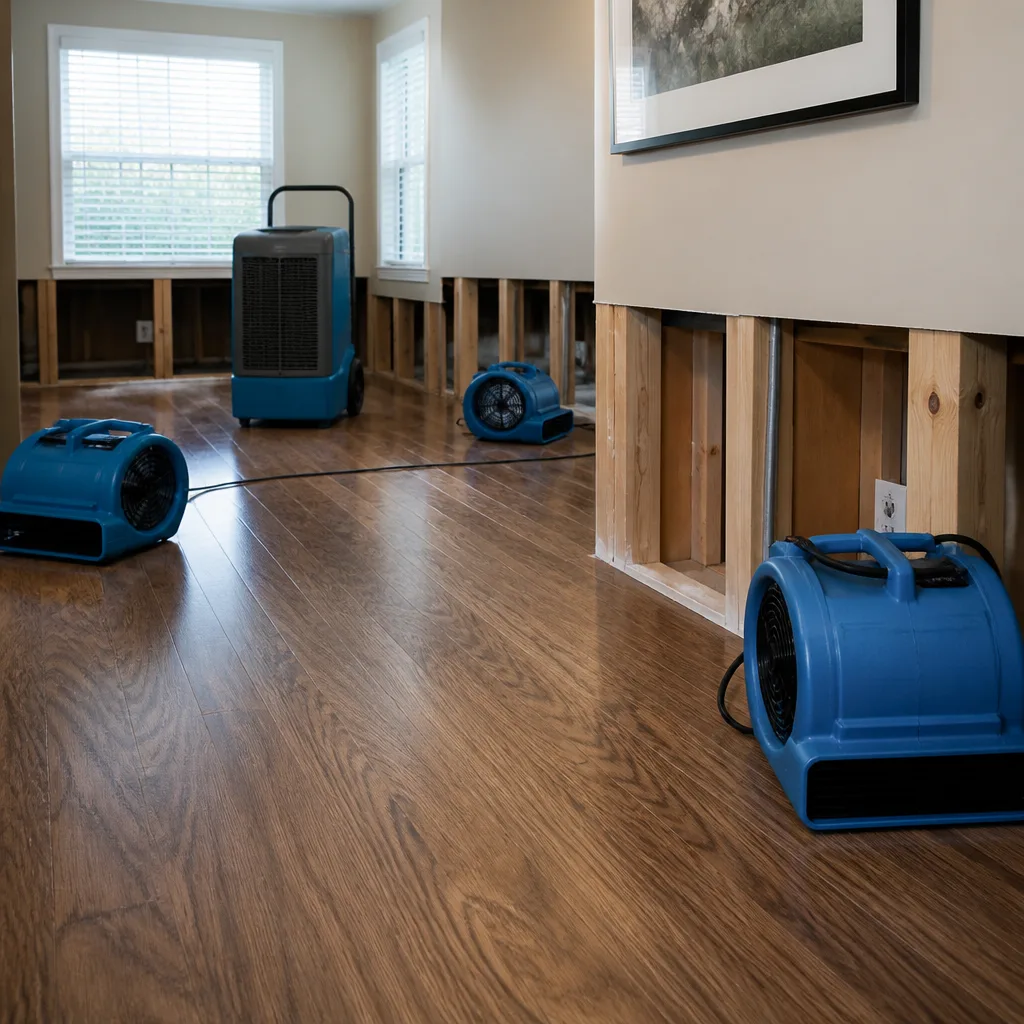
Wrightwood’s older cabins sit on pier-and-beam or shallow slab foundations. When water runs through wall cavities into the joist bays, simple surface drying won’t cut it. We use Injectidry systems to pull moisture from inside cavities without tearing out every wall, which saves original mountain-cabin trim and paneling where possible. Moisture readings get logged throughout, so you know the numbers, not just “it looks dry.”
Ceiling and Roof Leak Repair
Heavy snow loads on a shallow-pitch roof force meltwater into gaps that don’t leak during normal rain. By the time a ceiling stain appears, insulation above is likely holding water. We remove the saturated material, dry the framing, and document what the sheathing looked like so any structural repair gets scoped accurately rather than guessed at.
Water Mitigation in Wrightwood
Water Mitigation in Wrightwood is the emergency phase that stops the bleeding: emergency extraction, containment, and rapid drying before repair begins. In this town specifically, mitigation gets complicated by category. A frozen supply line that ran for three weeks in a locked cabin has gone from category 1 clean water to category 2 or worse by the time we arrive. That means antimicrobial treatment on framing and joists, not just water removal. Expect mitigation scopes here to run $1,800 – $3,500 when category 2 or 3 water is involved.
Vacant Cabin Mitigation
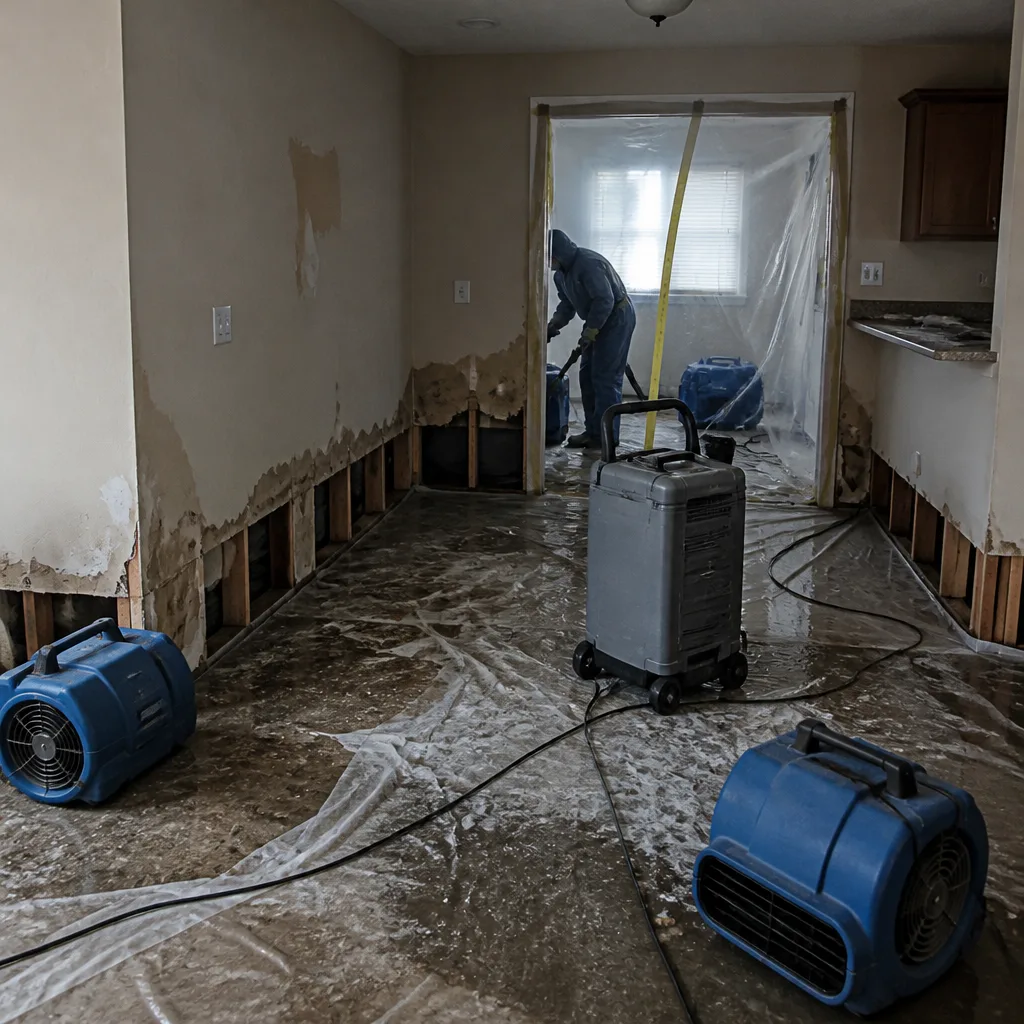
Every winter we see the same sequence: a north-facing wall freezes, a copper or PEX line splits, and water runs until a neighbor notices ice in the driveway or a utility bill spikes. Our first move is moisture mapping the entire footprint, not just the visible wet zone. Water travels along joists and under partition walls. We’ll set containment on the affected areas, run Phoenix dehumidifiers and B-Air air movers, and take baseline readings before we commit to any demolition.
Burn-Scar and Debris-Flow Water Intrusion
Wrightwood sits in the San Bernardino National Forest, and the 2009 Sheep Fire left burn-scar terrain above town. Spring debris flows carry sediment and ash into crawl spaces and lower-level rooms. That sediment masks moisture paths and complicates drying because it clings to surfaces and wicks into insulation. We handle pack-out and cleaning alongside water extraction, so you’re not juggling a separate vendor for the ash-soaked contents.

Trusted Brands We Service in Wrightwood
We run Dri-Eaz and Phoenix dehumidifiers, XPOWER and B-Air air movers, and Injectidry structural drying systems on Wrightwood jobs. These are the commercial-grade machines used on large-loss restoration projects, not the rental-counter units that struggle at 6,000 feet. For Wrightwood customers, that means we’re not waiting on equipment deliveries from the valley. We also keep a parts stock for common cabin plumbing and framing issues, so a repair phase doesn’t stall while a supplier ships a specialty fitting up the hill. You get the same documented drying protocol whether you’re in a 1950s cabin near the Country Club or a newer custom home off Sheep Creek Drive.
Common Water Damage Restoration Problems We See in Wrightwood Homes
- Frozen supply lines in vacant cabins. A pipe splits during a hard overnight freeze and runs undetected for weeks. By spring thaw, mold and rot are already established in joist bays and wall cavities.
- Pier-and-beam crawl spaces with missing vapor barriers. Moisture sits against floor joists far longer than it would in a slab home, and the damage stays hidden until floors start springing or sagging.
- Vaulted ceilings in mid-century A-frames. Snow-driven leaks travel along beams and sheathing, showing up as a stain far from the actual entry point, which complicates the source assessment.
- Ash and sediment from burn-scar debris flows. Runoff from the 2009 Sheep Fire burn zone carries fine sediment into lower-level rooms and crawl spaces, where it traps moisture against framing and requires pack-out cleaning before drying can really work.
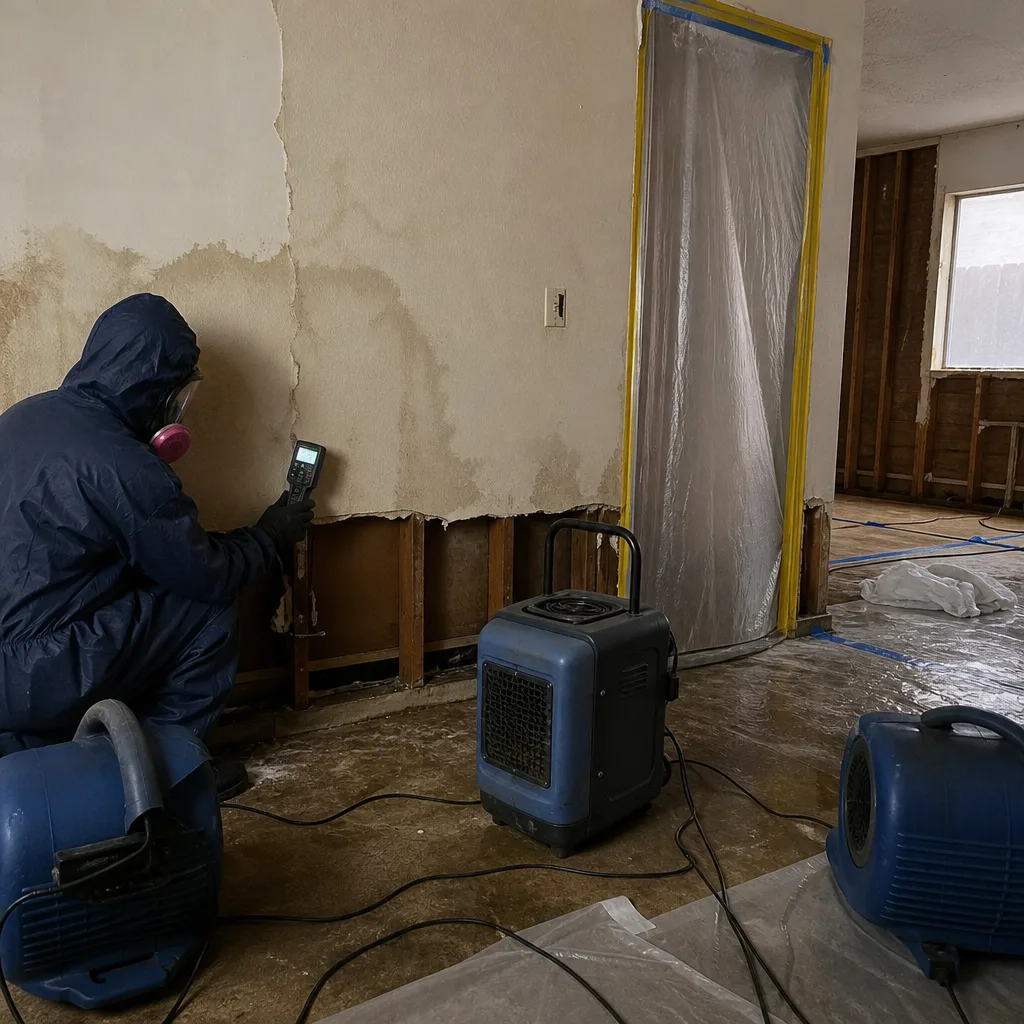
See the difference
 Before
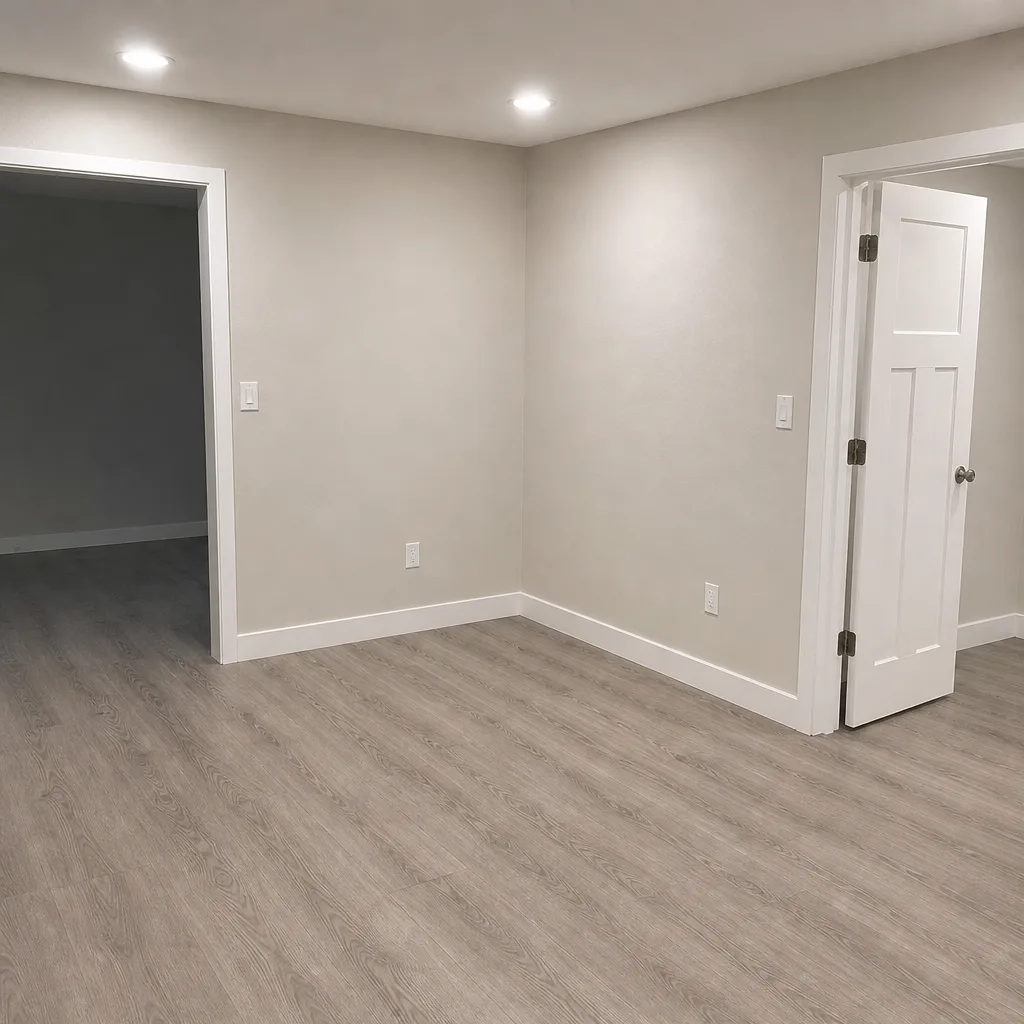 After
 Before
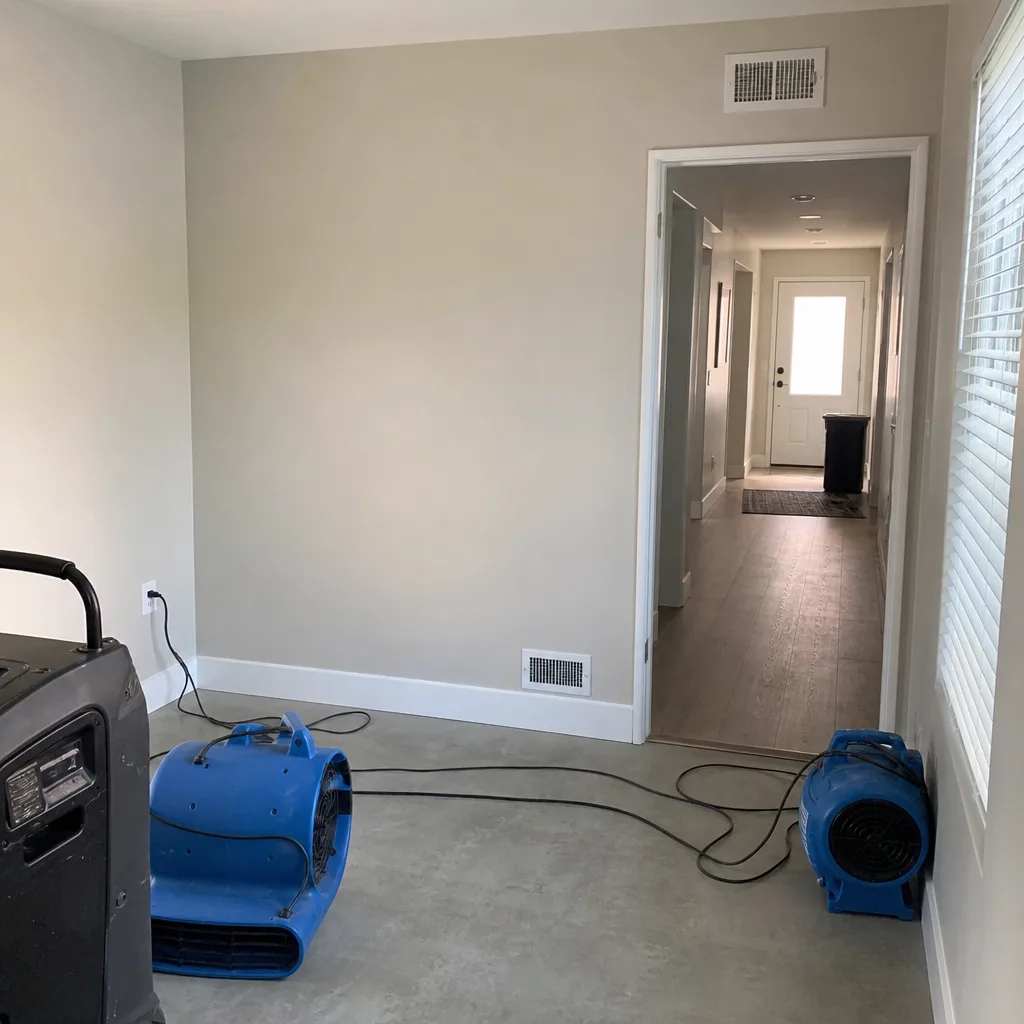 After
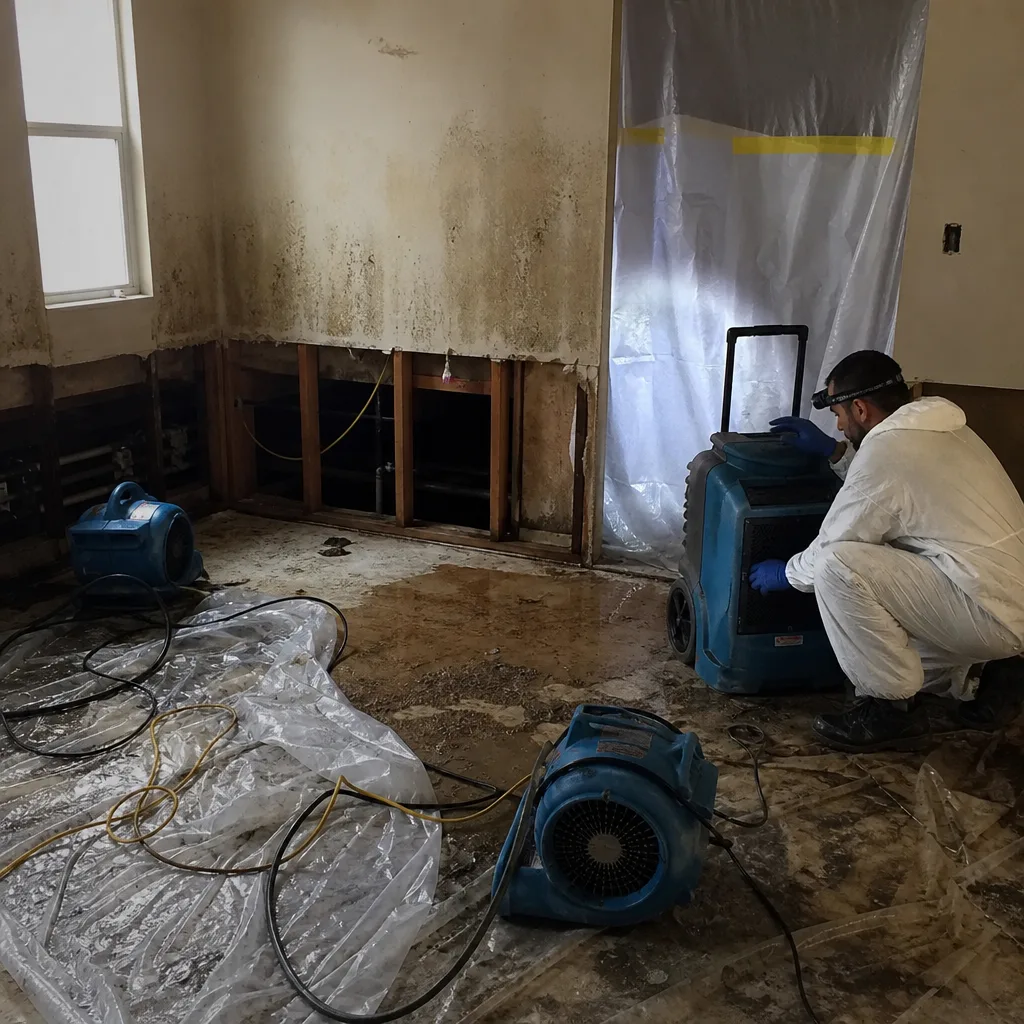 Before
 After
Pricing for Water Damage Restoration in Wrightwood, CA
What you’ll pay depends on water category, square footage affected, and how long the water ran before anyone found it. Here’s what Wrightwood homeowners typically see on our scopes:
- Emergency extraction and initial containment: $800 – $1,800
- Structural drying with commercial dehumidifiers and air movers: $1,500 – $3,200 for a single room, $3,500 – $6,000 for a full cabin footprint
- Category 2/3 antimicrobial treatment on framing and joists: $400 – $1,200
- Water damage repair (drywall, subfloor, trim, paint): $1,200 – $4,500 depending on material and extent
- Injectidry cavity drying for walls and ceilings (when demolition can be avoided): $300 – $900 per wall or ceiling section
Every scope comes in writing before work starts. No chasing, no surprises mid-job. Call (833) 589-5317 for a free estimate, and we’ll walk the property with a moisture meter, not a sales script.
We Also Serve Cities Near Wrightwood
Our crews regularly run the mountain and high desert corridor, serving Piñon Hills, Phelan, Oak Hills, and San Antonio Heights. If you’re a property manager with cabins across the 92397 zip code or a homeowner in a nearby foothill town, the same Water Damage Restoration standards and equipment apply. Read more about our broader service area at Water Damage Restoration in Wrightwood and the surrounding communities.
Serving Wrightwood, CA — Our Local Coverage Area
We’re based in the Wrightwood area and know this community well. Use the map below to see our service coverage — if you’re nearby, we can almost certainly help.
FAQs About Water Damage Restoration in Wrightwood
Because nobody’s there to catch it. In an occupied home, someone notices a wet floor or a hiss in a wall within minutes or hours. In a Wrightwood cabin left empty from November to April, a split supply line can run for weeks. That gives the water time to saturate insulation, travel along floor joists, and wick up through drywall and trim. The water also degrades in category: what started as category 1 clean water becomes category 2 or 3 by the time the thaw reveals it. That means antimicrobial treatment and more extensive drying, not just extraction. Call (833) 589-5317 and describe when you last checked the property. That timeline helps us set the right scope from the jump.
We start with moisture mapping across the entire footprint, not just the visible wet area. In pier-and-beam construction, water moves beneath the floor system along joist bays and sill plates. We take readings from the subfloor, joists, wall cavities, and any accessible crawl space. Where vapor barriers are missing or compromised, we flag it because that void changes how quickly framing can release moisture. We document all baseline readings before any drying begins, then log them daily until the structure returns to its pre-loss moisture content. That’s what documented dry actually means.
Category 1 is clean water from a supply line or melted snow that hasn’t been sitting long. Category 2 means significant contamination, often from water that’s run across dirty surfaces, collected in a crawl space, or sat for days. Category 3 is grossly contaminated, including anything with sewage, flood, or debris-flow sediment. In Wrightwood, a burst supply line in a vacant cabin often reaches category 2 before discovery because of the time elapsed. That changes the protocol: we’ll need antimicrobial treatment on affected framing, not just drying. If you’re not sure what category you’re looking at, call (833) 589-5317. We’ll assess it on site.
Yes, we handle both. The 2009 Sheep Fire left burn-scar terrain above Wrightwood, and spring runoff carries fine ash and sediment into crawl spaces, garages, and lower-level rooms. That sediment complicates water damage because it clings to surfaces, traps moisture against framing, and masks the actual moisture paths. Our team packs out affected contents, cleans surfaces, and then runs the structural drying protocol. Because we handle fire, water, and mold under one roof, you’re not coordinating separate vendors or dealing with finger-pointing about which problem caused what. One crew, full scope.
Because your adjuster needs verifiable evidence that the structure is actually dry, not just a visual check. Drying logs show daily moisture readings from joists, subfloor, wall cavities, and crawl spaces, tracked against the pre-loss moisture baseline for each material. In a town where insurance carriers see a lot of “the cabin was vacant for weeks” claims, documentation is the difference between a clean claim and a dispute. We generate logs for every job and coordinate directly with your adjuster. If you’ve already got an adjuster assigned, call (833) 589-5317 and we’ll send them the readings they need.
Contact Dry Line Water Damage in Wrightwood
If you’re looking at water where it shouldn’t be in Wrightwood, or you just opened your cabin door to find a ceiling stain and a musty smell you can’t place, don’t guess. Call (833) 589-5317. We’ll do an on-site assessment, show you the moisture readings, and put the scope in writing before any equipment gets unloaded. Glen Pacheco built this company to do the job to a documented standard, and that’s what you get up here at 6,000 feet.
Written by Glen Pacheco, Owner at Dry Line Water Damage, serving Wrightwood and the surrounding mountain communities.