
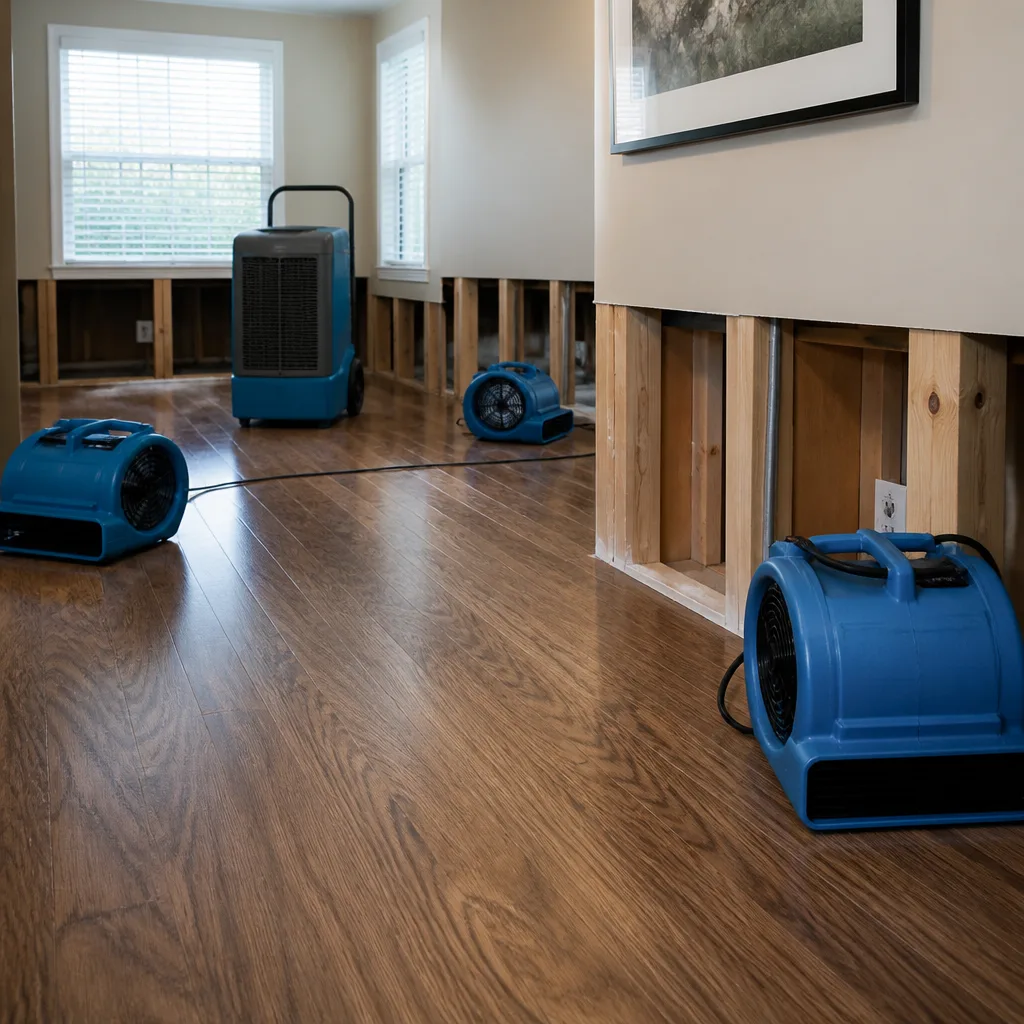
 Water damage drying
 Fire & smoke cleanup
 Mold remediation
 Storm response
 Sewage cleanup
 Reconstruction
Free visual inspection and a written scope of work before any mitigation begins - photos, moisture readings, and drying logs go in your claim file
The scope we write is the scope we bill. Anything new gets shown to you, in writing, before we touch it.
Get your free estimateRestoration work we handle
See the difference
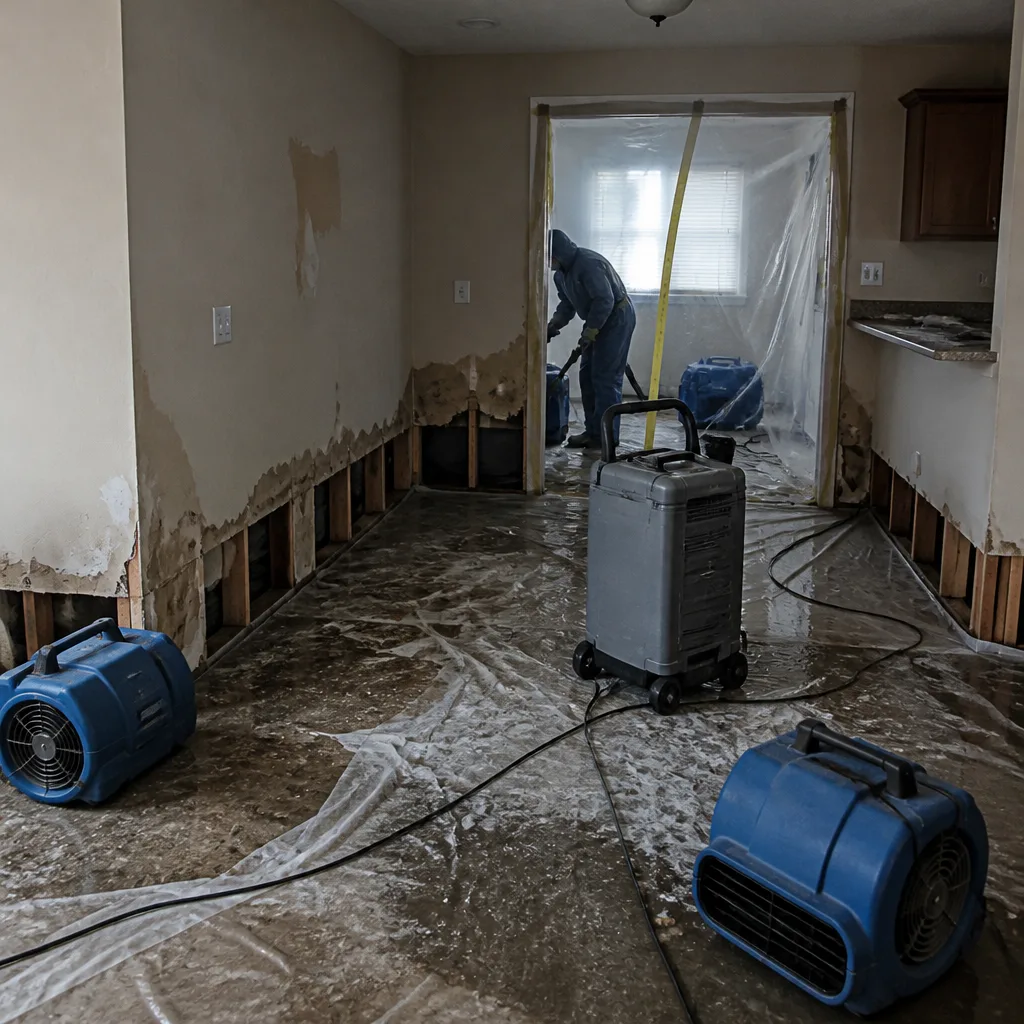 Before
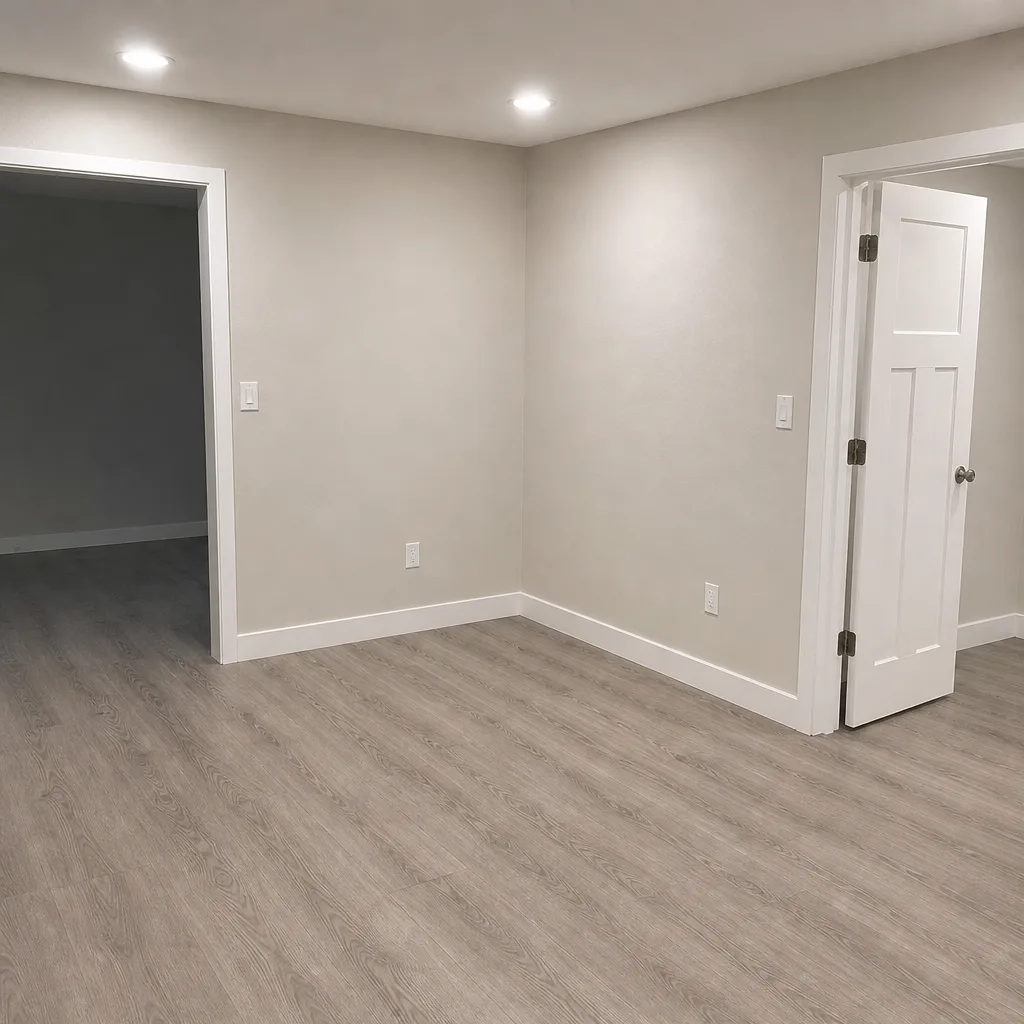 After
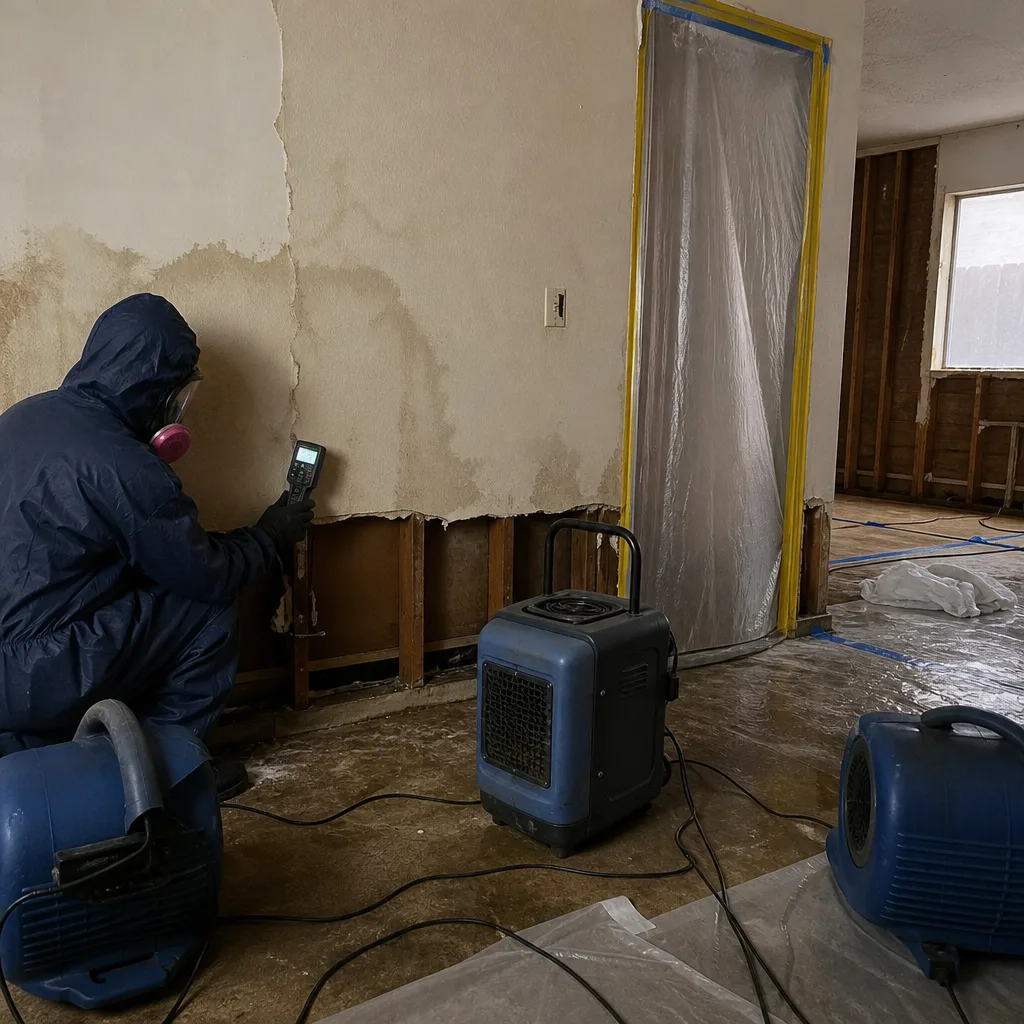 Before
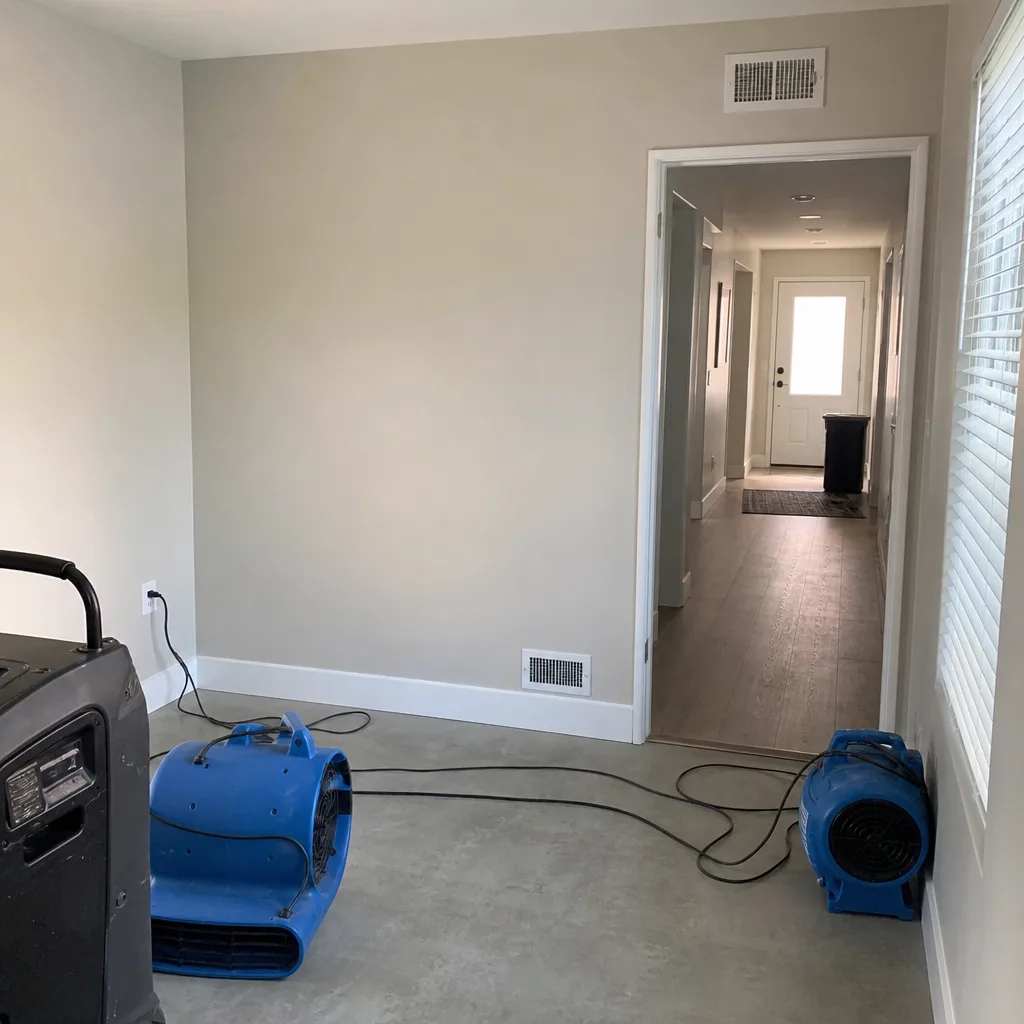 After
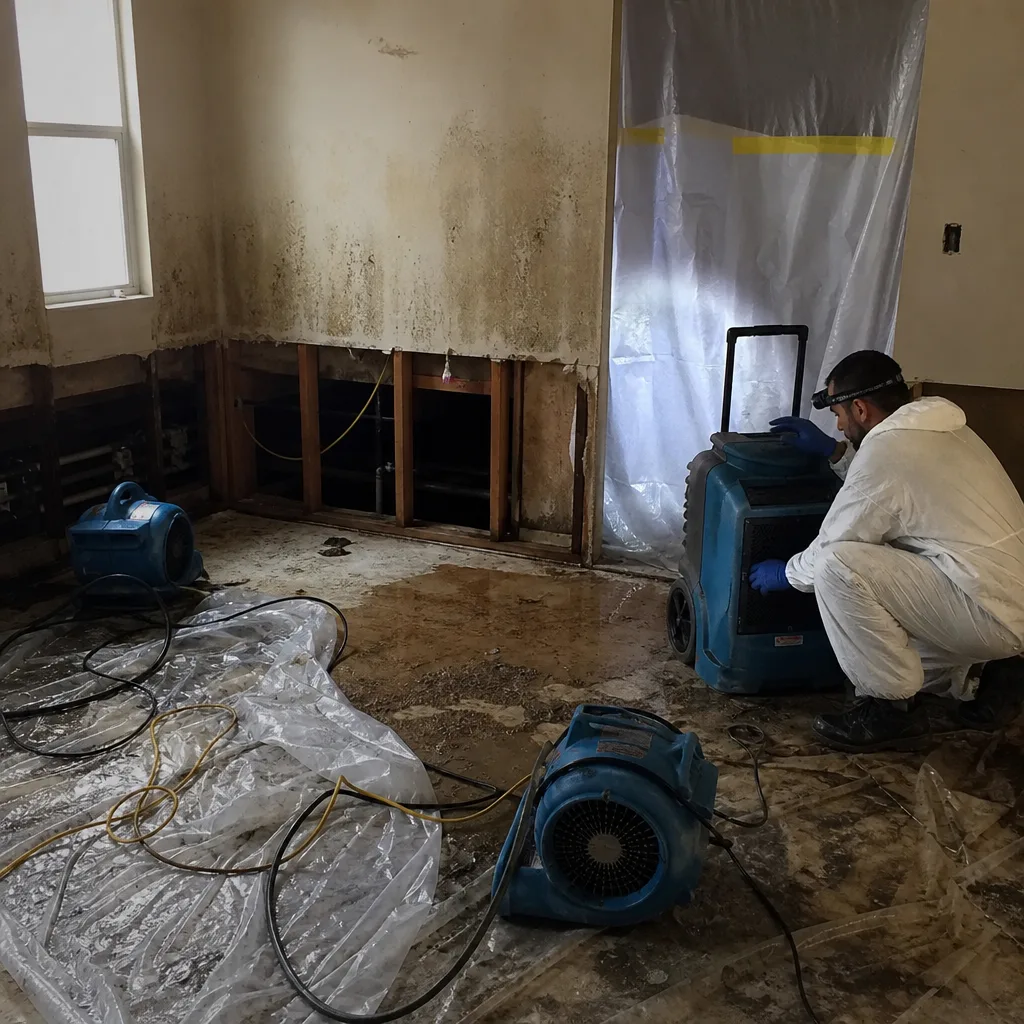 Before
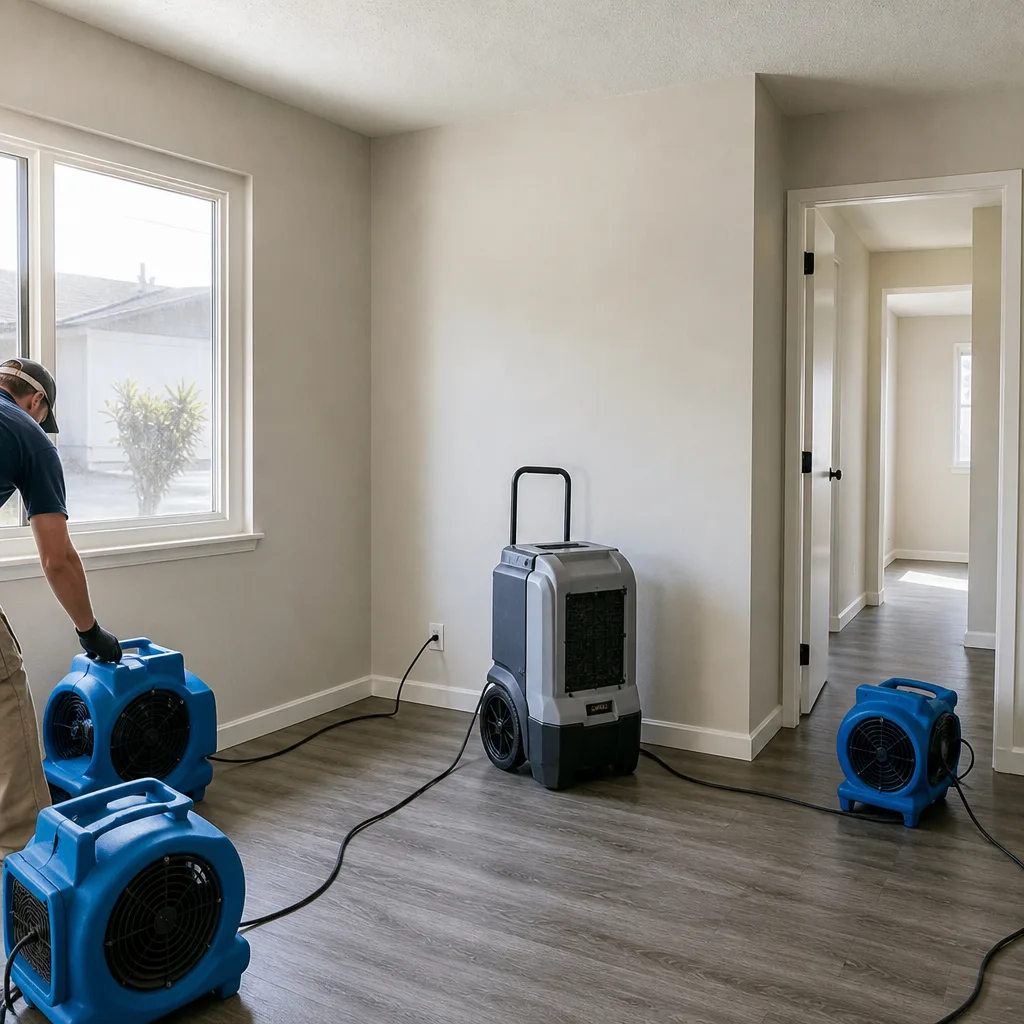 After
How Much Does Sewage Cleanup Cost in Fontana?
Sewage cleanup in Fontana typically costs $1,200 to $4,800 for an average residential backup, with most single-bathroom or laundry-line jobs landing near $1,800 to $2,900. Small, contained backups that reach only a finished floor can run as low as $850, while a Category 3 loss that soaks into drywall, cabinets, and subfloor in a slab-on-grade Fontana home can climb past $7,500. The number moves most on how far the contaminated water traveled and how much porous material has to come out.
Raw sewage is Category 3 water – the most contaminated class a restoration crew handles. It carries bacteria, viruses, and parasites, and anything porous it touches usually can’t be saved. That’s why the price of sewage cleanup in Fontana tracks demolition and disinfection as much as it tracks drying. At Dry Line Water Damage, we scope the job the same way an insurance adjuster will read it: room by room, material by material, with moisture readings logged before and after. Call (833) 589-5317 for a free estimate and we’ll put actual numbers on your loss instead of a ballpark over the phone.
Key Takeaways
- Most Fontana sewage backups fall between $1,200 and $4,800; severe Category 3 losses can exceed $7,500.
- Extraction, disinfection, and removal of contaminated material make up the bulk of the bill – drying is only part of it.
- Homeowners insurance often covers sudden sewage backups only if a sewer backup endorsement is on the policy; standard HO-3 policies in California usually exclude them.
- Waiting raises the price. Sewage that sits overnight wicks into framing and turns a $1,800 cleanup into a $5,000 reconstruction.
- Free estimates and itemized scopes are standard for a professional job. Call (833) 589-5317.
Sewage Cleanup Cost Breakdown (2026)
Here’s how a Fontana sewage cleanup bill breaks down by line item. These ranges reflect what we see on jobs across the city, from older tracts near downtown to newer builds in the south end.
| Line Item | Typical Fontana Range | What It Covers |
|---|---|---|
| Emergency response & assessment | $150 – $400 | On-site evaluation, moisture mapping, category classification, written scope |
| Water & waste extraction | $300 – $900 | Truck-mount or portable extraction of standing sewage, solids removal |
| Contaminated material removal | $400 – $2,200 | Removal and disposal of saturated drywall, insulation, flooring, baseboards |
| Disinfection & sanitization | $350 – $1,100 | EPA-registered disinfectant application, HEPA vacuuming, odor control |
| Structural drying | $500 – $1,800 | Commercial dehumidifiers and air movers, daily monitoring, moisture logs |
| Content cleaning or disposal | $150 – $800 | Assessment and cleaning of salvageable items; disposal of unsalvageable contents |
| Build-back / reconstruction | $800 – $4,500+ | Replacing drywall, flooring, trim, and cabinetry after the structure is dry |
Extraction and disinfection are the non-negotiables on every job. Build-back is where the range opens up. A laundry-room backup that stays on tile might need nothing more than a new baseboard. A finished basement or a hallway with laminate over particleboard subfloor is a different story, because that subfloor almost never survives Category 3 water. We use Injectidry structural-drying systems to reach inside wall cavities and under flooring where it’s safe to dry in place – that alone can keep a few hundred to a couple thousand dollars of demolition off the job. But on genuinely contaminated porous material, drying in place isn’t the right call, and a good crew will tell you that plainly.
What Affects Sewage Cleanup Pricing in Fontana
Two backups of the same size can price $2,000 apart. These are the factors that move the number most here in Fontana.
- Water category and contamination level. A toilet backup from a clean supply line is Category 1 and cheap to handle. Sewage from the main line is Category 3 and requires full PPE, containment, and disposal protocols. The difference in labor and disposal cost is significant.
- How far the water spread. Fontana’s slab-on-grade construction means sewage doesn’t have a basement to fill – it spreads sideways across the slab and wicks up drywall. A backup that reaches three rooms costs far more than one contained to a single bathroom, and slab moisture is harder to dry because there’s no airflow under the floor.
- Material types. Tile, sealed concrete, and vinyl plank often clean up and stay. Carpet, pad, laminate, and particleboard subfloor are typically removed. A 300-square-foot carpeted room adds removal, disposal, and replacement cost quickly.
- Time before cleanup starts. Sewage that sits 12 to 24 hours wicks higher into drywall and framing and starts growing mold within 24 to 48 hours in Fontana’s warm, dry climate. Every hour raises the odds you’ll pay for mold remediation on top of sewage cleanup.
- Access and equipment logistics. A second-floor bathroom or a tight mobile-home crawlspace takes more labor hours than a garage-adjacent laundry room. Older homes near downtown Fontana sometimes have narrow side yards that limit where we can stage the truck and drying equipment.
- Whether the source is fixed. If the backup came from a failing sewer lateral or a root intrusion, the cleanup can’t really finish until the line is cleared or repaired. We coordinate with plumbers on this, but the plumbing repair is a separate cost from the cleanup, and homeowners are often surprised by that split.
One Fontana-specific note on older housing stock: many homes built in the 1950s through 1970s in the city’s core have cast-iron or Orangeburg sewer laterals that are prone to collapse and root intrusion. When we see repeat backups at the same property, that’s usually the reason. Cleanup handles the mess; the lateral itself needs a plumber or sewer contractor. Knowing which problem you actually have saves you from paying for cleanup twice.
Does Homeowners Insurance Cover Sewage Cleanup in Fontana?
Usually only if you bought a sewer backup endorsement. Standard California homeowners policies typically exclude water that backs up through sewers or drains unless you added that coverage, and the endorsement commonly caps payout around $5,000 to $10,000. That cap is often enough for a typical Fontana backup but can fall short on a large Category 3 loss with reconstruction.
Two practical steps before you panic about the bill. First, call your insurer and ask specifically whether a “water backup” or “sewer backup” endorsement is on the policy – don’t assume from the general policy summary. Second, get a documented scope. Adjusters approve itemized, photo-documented, moisture-logged claims far faster than verbal estimates. That’s how we work: every affected material photographed and measured, drying readings recorded daily, and a written scope that matches the industry-standard estimating format adjusters use. If your claim gets partially denied, the documentation is what you use to push back. For a deeper look at the cleanup process itself, see our Sewage Cleanup in Fontana page.
How to Save on Sewage Cleanup
You can’t make Category 3 sewage cleanup cheap without cutting corners that cost more later. But there are legitimate ways to keep the bill down.
- Stop the source first. If the backup is still flowing, shut off water to the affected fixtures or call a plumber before cleanup begins. A crew extracting water from a live backup is fighting a losing battle, and you’ll pay for re-extraction.
- Call the same day. The single biggest cost driver is time. Same-day response keeps contamination from spreading and keeps drying equipment hours off the job.
- Move salvageable contents out of the affected area. Anything you can safely relocate before we arrive – and we mean items you can touch without exposure to sewage – reduces content-handling charges and protects things you’d rather keep.
- Get a written scope before work starts. A free estimate should itemize extraction, removal, disinfection, and drying separately, and note what’s excluded. That transparency is what you compare against. Call (833) 589-5317 and we’ll walk your loss on site.
- Fix the underlying plumbing issue. If a failing lateral caused the backup, repairing it prevents a second cleanup six months later. Paying twice is the most expensive way to handle this.
- Keep the drying running. Once equipment is in place, don’t shut it off early to save on electricity. Incomplete drying means mold remediation later, which is a bigger bill than the energy cost.
We’d rather lose a job than sell a cheaper version of it that fails. That’s why our estimates are free and itemized, and why we tell you up front which materials can be saved and which genuinely can’t.
What Does Professional Sewage Cleanup Actually Involve?
The work follows a sequence, and the price follows the sequence. It starts with a category classification – is this clean water, gray water, or true sewage – because that determines PPE levels and material salvage decisions. Then extraction of standing waste, followed by removal of contaminated porous material. Disinfection comes next, applied to all affected surfaces, with HEPA vacuuming to pull fines out of cracks and corners. Only then does structural drying begin, using commercial dehumidifiers and air movers sized to the cubic footage of the affected space. We run Dri-Eaz, Phoenix, XPOWER, and B-Air equipment on jobs because consumer-rental machines don’t move enough air or pull enough moisture to dry a structure to a documented standard. Daily moisture readings confirm the structure is actually dry, not just dry to the touch. Final step is build-back once readings confirm the structure is stable.
Every step has a cost attached, and every step can’t be skipped on a Category 3 job without putting the household at risk. That’s the difference between a real cleanup and a shop-vac and some bleach. Our home page lays out the three service lines we run – water damage, mold remediation, and fire damage – so you can see how a sewage backup can turn into a mold job if it’s not handled correctly. When mold shows up after a slow cleanup, that’s its own line item: mold remediation adds typically $1,200 to $4,000 depending on the square footage affected and whether containment is needed. The best way to avoid that cost is to handle the sewage correctly the first time.
One more point for property managers: coordination gaps cost money. When water damage, mold, and reconstruction are handled by three different vendors, each one blames the other when something’s not right, and you’re the one paying for the do-over. A crew that handles the full scope – extraction through documented dry through remediation – eliminates that handoff. That’s how Dry Line operates, one team accountable for the entire loss.
FAQs – Sewage Cleanup Cost
How much does sewage cleanup cost in Fontana?
Most Fontana sewage cleanups cost between $1,200 and $4,800, with a typical single-bathroom or laundry-line backup around $1,800 to $2,900. Small contained backups can run as low as $850, and large losses with reconstruction can exceed $7,500. Call (833) 589-5317 for an exact quote – estimates are free.
Does homeowners insurance cover sewage backup cleanup?
Only if you carry a sewer backup endorsement, which usually caps coverage between $5,000 and $10,000. Standard California policies typically exclude sewer backups. Check your policy declarations page for the endorsement before assuming, and call us for a documented scope your adjuster can work from – (833) 589-5317.
Is it cheaper to clean up sewage myself or hire a pro?
Hiring a professional is cheaper over time on any Category 3 sewage loss. A DIY cleanup usually runs $200 to $500 in rental equipment and supplies but leaves contamination in porous materials and often triggers mold growth, adding $1,200 to $4,000 in remediation later. Sewage carries real pathogens, and the exposure risk isn’t worth the savings.
How long does sewage cleanup take?
Extraction and disinfection usually take 4 to 8 hours on a typical residential job. Structural drying runs 3 to 5 days, with daily monitoring. Total elapsed time from call to a documented-dry structure is usually 4 to 7 days before any reconstruction starts.
Can you come today?
We prioritize active sewage backups in Fontana and schedule emergency response as quickly as our crews allow. The sooner cleanup starts, the lower the bill. Call (833) 589-5317 and tell us what’s backing up and where it’s reached – that helps us bring the right equipment on the first trip.
Get an Exact Number for Your Fontana Backup
Pricing a sewage backup from a phone description is guesswork, and guesswork is how homeowners get blindsided by a bill. We’d rather walk the loss with you, take moisture readings, and hand you an itemized estimate that matches what any adjuster or competing contractor can read. Dry Line Water Damage is an IICRC-certified operation, a Restoration Industry Association member, and we back our scope with documented moisture readings at every stage. Call (833) 589-5317 for a free estimate on sewage cleanup in Fontana, and we’ll tell you plainly what can be saved, what has to come out, and what it costs.
Pricing reflects the Fontana market as of 2026. Dry Line Water Damage offers free estimates – call (833) 589-5317.
Written by the team at Dry Line Water Damage, IICRC-certified restoration specialists serving Fontana, CA.
What Our Customers Say
"They cut the drywall at a clean line and only as far up as was actually wet, rather than gutting the whole room."
— Michelle Yang"Took moisture readings every day and logged them, and only pulled the drying equipment when the numbers said it was actually dry rather than on a fixed schedule."
— Diego Morales"Dealt directly with the insurance adjuster and documented everything with photos and readings. Our claim went through without a single dispute."
— Eric Park