Last updated October 31, 2026
 Water damage drying
 Fire & smoke cleanup
 Mold remediation
 Storm response
 Sewage cleanup
 Reconstruction
Free visual inspection and a written scope of work before any mitigation begins - photos, moisture readings, and drying logs go in your claim file
The scope we write is the scope we bill. Anything new gets shown to you, in writing, before we touch it.
Get your free estimateChoosing the Right Damage Restoration Brand: A Buyer’s Guide for Fontana
Here’s something most Fontana homeowners never consider until it’s too late: the restoration industry runs on a franchise model where the recognizable brand on the side of the truck often has no direct relationship with the crew that shows up at your door. The franchise fee that buys that name recognition has to come from somewhere, and in our experience watching this market for over a decade, it usually comes out of equipment budgets and technician wages. This guide will show you exactly how to evaluate any damage restoration company in Fontana based on the things that actually determine whether your home gets properly dried, remediated, or rebuilt: certifications held by the specific technician on site, the equipment brand and class on the truck, and how they handle insurance documentation. For The Complete Guide to Damage Restoration in Fontana with additional depth, see our resources page.
Quick Answer
The right damage restoration brand in Fontana is determined by three verifiable factors: the IICRC certification held by the technician actually doing the work, the class of drying equipment deployed (LGR dehumidifiers, not consumer-grade units), and whether the company writes its own Xactimate estimates rather than deferring to the adjuster’s scope. National brand recognition matters less than these technical capabilities.
Restoration work we handle
Table of Contents
- Why the Technician’s Certification Matters More Than the Company’s Logo
- The Equipment Questions That Separate Restoration Contractors from Handymen
- How to Evaluate Insurance Claim Experience Before You Sign Anything
- Franchise vs. Independent: What the Comparison Actually Involves in Fontana
- The Five-Question Phone Screen for Any Restoration Operator
- What Fontana’s Climate and Building Stock Mean for Restoration Work
- Common Mistakes to Avoid
- When to Call a Professional
Why the Technician’s Certification Matters More Than the Company’s Logo
Most restoration companies in Fontana will tell you they’re certified. The question is whether the person holding the moisture meter in your living room is the one who earned it. We’ve seen company owners list IICRC certification on their website while sending uncertified day labor to job sites. That’s not a technical distinction. It’s the difference between someone who understands psychrometrics, the science of how moisture moves through building materials, and someone who points a fan at a wet wall and hopes for the best.
The IICRC, or Institute of Inspection, Cleaning and Restoration Certification, is the restoration industry’s most rigorous third-party standard. It requires passing proctored exams that cover water damage restoration science, mold remediation protocols, and fire damage cleaning methodology. When a technician holds this certification, they’ve demonstrated knowledge of drying chambers, moisture mapping, and the containment processes that protect unaffected parts of your home from cross-contamination.
Here’s the question to ask any restoration company in Fontana, and the question that trips up a surprising number of operators:
- Ask whether the technician who will perform the work holds current IICRC certification in the specific discipline you need.
- Ask for the certification number. IICRC certifications are verifiable through the certifying body.
- Ask when the certification was last renewed. Standards change as building science evolves, and ongoing credentials signal active engagement with the field.
At Dry Line Water Damage, our Water Damage Restoration in Fontana work is performed under an IICRC-certified process, which means the people running our Dri-Eaz and Phoenix equipment understand the drying science behind it. If a company hesitates when you ask about technician-level certification, that hesitation is your answer.
The Equipment Questions That Separate Restoration Contractors from Handymen
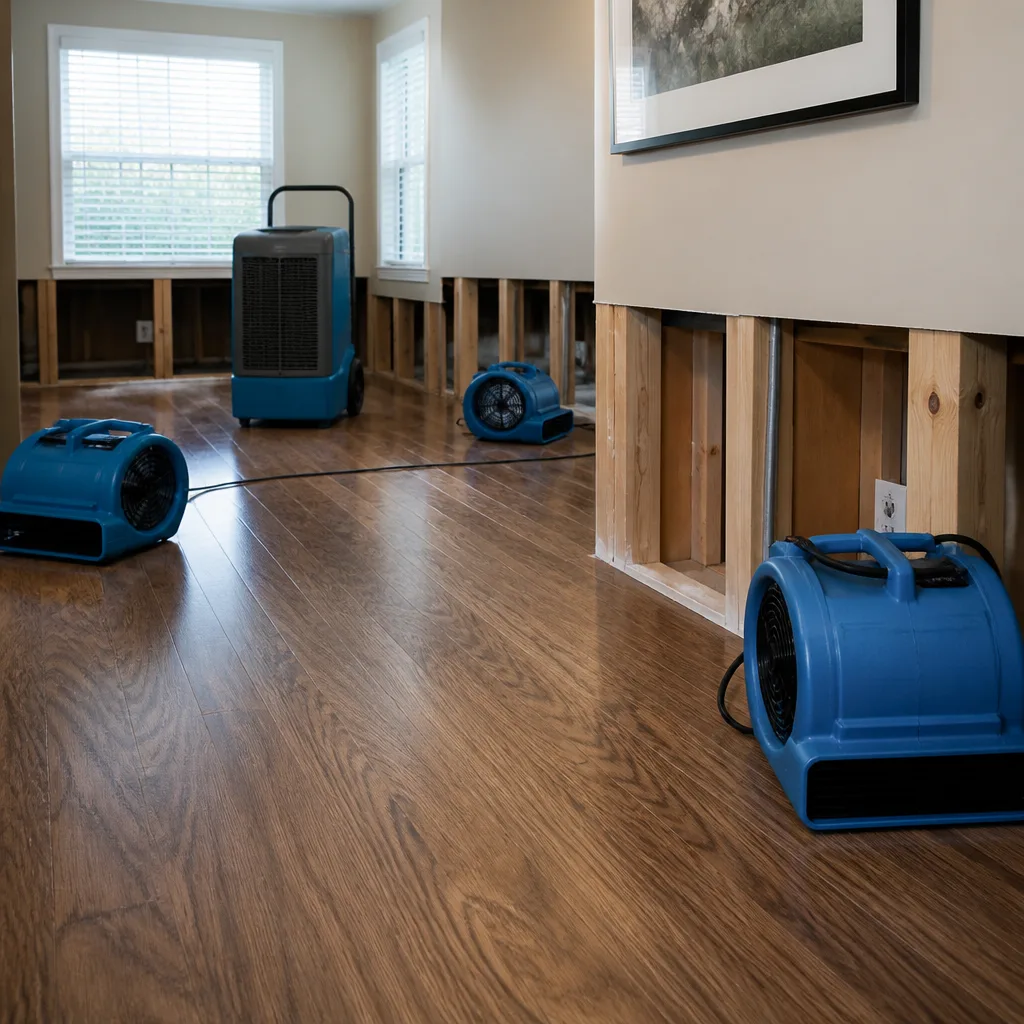
The Complete Water Damage Restoration Guide for Fontana Homeowners explains how professional water damage restoration depends on removing moisture from the air faster than it evaporates from building materials. The chart below breaks down the equipment classes you’ll encounter.
- LGR (Low Grain Refrigerant) dehumidifiers: These are the industry standard for structural drying. They remove significantly more water per kilowatt-hour than conventional dehumidifiers and continue working effectively at lower humidity levels, which is what allows walls and subfloors to reach a documented dry standard. Brands like Dri-Eaz and Phoenix dominate this category.
- Conventional or “consumer” dehumidifiers: The units sold at home improvement stores. They work in basements and crawl spaces under normal conditions, but they lack the capacity and low-humidity performance needed for active structural drying after a water loss.
- Desiccant dehumidifiers: Used as backup or in specific low-temperature environments, these use chemical adsorption rather than refrigeration. They’re less common in Fontana’s climate but relevant for certain commercial or specialty applications.
- Air movers: High-velocity fans that create airflow across wet surfaces. The number and placement matter as much as the unit itself. Professional restoration contractors calculate cubic feet per minute against affected square footage.
- Thermal imaging cameras and moisture meters: These are diagnostic tools, not drying equipment, but they’re essential for locating hidden moisture pockets inside walls and under flooring. A restoration company that doesn’t use thermal imaging is guessing at the scope.
The equipment question to ask is simple: “What class of dehumidifier will be on my job?” If the answer includes “LGR” and a brand name like Dri-Eaz, Phoenix, XPOWER, or B-Air, you’re talking to a restoration contractor. If the answer is vague or references “industrial fans,” you may be talking to a generalist who bought some equipment at a big-box store.
At Dry Line Water Damage, our Dry Line Water Damage home page documents our fleet and approach. We run Injectidry structural-drying systems on many Fontana jobs, which force air through wall cavities and under flooring to dry spaces that would otherwise require cutting open drywall or pulling up floors. That’s the difference between a three-day dry-out and a three-week reconstruction.
How to Evaluate Insurance Claim Experience Before You Sign Anything
Most Fontana homeowners filing a water or fire damage claim will work with an insurance adjuster who uses Xactimate, the software standard for estimating restoration costs. Our Damage Restoration Cost Breakdown: The Fontana Homeowner’s Reference for 2026 details how these estimates affect your final bill. Here’s what most people don’t know: some restoration companies don’t write their own Xactimate estimates. They wait for the adjuster to produce a scope of work, then either accept it or argue over line items after the fact.
This matters because adjusters, through no fault of their own, are managing dozens of claims simultaneously. They may not see the moisture trapped behind your baseboards or the soot residue inside your ductwork. If your restoration contractor isn’t capable of documenting those conditions and writing a detailed, line-item Xactimate estimate that reflects the actual scope, you’ll end up either paying out of pocket for the gap or living with incomplete restoration.
Questions to ask before you sign any work authorization:
- “Do you write your own Xactimate estimates, or do you work from the adjuster’s scope?” A contractor who writes their own estimates is advocating for your claim from the start.
- “Will you provide photo documentation of every affected area before, during, and after the job?” This is standard for insurance-grade restoration work and should never be an add-on.
- “Will you communicate with my adjuster directly?” The restoration contractor and the adjuster should be able to speak the same technical language.
- “What happens if you find additional damage after the job starts?” The answer should describe a documented supplement process, not a vague promise to “handle it.”
Dry Line Water Damage maintains memberships in the Restoration Industry Association (RIA) and IFA, which means we adhere to published industry ethics and best-practice standards. Documentation is part of the job, not an upsell. For Mold Remediation in Fontana work especially, third-party documentation of the containment protocol and clearance testing is what protects you if questions arise later.
Franchise vs. Independent: What the Comparison Actually Involves in Fontana
The national restoration franchises you see advertised on TV and billboards provide a real service: they’ve standardized a process that was historically inconsistent. When you call a large franchise, you generally know what the invoices will look like and that the trucks will show up. That’s not nothing.
But the franchise model has structural trade-offs that Fontana homeowners should understand before they choose based on brand recognition alone:
- Local ownership variability: Each franchise location is independently owned and operated. The brand standards exist, but the actual equipment inventory, technician certification levels, and management quality vary from owner to owner. The franchise brand on the website doesn’t guarantee what’s on the truck in Fontana.
- The franchise fee squeeze: Franchisees pay ongoing royalty fees, typically 6-10% of revenue, to the parent company. That money comes out of the local operating budget. In practical terms, it can mean older equipment, lower technician pay, or pressure to close jobs faster than the drying science allows.
- Volume orientation: Franchise brands are built for scale, which means their local operators often prioritize job count over job depth. A franchise location may run 40 concurrent jobs with one supervisor, while an independent restoration contractor running 15 jobs can put a senior technician on your project for the full duration.
Independent operators have their own trade-offs. They don’t have a national brand’s marketing budget or centralized training infrastructure, which means quality varies even more widely from shop to shop. The evaluation burden falls on you. That’s why the certification and equipment questions in this guide matter so much. Dry Line Water Damage operates as a technical specialist in the Fontana market, running the same commercial-grade equipment used on large-loss restoration jobs without the franchise overhead. We handle Fire Damage Restoration in Fontana with the same documentation discipline we apply to water losses, because insurance claims don’t discriminate by damage type.
The Five-Question Phone Screen for Any Restoration Operator
You have water spreading through your Fontana home and limited time. Here’s a five-question phone screen that will tell you, in under five minutes, whether you’re talking to a restoration contractor or a cleanup crew with a logo.
- “Is the technician coming to my home IICRC-certified for this specific type of damage?” Listen for a specific yes and a discipline. Water restoration and mold remediation are separate certifications. Fire and smoke are separate from both.
- “What class of dehumidifier will you bring?” The only correct answer is LGR. If they hesitate or say “commercial-grade” without naming the class, that’s a red flag.
- “Do you write your own Xactimate estimates?” We covered why this matters above. A “no” or a vague answer means you’ll be managing the insurance scope yourself.
- “Will you document moisture readings before, during, and after drying?” Documented dry means something specific: moisture content measurements taken with a meter and recorded. Insist on this.
- “Who handles mold if you find it during water mitigation?” A restoration contractor with integrated mold remediation capability can handle the full scope under one accountable team. A water-only shop will refer you out, creating a coordination gap and potential liability finger-pointing.
We’ve fielded these calls in Fontana for years. The technically serious companies answer all five questions without blinking. The others either can’t or won’t.
What Fontana’s Climate and Building Stock Mean for Restoration Work
Fontana sits in the Inland Empire’s high-desert transition zone, which means hot, dry summers and mild, occasionally wet winters. That climate profile creates specific restoration conditions that differ from coastal Southern California or the humid Southeast.
Fontana’s dry air is actually an advantage for structural drying during much of the year. Low ambient humidity allows LGR dehumidifiers to work faster. But the same dry climate masks a problem: moisture trapped inside wall cavities can evaporate slowly while the surface appears dry. A homeowner who watches a wet spot on the ceiling disappear might assume the problem is solved. Thermal imaging tells a different story. We’ve opened Fontana walls months after a “resolved” leak and found active mold growth hidden behind dry paint.
The housing stock matters too. Fontana has a mix of mid-century stucco construction and newer tract-home development. Stucco exteriors with wood framing create a drying challenge: the stucco holds moisture against the framing, lengthening drying times and increasing the risk of hidden rot. Newer homes with open floor plans and engineered lumber dry faster but can develop warping issues if the drying process isn’t managed carefully. A restoration contractor familiar with Fontana’s specific building inventory understands these differences.
One more local factor: Fontana’s growth means many homes are under warranty from the builder. If a plumbing failure occurs in a newer Fontana home, documentation of the restoration process may be required for warranty claims or construction-defect litigation. Ask your restoration contractor whether they provide the documentation trail that would hold up in that context. Not all do.
Common Mistakes to Avoid
- Choosing based on brand recognition alone: We’ve covered the franchise variability issue. The most advertised brand in Fontana is not necessarily the most technically capable operator in Fontana.
- Accepting “we’ll dry it with fans” as a plan: Air movement without dehumidification pushes moisture around the house. You need both, sized correctly for the affected square footage.
- Skipping the moisture documentation: If you don’t have written moisture readings showing the structure reached a dry standard, you have no way to verify the job was done. You also have no evidence for your insurer if problems surface later.
- Hiring separate vendors for water and mold: When a water-only shop finds mold and hands you off to a mold remediation company, the two vendors can blame each other for incomplete work. One accountable team handles the full scope without the gap.
- Waiting to file the claim: Insurance policies require prompt reporting. Delays give the carrier grounds to dispute coverage. Document everything before you call, but call the same day the damage occurs.
- Not asking about Injectidry or equivalent structural drying capability: If the answer is demolition, the equipment inventory is limited. In many Fontana homes, Injectidry systems can dry wall cavities and under-floor spaces without cutting out drywall or pulling up flooring, which means a smaller repair scope and a faster return to normal.
- Choosing on price: The low bid on a restoration job usually reflects a smaller equipment package, less documentation, or lower-skilled labor. None of those save you money in the long run.
When to Call a Professional
Any water release beyond a small, contained spill warrants a professional assessment. Specifically: water that has penetrated drywall, flooring, or cabinetry; any water event that ran longer than 24 hours; any visible mold growth larger than a few square feet; any fire or smoke damage regardless of size; and any water event involving sewage or contaminated water, which carries health risks that require containment and protocol-driven remediation. Fontana homeowners should also call immediately if they smell a musty odor with no visible source. That odor indicates hidden moisture, and hidden moisture is exactly what thermal imaging and moisture mapping are designed to find. Dry Line Water Damage offers free estimates in Fontana – call (833) 589-5317 and we’ll assess the scope and document what we find.
See the difference
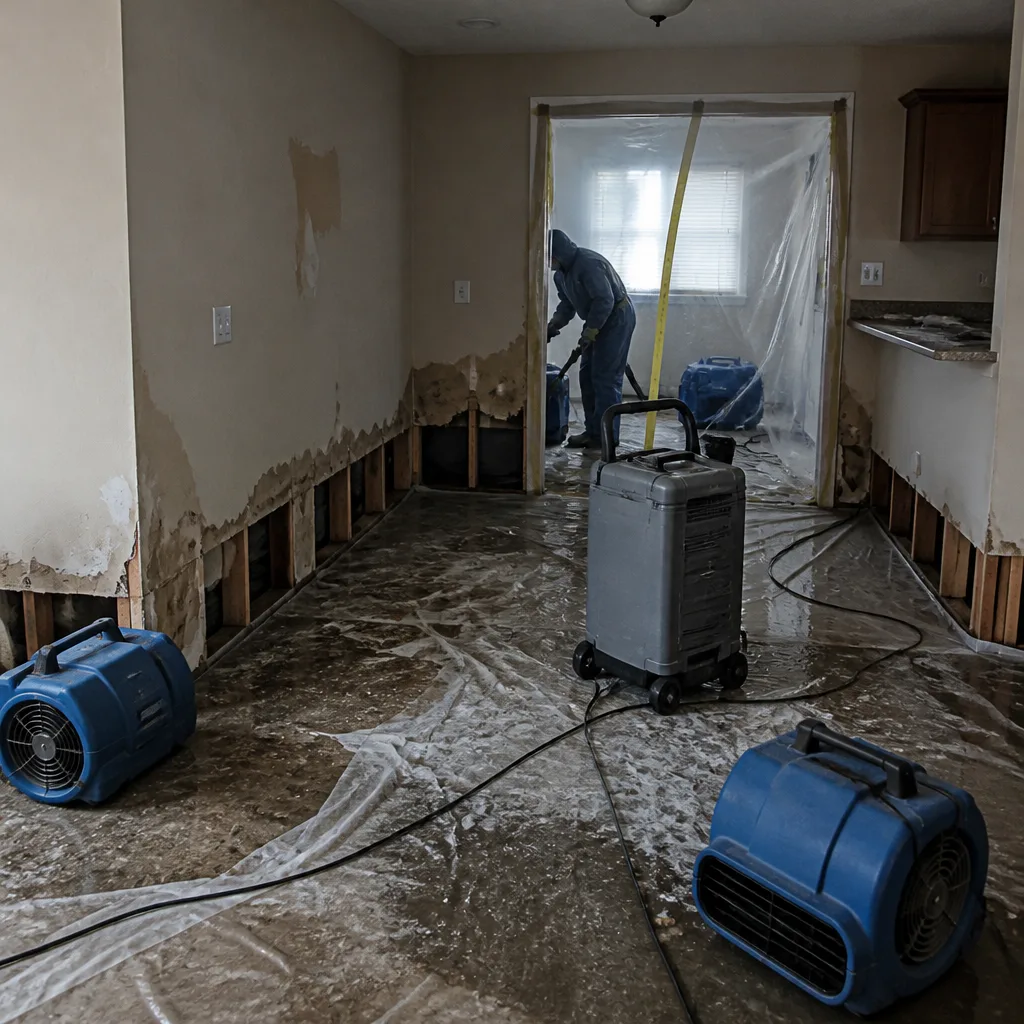 Before
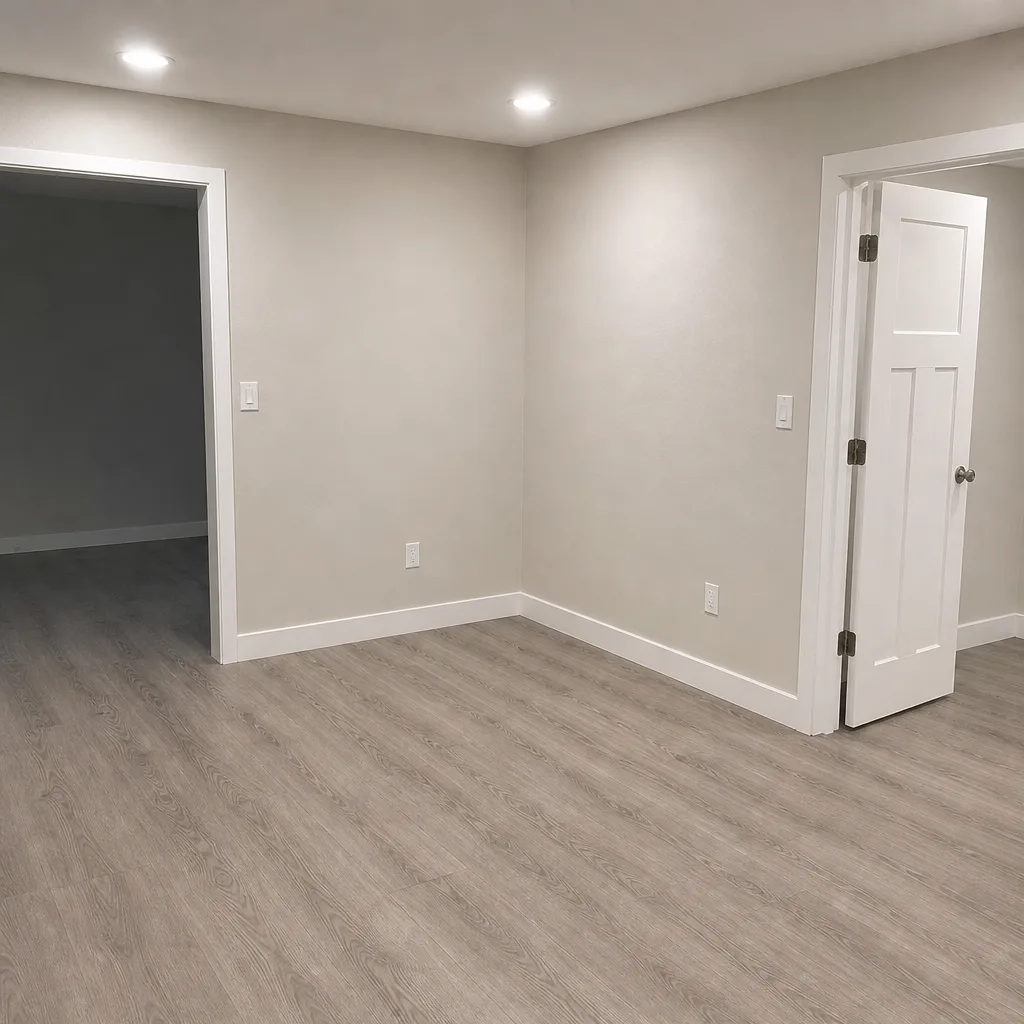 After
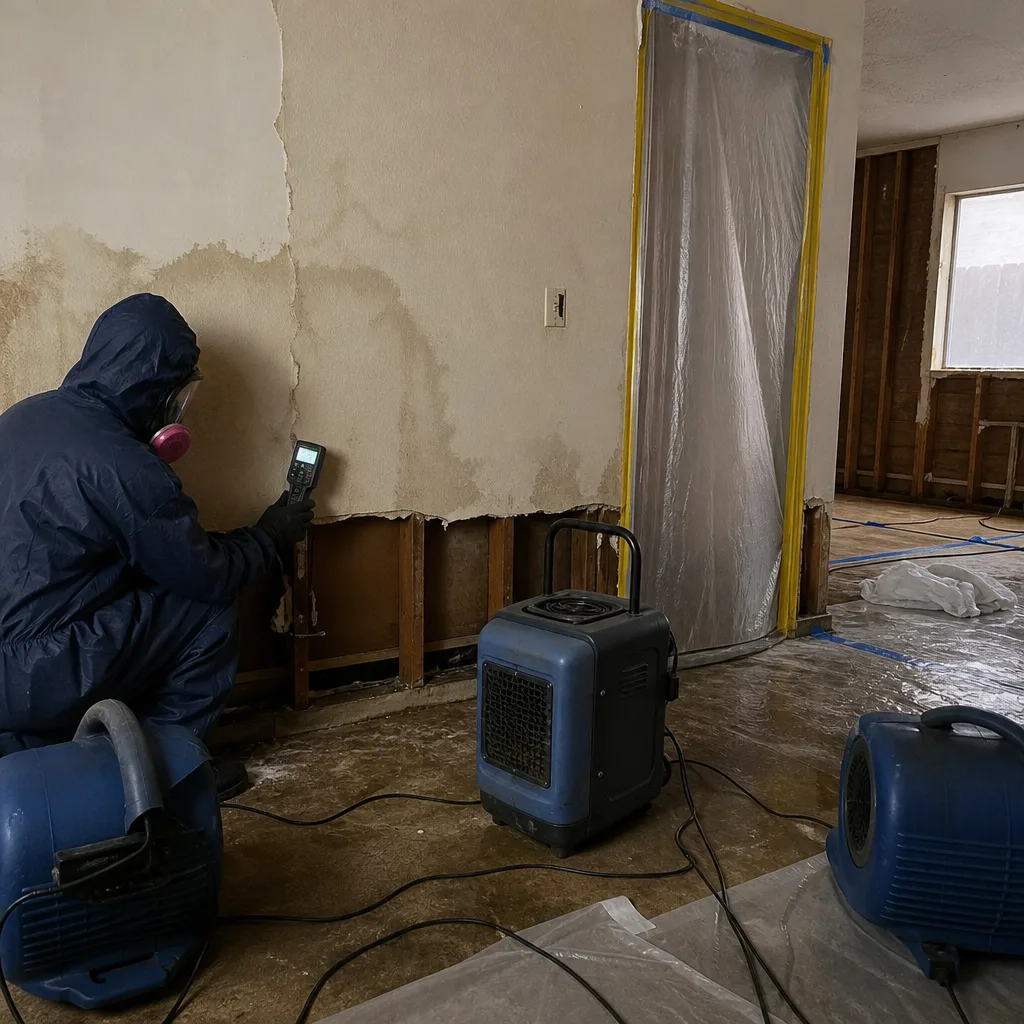 Before
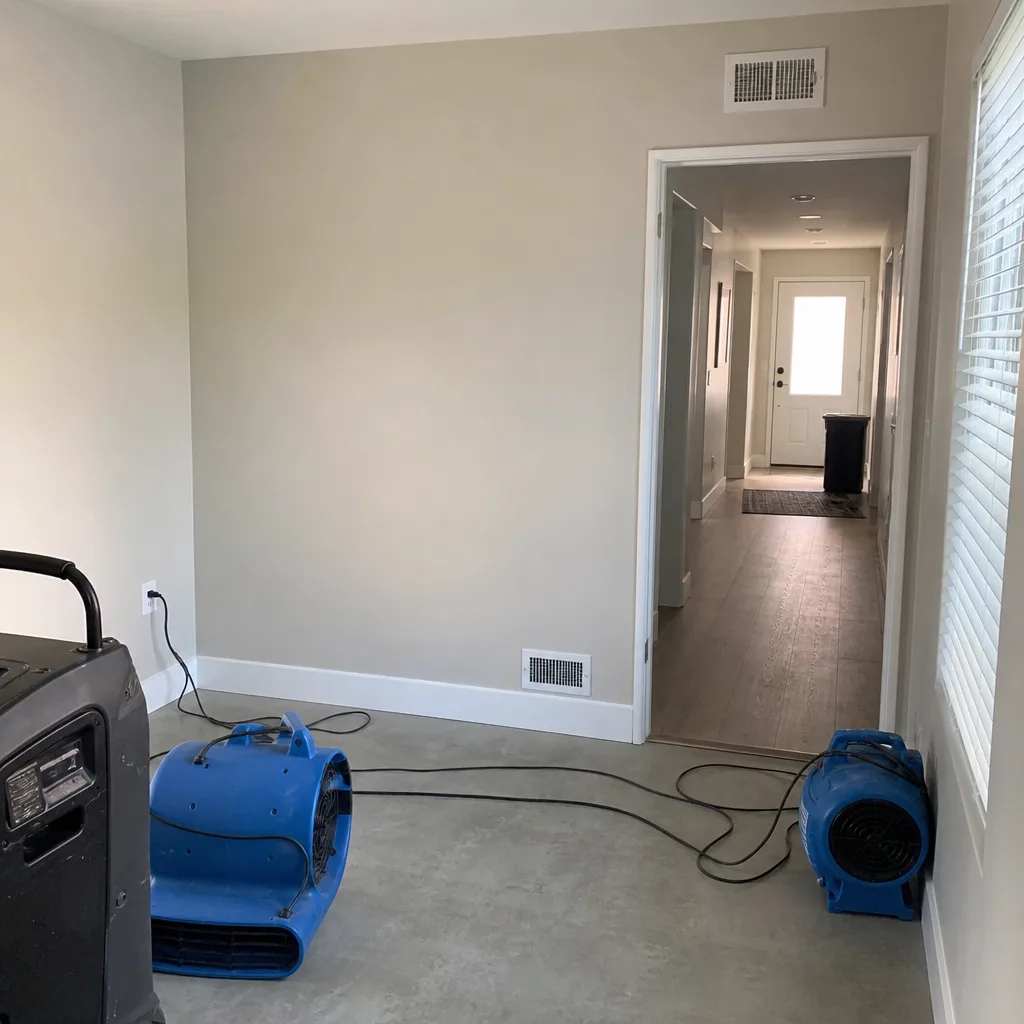 After
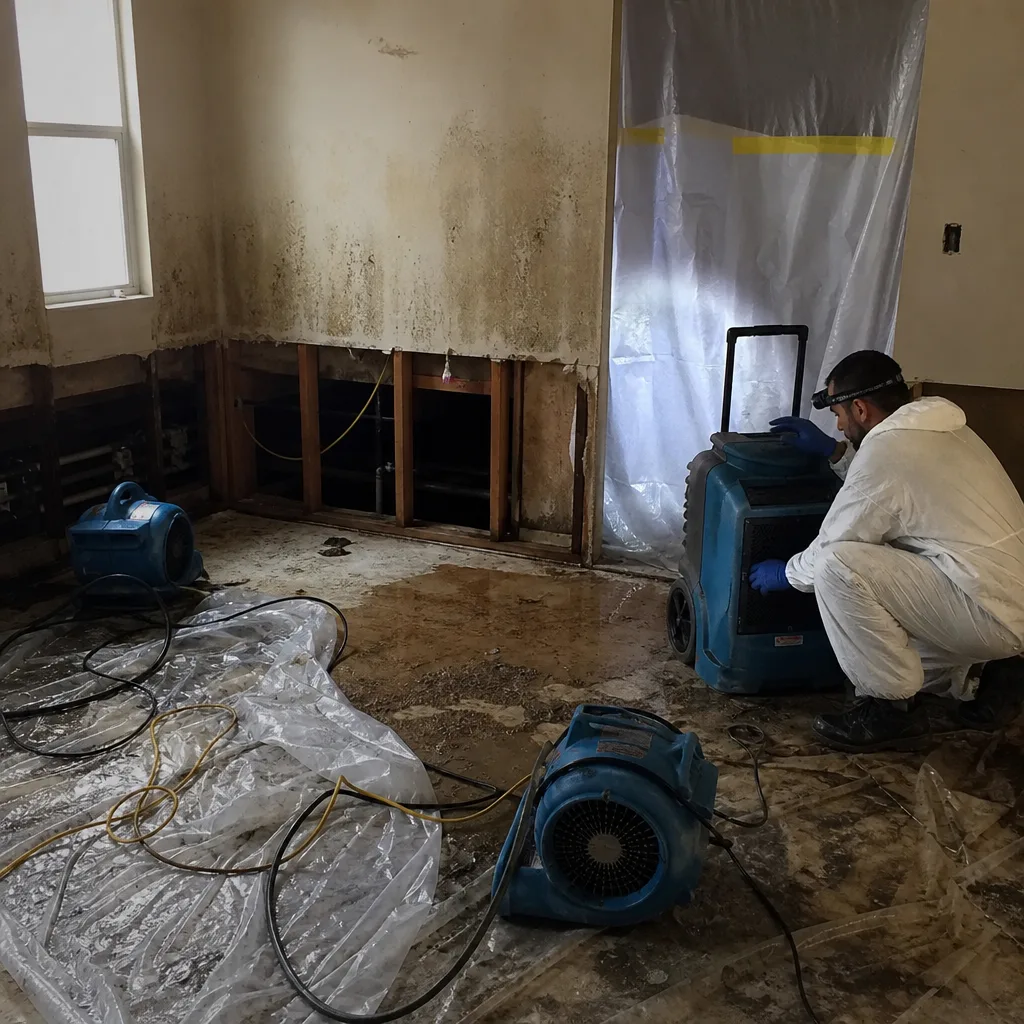 Before
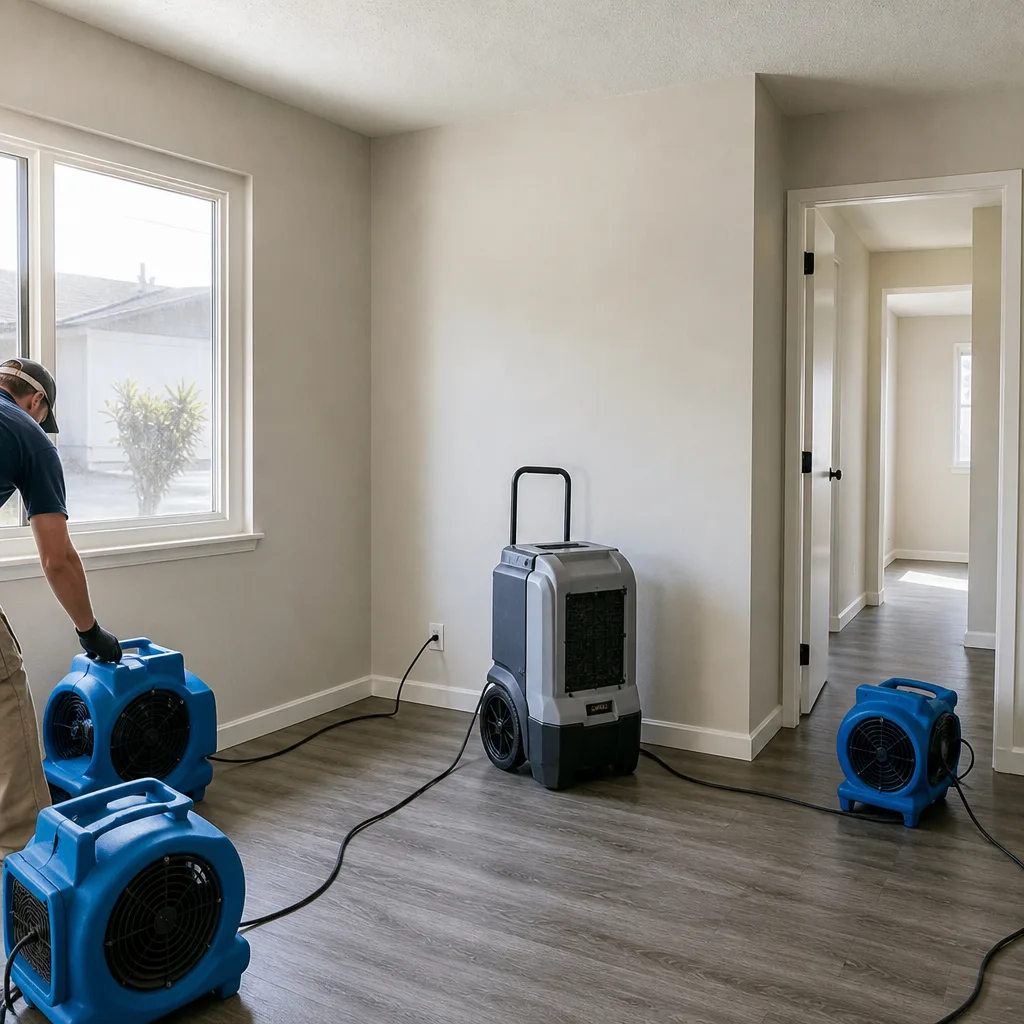 After
Frequently Asked Questions
Look for IICRC certification held by the technician who will perform the work, LGR-grade dehumidification equipment from brands like Dri-Eaz or Phoenix, and a documented process for insurance claims including Xactimate estimate writing. Any restoration company in Fontana that can’t answer specific questions about these three areas is not operating at a professional standard.
Ask for the certification number and verify it through the certifying body. Company-level certification claims mean nothing if the technician on site isn’t certified. A legitimate IICRC-certified operation in Fontana will provide this information without hesitation.
No, and hiring separate vendors creates coordination gaps and potential liability finger-pointing. Look for a restoration contractor in Fontana with integrated water damage and mold remediation capability under one accountable team. This is a key question to ask during the phone screen.
Most homeowner policies cover sudden and accidental water damage, such as a burst pipe or appliance failure. Gradual leaks and flooding from external sources typically require separate coverage. A restoration contractor experienced with Fontana insurance claims can review your policy language and document the damage in a way that supports your claim. Call (833) 589-5317 for guidance on your specific situation.
In Fontana’s dry climate, most structural drying completes in 3 to 5 days with proper LGR equipment. However, the actual timeline depends on the affected materials, the water category, and how long the water sat before mitigation began. Stucco-clad walls can extend drying times. Documented moisture readings, not visual inspection, determine when the structure is dry.
The difference is equipment class and process documentation. A restoration contractor runs LGR dehumidifiers and air movers sized for the affected square footage, uses moisture meters and thermal imaging to confirm hidden moisture is addressed, and provides written documentation of drying progress. A handyman with fans and a shop vac is not performing restoration, and the moisture left behind will cause mold within weeks.
The Bottom Line
The brand on the truck matters less than the equipment on the truck and the certification held by the person driving it. Fontana homeowners facing water, mold, or fire damage should evaluate restoration companies on three technical criteria: IICRC certification at the technician level, LGR-grade equipment from recognized brands like Dri-Eaz and Phoenix, and insurance documentation capability including Xactimate estimate writing. Ask the five screening questions. Verify the answers. Choose based on documented technical capability, not marketing. Your home’s structural integrity depends on it.
Written by the team at Dry Line Water Damage, serving Fontana since 2013.