

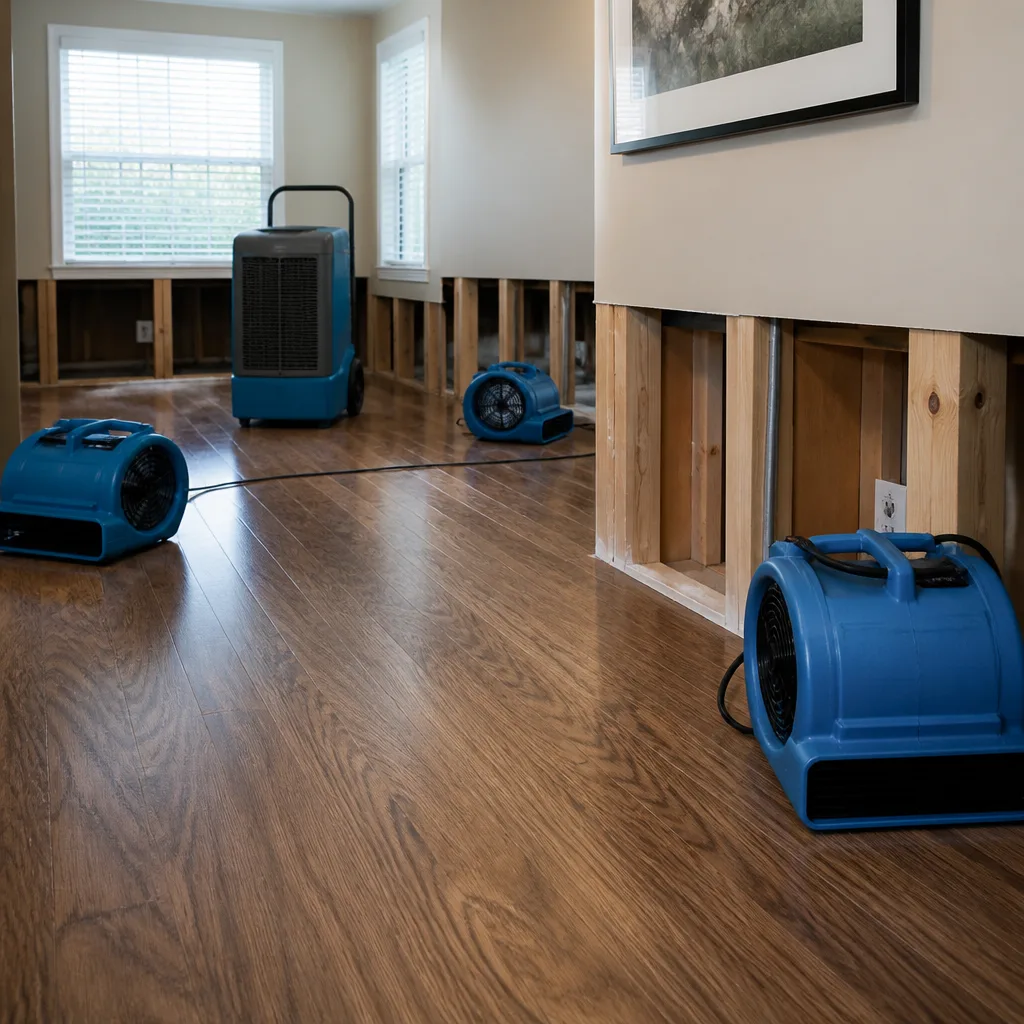
 Water damage drying
 Fire & smoke cleanup
 Mold remediation
 Storm response
 Sewage cleanup
 Reconstruction
Free visual inspection and a written scope of work before any mitigation begins - photos, moisture readings, and drying logs go in your claim file
The scope we write is the scope we bill. Anything new gets shown to you, in writing, before we touch it.
Get your free estimateFast, Reliable Mold Remediation Across Cathedral City
Mold remediation in Cathedral City typically costs $1,800 – $6,500 depending on containment needs, affected square footage, and whether attic or wall cavities are involved. Most jobs here are tied to one thing: flat and foam roofs that fail during monsoon downpours and bake mold into attics at 110°F. We know Cathedral City block by block, from the 92234 tracts near Date Palm Drive to the golf-course communities off 92235. If you smell something musty after a storm, call (833) 589-5317. We’ll tell you straight whether you need full remediation or a targeted treatment.
Why Dry Line Water Damage Is Cathedral City’s Preferred Mold Remediation Company
Cathedral City homeowners keep our number because we understand what 50-year-old stucco and flat roofs do in this climate. We don’t send a generalist. We send an IICRC-certified crew that runs Dri-Eaz and Phoenix dehumidifiers, the same gear large-loss restoration contractors use, and we document every moisture reading before and after drying. That matters when your adjuster asks for proof.
Glen Pacheco built this company on showing up with the right equipment and a written scope before work starts. Cathedral City customers don’t need a sales pitch. They need someone who knows why a 1974 tract home off Ramon Road smells like mildew every August. We do. Our response time to Cathedral City is same-day for active mold outbreaks, and we coordinate directly with your insurance carrier so you’re not translating moisture logs into adjuster-speak.
We’re an RIA member and IICRC-certified. That means our process is auditable, not anecdotal. When we say your attic is dry, we mean our moisture meters say so, not that it looks dry from the hatch.
Restoration work we handle
Mold Removal Specialist in Cathedral City
Mold Removal Specialist work in Cathedral City means rebuilding the humidity and moisture profile of a home that was never designed for monsoons. When we’re called, it’s usually because a homeowner saw staining on a ceiling, smelled something stale, or an inspector flagged elevated spore counts. The job involves containment, HEPA air scrubbing, removal of affected drywall or insulation, antimicrobial treatment, and structural drying with Injectidry where cavities are wet. In Cathedral City, a typical mold removal job runs $2,200 – $4,800 depending on access and how far the growth spread behind stucco.
Ceiling and Attic Mold After Monsoon Damage
The most common call from Cathedral City is a ceiling stain that appeared a week after a storm. By then, mold has usually established in the attic insulation above it. We check the roof membrane first, because treating the mold without fixing the water source means doing the job twice.
Wall Cavity Treatment Without Unnecessary Demolition
Stucco hides moisture. We use Injectidry panels to dry wall cavities through small access points, which preserves the stucco and reduces the repair scope. Cathedral City homeowners often assume a wet wall means tearing out the whole exterior. It usually doesn’t.
Black Mold Removal in Cathedral City
Black Mold Removal in Cathedral City requires the same containment and air-scrubbing discipline as anywhere else, but this climate adds a wrinkle: black mold often colonizes in attics that visually dry within a day, which makes detection harder than in humid coastal cities. We isolate the affected zone under negative pressure, HEPA-vacuum structural surfaces, remove and bag contaminated materials, and treat remaining surfaces with EPA-registered antimicrobials. For a contained bathroom or ceiling area, Cathedral City homeowners typically pay $1,800 – $3,200. A full attic with insulation replacement runs $4,500 – $6,500.
Post-Remediation Clearance Testing
We don’t call a mold job done until third-party clearance testing confirms spore counts are back to background levels. In Cathedral City, we recommend testing after every attic job because the heat can mask residual moisture that would regrow mold within weeks.
Documenting Everything for Your Insurer
We photograph containment, moisture maps, and material disposal. Your adjuster gets a line-item report, not a phone call summary. If your policy covers mold remediation in Cathedral City, we’ll help you substantiate it.

Trusted Brands We Service in Cathedral City
We run B-Air and Phoenix air movers, Dri-Eaz dehumidifiers, and Injectidry drying panels on Cathedral City jobs. These aren’t rental units from the hardware store. They’re the same commercial systems used on large-loss commercial projects. That matters in a city where a monsoon storm can leave three rooms and an attic wet at once. If you had a previous remediation attempt that came back, the difference is usually the equipment and the documentation. We bring both.
Common Mold Remediation Problems We See in Cathedral City Homes
- Hidden attic mold after flat-roof ponding: Water pools on low-pitch and foam roofs during monsoon bursts, then seeps into insulation. The 110°F attic heat dries the visible surface in hours, but trapped moisture under the roof sheathing keeps growing mold for weeks before you smell it.
- Stucco walls holding moisture from slab runoff: Desert-graded drainage pushes monsoon runoff toward foundation lines. Stucco wicks that moisture upward, and by the time you see staining at the baseboard, mold has usually worked into the wall cavity.
- Category misclassification of monsoon water: A roof leak from monsoon rain is rarely clean water. It picks up roof debris, bird droppings, and desert dust. Treating it as Category 1 water leads to incomplete remediation and recurring mold.
- Older tract homes with no attic ventilation: Many 1960s – 1980s Cathedral City homes were built without modern ridge or soffit vents. Heat and humidity build in the attic, and after any water intrusion, that sealed space becomes an incubator. We check ventilation as part of every job.
See the difference
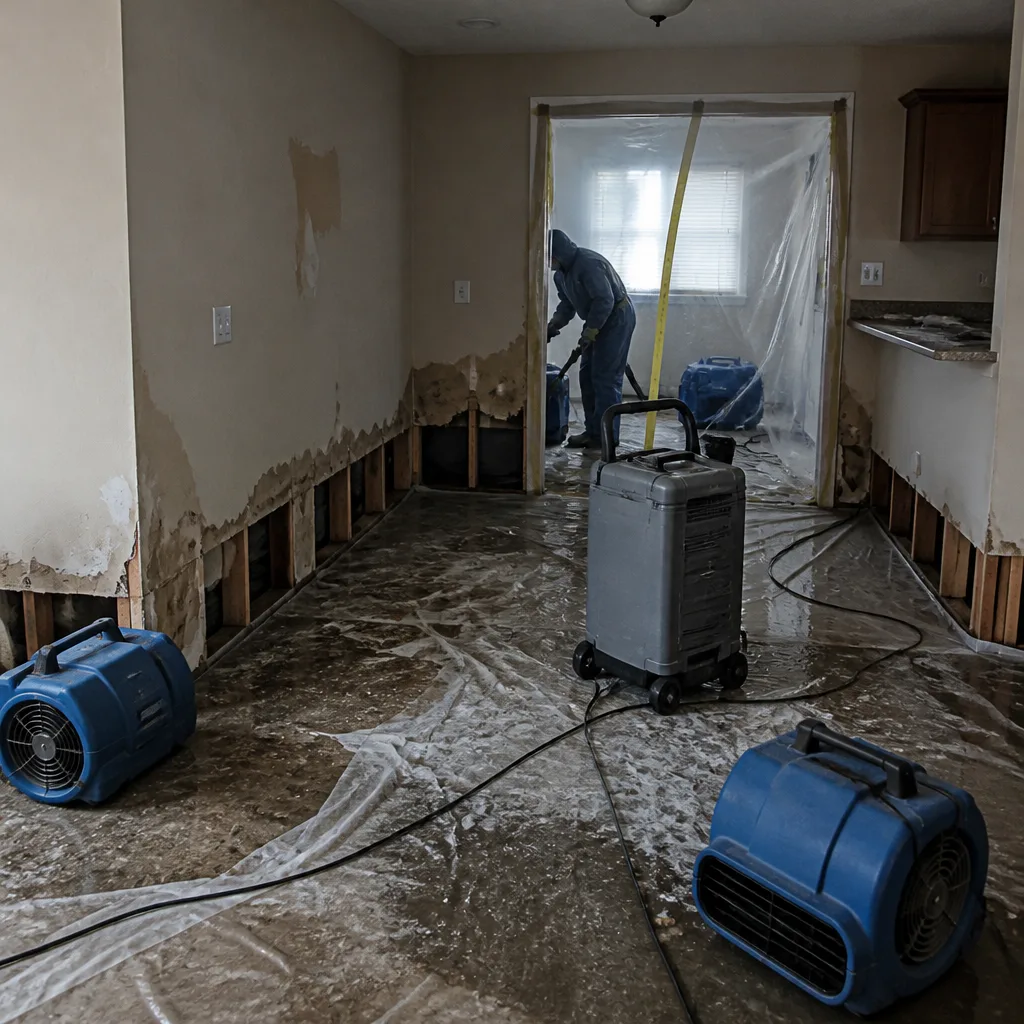 Before
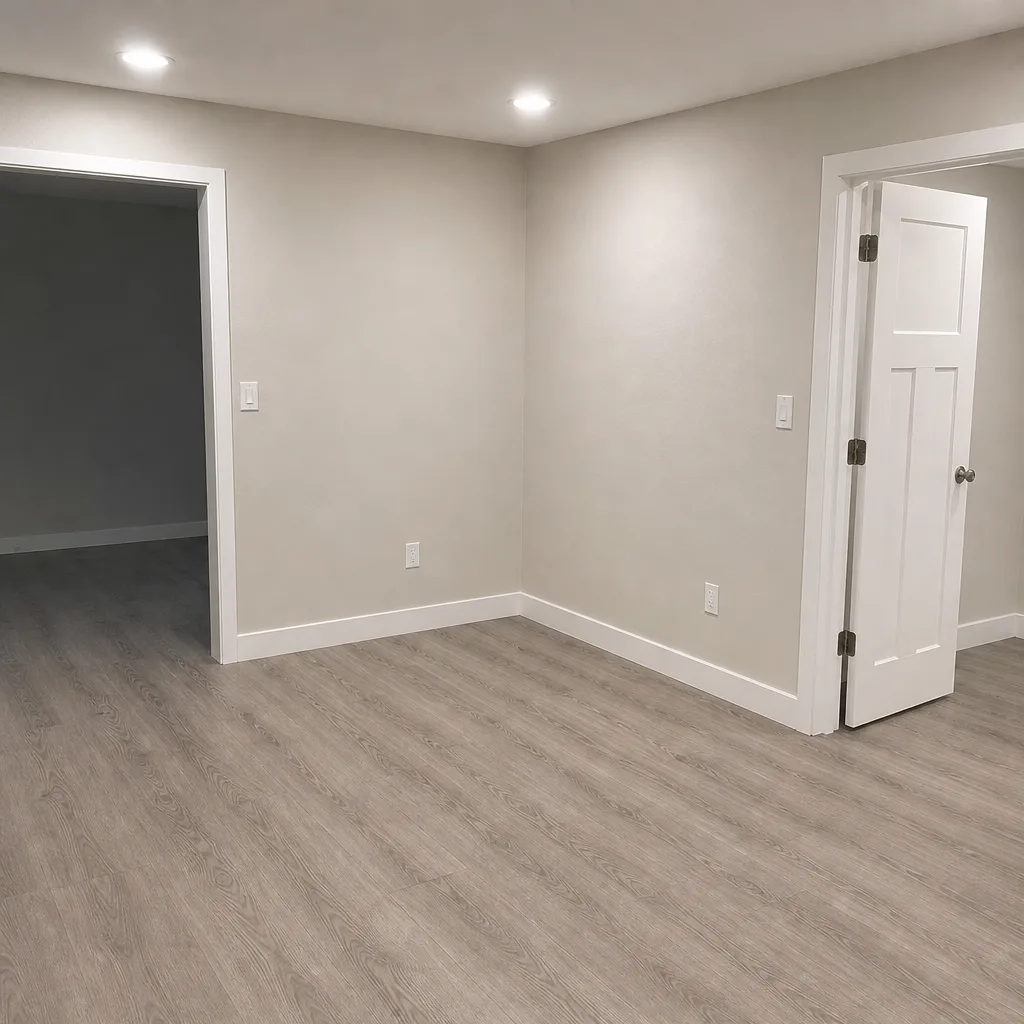 After
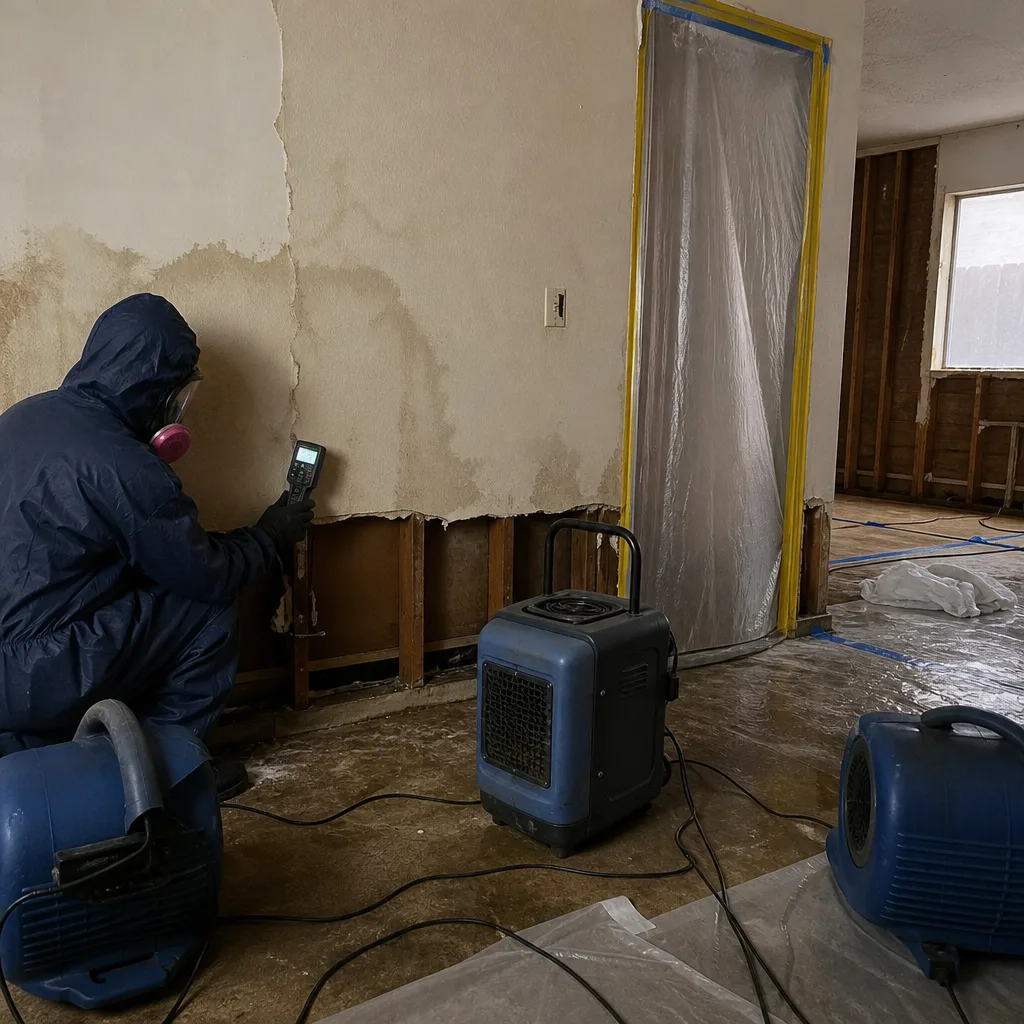 Before
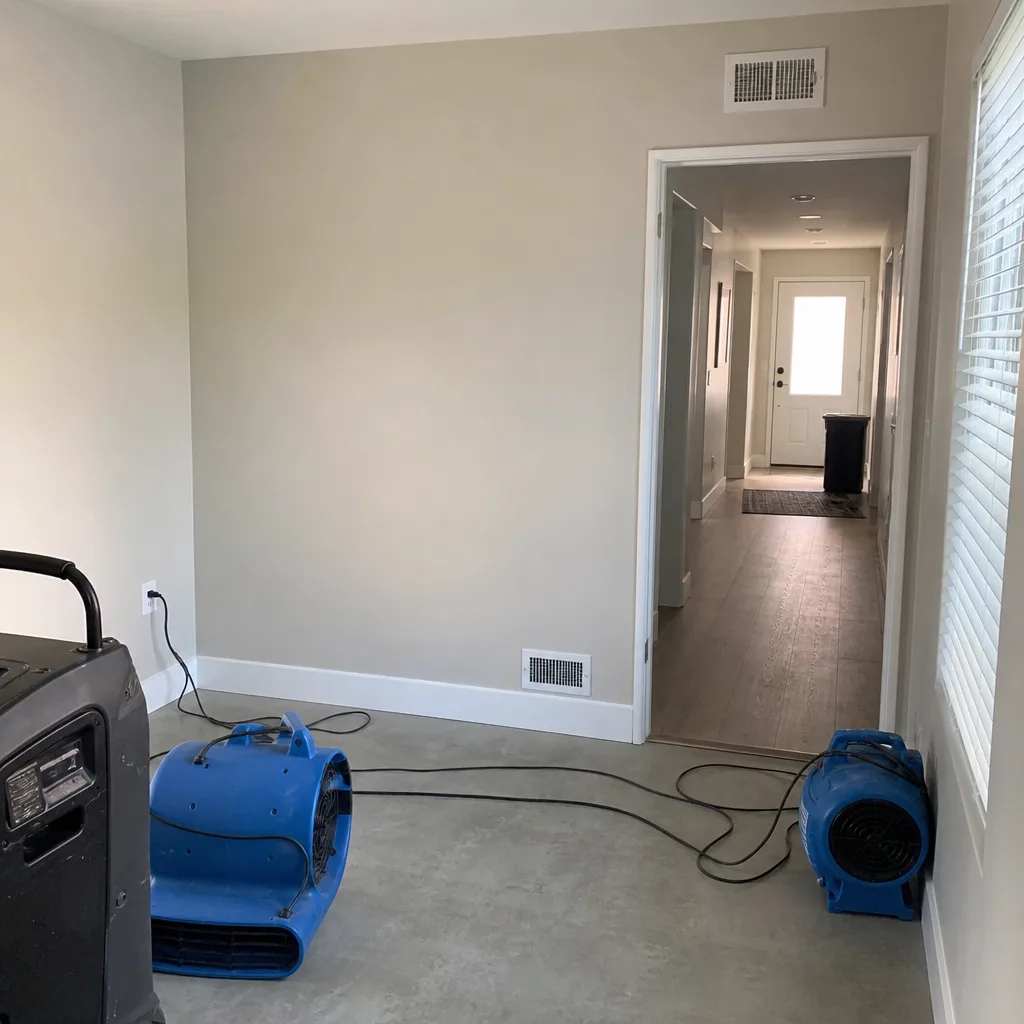 After
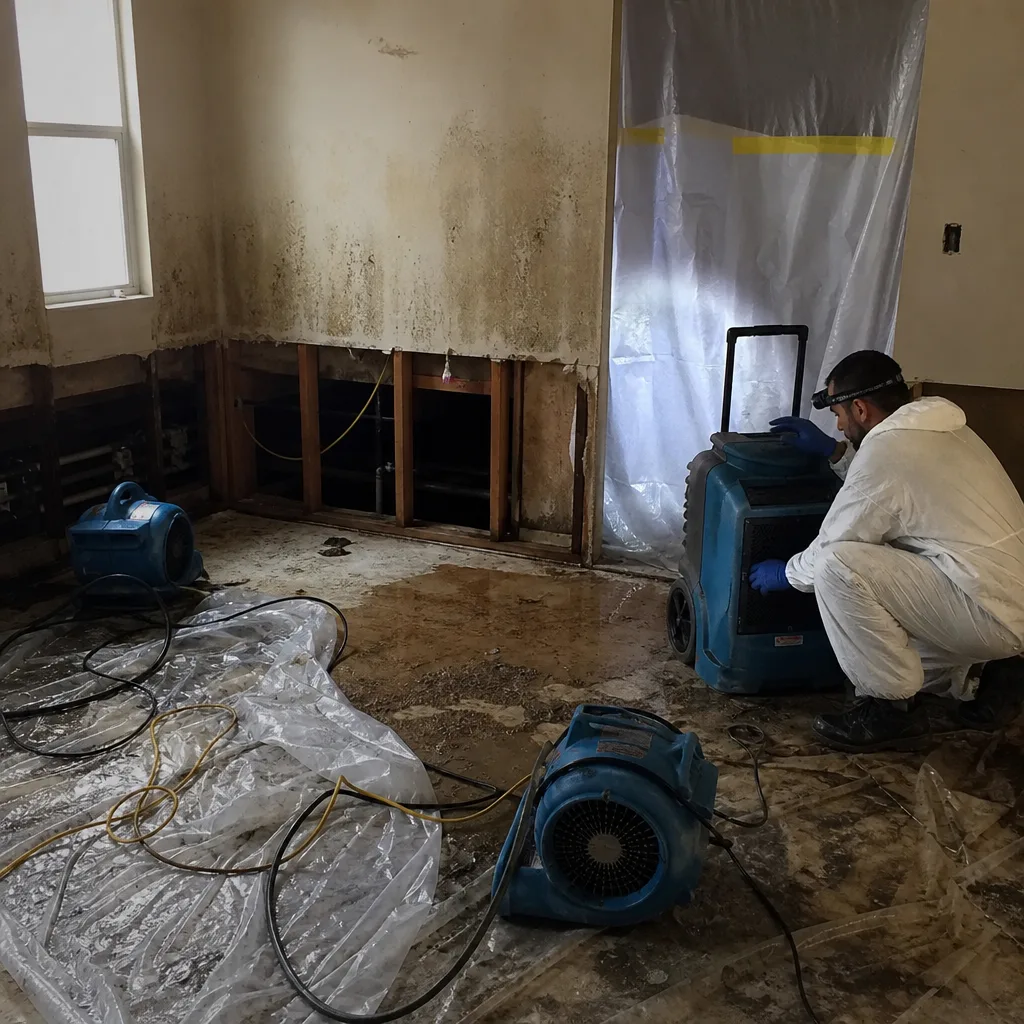 Before
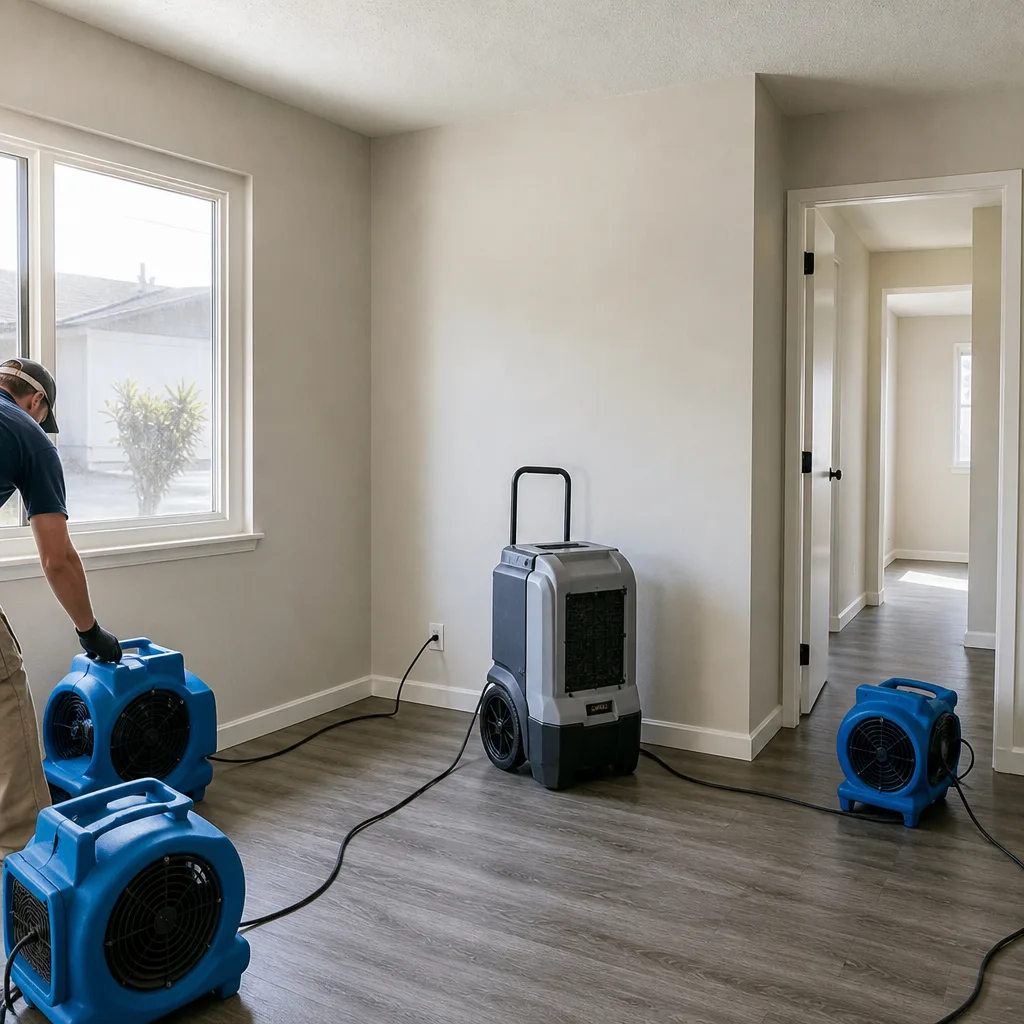 After
Pricing for Mold Remediation in Cathedral City, CA
- Spot treatment (single bathroom, small ceiling area): $1,200 – $2,200
- Contained mold removal, one room or ceiling section: $1,800 – $3,200
- Full attic mold remediation with insulation removal: $4,500 – $6,500
- Wall cavity drying with Injectidry (per wall section): $700 – $1,400
- Clearance testing and report: $350 – $600
What moves the price in Cathedral City is attic access, whether stucco has to be opened, and how far contamination spread before anyone noticed. We give you a written scope before any work begins, so there’s no mystery line item after the fact. Call (833) 589-5317 for a free estimate. We’ll come out, moisture-map the area, and tell you what you’re actually dealing with.
We Also Serve Cities Near Cathedral City
Our crews handle Mold Remediation across the Coachella Valley. We work regularly in Rancho Mirage, Palm Springs, Thousand Palms, and Palm Desert, which means we stock the same equipment and follow the same IICRC process whether your home is in Cathedral City or just across the wash.
Serving Cathedral City, CA — Our Local Coverage Area
We’re based in the Cathedral City area and know this community well. Use the map below to see our service coverage — if you’re nearby, we can almost certainly help.
FAQs About Mold Remediation in Cathedral City
Mold begins forming within 24 – 48 hours of water intrusion, but in Cathedral City’s heat, spore growth accelerates faster than in coastal climates. A monsoon roof leak on a Friday can produce visible attic mold by Monday. The heat dries the surface and hides the problem, so call (833) 589-5317 the day you notice a stain or musty smell, not after your handyman takes a look.
Flat and foam roofs on 1960s – 1980s Cathedral City tract homes are the single biggest mold driver we see. When monsoon rain pounds a low-pitch roof, water ponds instead of draining. It then seeps through cracked sealant, wets the insulation, and the attic heat bakes the moisture into the framing. Homeowners never see a ceiling stain because the water soaks upward into insulation before gravity pulls it down. We find these with moisture meters, not eyeballs.
Monsoon runoff in Cathedral City is typically Category 2, sometimes Category 3. It carries roof debris, bird and rodent droppings, and fine desert dust that accumulates during dry months. Treating it as clean water is the most common mistake we correct on prior failed remediations. We classify the water before we design the drying plan.
In most Cathedral City homes, yes. We use Injectidry panels to pull moisture out of wall cavities through small drilled access points. The stucco stays intact. We only open stucco when structural damage or severe contamination is already present, and we document why before we cut. Our goal is to dry the framing, not gut your exterior.
Yes, every mold remediation job we run includes EPA-registered antimicrobial application to affected surfaces after physical removal and drying. We don’t rely on bleach or hardware-store sprays. The treatment is documented as part of your insurance file, and we re-test moisture before we close the containment. Call (833) 589-5317 if you have more questions about our process.
We Were Called to a 1972 Stucco Home Near Cathedral Canyon
We were called to a 1972 stucco home near the Cathedral Canyon golf course after a monsoon downpour pooled on the flat roof and dripped into the attic. Our techs used moisture mapping to find elevated readings in the ceiling joists and drywall, then set up containment and air movers to dry the structure. After antimicrobial treatment, the homeowner avoided a full attic pack-out, and we logged the drying process for their insurance. That’s the job done right here in Cathedral City: documented, contained, and dry to a measurable standard.
If you’re in Cathedral City and suspect mold in your attic, walls, or crawl space, call (833) 589-5317 today. Glen Pacheco and our IICRC-certified crew will give you a straight assessment and a written scope before any work begins. Serving Cathedral City, the 92234 and 92235 zip codes, and all surrounding Coachella Valley communities.
Written by Glen Pacheco, Owner at Dry Line Water Damage, serving Cathedral City and the Coachella Valley.