


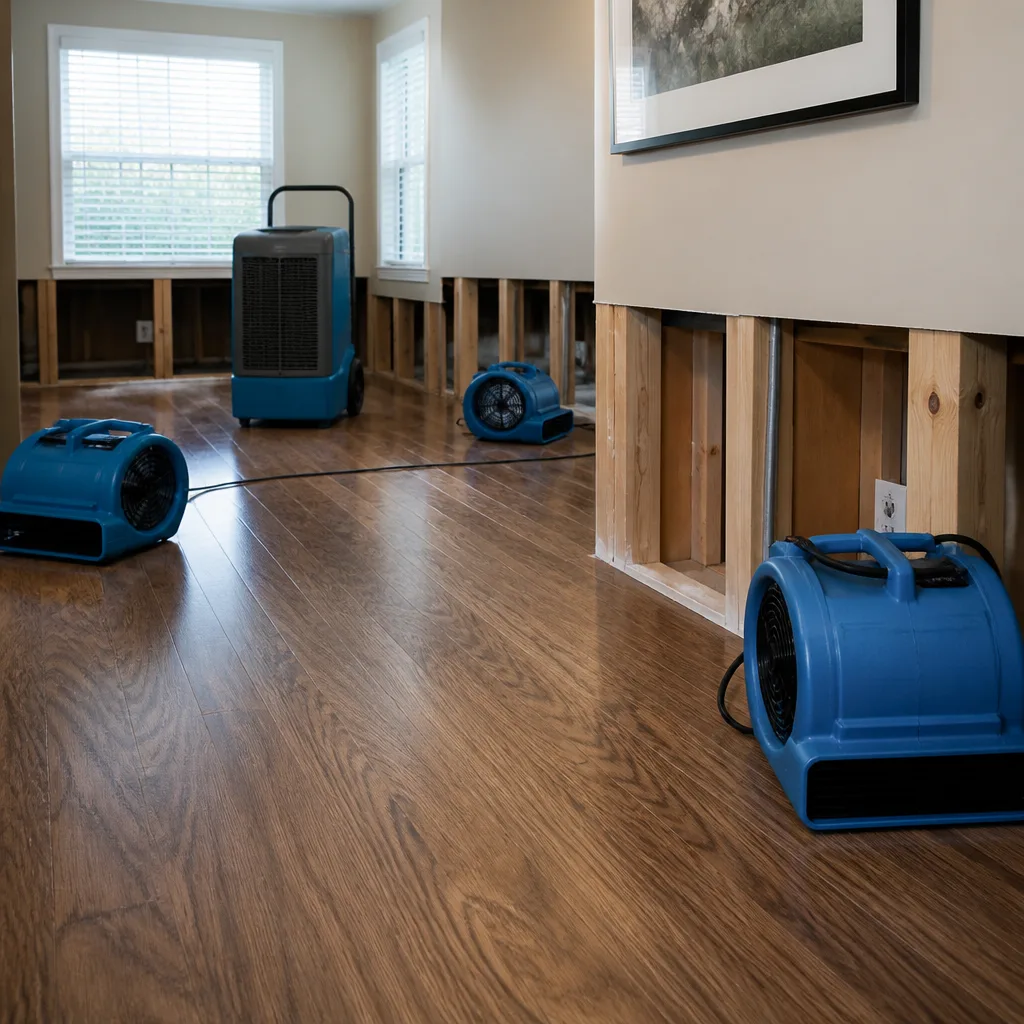
 Water damage drying
 Fire & smoke cleanup
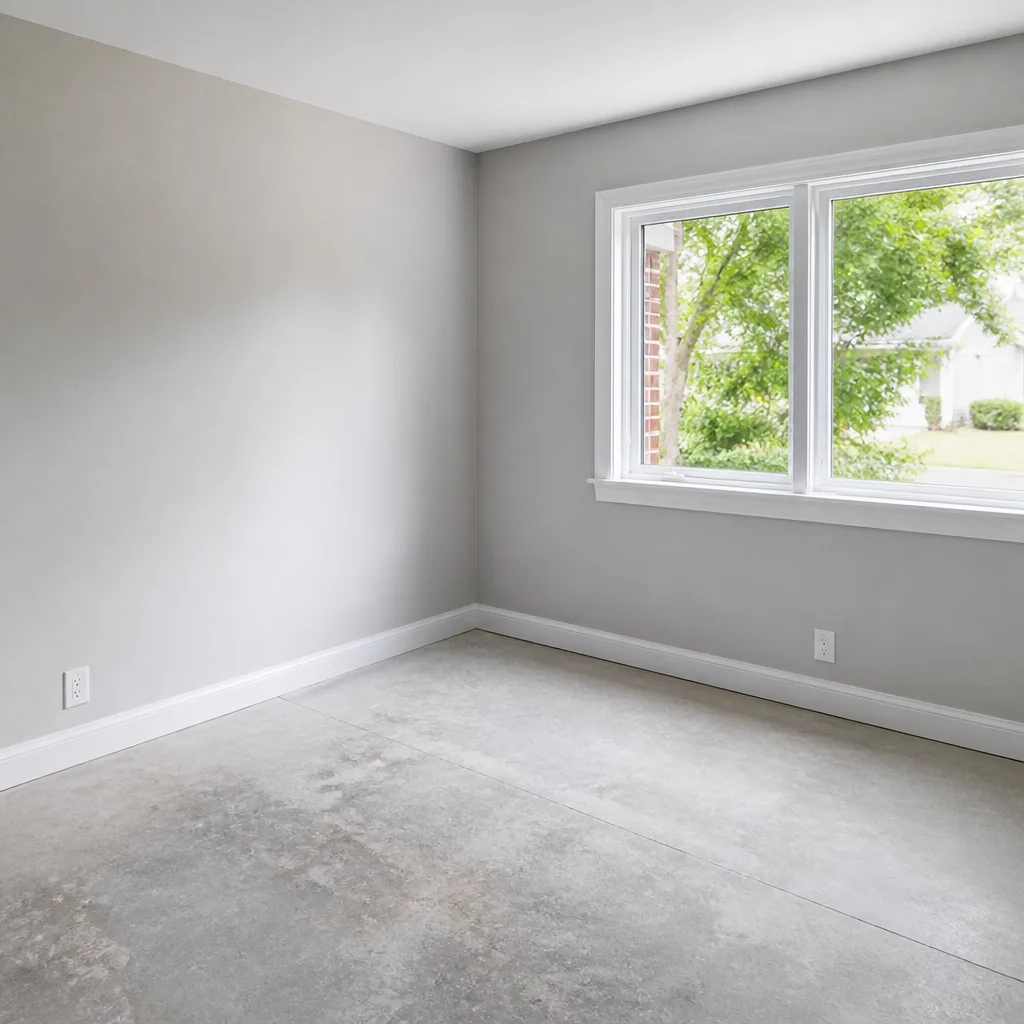 Mold remediation
 Storm response
 Sewage cleanup
 Reconstruction
Free visual inspection and a written scope of work before any mitigation begins - photos, moisture readings, and drying logs go in your claim file
The scope we write is the scope we bill. Anything new gets shown to you, in writing, before we touch it.
Get your free estimateFast, Reliable Mold Remediation Across Colton
Mold remediation in Colton typically runs $1,800 to $6,500 depending on how far the growth has spread and whether wall cavities or HVAC ducting are involved. Our crews know the 92324 housing stock well: mid-century stucco tract homes on slab, older wood-frame rentals near the rail corridor, and mobile homes in the more modest pockets. When a Colton homeowner or landlord calls, we trace the water entry point first, not just the visible stain. That means looking at wind-lifted shingles, cracked stucco, and door flashing before we ever set containment. Call (833) 589-5317 for a free estimate and we’ll walk you through the scope in plain terms.
Why Dry Line Water Damage Is Colton’s Preferred Mold Remediation Company
We’re an IICRC-certified operation, which matters in a city where mold calls often start as wind-damage calls. The certification means our process follows a documented third-party standard, not a checklist we wrote ourselves. Colton customers get the same equipment and protocols we run on large-loss commercial jobs: Dri-Eaz dehumidifiers, Phoenix air movers, and Injectidry systems for drying inside wall cavities without tearing out every sheet of drywall.
Our crew lead, Glen Pacheco, has worked restoration across the Inland Empire long enough to know that Colton’s rail-and-industrial belt creates a soiling pattern most restoration companies never see. Diesel soot and vibration-related cracking in older stucco near the tracks change how we approach containment and cleaning. We don’t skip the air scrubber on a Colton mold job the way a cheaper outfit might, because we know what’s settled into those wall cavities.
Response time to Colton is direct – we dispatch from our Fontana base and are typically on site within hours for active mold growth, not days. For landlords managing units near Mount Vernon Ave or Grand Terrace, that speed matters because every day of delay pushes spores further through a single-story footprint.
Restoration work we handle
Professional Mold Removal in Colton
Professional Mold Removal in Colton starts with identifying what actually got wet and why. In a slab-foundation stucco home, water doesn’t drain into a crawl space – it travels horizontally under finished flooring and wicks up into drywall. That’s why we don’t just spray the baseboard and call it done. We cut a small inspection opening, run moisture mapping across the affected wall, and document readings before and after drying.
Containment and Air Filtration
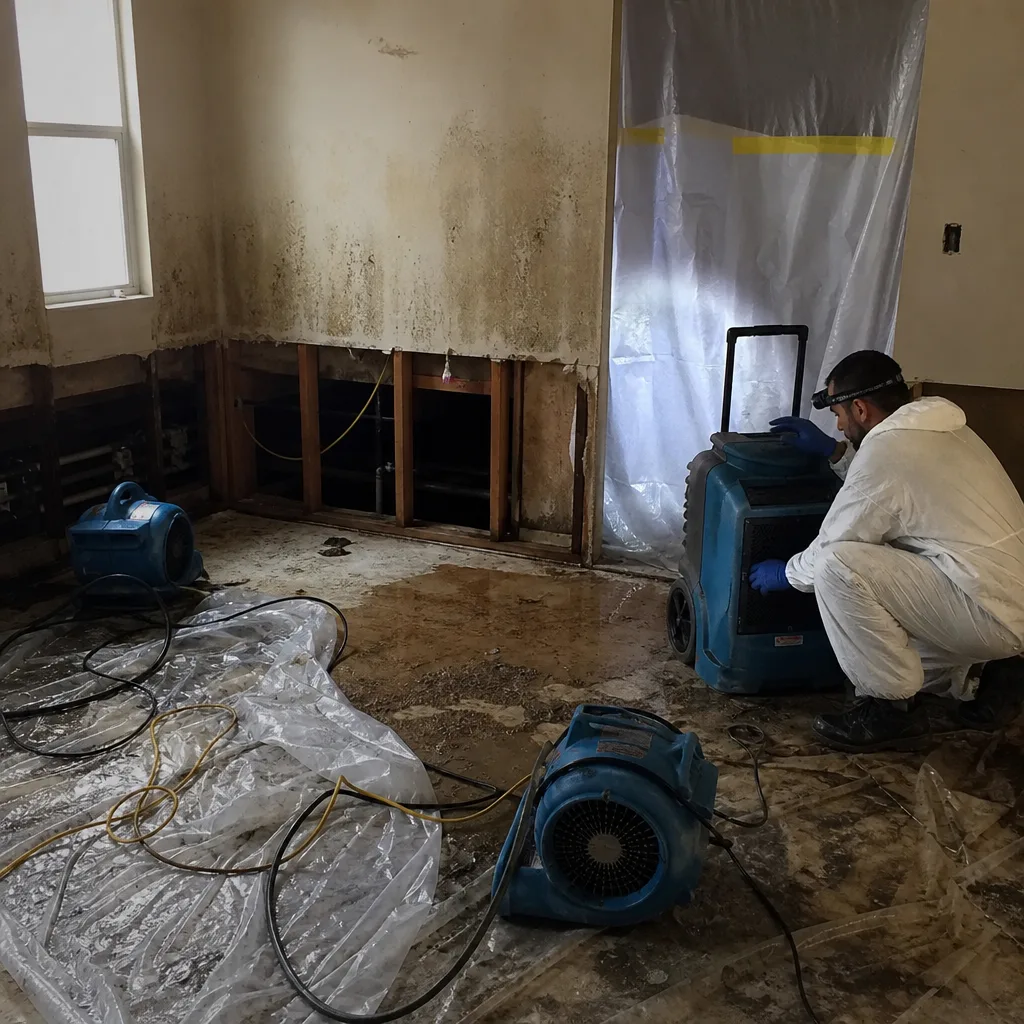
Before we remove mold-contaminated material, we set physical containment and run negative air with HEPA filtration. This keeps spores from spreading through the rest of the house while we work. In Colton’s older single-story tracts, where bedrooms share walls and return air moves through common ducting, this step is not optional.
Material Removal and Drying
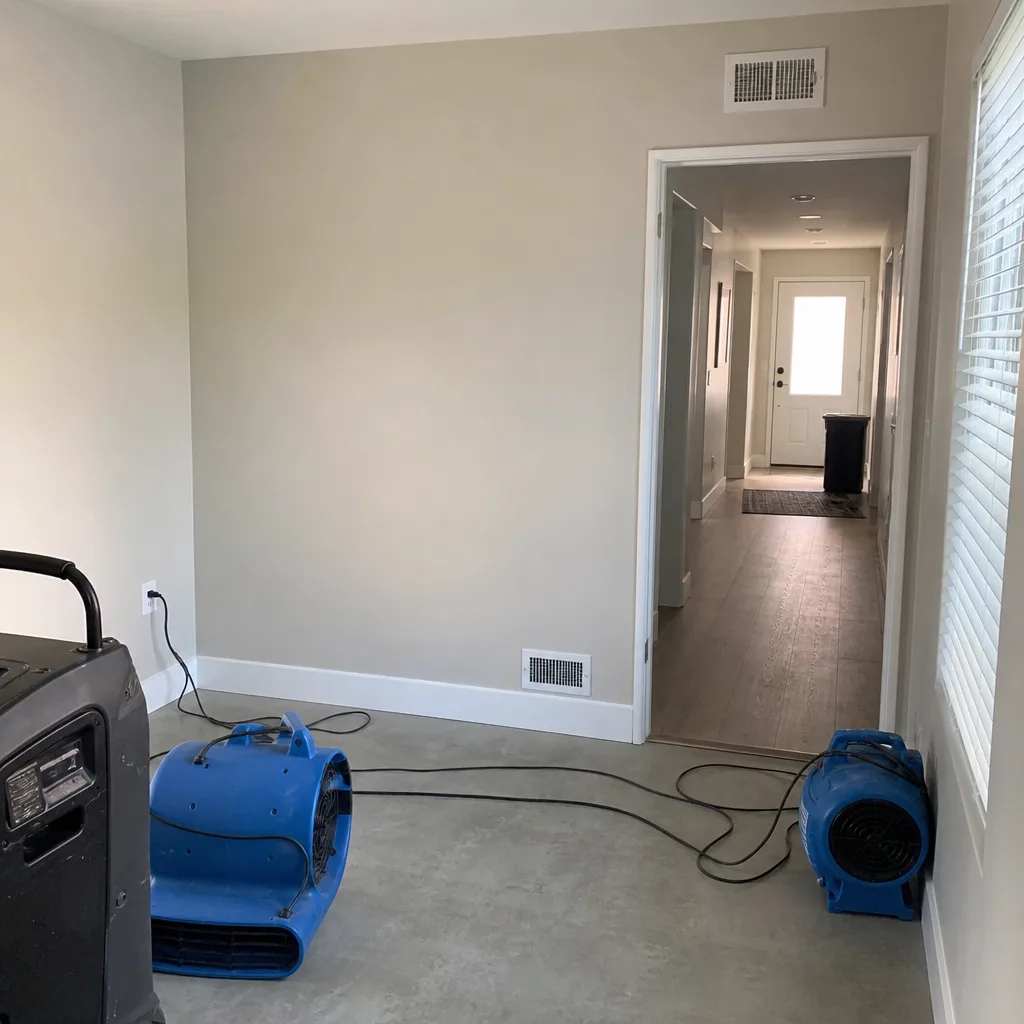
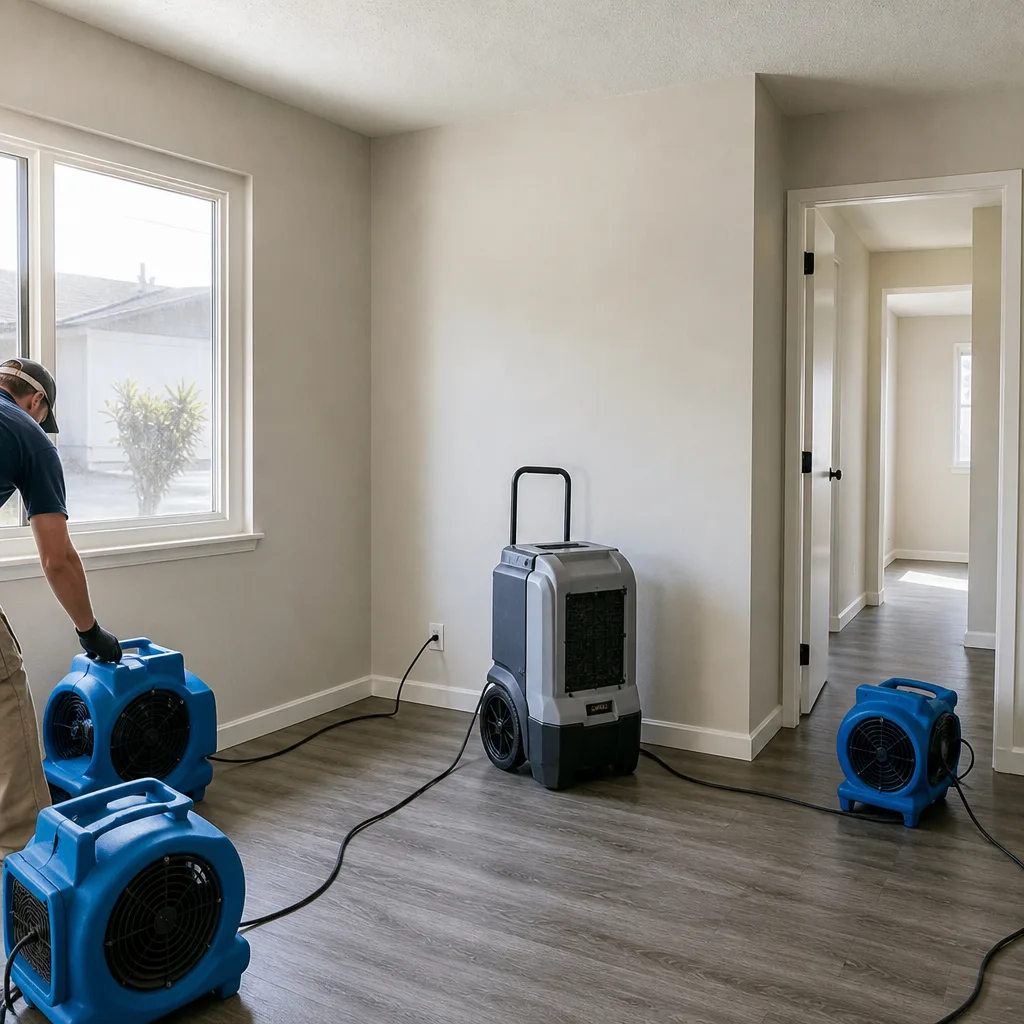
Wet drywall with visible mold growth gets cut out. Damp but salvageable framing gets dried in place with Injectidry panels and commercial air movers. We log drying readings daily until the structure hits a documented dry standard. Then we apply antimicrobial treatment and prep the area for reconstruction.
Mold Inspection in Colton
Mold Inspection in Colton is not a visual walkthrough. It’s a moisture investigation. We run infrared cameras across walls and ceilings, take moisture readings at baseboard level and inside wall cavities, and trace the path water took into the building. In Colton, that path usually begins at the roof edge or a stucco crack, not at a plumbing fixture.
Air and Surface Sampling
When a Colton homeowner reports a musty smell but no visible growth, we sample air and compare indoor spore counts to an outdoor baseline. That tells us whether the problem is active growth inside the envelope or just stale air from closed windows during a hot summer. Results come back from a third-party lab, not from our own equipment.
Post-Remediation Verification
After removal and drying, we re-test the affected area to confirm spore counts have dropped to normal background levels. This is the documented part of “documented dry.” The report goes to you and, when applicable, straight to your insurance adjuster.

Trusted Brands We Service in Colton
Colton homeowners don’t need us to explain what a Dri-Eaz LGR 2800i does – they need us to show up with it. We run Phoenix and Dri-Eaz dehumidifiers, XPOWER air movers, and B-Air scrubbers on Colton mold jobs because these are the machines commercial restoration contractors run on large-loss commercial work, not consumer-grade rentals from a hardware store. Parts and filters are stocked at our Fontana shop, so a clogged HEPA filter or a failed condensate pump doesn’t stall your job for three days while we wait on a shipment.
See the difference
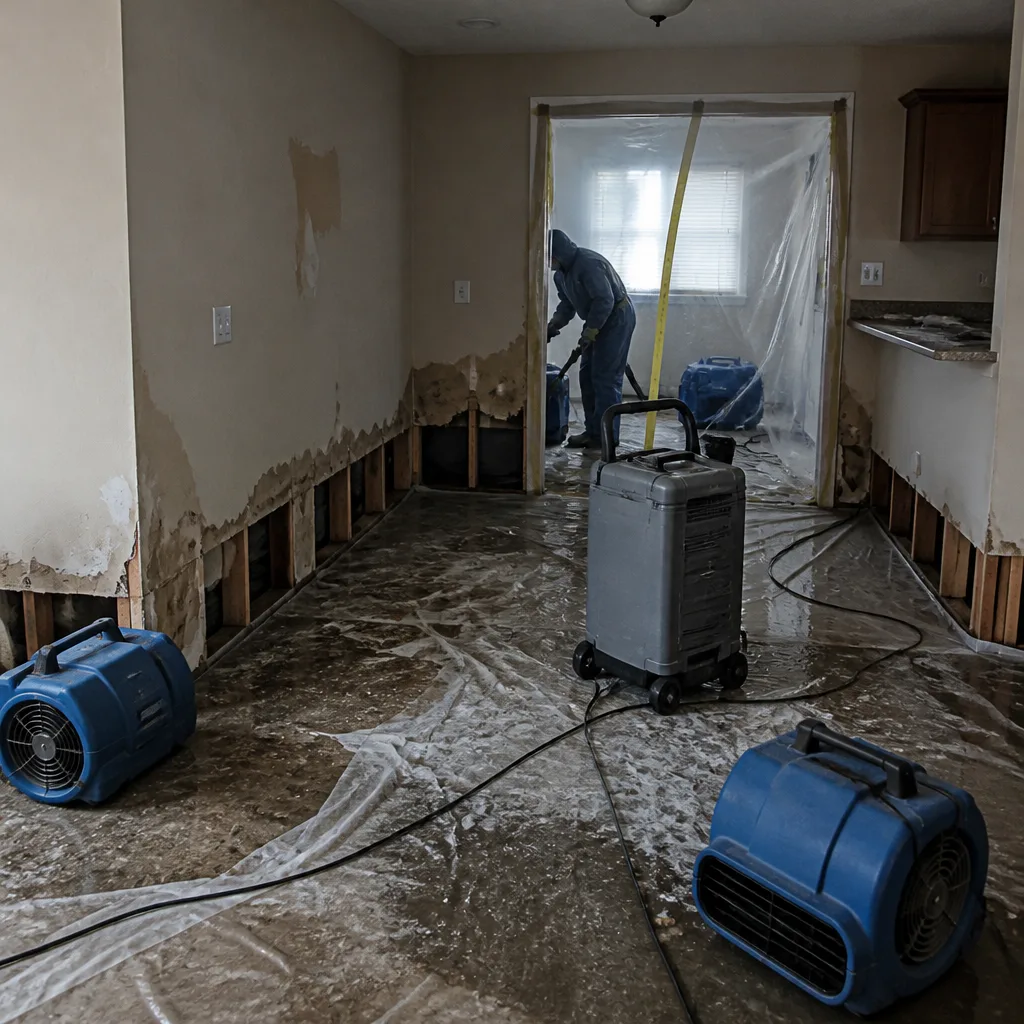 Before
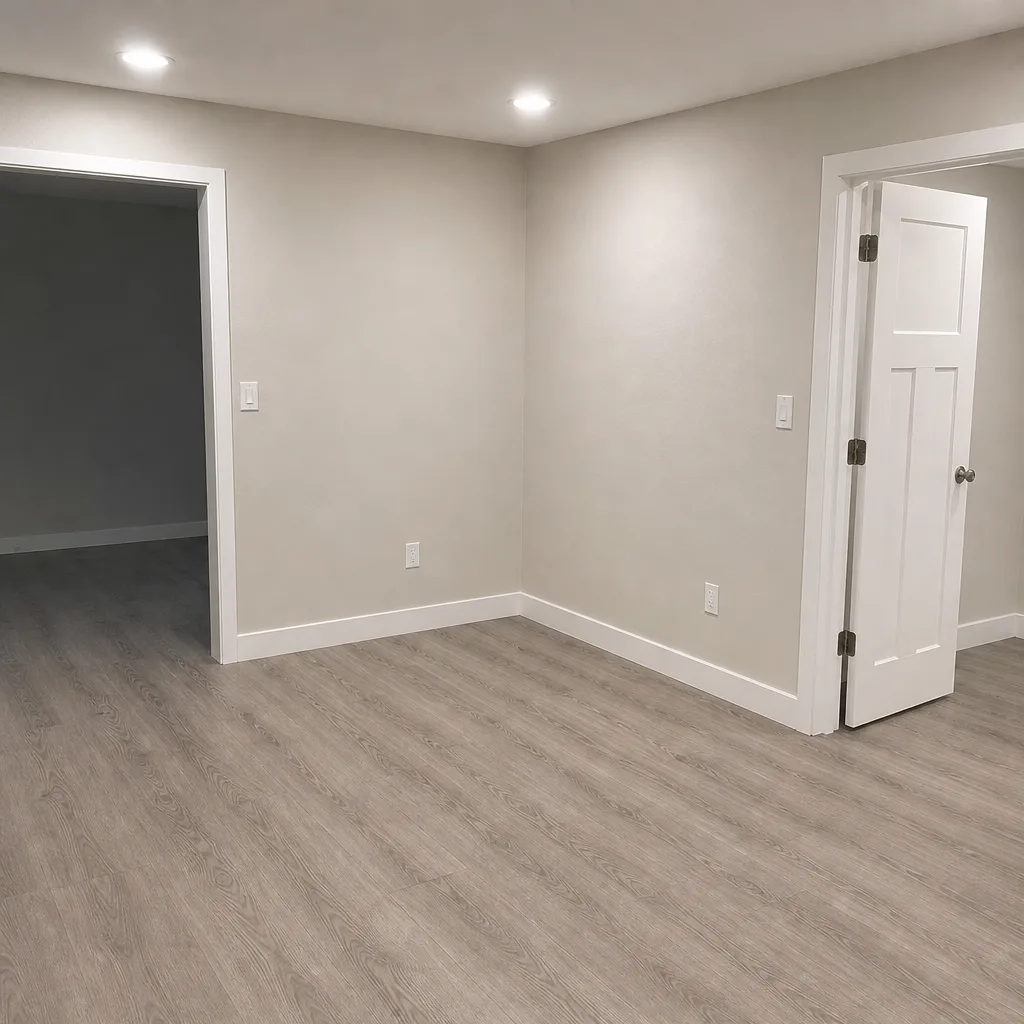 After
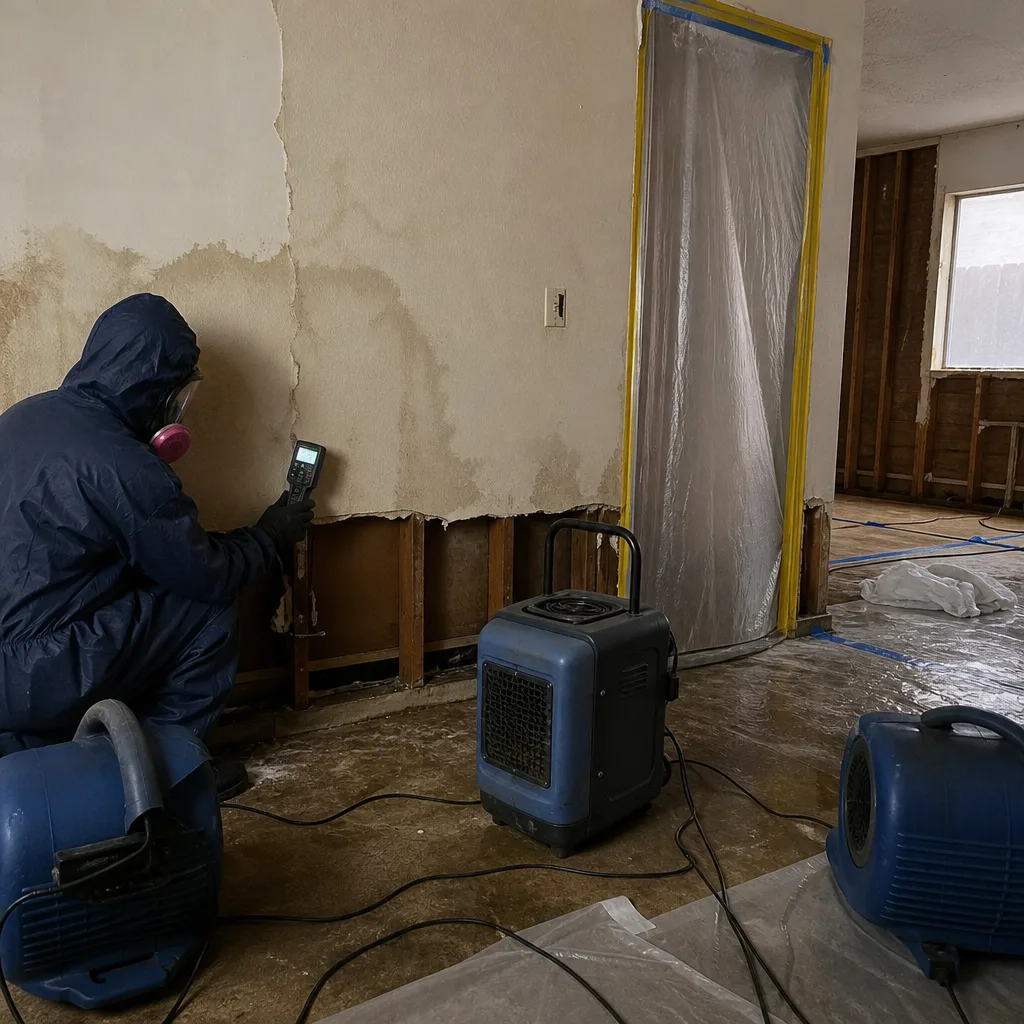 Before
 After
 Before
 After
Common Mold Remediation Problems We See in Colton Homes
- Wind-driven water entry through lifted flashing and cracked stucco. Santa Ana winds don’t just knock over trash cans. They lift shingles at the roof edge and drive rain sideways into stucco cracks. That water sits in wall cavities for weeks before a Colton homeowner smells it.
- Slab foundation moisture traveling under finished floors. Colton’s 1950s and 60s tract homes sit directly on concrete. Water that gets under vinyl plank or carpet doesn’t evaporate down – it spreads outward and wicks up into baseboards and drywall on the far side of the room.
- Rail and truck traffic soiling complicating containment. Homes near the freight lines along Mount Vernon Ave and the industrial corridor collect diesel soot and fine dust in wall cavities and HVAC ducts. That soiling binds to moisture and feeds mold growth, and it means our air scrubbing has to run longer to clear the headspace.
- Rental units where tenant reports get delayed. A large share of Colton’s 92324 housing is rental stock. Tenants report a musty smell to a landlord, the landlord schedules maintenance, and two weeks pass before anyone looks inside the wall. By then, the cavity is fully involved and demolition scope has doubled.
Pricing for Mold Remediation in Colton, CA
In Colton, expect these ranges for typical residential mold work:
- Isolated bathroom or closet mold (under 10 sq ft): $800 – $1,500
- Single-room remediation with containment and drying: $1,800 – $3,200
- Whole-wall or multi-room cavity remediation: $3,500 – $6,500
- Post-wind-event inspection plus remediation: $2,200 – $4,800
What moves the number is how far water traveled under a slab floor, whether HVAC ducting needs cleaning, and how much drywall must be removed before drying can start. We write the scope before work begins, in writing, and we don’t expand it mid-job without your sign-off. Estimates are free. Call (833) 589-5317.
We Also Serve Cities Near Colton
Our crews run mold jobs across the surrounding Inland Empire communities, including Grand Terrace, Highgrove, Loma Linda, and Rubidoux. If you’re just over the Colton line, we treat your job with the same local knowledge and documented process. See our full Mold Remediation service details or read more about Colton coverage. Most of these cities are within a 20-minute dispatch from our Fontana base.
Serving Colton, CA — Our Local Coverage Area
We’re based in the Colton area and know this community well. Use the map below to see our service coverage — if you’re nearby, we can almost certainly help.
FAQs About Mold Remediation in Colton
Because the water enters through a wind failure, not through sustained rain. A Santa Ana gust lifts shingles or cracks stucco at the roofline, then a fast fall rain pushes water into that gap. The dry hot weather that follows stalls visible growth, but moisture inside the wall cavity stays active. Weeks later, the first sustained damp period activates spores and the musty smell finally reaches living space. That’s why we trace the roof and door failure on every Colton mold call, not just the damp baseboard.
Yes. A raised-floor house lets water drain into a crawl space where air movement can help dry it. A Colton slab home has no drainage path under the building. Water that intrudes at a wall plate or under a door threshold spreads laterally under the slab and wicks up through the floor covering into baseboards and drywall. By the time you see staining, the affected area is typically larger than what’s visible. Infrared and moisture mapping are the only reliable way to define the actual boundary of the wet zone.
The 24 – 48 hour standard applies, but Colton’s hot summer complicates the clock. Growth slows in dry heat, which sounds good but actually masks the problem: the wall cavity stays damp at the substrate level while the surface feels dry. When the first fall rain arrives, growth accelerates fast. If a Santa Ana event lifted shingles or broke flashing, schedule an inspection within a few days, even if nothing looks wet inside. The cavity moisture reading tells the real story. Slow action turns a $1,200 drying job into a $4,500 remediation.
The IICRC categorizes water as clean, gray, or black. Clean water from a supply line break often lets us dry materials in place. Gray or black water – from roof runoff carrying rail belt soot, or from a sewage backup – changes the calculus. Contaminated material typically gets removed, not dried, because the substrate is colonized with more than just mold. In Colton, wind-driven rain that passes over a soot-coated roof or through years of accumulated dust in a wall cavity often reads as gray water even if the source was rain. Removal is the safer call and the one we’ll document for your adjuster.
Documentation first. Photos of the affected area, moisture readings, the inspection opening, and the containment setup. If a tenant is involved, we coordinate access and keep a written log of dates and work performed. Insurance carriers want that paper trail, and landlords near the Mount Vernon Ave rail corridor know that diesel soot in the wall cavity means the job takes longer and costs more than a standard bathroom mold call. We write the scope before work starts so the landlord knows the full number up front. Call (833) 589-5317 to schedule a walkthrough.
Written by Glen Pacheco, Owner at Dry Line Water Damage, serving Colton and the Inland Empire with IICRC-certified mold remediation, water damage restoration, and fire damage restoration.