

 Water damage drying
 Fire & smoke cleanup
 Mold remediation
 Storm response
 Sewage cleanup
 Reconstruction
Free visual inspection and a written scope of work before any mitigation begins - photos, moisture readings, and drying logs go in your claim file
The scope we write is the scope we bill. Anything new gets shown to you, in writing, before we touch it.
Get your free estimateFast, Reliable Mold Remediation Across Desert Hot Springs
Mold remediation in Desert Hot Springs typically costs $1,800 – $6,500 depending on the size of the affected area, with inspection and testing running $350 – $700. If you’ve found mold after a windstorm, a plumbing leak, or months away from a seasonal home, our IICRC-certified team can be on-site quickly to assess the damage and start containment. Call (833) 589-5317 for a free estimate from a crew that knows the 92240 and 92241 housing stock and the specific ways mold takes hold here.
Desert Hot Springs isn’t like Palm Springs or Cathedral City. The wind, the hard geothermal water, and the older stucco homes create a different set of mold risks. We’ve worked enough jobs here to know exactly where to look first, and we document everything for your adjuster.
Why Dry Line Water Damage Is Desert Hot Springs’s Preferred Mold Remediation Company
We approach every job as a restoration project with measurable outcomes, not a spray-and-walk-away cleanup. That’s the difference between a generalist handyman and an operation built around IICRC-certified process. Our understanding of Mold Remediation as a discipline means we treat the moisture source, the contaminated materials, and the air quality as one connected problem.
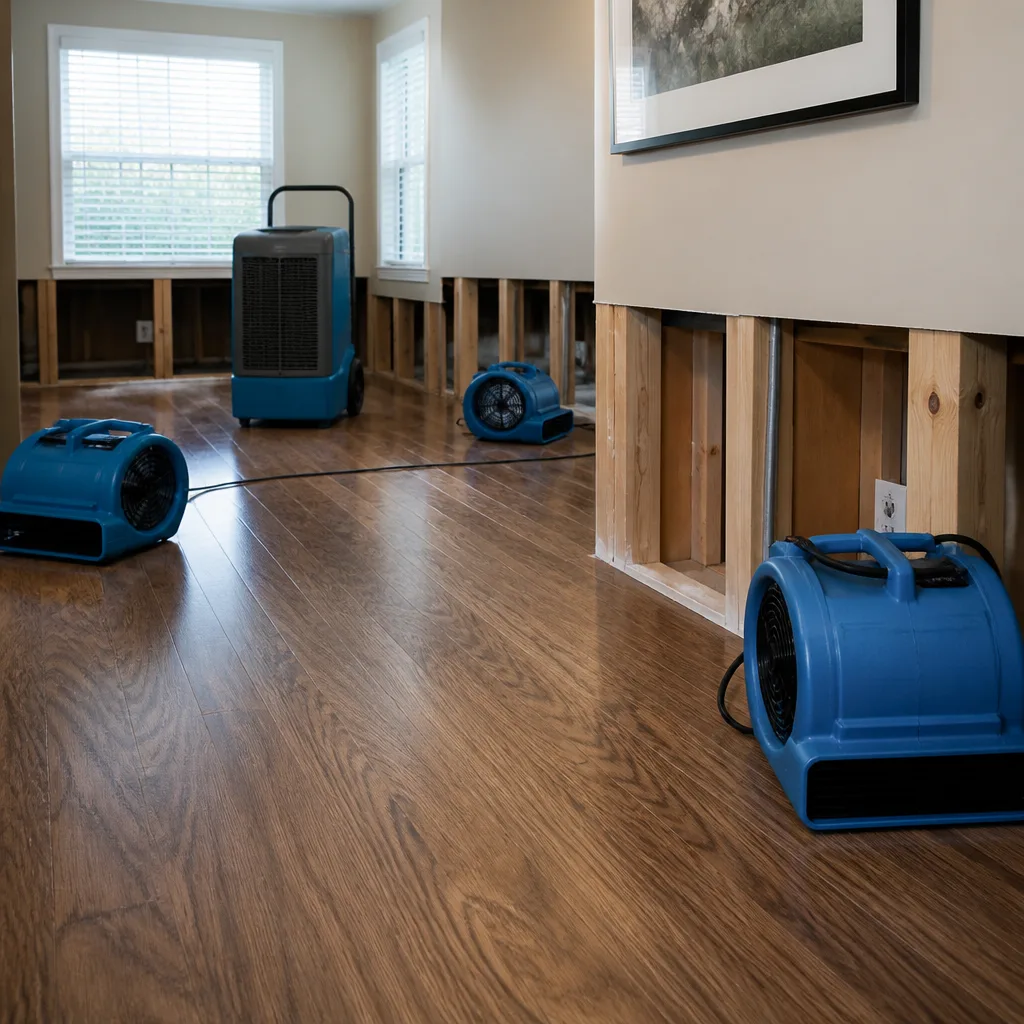
Desert Hot Springs homeowners and property managers keep calling us back because we show up with commercial-grade Dri-Eaz dehumidifiers, Phoenix air movers, and Injectidry systems that pull moisture from inside wall cavities without tearing out drywall unnecessarily. Glen Pacheco built this company on the principle that restoration is a trade with standards, and our membership in the Restoration Industry Association holds us to a published code of ethics. That matters when you’re dealing with a mold problem you can’t see behind a vanity or inside a stucco wall.
We also know the local failure points. A cracked stucco exterior on the windward side of a 1970s home near Desert Hot Springs City Hall isn’t just cosmetic. It’s an entry point for wind-driven rain and dust that feeds mold inside the framing. We look for these patterns before we quote, so your scope of work reflects what’s actually wrong.
Restoration work we handle
Mold Inspection in Desert Hot Springs
Mold inspection in Desert Hot Springs runs $350 – $700 and is the right first step when you smell mustiness, see staining, or find moisture you can’t explain. Our inspection includes visual assessment of likely problem areas, moisture mapping with meters, and air or surface sampling where indicated. We pay particular attention to wall cavities and cabinet spaces in older homes where geothermal water corrosion creates pinhole leaks that hide for months. A real inspection tells you whether you have active mold, what type, and where the moisture is coming from. Without that, you’re guessing.
What Happens During a Mold Inspection
We start with the areas you’ve flagged, then methodically check the spots where mold in Desert Hot Springs homes actually starts. That means under sinks, behind water heaters and laundry hookups, around window frames that catch San Gorgonio wind-driven rain, and inside HVAC plenums where dust and spores accumulate. We use moisture meters that read through stucco and drywall. If we find elevated readings, we map the affected zone so we know the full scope, not just the visible patch.
When to Schedule an Inspection
If you’re a seasonal resident returning to a home that’s been closed up for months, schedule an inspection before you move back in. Shut-up homes with the air off are mold incubators, especially with the mineral scale and slow leaks common in 92241 plumbing. If you’ve had any water event in the last two years, a post-remediation clearance inspection is cheaper than reopening walls later.
Mold Removal Specialist in Desert Hot Springs
A mold removal specialist in Desert Hot Springs does more than wipe down surfaces. We contain the affected area, create negative air pressure to keep spores from spreading, remove contaminated drywall or insulation, treat the remaining structure with antimicrobial agents, and document every step with photos and moisture readings. Typical mold removal here runs $1,800 – $6,500 depending on how far the mold has traveled and whether the source is a plumbing failure, a roof leak, or a long-running humidity problem. We do not seal up a wall until our meters show it’s actually dry.
Containment and Source Repair
The first thing we do before cutting anything is set containment. Nothing spreads mold faster than the wind that moves through Desert Hot Springs homes when a door or window opens. Negative air machines keep the contaminated air in the work zone. Then we find the source. In this town, the source is often a corroded supply line or a leaking water heater fed by hard, sulfurous geothermal water. Fixing the mold without fixing the source is a waste of your money.

Drying and Clearance
After removal, we dry the cavity with Injectidry systems and commercial dehumidifiers, not box-store fans. Then we test moisture content in the framing and surrounding drywall. Only when the numbers hit the documented-dry standard do we rebuild. You get a written report showing what we found, what we did, and what the moisture readings were. Your adjuster gets the same report.
Trusted Brands We Service in Desert Hot Springs
Our equipment is built for restoration work, not rentals. Dri-Eaz dehumidifiers and Phoenix air movers are the same machines used on commercial and large-loss jobs across the Coachella Valley. Injectidry systems let us push dry air through sealed wall cavities and under flooring without ripping everything out, and B-Air units handle containment and air scrubbing on bigger residential jobs. When we run equipment in Desert Hot Springs, we size it to the job and monitor it daily, because desert heat changes the drying equation. The low ambient humidity actually works for us once we get air moving through the right paths.
See the difference
 Before
 After
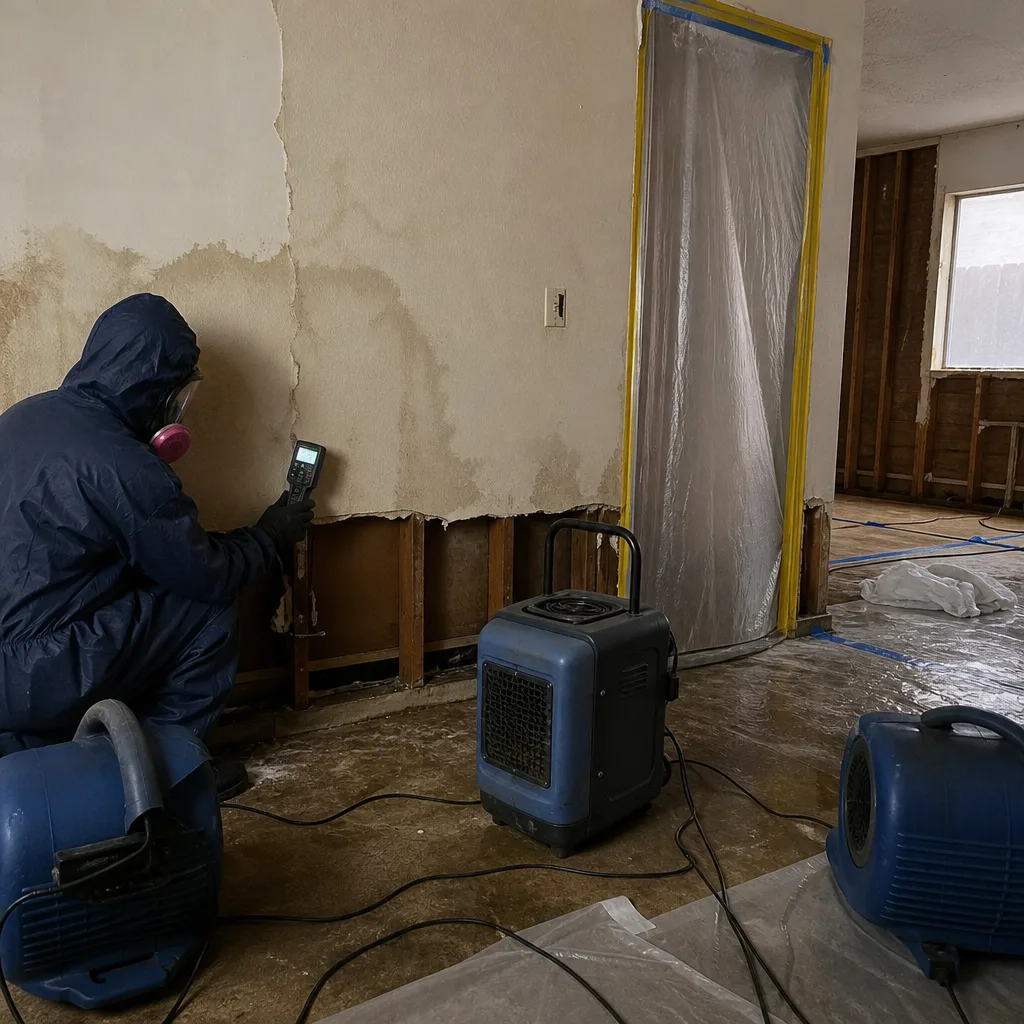 Before
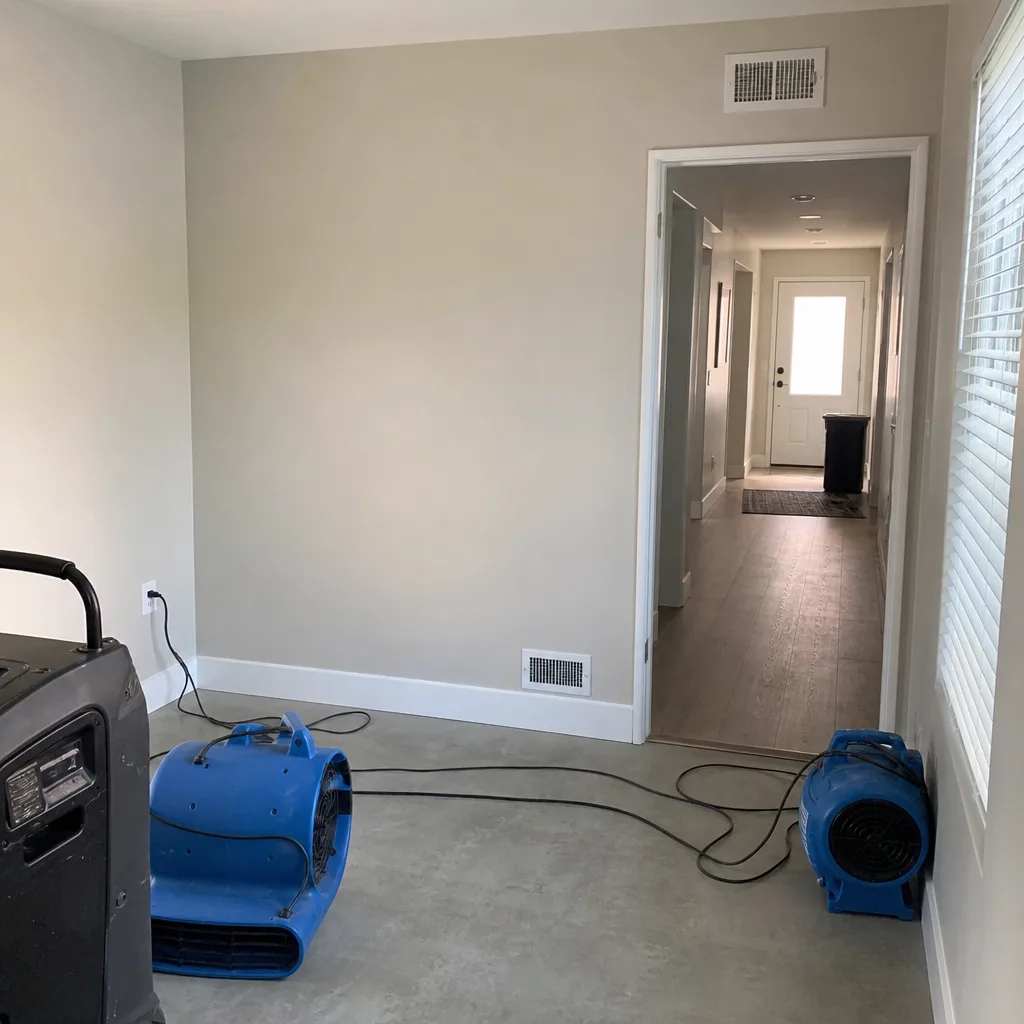 After
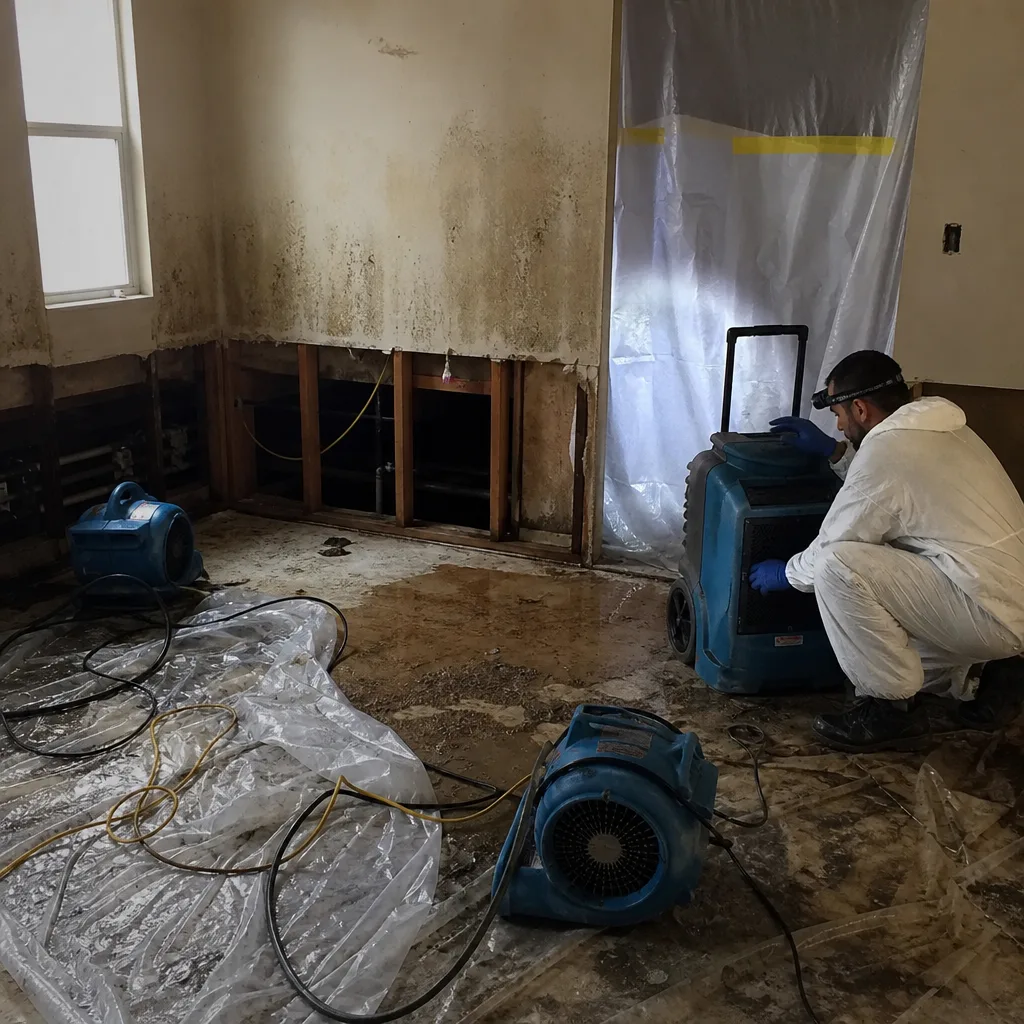 Before
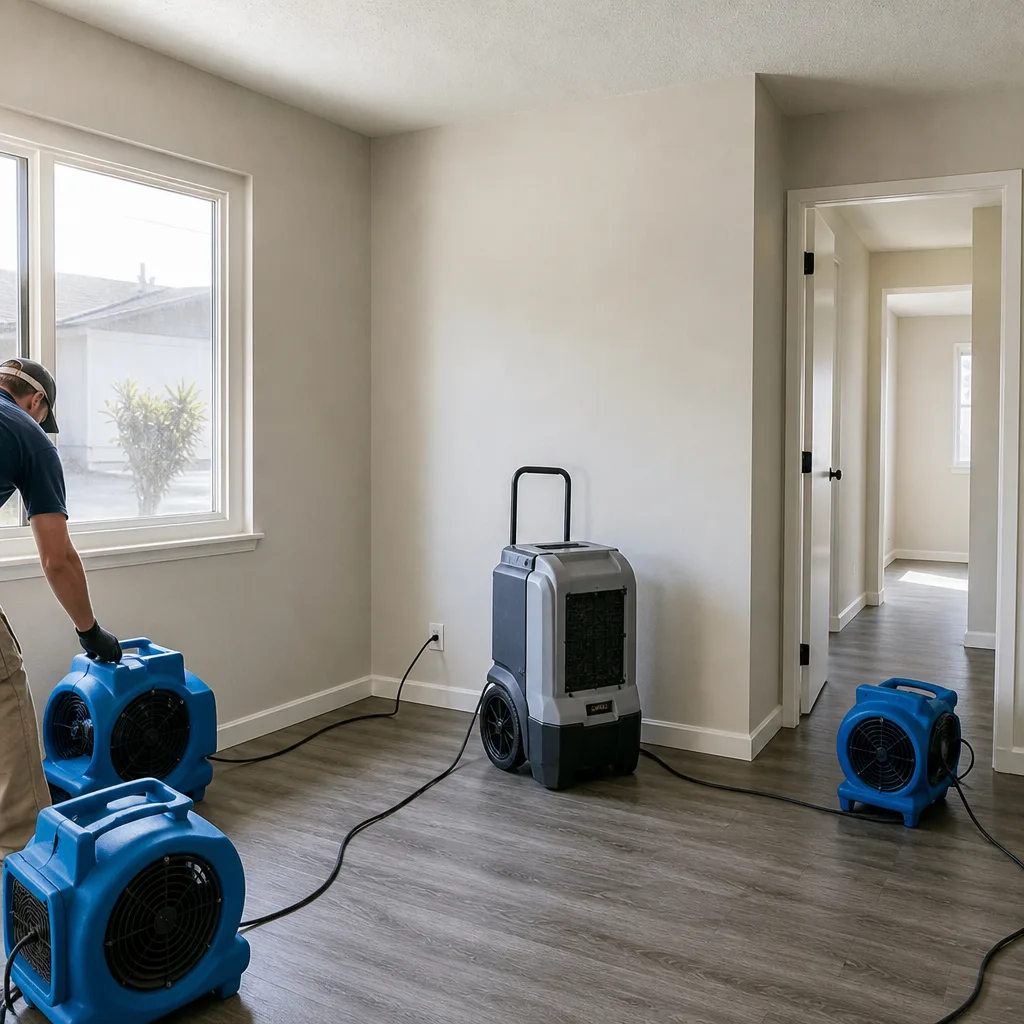 After
Common Mold Remediation Problems We See in Desert Hot Springs Homes
- Hidden corrosion leaks from geothermal water: The mineral-rich water from the local aquifer attacks copper and galvanized supply lines faster than the Colorado River water used in Palm Springs. We regularly find pinhole leaks inside walls that have been quietly feeding mold for a full season.
- Wind-driven dust and spore intrusion through HVAC: The San Gorgonio Pass winds push fine dust and mold spores through imperfect duct seals and into return plenums. Homes with older HVAC systems here spread contamination faster than homeowners expect.
- Stucco homes that look dry on the outside and are wet inside: In a dry climate, exterior surfaces dry fast and hide moisture that’s trapped behind stucco. We’ve seen dark mold colonies on framing behind stucco that felt bone-dry from the outside.
- Seasonal homes left closed for months: Snowbird properties with the AC off and no air circulation trap whatever moisture comes from slow leaks or monsoon humidity. Mold gets a running start before anyone notices.
Pricing for Mold Remediation in Desert Hot Springs, CA
Here’s what we see in the 92240 and 92241 market. A mold inspection with moisture mapping runs $350 – $700. Small containment and removal jobs, like a single bathroom vanity area, start around $1,800 – $2,800. A full-room remediation with drywall removal, cavity drying, antimicrobial treatment, and rebuild typically runs $3,500 – $6,500. Whole-home or multi-room jobs involving HVAC contamination go higher based on square footage and ductwork scope. Your quote depends on how far the mold has spread, what materials are affected, and whether the source is an active leak that needs repair first. Every estimate is free and written with a clear scope before any work starts. Call (833) 589-5317 and we’ll come out to Desert Hot Springs with meters and containment plans, not vague promises.
We Also Serve Cities Near Desert Hot Springs
Our Mold Remediation in Desert Hot Springs service area extends across the west Coachella Valley. We regularly work in Desert Edge, Sky Valley, Garnet, and Thousand Palms. If your property sits near the San Gorgonio Pass or along Dillon Road, you’re in our coverage zone and we can typically be on-site the same day you call.
Serving Desert Hot Springs, CA — Our Local Coverage Area
We’re based in the Desert Hot Springs area and know this community well. Use the map below to see our service coverage — if you’re nearby, we can almost certainly help.
FAQs About Mold Remediation in Desert Hot Springs
Desert Hot Springs’ geothermal water is hard and sulfurous, which corrodes copper and galvanized supply lines faster than the Colorado River water used in neighboring Palm Springs. That corrosion produces pinhole leaks inside walls, behind vanities, and under slabs. The leaks are slow enough that they don’t cause obvious flooding, but they run long enough to saturate drywall and framing. Mold then grows inside the wall cavity where no one sees it until staining or odor appears. If you live in an older home in 92240 or 92241 and haven’t inspected your supply lines, a hidden leak may already be feeding mold. Call (833) 589-5317 for a moisture inspection before the problem spreads.
Shut off the water at the main and drain the supply lines. That’s the single most effective step, because it removes the moisture source that most Desert Hot Springs mold problems start with. Then leave the HVAC fan on “circulate” mode with a fresh filter, or install a smart thermostat that runs the fan for 15 minutes every few hours. Set a local contact to check the property after major wind events, because San Gorgonio winds can break window seals and push rain into wall cavities. If you return and smell mustiness, get a mold inspection before you spend a night in the house.
Yes. The ambient air is dry, but the inside of a wall cavity is not. A small leak from a corroded supply line, a poorly sealed window, or a monsoon-driven roof breach creates a humid microclimate that stays damp for weeks. The outside heat actually accelerates the cycle by warming the trapped moisture. Low outdoor humidity just means the drywall surface dries out and hides the moisture behind it. That’s why we rely on meters, not visual inspection, to confirm a structure is dry.
Older stucco homes in Desert Hot Springs require a different approach than newer tract builds. The stucco itself can be sandblasted by wind, cracked from decades of thermal cycling, and loose enough to let water through windward-facing walls. We inspect the exterior penetrations around windows, hose bibs, and junction boxes before we start interior remediation. Inside, we expect to find framing that reads higher on the moisture meter than the drywall covering it. Our process includes injecting dry air into wall cavities with Injectidry systems, which is far less destructive than tearing out every wall to reach wet framing. We also check for corroded plumbing, which is the most common hidden source in these homes.
Call for a mold inspection before you start moving furniture or cutting drywall. Windstorms in Desert Hot Springs breach stucco, lift roofing, and break window seals. That lets water in, but the water often travels before it pools. A professional inspection with moisture meters and thermal imaging finds where the water went, not just where it ended up. If you see staining on a wall or ceiling after a San Gorgonio wind event, the moisture may have started on the roofline and traveled down. Call (833) 589-5317 and we’ll map the full path before any remediation begins.
Written by Glen Pacheco, Owner at Dry Line Water Damage, serving Desert Hot Springs and the Coachella Valley with IICRC-certified mold remediation and restoration services.