

 Water damage drying
 Fire & smoke cleanup
 Mold remediation
 Storm response
 Sewage cleanup
 Reconstruction
Free visual inspection and a written scope of work before any mitigation begins - photos, moisture readings, and drying logs go in your claim file
The scope we write is the scope we bill. Anything new gets shown to you, in writing, before we touch it.
Get your free estimateFast, Reliable Mold Remediation Across Ontario
Mold remediation in Ontario, CA typically runs $1,800 – $6,500 depending on how far the growth has spread and whether it’s inside wall cavities or behind finished surfaces. Most jobs we open in Ontario trace back to water that sat hidden for weeks, not days. We work in Ontario’s 91761, 91762, 91764, and 91758 ZIPs regularly, and we know exactly what the older housing stock here does after a winter storm or a supply-line failure. Call (833) 589-5317 and we’ll walk you through what you’re dealing with, what it’ll take to fix it, and what your insurance likely covers.
Why Dry Line Water Damage Is Ontario’s Preferred Mold Remediation Company
We’re an IICRC-certified operation, which means our Mold Remediation process follows the restoration industry’s most rigorous third-party standard for training and methodology. Not a self-issued credential. Glen Pacheco leads a crew that has opened hundreds of wall cavities in Ontario homes and documented exactly what was growing inside, then brought those assemblies to a documented dry standard before rebuilding. That matters in a city where half the housing stock predates 1970 and the other half was built during the stucco boom of the 1990s and 2000s. Both eras fail differently, and both need someone who knows the difference.
Ontario homeowners and property managers call us because we document everything. Moisture readings before, during, and after. Photos of every surface we open. A written scope before work starts. If you’re coordinating with an adjuster, you’ll have the paperwork needed to support a claim. We speak the insurance industry’s language and we hand you the documentation without you having to ask twice.
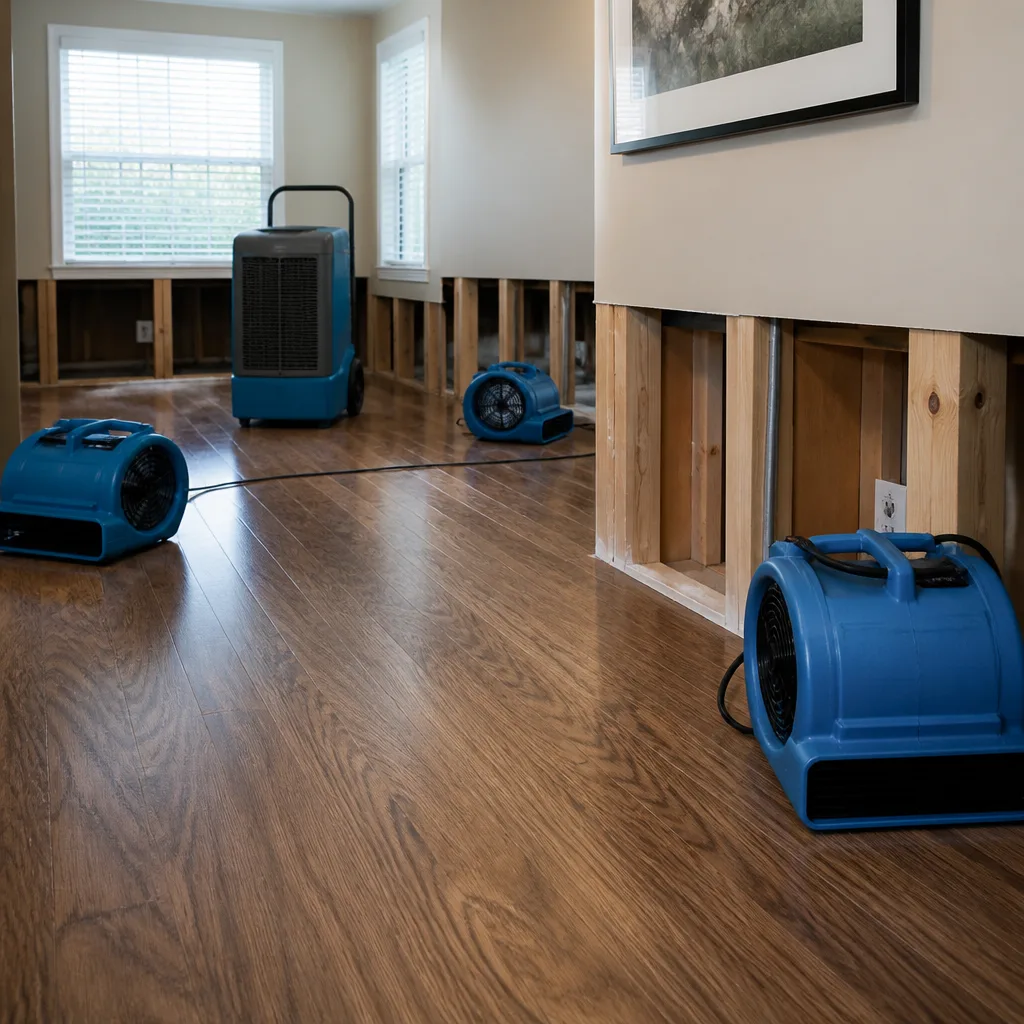
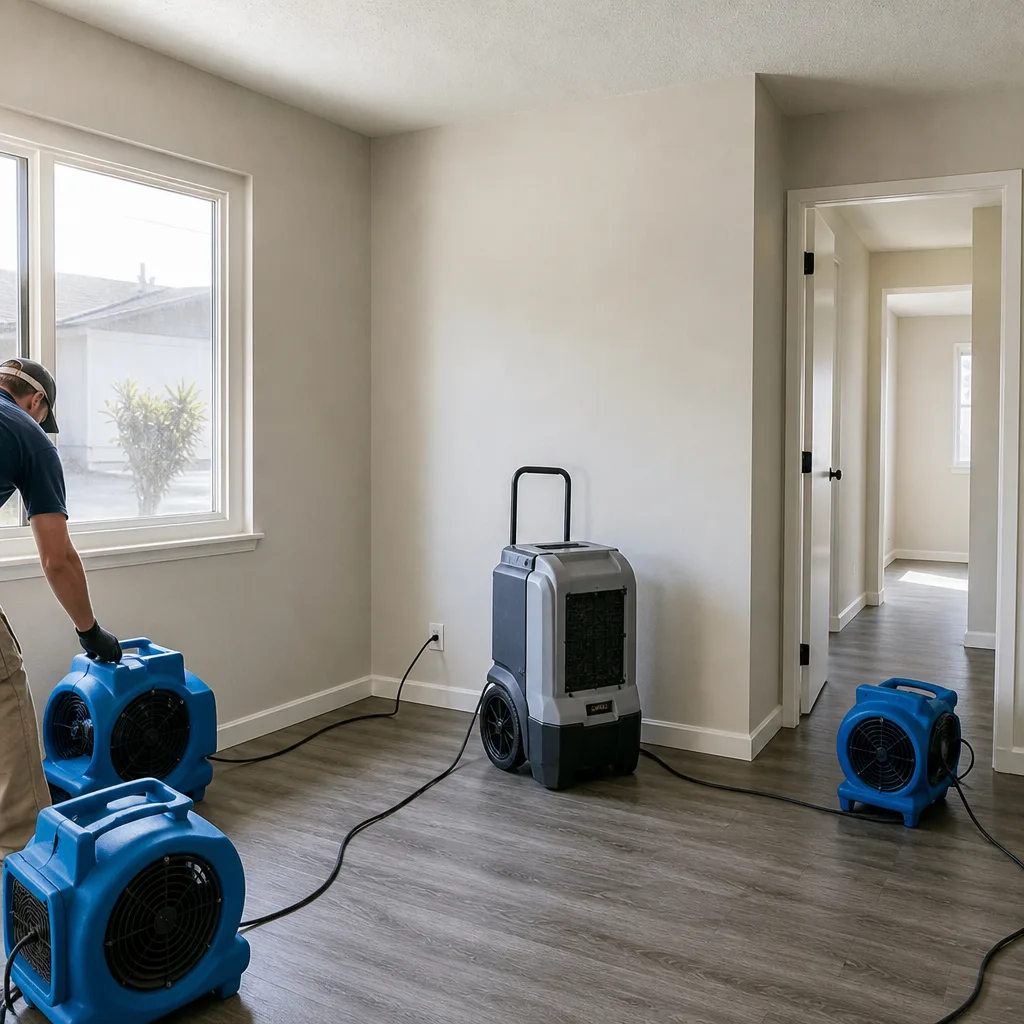
Our equipment is commercial-grade: Dri-Eaz and Phoenix dehumidifiers, XPOWER air movers, and Injectidry structural-drying systems that pull moisture from inside walls and floor cavities without unnecessary demolition. Across Ontario, that means less drywall torn out, less rebuild cost, and a faster return to a clean, habitable space.
Restoration work we handle
Bathroom Mold Removal in Ontario
Bathroom mold removal in Ontario usually costs $450 – $1,400 for a contained job in a single bathroom, and the work typically involves removing affected drywall or baseboard, treating the framing, and addressing whatever moisture source kept feeding the growth. In Ontario’s older 1950s and 1960s tracts, bathroom exhaust fans are often original or retrofitted poorly, so humidity sits on painted drywall and behind vanities. In the 1990s-2000s two-story subdivisions, we more often see failed toilet wax rings or shower-pan leaks that soaked subfloor and wall cavities before anyone saw staining. Either way, surface cleaning alone doesn’t resolve it when the moisture source is still active.
Exhaust Fan Upgrades and Ventilation Checks
If the fan isn’t pulling enough CFM for the bathroom’s square footage, or if it vents into the attic instead of outside, mold will return no matter how thoroughly we clean. We verify vent routing and recommend a fan replacement when the math doesn’t work. It’s a small repair compared to opening the ceiling again in eighteen months.
Containment and Surface Treatment
We set a negative-air containment around the bathroom so spores don’t migrate through the house while we remove affected material. Framing gets treated with an antimicrobial once dry standard is met, and we document readings before we close anything back up. You’ll have a written record showing the cavity was actually dry, not just visually clean.
Mold Removal Service in Ontario
Full mold removal service in Ontario runs $1,800 – $6,500 depending on affected square footage and whether the growth sits inside wall, ceiling, or floor assemblies. The defining variable in Ontario is what caused the water in the first place. A 1958 flat-roof home in the downtown core that took roof-patch water into a ceiling cavity for three weeks is a different job than a 2003 two-story in a subdivision off Archibald where a supply line failed inside a floor assembly. We classify the water source, map the wet perimeter with moisture meters, and scope the job from actual readings, not guesses.
Hidden Cavity Mold in Ceilings and Floors
We find mold in closed assemblies all over Ontario. The growth starts within 24 to 48 hours of a water release, and by the time a stain shows on the visible surface, the cavity above or below is usually worse. We cut access, evaluate the framing, and dry it with Dri-Eaz and Phoenix equipment plus Injectidry panels where cavity drying is faster than full tear-out.

Post-Remediation Verification
Before we rebuild, we take moisture readings across the entire affected envelope and record them in drying logs. The goal is a documented dry standard, not a visual once-over. If an adjuster questions whether the job was complete, you’ll have the data to support it.
Trusted Brands We Service in Ontario
We run Phoenix dehumidifiers, Dri-Eaz air movers, XPOWER ventilation, and Injectidry structural-drying panels on Ontario jobs. These are the same systems large-loss and commercial restoration contractors use, not consumer rental machines. We keep spare parts and replacement components stocked so an equipment failure on a job doesn’t stall your remediation by days. Ontario homeowners sometimes ask whether the brand of equipment matters. It does. Commercial-grade gear moves more air, pulls more moisture per day, and gives us drying logs that hold up under insurance scrutiny. That’s the standard Glen Pacheco runs every job to.
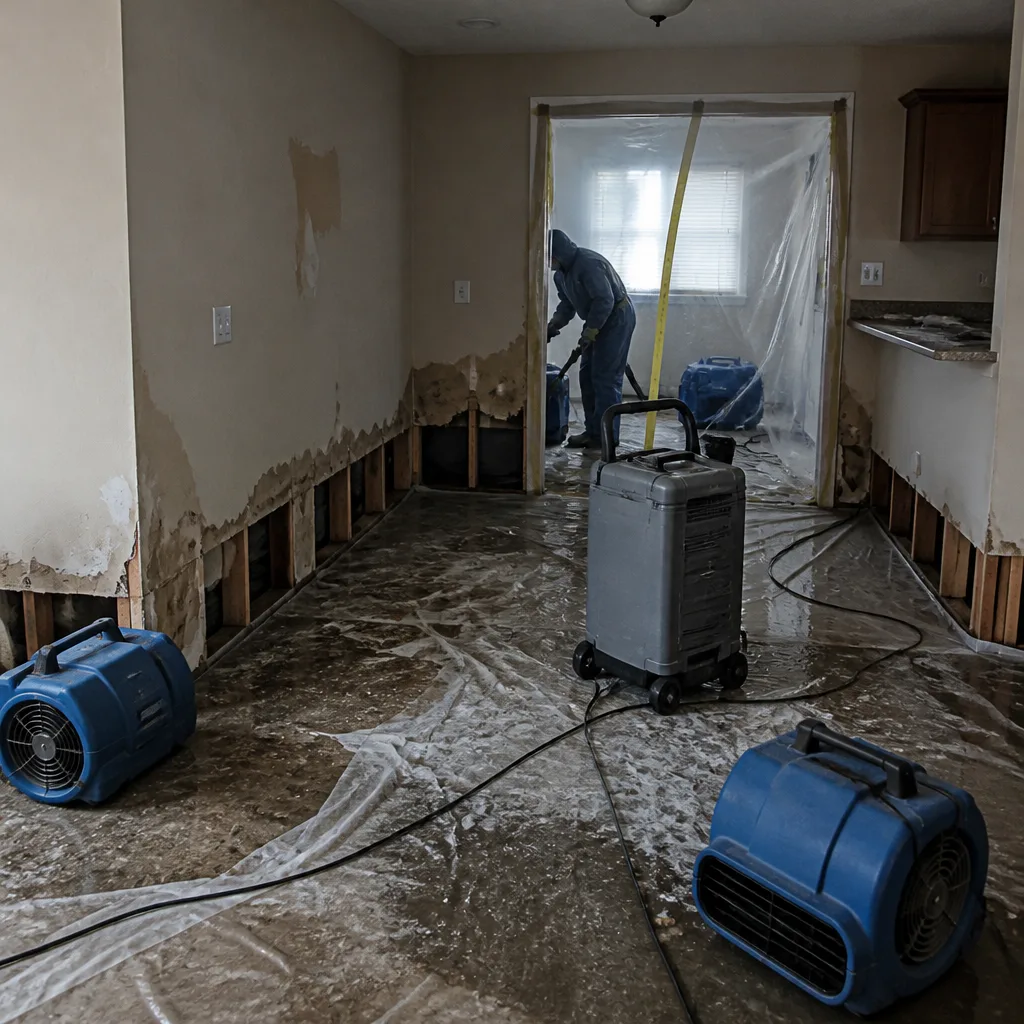
See the difference
 Before
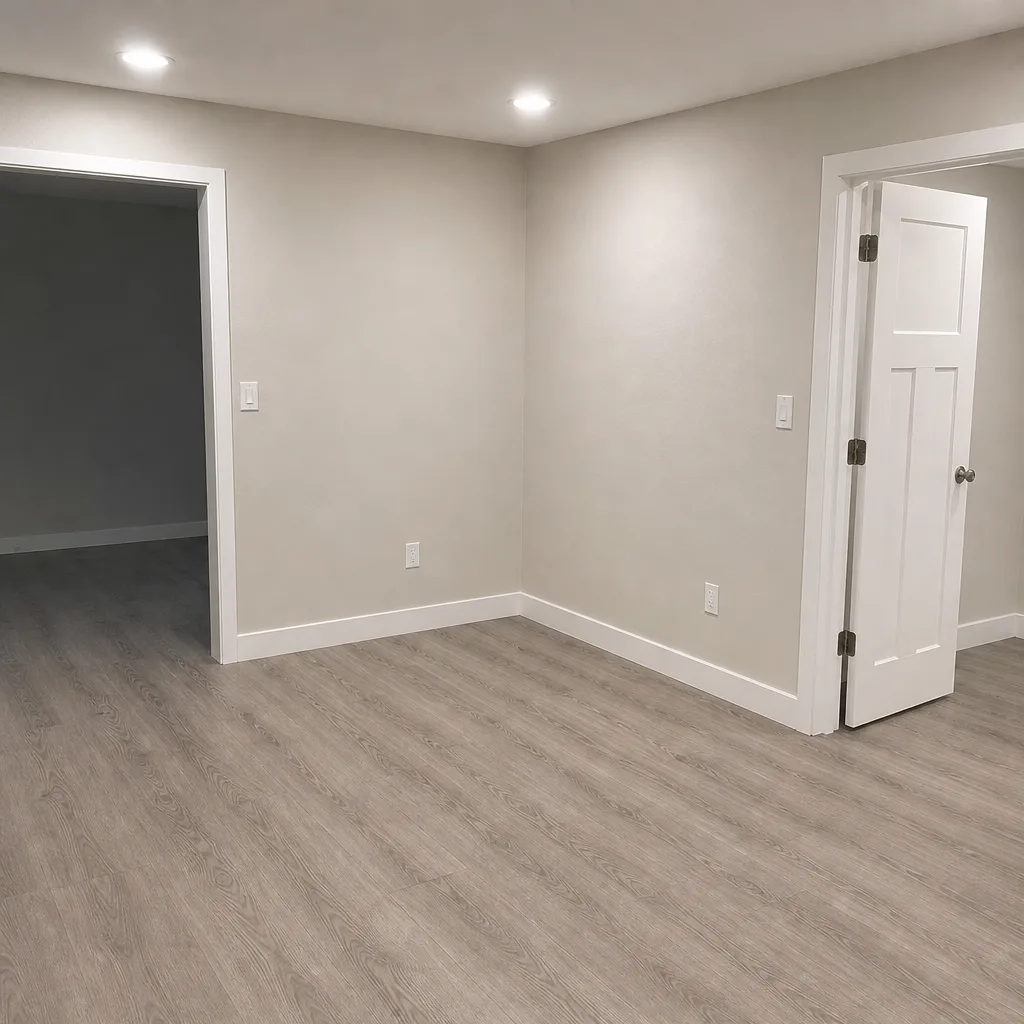 After
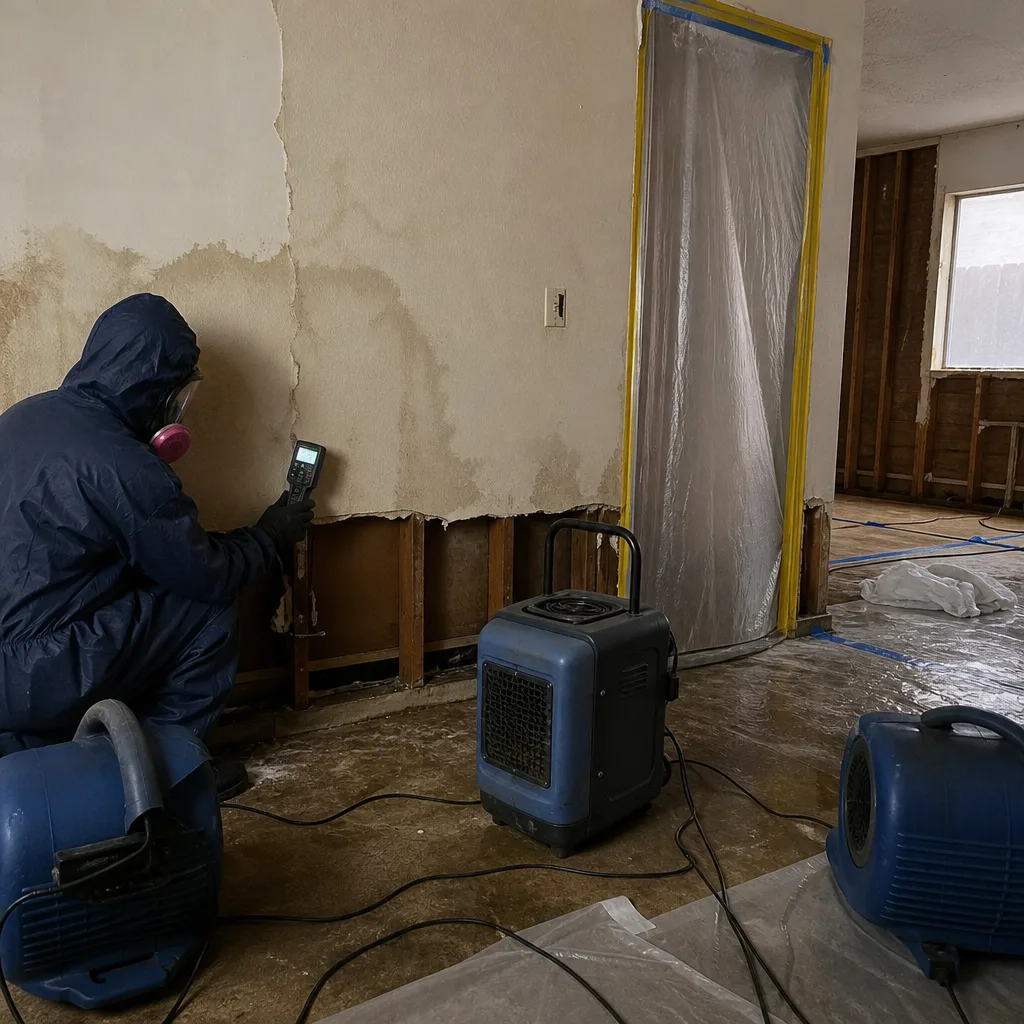 Before
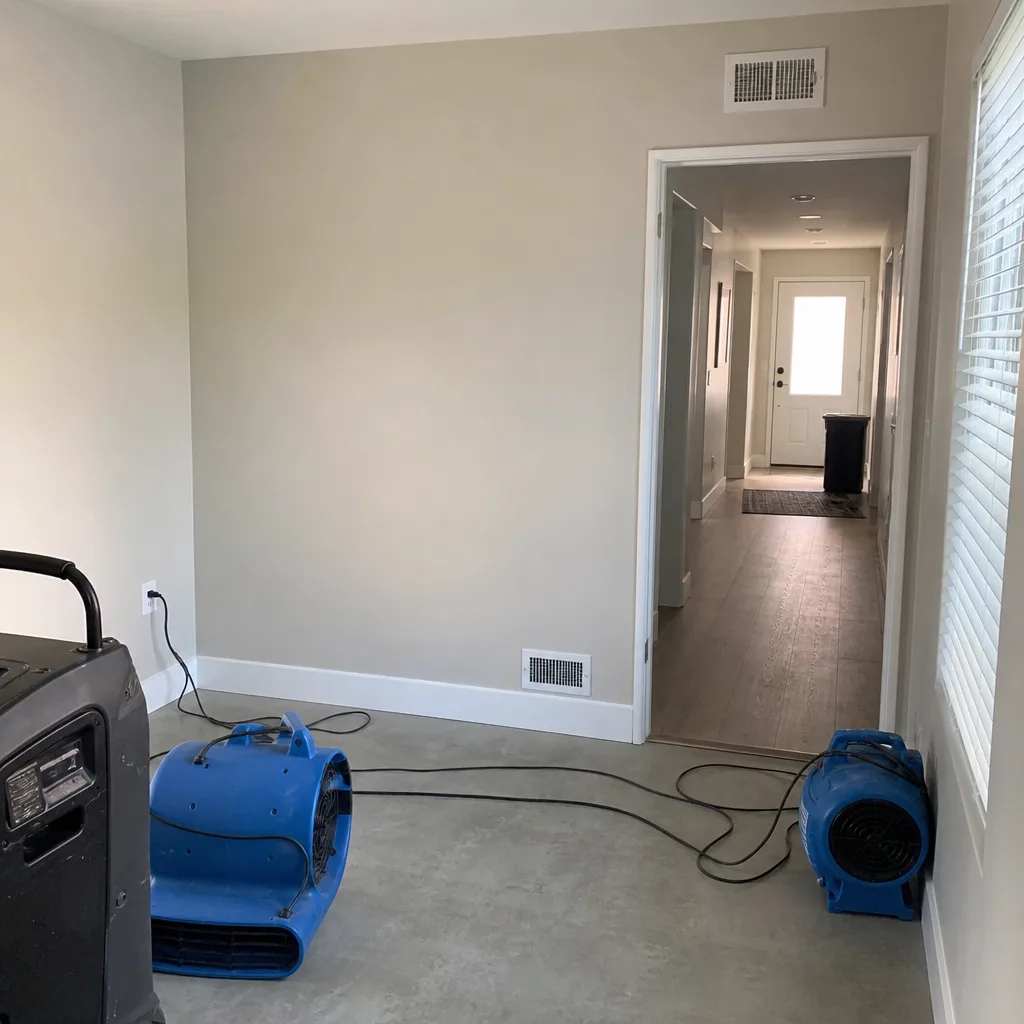 After
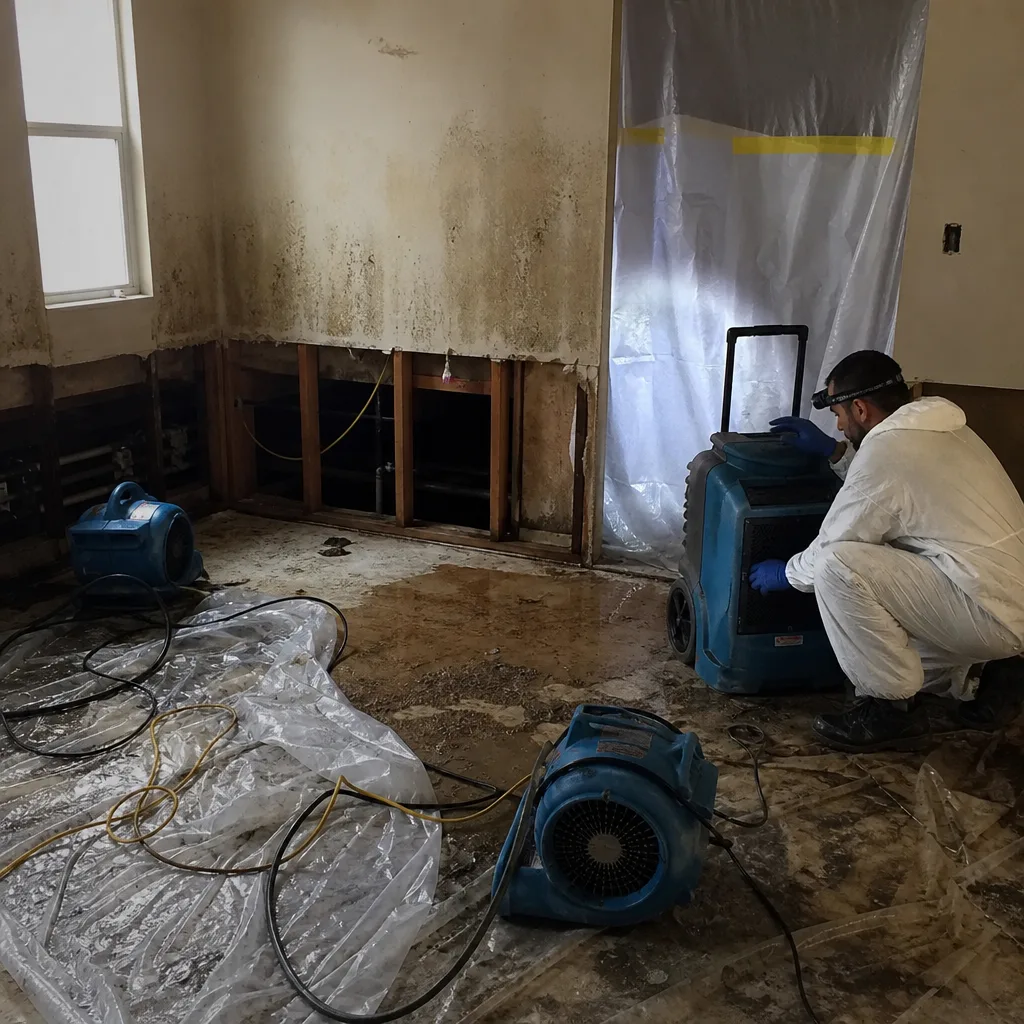 Before
 After
Common Mold Remediation Problems We See in Ontario Homes
- Flat-roof patch failures in 1950s-60s core ZIPs: Original flat and low-slope roofs over single-story homes in 91761 and 91762 reopen at old patch lines during winter atmospheric-river storms. Water drips into ceiling and wall cavities for weeks before a musty smell or stain surfaces, and the cavity is usually moldier than the visible stain suggests.
- Second-floor supply-line leaks in 1990s-2000s two-story tracts: PEX supply lines fail inside wall or floor assemblies, wet the ceiling of the floor below, and grow mold inside the closed cavity within two days. Contractors who spot-dry the visible ceiling without opening the assembly leave active mold behind.
- Missed water classification on aging-plumbing losses: Galvanized and early copper supply lines in older Ontario homes eventually leak, and the water that comes out is rarely clean. Contractors who skip Category 1/2/3 classification dry framing that should have been removed, locking contamination into the structure.
- Bathroom humidity in original-bath homes: A 1950s or 1960s Ontario tract home usually has one bathroom with an undersized or improperly vented exhaust fan. Persistent humidity feeds ongoing surface mold on drywall and behind vanities that keeps coming back until the ventilation is actually fixed.
Pricing for Mold Remediation in Ontario, CA
Here’s what Ontario homeowners and property managers can expect. A contained bathroom mold job runs $450 – $1,400. A cavity mold job in a ceiling or wall assembly runs $1,500 – $4,200, depending on how far we have to open and whether structural drying equipment is needed. Whole-room or multi-room remediation in a flat-roof home with roof-patch water intrusion runs $3,500 – $6,500, and that includes containment, material removal, drying, antimicrobial treatment, and rebuild-ready framing. What moves the number is square footage of affected assembly, accessibility, and whether the water that caused it was clean or contaminated. We write a scope before work starts, and we don’t start until you’ve read it. Call (833) 589-5317 for an exact quote, free.
We Also Serve Cities Near Ontario
Dry Line Water Damage handles mold jobs across the broader Inland Empire, including Montclair, Upland, Chino, and San Antonio Heights. If you’re in a neighboring city and dealing with the same slab-foundation, flat-roof, or cavity-leak issues we see in Ontario, the Mold Remediation in Ontario process applies exactly the same way. Call (833) 589-5317 and we’ll let you know when we can be there.
Serving Ontario, CA — Our Local Coverage Area
We’re based in the Ontario area and know this community well. Use the map below to see our service coverage — if you’re nearby, we can almost certainly help.
FAQs About Mold Remediation in Ontario
Because the flat or low-slope roofs on those 1950s and 1960s tract homes fail slowly. Water gets past an old patch, moves through the roof assembly, and sits in the ceiling or wall cavity. You don’t see anything for weeks because the visible drywall surface is the last thing to show moisture. By the time a stain appears, the cavity above it has been wet long enough for mold to be established. If you smelled mustiness after the last atmospheric-river storm, call (833) 589-5317 and we’ll moisture-map the ceiling before anyone tears into the surface blindly.
It’s almost never just a stain. A first-floor ceiling stain in a two-story Ontario home means water released inside the floor assembly above, and that closed cavity has been wet for at least a couple of days. Mold starts growing inside the assembly within 24 to 48 hours, before the stain even shows. We open a small access point, inspect the cavity, take moisture readings, and scope the job from what’s actually there. Call (833) 589-5317 for an inspection.
Yes, and it changes what gets removed. Category 1 is clean water, like a supply line. Category 2 carries some contamination, like a toilet overflow or sump water. Category 3 is unsanitary, like sewage or floodwater. In older Ontario homes with aging galvanized or copper plumbing, a slow plumbing leak is often Category 2 by the time it’s found. Framing that soaked in Category 2 or 3 water should generally be removed rather than dried. A contractor who skips classification dries framing that should have been torn out. That’s a health and structural problem later, and it’s the kind of corner we don’t cut.
Usually, yes, if the mold is limited to the drywall, baseboard, and surface of the framing. We contain the bathroom, remove the affected drywall, treat the studs, dry the cavity with commercial equipment, and rebuild. A full gut is only necessary when the framing itself is saturated with contaminated water or when the growth extends far beyond the visible area. Injectidry panels often let us dry cavities in place instead of tearing out extra material. Call (833) 589-5317 and we’ll tell you honestly which path your bathroom needs.
Yes. We handle warehouse sprinkler failures, roof-drain overflows, and logistics-facility water losses along the 60 and I-15 corridors in Ontario. Those jobs involve larger square footage, higher ceilings, and different containment logistics than a residential bathroom, but the process is the same: classify the water, map the wet area, contain it, dry it with commercial-grade equipment, and document everything for the property owner and insurer. Glen Pacheco has run commercial losses in Ontario’s industrial corridor that most residential-only restoration crews in the area never see. Call (833) 589-5317 for a commercial scope.
Written by Glen Pacheco, Owner at Dry Line Water Damage, serving Ontario and the Inland Empire with IICRC-certified mold remediation, water damage restoration, and fire damage restoration.