

 Water damage drying
 Fire & smoke cleanup
 Mold remediation
 Storm response
 Sewage cleanup
 Reconstruction
Free visual inspection and a written scope of work before any mitigation begins - photos, moisture readings, and drying logs go in your claim file
The scope we write is the scope we bill. Anything new gets shown to you, in writing, before we touch it.
Get your free estimateFast, Reliable Water Damage Restoration Across Colton
Water damage restoration in Colton costs between $2,100 and $7,800 for a typical single room, while whole-home flood cleanup from storm runoff or a burst supply line runs $9,000 to $28,000 depending on how far the water traveled under slab floors and into wall cavities. We serve every corner of 92324, from the older stucco tracts west of Rancho Avenue to the rail-adjacent pockets near the Union Pacific corridor, and our crews reach most Colton addresses within 45 to 90 minutes of your call. Glen Pacheco built Dry Line Water Damage to answer the specific challenge Colton homes present: water that hides under finished floors on slab foundations, where there’s no basement to reveal the intrusion until secondary damage has already started. Call (833) 589-5317 any hour, and we’ll have a certified technician mapping moisture across your floor plan while the water is still being extracted.
Why Dry Line Water Damage Is Colton’s Preferred Water Damage Restoration Company
Glen Pacheco runs an IICRC-certified operation, which means our technicians train to an external standard that covers water categories, drying science, and mold containment rather than a company-issued checklist. We’ve been walking Colton’s 1950s-70s stucco homes for years, and we know what a slab-on-grade floor plan does to water migration. A leak at one end of a hallway can track under the floating floor and show elevated moisture 20 feet away in the master bedroom, because there’s no basement break to stop lateral wicking. That’s a Colton-specific failure mode, and we dry for it.
Our customers along La Cadena Drive and down toward Grand Terrace have told us the same thing: they want proof the structure is dry, not a technician’s hand wave. We document every job with moisture maps, pre-loss condition photos, and drying logs your adjuster can actually use. As an RIA member, we’re bound to a published code of ethics, and our process reflects that.
Restoration work we handle
Water Mitigation in Colton
Water mitigation in Colton means stopping the spread first, then drying the structure to a documented standard using the same commercial-grade equipment large-loss contractors run. When a supply line bursts or storm runoff pushes through a door, the first 24 to 48 hours decide whether you’re dealing with a dry-out or a mold remediation. Our crews arrive in Colton ready to extract standing water, remove saturated padding and baseboards as needed, and set up containment so moisture doesn’t migrate deeper into unaffected rooms.
Structural Drying Without Unnecessary Demo
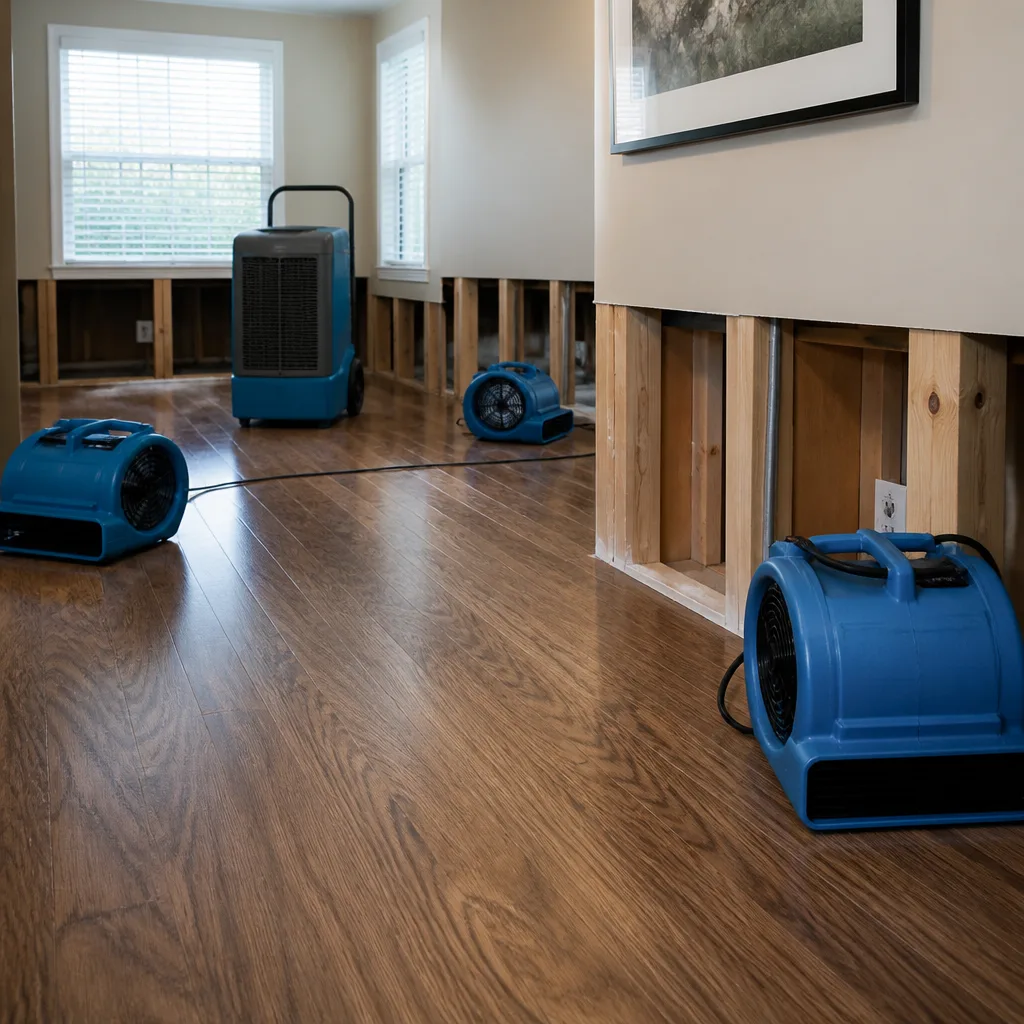
We run Injectidry systems that pull water from inside wall and floor cavities without tearing out every square foot of drywall or flooring. On Colton’s slab homes, that matters: the more finished floor we can dry in place, the smaller the rebuild scope and the shorter the time before you’re back in the house. We verify with moisture meters and thermal imaging, not a visual once-over.
What Colton Water Mitigation Costs
Mitigation alone, before any rebuild, typically runs $1,800 to $5,400 in Colton. That includes extraction, equipment placement, monitoring, and documentation. The price swings with how many rooms are involved and how far water tracked under the slab.
For full-scope Water Damage Restoration that includes mitigation plus rebuild, Colton homes generally land between $7,000 and $24,000 depending on materials and finish level.
Flooded Basement in Colton
Most Colton homes don’t have basements, so when we talk about a flooded basement in Colton we’re usually describing a converted garage, a sunken living room, or a below-grade utility area where storm runoff pooled. Slab homes here don’t drain down like a true basement; water sits against the foundation and seeps under the plate. In the 92324 flats north of the 10 and south of Valley Boulevard, seasonal rain can send muddy runoff across low-lying lots fast enough that water comes in under doors and through garage slab seams.
Storm Runoff and Foundation Seepage
When muddy water pushes through, it’s almost always category 2 or worse, which carries its own drying and disinfection protocol. We extract first, then map where the water traveled. On slab homes near the rail spur, vibration-related hairline cracking in the slab edge invites exactly this kind of intrusion, and a surface mop doesn’t touch it.
Extraction and Drying for Slab Homes
We use truck-mounted extraction where conditions allow, then place Dri-Eaz LGR dehumidifiers and XPOWER air movers in the affected zone. On a typical sunken garage or below-grade utility room in Colton, extraction plus structural drying runs $2,400 to $6,900 before any finish work.

Trusted Brands We Service in Colton
We don’t bring consumer-rental machines to a Colton job. Our fleet includes Dri-Eaz and Phoenix dehumidifiers, XPOWER and B-Air air movers, and Injectidry structural-drying systems, the same gear you’d see on a commercial loss or a hospital corridor dry-out. We keep parts and accessories stocked for these systems, and because our technicians train on the equipment they run in the field, there’s less downtime and fewer return trips for our Colton customers. IICRC certification means the person running the machine understands the drying science behind it, not just which button to push.
See the difference
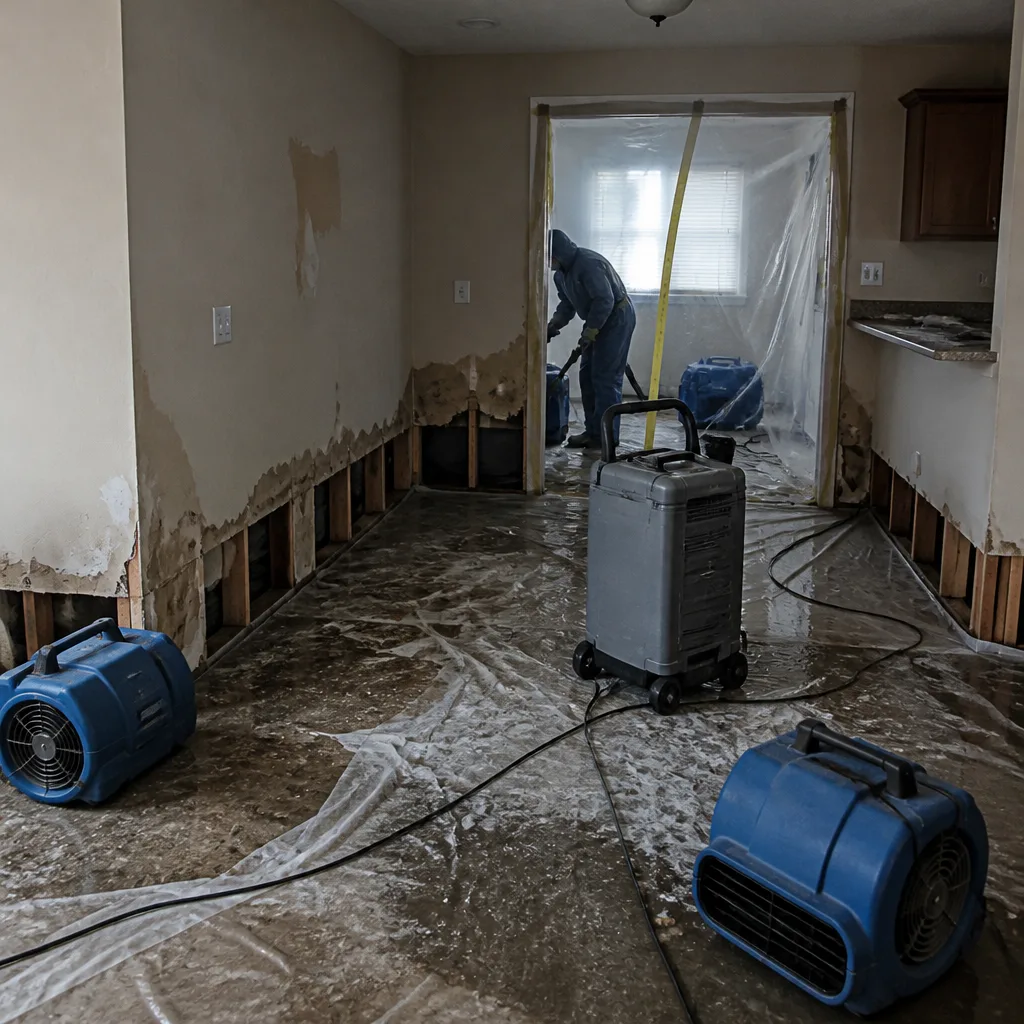 Before
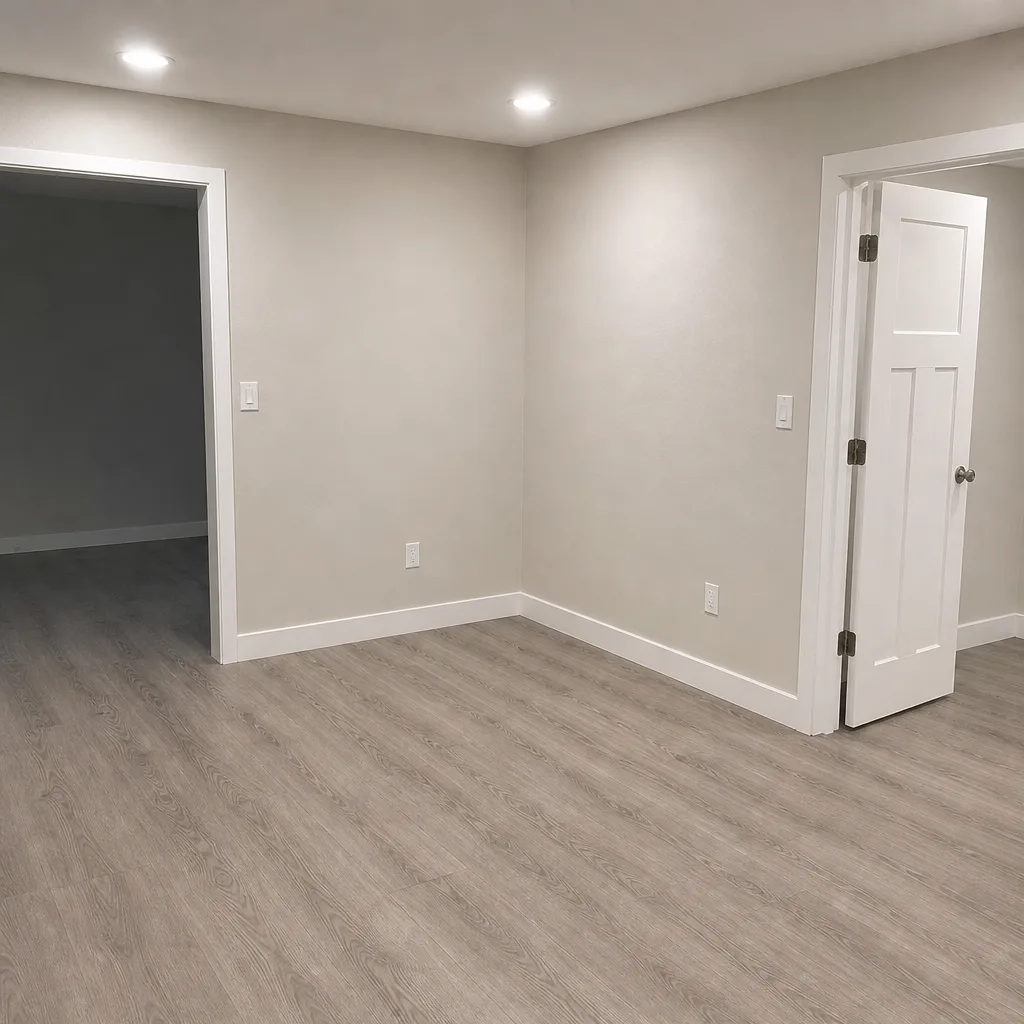 After
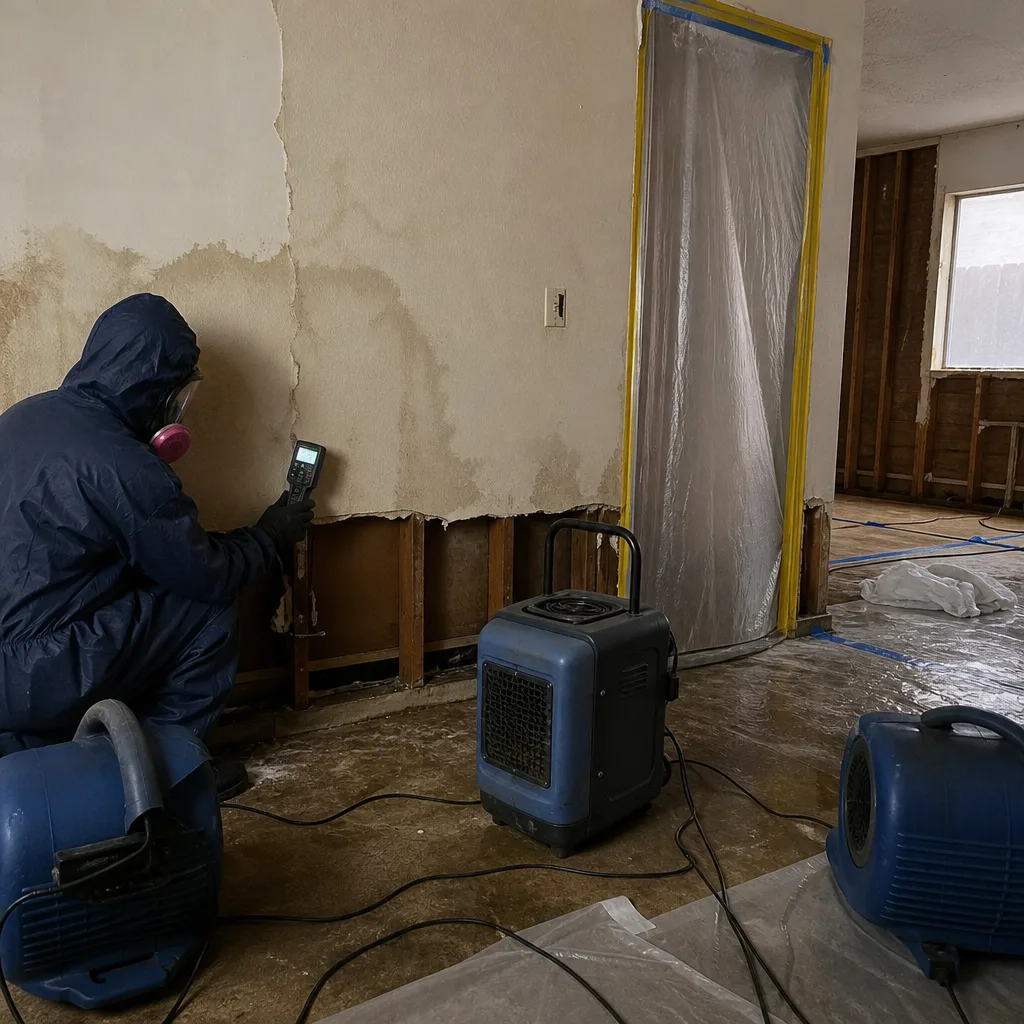 Before
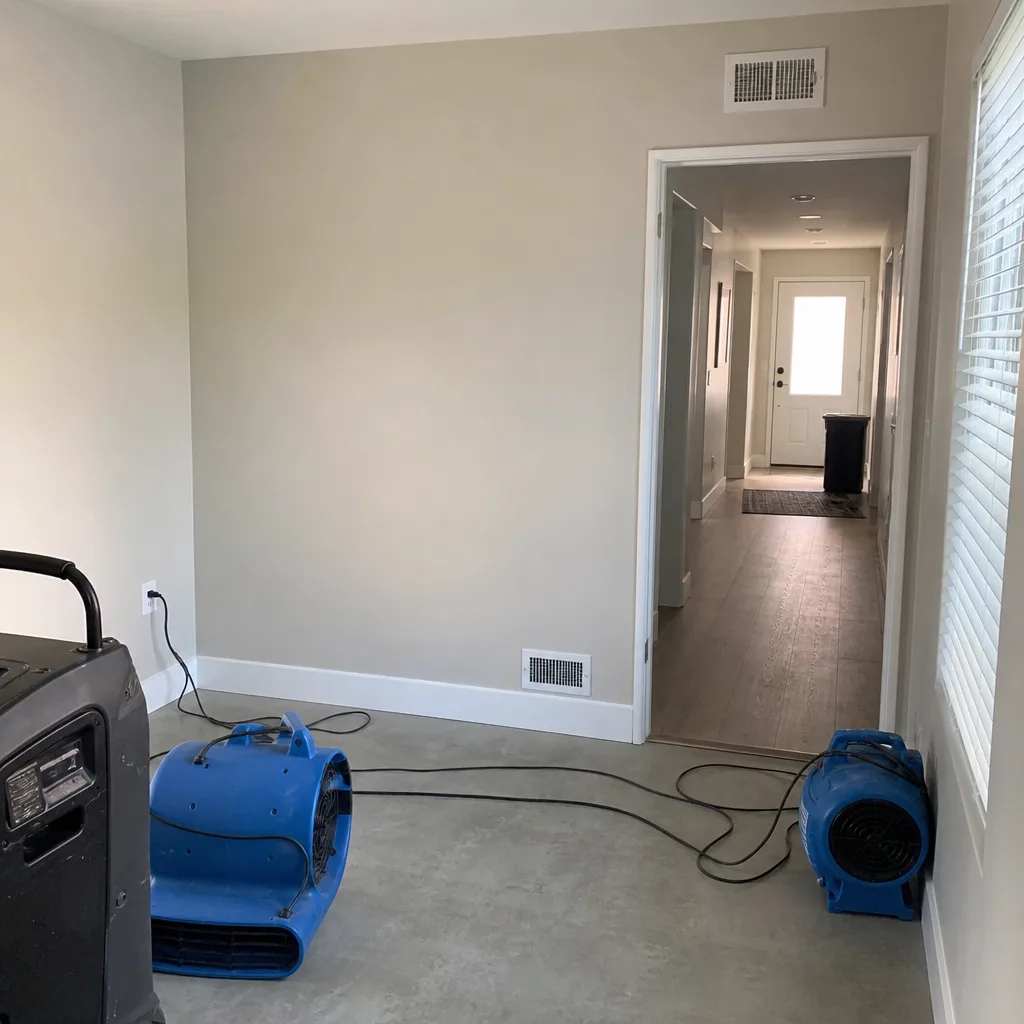 After
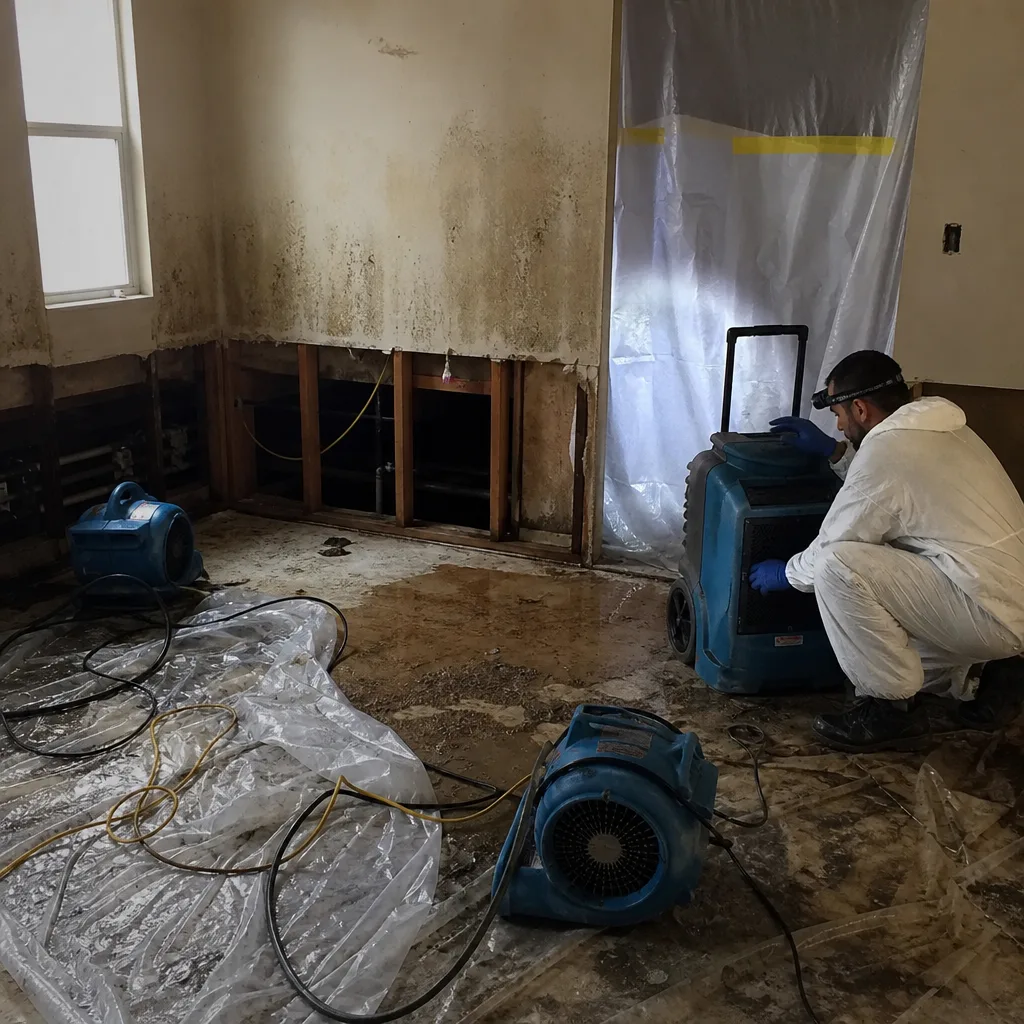 Before
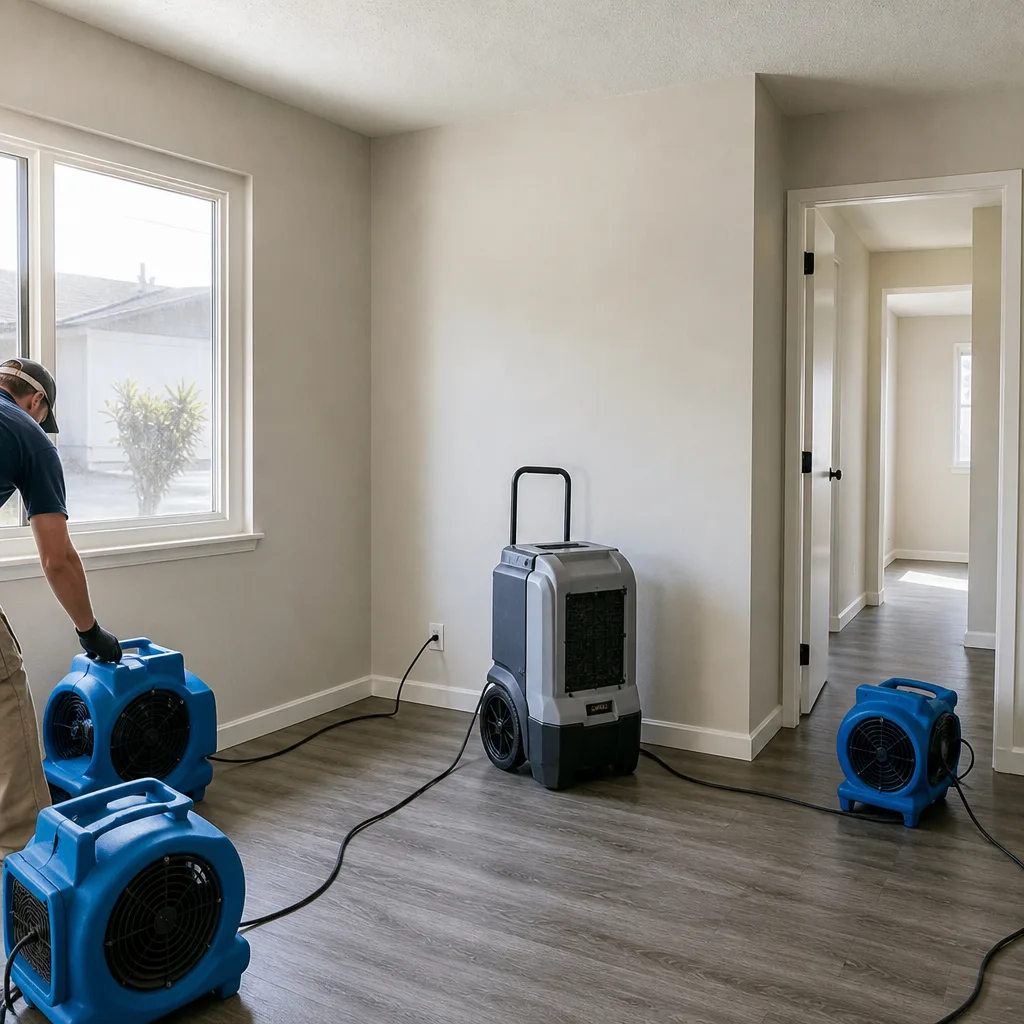 After
Common Water Damage Restoration Problems We See in Colton Homes
- Water wicking laterally under finished floors on slab foundations. No basement means no visible tell. By the time a homeowner notices cupping laminate or musty air in a 1960s stucco house, the moisture has often been moving for a week, which pushes the job into category 2 or 3 territory.
- Hairline stucco cracking near the rail corridor and the heavy truck routes along Barton Road. Freight vibration works through the soil over decades. The cracks look cosmetic, but during a Santa Ana rain event they become the primary entry point for wind-driven moisture and runoff, and we find wet insulation and damp framing behind stucco that looked dry from the street.
- Wind-driven roof failures that never get moisture-mapped into wall cavities. Santa Ana gusts throw debris and lift shingles, then rain follows the opening. Some crews replace the shingle and call it done. We check the wall cavities and the slab edge beneath the leak, because Colton’s dry summers mean a little trapped moisture can stay hidden for months.
- Garage slab cracks from decades of thermal expansion. Colton’s hot, dry summers bake concrete, and seasonal rain finds the micro-cracks. Flooded garage slabs in 92324 often read elevated moisture across a much wider area than the visible wet spot suggests.
Pricing for Water Damage Restoration in Colton, CA
In Colton, emergency water extraction for a single room typically runs $800 to $2,400, while full structural drying using LGR dehumidifiers and Injectidry systems lands between $3,000 and $9,000 depending on square footage. When the job includes removal of saturated flooring, drywall repair, and finish work, most 92324 homes fall in the $9,000 to $24,000 range. The two biggest cost variables are how far water traveled under the slab and how much of the finished floor can be dried in place rather than replaced. Every estimate we give Colton homeowners is free, and we document the scope in writing before work starts. Call (833) 589-5317 and we’ll have someone at your door with a moisture meter.
We Also Serve Cities Near Colton
Our crews work throughout the Inland Empire’s older housing stock, and we regularly serve Grand Terrace, Highgrove, Loma Linda, and Rubidoux. If you’re in a neighboring city and facing water intrusion, the same IICRC-certified process applies. You can read more about the city-specific conditions we see by visiting our Water Damage Restoration in Colton page, or call (833) 589-5317 for a direct dispatch.
Serving Colton, CA — Our Local Coverage Area
We’re based in the Colton area and know this community well. Use the map below to see our service coverage — if you’re nearby, we can almost certainly help.
FAQs About Water Damage Restoration in Colton
Colton’s 1950s-70s homes sit on slab-on-grade foundations without basements, so water can’t drain vertically into a lower level. Instead it moves horizontally under the finished floor, wicking through the slab edge and the flooring underlayment for 10, 20, or 30 feet before a homeowner sees a single wet spot. Add decades of rail and truck vibration working hairline cracks into the slab, and the water has a network of tiny channels to travel through. That’s why we moisture-map the entire floor plan on every Colton job, not just the visible wet area. Call (833) 589-5317 if you suspect hidden water under your floors.
Within the first 24 to 48 hours. After that window, dormant mold spores in the building materials begin to activate, and a drying job becomes a mold remediation. Storm runoff in Colton is usually category 2 or 3 water, which carries contaminants and requires more aggressive drying and disinfection. The faster extraction starts, the less flooring and drywall we have to remove. Call (833) 589-5317 the moment water enters and we’ll dispatch to 92324 immediately.
Yes, in a way that’s unique to Colton. Constant vibration from freight lines and heavy truck traffic on Barton Road transmits through the soil and into older slab foundations and stucco walls, opening hairline cracks over the years. Those cracks become moisture entry points during rain events, and we routinely find damp framing behind stucco that would be dry in a quieter city. It’s one reason our moisture readings near the rail corridor often cover a wider area than the visible damage suggests.
Category 1 is clean water from a supply line or a burst pipe. Category 2 contains significant contamination, like laundry discharge or sump overflow. Category 3 is grossly contaminated, which includes storm runoff and sewage. In Colton, a broken supply line behind a vanity is a category 1. The muddy runoff that pushes under a garage door during a Santa Ana rain event is almost always category 3. Each category requires a different drying and disinfection protocol, and we document the category in the drying log for your insurer. Call (833) 589-5317 for an assessment in Colton.
Yes, and a large share of our Colton work is on rental properties, because much of the city’s housing stock is older and rental-heavy. We coordinate directly with property managers, provide the moisture documentation and pre-loss photos adjusters require, and write scopes that make sense for a rental unit, where the priority is drying fast and minimizing vacancy time. Glen Pacheco and the Dry Line team understand landlord-tenant timelines and insurance billing. Call (833) 589-5317 for a free estimate on rental or owner-occupied properties in Colton.
We got a call on a 1960s single-story stucco home near the Colton rail corridor where Santa Ana-driven debris had punched a roof vent and storm runoff ran down inside the wall cavity, soaking the slab under the original vinyl. Our tech pulled moisture readings across the floor plan, set up containment, ran water extraction and LGR dehumidification with Dri-Eaz and XPOWER air movers, and logged a drying log against the pre-loss condition for the landlord’s insurer. Stucco cracking near the tracks had let moisture track laterally, so we extended structural drying into the adjacent room before any rebuild. The home dried to standard in six days, with about a third of the flooring saved that a less thorough crew would have torn out.
If water is in your Colton home right now, call (833) 589-5317. We answer around the clock, and our estimate is free. If you’re still watching a damp spot on the carpet or a musty smell in the hallway, call anyway. The moisture we can’t see is the moisture that costs the most later.
Written by Glen Pacheco, Owner at Dry Line Water Damage, serving Colton’s water-damaged homes and rental properties with IICRC-certified process and documented drying standards.