 Water damage drying
 Fire & smoke cleanup
 Mold remediation
 Storm response
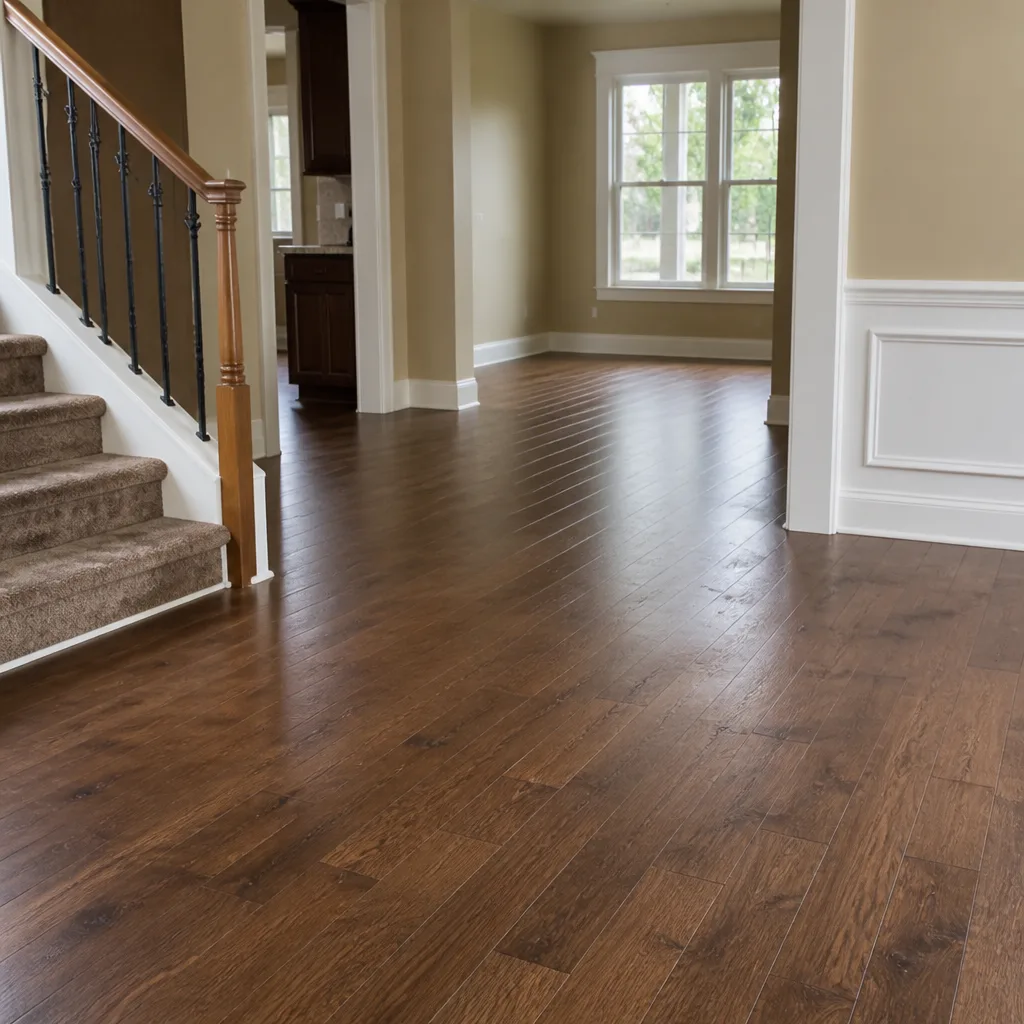 Sewage cleanup
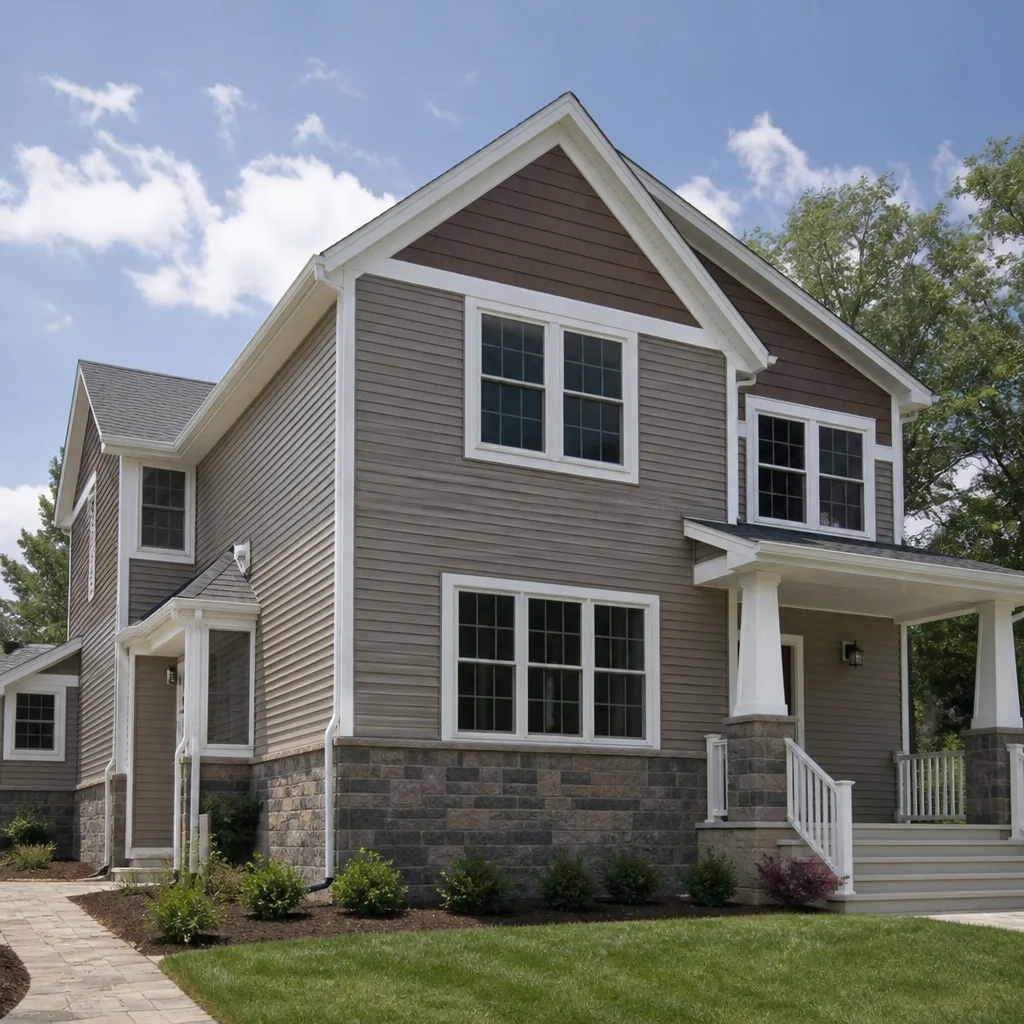 Reconstruction
Free visual inspection and a written scope of work before any mitigation begins - photos, moisture readings, and drying logs go in your claim file
The scope we write is the scope we bill. Anything new gets shown to you, in writing, before we touch it.
Get your free estimateRestoration work we handle
See the difference
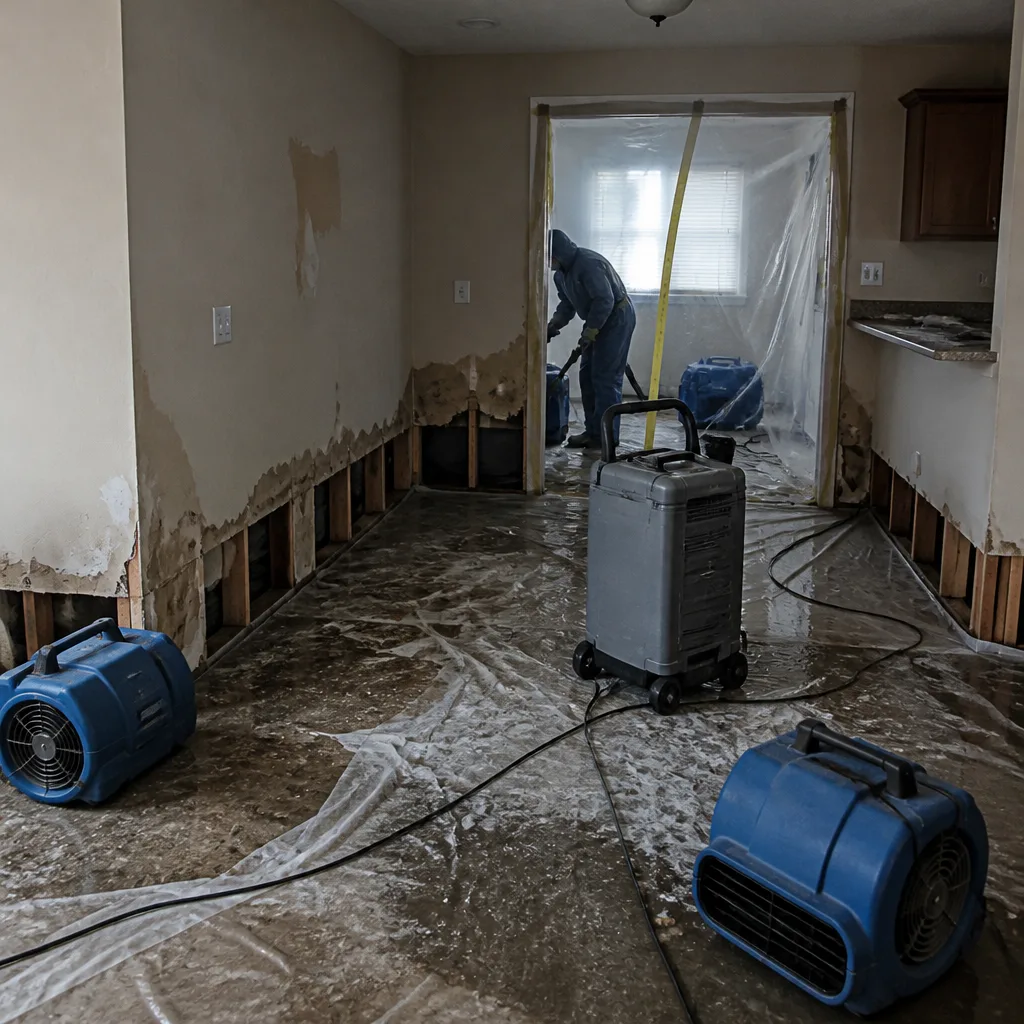 Before
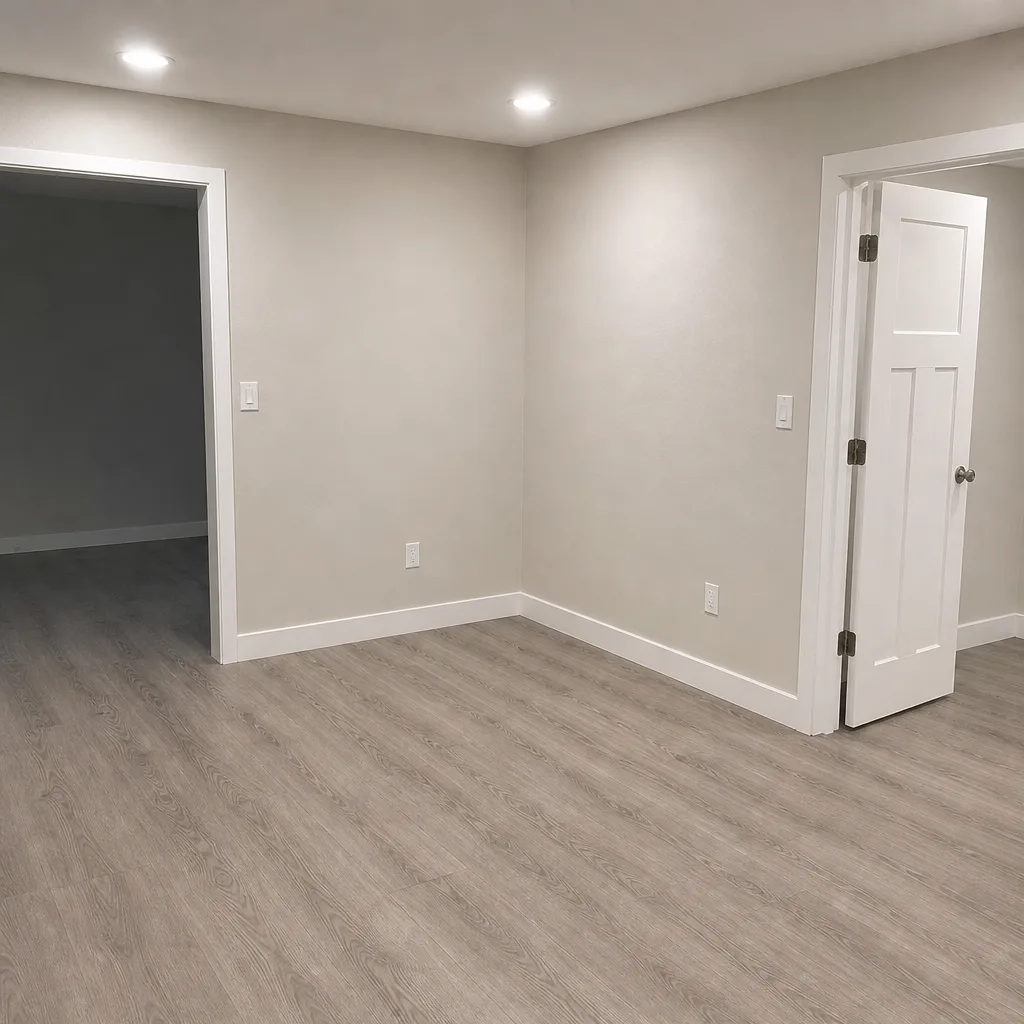 After
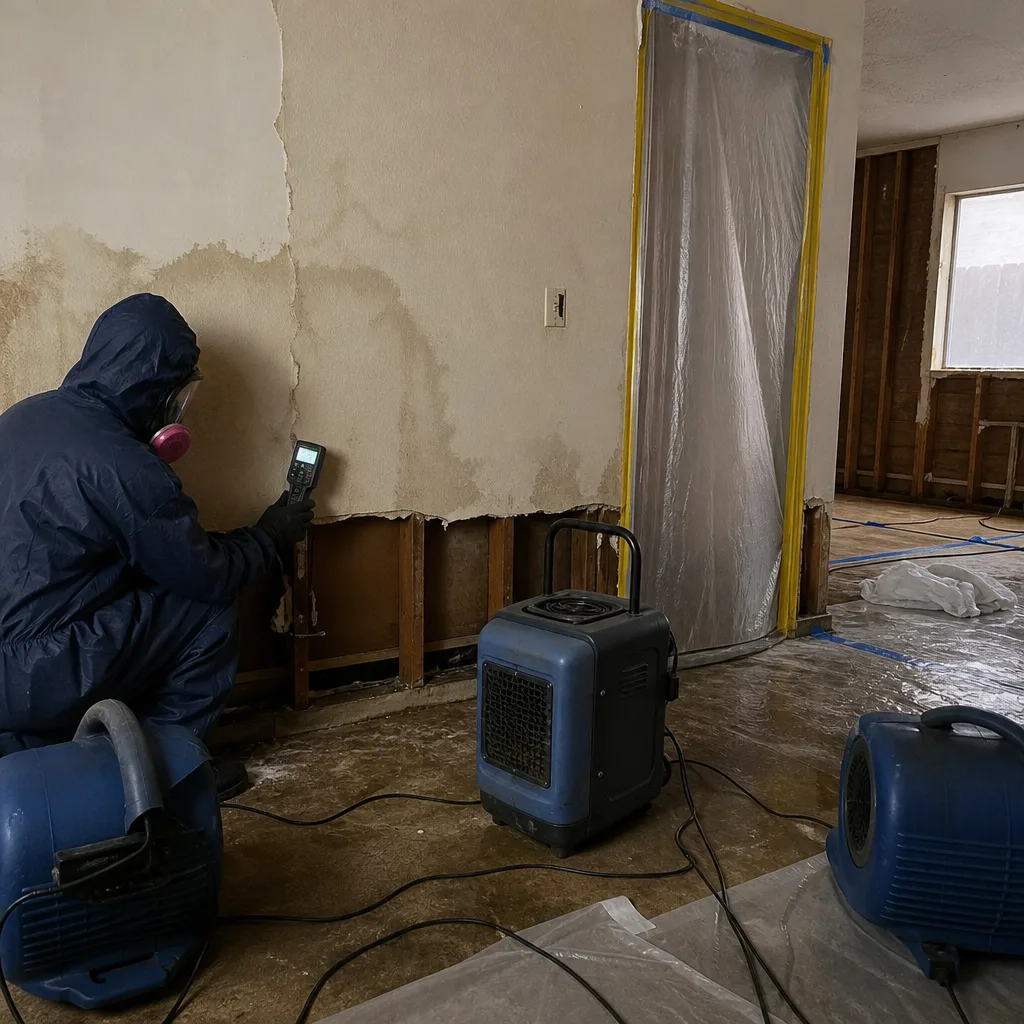 Before
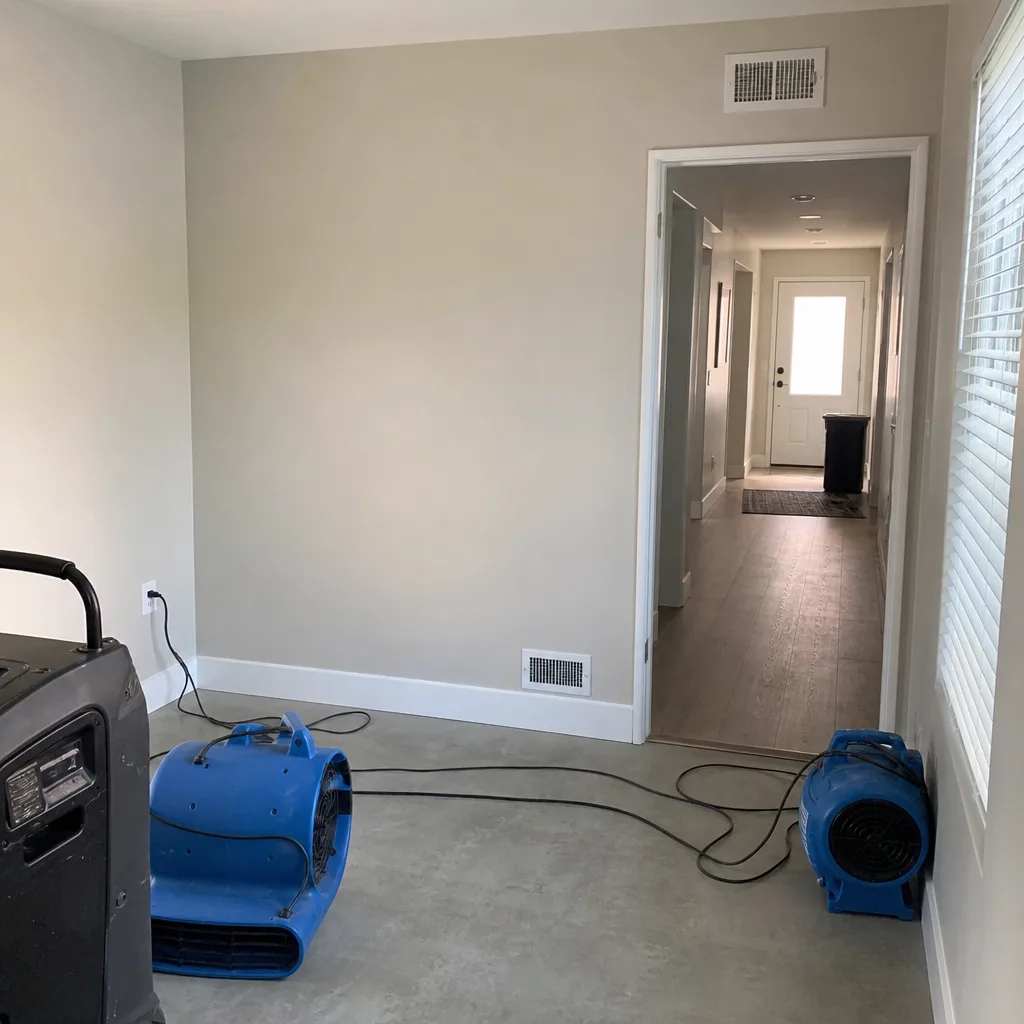 After
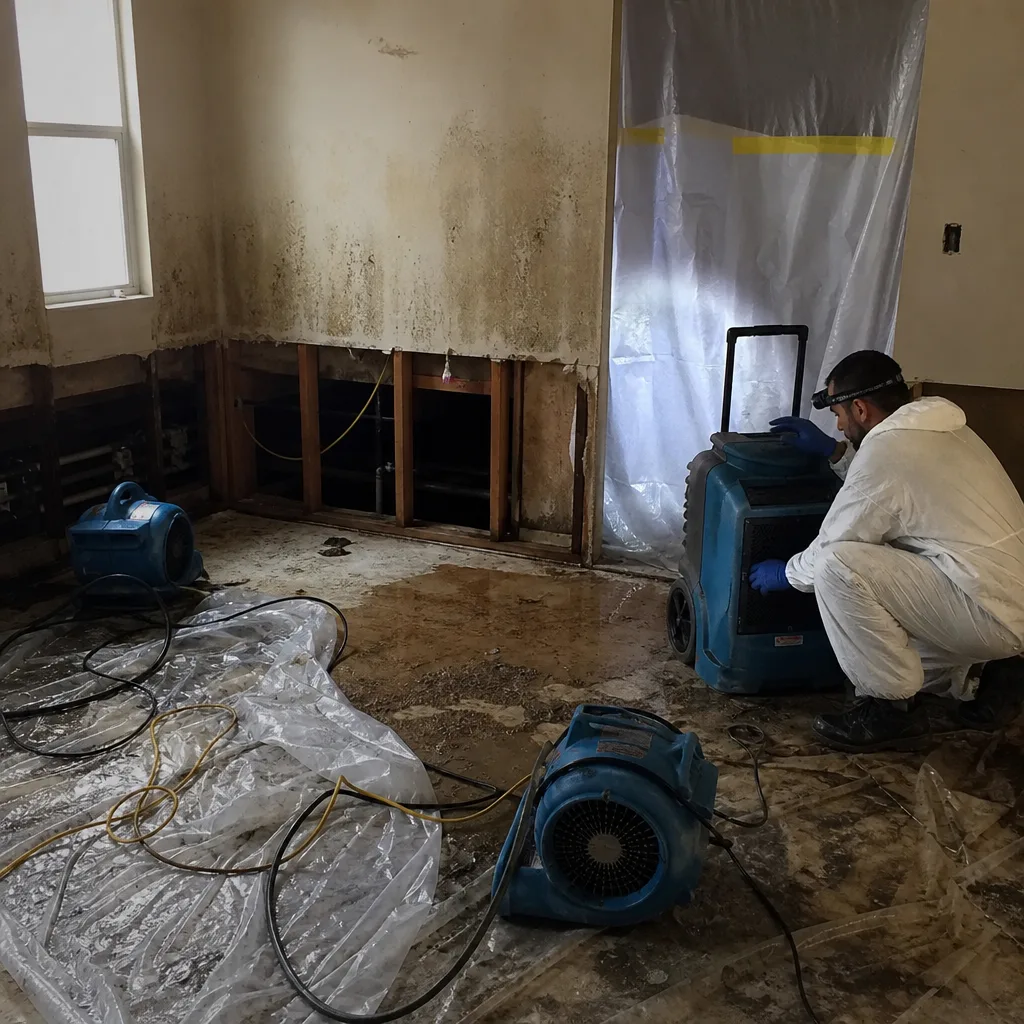 Before
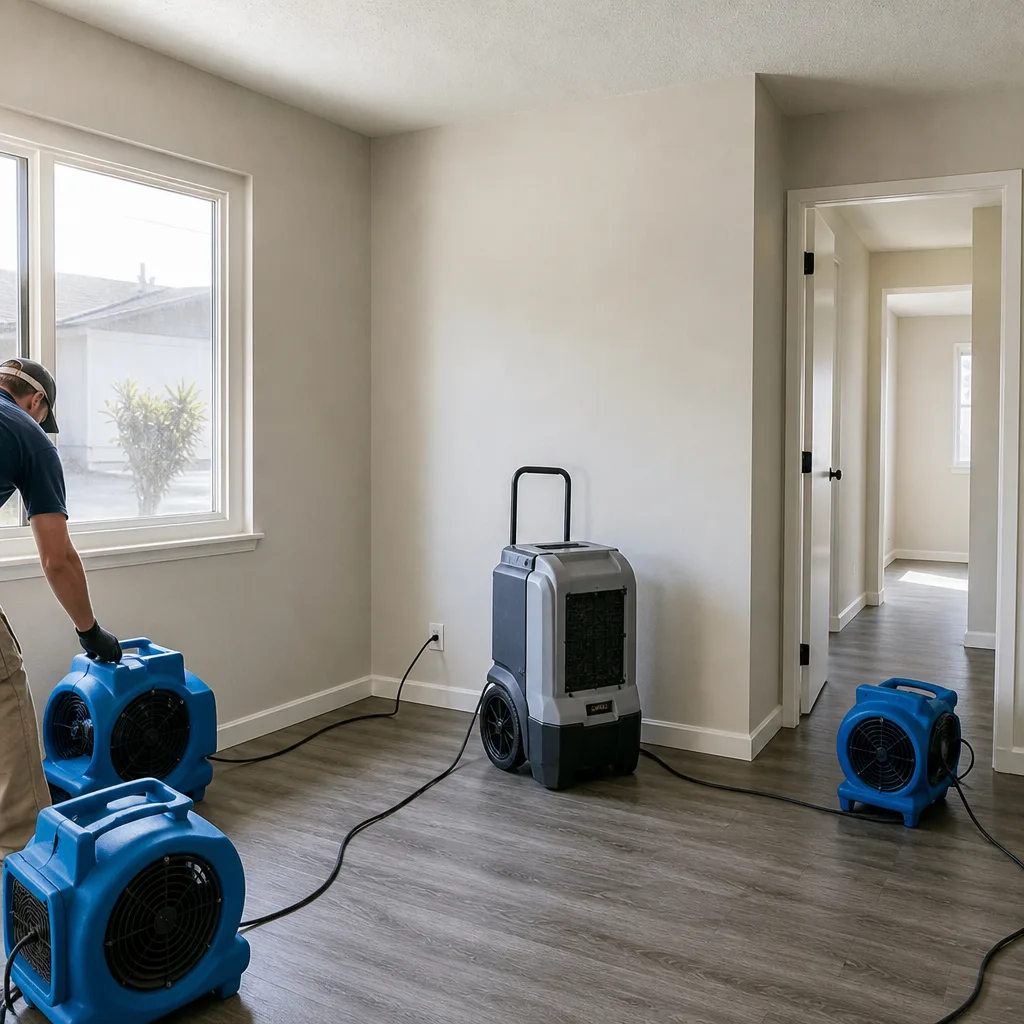 After
How Much Does Water Damage Restoration Cost in Fontana?
In Fontana, most residential water damage restoration jobs run between $1,800 and $5,600, and a clean, fast-caught supply-line leak often lands near the low end at $1,200 to $2,000. Larger jobs involving a slab leak, a failed second-floor water heater, or a category 3 sewage backup can push past $8,000 once drywall, cabinets, and flooring are replaced. The number that matters most is how quickly the drying starts. Water that sits past 48 hours turns a drying job into a demolition job, and that’s where the price jumps.
Dry Line Water Damage handles water damage restoration, mold, and fire losses with one IICRC-certified crew and commercial-grade drying systems. We give free estimates in Fontana, and we’ll tell you plainly what has to come out and what can be saved.
Key Takeaways
- Typical Fontana water damage restoration: $1,800 to $5,600.
- Category 3 (sewage or contaminated) water costs 35% to 60% more than clean-water losses.
- Mold found behind a wall adds $1,200 to $4,500 for remediation.
- Insured losses are usually billed to the carrier, and you typically owe only your deductible.
- Starting professional drying within 24 hours is the single biggest cost saver.
Water Damage Restoration Cost Breakdown (2026)
Here’s how Fontana pricing shakes out line by line for the 2026 market. Ranges assume a single-family home and a typical 400 to 900 square-foot affected area.
| Service / Line Item | Typical Fontana Range | Notes |
|---|---|---|
| Water extraction (standing water) | $250 – $800 | Weighted by water depth and floor type |
| Structural drying / dehumidification (per day) | $150 – $450 | 3 to 5 days is standard; more for thick slab or tile |
| Moisture mapping & monitoring | $75 – $250 | Documented readings for insurance |
| Drywall removal and disposal (per sq ft) | $3 – $7 | Flood cuts 12 to 24 inches above the water line |
| Baseboard and trim removal | $4 – $9 per linear ft | Often unavoidable in soaked rooms |
| Antimicrobial treatment | $200 – $600 | Applied after extraction, before drying |
| Mold remediation (if found) | $1,200 – $4,500 | Higher for HVAC contamination or large areas |
| Content pack-out, cleaning, storage | $400 – $2,500 | Furniture, electronics, documents |
| Carpet and pad replacement | $4 – $9 per sq ft | Pad is almost always discarded |
| Drywall repair and repaint | $3 – $8 per sq ft | After drying is confirmed |
| Flooring replacement (LVP or laminate) | $4 – $11 per sq ft | Wood and tile cost more |
| Sewage/category 3 cleanup surcharge | 35% – 60% of total | Requires containment and PPE |
The line items above are ranges because three things move the total more than anything else: how contaminated the water is, how much material gets wet, and how long the home sat before anyone called. A clean supply-line leak in an open living room dries faster than a slow pinhole leak behind cabinetry that’s been running for a week. Category 1 water (clean) is the cheapest to handle. Category 2 (gray) comes from appliances and washing machines. Category 3 (black) is groundwater flooding and sewage, and it requires containment, antimicrobials, and removing any porous material it touched. Fontana’s summer heat drives a lot of category 3 calls after monsoonal storms and flash floods push water through garage slabs and low crawlspaces.
What Affects Water Damage Restoration Pricing in Fontana
Fontana isn’t a generic market, and the local conditions here drive specific cost differences.
- Water category and contamination. Clean-water losses typically run $1,800 to $3,200; category 3 losses routinely reach $4,000 to $8,000 because contaminated materials can’t be dried in place, they have to be removed and disposed of.
- Slab-on-grade construction. Much of Fontana’s housing stock, from older Southridge homes to newer builds near Sierra Lakes, sits on slab foundation. Water wicks into concrete and tile underlayment, and drying slab takes longer than a wood subfloor. Plan on 4 to 6 drying days, not 3.
- Summer desert heat vs. monsoon storms. Fontana’s hot, dry summers dry out surfaces fast, but they also cause slab cracks and expansion that let water migrate. The August-to-September monsoon season is when we see the most storm-driven calls, and flash flooding often hits garages and the front door threshold first.
- Mold risk and humidity. If the AC fails during a water loss in summer, indoor humidity can climb above 60% within hours, and mold can start in 24 to 48 hours. That’s why we deploy dehumidifiers immediately, not on day two.
- How far the water traveled. Water in one room is a small job. Water in the walls, under the slab, or in the attic is a different scope, and price scales with the linear footage of wall cavity that has to be dried.
- Insurance vs. out-of-pocket. If the loss is covered by homeowners insurance, most Fontana customers only pay their deductible. The full restoration cost is billed to the carrier, and that affects how we scope the job, not what you pay.
How to Save on Water Damage Restoration
You can’t fully control the price of a water loss, but a few practical choices consistently keep the total lower.
- Shut off the water and call for drying the same day. Every 24 hours of delay roughly adds a day of drying and often tips a wall into “has to come out” territory. That’s $800 to $2,000 in extra demolition and repair.
- Photograph everything before anything is moved. Clear before-and-after photos help adjusters build a complete scope. Missing photos are one of the most common reasons a claim gets underpaid.
- Document the source. Note whether it was a supply line, water heater, dishwasher, or storm intrusion. This tells us immediately whether we’re dealing with category 1 or category 3 water, and that estimate changes fast.
- Let the techs do their own moisture readings. We use Injectidry systems to dry inside wall cavities without tearing them open when conditions allow. Every wall saved means less drywall repair and paint.
- Call your insurance before calling three contractors. The adjuster and the restoration crew need to be on the same page about scope. Coordination gaps are the most common reason a claim drags on and out-of-pocket costs creep up.
We offer free estimates throughout Fontana and surrounding San Bernardino County. Call (833) 589-5317 and we’ll walk you through what we see and what it’s likely to cost before any work starts.
What Does Water Damage Restoration Usually Include?
A standard Fontana restoration job takes you from wet to documented dry in five stages.
- Emergency assessment and extraction. We locate the source, stop it, extract standing water, and map moisture readings throughout the affected area.
- Containment and material removal. Saturated drywall, baseboards, insulation, and flooring come out when they can’t be dried. We try to save as much as possible with Injectidry systems that reach inside cavities.
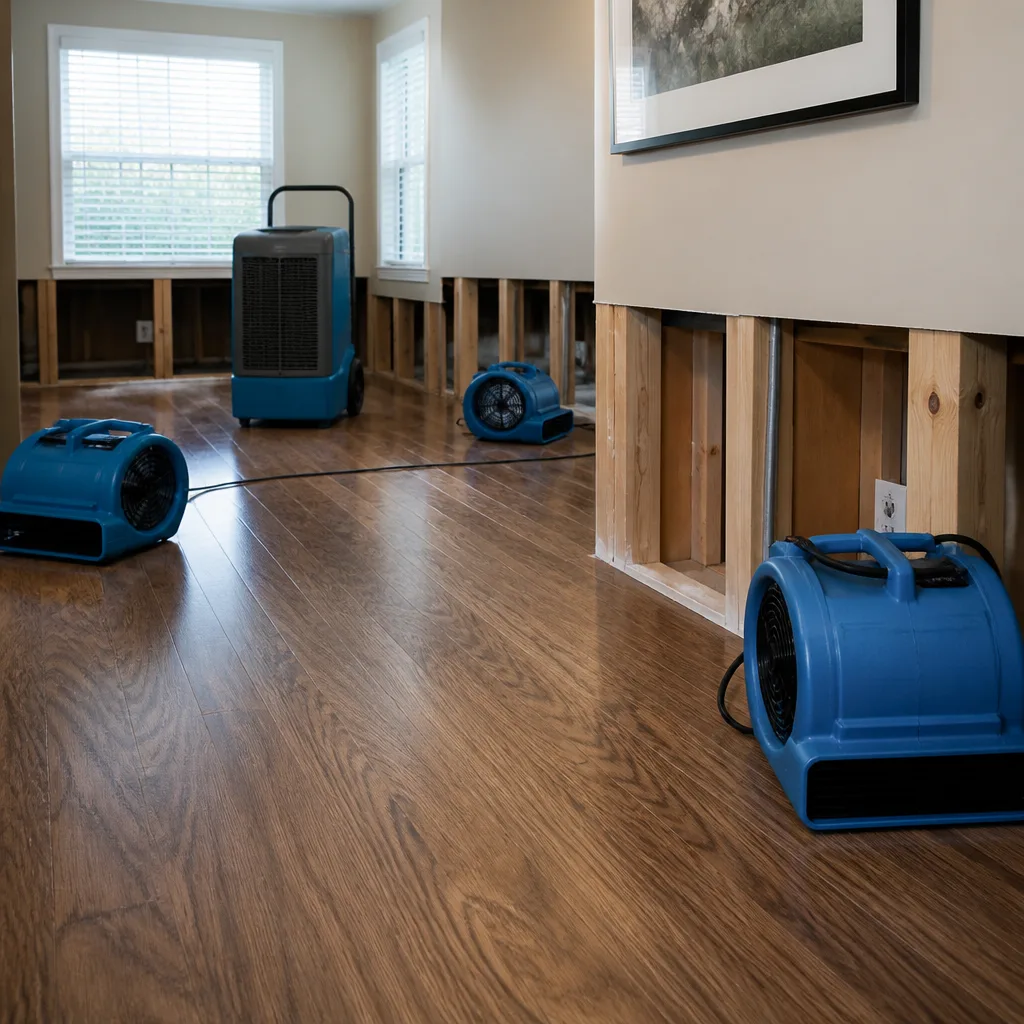
- Drying. Dri-Eaz and Phoenix dehumidifiers and air movers run continuously until daily moisture readings show the structure has reached a verified dry standard.
- Antimicrobial and monitoring. Applied early to prevent mold, with readings logged every day so you and your adjuster can see the progress.
- Repair and documentation. Drywall, flooring, and paint go back, and you get a written record of the moisture readings showing the building is actually dry.
The whole process typically takes five to seven days for a modest loss, and up to two weeks or more for a larger one. That’s why cost-per-day matters. Drying time adds up faster than the extraction does.
Does Homeowners Insurance Cover Water Damage Restoration in Fontana?
Most sudden water losses are covered. The standard rule: sudden and accidental is covered, gradual and maintenance-related is not. A burst pipe, a failed water heater, or a washing machine that overflowed usually gets paid. Slow leaks that built up over months, long-term rot, and flooding that comes from outside the home (monsoon storm flooding, for example) generally aren’t covered without separate flood insurance.
Here’s what typically happens in Fontana:
- Covered: burst supply lines, appliance failures, water heater leaks, roof leaks from sudden storm damage, sewage backups (if the policy rider is in place).
- Usually not covered: slow findings, worn-out plumbing, neglected maintenance, storm flooding from outside the home, and mold that resulted from a long-ignored leak.
- Deductible: typically $500 to $2,500 depending on your policy. If the total repair cost is close to your deductible, paying out of pocket may make more sense.
We document losses to insurance standards, photograph every material removed, log moisture readings daily, and speak the adjuster’s language about scope and category. If you’re unsure whether your policy covers a given loss, call (833) 589-5317 and we’ll walk through it with you.
When Should You Call a Water Damage Restoration Company Right Away?
Call the same day if any of these are true:
- Water is still running or hasn’t been shut off.
- The water is contaminated (sewage, toilet overflow, or outdoor floodwater).
- The affected area is larger than a few square feet.
- Water has reached under baseboards, into wall cavities, or under flooring.
- It’s been more than 24 hours since the water appeared.
- You can smell a musty or earthy odor.
What “why call now” comes down to is this: a $1,800 drying job becomes a $6,000 demolition-and-mold-remediation job when it sits for a week. Our team is IICRC-certified, RIA-affiliated, and works with Dri-Eaz, Phoenix, XPOWER, B-Air, and Injectidry equipment because that’s what it takes to reach a documented dry standard, not just a dry-looking surface. Learn more about our Water Damage Restoration in Fontana service or return to our home page to see how we work.
FAQs – Water Damage Restoration Cost
How much does water damage restoration cost in Fontana?
Most Fontana water damage restoration jobs cost between $1,800 and $5,600, with small clean-water losses starting around $1,200 and larger sewage or slab-leak jobs exceeding $8,000. Call (833) 589-5317 for a free, no-obligation estimate on your specific loss.
Is it cheaper to repair or replace after water damage?
Repair is almost always cheaper if the material can be dried within 48 hours. Drying a wall cavity costs far less than tearing it out, and that’s why we use Injectidry systems to reach inside walls before recommending demolition. Once mold is established or drywall has swelled, replacement is usually the lower-cost and safer path. We make that call based on moisture readings, not guesswork.
Does insurance cover water damage restoration?
Yes, for sudden accidental losses like burst pipes and water heater failures. Gradual leaks and outdoor flooding typically aren’t covered. Your out-of-pocket is usually just your deductible, which ranges from roughly $500 to $2,500. Call (833) 589-5317 and we’ll help you understand what your policy is likely to cover.
How long does water damage restoration take in Fontana?
Most jobs take five to seven days from extraction to dry, and larger slab or sewage losses can take ten to fourteen days. Slab-on-grade construction common in Fontana often adds a day or two of drying time compared to wood subfloors. The repair phase afterward adds its own timeline depending on scope.
Can you come today?
Yes. We schedule same-day assessments for active water losses throughout Fontana. The sooner we start drying, the smaller your final bill will be. Call (833) 589-5317 and we’ll confirm timing for your address.
Pricing reflects the Fontana market as of 2026. Dry Line Water Damage offers free estimates – call (833) 589-5317.
What Our Customers Say
"They cut the drywall at a clean line and only as far up as was actually wet, rather than gutting the whole room."
— Michelle Yang"Took moisture readings every day and logged them, and only pulled the drying equipment when the numbers said it was actually dry rather than on a fixed schedule."
— Diego Morales"Dealt directly with the insurance adjuster and documented everything with photos and readings. Our claim went through without a single dispute."
— Eric Park