

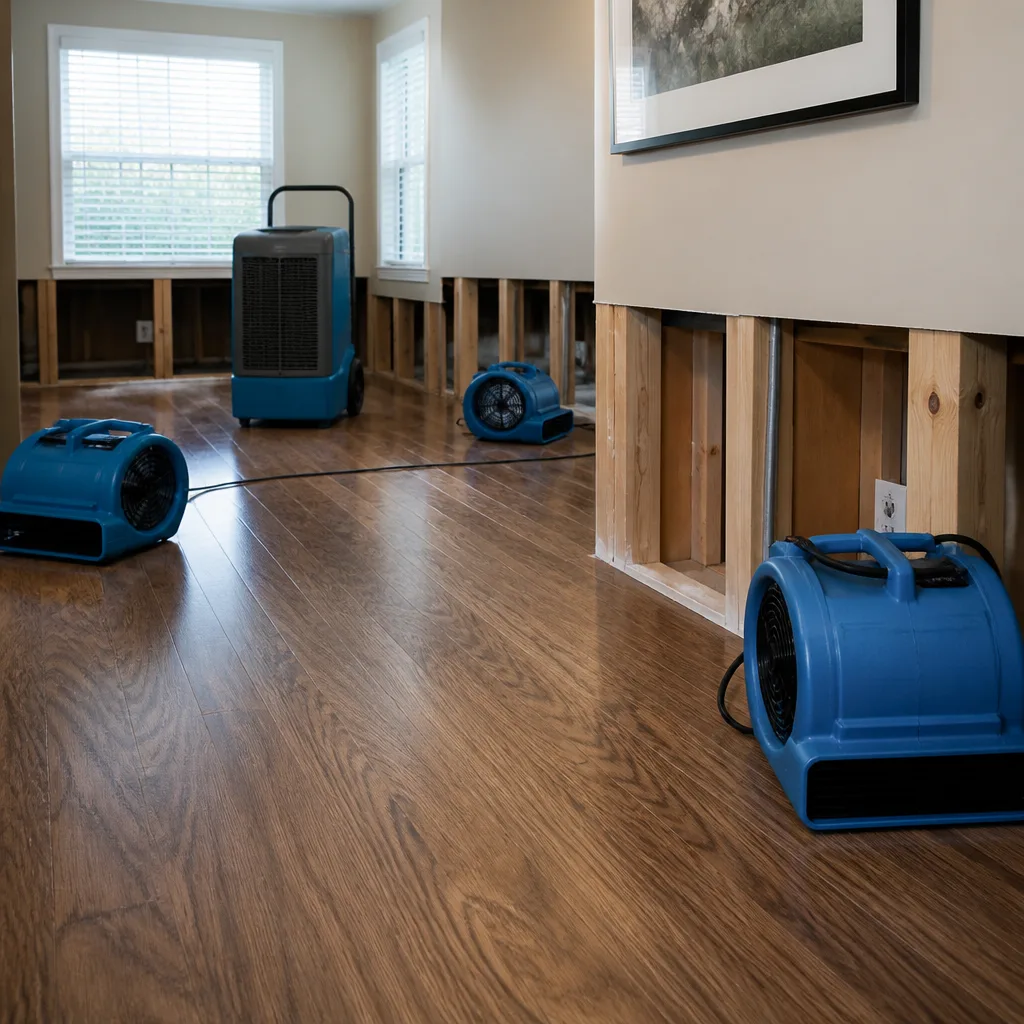
 Water damage drying
 Fire & smoke cleanup
 Mold remediation
 Storm response
 Sewage cleanup
 Reconstruction
Free visual inspection and a written scope of work before any mitigation begins - photos, moisture readings, and drying logs go in your claim file
The scope we write is the scope we bill. Anything new gets shown to you, in writing, before we touch it.
Get your free estimateFast, Reliable Water Damage Restoration Across Laguna Hills
Water damage restoration in Laguna Hills usually runs $2,400 to $6,800 for a typical Category 1 clean-water loss involving multiple rooms, with smaller isolated incidents starting around $900 and large-loss or contaminated-water jobs exceeding $12,000. Most structural drying in our area completes in 3 to 5 days when we can get equipment running within the first 24 hours. If you’re standing in water right now, call (833) 589-5317 and we’ll dispatch a crew to Laguna Hills immediately.
Laguna Hills is not a coastal city, and that changes how water damage behaves here. Homes built in the 1970s through 1990s along the Saddleback foothills deal with Santa Ana wind-driven rain that forces water sideways into attic vents and under tile eaves. The living room looks dry. The attic is not. We know this because we have pulled moisture readings across hundreds of stucco-over-wood homes in this city, not because we read it in a training manual. Our Water Damage Restoration team treats this inland-edge reality as the default starting point for Laguna Hills inspections.
Why Dry Line Water Damage Is Laguna Hills’s Preferred Water Damage Restoration Company
Laguna Hills homeowners and property managers call us because we run the same equipment and process on a 1,400-square-foot Nellie Gail Ranch townhome that large-loss restoration contractors run on commercial buildings. Dri-Eaz dehumidifiers, Phoenix air movers, XPOWER air scrubbers, and Injectidry structural drying systems are on our trucks, not rented from a counter. Glen Pacheco built Dry Line Water Damage around one principle: if the moisture readings are not documented, the job is not done. That standard matters in Laguna Hills, where hidden damp behind EIFS-style exteriors and inside ceiling cavities is the real enemy after a Santa Ana event.
We carry IICRC certification, which means our technicians are trained and tested to a third-party standard, not a self-issued credential. We are also a member of the Restoration Industry Association, bound by their published code of ethics. When your Laguna Hills adjuster asks for drying logs, thermal imaging summaries, and daily moisture content readings, we have them ready. That documentation is what separates a restoration company from a cleanup crew.
Response time to Laguna Hills from our dispatch center runs tight because we stage equipment for Orange County’s inland corridor. When the Santa Ana winds blow, we know the call pattern before the phones ring: attic intrusion, eave saturation, wind-blown debris damage. That local repetition means our techs arrive already thinking about where the water actually entered, not just where it pooled.
Restoration work we handle
Water Damage Cleanup in Laguna Hills
Water Damage Cleanup in Laguna Hills is the extraction, removal, and structural drying phase that begins the moment we arrive. For a standard clean-water loss in a 92653 tract home, cleanup typically runs $1,800 to $4,200, which includes water extraction, demolition of unsalvageable drywall and baseboards, equipment setup, and daily monitoring. The first sentence of any Laguna Hills cleanup job is always the same: find the actual point of intrusion, not the visible puddle. After a Santa Ana wind and rain event, that means our techs head for the attic vents and the underside of eaves before they look at the living room floor.
Extraction and Containment
We extract standing water with truck-mounted and portable extraction units, then set containment to isolate the wet zone. In Laguna Hills townhomes near the Laguna Hills Mall corridor, shared walls mean containment is not optional. We isolate the affected area so drying air moves through the wet materials, not the neighbor’s unit, and so what we do is measurable per square foot of affected surface.
Demolition Decisions
Not every wet wall gets cut. Injectidry systems let us dry inside cavities without removing drywall when the material has not lost structural integrity. We cut when drywall is swollen, crumbling, or contaminated. In older Laguna Hills homes with original 1980s drywall, saturated material often fails quickly, and cutting early saves weeks of slow hidden rot. Every cut is documented with photos and moisture readings before and after.
Emergency Water Damage Restoration in Laguna Hills
Emergency Water Damage Restoration in Laguna Hills is the service that starts when you call (833) 589-5317 at 2 a.m. with a burst supply line or a roof leak during a wind event. Emergency extraction and initial mitigation for a single-room loss typically runs $1,200 to $3,800, with the cost driven upward by the amount of standing water, the number of affected rooms, and whether contaminated water is involved. In Laguna Hills, the most common emergency is not a pipe at all. It is wind-driven rain forcing through an attic vent or under a tile eave during a fast February or October Santa Ana storm, and that intrusion is always worse than it looks from the living room.
Attic-First Response
When we arrive at a Laguna Hills emergency after a wind event, our first moisture readings come from the attic decking and the underside of the eaves. That is where stucco-over-wood construction on hillside lots hides water. A living-room-only inspection would miss the wet insulation above the ceiling drywall, and that missed moisture becomes mold within days. We document the attic readings, set containment, and get dehumidification running the same visit.

Water Source Shutoff and Triage
For active plumbing failures, we locate and stop the source before extraction begins. For roof and eave intrusion, we tarp and secure the entry point where possible and coordinate with your roofer or adjuster for the permanent repair. The goal of the first hour is to stop the water and start the drying, not to make the damage disappear. Full drying takes days. Stopping the active loss takes minutes.
Trusted Brands We Service in Laguna Hills
Laguna Hills homes run on brand-name equipment from Dri-Eaz, Phoenix, and XPOWER because those are the units our techs trust, not because they look good in a photo. We keep these commercial-grade systems stocked and serviced for rapid deployment into the 92653 and 92654 ZIP codes. When a Laguna Hills property manager calls about a common-area flood near Moulton Parkway, we do not wait on a rental counter. The dehumidifiers and air movers go on the truck, the truck goes to Laguna Hills, and the drying starts the same day. That is the operational difference between a restoration contractor and a generalist with a wet-vac.
See the difference
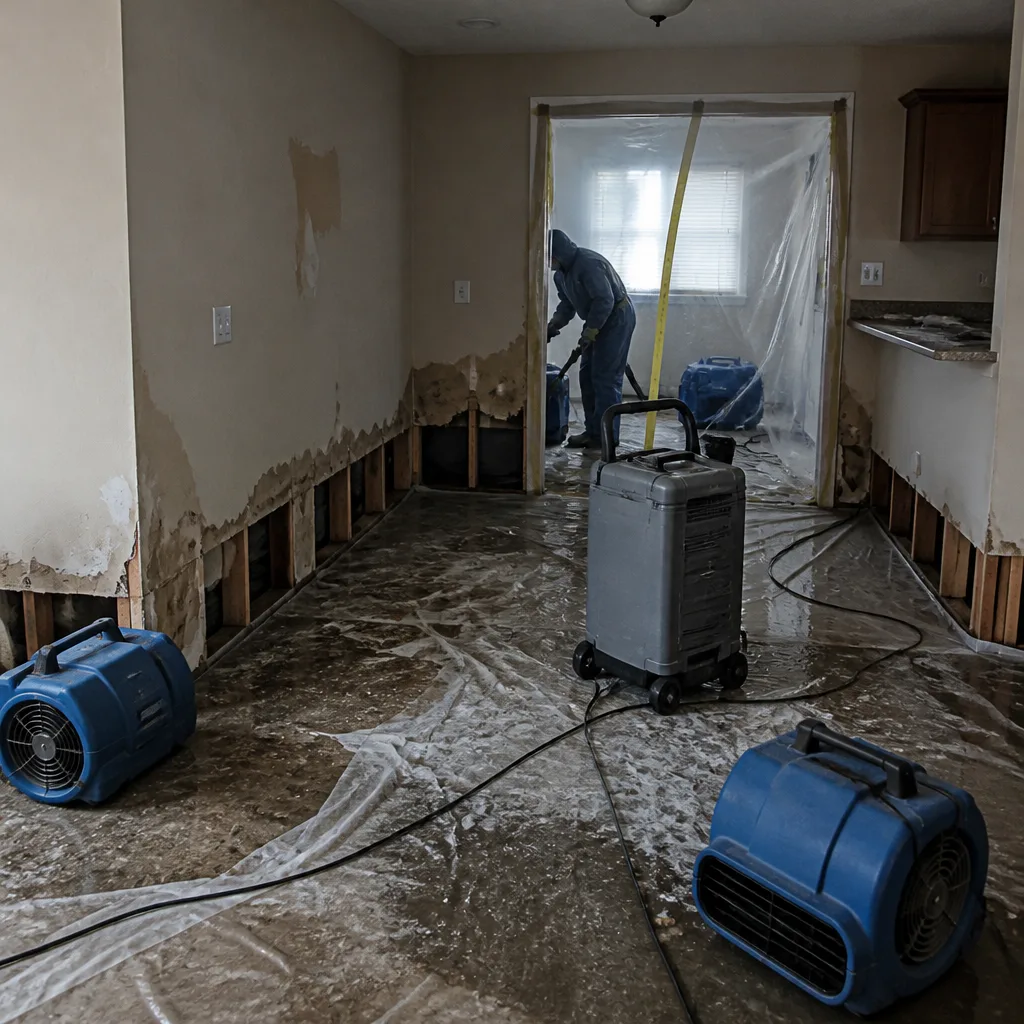 Before
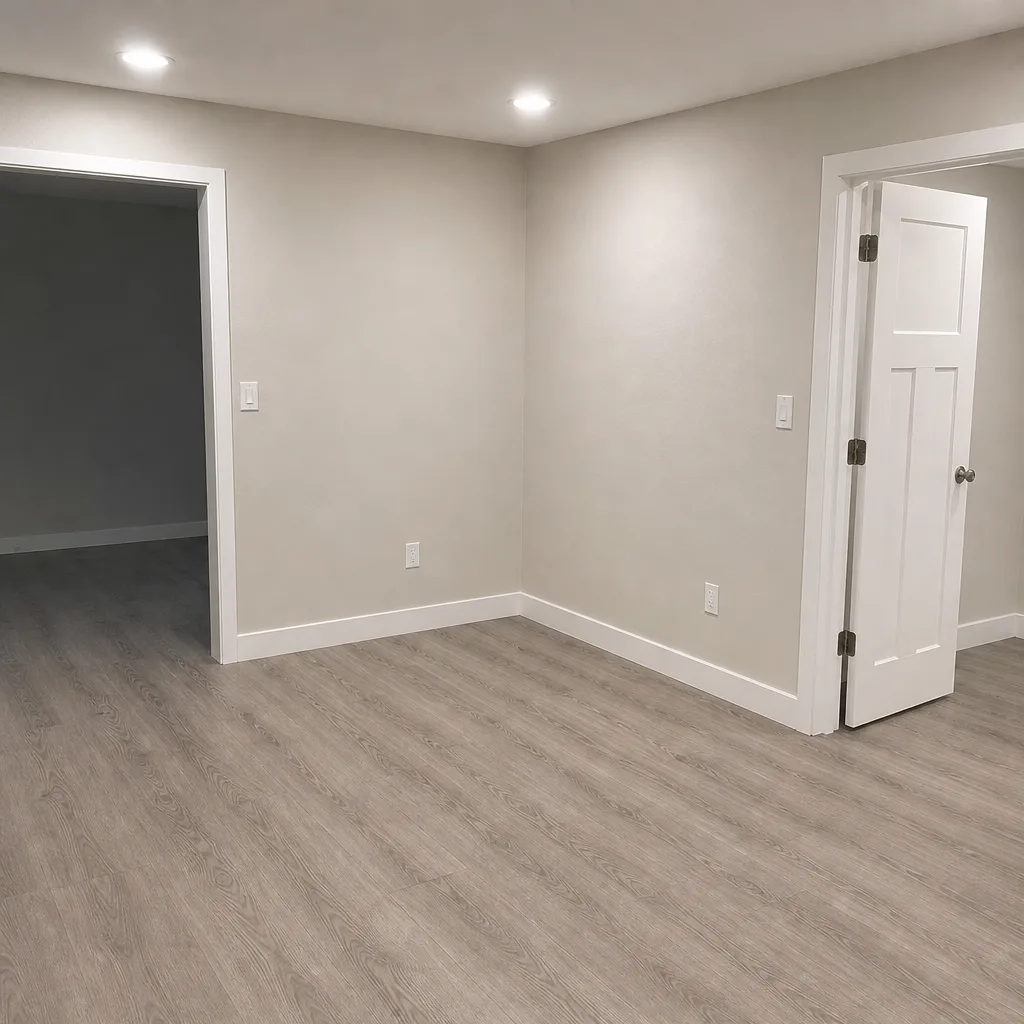 After
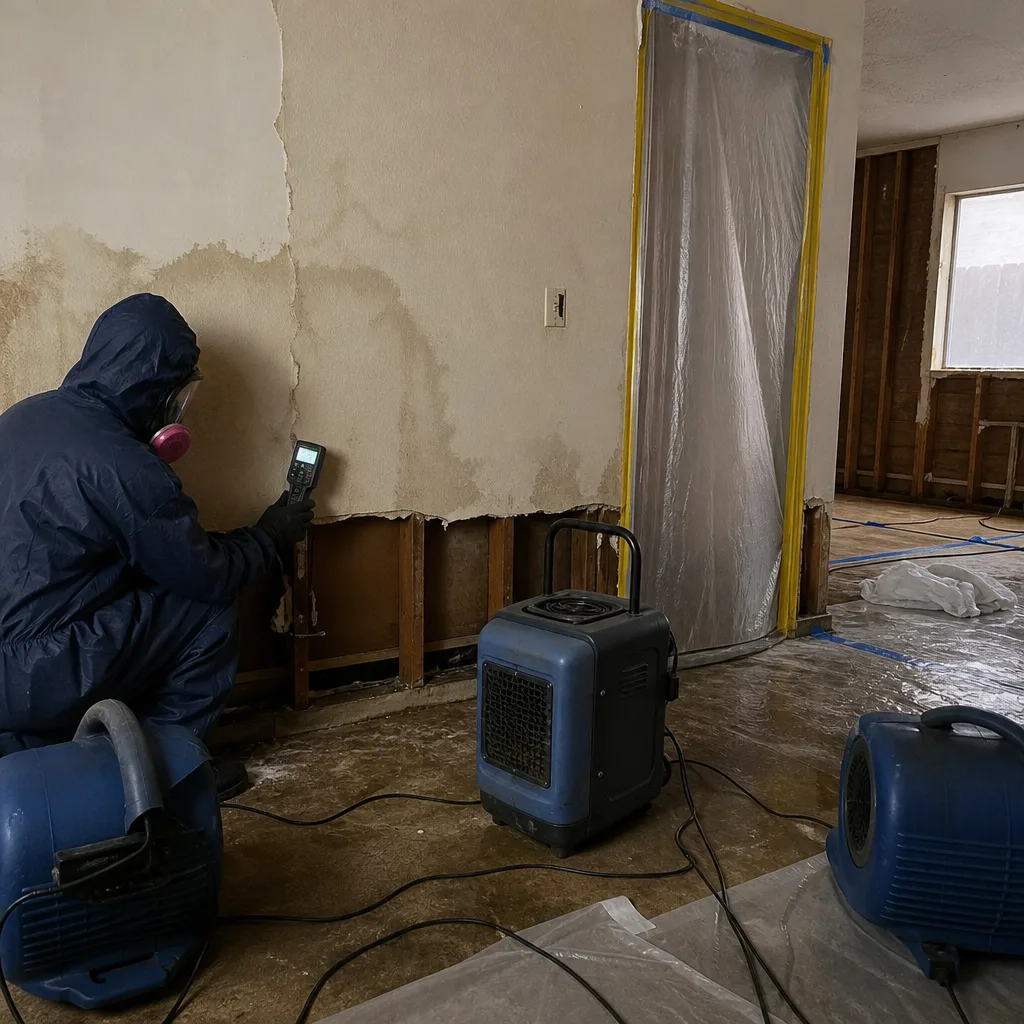 Before
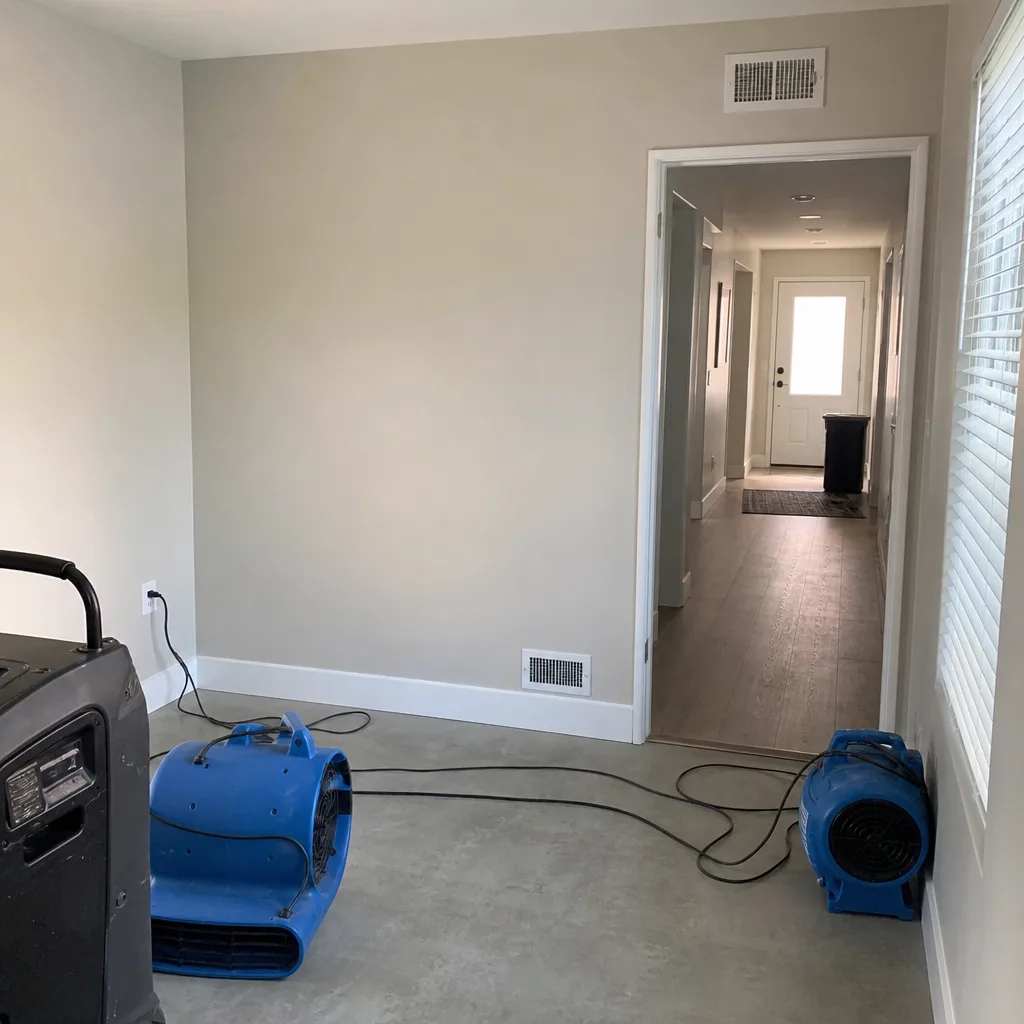 After
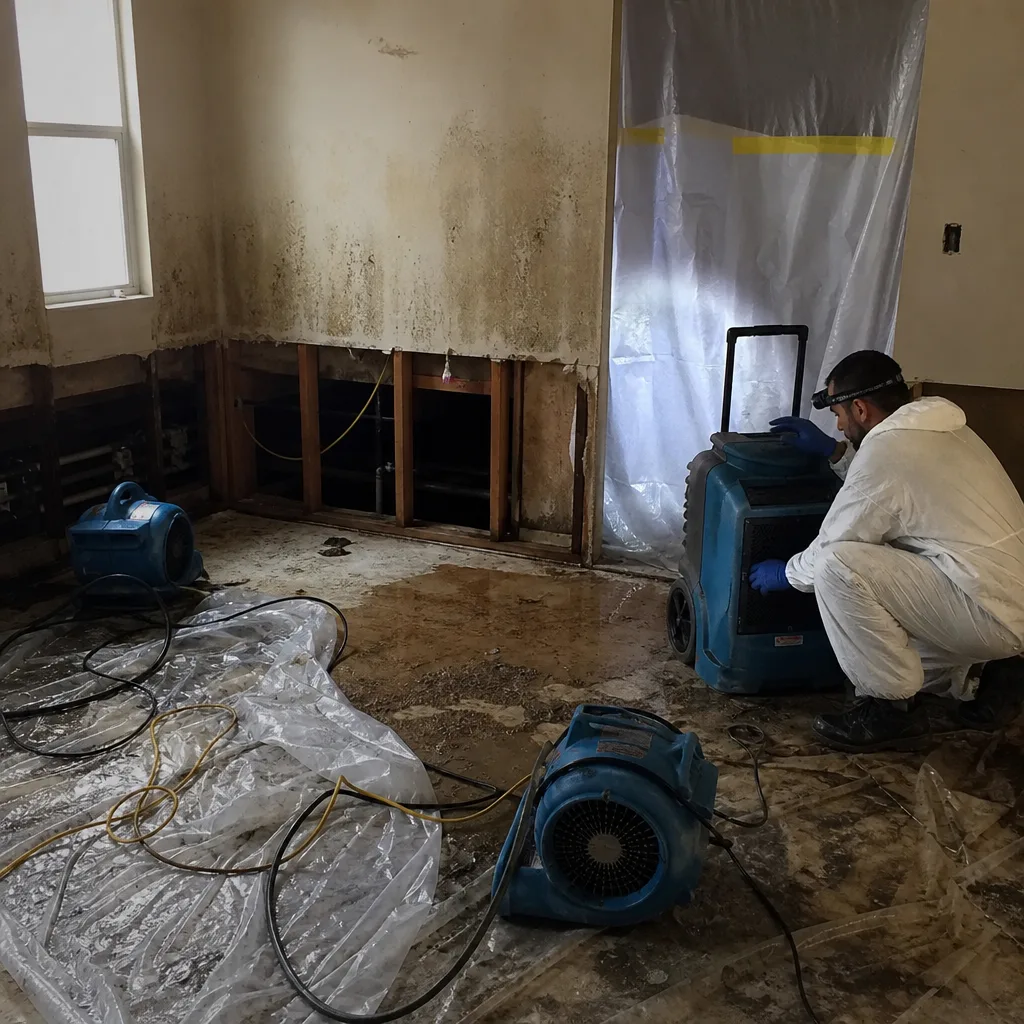 Before
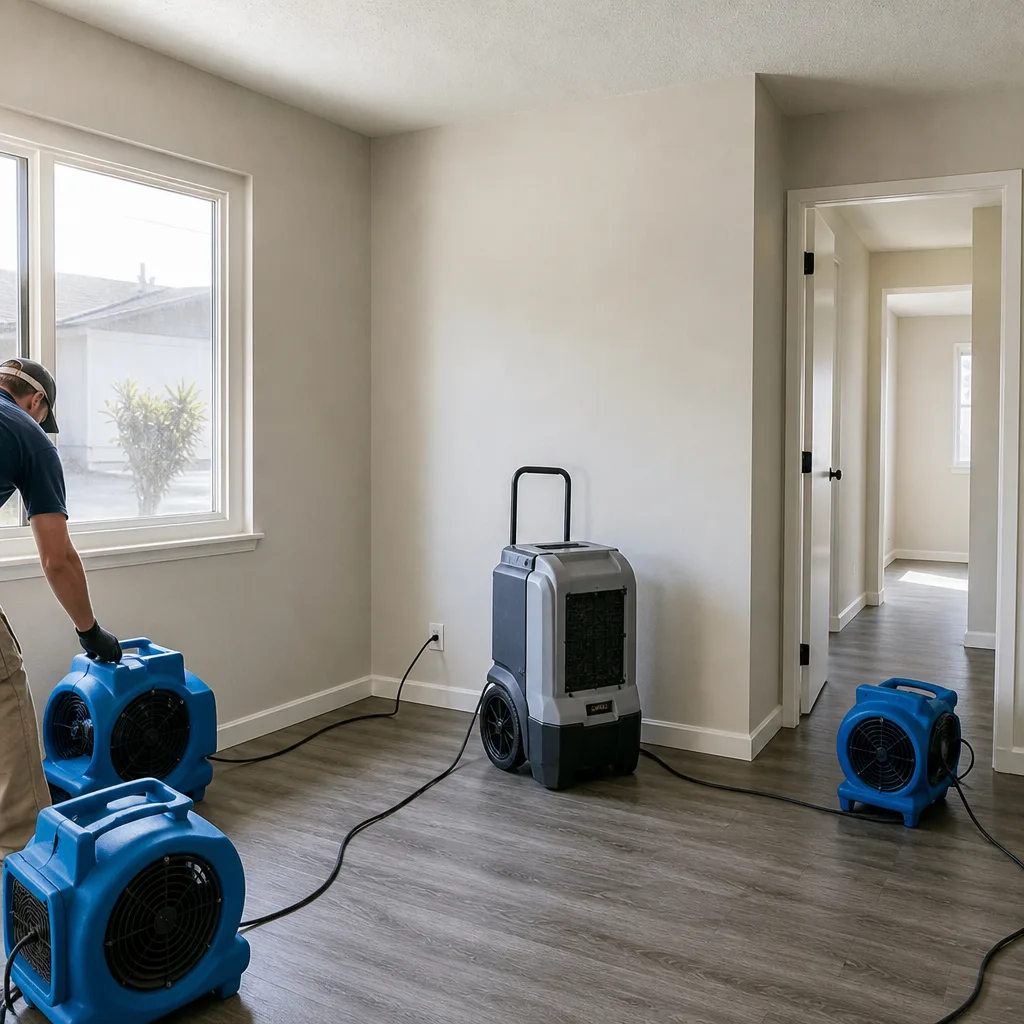 After
Common Water Damage Restoration Problems We See in Laguna Hills Homes
- Attic intrusion from Santa Ana wind-driven rain. Sideways rain forces into attic vents and under tile eaves, saturating insulation and ceiling drywall above living spaces. By the time water shows on the ceiling, the attic has been wet for hours or days.
- Hidden moisture behind EIFS-style exteriors. Many 1980s and 1990s Laguna Hills homes have synthetic stucco exteriors that trap water against the wood framing. The surface feels dry while the cavity behind it stays wet, and that hidden damp is where mold starts.
- Shared-wall drying problems in attached townhomes. Condos and townhomes near the Laguna Hills Mall and Nellie Gail corridor share wall cavities. If one unit floods, the neighbor’s side often carries moisture that no one sees, and drying must account for both units.
- Misjudging a loss from the living room only. We repeatedly see jobs where a homeowner or a less experienced contractor declared the house dry because the carpet felt dry. Without moisture mapping in the attic, eave line, and behind baseboards, structural drying never truly finishes.
Pricing for Water Damage Restoration in Laguna Hills, CA
Water damage restoration pricing in Laguna Hills depends on the category of water, the square footage affected, and whether structural materials can be dried or must be cut. Expect the following ranges for this market:
- Emergency extraction and initial mitigation: $1,200 to $3,800 for a single room, higher for multiple rooms or contaminated water.
- Full water damage restoration for a typical clean-water loss: $2,400 to $6,800, including extraction, demolition, drying equipment, monitoring, and basic rebuild prep.
- Catastrophic or Category 3 losses: $8,000 to $15,000+, involving sewage or extended saturation requiring full containment and extensive material removal.
- Pack-out and content drying: $900 to $3,000 depending on volume and whether climate-controlled storage is required.
What moves the number in Laguna Hills is not just square footage. It is whether the water reached the attic or stayed on the slab, whether the exterior is EIFS-style stucco that traps moisture, and whether the loss is Category 1 clean water or something worse. Call (833) 589-5317 for a line-item estimate in writing before work starts. No one should sign a restoration contract without a scope they can read.
We Also Serve Cities Near Laguna Hills
Our crews regularly run Water Damage Restoration in Laguna Hills and the surrounding inland Orange County communities. We serve Laguna Woods, Lake Forest, Mission Viejo, and Coto De Caza with the same IICRC-certified process and Dri-Eaz and Phoenix equipment we run here. If your home is in a neighboring city and you have water intrusion after a wind event, the same attic-first inspection logic applies.
Serving Laguna Hills, CA — Our Local Coverage Area
We’re based in the Laguna Hills area and know this community well. Use the map below to see our service coverage — if you’re nearby, we can almost certainly help.
FAQs About Water Damage Restoration in Laguna Hills
Because Laguna Hills sits on the inland Santa Ana wind edge, wind-driven rain forces sideways into attic vents and under tile roofs and eaves, so the first moisture readings we take after a storm are in the attic and on the underside of eaves, not the living room. The living room may look and feel dry while the attic insulation and ceiling drywall above it are saturated. When we skip that step, we miss the loss and mold starts behind the drywall. If you have had a wind event and suspect water, call (833) 589-5317 and ask for an attic-first inspection.
Act within 24 hours. Drywall in a Laguna Hills townhome that stays wet begins supporting microbial growth quickly, especially in a contained space with limited airflow. The sooner we get dehumidification and air movers running, the more wall and ceiling material we can save with Injectidry structural drying instead of cutting. Call (833) 589-5317 the same day you see the stain, not the day it spreads.
Category 1 clean water from a supply line is the cheapest and fastest to dry. Category 2 gray water, like washing machine overflow, requires antimicrobial treatment and a slightly higher drying standard. Category 3 black water from sewage or outside ground intrusion requires full containment, disposal of affected porous materials, and a remediation process that cannot be skipped. In Laguna Hills hillside homes, category can change mid-job if wind-driven rain picked up contaminants from the roof or gutter system. We document the category at the start and adjust only if testing or conditions warrant it.
No. Laguna Hills’ semi-arid climate shortens drying times compared with the coast, but it does not extract pooled water or replace dehumidification and air movers inside a contained, unvented space. In fact, dry surface air can make wet drywall feel deceptively dry while the cavity behind it stays saturated. Equipment dries the structure. Weather dries the outside of it. Call (833) 589-5317 and we will explain what your specific loss actually needs.
Yes. When a loss requires removing contents so structural drying can run correctly, Dry Line Water Damage coordinates a full pack-out: documented inventory, photo records, controlled storage, and content drying with the same commercial-grade equipment we use on the structure. Glen Pacheco and our team have managed pack-outs in Laguna Hills homes where the entire first floor was affected, and we handle the insurance documentation so your adjuster sees exactly what left the house and what comes back. Call (833) 589-5317 for a pack-out scope in writing.
Written by Glen Pacheco, Owner at Dry Line Water Damage, serving Laguna Hills since our first attic-first inspection on a Santa Ana wind loss.