

 Water damage drying
 Fire & smoke cleanup
 Mold remediation
 Storm response
 Sewage cleanup
 Reconstruction
Free visual inspection and a written scope of work before any mitigation begins - photos, moisture readings, and drying logs go in your claim file
The scope we write is the scope we bill. Anything new gets shown to you, in writing, before we touch it.
Get your free estimateFast, Reliable Water Damage Restoration Across Mead Valley
Water damage restoration in Mead Valley typically costs between $1,800 and $6,500 depending on how far the water traveled and what it soaked into. We get crews from our Fontana yard into Mead Valley the same day in almost every case, usually within 60 to 90 minutes of your call. The difference out here is that most properties sit on private wells and septic systems, so the source of the water is rarely what homeowners expect. A ruptured well tank, a failed supply line from a pump house, a backed-up septic drain, these are the calls we run in Mead Valley. If you’re standing in water right now, call (833) 589-5317 and we’ll tell you exactly what to do before we arrive.
Key Takeaways
- Emergency response to Mead Valley runs 60 to 90 minutes in normal conditions.
- Restoration work in the 92570 ZIP ranges from roughly $1,800 to $6,500 for typical residential losses.
- Our process includes moisture mapping on every job, which matters more on rural and manufactured properties.
- We document everything with photos, moisture logs, and written scopes for insurance adjusters.
- IICRC-certified crews, Injectidry structural drying, and Dri-Eaz commercial dehumidifiers are standard on our Mead Valley calls.
Restoration work we handle
Why Dry Line Water Damage Is Mead Valley’s Preferred Water Damage Restoration Company
We’ve worked enough homes between Highway 74 and the Perris line to know that Mead Valley doesn’t fit the standard restoration playbook. The properties out here are a mix of older stick-built homes, manufactured homes, and ranch parcels where additions went up without a building department ever looking at them. That changes how we dry a structure, how we find hidden moisture, and how long we keep equipment running. Homeowners in Mead Valley call us back because the first visit includes real answers, not a sales pitch.
Glen Pacheco, our owner, runs a crew that’s trained to the IICRC standard, the restoration industry’s most demanding third-party certification. We’re not a franchise operation with a rotating cast of technicians. The same supervisors who scope the job are the ones who check moisture readings at the end. Homeowners around Mead Valley tell us they value that continuity. Property managers do too, because it means one point of contact from extraction through final documentation.
Our response to Mead Valley is built around the 215 corridor and surface streets like Brown Street and Rider Street, which puts most addresses in the 92570 ZIP within easy reach. When you call with an active leak, we’re not routing you through a national call center. You talk to someone who knows the difference between a Meadowbrook home and a ranch parcel near the San Jacinto River channel, because that difference changes what we load on the truck.
Water Damage Cleanup in Mead Valley
Water Damage Cleanup in Mead Valley starts with finding where the water actually came from, which on well properties often means checking the well tank, the pressure switch, the supply line, or a septic line before we even set up an air mover. We’ve seen water migrating under manufactured flooring from a failed well tank while the homeowner thought the washing machine was to blame. You can’t dry what you haven’t found, and that’s the first thing we tell every Mead Valley customer.
Most Mead Valley cleanup jobs run between $1,800 and $3,800. That covers extraction, containment where needed, structural drying equipment, antimicrobial application, and a final written scope of what’s dry and what’s not. The price moves up when water sat for more than 24 hours, when it got into multiple rooms, or when we have to pull flooring or drywall to get airflow into cavities. Every job ends with a documented dry reading, not a visual guess.
Well and Septic-Related Cleanup
A failing well pressure tank can dump 30 to 50 gallons onto a floor in minutes, and it will keep weeping until someone shuts the feed. We check the water source on every Mead Valley call because municipal crews from Riverside and Corona don’t always think to look at a pump shed or a buried septic line. Missing that step means you dry the visible water and then get called back two weeks later when the framing is still wet.
Manufactured Home and Addition Cleanup
Manufactured homes hide water in the belly board, under insulation, and inside the OSB subfloor. Owner-built additions are even trickier because we don’t always know what’s behind the drywall or under the floor. We use moisture meters and thermal imaging to map the spread before we decide what gets cut and what gets dried in place with Injectidry panels.
Emergency Water Damage Restoration in Mead Valley
Emergency Water Damage Restoration in Mead Valley is the work we do when the water is still running, the drywall is wicking upward, and every hour that passes pushes the job further under floors and into framing. We dispatch from Fontana and reach most Mead Valley addresses in 60 to 90 minutes. In a hot, dry Riverside County basin, that speed matters differently than it does in a beach town, because the heat doesn’t dry wood evenly. It bakes the surface while moisture stays trapped deeper.
Emergency response for a Mead Valley home typically runs $2,200 to $4,500 when there’s active extraction, equipment deployment, and containment. That’s the cost before rebuild work. If the water sat overnight or a well tank kept cycling, expect the higher end. We’ll give you a written number before equipment ever turns on. No one should sign a drying contract they haven’t read.
After-Hours and Weekend Dispatch
Water doesn’t wait for business hours, and well failures don’t seem to either. We keep crews on rotating call so that a Friday night tank rupture gets the same fast response as a Tuesday morning supply line leak. The first thing we do on site is shut the water source, then start extraction. You’d be surprised how many Mead Valley homes have shutoff valves that haven’t been touched in a decade.
Documented Structural Drying
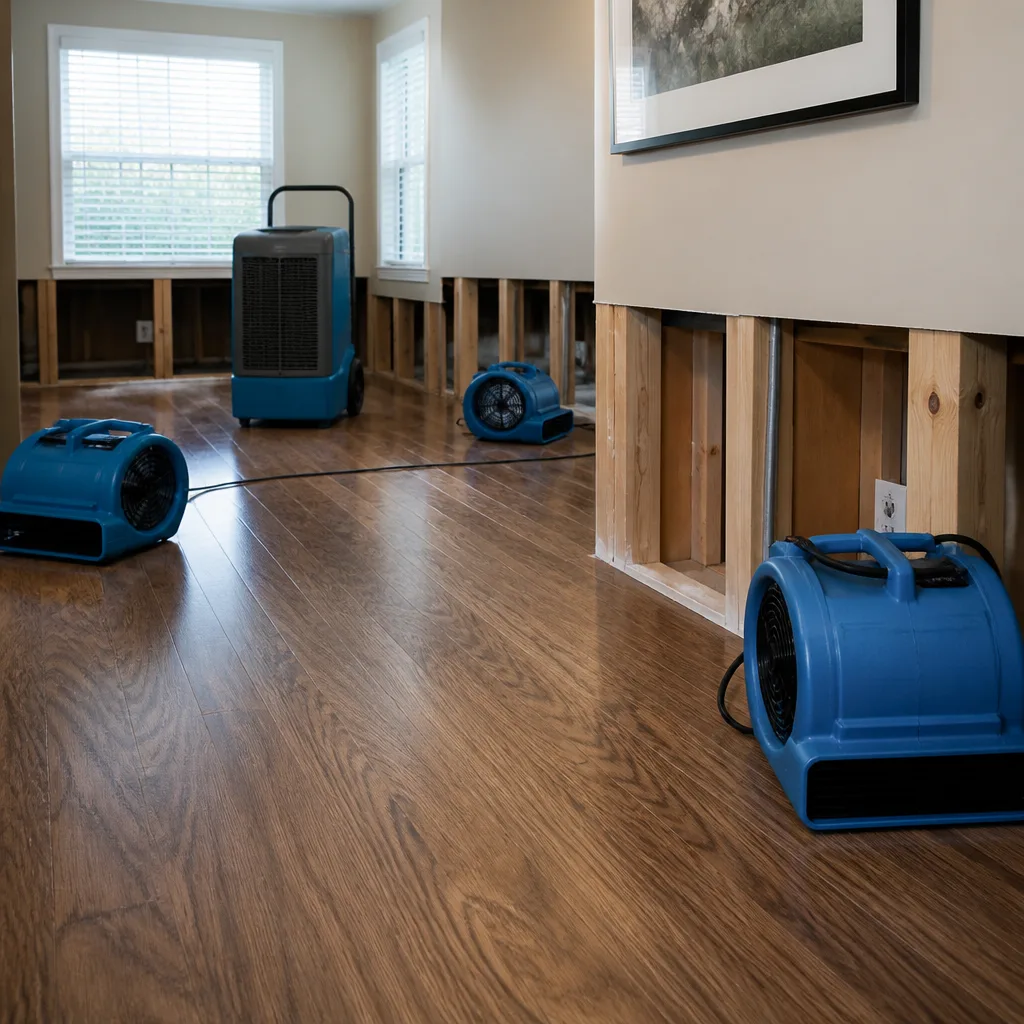
We run Dri-Eaz and Phoenix dehumidifiers with daily moisture readings until the numbers come back to pre-loss condition. That’s what documented dry means. We’re not packing up when the floor feels dry to the hand. We’re packing up when the meter says the framing, subfloor, and cavities are dry to the standard our IICRC training requires.
Trusted Brands We Service in Mead Valley
The equipment we run on Mead Valley jobs is the same commercial-grade gear used on large-loss commercial claims: Dri-Eaz refrigerant dehumidifiers, Phoenix axial air movers, and XPOWER or B-Air fans for high-flow evaporation. Then there’s Water Damage Restoration using Injectidry systems, which dry inside wall cavities and under manufactured flooring without ripping everything out. That’s the difference between a three-day drying job and a three-week gut-and-rebuild. We stock common parts and consumables in our Fontana yard so we’re not waiting on a supply run when a Mead Valley home is mid-mitigation.
Common Water Damage Restoration Problems We See in Mead Valley Homes
- Well tank failures and supply line ruptures: The most common source of water damage in Mead Valley isn’t a municipal main. It’s a pressure tank that rusted through or a poly supply line that split. We always trace the source back to the well or pump shed before assuming the leak is inside the house.
- Hidden moisture under manufactured home floors: OSB subfloor in manufactured homes wicks water fast and hides it perfectly. The vinyl or laminate on top looks fine while the structural layer underneath goes soft and moldy. Moisture mapping is the only way to find it.
- Unpermitted additions with no moisture barrier: Many Mead Valley properties have rooms or extensions built without a permit, which usually means no proper vapor barrier and framing that’s directly against soil. Water finds those weaknesses in minutes. Drying them properly takes longer and costs more because the construction itself fights us.
- Heat masking the spread: In summer, a leak behind a wall can feel dry to the touch within a day while the framing behind it is still at 30 percent moisture content. That’s why we do thermal imaging on every Mead Valley water loss, not just the big ones.
Pricing for Water Damage Restoration in Mead Valley, CA
A small clean-water leak that’s caught immediately and contained to one room in a Mead Valley home usually lands between $1,800 and $2,800. Whole-home flood cleanup from a ruptured well tank or a failed supply line that ran overnight typically runs $3,500 to $6,500 before any rebuild or flooring replacement. The biggest cost drivers in Mead Valley are how long the water ran, whether it got under a manufactured home, and whether unpermitted construction requires extra demolition to create drying access. Every job gets a written estimate before we start. Call (833) 589-5317 and we’ll walk through what your specific situation is likely to cost based on homes we’ve handled nearby in Mead Valley.
See the difference
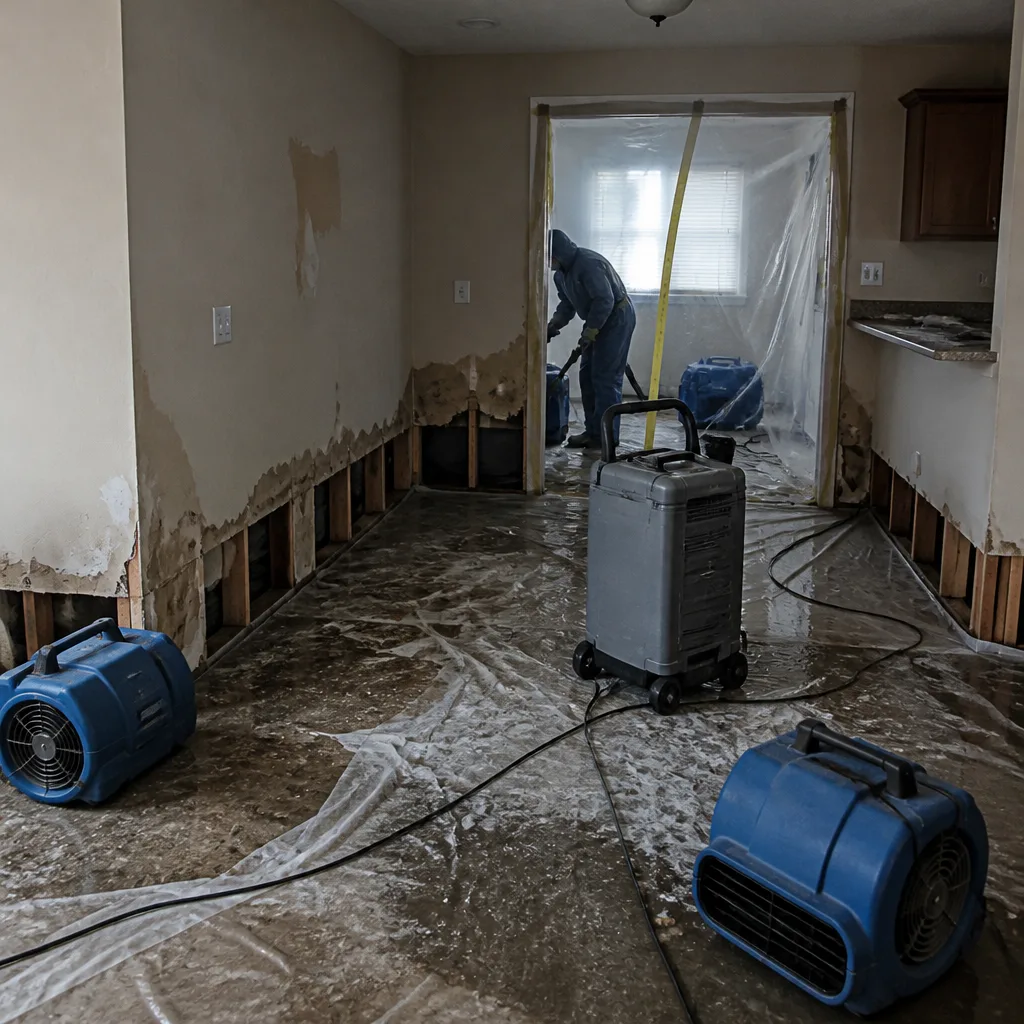 Before
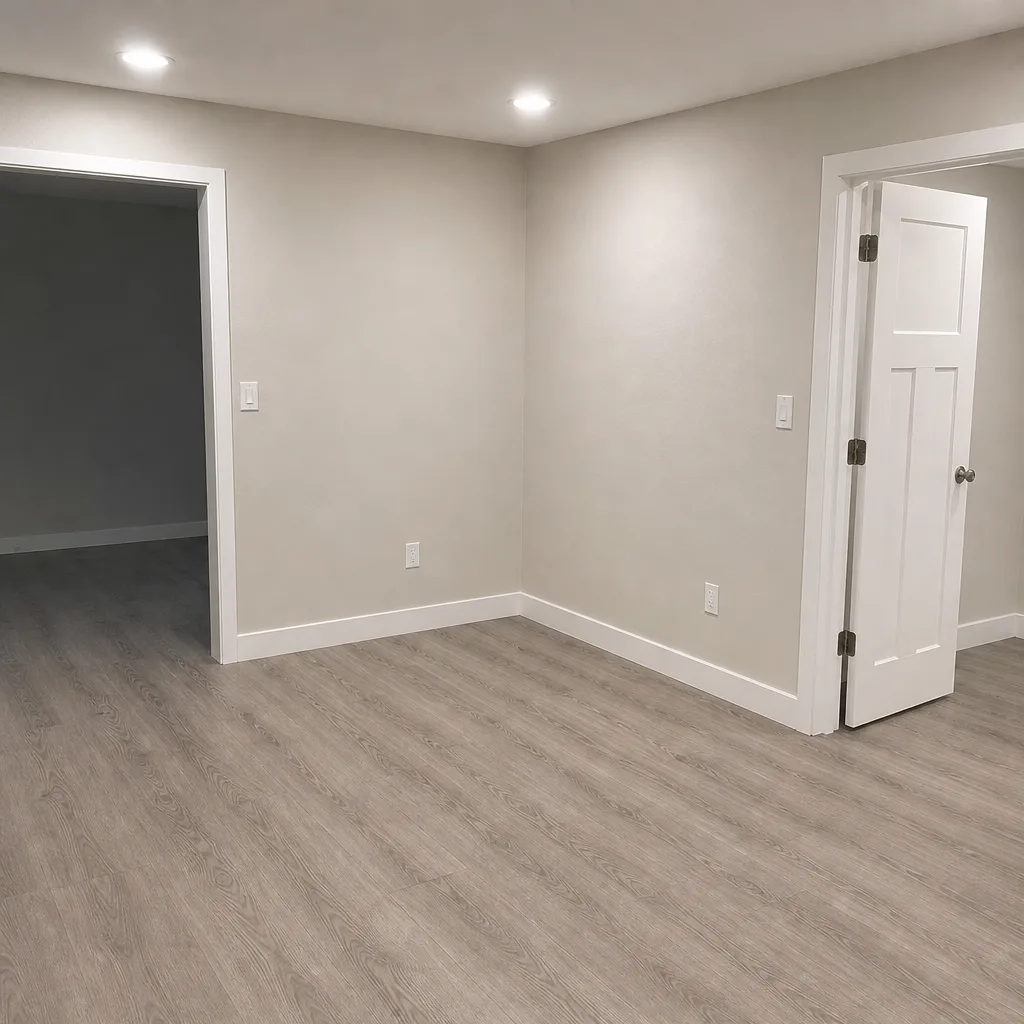 After
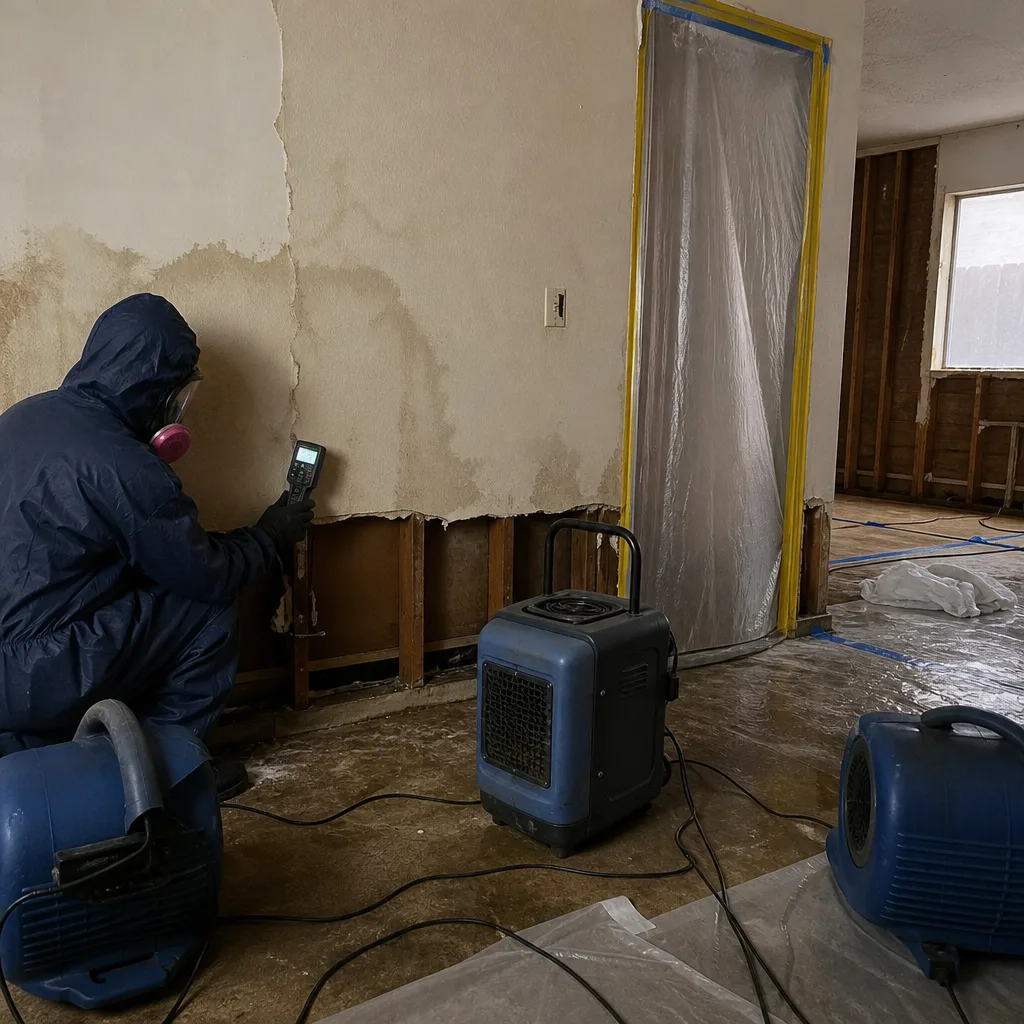 Before
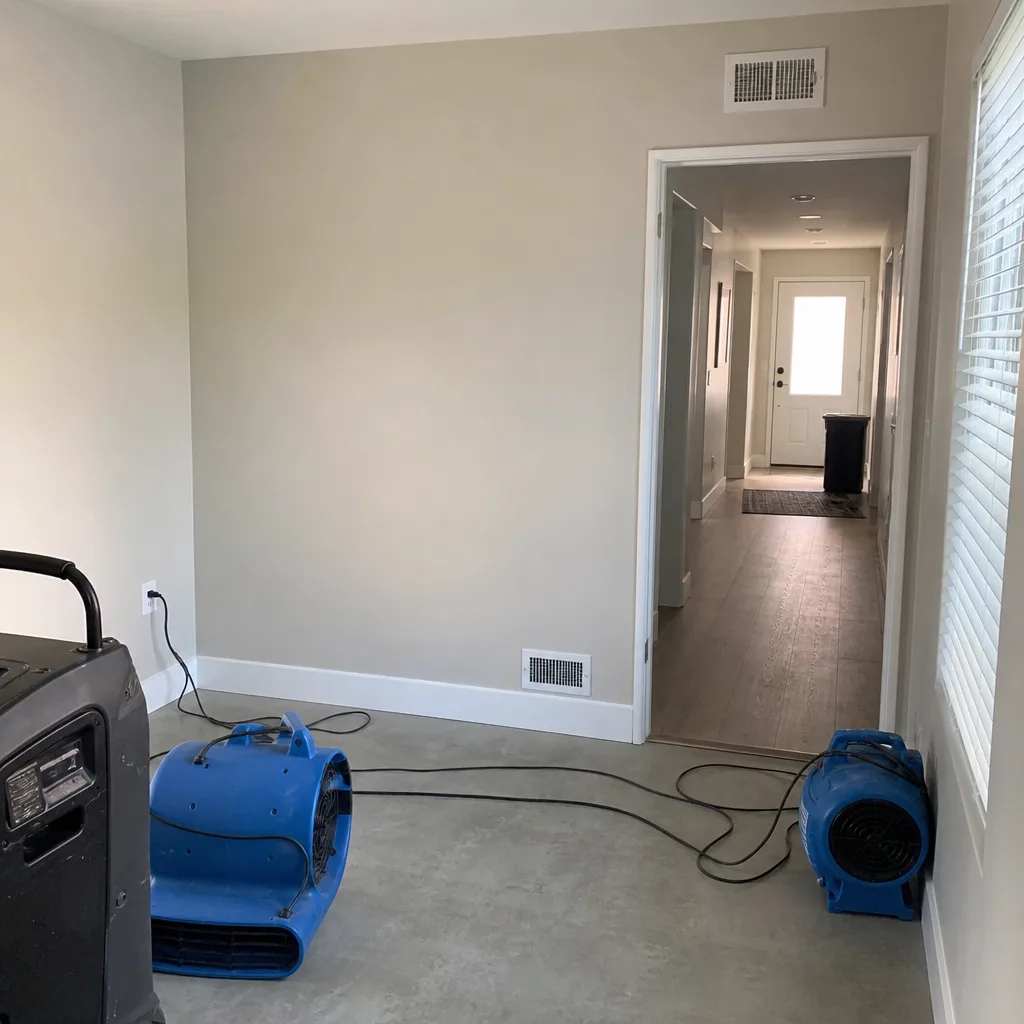 After
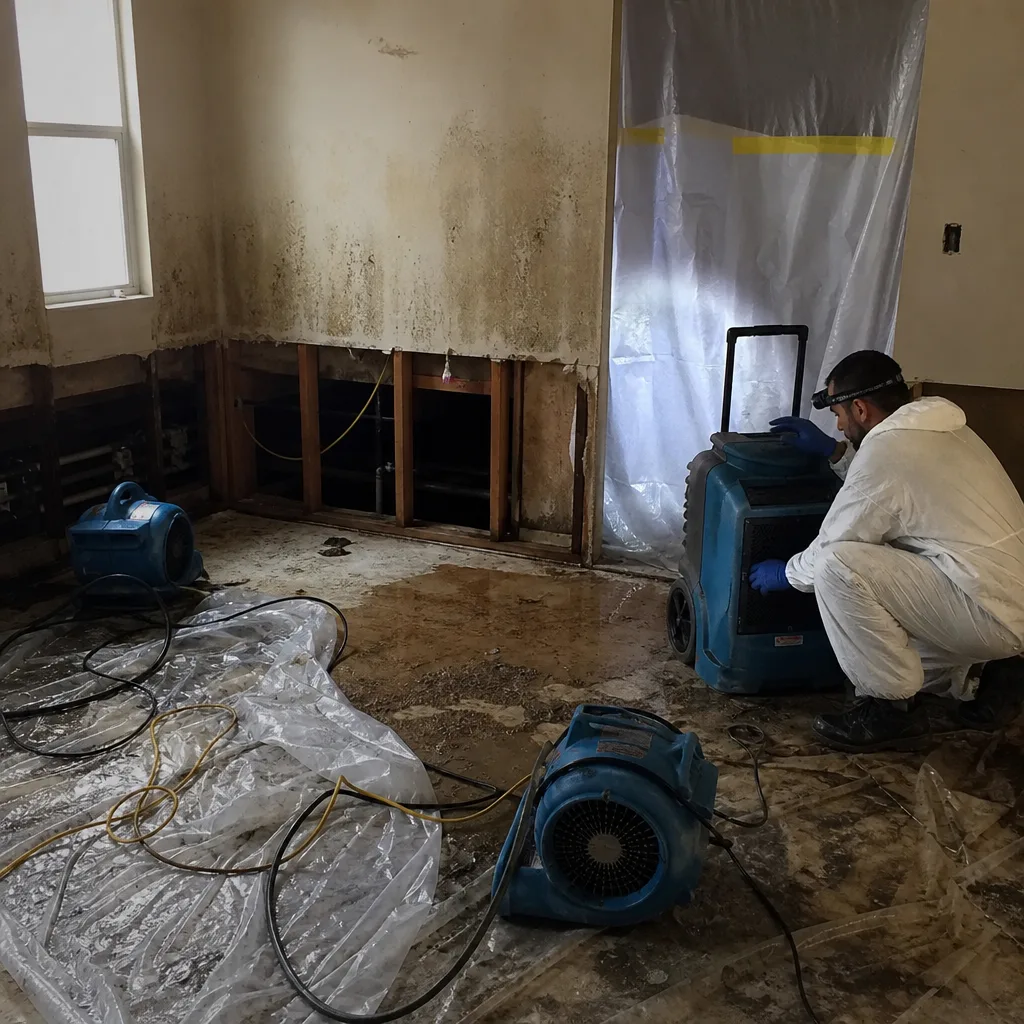 Before
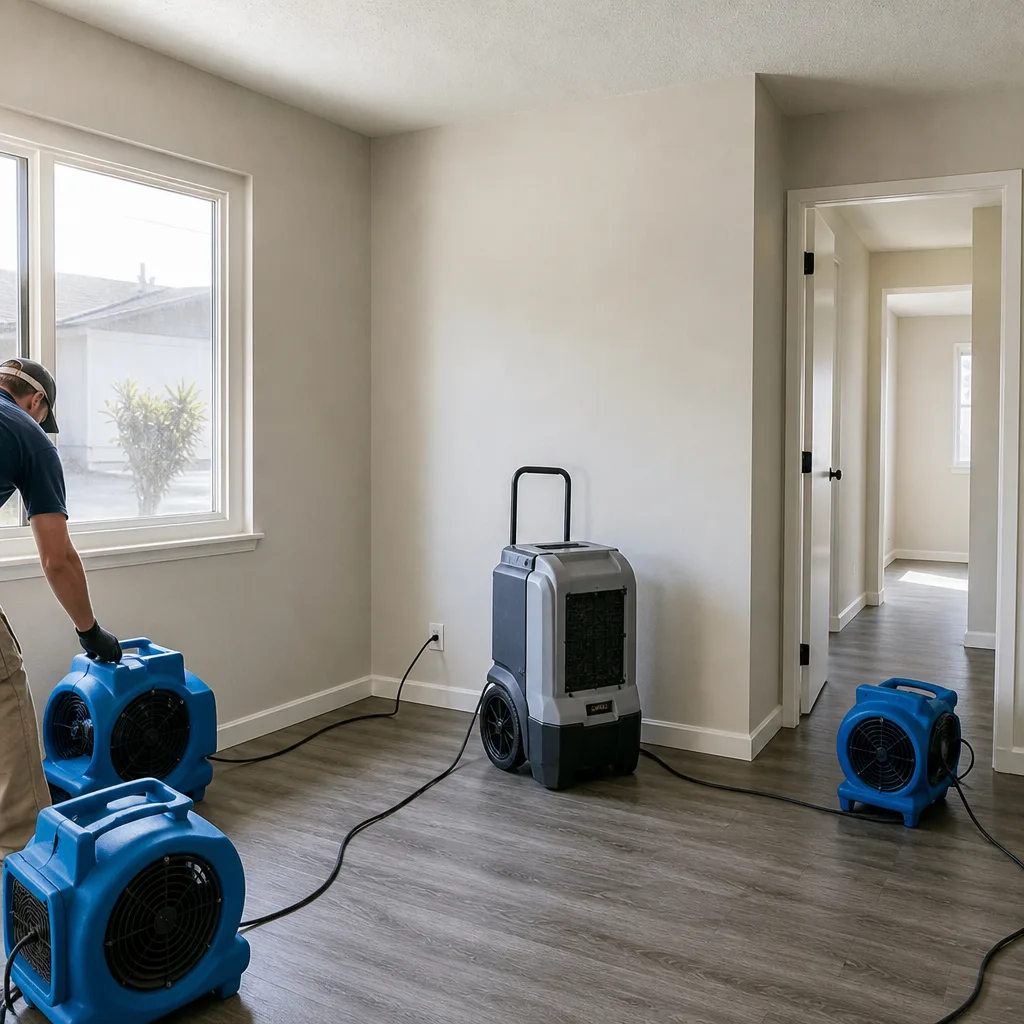 After
We Also Serve Cities Near Mead Valley
Dry Line Water Damage works throughout the Perris Valley and surrounding Riverside County communities. We regularly run crews to homes in Perris, Good Hope, Canyon Lake, and Meadowbrook, so if you’re on the edge of the 92570 ZIP or just across the Perris line, the same crew and the same equipment are available. Call (833) 589-5317 for service anywhere in the immediate Mead Valley area.
Serving Mead Valley, CA — Our Local Coverage Area
We’re based in the Mead Valley area and know this community well. Use the map below to see our service coverage — if you’re nearby, we can almost certainly help.
FAQs About Water Damage Restoration in Mead Valley
We diagnose and shut off the water source first, whether that’s a well pressure tank, a supply line, or a septic backup, then we start extraction and drying. We check the pump house, the tank, the feed line, and any visible septic access on every Mead Valley call because the source of the water changes how quickly it spreads and what’s contaminated.

Call (833) 589-5317 if your well tank failed or you suspect a septic line is flooding your floors. We’ll tell you how to shut the feed while we’re on the way.
Yes, we dry manufactured homes and owner-built additions regularly, including structures that were never permitted or inspected. We use moisture mapping to understand the framing layout before cutting, and we deploy Injectidry panels to dry wall and floor cavities without unnecessary demolition. Unpermitted construction just means we move more carefully and document what we find, because you’ll need that record for your adjuster.
Call (833) 589-5317 and we’ll schedule a walkthrough on your Mead Valley property to map the wet areas and give you a written scope.
We run Dri-Eaz and Phoenix commercial dehumidifiers, high-flow air movers from XPOWER and B-Air, and Injectidry systems for cavity drying. The heat in Mead Valley actually works against you during drying because surfaces feel dry while deeper framing stays wet, so we rely on metered readings rather than touch. Equipment stays in place until the numbers say the structure is dry.
Call (833) 589-5317 for a moisture assessment on your Mead Valley home if you suspect water got behind walls or under floors.
Most Mead Valley calls get a crew on site within 60 to 90 minutes during normal conditions, including nights and weekends. We dispatch from Fontana and run surface streets and the 215 to reach the 92570 ZIP quickly. Active water flow gets shut off first, then extraction starts immediately.
Call (833) 589-5317 now if water is running in your Mead Valley home and you need fast action.
Yes, every Mead Valley job includes photo documentation, daily moisture logs, a written drying plan, and a final dry standard report. We coordinate directly with adjusters and can send them the same documentation you receive. If the loss involves a well tank or septic component, we document the source failure too, because adjusters sometimes miss it.
Call (833) 589-5317 and we’ll start the documentation process while the water is still being extracted, which keeps your claim moving.
Why Mead Valley’s Water Damage Needs a Different Approach
Out in Mead Valley, the first sign of trouble is often a well pump that won’t stop running or a wet spot in the yard near the septic line, not a plumbing fixture that obviously burst. Most of the area’s housing was built before municipal water and sewer ever reached this part of Riverside County, and a good portion of it was owner-built or manufactured. A restoration crew that doesn’t understand wells and septic systems will dry the visible water and miss the part that’s still feeding the problem. We handle Mead Valley differently. We trace the water to its actual source, we check the pump house and the septic access, and we don’t stop extraction until the source is shut or isolated. That’s not a checklist item. It’s how the job has to work out here.
The housing stock adds another layer. Many Mead Valley homes have additions that never saw a building inspector, which means framing that’s undersized, no vapor barrier, and drywall attached straight to studs that sit against an uninsulated exterior. Water moves through those structures fast. Moisture readings in one room can understate what’s happening two rooms away. We’ve learned to map a wider area than the visible damage suggests, because out here, the water usually traveled further than it looks.
Then there’s the heat. Mead Valley sits in a hot inland basin where summer temperatures sit in the high 90s for weeks. Wood and OSB bake on the surface but hold moisture deeper where the sun never reaches. A homeowner may run a hand over a wall and feel dry, while our meter reads 32 percent moisture content six inches inside the cavity. That’s the hidden rot and mold window, and in this climate, it closes faster than people expect. Mold can colonize within 24 to 48 hours when surface materials stay warm and the interior stays wet. The drying has to be measured, not guessed at.
What a Mead Valley Water Damage Job Actually Looks Like
We responded to a call on Brown Street in Mead Valley where a homeowner’s well tank had ruptured, flooding the manufactured home’s subfloor. Our crew used moisture mapping to trace hidden moisture in the OSB, then set up containment and structural drying with Dri-Eaz dehumidifiers and air movers. After three days, moisture readings returned to pre-loss condition, and we applied antimicrobial treatment to prevent mold. That job was a reminder of why Mead Valley work can’t be run like a suburb in Corona: the water source was outside the main living space, the floor hid the spread, and the hot air kept the surface dry while the OSB underneath was saturated.
Every Mead Valley job follows the same pattern. We find the source, shut it, extract the standing water, map the moisture, set up drying, and take daily readings until the numbers are where they need to be. Before we start, you get a written scope. After we finish, you get a written dry standard report with all the numbers. No mystery, no handshake deal on whether your floor is actually dry.
Insurance Claim Support for Mead Valley Homeowners
Most Mead Valley water damage comes through an insurance claim, and most homeowners have never dealt with a claim before. We document every step, take photos of the source failure as well as the visible damage, log moisture readings daily, and send adjusters the same report you get. If the adjuster questions whether a manufactured floor needed to come out, we have the readings and the photos to show why. If they dispute the source, we have the well tank or septic line documented. We speak the adjuster’s language because we’ve sat at enough of those kitchen tables to know that a well-documented claim settles faster, with less friction, and with fewer surprises for the homeowner.
Glen Pacheco built Dry Line Water Damage around this kind of work: restoration that’s technically sound, documented, and accountable. We’re a member of the Restoration Industry Association, and we hold our crews to the RIA’s published code of ethics. That matters when you’re trusting someone to cut into your floors and stand behind the work.
Get Water Damage Help in Mead Valley Today
If water is running in your Mead Valley home right now, shut the well pump or the main valve if you can find it, then call (833) 589-5317. We’ll talk you through the first few minutes and get a crew dispatched to the 92570 ZIP immediately. If the water has been sitting, call anyway. The sooner we get moisture mapping and drying started, the less demolition and rebuild you’ll be looking at. Estimates are free, and you’ll get written numbers before any equipment goes into your home.
Written by Glen Pacheco, Owner at Dry Line Water Damage, serving Mead Valley and the surrounding Riverside County communities.