

 Water damage drying
 Fire & smoke cleanup
 Mold remediation
 Storm response
 Sewage cleanup
 Reconstruction
Free visual inspection and a written scope of work before any mitigation begins - photos, moisture readings, and drying logs go in your claim file
The scope we write is the scope we bill. Anything new gets shown to you, in writing, before we touch it.
Get your free estimateWater Damage Restoration in Murrieta Hot Springs: What It Costs and How We Work
Water damage restoration in Murrieta Hot Springs typically runs $2,200 to $6,800 for a standard single-room event, and $8,000 to $28,000 for multi-room or structural flooding. Most jobs in the 92563 ZIP are started the day you call because the geothermal humidity here turns a small leak into a mold problem faster than nearly anywhere else in Riverside County. If you’re standing in water or watching a ceiling stain spread, call (833) 589-5317. A certified crew from our Water Damage Restoration team can be dispatched to Murrieta Hot Springs immediately.
What you should know before anyone touches the house: the visible water is only part of the problem in this area. Warm slab foundations and elevated ambient moisture from the hot springs mean water travels into wall cavities, under flooring, and through HVAC chases long after the puddle is gone. The work here is scoped differently than it is in Temecula or Wildomar.
Fast, Reliable Water Damage Restoration Across Murrieta Hot Springs
We’ve worked restoration across Murrieta Hot Springs long enough to know that a late-night supply line rupture on Via Mira Mosa and a slow PEX joint leak off Murrieta Hot Springs Road need very different approaches. The first is an extraction and containment job. The second is a moisture-mapping problem that, left alone for a few days, becomes a mold remediation project. Both are handled by one certified crew, not a rotating cast of subcontractors.
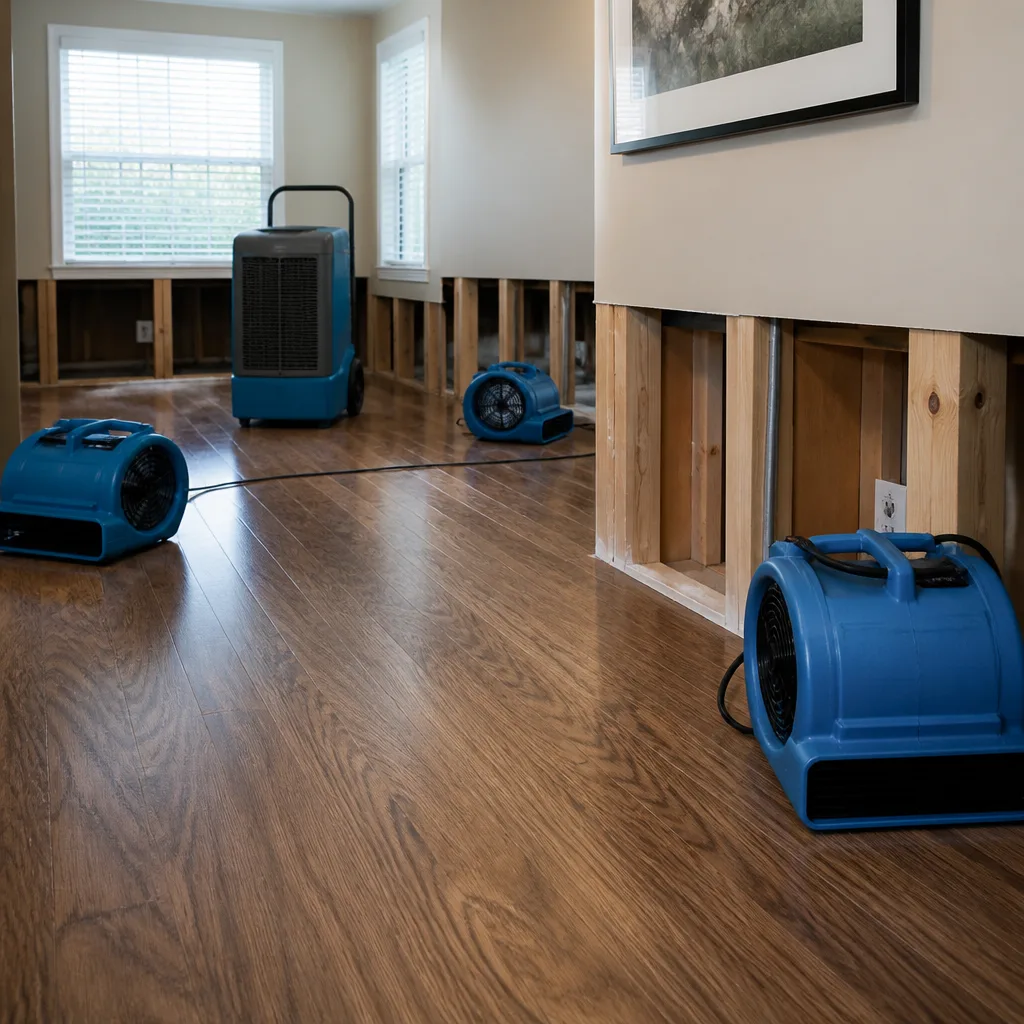
Our trucks carry Dri-Eaz and Phoenix commercial dehumidifiers, XPOWER air movers, and Injectidry structural-drying systems. That matters here because the houses in 92563 are tight, stucco-clad, wood-frame envelopes from the 1990s and 2000s. They trap moisture. The drying plan has to account for that, or the “dry” house you’re told you have is just dry on the surface. We document every moisture reading, every day, until the structure measures to a dry standard, not just visually.
Call (833) 589-5317 if you’ve got standing water, a spreading stain, or a musty scent you can’t locate. We’ll tell you plainly whether you need full restoration or a targeted dry-out.
Restoration work we handle
Why Dry Line Water Damage Is Murrieta Hot Springs’s Preferred Water Damage Restoration Company
We’re an IICRC-certified operation, which means the crew that walks into your Murrieta Hot Springs home is trained to a written industry standard, not a self-issued credential. We’ve handled water losses in the master-planned tracts along Clinton Keith Road, the older streets near the resort, and the newer builds pushing toward the eastern edge of 92563. Homeowners here ask two things: how fast can you get here, and will the drying actually hold. The answer to the first is now. The answer to the second is a set of daily moisture logs and a final dry standard, because we don’t consider a job done when the carpet feels dry to the touch.
Local knowledge changes the scope. A water heater failure in a slab-on-grade home near the geothermal zone behaves differently than the same failure in a raised-foundation property in Murrieta proper. We map the slab edge and the HVAC chase as standard practice here, because warm slabs create condensation paths that don’t exist in drier inland cities. One crew handles water, mold, and fire damage, so you’re not coordinating three vendors while your adjuster waits on documentation.
Emergency Water Removal in Murrieta Hot Springs
Emergency water removal in Murrieta Hot Springs means extracting standing water, setting containment, and getting commercial air movers and dehumidifiers running within hours, not days. The clock here is shorter than in most of Riverside County. Elevated humidity from the hot springs doubles the window for microbial growth, so what might be a two-day drying window in Temecula can compress to under 24 hours in parts of 92563.
Extraction and Containment First
We start with truck-mounted extraction to pull the bulk water out, then set plastic containment to isolate the affected area. This isn’t theater. In a tight 2000s home, the negative air pressure keeps moisture and spores from migrating into the HVAC system while drying is underway.
Cost for emergency water removal in Murrieta Hot Springs typically runs $1,400 to $3,200, depending on the size of the affected area and how far water has traveled under flooring or into walls.
Drying to a Documented Standard
Air movers and LGR dehumidifiers run until moisture meters read dry, not until the clock says we’re done. We log readings daily and share them with your adjuster. That documentation is the difference between a restoration that holds and one that sours into a mold claim six months later.
Injectidry systems let us dry wall cavities and under flooring without opening every surface. In Murrieta Hot Springs, where hidden moisture is the rule rather than the exception, that means less demolition and a smaller repair scope.
Flood Damage Restoration in Murrieta Hot Springs
Flood damage restoration in Murrieta Hot Springs handles the scenarios beyond a single fixture leak: winter storm water pushing under a door, a failed water heater that flooded the garage and laundry, or a slab leak that’s been silently wetting the floor for weeks. These jobs usually involve Category 2 or 3 water, which means porous materials come out rather than get dried in place.
Category and Scope Decisions
A PEX joint failure behind a laundry wall might start as Category 1 clean water, but after sitting against drywall and a warm slab for two days, it sours. We test and classify the water on arrival, then explain in writing what gets dried and what gets removed. You should know why drywall is coming out before a saw is raised.
In Murrieta Hot Springs, we scope slab edges and HVAC chases on flood jobs because warm ground moisture can wick into the same cavities the flood already compromised.

Full-Scope Restoration, One Crew
Flood restoration often peels back into mold remediation when hidden cavities are opened. That’s not a handoff to another company. Our crew handles water extraction, structural drying, antimicrobial treatment, and any mold work that’s revealed. Your adjuster gets one set of documentation, one scope of work, and one accountable contractor.
Flood damage restoration in Murrieta Hot Springs generally runs $5,500 to $18,000, with larger or multi-room losses landing in the $20,000 to $28,000 range once demolition and rebuild scope are included.
Trusted Brands We Service in Murrieta Hot Springs
We run Dri-Eaz and Phoenix dehumidifiers, XPOWER air movers, and Injectidry structural-drying panels on homes throughout Murrieta Hot Springs. These are the same commercial-grade systems used on large-loss commercial jobs, not rental-counter machines. Because we service and maintain our own fleet, parts and replacements don’t add days to a drying schedule. When a job requires a specific drying panel or desiccant unit, it’s on a truck, not waiting on a rental queue.
See the difference
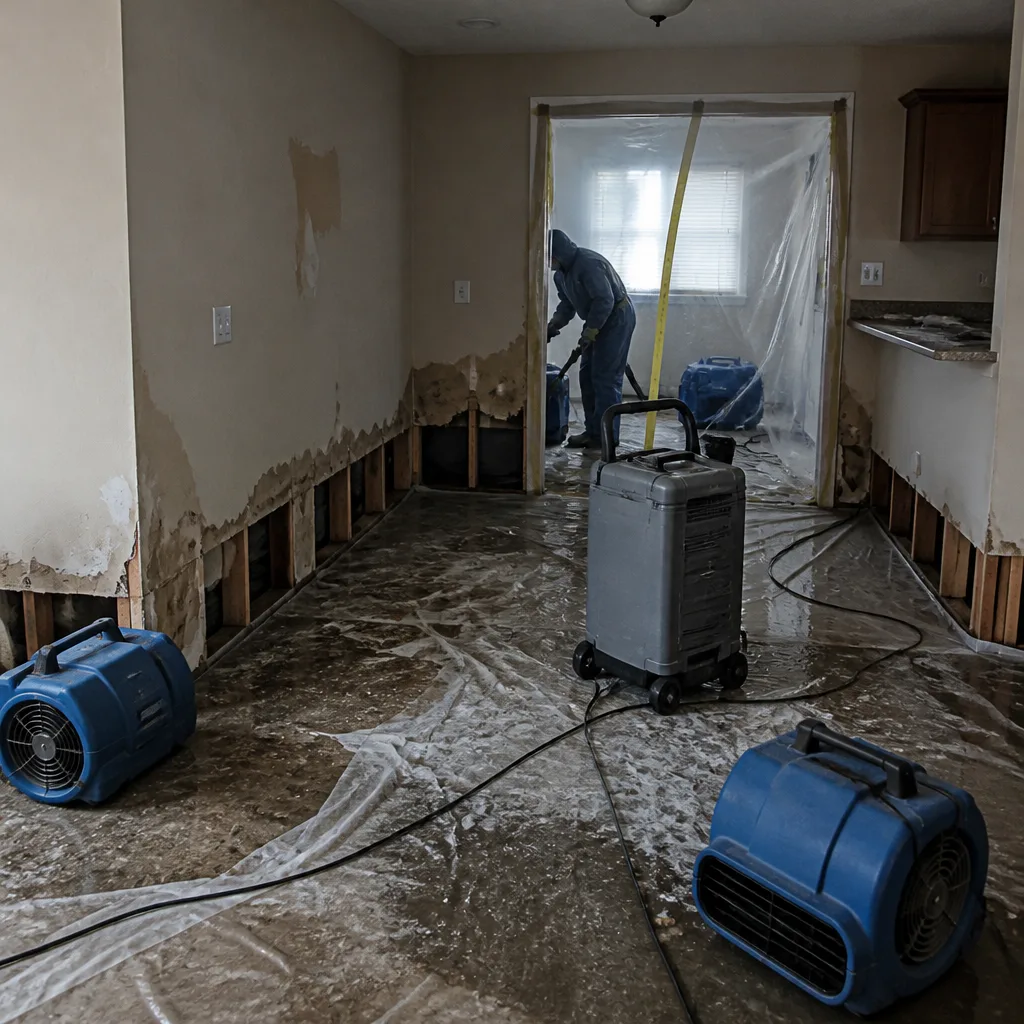 Before
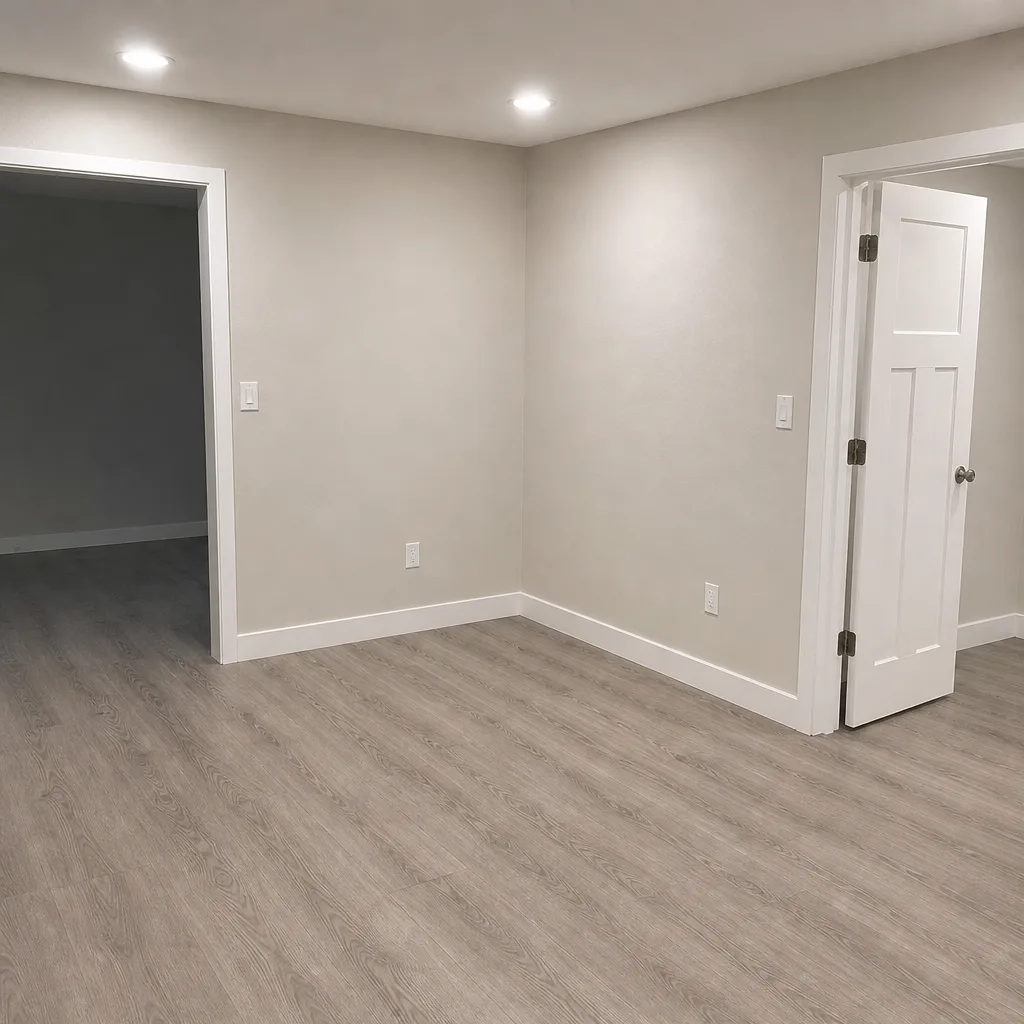 After
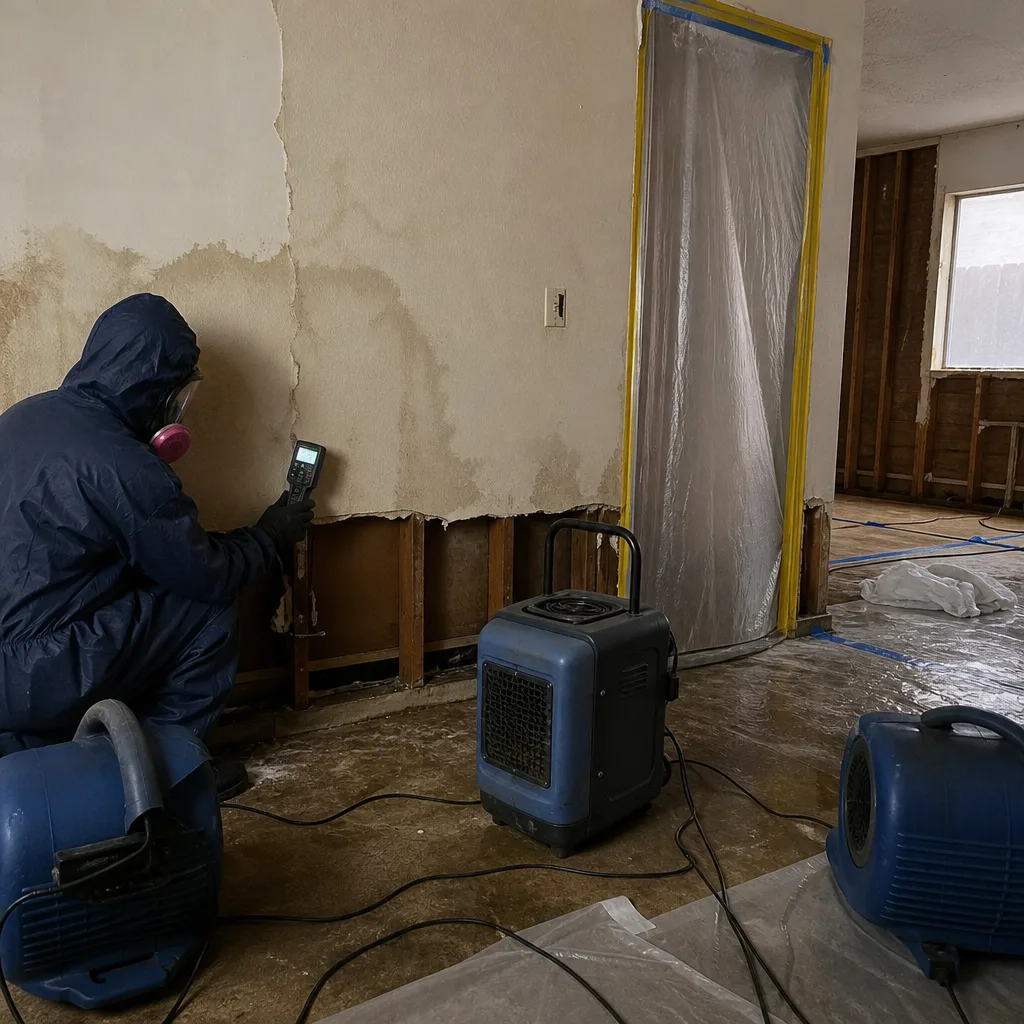 Before
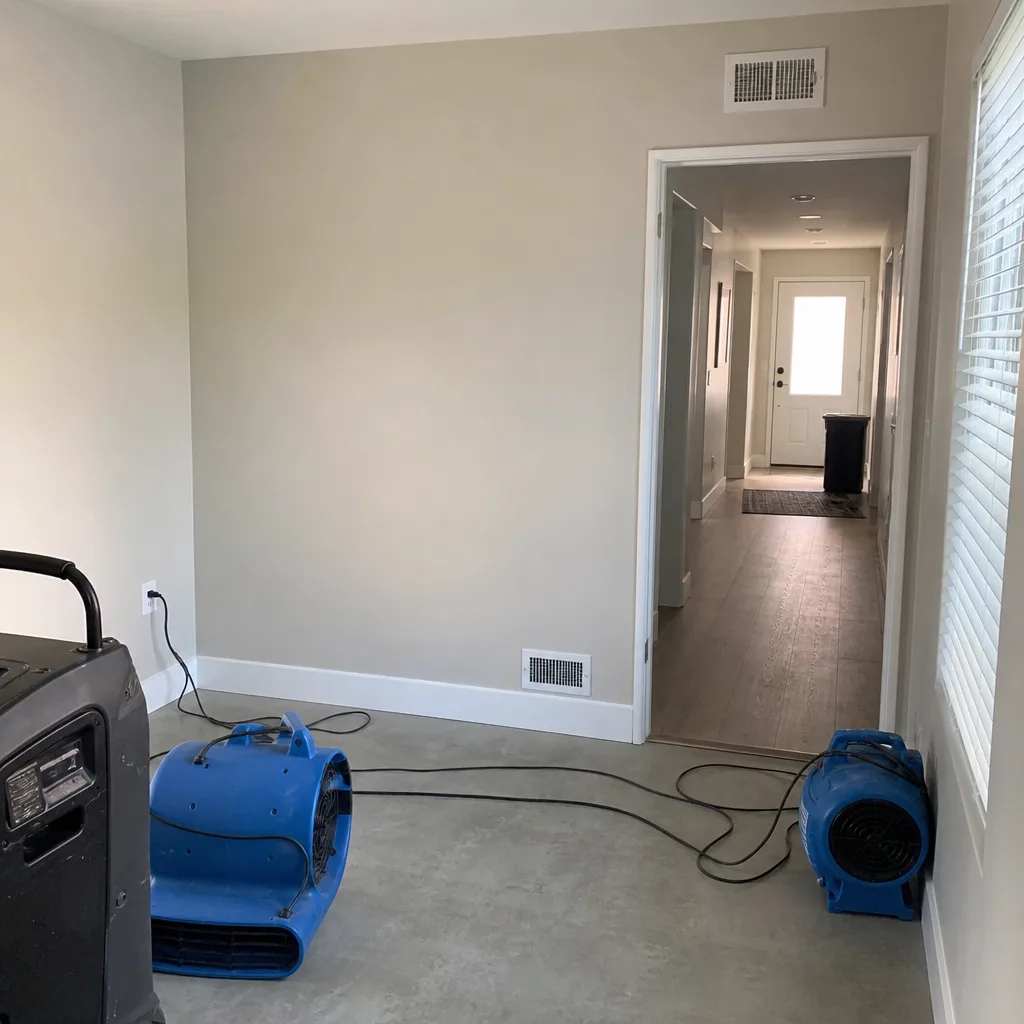 After
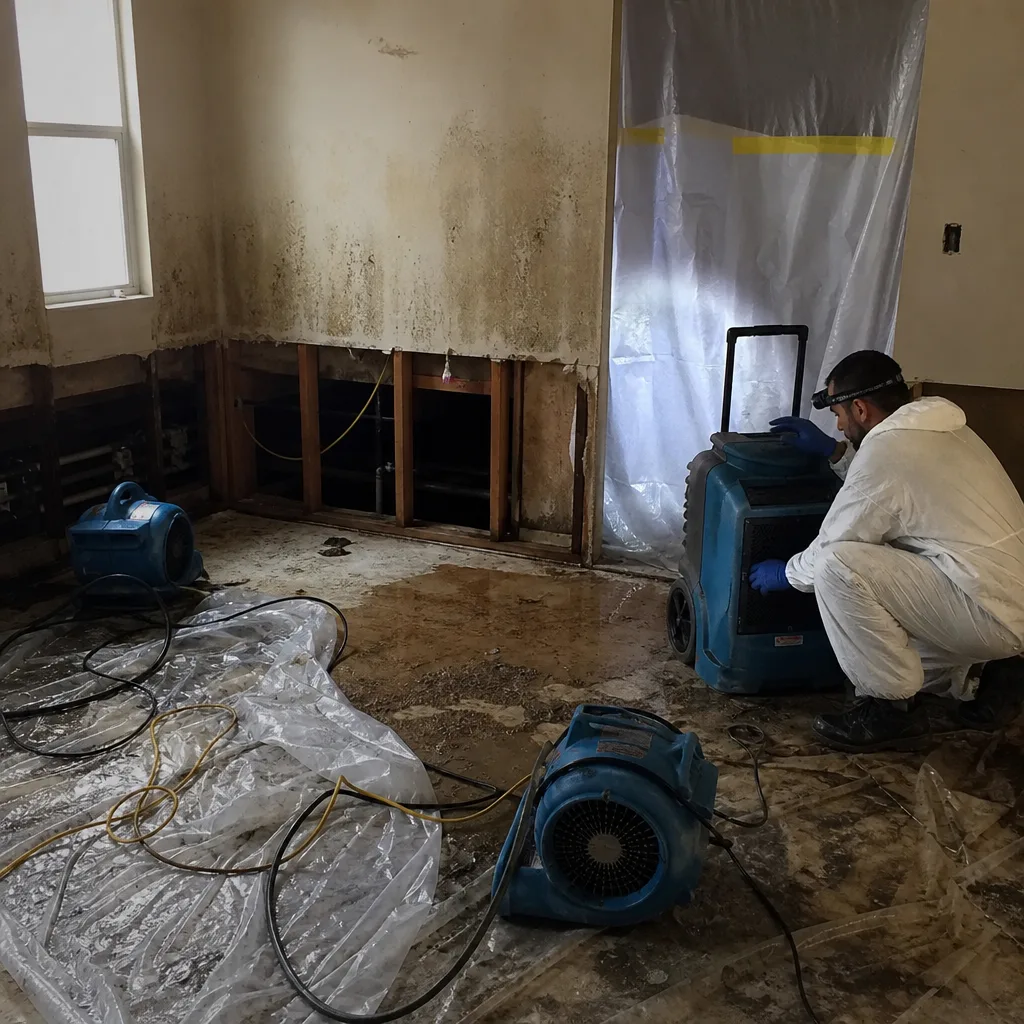 Before
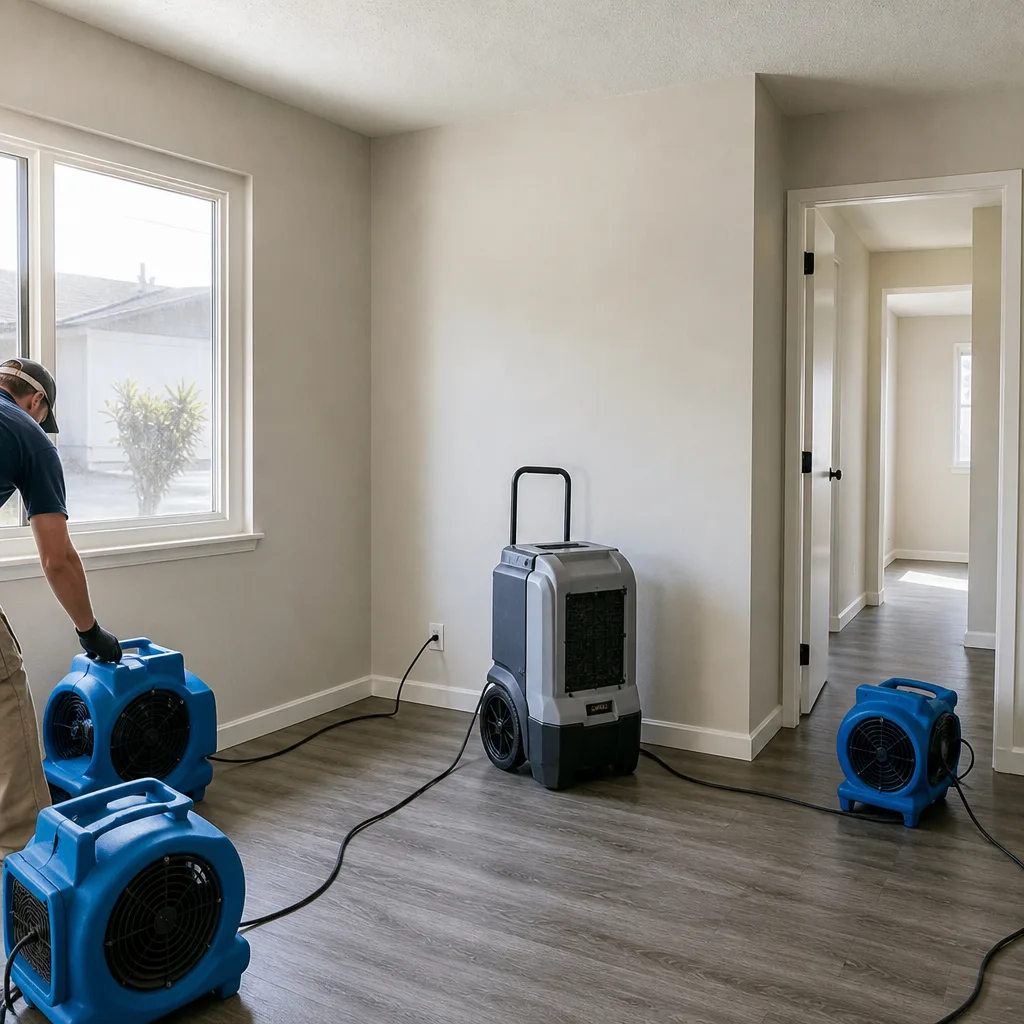 After
Common Water Damage Restoration Problems We See in Murrieta Hot Springs Homes
- Trapped moisture in tight building envelopes. The stucco-and-wood-frame construction common in 92563 holds moisture in wall cavities and HVAC chases long after the surface looks dry. We’ve found elevated readings days after a homeowner thought the leak was handled.
- Warm slab condensation with no visible leak. Homes near the geothermal zone can show wet subfloor and damp wall bases without a supply line failure anywhere. Moisture mapping has to include slab edges, or the source stays hidden.
- Builder-grade plumbing joints. PEX and copper joint failures behind walls and under slabs are common in 1990s and 2000s master-planned tracts. The water travels along framing and flooring before anyone notices a stain.
- Fast mold growth from geothermal humidity. Elevated ambient moisture compresses the microbial growth window. A leak that would dry harmlessly in a drier inland city becomes a mold remediation project here, often inside two or three days.
Pricing for Water Damage Restoration in Murrieta Hot Springs, CA
Here’s what Murrieta Hot Springs homeowners can expect to pay.
| Service | Typical Range in Murrieta Hot Springs |
|---|---|
| Emergency Water Extraction | $1,400 – $3,200 |
| Structural Drying & Dehumidification | $1,800 – $4,500 |
| Single-Room Full Restoration | $2,200 – $6,800 |
| Flood Cleanup (Multi-Room) | $5,500 – $18,000 |
| Burst Pipe Restoration | $3,000 – $9,500 |
| Ceiling & Roof Leak Water Damage | $1,200 – $4,800 |
What moves the number: how far water traveled under flooring, whether it’s Category 1 or soured Category 2/3, how much drywall and baseboard comes out, and whether the slab edge or HVAC chase needs drying. Every job gets a written scope before work starts, so the number you’re quoted is the work you’re approving. Estimates are free. Call (833) 589-5317 and we’ll walk your specific situation.
Murrieta Hot Springs’s Geothermal Zone Changes the Drying Math
Here’s what makes restoration in Murrieta Hot Springs genuinely different from Murrieta, Temecula, or Wildomar: the namesake geothermal zone keeps the ground warm and the ambient humidity elevated in much of 92563. That means condensation forms under flooring and inside wall cavities and HVAC chases even when there’s no visible leak. A homeowner near Murrieta Hot Springs Road might see a damp smell, a slight buckling in laminate, or a water stain on a baseboard with no obvious source. In most inland cities, that would be puzzling. Here, it’s the geology.
Moisture mapping for a Murrieta Hot Springs job has to go beyond the obvious wet spot. We check the slab edge, the wall cavities adjacent to the visible water, and the HVAC chase. In a 2000s master-planned tract off Murrieta Hot Springs Road, we were called for a slow PEX joint failure behind the laundry wall. The tight stucco-and-wood-frame envelope had trapped the moisture, and our mapping found elevated readings in the adjacent wall cavity and the HVAC chase that the homeowner never suspected. We set containment, ran Phoenix dehumidification and air movers for structural drying, logged daily moisture readings, and applied antimicrobial treatment after the drywall came out. Builder-grade detailing on these homes is exactly why we scope the hidden cavities, not just the visible water.
The old dormitory and resort properties near the springs, along with the newer tracts pushing east, all share one trait: if you dry only what you can see, you’re leaving moisture in the places mold likes best. That’s the local problem we plan for on every job here.
We Also Serve Cities Near Murrieta Hot Springs
Our crews cover Murrieta Hot Springs and the surrounding communities, including Murrieta, Temecula, Wildomar, and Quail Valley. If your property falls within that corridor, the same Water Damage Restoration in Murrieta Hot Springs team can respond. We know the housing stock and the moisture behavior across this part of Riverside County.
Serving Murrieta Hot Springs, CA — Our Local Coverage Area
We’re based in the Murrieta Hot Springs area and know this community well. Use the map below to see our service coverage — if you’re nearby, we can almost certainly help.
FAQs About Water Damage Restoration in Murrieta Hot Springs
Murrieta Hot Springs’ geothermal zone keeps ambient humidity elevated and slab foundations warm, which compresses the microbial growth window to roughly 24 to 48 hours after water intrusion. In Murrieta or Temecula, a slow leak might sit for days without mold. Here, it can colonize inside wall cavities and under flooring before you’ve noticed a stain. That’s why we prioritize same-day extraction and structural drying in 92563.
Yes. In a tight stucco-and-wood-frame envelope like most 92563 homes, even a small PEX joint failure wicks moisture into adjacent wall cavities and along the slab. Containment and air movers prevent that moisture from migrating further while the structure dries to a documented standard. A small visible leak frequently means a much larger hidden wet area here, which is why we scope the hidden cavities on every job.
We classify the water first. Category 1 clean water can often be dried in place. Category 2 or 3 water, which happens when a leak sits against drywall or a warm slab for days, means porous materials like drywall, carpet pad, and insulation get removed instead. The decision is based on water category, material type, and how far moisture has traveled. We write the scope before demolition starts.
Yes. Homes near the geothermal zone have warm slab foundations and elevated ambient humidity, so we include slab-edge and HVAC chase readings in the moisture map and often run dehumidification longer than we would in a drier inland city. The drying standard is the same, but the path to get there accounts for the subsurface moisture that’s unique to this area.
It includes extraction, containment, structural drying with daily moisture logs, antimicrobial treatment where wall cavities are opened, and a written list of materials being removed versus dried. For newer builds here, we pay particular attention to builder-grade plumbing joints and the HVAC chase, since those are the most common paths for hidden moisture. The scope is written before work starts, and we share it with your adjuster.
Need a crew in Murrieta Hot Springs now? Call (833) 589-5317 for a free estimate and a straight answer on whether you’re looking at a dry-out or a full restoration. We’ll map the moisture the way this area requires and give you a written scope before any work begins.
Written by Glen Pacheco, Owner at Dry Line Water Damage, serving Murrieta Hot Springs with IICRC-certified water damage restoration.