

 Water damage drying
 Fire & smoke cleanup
 Mold remediation
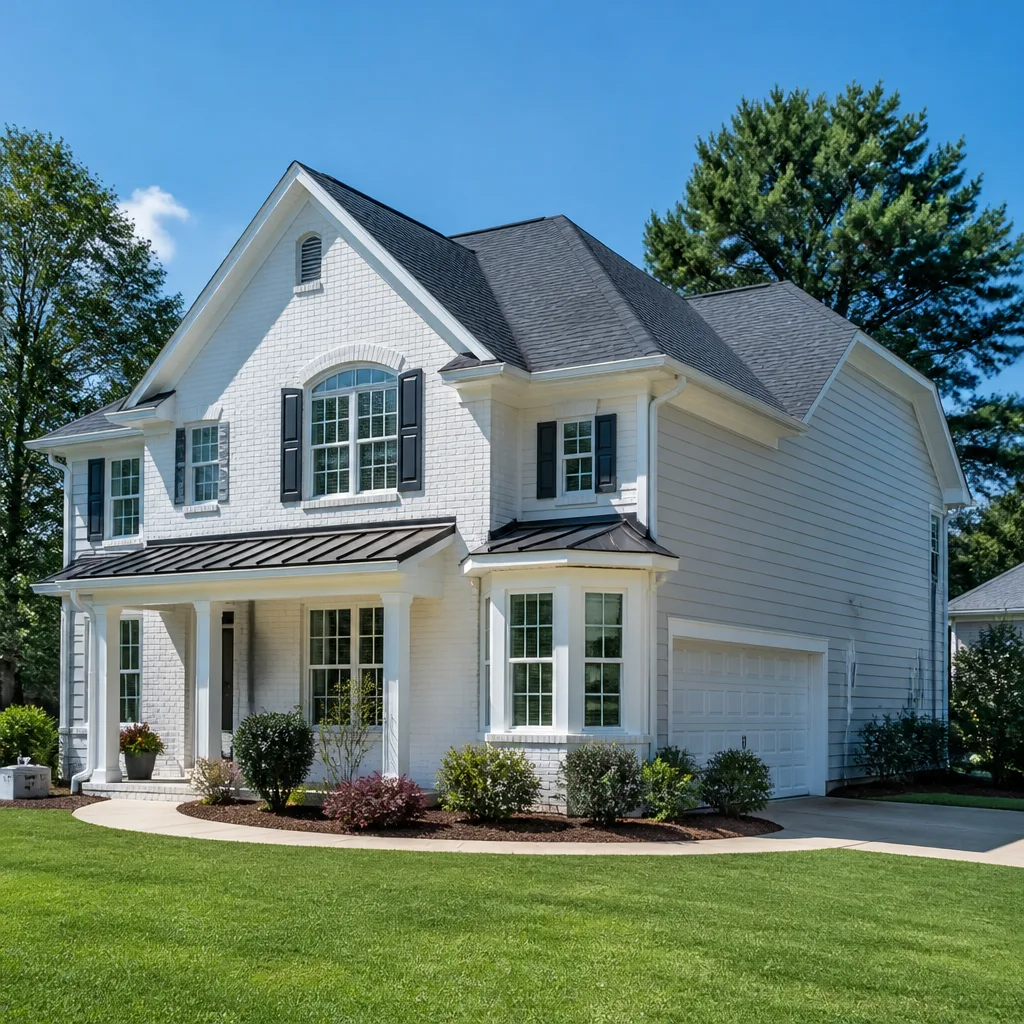 Storm response
 Sewage cleanup
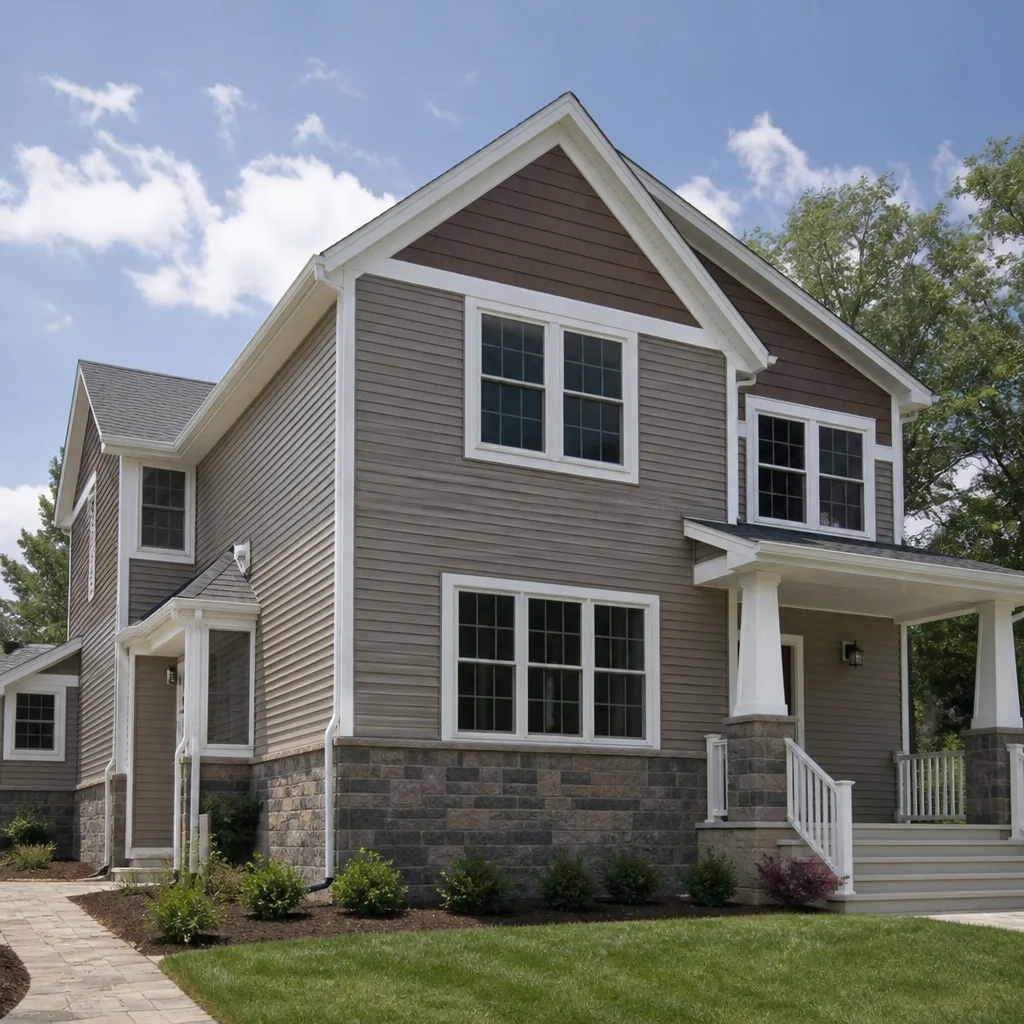 Reconstruction
Free visual inspection and a written scope of work before any mitigation begins - photos, moisture readings, and drying logs go in your claim file
The scope we write is the scope we bill. Anything new gets shown to you, in writing, before we touch it.
Get your free estimateFast, Reliable Water Damage Restoration Across Ontario
Water damage restoration in Ontario, CA typically costs $2,100 – $5,800 for a standard Category 1 or 2 loss, with emergency extraction alone running $450 – $1,200. Our crews reach most Ontario addresses within 60 – 90 minutes because we stage equipment in the Inland Empire rather than dispatching from Los Angeles or Orange County. Call (833) 589-5317 and we’ll have a moisture mapping technician on the road while you’re still on the phone.
Ontario’s water damage profile is different from what most people expect in Southern California. It’s not earthquakes. It’s the Santa Ana winds tearing open flat-roof flashings on 1950s tract homes, then the next atmospheric river pushing water straight through the gap. We know the older cores of 91761, 91762, and 91764 block by block because we’ve dried enough of them. That local knowledge changes how fast we find the actual water path, not just the puddle you can see.
Why Dry Line Water Damage Is Ontario’s Preferred Water Damage Restoration Company
We’re an IICRC-certified restoration operation led by Glen Pacheco, not a franchise crew running a generic playbook. Ontario homeowners and property managers call us because our drying logs hold up to adjuster scrutiny. When a loss in the 91762 tracts involves wind-lifted roofing that let water into a ceiling assembly, the insurance claim lives or dies on documentation. We provide that.
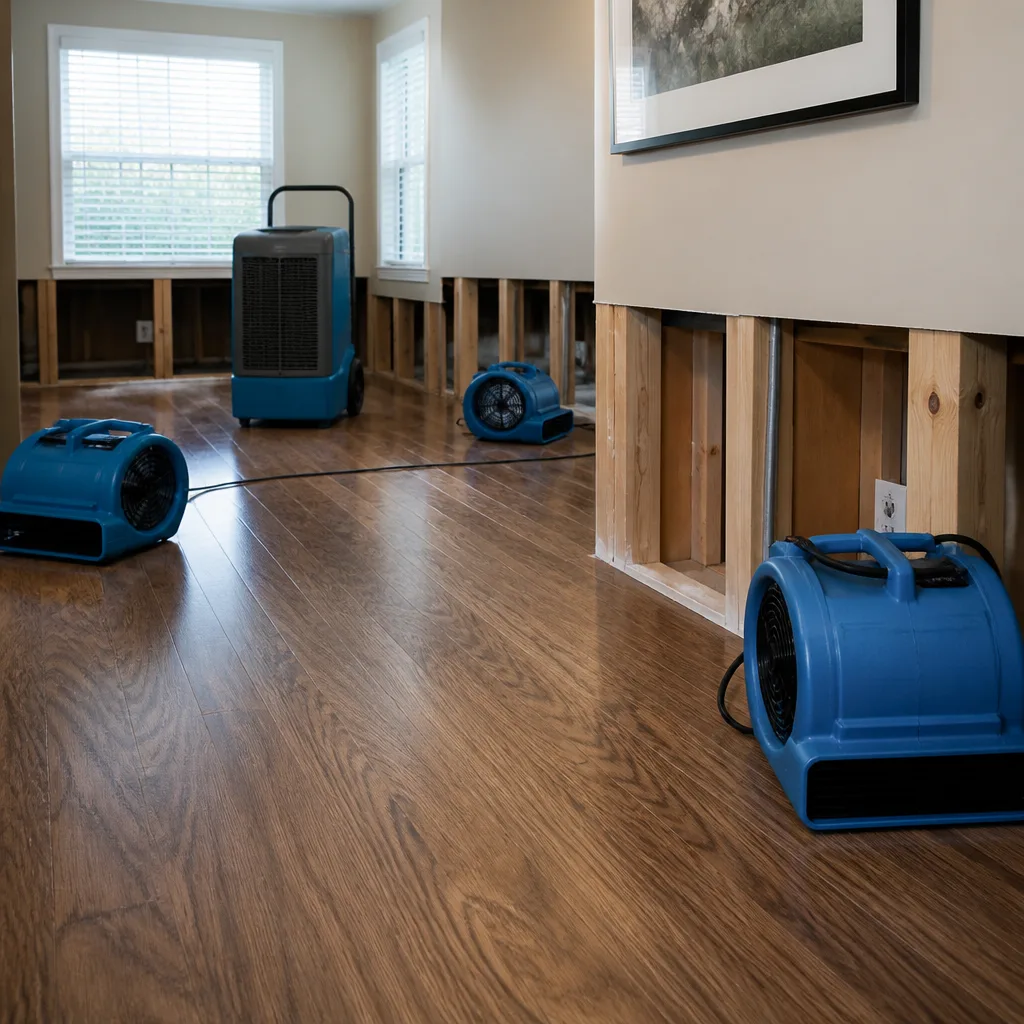
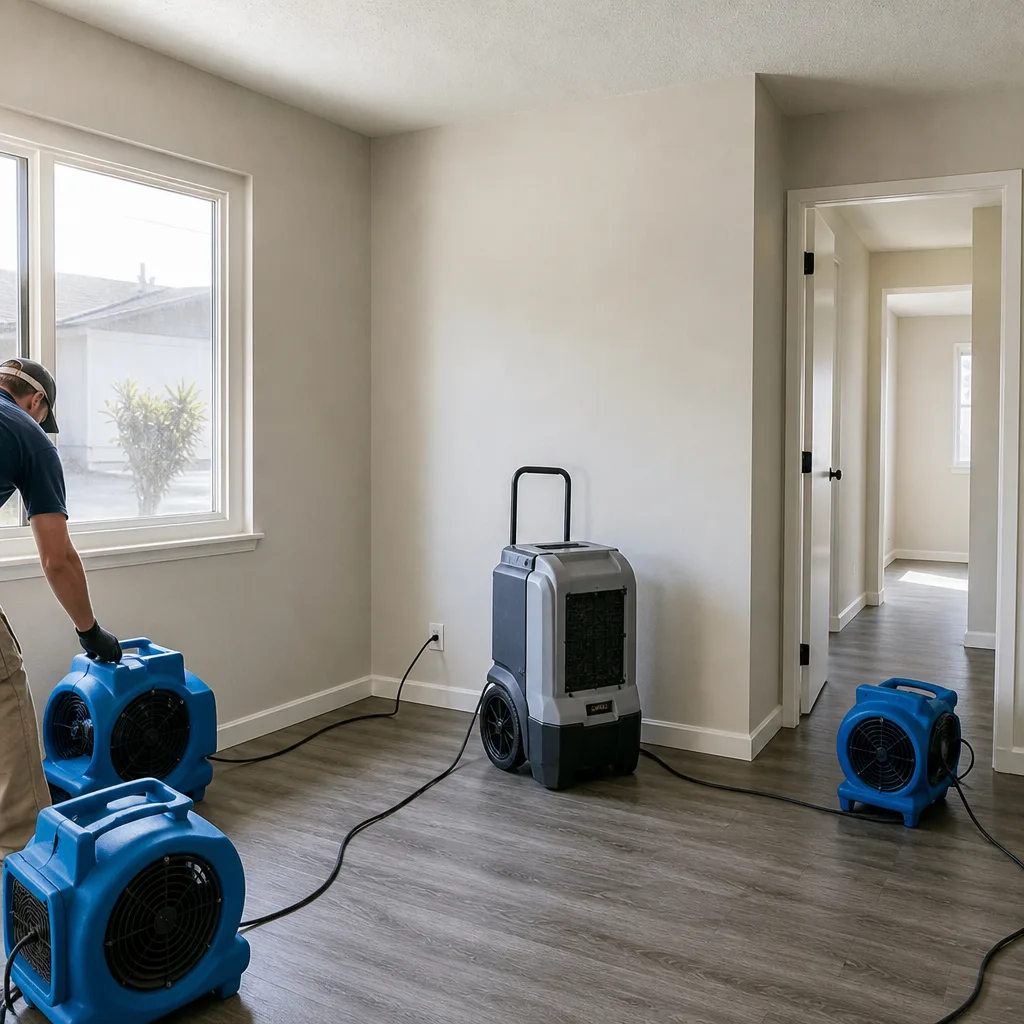
Our techs run Dri-Eaz and Phoenix commercial dehumidifiers, not rental-shop machines. In Ontario’s older single-story homes with original framing, that equipment difference determines whether joists dry in place or get torn out. We also use Injectidry systems to pull moisture from wall cavities and under cabinetry without demolition. That saves repair scope on homes where matching 1960s lathe-and-plaster or original hardwood costs real money to replace.
One crew handles the full water loss. If extraction reveals microbial growth behind baseboard, our mold remediation line picks it up without a handoff. If a water heater failure caused smoke or charring near wiring, fire damage response stays under the same roof. No coordination gaps, no finger-pointing between vendors, no gaps in the documentation trail.
Glen Pacheco built this company around a simple standard: document every moisture reading, every containment boundary, every piece of equipment placed, every hour it ran. Ontario adjusters know what a defensible drying claim looks like. So do we.
Restoration work we handle
Water Damage Cleanup in Ontario
Water damage cleanup in Ontario means removing standing water, cutting out saturated materials that can’t dry, treating affected surfaces, and getting the structure to a documented dry standard – fast, because Ontario’s summer heat accelerates mold growth inside enclosed wall cavities. A typical single-room cleanup in a 91762 home runs $900 – $2,400 depending on how far water traveled through the slab foundation or wall framing.
Extraction and Material Removal
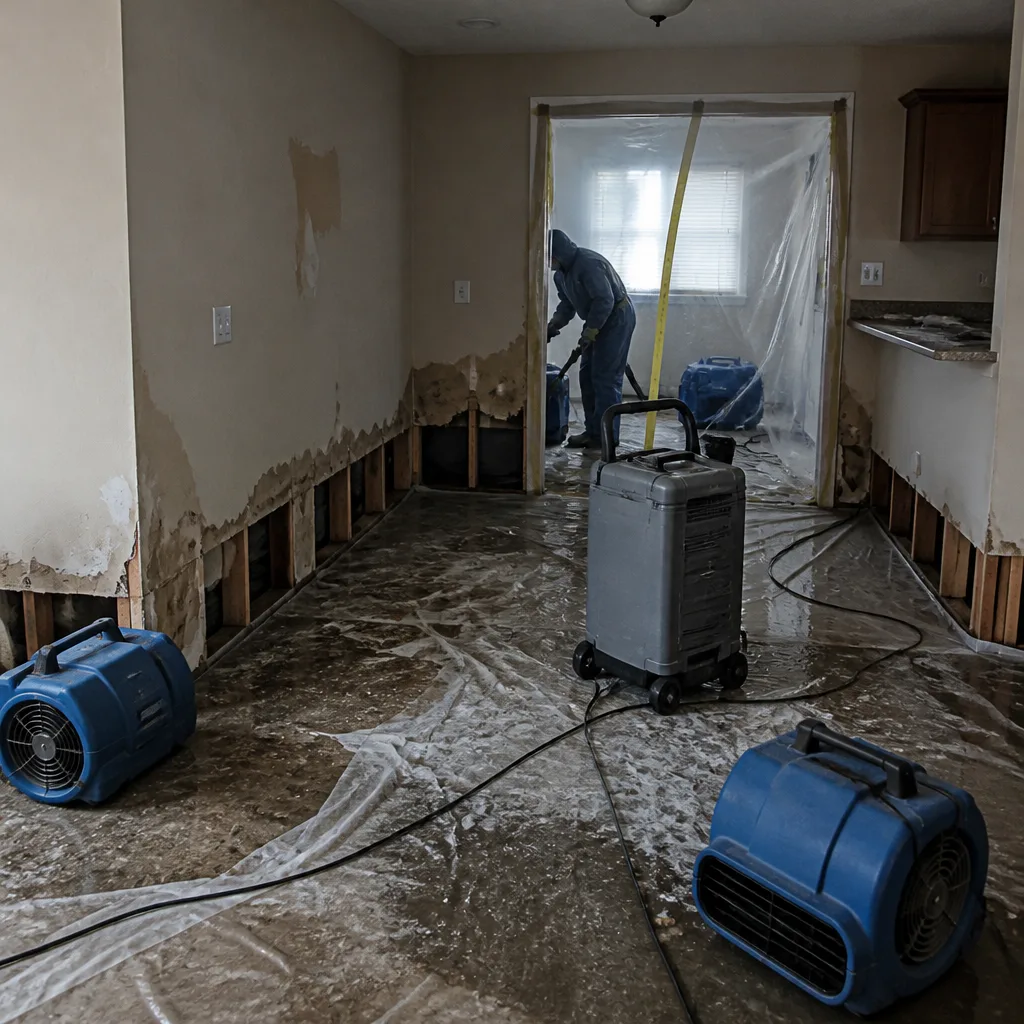
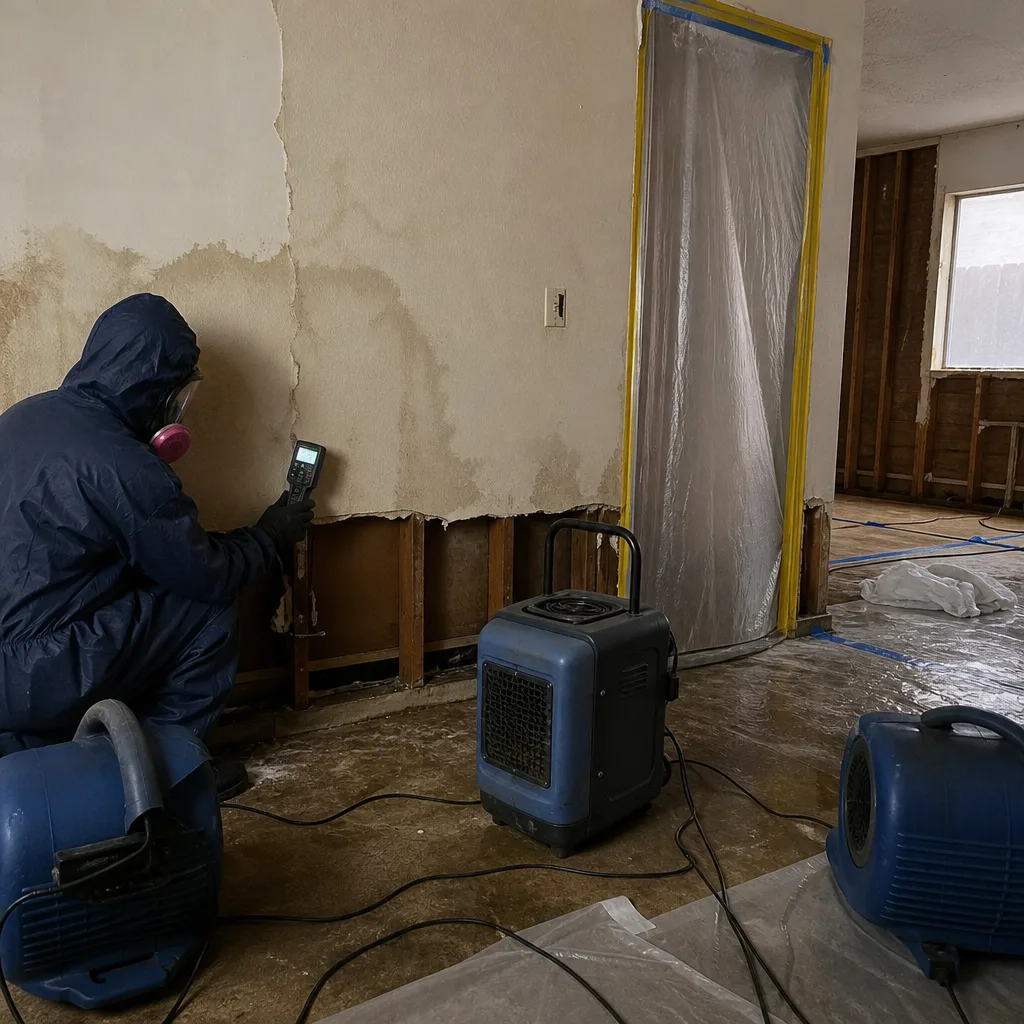
We start with truck-mounted or portable extraction to pull free water from flooring, pad, and any carpet that’s salvageable. In Ontario’s older 1950s – 60s homes, the real question is always what’s behind the baseboard. We cut drywall at the water line, log moisture readings with penetrating and non-penetrating meters, and remove only what the readings say is unsalvageable. That matters when the home has original plaster, because unnecessary demolition triggers unnecessary rebuild cost.
Antimicrobial Treatment and Drying Setup
Once affected materials are out, we treat framing and cavities with an EPA-registered antimicrobial before the drying system goes in. In Ontario’s 1990s – 2000s stucco subdivisions where PEX supply lines fail behind second-floor walls, this step is where a Category 1 loss becomes manageable instead of turning into a Category 2 or 3 problem weeks later. We leave air movers and dehumidifiers running until the drying logs show stability, not just a dry surface.
Emergency Water Damage Restoration in Ontario
Emergency water damage restoration in Ontario is what we do when a supply line bursts at 2 a.m. in a 91764 subdivision house, or when a Santa Ana event rips a flat-roof patch open in 91762 and the next rainstorm fills the ceiling cavity. Typical emergency response with extraction, containment, and initial drying setup runs $1,800 – $4,200 for a standard residential loss before rebuild scope.
Rapid Dispatch and Initial Stabilization
We map moisture immediately on arrival, not after setting up equipment. In Ontario’s slab-foundation homes, water travels fast through the void spaces under tile and laminate, so the visible puddle is almost never the full loss boundary. We contain the affected zone, extract standing water, and document the pre-existing condition before we start any tear-out. That pre-existing documentation is what separates a clean insurance claim from a disputed one.

Structural Drying Without Unnecessary Demolition
Where the framing is wet but stable, Injectidry panels and mats let us dry inside wall and ceiling cavities without opening every surface. That’s a specific advantage in Ontario’s older tract homes, where matching 60-year-old drywall texture and paint is a cost homeowners get hit with twice – once in demolition, once in repair. We’d rather dry the cavity, log the readings, and spare the original material.
Trusted Brands We Service in Ontario
Ontario homeowners ask us to service losses involving all major equipment and fixture brands, but the most common calls trace back to aging copper supply lines in 1950s – 60s homes, failing water heater supply connections, and second-floor PEX fittings in newer stucco subdivisions. We don’t sell replacement plumbing, so our only interest is stopping the source, drying the structure, and documenting the loss. When we need parts to cap a line or isolate a leaking fixture locally, our techs hit the supply houses along the 60 corridor, not a big-box shelf. That keeps an Ontario job moving without waiting on parts from out of state.
Common Water Damage Restoration Problems We See in Ontario Homes
- Wind-lifted flat-roof flashing on 1950s – 60s tracts in 91761 and 91762. A Santa Ana event pulls the patch, the next storm fills the ceiling, and the homeowner discovers it days later. By then the insulation is saturated and the framing is wicking water across the ceiling grid.
- Second-floor PEX supply-line failures in 1990s – 2000s stucco subdivisions. Water migrates down through wall cavities and into first-floor ceilings, often categorized as clean water when the travel path has already contaminated it. Without proper containment and antimicrobial treatment, that loss becomes a mold risk.
- Slab leaks in older ZIP 91762 and 91764 homes with original copper. These move water under flooring and into base plates for weeks before anyone sees the floor cup or the water bill spike. The structural drying scope is always larger than the visible stain suggests.
- Warehouse sprinkler failures and roof-drain overflows along the 60 and I-15 corridor. These losses involve logistics inventory, racking systems, and pre-loss condition questions that residential crews don’t handle. Documentation matters more than drying speed.
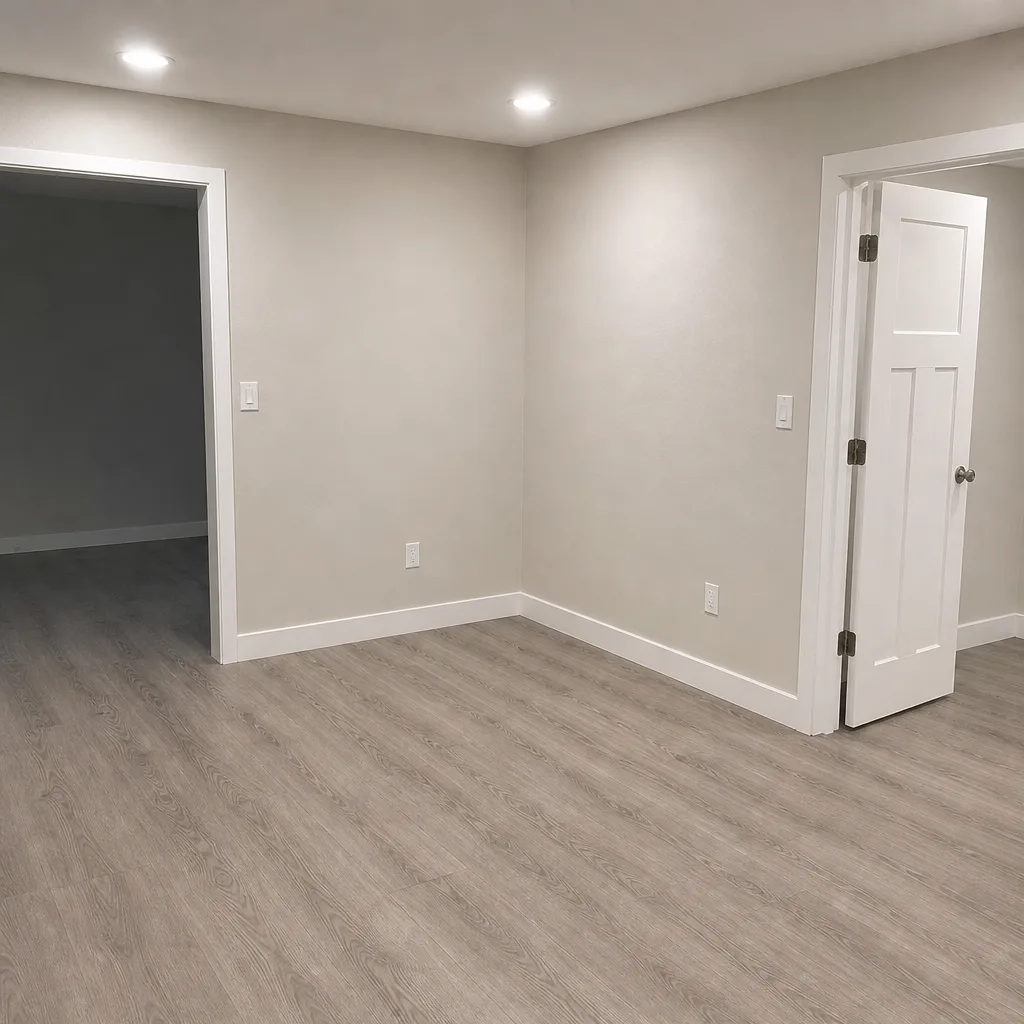
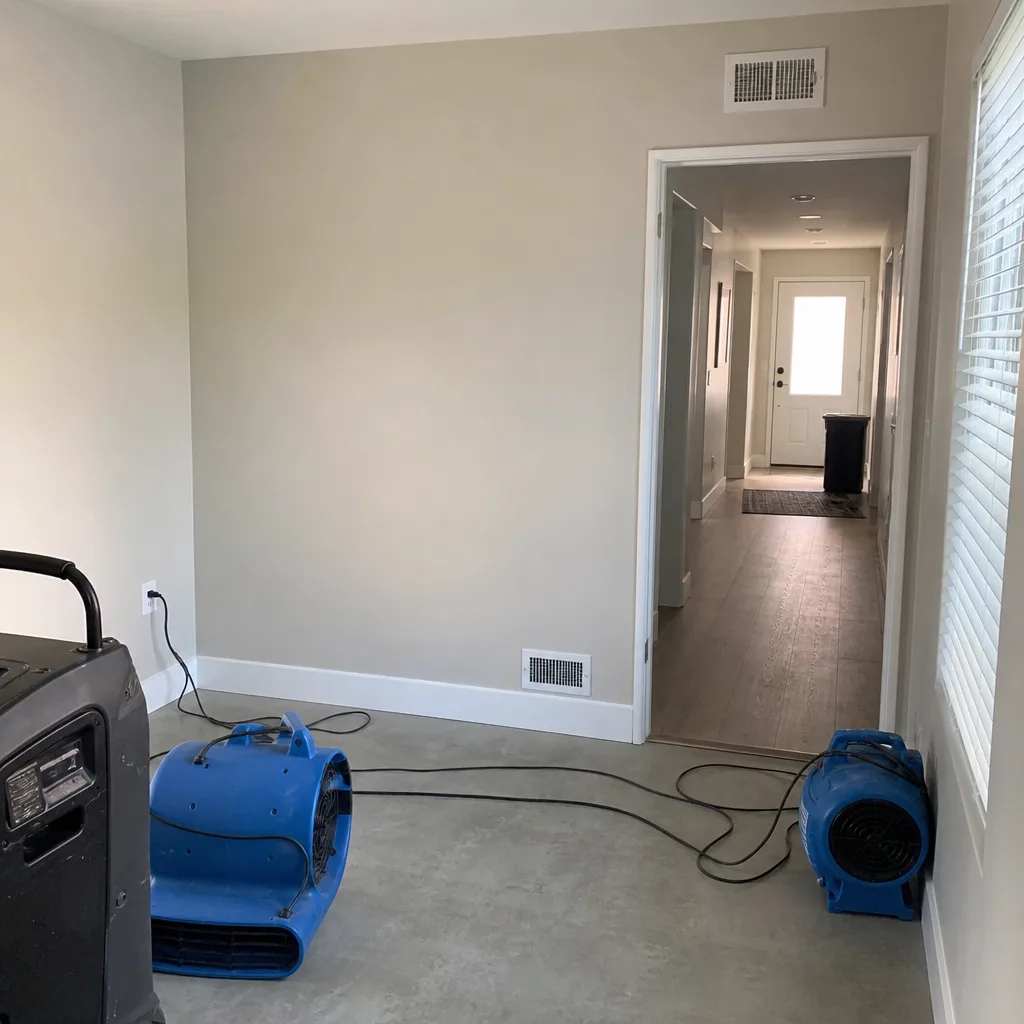
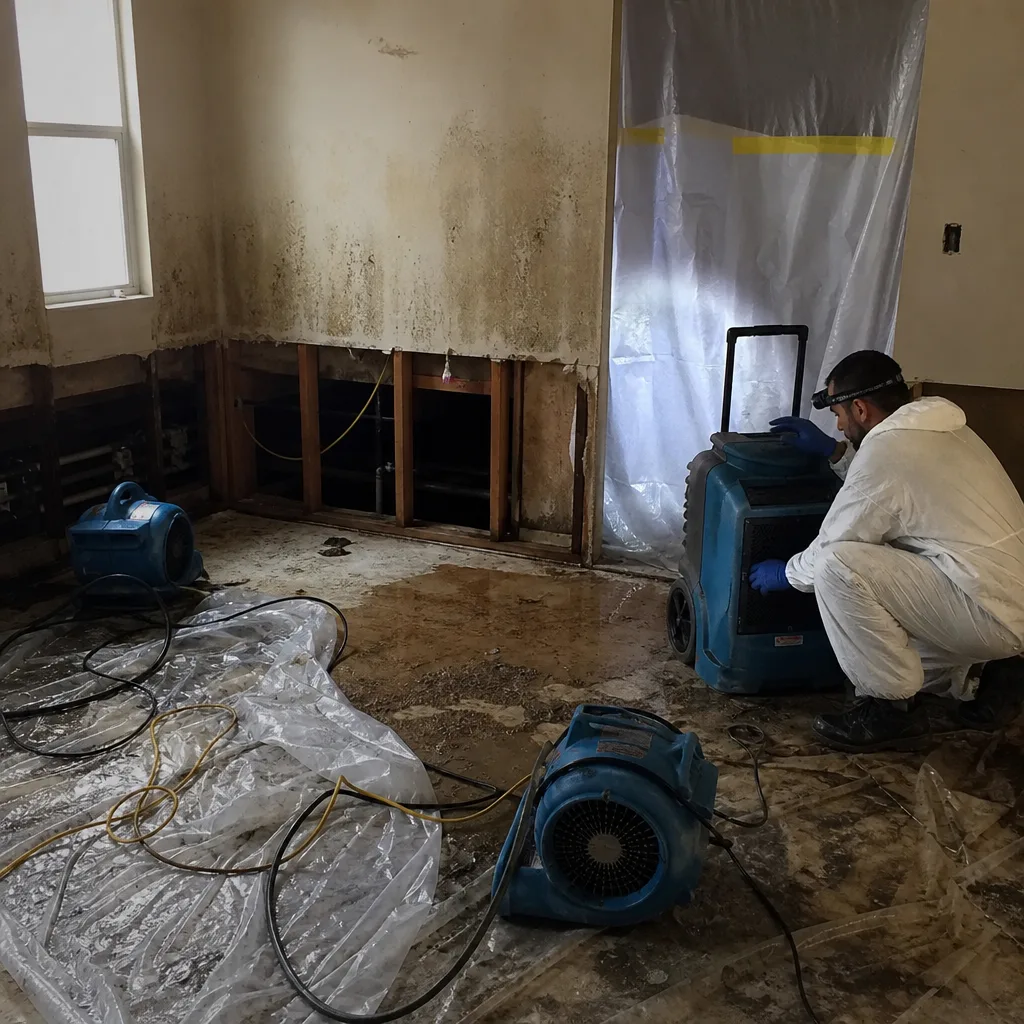
See the difference
 Before
 After
 Before
 After
 Before
 After
Pricing for Water Damage Restoration in Ontario, CA
Here’s what Ontario homeowners can expect from a Dry Line Water Damage scope. Emergency extraction with same-day response runs $450 – $1,200 for typical single-room flooding. Full cleanup with material removal, antimicrobial treatment, and structural drying on a 200 – 400 square foot loss runs $2,100 – $5,800. Larger multi-room losses, second-floor ceiling involvement, or Category 3 water from sewer or yard-drainage backups push into the $6,000 – $12,000 range. The variables in Ontario’s housing stock are specific: original plaster in pre-1965 homes costs more to cut and patch than drywall, and flat-roof water intrusion through insulation requires more drying contact time than a clean supply-line leak. We write a scope before work starts, line-itemed, so the adjuster sees exactly what’s getting dried, removed, and treated. Call (833) 589-5317 for a free estimate and we’ll walk the loss with you.
We Also Serve Cities Near Ontario
Our crews work the full Inland Empire corridor around Ontario, including Water Damage Restoration in Ontario and the neighboring communities of Montclair, Upland, Chino, and San Antonio Heights. If your property is a few exits up the 10 or 15, we’re already staging near you.
Serving Ontario, CA — Our Local Coverage Area
We’re based in the Ontario area and know this community well. Use the map below to see our service coverage — if you’re nearby, we can almost certainly help.
FAQs About Water Damage Restoration in Ontario
Yes, and it’s the most underrated water damage trigger in Ontario. Santa Ana winds lift and tear flat-roof flashings and patched areas on older tract homes, especially in 91761 and 91762, and the next Pacific system drives water straight through the opening into the ceiling assembly. The wind event is the source; the water damage is the result. If you had roof damage during a wind event and then a storm, call (833) 589-5317 before the stain spreads.
Because the original 1950s – 60s flat and low-slope roofs were never designed for Ontario’s combination of Santa Ana wind load and atmospheric-river rainfall, and the patch jobs done over the years fix the membrane cosmetically without addressing the flashing failures at the source. Each winter, the same addresses take water in the same spots. The proper restoration sequence is water extraction and structural drying first, then a documented scope for the wind-rated roof repair – not another cosmetic patch.
In Ontario’s summer heat, mold growth can start in 24 – 48 hours when water is trapped inside a wall cavity or ceiling assembly with no airflow. That’s why structural drying without unnecessary demolition matters – Injectidry systems let us pull moisture from those cavities fast instead of waiting for tear-out scheduling. Call (833) 589-5317 and we’ll have equipment running before the 48-hour window closes.
A slab leak itself starts as Category 1 clean water, but the moment that water sits under flooring, wicks up through base plates, and mixes with accumulated dust and soil in a wall cavity, it degrades toward Category 2. Ontario’s older slab homes in 91762 and 91764 are exactly where this happens most, because the water travels unseen for days or weeks before anyone notices. We classify based on actual contamination readings at the time of our assessment, not on the source line alone.
Yes. A warehouse sprinkler loss involves racking, inventory, pre-loss condition documentation, and often multiple affected zones across a large footprint. The pack-out plan and moisture mapping scope are entirely different from a single-family home. Our crew runs containment, drying, and documentation for commercial losses along the Ontario airport corridor, and we coordinate directly with property managers and adjusters on scope disputes before they escalate.
Call Dry Line Water Damage for Water Damage Restoration in Ontario
If you’re reading this with water moving through a ceiling, a buckled floor, or a wall that’s warm and wet, don’t wait for the stain to tell you where it went. Call (833) 589-5317 and we’ll send an IICRC-certified crew from our Inland Empire staging zone. Glen Pacheco’s team will document the loss from the first moisture reading to the final drying log. One crew, full scope, documented dry.
Written by Glen Pacheco, Owner at Dry Line Water Damage, serving Ontario since 2019.