


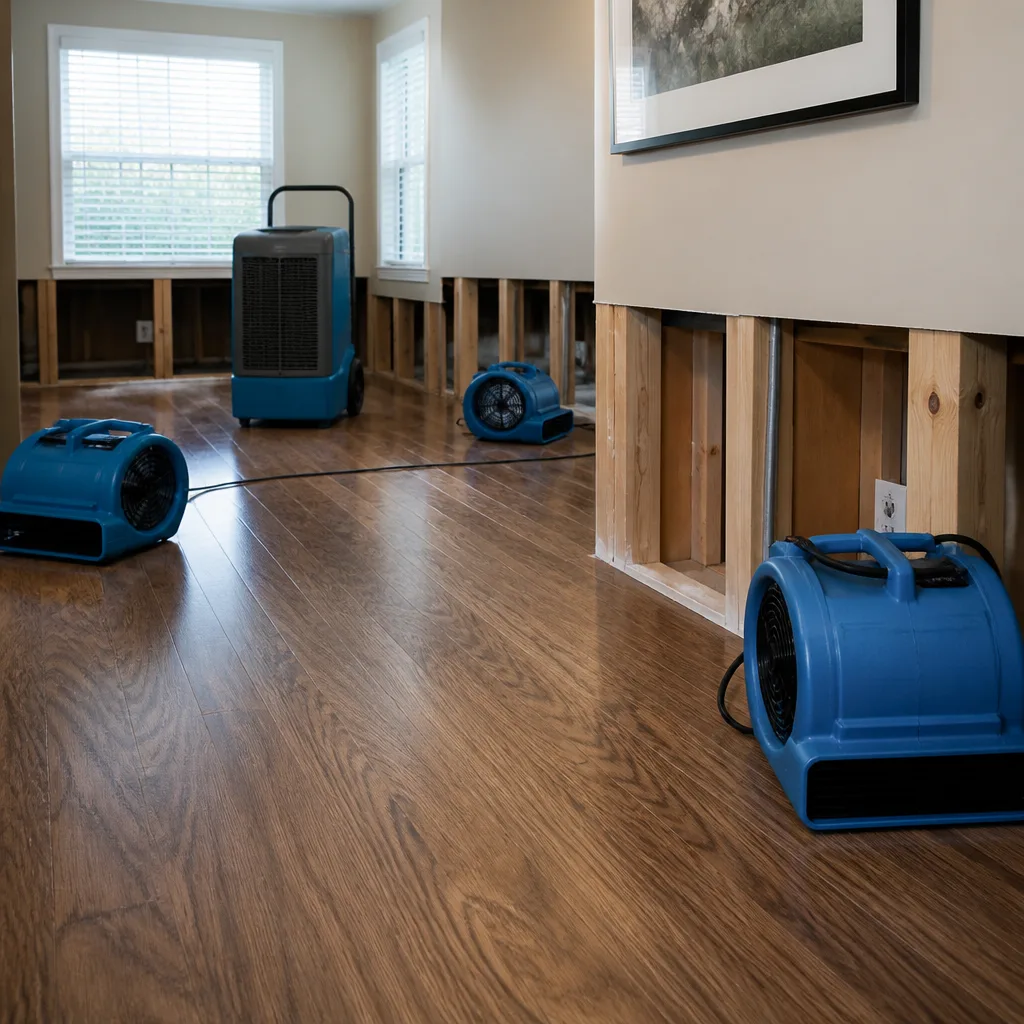
 Water damage drying
 Fire & smoke cleanup
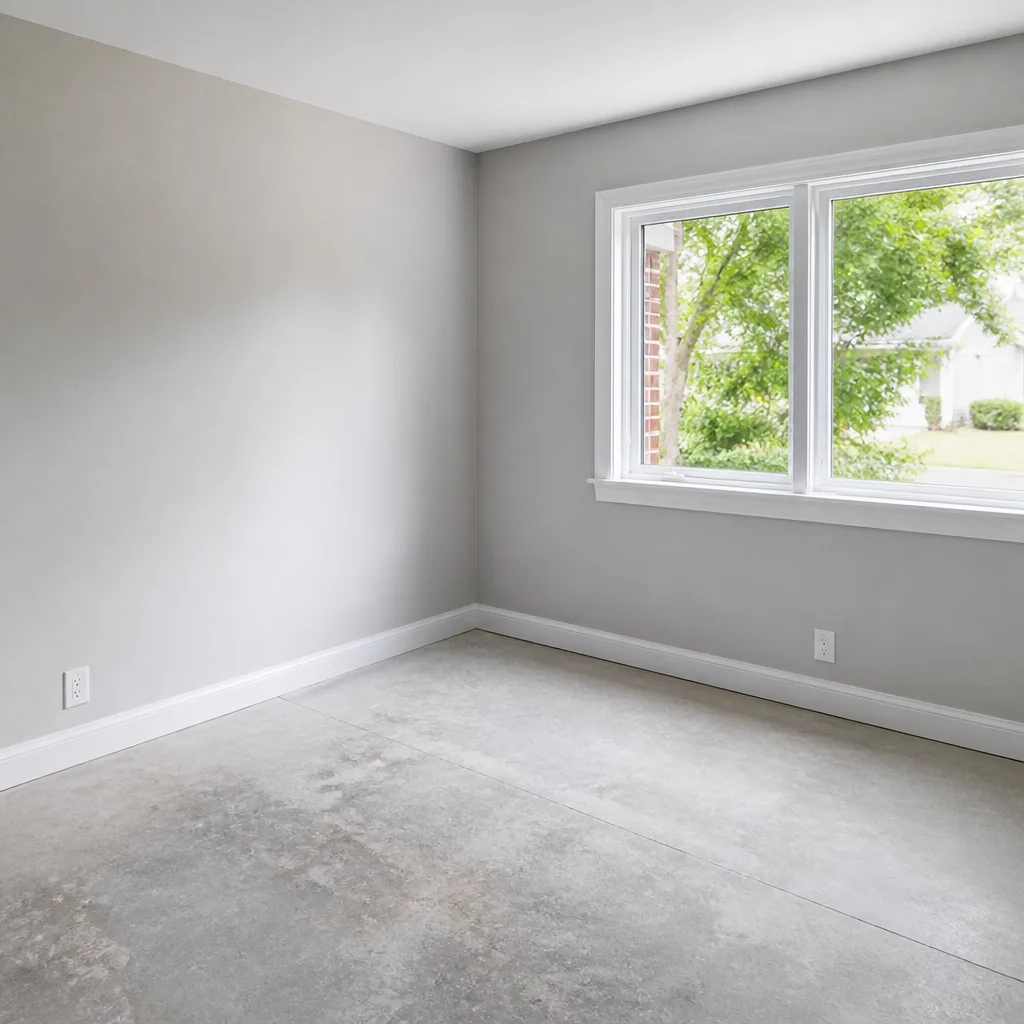 Mold remediation
 Storm response
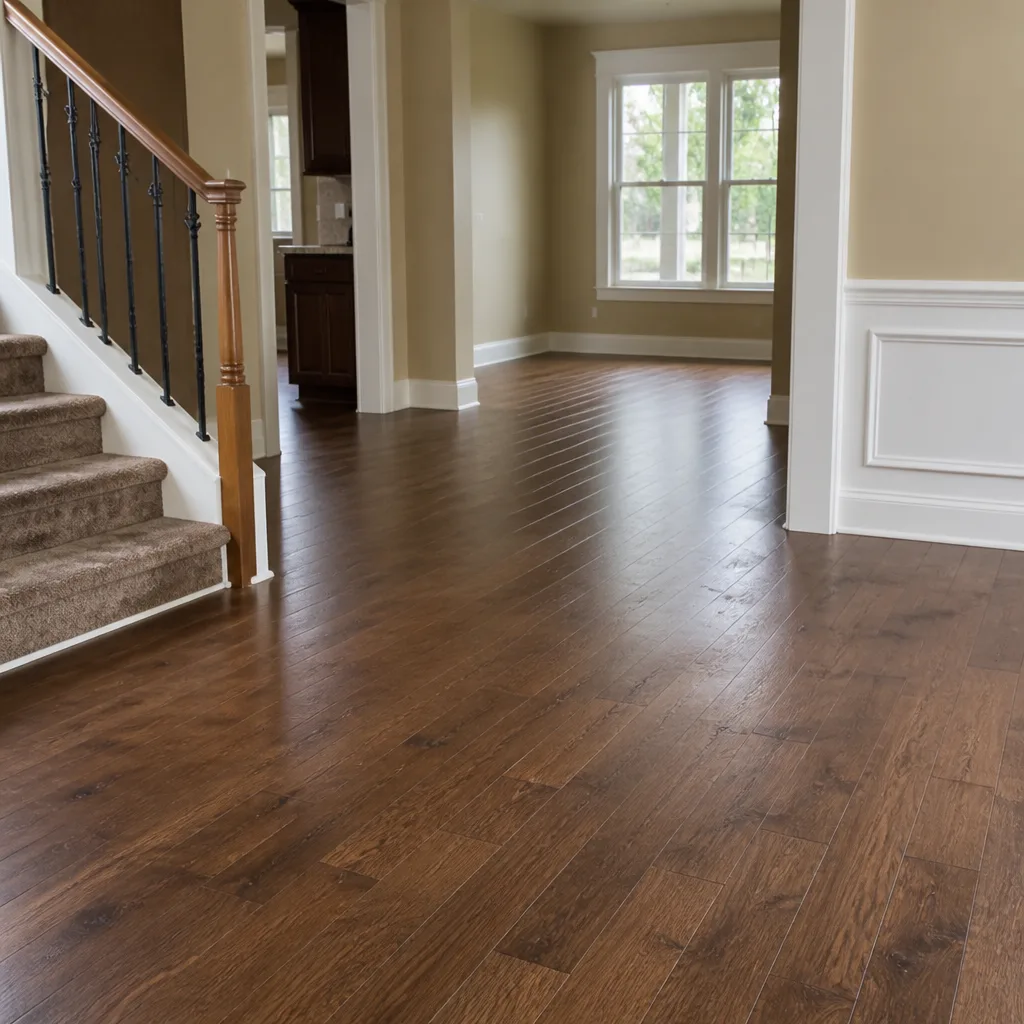 Sewage cleanup
 Reconstruction
Free visual inspection and a written scope of work before any mitigation begins - photos, moisture readings, and drying logs go in your claim file
The scope we write is the scope we bill. Anything new gets shown to you, in writing, before we touch it.
Get your free estimateFast, Reliable Water Damage Restoration Across Trabuco Canyon
Water damage restoration in Trabuco Canyon costs between $1,800 and $6,500 for most single-room losses, with full basement extraction and structural drying typically landing at $3,200 to $5,800 depending on how far water has wicked into framing and subfloor. Our crews run the same IICRC-certified process here that we use on large commercial losses, and we can usually be on site in Trabuco Canyon within 60 to 90 minutes of your call. Trabuco Canyon homes demand more from a drying plan than tract housing does, because the canyon’s sloped lots and older wood-framed construction create cavities that hide water for weeks. Call (833) 589-5317 the moment you see water where it shouldn’t be. Glen Pacheco and his team have worked enough Live Oak Canyon Road and Trabuco Canyon Road properties to know exactly where moisture goes in these houses and what it takes to get it documented dry.
Why Dry Line Water Damage Is Trabuco Canyon’s Preferred Water Damage Restoration Company
We are an IICRC-certified operation, which means our technicians train to a published third-party standard for water damage restoration, not a checklist we wrote ourselves. Trabuco Canyon homeowners call us because we bring commercial-grade drying systems, not rental-shop equipment, into homes where a failed exterior door or a debris flow has left saturated framing behind the drywall. Our Injectidry structural-drying system pulls water from inside wall cavities and under hardwood floors without ripping everything apart, which matters when you are restoring a 1980s custom canyon home with irreplaceable millwork. Glen Pacheco has built the crew around one principle: document the moisture, dry to a measurable standard, and hand the homeowner a written moisture map their adjuster can actually read. As an RIA member, we follow the restoration industry’s published code of ethics and stay current on drying science through ongoing professional development. Trabuco Canyon customers regularly tell us the same thing: the adjuster looked at our documentation and stopped asking questions.
Restoration work we handle
Flooded Basement in Trabuco Canyon
A flooded basement in Trabuco Canyon is frequently not a plumbing failure at all. On hillside lots below the Santa Ana Mountains, the first heavy rain after a foothill fire can push muddy runoff downhill and into a walkout basement or a below-grade garage that has stayed dry for twenty years. We scope these jobs as debris-flow intrusions, not clean-water leaks, which changes everything about the drying plan and the safety protocol.
Mud and Debris Intrusion
When canyon drainage carries post-fire ash and mud into a basement, we treat the water as Category 2 or 3, meaning it carries contaminants and requires antimicrobial application after extraction. The mud itself has to be removed before drying equipment can work, because wet silt sitting on a concrete slab will keep feeding moisture into the air and into any drywall it touches. Expect a flooded basement of this type in Trabuco Canyon to run $3,800 to $7,200 depending on square footage and how much sediment came in with the water.
Slope-Side Basement Drying
A walkout basement built into a Trabuco Canyon hillside has one wall that is buried in earth. When storm water gets behind that wall, the soil itself becomes a moisture reservoir, and drying only the interior face fails within weeks. We run moisture probes into the below-grade wall assembly and keep Dri-Eaz dehumidifiers running until readings confirm the entire cross-section is dry, not just the surface. A Hillside basement water loss in Trabuco Canyon with wall-cavity saturation typically costs $4,200 to $6,800 to dry and restore.
Water Extraction in Trabuco Canyon
Water extraction in Trabuco Canyon is the first hour of the job, and doing it wrong makes every later step harder. Standing water in a canyon home does not just sit on top of the flooring, it migrates under baseboards, into the tongue-and-groove subfloor, and through any crack in the slab or crawlspace vent. We run truck-mounted extraction with wand and weight, then follow with sub-surface extraction mats on saturated carpet and pad.
Extraction Before Drying
On a storm-driven door leak off Live Oak Canyon Road, we pulled over 40 gallons of water from a single room before placing a single air mover. That matters because any water left in the carpet pad or under the subfloor keeps evaporating during the dry-down, slowing the process and pushing humidity into wall cavities that were dry on day one. Trabuco Canyon extraction-only calls, where a homeowner catches a burst supply line or a failed water heater early, usually run $900 to $1,800.
Storm Water and Debris Removal
Post-storm extraction on a canyon lot often means pumping silty water out of a garage or basement before standard extraction equipment can safely run. We separate solids from water using trash pumps and filtration, then switch to extraction mats and dehumidifiers. A mud-intrusion extraction on a Trabuco Canyon property, including pump-out and sediment removal, typically lands between $2,500 and $5,000 before structural drying begins.
Trusted Brands We Service in Trabuco Canyon
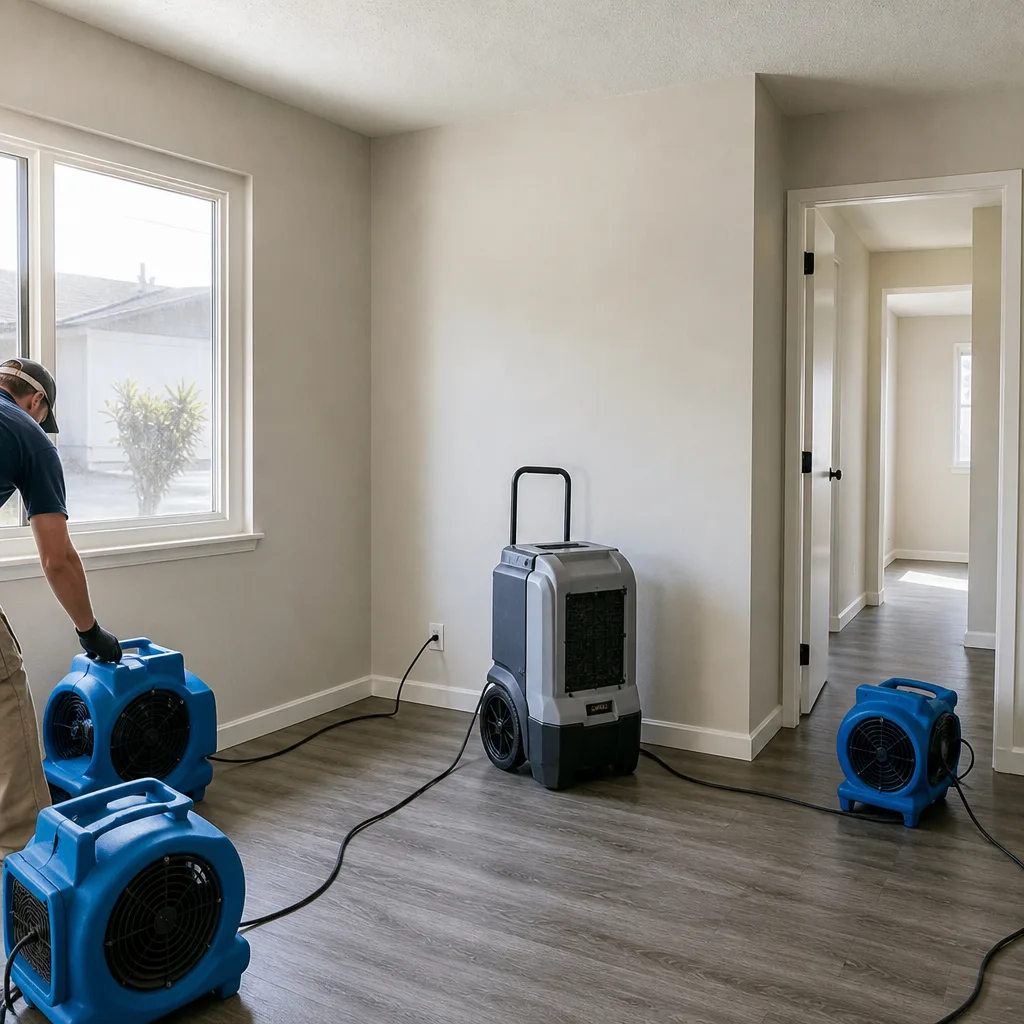
We run Dri-Eaz dehumidifiers and Phoenix air movers on Trabuco Canyon jobs because these are the brands IICRC-certified restorers use on commercial large-loss work, and they hold their drying curves longer than the consumer-rental units that fail on day two. Our B-Air air scrubbers run HEPA filtration when we are dealing with post-fire ash that came in with storm water. Because Trabuco Canyon homes are spread across Trabuco Creek and the surrounding ridgelines, we keep a full truck inventory ready so we never have to leave a drying job to source a fan or a sensor.
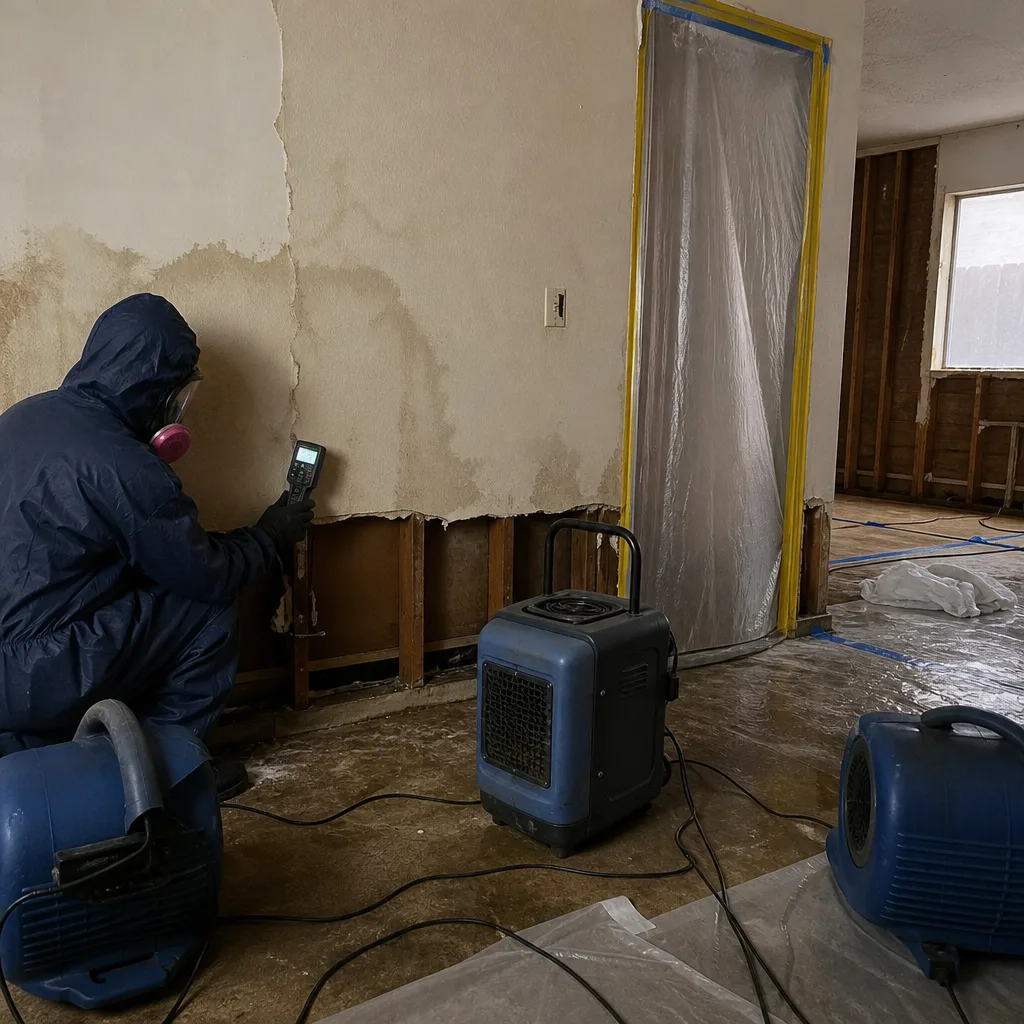
See the difference
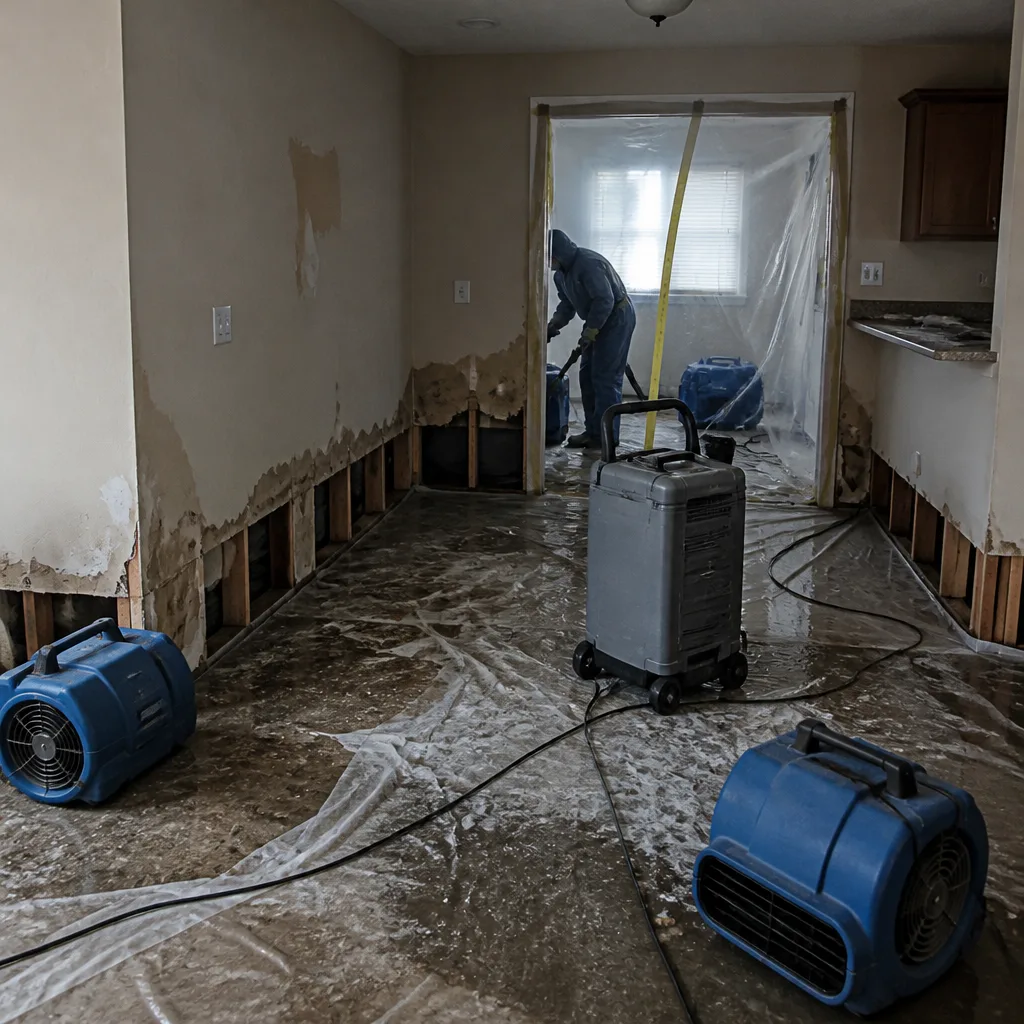 Before
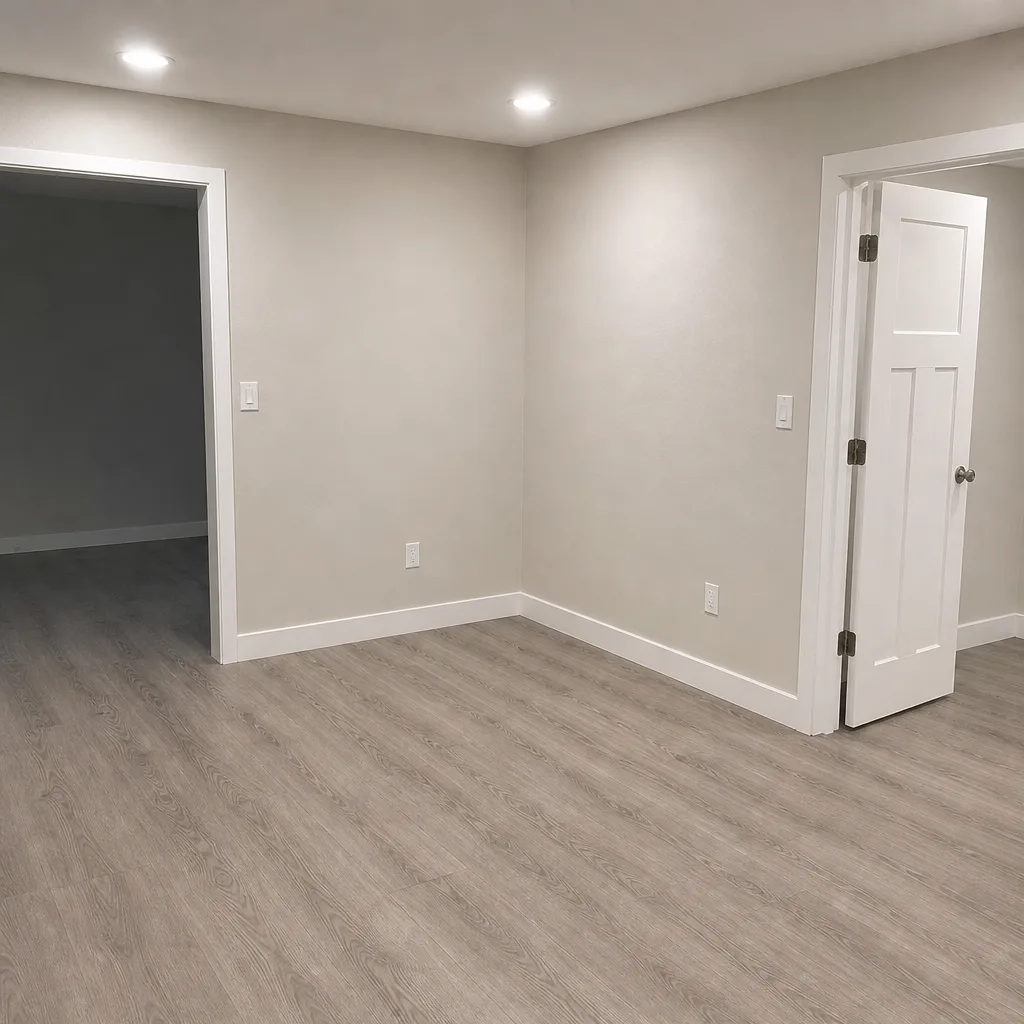 After
 Before
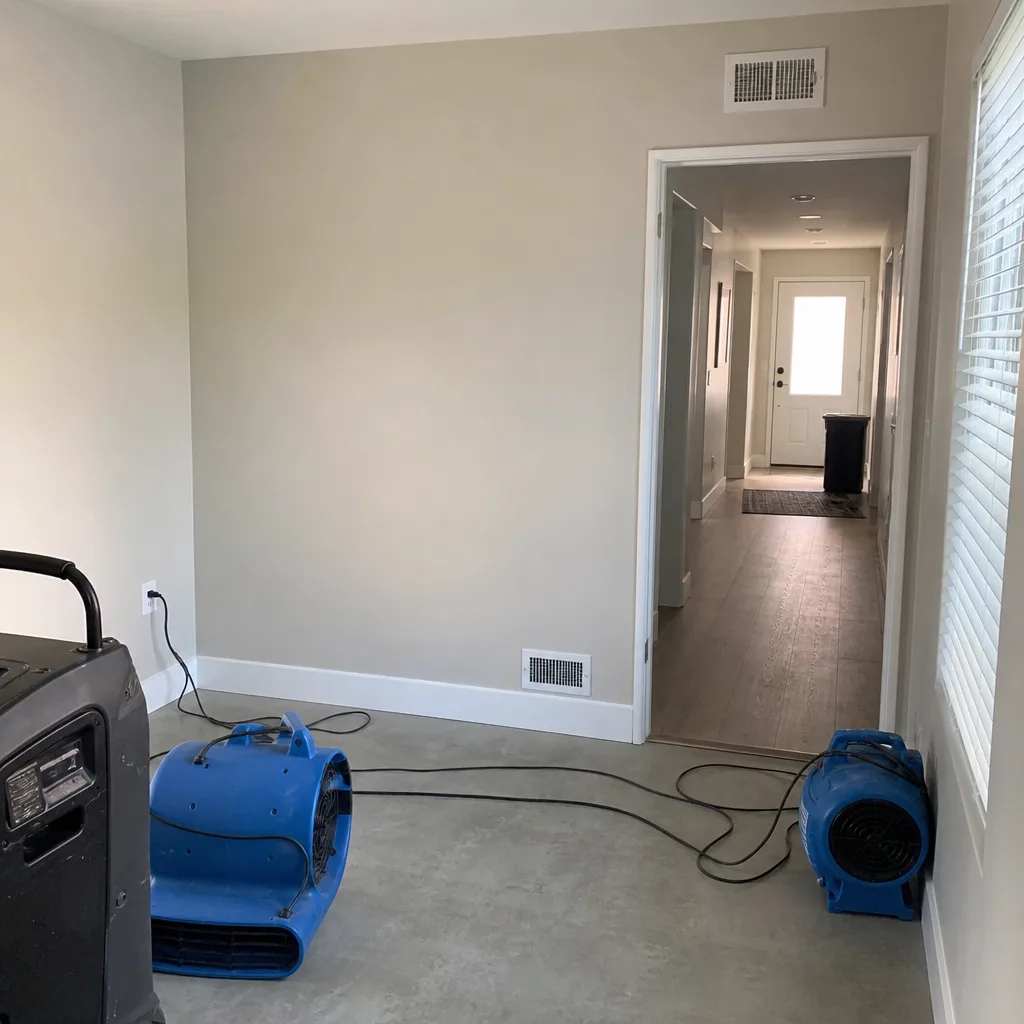 After
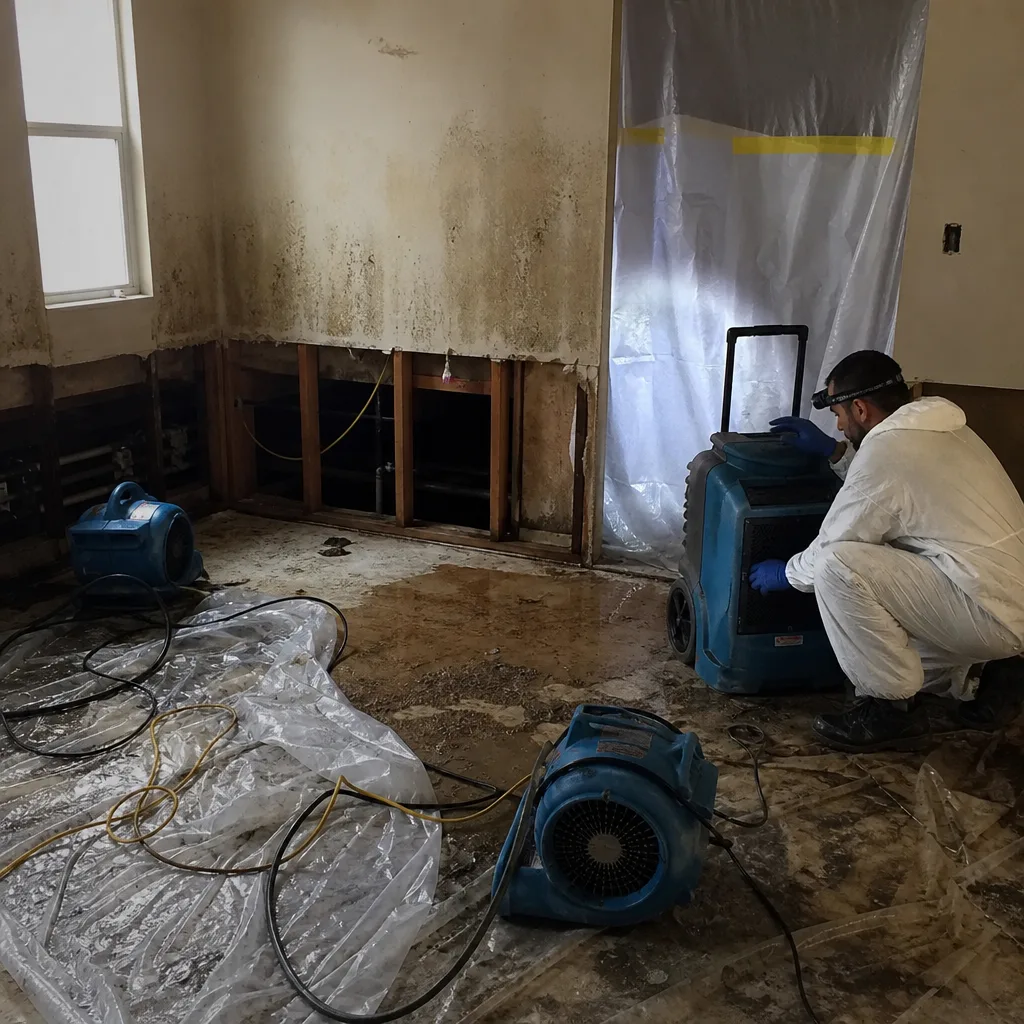 Before
 After
Common Water Damage Restoration Problems We See in Trabuco Canyon Homes
- Wind-driven rain through failed exterior doors. A wind-rated or impact-rated door that no longer seals lets storm-driven rain into the envelope long before you see a visible leak, and the water wicks into the subfloor and framing where mold can start on wet drywall within 24 to 48 hours.
- Post-fire mud intrusion treated as dirt. Homeowners and small crews often treat post-fire mud and ash in canyon homes as something to simply shovel out. Skipping moisture mapping on the saturated framing and slope-side walls beneath the debris leaves Category 2 or 3 water inside the structure.
- Hidden Category 2 and 3 water behind wood siding. Older 1970s to 1990s Trabuco Canyon homes with wood siding and decks hide contaminated water behind exterior cladding, so drying gets scoped to the wrong materials and deck and structural wood rot are missed entirely.
- Drying scoped like a tract home. A flat-lot house in Rancho Santa Margarita dries with a straightforward air-mover layout. A canyon home with a buried basement wall, a crawlspace, and an attached deck needs a different plan, and we write that plan specifically for Trabuco Canyon construction.
Pricing for Water Damage Restoration in Trabuco Canyon, CA
We Also Serve Cities Near Trabuco Canyon
Our trucks run daily into Trabuco Canyon and the surrounding canyon communities. We also provide Water Damage Restoration across Rancho Santa Margarita, Foothill Ranch, Portola Hills, and Coto De Caza, where the housing stock ranges from tract-built to custom hillside. If your home is in one of those areas and you have water coming in, the same crew and the same equipment respond.
Serving Trabuco Canyon, CA — Our Local Coverage Area
We’re based in the Trabuco Canyon area and know this community well. Use the map below to see our service coverage — if you’re nearby, we can almost certainly help.

FAQs About Water Damage Restoration in Trabuco Canyon
Why does storm water get into Trabuco Canyon homes that never flooded before?
Because Trabuco Canyon homes sit in canyon drainages below the Santa Ana Mountains, and the first heavy rain after a foothill fire can send a debris flow down a drainage that has never carried water toward a particular house before. The water follows the new channel, and a basement or garage that has been dry for decades can suddenly take on mud, ash, and contaminated runoff. Also, a wind-damaged exterior door that has been letting wind-driven rain into the envelope for months can reach a tipping point during a single heavy storm. If water is inside your Trabuco Canyon home for the first time, call (833) 589-5317 and we will tell you over the phone whether it is safe to wait for an assessment.
How fast do we need to dry a wind-damaged door opening in a canyon home?
Within 24 to 48 hours. Wet drywall, subfloor, and framing in a Trabuco Canyon home can support mold growth within a day or two, and canyon air during the dry season is not humid enough to slow that process. Once water gets past the door threshold and into the subfloor, structural drying has to start immediately using extraction, air movement, and dehumidification. Waiting a week means replacing materials instead of drying them. For an emergency extraction on a wind-driven door leak in Trabuco Canyon, call (833) 589-5317 at the first sign of water.
What’s different about drying a wood-sided 1970s – 1990s canyon home versus a tract home?
A wood-sided 1970s to 1990s Trabuco Canyon home traps water behind exterior cladding and in the framing that sits behind it. Water runs down the inside face of the siding, collects at the mudsill, and wicks into the subfloor and lower wall cavities without ever showing on the interior drywall. Drying those houses requires probing into wall cavities and running Injectidry systems that pull water out through tubing placed inside the cavities, not just running air movers across the room surface. A tract home with stucco on a flat lot does not create those same hidden reservoirs. If your Trabuco Canyon home has wood siding and any history of a door or window leak, call (833) 589-5317 and we can assess the cavity moisture before drywall gets opened.
Does a failing exterior door really lead to basement water before the storm hits?
Yes. A failing exterior door on a Trabuco Canyon home can let wind-driven rain into the envelope every time it rains, even if the water never shows up as a visible puddle. The water moves under the threshold, through the framing, and down into the basement or crawlspace, where it sits against the subfloor and wicks upward. By the time a heavy storm arrives and pushes more water through the same gap, the materials below are already saturated and the loss becomes a structural drying job instead of a simple door replacement. If you have a door that has been sticking or showing rust at the threshold, call (833) 589-5317 and we will check the framing behind it.
What does Category 2 or 3 water mean for a Trabuco Canyon mud intrusion?
Category 2 water contains significant contamination, and Category 3 water is grossly contaminated with sewage, pathogens, or toxic substances. A post-fire mud intrusion in a Trabuco Canyon home is treated as Category 2 at minimum, because the ash and mud that wash down from the Santa Ana Mountains carry burned material, soil bacteria, and chemical residue from the fire zone. That means we pull affected drywall and insulation, run HEPA air scrubbers during the work, and apply an EPA-registered antimicrobial to affected framing. It is not a mop-and-dry job. If mud and ash came into your Trabuco Canyon home during a storm, call (833) 589-5317 before anyone starts shoveling it out, because moving contaminated material incorrectly spreads the problem.
Call (833) 589-5317 for a free estimate on water damage restoration in Trabuco Canyon. We answer around the clock and can usually reach your home within 90 minutes.
Written by Glen Pacheco, Owner at Dry Line Water Damage, serving Trabuco Canyon and the surrounding canyon communities.