

 Water damage drying
 Fire & smoke cleanup
 Mold remediation
 Storm response
 Sewage cleanup
 Reconstruction
Free visual inspection and a written scope of work before any mitigation begins - photos, moisture readings, and drying logs go in your claim file
The scope we write is the scope we bill. Anything new gets shown to you, in writing, before we touch it.
Get your free estimateFast, Reliable Mold Remediation Across Lake Arrowhead
Mold remediation in Lake Arrowhead typically runs $2,800 – $8,500 for a contained job involving Category 3 water loss, and most second-home freeze discoveries require full containment plus demolition of wet building materials within 48 hours of us arriving. We work the mountain roads, the private drives, and the crawl spaces under 1920s – 1980s cabins that other crews won’t touch. If you’ve got water running down a driveway up here or you’ve found black growth spreading behind a baseboard in a cabin that sat empty all week, call (833) 589-5317 now. Glen Pacheco and our IICRC-certified crew respond to Lake Arrowhead and the surrounding mountain communities with equipment sized for steep terrain and tight access.
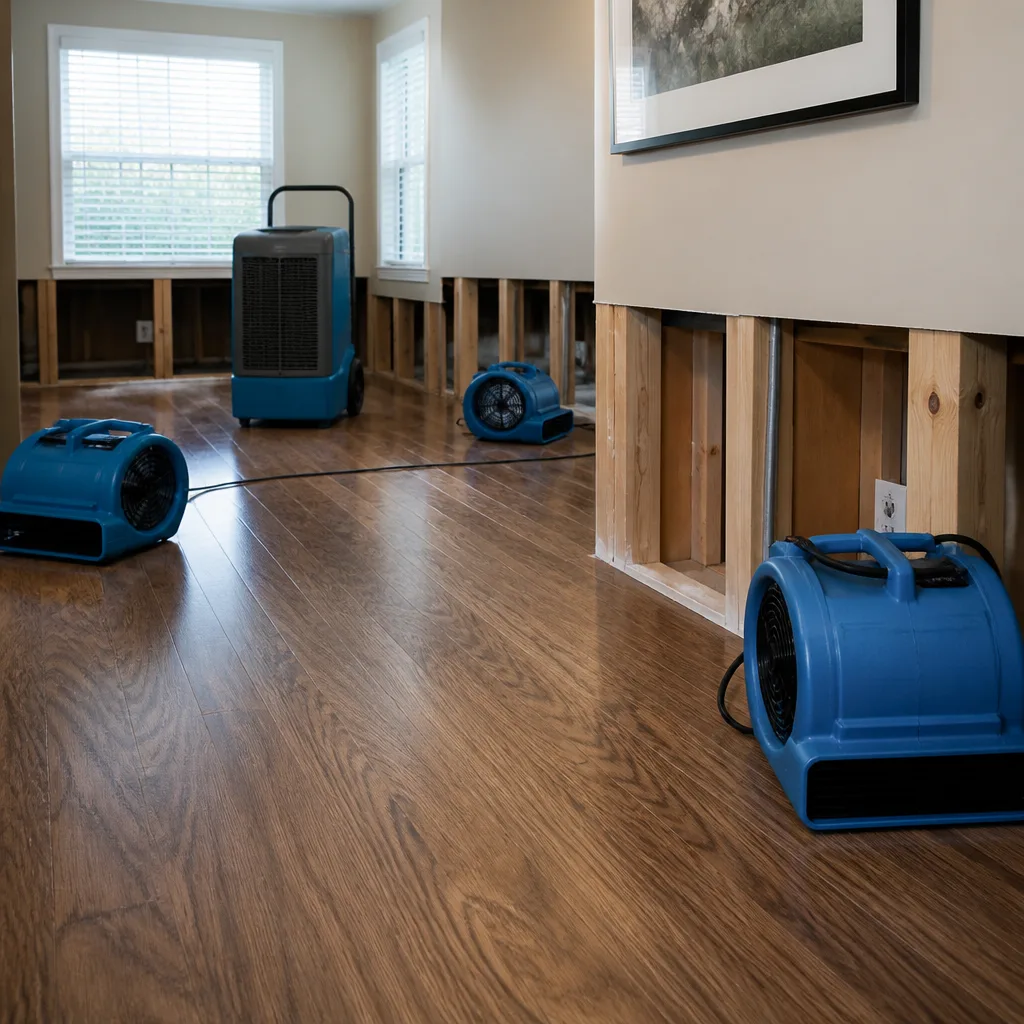
Lake Arrowhead’s freeze-thaw cycle at 5,000+ feet creates a mold problem most flatland remediation companies don’t understand. The call doesn’t start with a musty smell. It starts with a neighbor reporting water flowing down your driveway. By the time anyone opens the door, the leak has run for three or four days, the water is Category 3, and mold has already taken hold behind drywall and under pier-and-beam subfloors. That’s the job we show up for, and it’s why we carry Dri-Eaz dehumidifiers and XPOWER air movers sized for mountain cabins where access means a wheelbarrow, not a driveway turnaround.
Why Dry Line Water Damage Is Lake Arrowhead’s Preferred Mold Remediation Company
Dry Line Water Damage is an IICRC-certified operation led by Glen Pacheco, and the difference shows when a Lake Arrowhead job gets complicated. The IICRC credential is the restoration industry’s most rigorous third-party standard for training and methodology. It means our techs follow documented drying standards, not “looks dry to me.” For a slope-side cabin with a pier-and-beam foundation and water that ran for days under the floor, that certification is the difference between a remediation that holds and one that blooms again in six weeks.
We run Injectidry structural drying systems that pull moisture from inside wall cavities and under subfloors without ripping out every stick of framing. That matters in Lake Arrowhead, where older cabins have real dimensional lumber that’s worth saving and where unnecessary demolition on a second home means months of extra rebuild cost for an owner who lives in LA. Our fleet includes Dri-Eaz and Phoenix equipment, the same commercial-grade dehumidifiers and air movers used on large-loss restoration jobs, not the consumer rental units you get at a hardware store. Glen Pacheco’s crews document every moisture reading, every containment seam, and every pack-out item with photos and logs your adjuster can actually use. We are members of the Restoration Industry Association, bound by a published code of ethics, and we handle water, mold, and fire under one roof so the crew that finds the mold is the same crew that fixes what caused it.
Our Mold Remediation team has worked driveways off Kuffel Canyon Road, narrow lanes in Cedar Glen, and cabins tucked into the ridges above Grass Valley Lake. The driving reality of Lake Arrowhead is simple: the roads twist, the driveways are steep, and in a snow year, access can disappear for a day or two. We plan around that. When a call comes in from a 92352 address, our crew knows to bring the equipment that can be hand-carried the last hundred yards if the truck can’t make the turn.
Restoration work we handle
Black Mold Removal in Lake Arrowhead
Black mold removal in Lake Arrowhead usually means removing mold that has established itself after a leak that ran untouched for days, most often in a second home that sat empty between Sunday and Friday. The work involves containment, negative air pressure, removal of affected drywall and insulation, antimicrobial treatment, and structural drying to a documented standard. After a week-old freeze loss, expect this to be a Category 3 job, which means porous materials that absorbed contaminated water get removed, not dried. Costs in Lake Arrowhead for a contained removal with demolition typically start around $2,500 and can exceed $7,000 when the mold has moved through wall cavities and into a pier-and-beam subfloor.
Containment and Material Removal
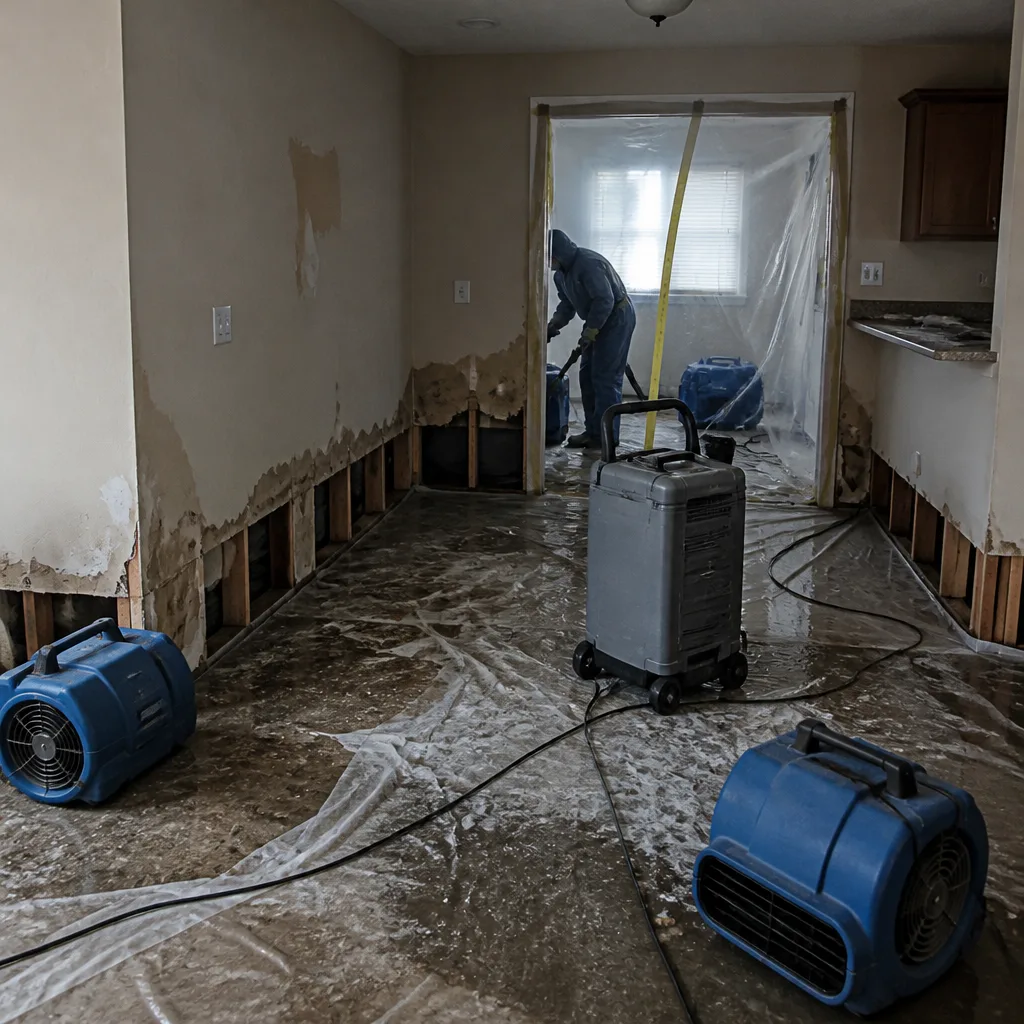
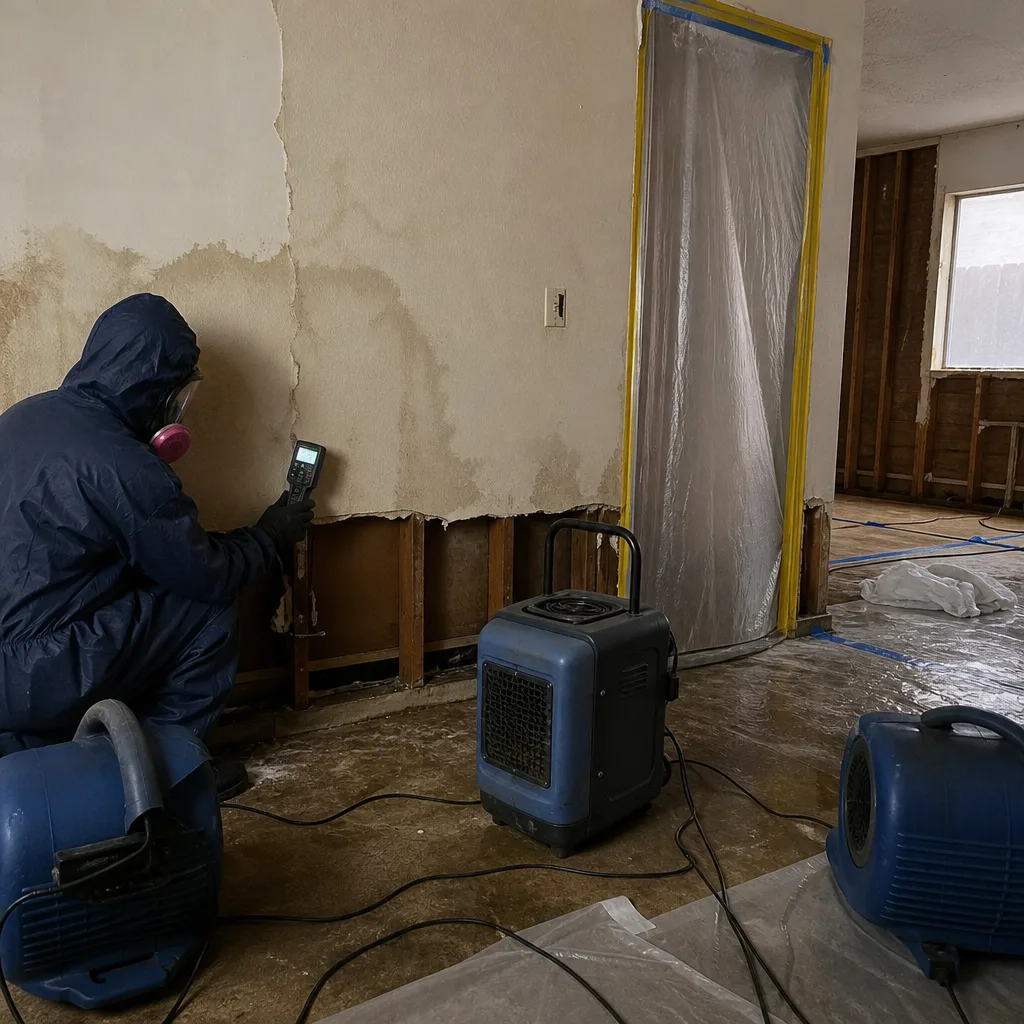
We seal off the affected area with 6-mil poly and set negative air pressure so mold spores don’t travel to the rest of the cabin while we work. Wet drywall, baseboard, and insulation come out. If the leak was a sewage-adjacent freeze loss or ran long enough to pull in outside contaminants, the category drives what gets removed. We don’t cut corners on category.
Antimicrobial Treatment and Drying
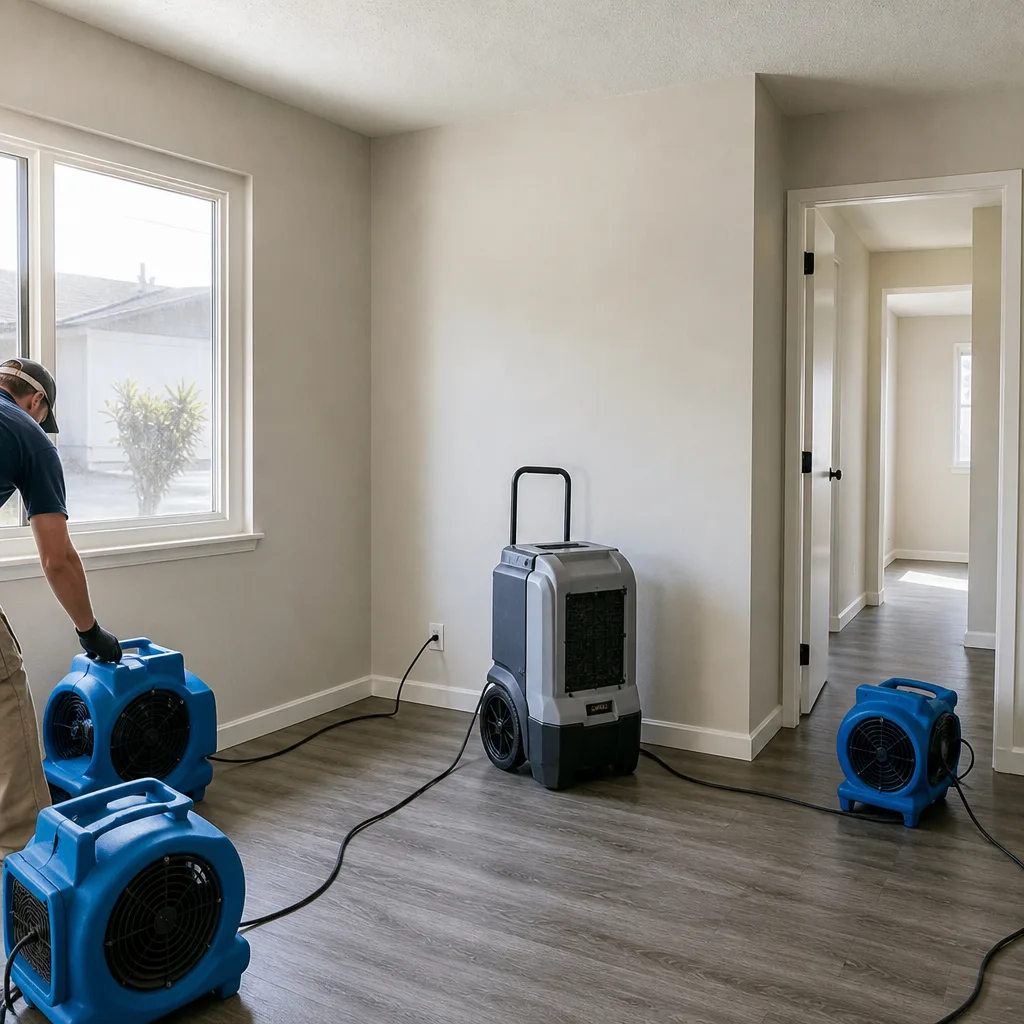
After demolition, we treat remaining framing and surfaces with an antimicrobial, then bring in Dri-Eaz dehumidifiers and XPOWER air movers to pull moisture down to target. We document the drying log with daily readings. You get a record, not a verbal “it’s dry now.”
Mold Removal Contractor in Lake Arrowhead
A mold removal contractor in Lake Arrowhead needs to understand the housing up here: wood-frame cabins from the 1920s through the 1980s, pier-and-beam foundations on slopes, galvanized steel and polybutylene plumbing that shatters in a hard freeze, and finished basements under living space. That’s the build profile we see most weeks. The job starts with locating the water source, mapping moisture across the structure, and then setting a work scope in writing before any demolition begins. We’re not a handyman with a spray bottle. We are an IICRC-certified firm that writes a scope, photographs everything, and works with your adjuster. For a typical Lake Arrowhead cabin mold job, a full remediation with containment, removal, drying, and clearance runs $3,000 – $9,000 depending on square footage and how far the water traveled under the floor.
Moisture Mapping Before Demolition
In a cabin on a slope, the water rarely pools where the leak started. It runs downhill under the flooring and into the low corner of the crawl space. If your contractor skips moisture mapping and just pulls wet drywall, the mold keeps feeding on what’s left underneath. We map it first, with meters and thermal imaging, so the demolition scope matches where the water actually went.
Written Scope Before Work Starts
You’ll have a written scope in hand before a tool comes off the truck. That document explains which materials get removed, why they’re being removed, the containment plan, the drying plan, and the target completion. It’s the same discipline a commercial restoration job requires. We don’t start demolition on a verbal handshake.
Trusted Brands We Service in Lake Arrowhead
We service and run Dri-Eaz, Phoenix, XPOWER, and Injectidry equipment because those are the machines that produce a documented dry standard. Injectidry is the one that matters most in Lake Arrowhead’s older cabins, it pulls water from inside wall cavities and under floors without gutting the whole room. Our crews stock the consumables and filters to keep that gear running through multi-day drying jobs. For a cabin off a snow-plowed side road, we bring enough machine capacity that a road closure doesn’t stall your drying. When the roads open, we close the job.
See the difference
 Before
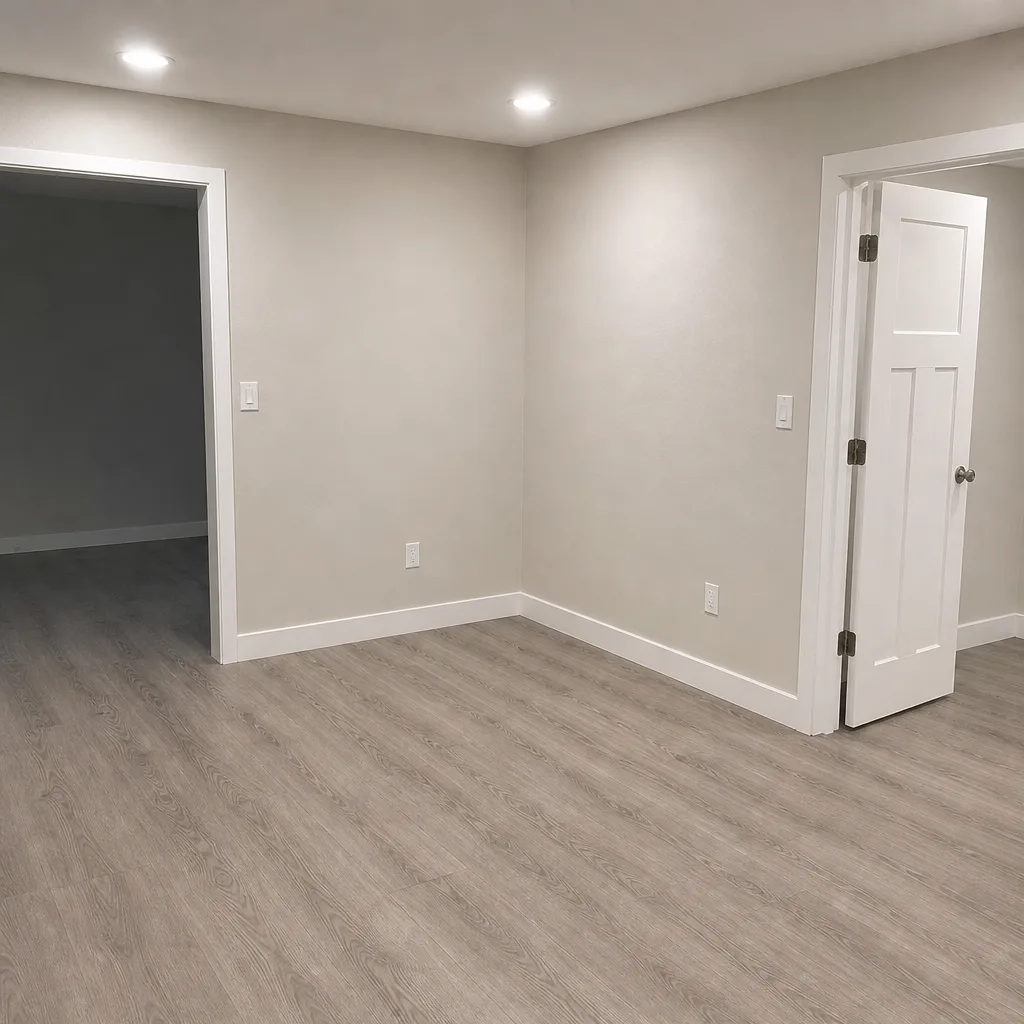 After
 Before
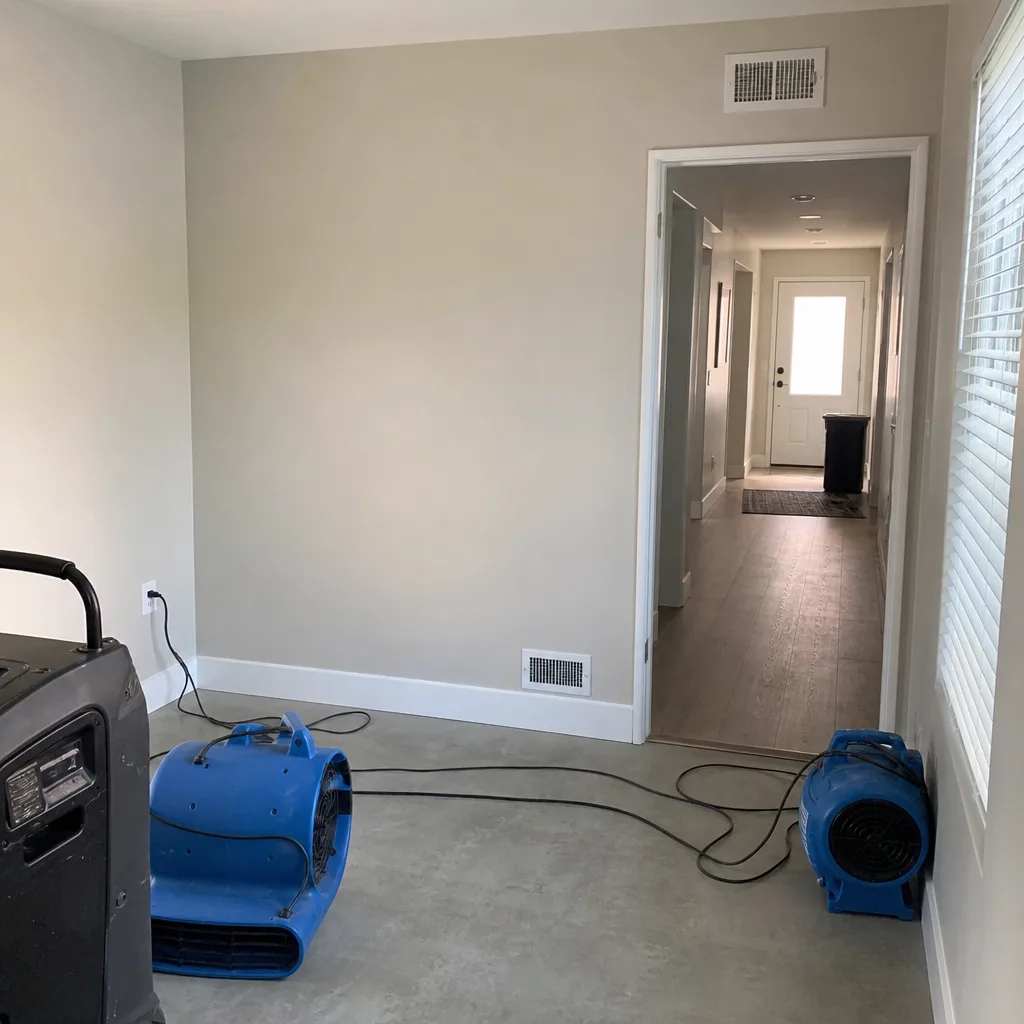 After
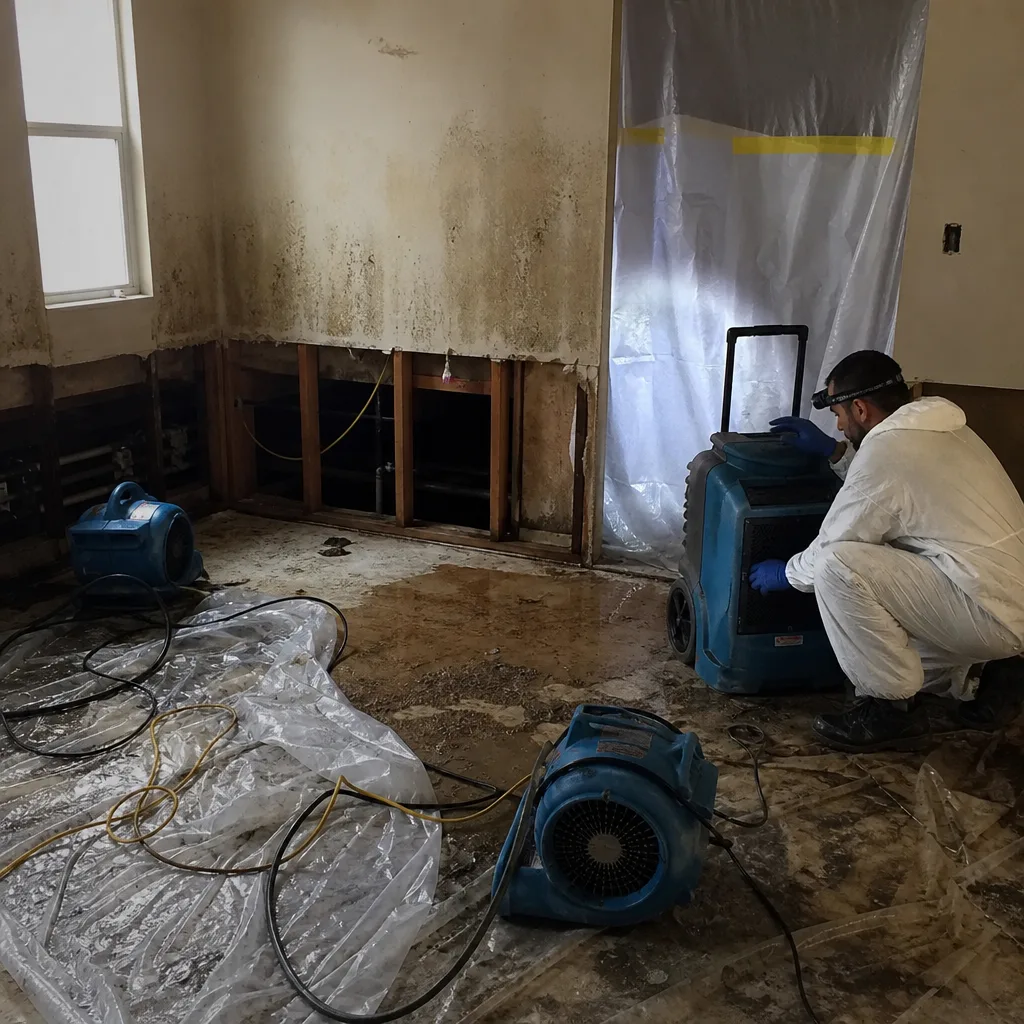 Before
 After
Common Mold Remediation Problems We See in Lake Arrowhead Homes
- Water pooled unseen under pier-and-beam floors. A burst pipe in a wall leaks down through the subfloor and collects in the low corner of the crawl space. Visible drywall might look dry after a day of airing out, but the framing underneath is still feeding mold. Moisture mapping catches this; visual inspection doesn’t.
- Category 3 discovered days late. A second-home owner leaves Sunday, the freeze hits Tuesday, and nobody notices until Friday. The water that sat for 72 hours is no longer Category 1. Drying contaminated framing instead of removing it leaves the next mold bloom already scheduled.
- Snow-blocked driveways delaying the start. When a narrow private drive is buried, the 24 – 48 hour window for mold growth keeps ticking. Our crews stage equipment and work with owners on access so containment starts the same day we can reach the house.
- Legacy plumbing failures in 1920s – 1980s cabins. Galvanized steel and polybutylene lines don’t handle Lake Arrowhead’s freeze-thaw cycle. When they fail at 5,000 feet elevation, the pipe doesn’t drip. It lets go. The resulting water volume is what turns a small leak into a full mold remediation.
Pricing for Mold Remediation in Lake Arrowhead, CA
We Also Serve Cities Near Lake Arrowhead
For mold remediation in Lake Arrowhead and the surrounding mountain towns, our crews cover Crestline, Running Springs, Highland, and Muscoy. If you’re on the mountain or just below it and the roads are open, we’re on the way.
Serving Lake Arrowhead, CA — Our Local Coverage Area
We’re based in the Lake Arrowhead area and know this community well. Use the map below to see our service coverage — if you’re nearby, we can almost certainly help.
FAQs About Mold Remediation in Lake Arrowhead
Mold can begin colonizing wet drywall and framing within 24 to 48 hours, and if a pipe burst Sunday and you arrive Saturday, the mold is already established. Treating a week-old freeze loss as a simple drying job is a mistake. We scope it as a Category 3 loss from the start, remove porous material that absorbed contaminated water, and set containment before cross-contamination spreads. Call (833) 589-5317 and we’ll walk you through what we’d do on your specific cabin.
Yes. Water from a burst pipe or roof leak runs downhill under the floor and collects in the low corner of the crawl space, so the mold problem is rarely confined to the room where the leak started. We map moisture across the entire subfloor before we write the demolition scope. If a crew doesn’t check under the floor, they’re leaving the next bloom behind.
Our crews work Lake Arrowhead driveways throughout the winter, and we plan around snow access. Equipment can be hand-carried the last stretch when a truck can’t make the turn, and we stage drying units to keep a job running even if a plow is a day behind. The containment and drying start the day we get boots on your property.

Older cabins up here were built with real dimensional lumber and pier-and-beam construction, which often means saving framing is possible and worth the effort with structural drying instead of gutting. But the plumbing is often galvanized or polybutylene and prone to hard-freeze failure, which means the water volume is bigger and the damage is deeper than a newer home on a slab. We scope for the house you actually have, not a generic floor plan.
If the policy covers the sudden and accidental water discharge, the mold remediation that follows is often included when you document the loss properly. We photo every step, write the drying logs, and work directly with your adjuster so the claim doesn’t stall over missing evidence. Glen Pacheco’s crew has handled this exact conversation for Lake Arrowhead second-home owners many times.
Call Dry Line Water Damage at (833) 589-5317 for a free estimate on mold remediation in Lake Arrowhead, CA. We answer direct, we show up equipped, and we leave you with documentation your insurer can use.
Written by Glen Pacheco, Owner at Dry Line Water Damage, serving Lake Arrowhead and the surrounding mountain communities with IICRC-certified mold remediation since 2008.