


 Water damage drying
 Fire & smoke cleanup
 Mold remediation
 Storm response
 Sewage cleanup
 Reconstruction
Free visual inspection and a written scope of work before any mitigation begins - photos, moisture readings, and drying logs go in your claim file
The scope we write is the scope we bill. Anything new gets shown to you, in writing, before we touch it.
Get your free estimateFast, Reliable Water Damage Restoration Across Grand Terrace
Water damage restoration in Grand Terrace usually costs between $1,800 and $5,200 depending on how far the water traveled through the structure, and most emergency extractions here begin within 60 to 90 minutes of your call. We know this city’s hillside lots and the way storm water behaves on them, which means we don’t start tearing out drywall before we understand where the water came from and where it’s trying to go. If you’re dealing with a burst pipe, a failed water heater, or storm runoff that found its way into the house, call (833) 589-5317 now and we’ll have a certified crew rolling toward 92313 immediately.
Grand Terrace isn’t a flat-lot suburb. When water gets into a house off Barton Road or up near Blue Mountain, the fix isn’t always what a generic restoration script would call for. That’s why our Water Damage Restoration team starts every job here with a drainage diagnosis before demolition. You need a crew that knows the difference between a plumbing leak on a slab-on-grade and storm water that cut a channel under your fence and stacked against the garage. That’s the work we do.
Why Dry Line Water Damage Is Grand Terrace’s Preferred Water Damage Restoration Company
We’ve worked Grand Terrace homes long enough to recognize the pattern before we set foot inside. Most of the housing stock here was built from the 1950s through the early 1980s, much of it on terraced hillside lots with original plumbing still in the slab. Glen Pacheco built Dry Line Water Damage around the reality that a slow leak under a Grand Terrace kitchen floor can saturate for weeks before anyone notices. By the time you see staining or smell must, the moisture has already spread well past what a surface dry-out can fix.
Our IICRC-certified process is the standard insurance adjusters expect to see. We document every stage, run moisture mapping before and after drying, and hand you a drying log that shows exactly what was done and why. Grand Terrace homeowners tell us the same thing: they want to know the water is actually out of the wall cavity, not just gone from the carpet. That’s what documented dry means here.
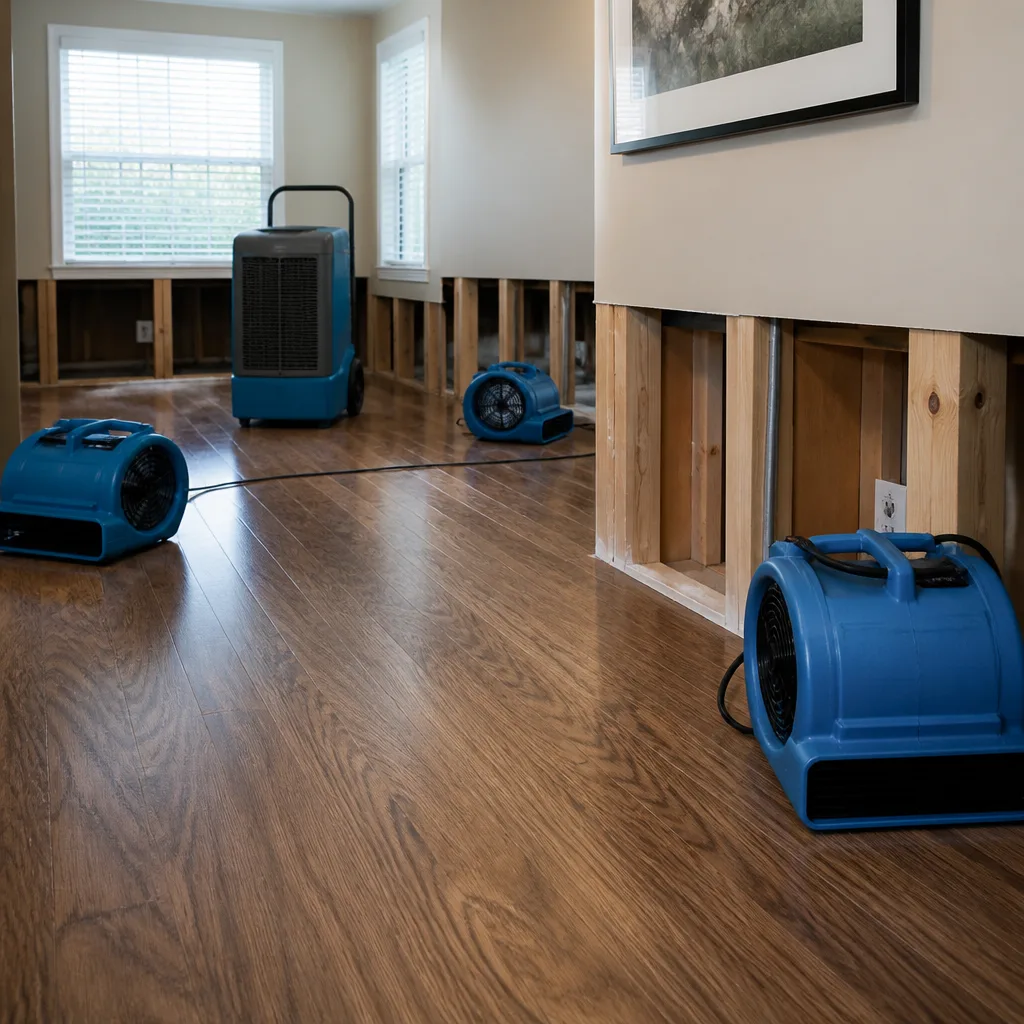
Response time to Grand Terrace matters because the 24-to-48-hour mold window doesn’t wait for a generalist handyman to clear his schedule. We dispatch from Fontana and we’re on Grand Terrace streets fast, with commercial-grade Dri-Eaz dehumidifiers and XPOWER air movers on the truck, not consumer rental gear. When you call, you get a crew that can actually start extraction the same hour we arrive.
Restoration work we handle
Emergency Water Removal in Grand Terrace
Emergency Water Removal in Grand Terrace almost always starts with the source: a supply line that let go, a failed water heater in a garage, a toilet that overflowed while you were gone, or storm runoff that pushed through a canyon-edge foundation. The first job is stopping the water, then extraction, then containment and drying. On hillside lots, we also check whether water is still moving toward the structure from upslope before we commit to a drying plan, because removing water you haven’t stopped is wasted motion.
Most Grand Terrace emergency extraction and initial drying runs $1,800 to $3,800 when we catch it within the first day. A slab leak under a 1970s rancher off Mt. Vernon Avenue that requires opening flooring and running Injectidry lines through the walls can push toward $5,200, especially if baseboards and drywall need removal. The estimator will walk you through a written scope before any work starts, so there’s no surprise invoice after the fact.
Slab Leak Response on Terraced Lots
Original mid-century plumbing under a Grand Terrace slab often fails slowly, sending water laterally under the flooring. Homeowners sometimes mistake it for high humidity or a recent spill. Moisture readings across the slab tell us the real extent, and injection-drying with Injectidry panels can often dry the assembly without pulling up every square foot of flooring.
Garage Intrusions from Uphill Runoff
On Grand Terrace streets where the lot runs uphill toward Blue Mountain, storm water collects against the uphill-facing garage slab and finds its way under the door or through the stem wall. We’ve fixed enough of these to know the drywall is often the last thing you touch. The channel outside gets addressed first, or you’ll dry the same wall twice.
Flood Damage Restoration in Grand Terrace
Flood Damage Restoration in Grand Terrace is different from the flat-lot urban flooding you see in Colton or Rubidoux. Here, the water doesn’t pool, it runs. That means our flood work starts with slope drainage, not just extraction. The 2023 atmospheric river events showed what intense short-duration storms do to dry, hydrophobic hillside soils: more runoff, more velocity, and more water finding the low point, which is usually the garage or the uphill foundation wall.
Storm water and mud intrusion on a Grand Terrace hillside property typically runs $2,200 to $5,200 depending on how much sediment came in with the water and how far it traveled through finished space. When post-fire debris flow off Blue Mountain is in the mix, the water category changes and the scope changes with it, because that runoff carries contaminants that alter how we treat the affected materials.

Canyon-Edge Mud and Runoff
Properties along the canyon edges and the steeper streets below Blue Mountain deal with mud, not just water. We classify the water correctly before we decide what gets dried and what gets cut out. Getting this wrong means drying contaminated materials that should have been removed.
Post-Runoff Structural Drying
After runoff enters, the drying plan almost always includes Dri-Eaz dehumidifiers and Phoenix air movers sized to the affected square footage. We also run Injectidry lines into wall cavities that show elevated readings. On a hillside home, hidden moisture travels downhill inside the wall, so the drying plan has to account for migration, not just the visible puddle.
Trusted Brands We Service in Grand Terrace
We arrive on Grand Terrace jobs with Dri-Eaz and Phoenix extraction and drying equipment, XPOWER air movers, and B-Air filtration units. Injectidry panels handle the structural drying inside walls and under flooring where a demo-first crew would start swinging hammers. Because we’re stocked locally out of Fontana, parts and additional units reach Grand Terrace fast, and we don’t lose a drying day waiting on equipment from a distant warehouse.
See the difference
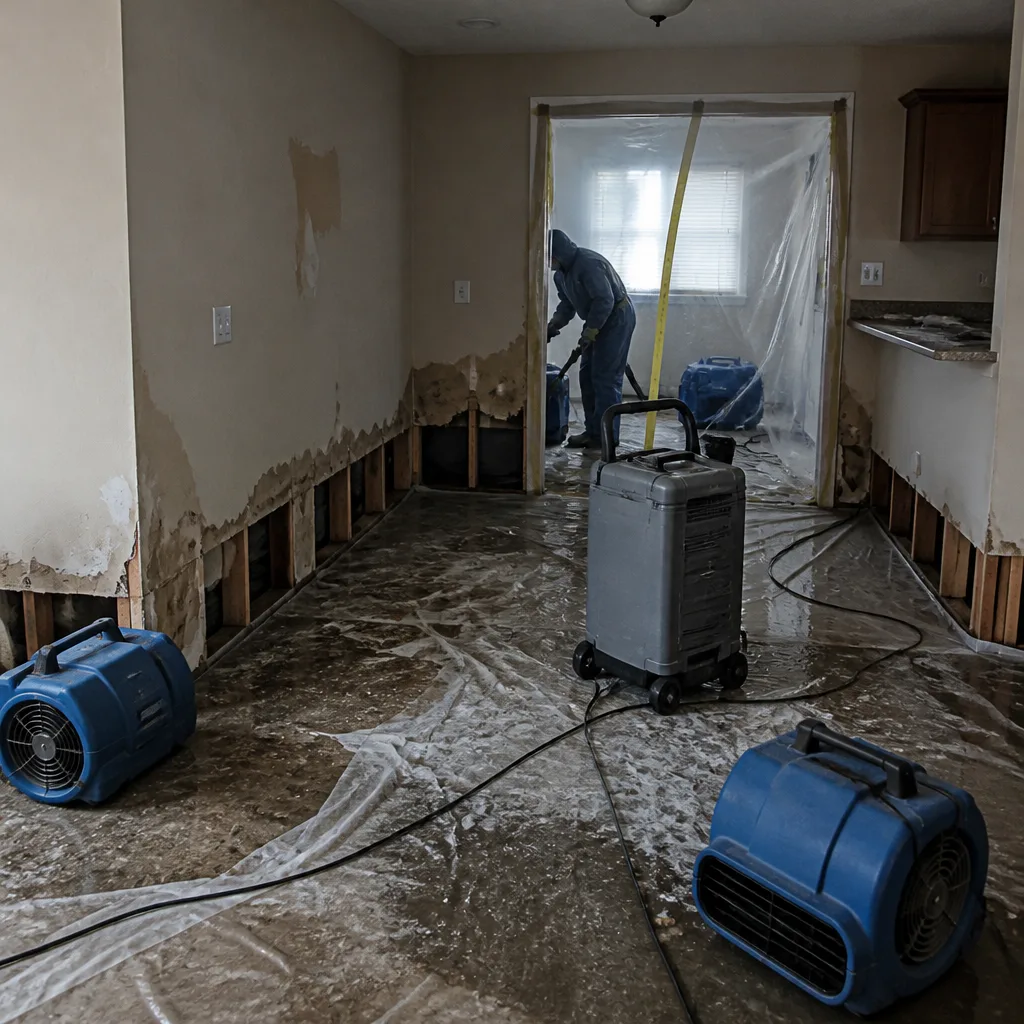 Before
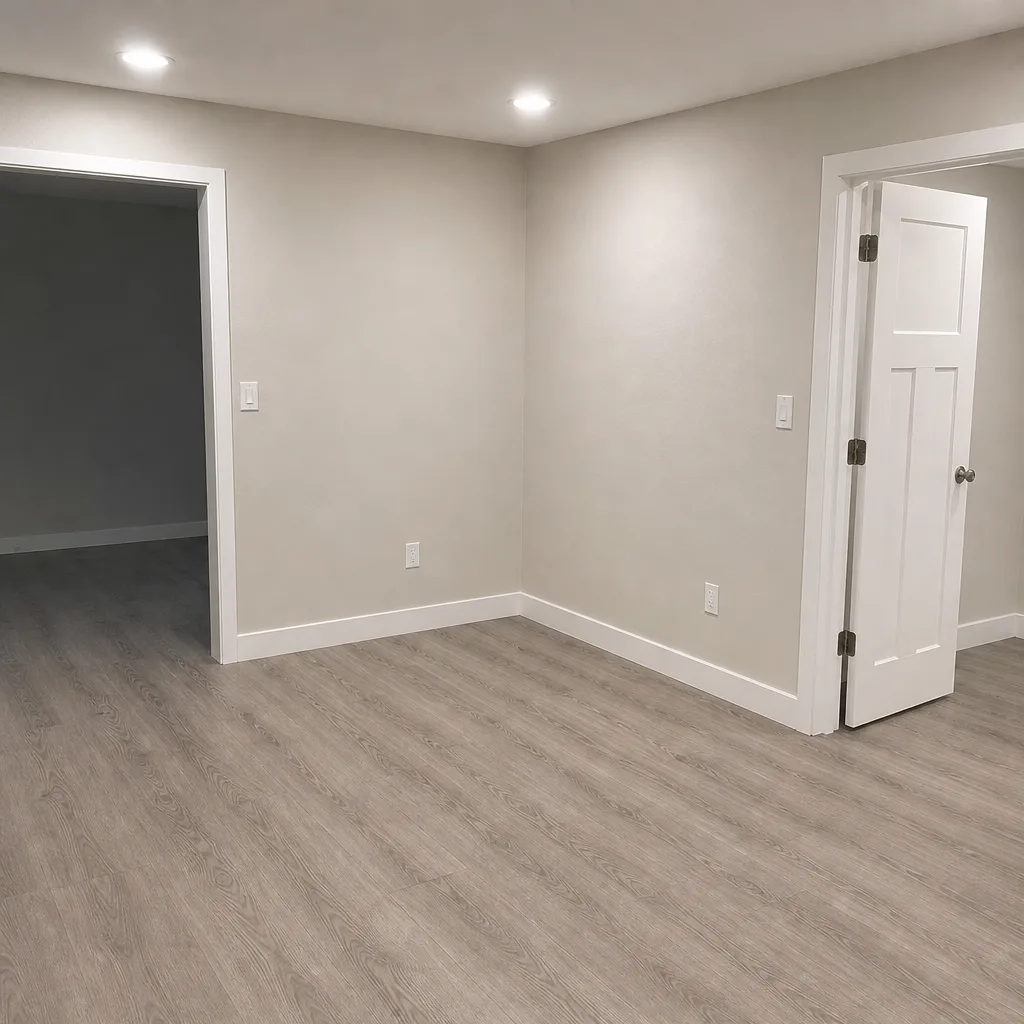 After
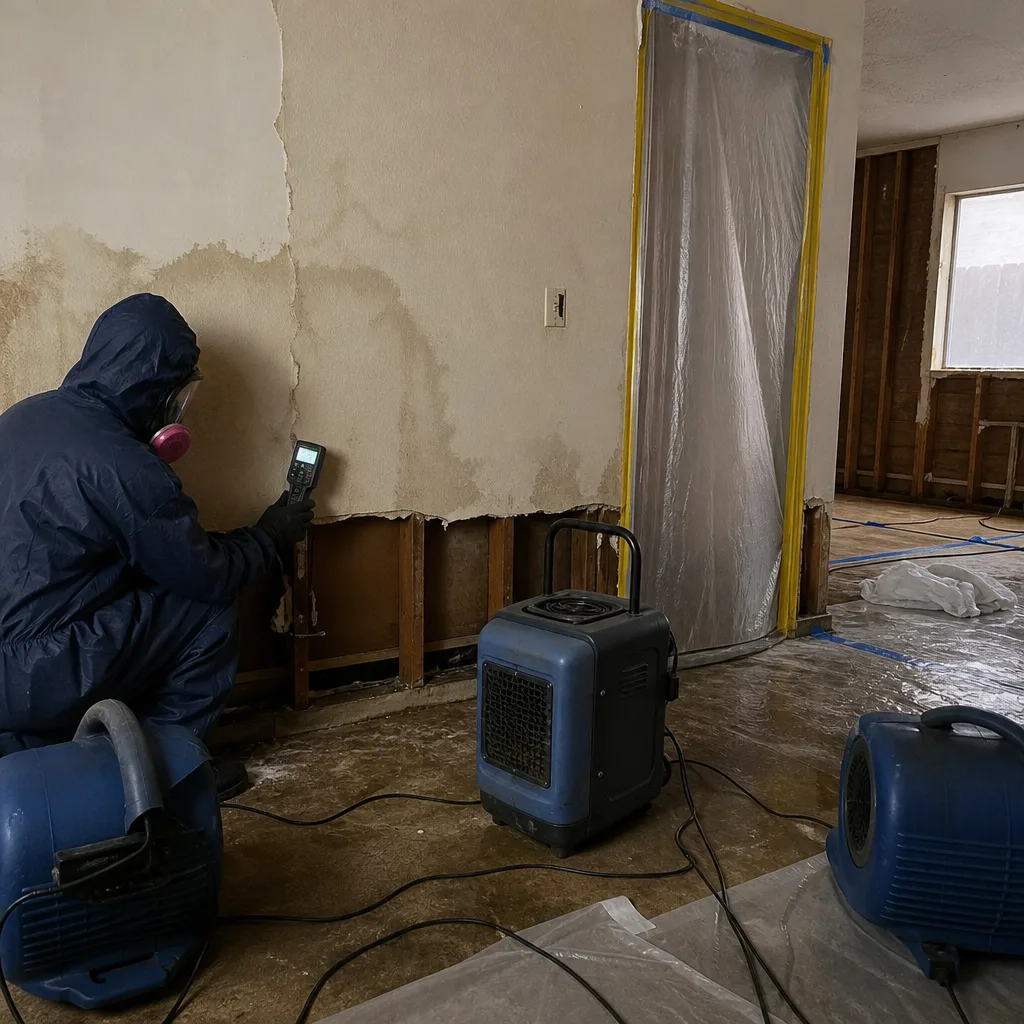 Before
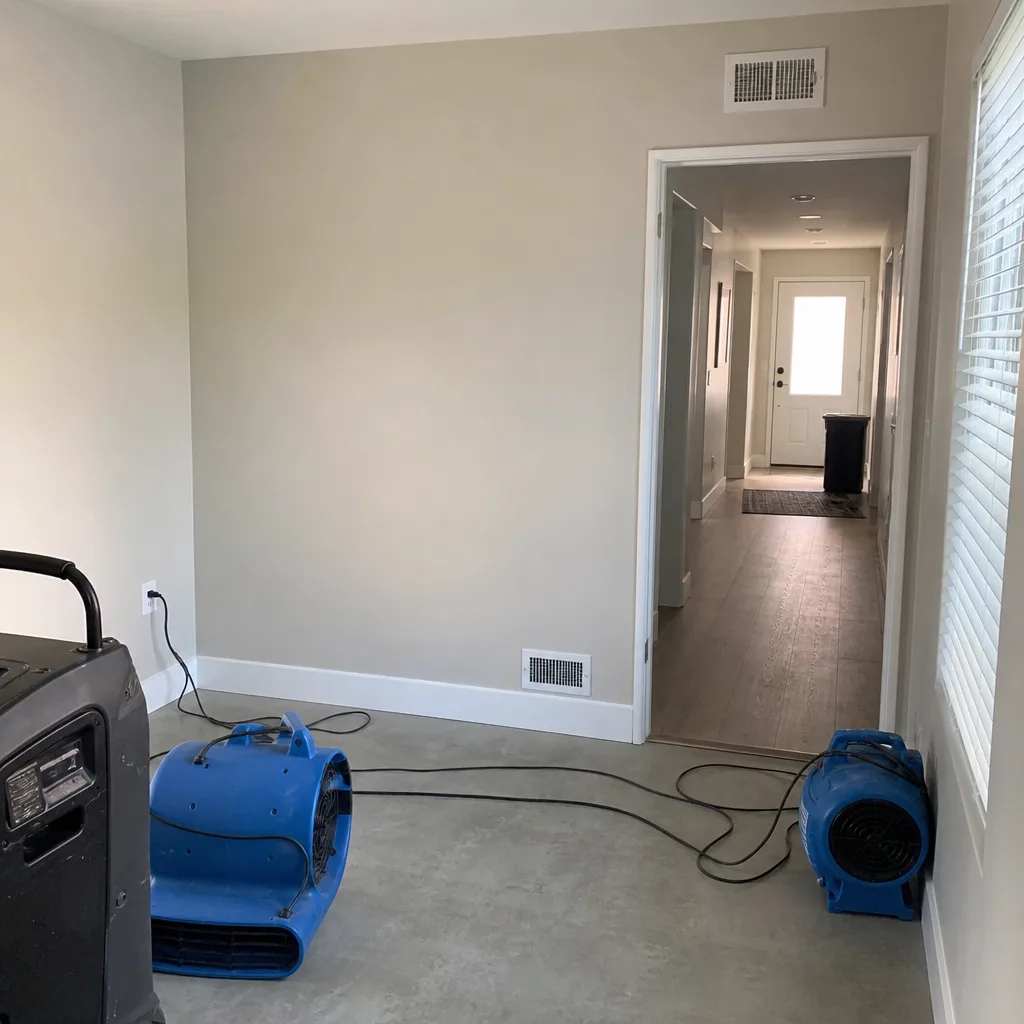 After
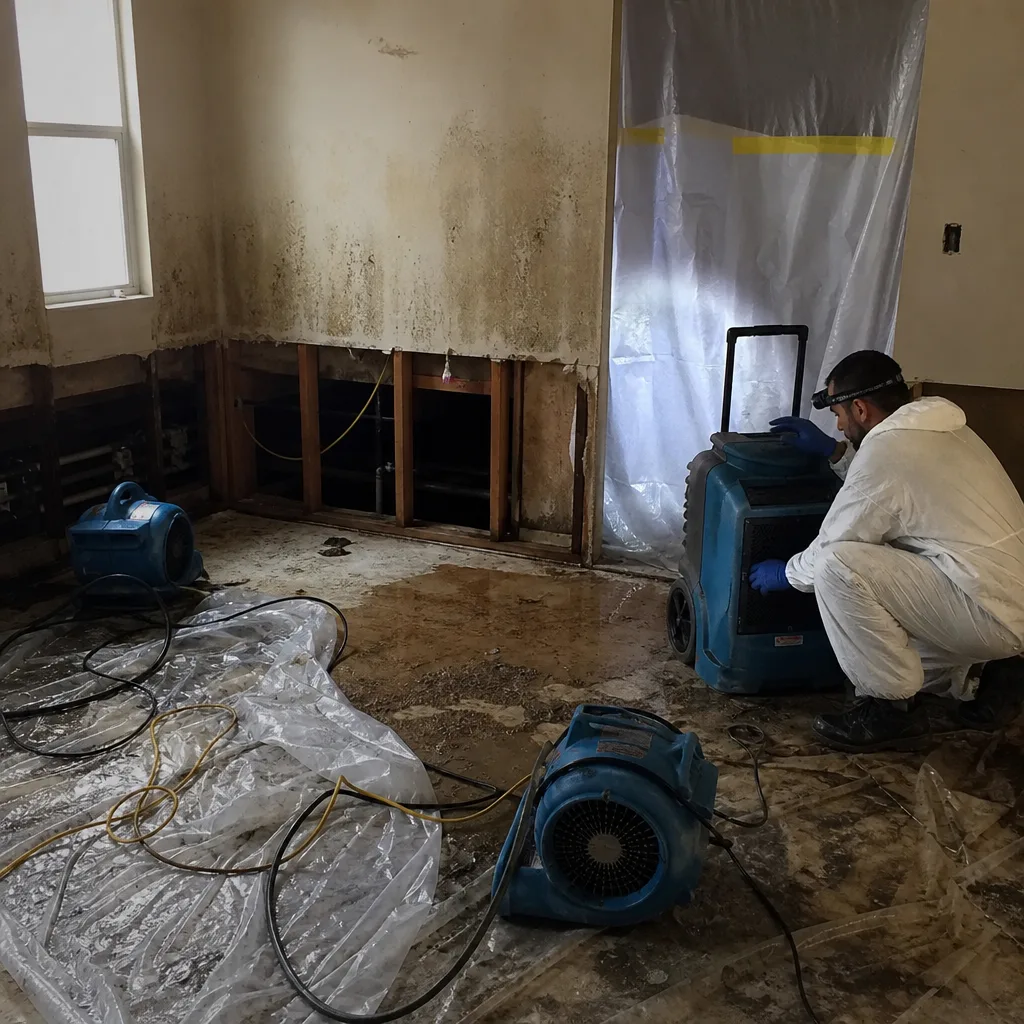 Before
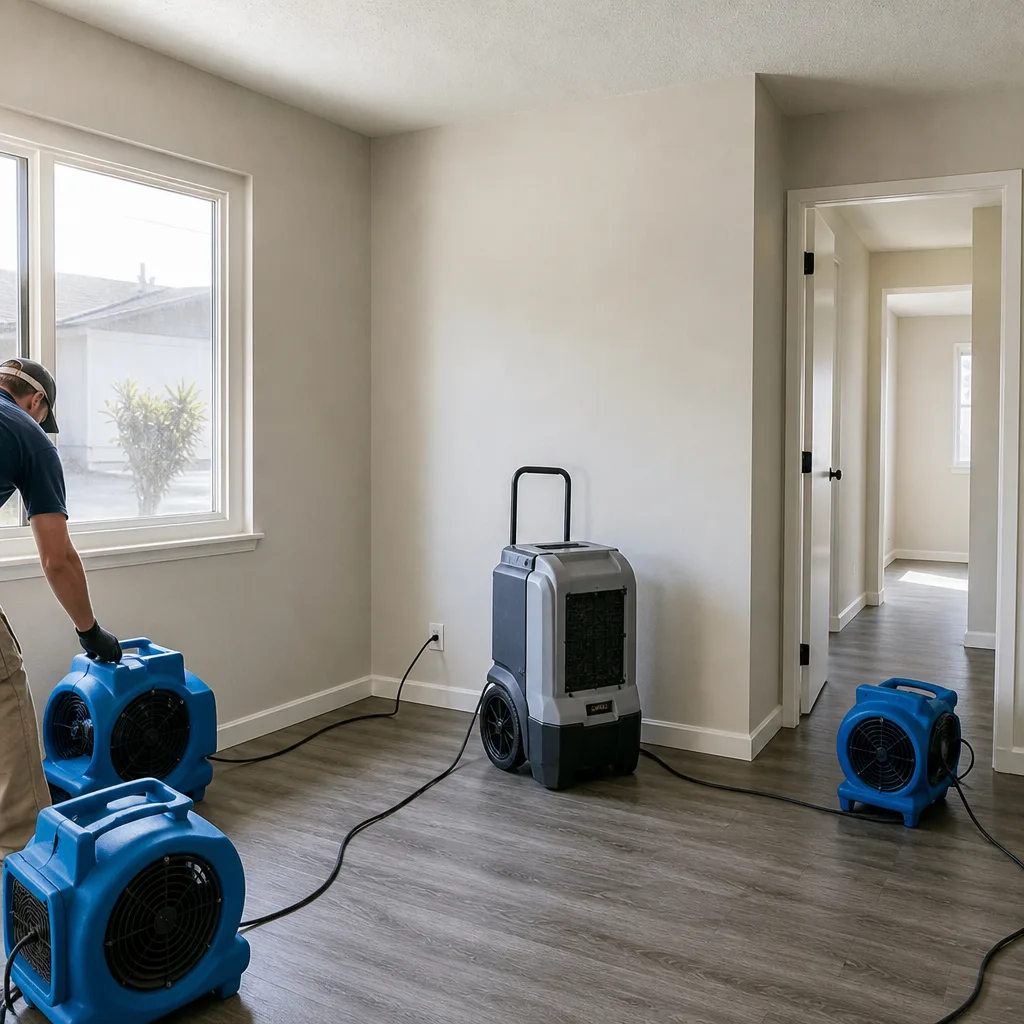 After
Common Water Damage Restoration Problems We See in Grand Terrace Homes
- Uphill-facing garage slabs taking runoff. On the terraced streets below Blue Mountain, water stacks against the garage slab during short winter downpours. The door seal fails or the stem wall wicks water, and by the time you notice, the baseplate and drywall are saturated.
- Slow slab leaks from original mid-century plumbing. Homes built in the 1960s and 70s in Grand Terrace often still run their original supply lines under the slab. These leaks don’t announce themselves; they spread under flooring and only show up when moisture readings reveal saturation well past the mold window.
- Storm water cutting channels under fences and patios. On steeper lots, runoff carves shallow channels along property lines and under hardscape. That water then finds the foundation or the garage. Crews that ignore the outside channel and start tearing out drywall just set the same failure up for the next storm.
- Post-fire debris flow ignored in the scope. Blue Mountain’s burn history adds a seasonal debris flow layer for canyon-edge properties. Runoff that crosses burned terrain carries sediment and contaminants, and treating that water as clean storm water creates a contamination problem that shows up weeks later.
Pricing for Water Damage Restoration in Grand Terrace, CA
You’ll spend roughly $1,800 to $3,800 for a contained emergency extraction and drying job in Grand Terrace, like a water heater failure in a garage or a supply line break caught early. A hillside flood cleanup with mud intrusion runs $2,200 to $5,200 depending on sediment load and how much finished flooring and drywall is involved. Slab leaks under a 1970s home that require flooring removal and Injectidry wall drying typically land between $3,500 and $5,200. The written scope you approve before work starts locks in the plan and the price; call (833) 589-5317 and we’ll come out and give you exact numbers.
We Also Serve Cities Near Grand Terrace
Our crews cover Grand Terrace and the surrounding Inland Empire communities from our Fontana base. If you’re in Highgrove, Colton, Loma Linda, or Rubidoux, the same IICRC-certified process and commercial-grade drying fleet is available, usually with the same rapid dispatch that Grand Terrace homeowners get.
Serving Grand Terrace, CA — Our Local Coverage Area
We’re based in the Grand Terrace area and know this community well. Use the map below to see our service coverage — if you’re nearby, we can almost certainly help.
FAQs About Water Damage Restoration in Grand Terrace
Grand Terrace’s steep, terraced lots sit on compacted, often hydrophobic soil that sheds water quickly during intense winter storms. Instead of pooling, runoff follows the path of least resistance along property lines, under fences, and across patios, cutting shallow channels as it goes. That’s why slope-directed drainage diagnosis has to happen before any drywall tear-out, or the same channel will re-wet the assembly after every storm. Call (833) 589-5317 and we’ll trace the water path first.
Runoff that crossed a hillside lot, especially one below Blue Mountain’s burn area, is usually Category 2 or Category 3 water because it carries soil, fertilizers, animal waste, and sometimes post-fire sediment. That classification changes the scope: affected porous materials like drywall and carpet pad often get removed rather than dried. We classify before we cut, and we document it for your adjuster.
Mold can establish on wet Grand Terrace drywall within 24 to 48 hours when indoor temperatures are in the comfortable range, and faster if the wall cavity stays closed and warm. Homes on terraced lots are especially prone because water travels downhill inside the wall cavity, creating hidden wet zones that don’t dry on their own. Same-day extraction and active structural drying matter. Call (833) 589-5317 as soon as you see water, and we’ll get ahead of it.
Yes, it changes the classification and the scope because runoff that crosses burned terrain picks up contaminants that clean storm water doesn’t carry. Materials contacted by that water typically get removed rather than dried, and we adjust the drying plan and containment accordingly. We document the water source and our classification reasoning so your insurance claim reflects the real conditions, not a generic storm-water cleanup.
We start with moisture mapping across the slab and the wall base to see how far the water actually traveled, then run Injectidry panels into the wall cavity and set Dri-Eaz dehumidifiers and air movers according to the affected square footage. Drywall only comes out where readings show saturation or contamination. On Grand Terrace hillside garages, we often save most of the wall by drying the assembly in place, provided the exterior drainage issue is corrected first. Call (833) 589-5317 for a free assessment.
Written by Glen Pacheco, Owner at Dry Line Water Damage, serving Grand Terrace and the Inland Empire with water, mold, and fire damage restoration.