


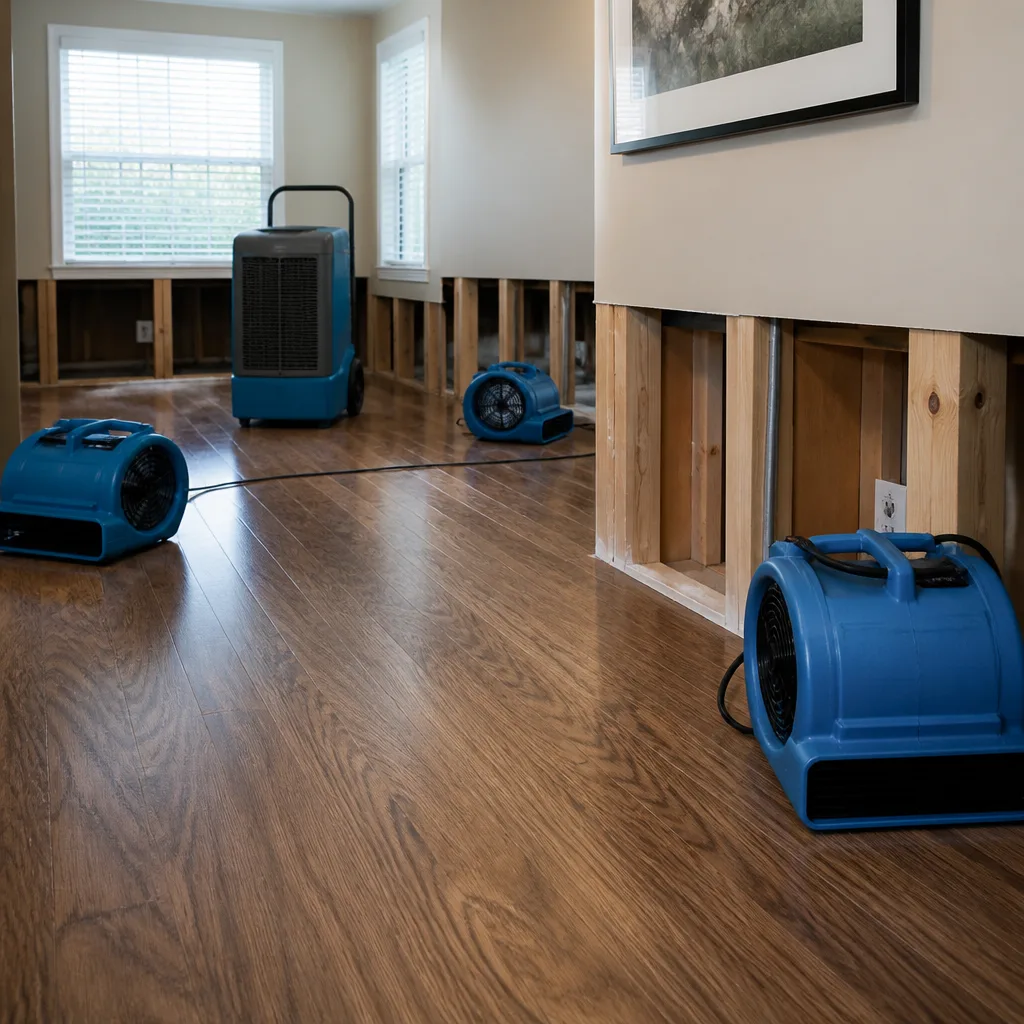
 Water damage drying
 Fire & smoke cleanup
 Mold remediation
 Storm response
 Sewage cleanup
 Reconstruction
Free visual inspection and a written scope of work before any mitigation begins - photos, moisture readings, and drying logs go in your claim file
The scope we write is the scope we bill. Anything new gets shown to you, in writing, before we touch it.
Get your free estimateFast, Reliable Water Damage Restoration Across Mission Viejo
Water damage restoration in Mission Viejo typically runs $2,100 – $6,800 depending on the size of the loss, the category of water, and how far moisture has migrated through slab-on-grade construction. Most Mission Viejo calls we handle are plumbing failures, not weather events. If you’re standing in water right now, call (833) 589-5317 and we’ll walk you through shutting off the supply line before our crew rolls out from Fontana.
We’ve worked enough homes in the 92690, 92691, and 92692 tracts to know that Mission Viejo water losses don’t behave like losses in older cities. The housing stock went up in a tight 1966 – 1990 window on slab foundations with stucco-over-woodframe exteriors, and the original supply plumbing is now failing on a shared schedule. When one neighbor off Marguerite Parkway gets a pinhole in a polybutylene line, the houses around them are usually on the same clock. Our Water Damage Restoration team approaches every Mission Viejo job with that tract-wide reality in mind, not just the single wet room in front of us.
You want specifics, so here they are: we’re an IICRC-certified operation, we run Dri-Eaz, Phoenix, and Injectidry systems, and we document moisture readings until the structure is measurably dry – not just dry to the touch. Glen Pacheco built this company to do restoration the way insurance adjusters expect it done: scoped, logged, and defensible.
Why Dry Line Water Damage Is Mission Viejo’s Preferred Water Damage Restoration Company
Mission Viejo homeowners call us because we understand what a 1970s tract home does when water gets under the slab. That’s not marketing language – it’s repetition. We’ve pulled wet carpet and pad off slab edges off La Paz, behind Lake Mission Viejo, and through the condo clusters near the 241. Each job tells us more about how these specific structures hold and move moisture.
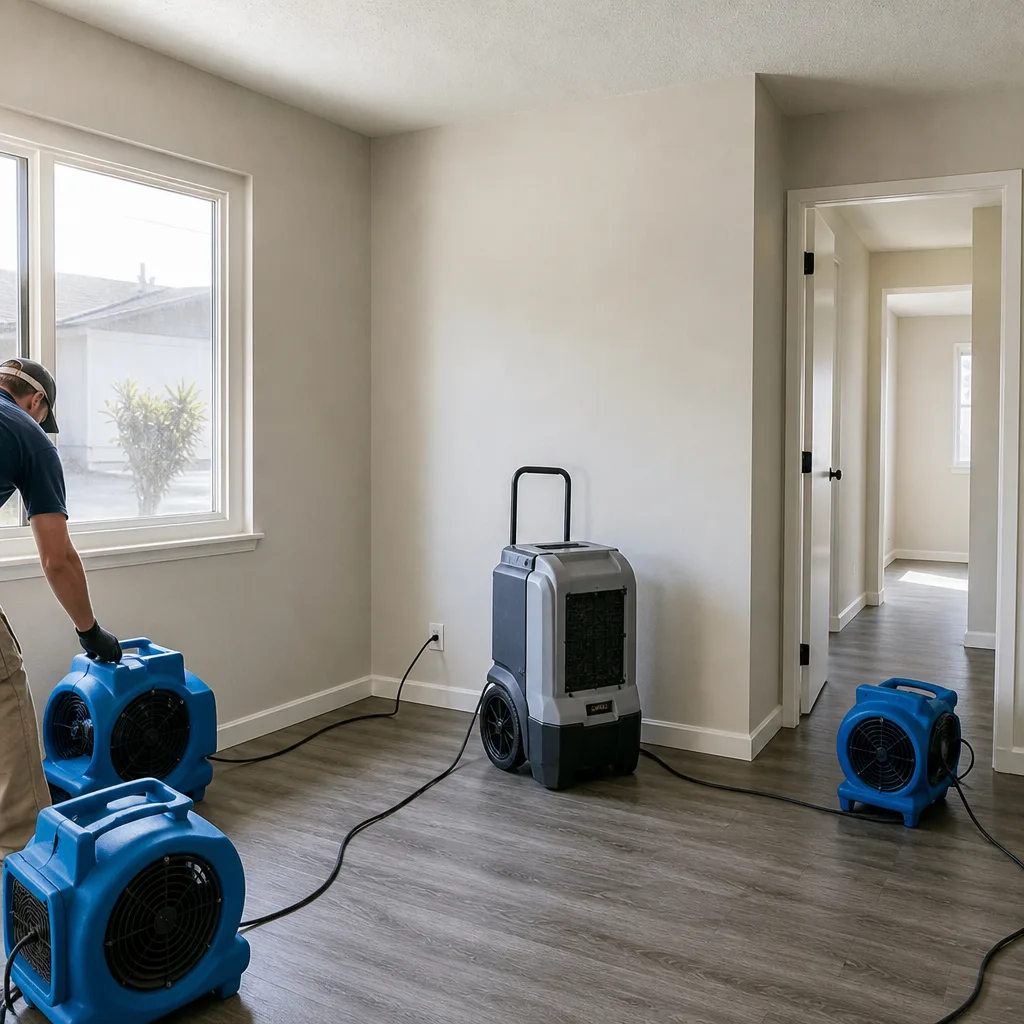
Our reputation in Mission Viejo comes from showing up with the same equipment large-loss contractors use, not rental fans from a hardware store. Dri-Eaz dehumidifiers, Phoenix air movers, and Injectidry structural-drying systems let us dry inside wall cavities and under flooring without ripping everything out. For a homeowner, that means less demolition, lower rebuild scope, and a drying log your adjuster can actually read.
We’re bound by the Restoration Industry Association’s published code of ethics. We carry IICRC certification across our water, mold, and fire work. That matters in Mission Viejo’s HOA-governed condo clusters, where shared-wall water losses bring out questions about who’s responsible for what. We write scopes that answer those questions in writing before a single wall is opened.
Restoration work we handle
Water Mitigation in Mission Viejo
Water Mitigation in Mission Viejo is the first-phase work that stops active damage and starts drying: extraction, containment, controlled demolition, and structural drying. You need mitigation the moment water has passed through drywall, flooring, or into a wall cavity. Waiting even 24 hours in Mission Viejo’s warm semi-arid climate lets moisture spread under slab edges and behind stucco, where it won’t show itself until the mold or the must comes back. Typical water mitigation in Mission Viejo runs $1,800 – $4,200 for a single-room plumbing loss, and $4,500 – $8,000 when a second-story line drops into a slab-on-grade family space and saturates multiple materials.
What the Process Actually Looks Like Here
We extract standing water, set containment with plastic sheeting and negative air pressure, then map moisture across the affected rooms and adjoining spaces. On slab homes in the Mission Viejo tracts, floor-level readings often hide wet slab edges two to three feet past the visible stain. We don’t skip that step, because a re-wet from an un-dried slab edge turns a $3,000 mitigation into a $9,000 rebuild.
After extraction, we place Dri-Eaz and Phoenix equipment and take daily moisture readings until the structure is dry to IICRC standard. That’s documented dry – numeric, logged, and verifiable. No one signs off on a visual guess.
Who Needs Mitigation Fastest in Mission Viejo
Homes built in the 1970s and 80s with original copper or polybutylene supply lines. If your home still runs gray polybutylene pipe, the question isn’t whether a line will fail – it’s what gets wet when it does. Slab construction hides the damage longer than raised foundations, and by the time water surfaces, it’s already migrated under flooring and up drywall.
Condo and townhome owners in the late-1970s – 80s clusters face a different pressure: shared walls mean your mitigation scope depends on your neighbor’s unit and the HOA’s governing documents. We write mitigation scopes that identify what’s yours, what’s common-area, and what the association’s master policy likely covers.
Flooded Basement in Mission Viejo
Flooded Basement in Mission Viejo usually means a lower-level family room or a sunken den on a slab, not a true below-grade basement – Mission Viejo Company homes were built slab-on-grade, so standing water on a lower floor sits directly on concrete and wicks into walls, cabinetry, and door frames immediately. You need extraction and structural drying started the same day because Mission Viejo’s dry heat evaporates surface water fast, but that vapor goes right into the wall cavities and behind the stucco. A flooded lower level in Mission Viejo typically costs $2,500 – $5,500 to extract, dry, and prepare for rebuild, depending on finish materials and how far the water ran.

Slab Edge Drying That Actually Holds
On a slab floor, the water doesn’t just pool – it flows to the lowest point and seeps under baseboards, under cabinetry, and into the drywall wick line. We drill small access points behind baseboards and run Injectidry panels to move air through the wall cavity without tearing out drywall. That’s structural drying without unnecessary demolition, and it’s why our drying logs show dry readings a generalist crew never reaches.
We also pull back carpet and pad at the wet edge because the pad acts like a sponge against the slab. If you skip that, the visible carpet dries while the pad underneath stays saturated and feeds mold for weeks.
When the “Basement” Is Actually a Condo Lower Floor
In Mission Viejo’s condo and townhome clusters, a flooded lower floor is almost always attached to someone else’s unit wall. Water from your water heater or supply line can travel into the common wall and into the neighboring unit’s flooring. HOA declarations and master insurance policies dictate who pays for what. We scope those losses with the association’s responsibility map in mind, not just the unit owner’s claim.
Trusted Brands We Service in Mission Viejo
Our Mission Viejo jobs run on XPOWER air movers, Dri-Eaz dehumidifiers, and Injectidry drying systems for hard-to-reach cavities. We keep replacement parts and consumables on the truck for these units, which means we don’t lose drying time waiting on supply runs. For Mission Viejo homeowners, that translates to fewer days of equipment running and a shorter window between mitigation and rebuild. These are the same brands adjusters recognize on commercial losses, which helps when your claim needs a defensible equipment log.
See the difference
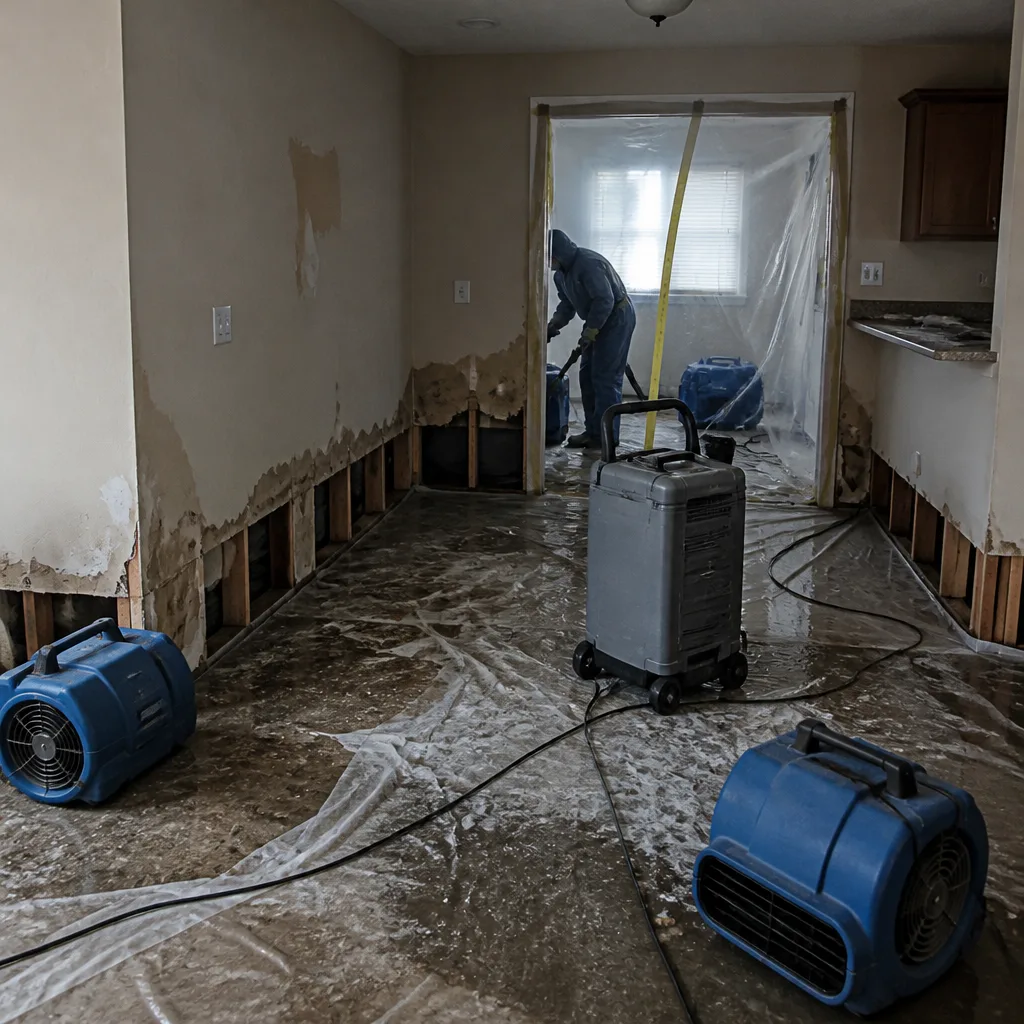 Before
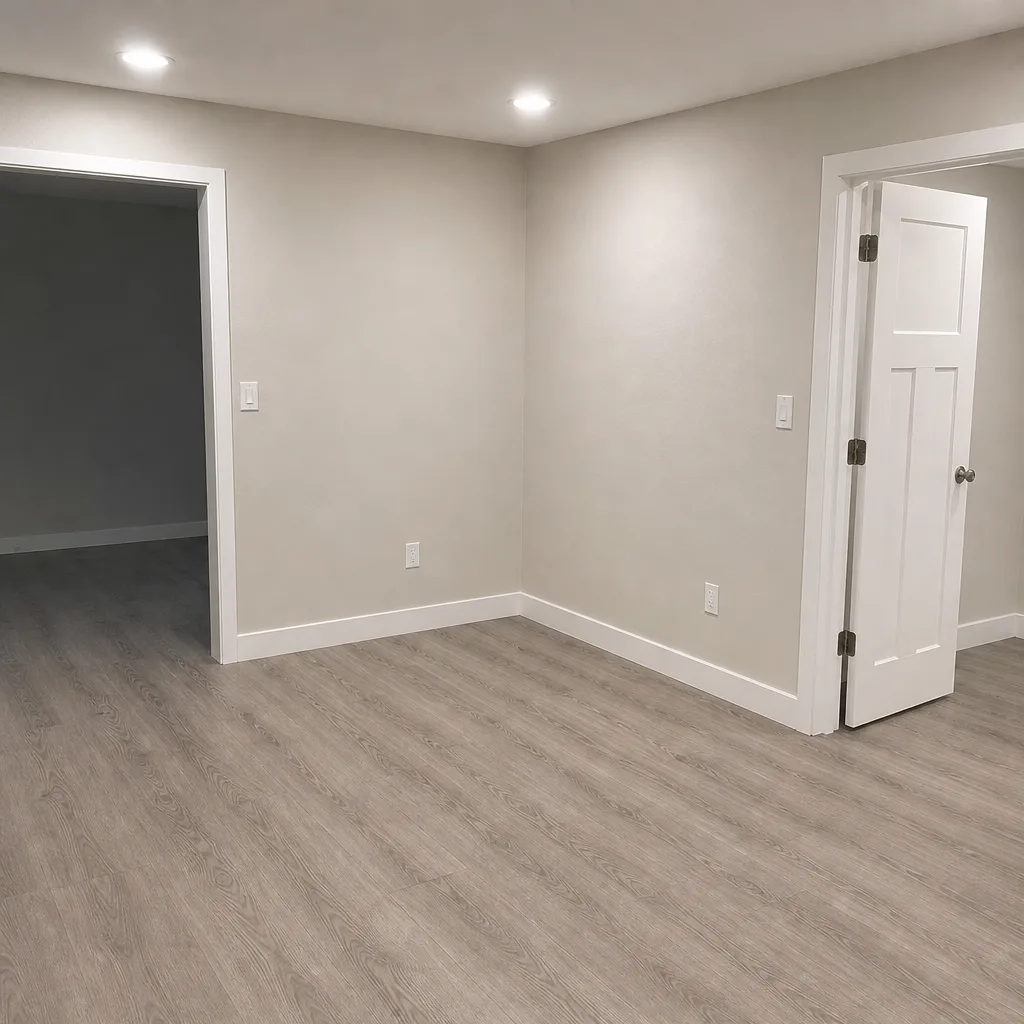 After
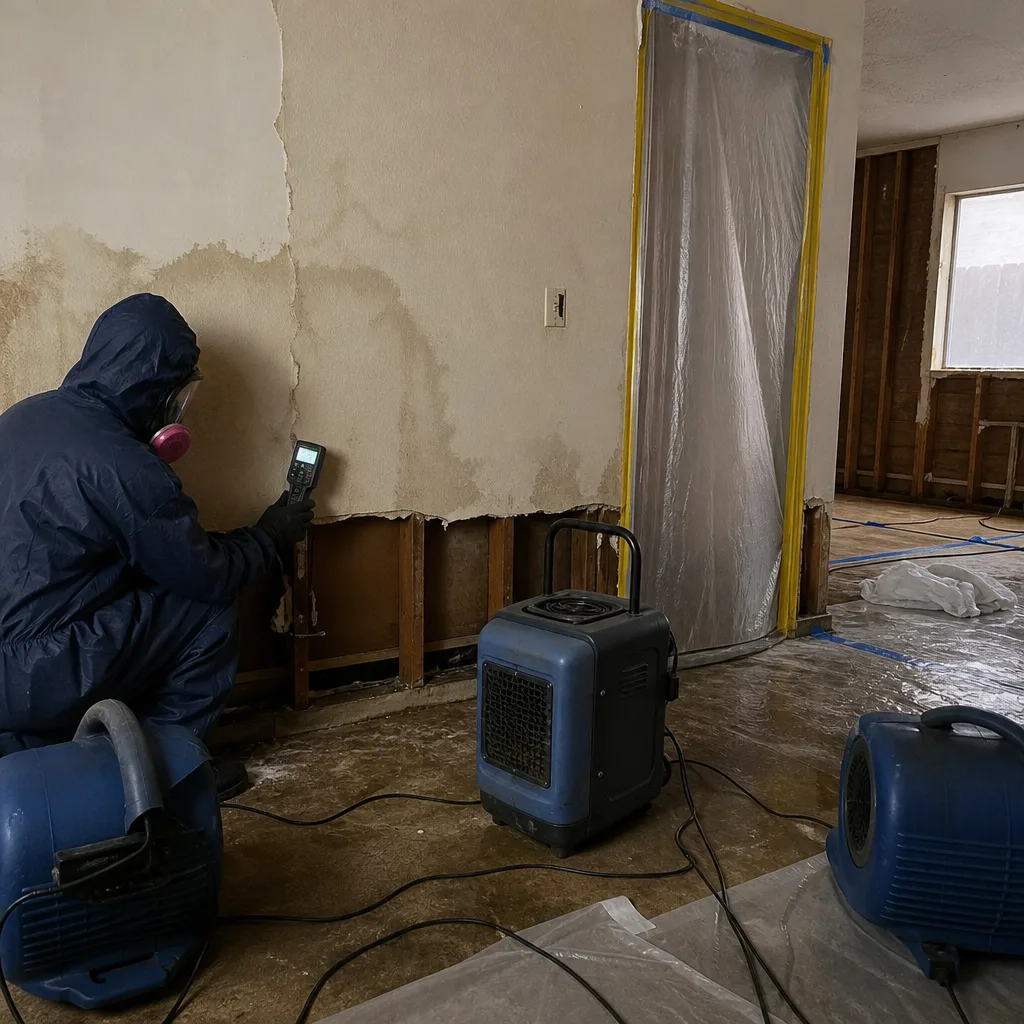 Before
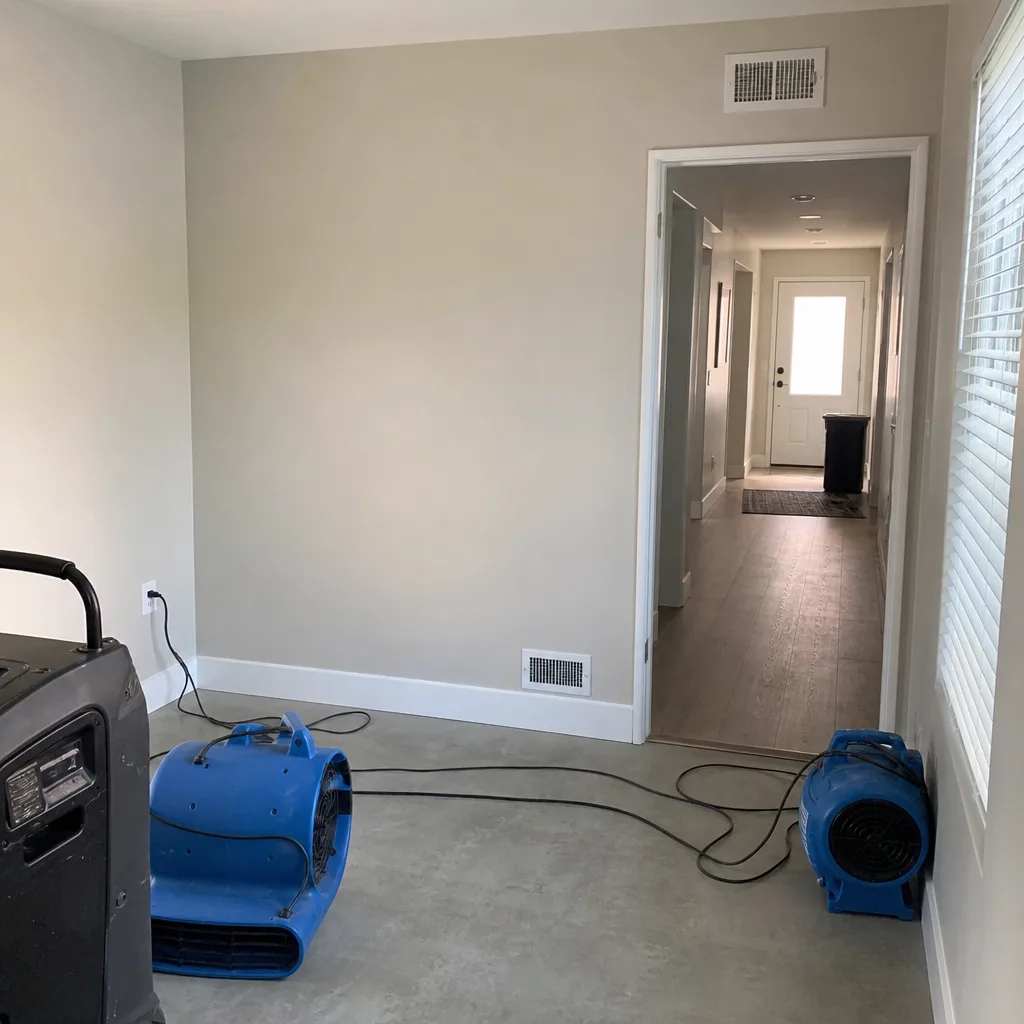 After
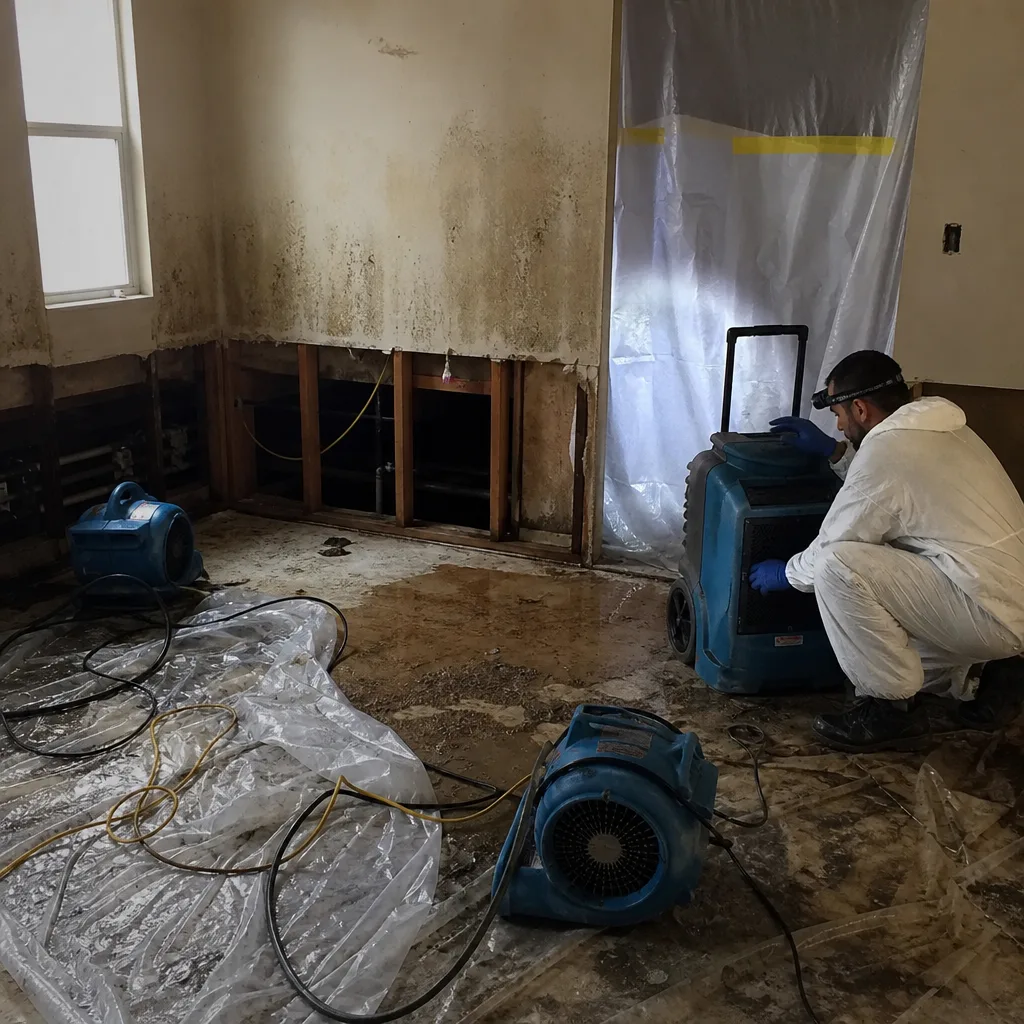 Before
 After
Common Water Damage Restoration Problems We See in Mission Viejo Homes
- Tract-wide plumbing failures on original polybutylene and copper lines. Mission Viejo Company built most of the city in a tight 1966 – 1990 window, and the supply plumbing fails on a shared timetable. A pinhole in one home’s gray pipe is a warning for the whole tract.
- Wet slab edges that re-wet the structure after drying looks complete. Slab-on-grade foundations hide moisture migration under flooring and behind baseboards. Crews that skip moisture mapping under the slab edge miss the water and sign off too early.
- Stucco cavities that hold moisture without showing it. Woodframe walls with stucco exteriors trap vapor in the cavity when water runs down the inside of a wall. Visual inspection says dry; a moisture meter says otherwise, and the mold shows up months later.
- Shared-wall losses in HOA-governed condo clusters. The large late-1970s – 80s townhome and condo developments around Mission Viejo have governing documents that split responsibility for water losses in ways most restoration scopes ignore – until the HOA pushes back.
Pricing for Water Damage Restoration in Mission Viejo, CA
Water mitigation in Mission Viejo usually lands between $1,800 and $4,200 for a single-room plumbing loss. A flooded lower level on a slab runs $2,500 – $5,500. A second-story supply line failure that drops into a family room and saturates multiple materials typically hits $4,500 – $8,000 by the time extraction, containment, drying, and antimicrobial treatment are complete. What moves the number is the category of water, how far moisture migrated under the slab, and how much drywall and flooring we have to remove to dry properly. We give you a written scope before we start, and we document every moisture reading on the drying log. Call (833) 589-5317 for a free estimate – we’ll tell you what the numbers actually look like for your loss, not a vague range.
We Also Serve Cities Near Mission Viejo
Our crews work throughout the south Orange County area, including Coto De Caza, Lake Forest, Laguna Hills, and Rancho Santa Margarita. If you’re in any of those cities and dealing with a water loss, the same IICRC-certified process and Dri-Eaz/Phoenix equipment applies. You can reach us at (833) 589-5317, or learn more about our coverage by visiting Water Damage Restoration in Mission Viejo.
Serving Mission Viejo, CA — Our Local Coverage Area
We’re based in the Mission Viejo area and know this community well. Use the map below to see our service coverage — if you’re nearby, we can almost certainly help.
FAQs About Water Damage Restoration in Mission Viejo
Because nearly every Mission Viejo tract went up inside the same 1966 – 1990 Mission Viejo Company build window, the original polybutylene and early copper supply lines fail on a shared neighborhood schedule. A pinhole burst in one home’s gray pipe usually means dozens of neighbors on the same street are on the same borrowed-time plumbing. Slab-on-grade foundations and stucco-over-woodframe walls then move that water in the same pattern house to house. We treat the tract as the context, not just the single wet room. Call (833) 589-5317 and we’ll tell you whether your line looks like the ones we’ve already pulled out on your street.
Same day, ideally within hours. Mission Viejo’s warm semi-arid climate evaporates surface water quickly, but that vapor moves into wall cavities and behind stucco just as fast. On a slab home, the pad under carpet and the wick line inside drywall start feeding microbial growth within 24 to 48 hours. Waiting means a $3,000 mitigation turns into a $9,000 rebuild. Call (833) 589-5317 the moment you see water – we’ll walk you through shutting off the supply before the truck arrives.
Yes. Clean water from a supply line is Category 1 and most affected materials can be dried in place if we reach them fast. Grey water from a dishwasher or sump failure is Category 2 and porous finishes like carpet and pad usually get removed. Black water from a sewage backup means anything the water touched gets cut out and disposed – no drying, full removal. The category determines what we dry, what we cut, and what the rebuild scope includes. We’ll tell you which category you have before any work starts.
It depends on the HOA’s governing documents and which side of the wall the source sits on. The association’s master policy typically covers common-area and original structural elements, while the unit owner’s policy covers interior finishes and betterments. Shared-wall water losses get complicated fast, and a restoration scope that ignores the HOA’s responsibility map will get rejected. We’ve worked enough condo clusters in the 92691 and 92692 zip codes to write scopes that account for association rules from the first line item. Call (833) 589-5317 and we’ll help you sort out who pays for what before demolition starts.
Yes. Stucco exteriors create a cavity between the stucco and the interior drywall, and water that runs down the inside of a wall gets trapped in that cavity where it can’t evaporate to the outside. We have to dry the cavity from the inside with Injectidry panels and monitor it with moisture readings, because the stucco hides the damage visually. A generalist crew sees a dry wall and walks away; we log numbers until the cavity is actually dry. Call (833) 589-5317 for a moisture assessment if you’ve had a recent leak and suspect the wall is still wet.
Written by Glen Pacheco, Owner at Dry Line Water Damage, serving Mission Viejo since 2019.