

 Water damage drying
 Fire & smoke cleanup
 Mold remediation
 Storm response
 Sewage cleanup
 Reconstruction
Free visual inspection and a written scope of work before any mitigation begins - photos, moisture readings, and drying logs go in your claim file
The scope we write is the scope we bill. Anything new gets shown to you, in writing, before we touch it.
Get your free estimateFast, Reliable Water Damage Restoration Across Rancho Cucamonga
Water damage restoration in Rancho Cucamonga typically costs $1,800 to $6,500 depending on how far the water traveled and what it touched. Most jobs we handle in the 91737, 91739, 91701, and 91729 zip codes involve either a supply-line failure, a wind-driven roof leak, or muddy runoff after a foothill storm. If water is actively pooling in your home right now, call (833) 589-5317 and we’ll walk you through the first steps on the phone while a crew heads your direction.
We’ve worked homes from the Alta Loma foothills down to the newer subdivisions around Victoria Gardens, and we know how Rancho Cucamonga’s specific housing stock responds to water. Stucco-over-wood-frame construction hides moisture well. That’s not a compliment. By the time you see a stain on the wall, the cavity behind it has usually been wet for days. Our Water Damage Restoration process starts with moisture mapping, not guesswork, because in this city what you can’t see is usually the actual problem.
Why Dry Line Water Damage Is Rancho Cucamonga’s Preferred Water Damage Restoration Company
Glen Pacheco built Dry Line Water Damage around a simple position: use the same equipment and documentation standards that large-loss insurance contractors use, and apply them to every home, whether it’s a 2,200-square-foot tract house in Etiwanda or a 1970s ranch property in Alta Loma with aging roof penetrations. We’re an IICRC-certified operation, which means our extraction, drying, and sanitization procedures follow a third-party standard, not whatever the crew happens to remember that day.
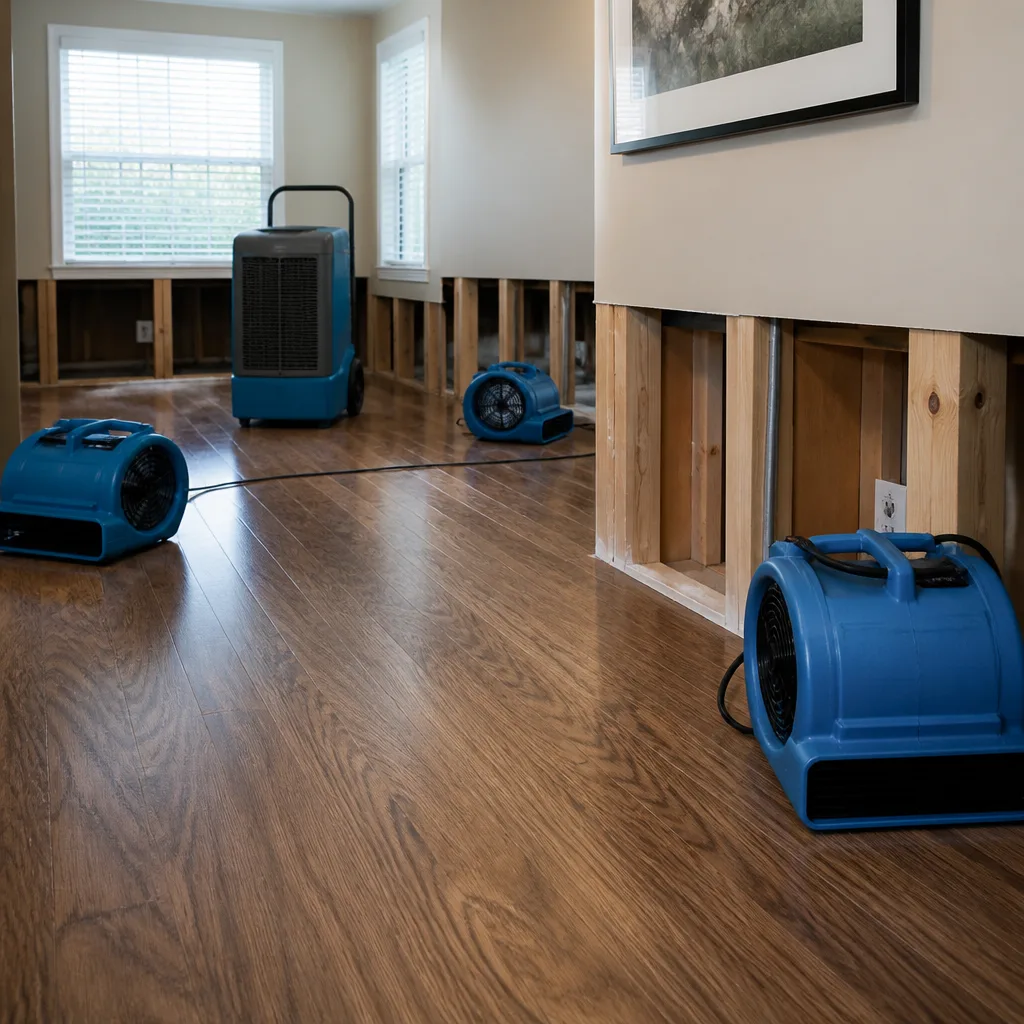
Rancho Cucamonga homeowners call us because we show up with Dri-Eaz and Phoenix equipment rather than rental-store gear. The distinction matters when you’re trying to hit a documented dry standard before mold has a chance to establish. We run Injectidry structural drying systems when water is trapped in wall cavities or under slab flooring, pushing air where consumer fans simply cannot reach. That reduces the demolition footprint, which matters in planned-community homes where matching a 1990s builder-grade finish after a tear-out is harder than most people expect.
Our crews work the I-210 and I-15 corridors into Rancho Cucamonga routinely, and we know the difference between an Alta Loma hillside home with drainage exposure and a flat-lot Victoria tract home with a slab leak. That local familiarity shortens the diagnostic phase and gets extraction started faster. We also coordinate directly with adjusters, providing the photo documentation and daily drying logs that carriers expect. That’s not a courtesy; it’s how claims actually move forward without stalling.
Restoration work we handle
Water Extraction in Rancho Cucamonga
Water extraction in Rancho Cucamonga means pulling standing water and saturated material out of a home before secondary damage sets in. In this city, extraction frequently involves sediment-laden water, not clean supply-line breaks, because our foothill drainages move mud and debris into homes at the base of the canyons. When category 3 water has wicked into drywall or carpet pad, extraction is the only step that gets the contaminant load out before drying can even begin. A typical water extraction call in Rancho Cucamonga runs $900 to $2,800 depending on square footage and how much of the water is visible versus trapped.
Slab Foundation Extraction
Most Rancho Cucamonga tract homes sit on slab foundations, which changes how water behaves. Instead of draining down into a crawl space, water sheets across the slab, under baseboards, into bathrooms, and behind kitchen islands. Extraction on a slab home means chasing the water laterally, not just pulling it off the top. We use truck-mounted and portable extraction units with water claws on carpeted areas, then immediately begin mapping moisture in the slab-adjacent drywall to see where capillary action pulled water upward.
Category 3 Water Handling
When runoff from the Cucamonga Peak foothills enters a home, the water is category 3 by definition: it has flowed across ground surface, picking up soil, ash, and whatever the burn scar left behind. That water cannot simply be dried; it has to be extracted and the affected materials either removed or sanitized to a documented standard. We run the extraction first, then decide with the homeowner and adjuster what stays and what goes. No drying fan fixes sediment contamination.
Emergency Water Removal in Rancho Cucamonga
Emergency water removal in Rancho Cucamonga is the same-day response that stops active water from continuing to spread. In a city where a burst supply line in a second-floor laundry room can reach the first floor in under an hour, time is the difference between a $1,200 extraction and a $9,000 rebuild. Most emergency water removal calls in Rancho Cucamonga run $1,200 to $4,000 for the initial response, extraction, and equipment drop, with the full scope refined once we see the moisture map. Call (833) 589-5317 and we’ll get a crew rolling while you’re still describing the problem.
Same-Day Mitigation Response
We stage crews along the I-15 corridor, so response into Rancho Cucamonga neighborhoods like Alta Loma, Etiwanda, and the Victoria area is measured in hours, not days. The first crew’s job is simple: stop the source, remove standing water, and begin drying. The second phase, which is the moisture mapping and scope documentation, happens once the emergency is contained. That sequence matters because a wet slab under saturated pad pours moisture into the air for weeks, even after the visible water is gone.

Water Heater and Supply Line Failures
Inland heat accelerates failure of rubber supply lines and water heater connections, and Rancho Cucamonga’s summer temperatures over 100°F are hard on both. We see a steady stream of water heaters that let go while homeowners are at work, flooding garages and adjacent finished rooms. Emergency removal on a water heater failure usually involves extracting the garage, checking whether the water breached the common wall into the house, and drying both sides of that assembly. It’s a specific pattern we know well in this market.
Trusted Brands We Service in Rancho Cucamonga
Rancho Cucamonga homes span a wide build window, from 1970s Alta Loma ranch properties to 2000s Etiwanda and Victoria master-planned homes. The plumbing and appliance brands reflect that range. We service Rheem water heaters, Moen and Delta supply fixtures, Whirlpool and LG laundry connections, and the builder-grade PEX and copper systems that dominate Rancho Cucamonga’s tract construction. Because we run calls in this city weekly, we keep common Rancho Cucamonga parts on the truck: supply lines, angle stops, water heater connectors, and the fittings needed for the PEX systems that 1990s and 2000s builders used throughout this market.
See the difference
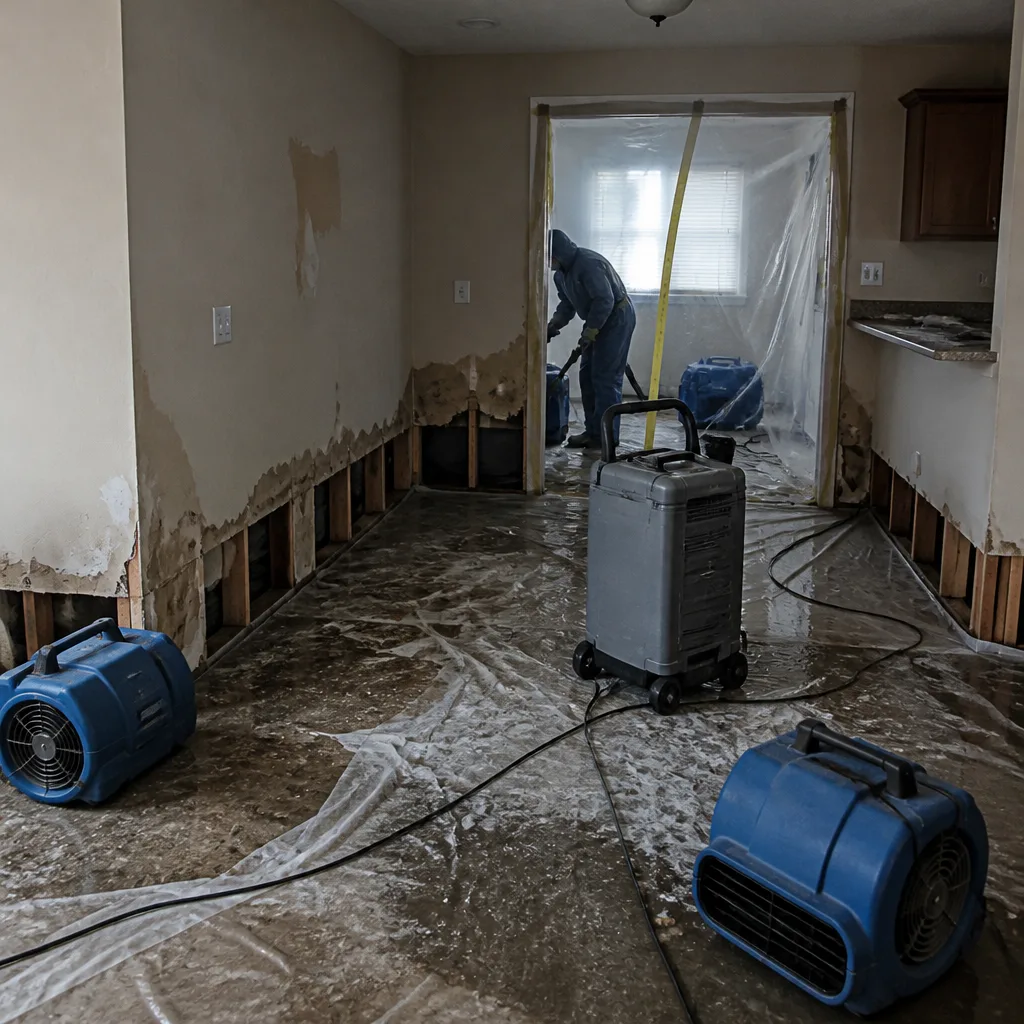 Before
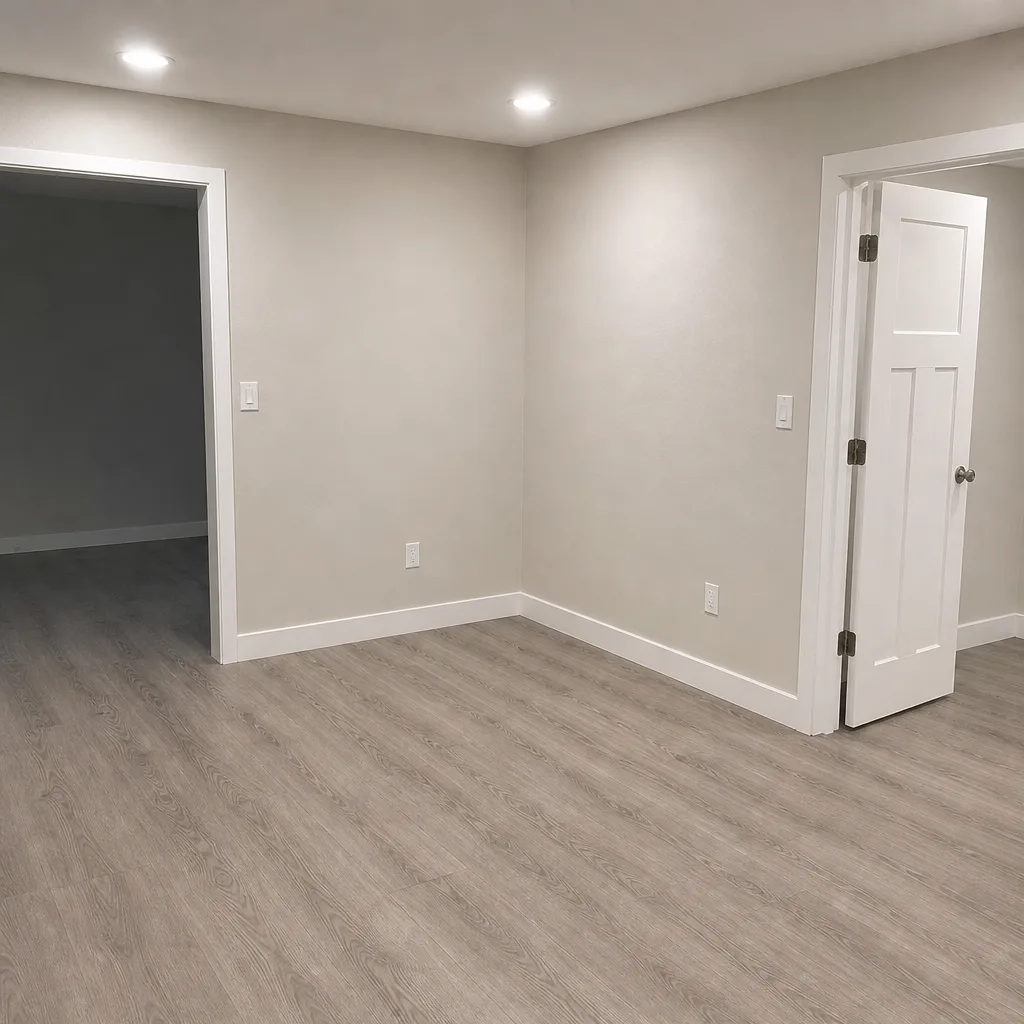 After
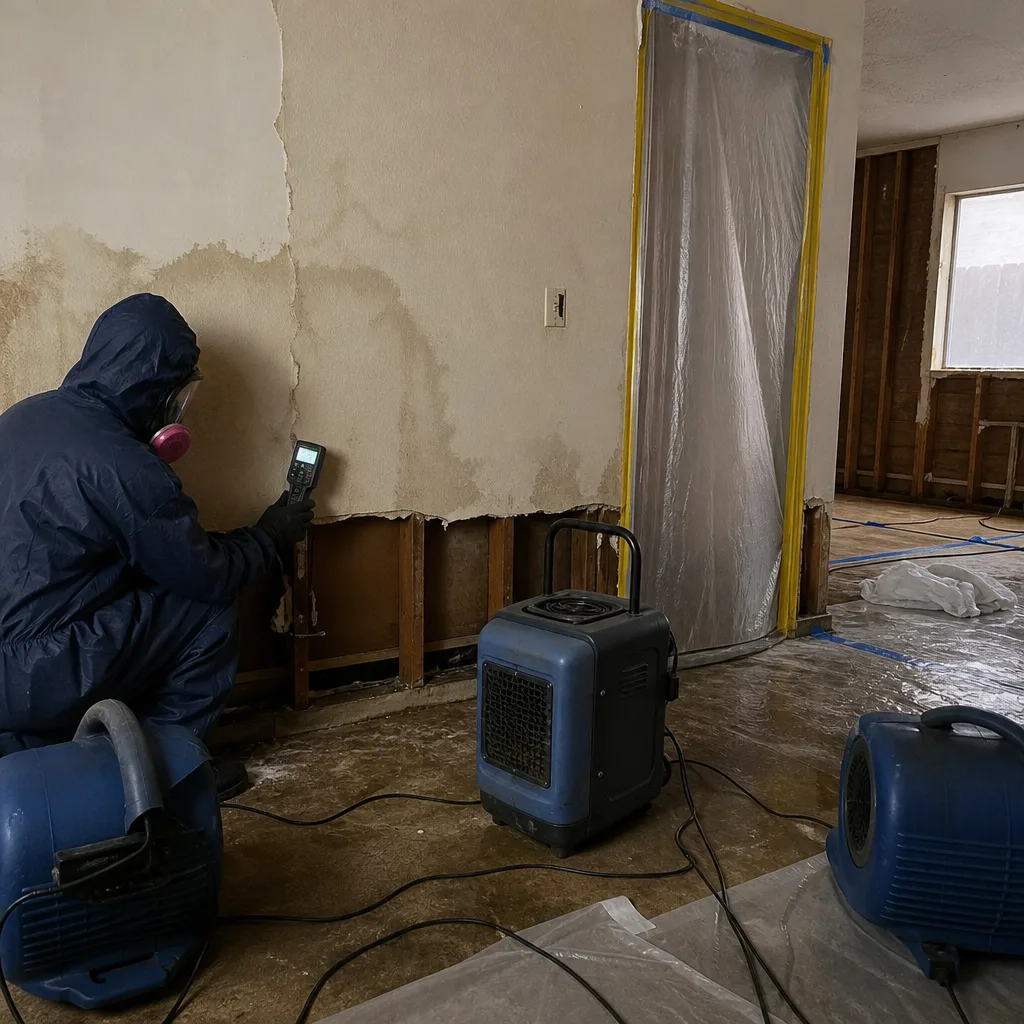 Before
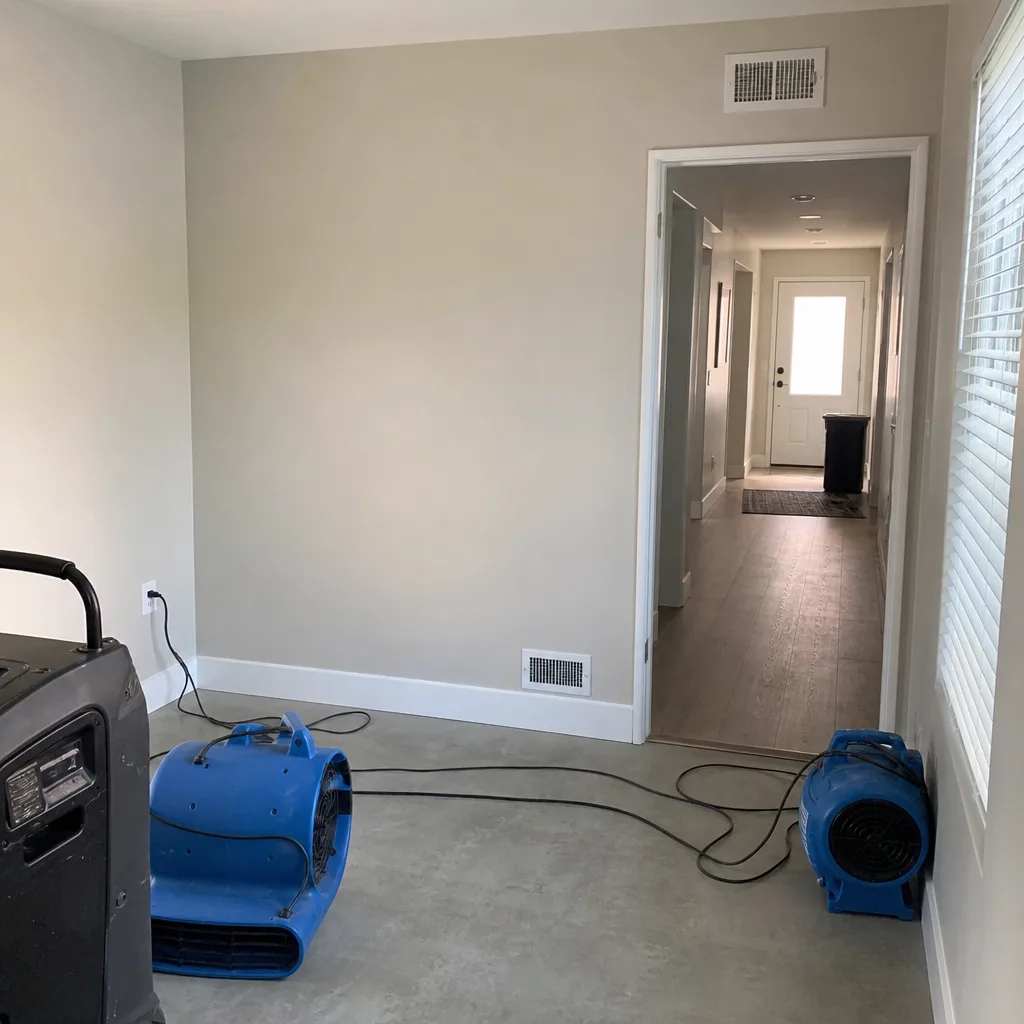 After
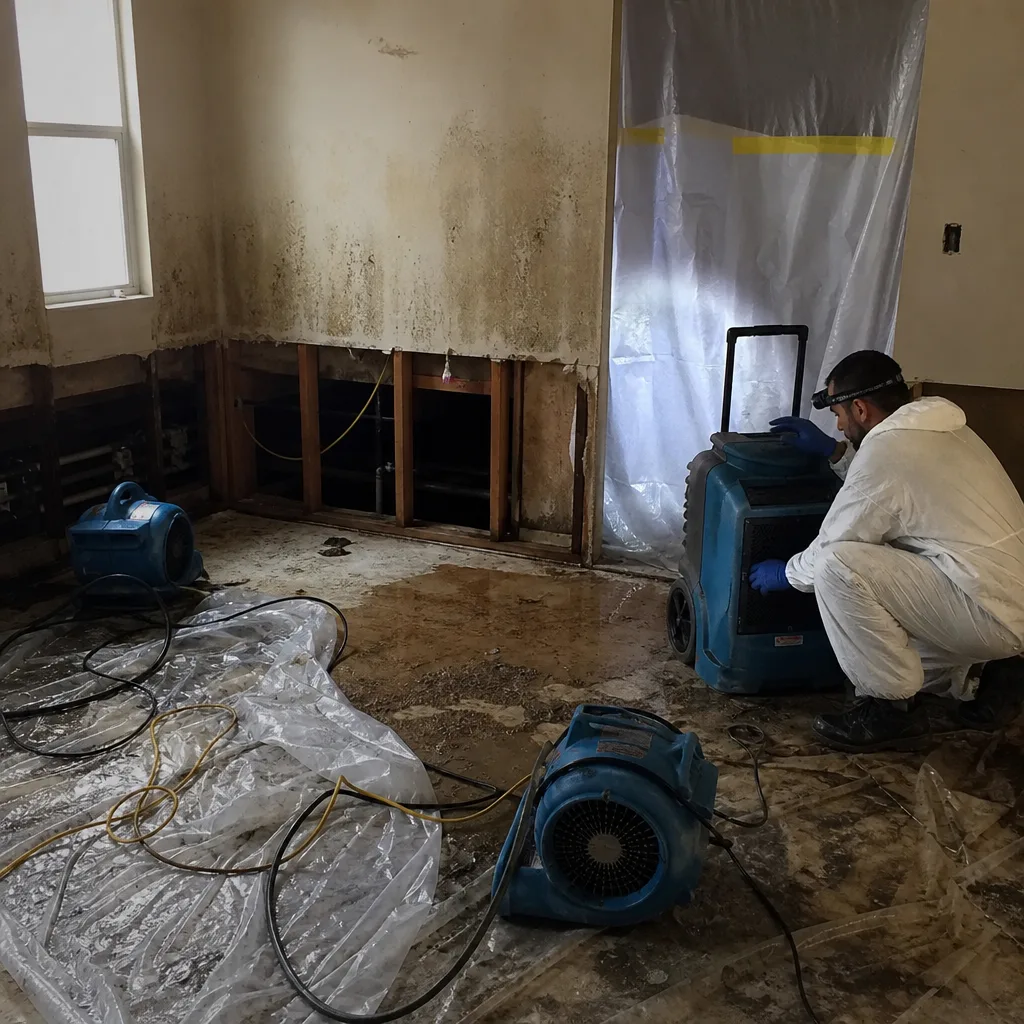 Before
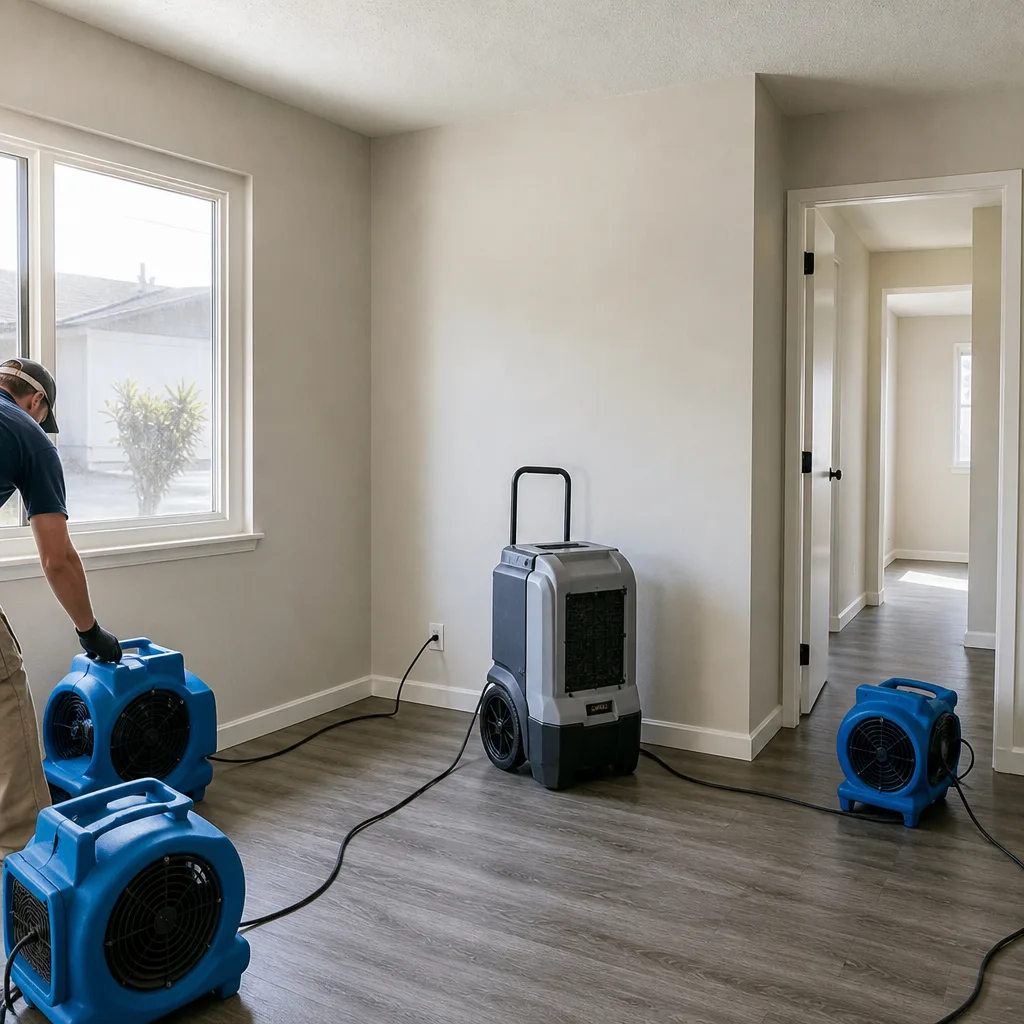 After
Common Water Damage Restoration Problems We See in Rancho Cucamonga Homes
- Burn-scar debris flow into foothill neighborhoods. After a fire in the San Gabriel foothills, a normal winter storm becomes a mud and debris event for homes in Alta Loma and Etiwanda. That water is category 3 and carries sediment that has to be physically extracted, not just dried in place.
- Wind-driven rain through stucco envelope failures. Santa Ana winds crack stucco and lift tiles, and when a rain event follows, water gets behind the exterior finish and into the wall cavity. By the time a homeowner sees the interior stain, the framing has often been wet for days.
- Slab leaks that run under flooring. Rancho Cucamonga’s slab foundation homes hide supply-line leaks until the water has traveled under tile or laminate across multiple rooms. The leak itself is a plumber’s fix; the restoration side is extracting and drying the flooring assembly before delamination and mold set in.
- Heat-stressed water heater and supply line failures. Inland summer heat pushes garage temperatures past 110°F, and rubber connectors and tank fittings fail as a result. These are often the ones homeowners don’t find until water has reached the finished house, not just the garage.
Pricing for Water Damage Restoration in Rancho Cucamonga, CA
- Emergency water extraction and mitigation: $1,200 – $4,000. Includes initial response, standing-water removal, equipment drop, and moisture mapping.
- Structural drying and dehumidification: $800 – $2,200. Daily monitoring, drying log updates, and equipment maintenance until documented dry.
- Category 3 water handling with containment: $2,500 – $6,500. Includes extraction, antimicrobial application, containment, and removal of non-salvageable materials.
- Full mitigation with pack-out and content drying: $4,000 – $10,000+. Applies to multi-room floods where contents, flooring, and lower drywall all need processing.
What moves a Rancho Cucamonga job to the higher end of these ranges is usually the water category and how far the water traveled before we arrived. A clean supply-line break caught within an hour is a different project than muddy foothill runoff that sat overnight in a slab home. We write a scope in plain English before work starts, with line items and drying goals you can hand to an adjuster. Estimates are free, and we’ll always tell you if the scope is smaller than the adjuster’s reserve, not the other way around. Call (833) 589-5317 to get a number on your specific situation.
We Also Serve Cities Near Rancho Cucamonga
Our crews regularly work the corridors that connect Rancho Cucamonga to the surrounding communities. That includes San Antonio Heights and Upland to the west, where older hillside homes face the same wind-driven envelope failures, and Ontario and Fontana to the south, where slab-on-grade construction and industrial-adjacent housing create their own water patterns. If you’re in one of those cities and need water damage restoration, call (833) 589-5317 and we’ll confirm coverage for your address.
Serving Rancho Cucamonga, CA — Our Local Coverage Area
We’re based in the Rancho Cucamonga area and know this community well. Use the map below to see our service coverage — if you’re nearby, we can almost certainly help.
FAQs About Water Damage Restoration in Rancho Cucamonga
Because the water in this city is frequently category 2 or 3, not clean supply water, and because stucco-over-frame construction hides moisture in wall cavities where a box fan will never reach. A shop vac removes standing water from the surface but cannot pull saturated drywall water back out of the material or dry the cavity behind the stucco. Without moisture mapping and commercial-grade dehumidification, the hidden moisture keeps working for weeks. Our IICRC-certified process uses Dri-Eaz and Phoenix equipment plus Injectidry cavity drying to hit a documented dry standard, and the drying logs prove it. Call (833) 589-5317 for a moisture assessment that tells you whether your situation is a surface cleanup or a structural dry.
Within 24 to 48 hours is the window where extraction and drying can still prevent most secondary damage. In Rancho Cucamonga’s hot inland climate, that window shrinks in summer because heat accelerates mold growth inside a damp wall cavity. The stucco exterior also traps moisture longer than a vented siding assembly would, so the wall stays wetter, longer. If the wall is wet from category 3 runoff, the timeline is even shorter because you’re dealing with contaminated material, not just damp drywall. Call (833) 589-5317 the same day you see or feel the wet spot, and we’ll let you know over the phone whether it’s a mitigation call or a monitoring situation.
Category 1 is clean water from a supply line or sink overflow; category 2 has some contamination, like washing-machine discharge; category 3 is grossly contaminated from ground surface, sewage, or post-fire runoff. The category determines whether we dry a material in place or remove it. Nobody dries category 3 carpet pad, and with muddy foothill runoff that’s exactly the water Rancho Cucamonga homes see after burn-scar storms. The answer is extraction, containment, antimicrobial treatment, and removal of saturated porous materials, all documented for your adjuster. If you’re not sure what category hit your home, call (833) 589-5317 and we’ll assess it during the free estimate.
Yes. Pack-out means we inventory, photograph, and move salvageable contents to a drying area or storage while the structure is being mitigated. We then run daily drying logs showing moisture readings in each affected area, which is the documentation your adjuster needs to release mitigation approval and eventually close the claim. In slab-foundation Rancho Cucamonga homes where muddy floodwater reached flooring and baseboards, pack-out is often the difference between saving and losing furniture and personal effects. We coordinate directly with your carrier and can send the logs to your adjuster the same day they request them. Call (833) 589-5317 to get pack-out and documentation on your claim, not just extraction.
Yes, and it’s a pattern we see every fall and winter in Rancho Cucamonga. Santa Ana winds lift roof tiles, crack stucco at corners and window reveals, and drive rain sideways into envelope gaps that stay dry during normal storms. Once water gets behind the stucco and into the wood-framed wall cavity, it has no place to drain, so it sits against the framing and the interior drywall. By the time a homeowner notices the ceiling stain or baseboard swelling, the cavity has been wet for days or longer. If you suspect wind-driven water intrusion, call (833) 589-5317 for a moisture map of the affected wall; it’s the only way to see what the stucco is hiding.
Written by Glen Pacheco, Owner at Dry Line Water Damage, serving Rancho Cucamonga and the surrounding inland foothill communities.