Last updated October 31, 2026
 Water damage drying
 Fire & smoke cleanup
 Mold remediation
 Storm response
 Sewage cleanup
 Reconstruction
Free visual inspection and a written scope of work before any mitigation begins - photos, moisture readings, and drying logs go in your claim file
The scope we write is the scope we bill. Anything new gets shown to you, in writing, before we touch it.
Get your free estimateThe Complete Guide to Damage Restoration in Fontana
Most Fontana homes that get “restored” after water damage are dried to visible dryness, not to documented dryness. The distinction matters more than most homeowners realize. A wall that feels dry to the touch can still hold 18% moisture content inside the cavity, which is more than enough to feed mold growth within three to five weeks. This guide walks through every phase of legitimate damage restoration in Fontana, from the first extraction pass to the final moisture clearance report, so you can tell the difference between work that’s actually done and work that just looks done. For a deeper dive, see The Complete Water Damage Restoration Guide for Fontana Homeowners. You’ll learn what each phase accomplishes, what documentation a serious contractor produces, and why Fontana’s inland climate makes surface-level drying checks especially misleading.
Restoration work we handle
Quick Answer
Damage restoration in Fontana follows a sequenced technical process: emergency extraction, structural drying, dehumidification, cleaning or remediation, and final moisture documentation. Skipping or reordering these phases leaves hidden moisture that causes recurring mold and material failure. A legitimate restoration job in Fontana ends with a written moisture clearance report showing readings from inside walls and floors, not just visible surfaces.
Table of Contents
- Extraction: The First 60 Minutes Set the Ceiling for Everything Else
- Structural Drying vs. Contents Drying: Why They Are Not the Same Job
- Dehumidification: The Phase Most Fontana Jobs Skip
- Why Fontana’s Inland Heat Lies to You About Dryness
- What IICRC S500 Compliance Actually Requires at Each Phase
- Mold Remediation as a Distinct Phase, Not an Add-On
- Fire Damage: The Restoration Sequence Most People Get Backwards
- The Final Moisture Clearance Report: What It Contains and Why You Should Demand One
- Common Mistakes to Avoid
- When to Call a Professional
- Frequently Asked Questions
- The Bottom Line
Extraction: The First 60 Minutes Set the Ceiling for Everything Else
Extraction is not the same thing as drying, and it’s not the same thing as dehumidification. Extraction is the physical removal of standing water and saturated surface water using high-volume pumps and extraction wands. It’s the phase that determines how much drying work remains, and it’s the phase where cutting corners is most visible later.
For a typical water loss in a Fontana home, a proper extraction pass removes anywhere from 75% to 90% of the water that can physically be removed with equipment. What’s left is bound water, which is moisture absorbed into materials like drywall, subfloor, framing lumber, and the bottom plate of walls. That bound water can only be addressed through controlled drying. But here’s what many homeowners don’t realize: if extraction is done poorly, or skipped in favor of putting fans on standing water, the bound moisture load is dramatically higher than it needed to be. The drying phase then takes longer, costs more, and penetrates less effectively.
In our experience on Fontana job sites, the homes that dry fastest are the ones where extraction was aggressive and methodical. We use truck-mounted and portable extraction systems rated for commercial water removal, not the consumer-grade carpet extractors that leave a half-inch of water in the pad. The goal of extraction is to get the structure from “saturated” to “damp” as quickly as possible. That’s the only state from which professional drying can actually work.
What a legitimate extraction phase includes:
- Standing water removed from all affected areas, including low spots and subfloor cavities
- Carpet pad assessed and, in most cases, removed if it has absorbed water, because pad does not dry reliably in place
- Baseboards pulled where water has wicked behind them, exposing the wall cavity for drying
- Initial moisture readings taken throughout the affected area to establish a baseline and set drying goals
- An extraction map or diagram showing where water traveled, which guides equipment placement in the next phase
If a contractor in Fontana skips the moisture baseline or doesn’t pull wet pad, the rest of the job is built on guesswork. Those initial readings are what make drying verifiable later. Without them, no clearance report can honestly say the structure returned to a pre-loss condition.
Structural Drying vs. Contents Drying: Why They Are Not the Same Job
Structural drying and contents drying are two different technical disciplines, and treating them as one job causes material failure. Structural drying means reducing moisture in building materials: framing lumber, drywall, subfloor, concrete slabs, ceiling joists. Contents drying means reducing moisture in movable property: furniture, clothing, documents, electronics, drapery, books, and personal items. They require different equipment, different placement logic, and different measurement standards.
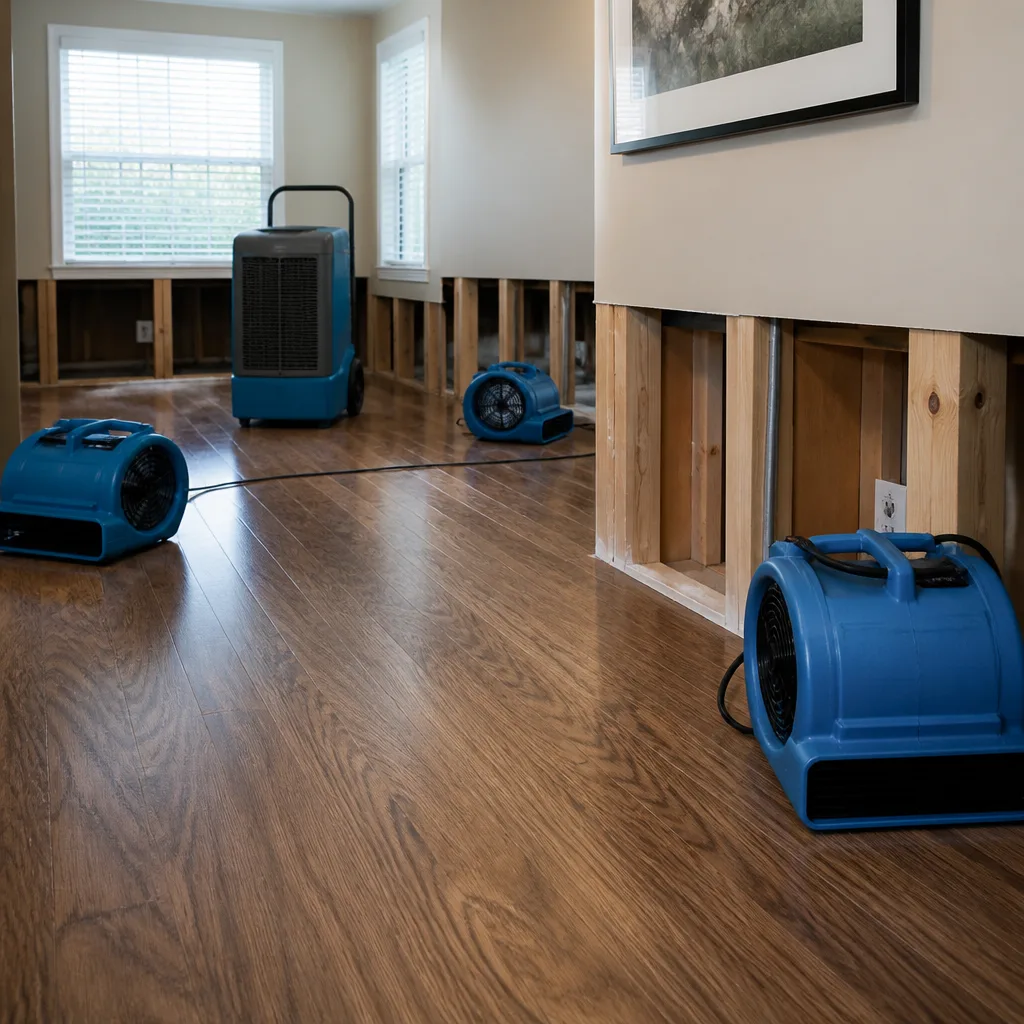
Structural drying in Fontana typically requires strategic placement of commercial-grade air movers and dehumidifiers to create a specific airflow pattern across wet surfaces. The air movers don’t just blow air randomly. They’re positioned to create a vortex that continuously strips moisture-laden air from the surface of materials and carries it to dehumidifiers, which remove the moisture from the air. This is called a psychrometric approach, and it’s the difference between professional drying and renting a few fans from the hardware store.
Contents drying is often handled off-site or in a contained drying chamber, because wet contents can’t always be dried in place. Electronics need specialized low-humidity drying environments. Documents may need freeze-drying. Textiles and furniture often need moving air at specific temperature and humidity ranges to prevent swelling, warping, or staining. In Fontana’s dry summer heat, there’s a temptation to put wet furniture outside in the sun and call it dried. That’s a mistake. Sun drying drives moisture unevenly, warps wood, and sets stains. It is not a controlled process.
Here’s the distinction that matters most for Fontana homeowners:
- Structural drying uses low-grain refrigerant (LGR) dehumidifiers and high-velocity air movers to remove moisture from the building itself. The target is typically 14% moisture content or lower in wood framing, depending on the material type and local equilibrium conditions.
- Contents drying uses a broader range of tools: drying chambers, desiccant dehumidifiers for low-humidity environments, air ducting, and specialized racks for textiles and documents. The target is the material’s original dry weight, not an arbitrary percentage.
The reason this distinction matters is that a contractor who only runs air movers in a room and never addresses the wall cavity is doing half a structural job. The visible drywall may dry, but the studs behind it stay wet. We’ve opened walls in Fontana homes months after a “completed” restoration and found framing lumber still at 20% moisture content. The homeowner saw dry paint. The studs told a different story.
Our Water Damage Restoration in Fontana process uses Injectidry structural-drying systems that push dry air directly into wall cavities and under flooring without cutting access holes in every stud bay. That’s the difference between drying what you can see and drying what’s actually wet. The Injectidry approach means fewer demolition cuts, less repair work afterward, and a more complete dry. It’s the same system used on commercial large-loss jobs, applied to residential scale.
Dehumidification: The Phase Most Fontana Jobs Skip
Dehumidification is the removal of water vapor from the air after it has evaporated from wet materials. It’s a separate phase that can’t be collapsed into drying. Air movers alone don’t dry a structure. They just move moisture from surfaces into the air. If that moisture isn’t removed by a dehumidifier, it settles back into the materials as soon as the air reaches saturation, or it migrates to cooler parts of the house where it condenses and creates new problems.
This is the phase most often skipped or under-resourced on residential jobs in Fontana. The reason is simple: dehumidifiers are expensive equipment, and they draw significant power. A contractor who runs one LGR dehumidifier for a whole-floor water loss is not doing dehumidification work. They’re doing a gesture at it.
Proper dehumidification requires calculating the cubic footage of the affected space, measuring the current grains of moisture per pound of air (GPP), and determining how many pints per day of removal capacity is required to bring the space into an acceptable drying range. That calculation changes over time as drying progresses, which means the equipment load needs to be adjusted. A serious restoration contractor measures humidity daily and recalibrates. They don’t set equipment and walk away for a week.
In practice, for a typical 1,200-square-foot water loss in a Fontana single-family home, the dehumidification load is usually met with between 2 and 4 LGR dehumidifiers working in coordination with a dozen or more air movers. That’s not a number we’d pull from a generic chart; it depends on the depth of saturation, the materials affected, and the current weather conditions. The point is that dehumidification is an engineered phase, not a default setting.
We use Dri-Eaz and Phoenix LGR dehumidifiers on Fontana jobs because those units are built for continuous commercial duty. Consumer dehumidifiers, the kind you buy at a big-box store, remove a fraction of the water per day and are not designed to run 24/7 for weeks. The difference in drying time between commercial and consumer equipment isn’t a matter of a few hours. It can add a week or more to a job, and every day of wet materials is another day mold has to get established.
Why Fontana’s Inland Heat Lies to You About Dryness
Fontana sits in the Inland Empire, where summer temperatures regularly exceed 100°F and relative humidity drops below 20%. That combination creates a false sense of dryness that causes real problems for water damage restoration. Homeowners feel the dry air, see surfaces that look dry, and assume the structure has dried. What they’re seeing is evaporative surface drying, not structural drying.
The physics works like this: in low-humidity heat, water on exposed surfaces evaporates quickly. That’s why a kitchen floor in Fontana can be visibly dry within a day of a water event. But the evaporation that happens at the surface doesn’t mean the moisture inside the subfloor, behind the drywall, or within the wall cavities has been removed. In fact, that fast surface drying can make things worse, because it creates a vapor pressure gradient that slows deep drying while making the surface read as dry on a basic moisture meter reading.
Moisture meters measure the surface or near-surface of a material. If the surface has dried but the core is still wet, a quick, shallow reading gives a false “dry” result. A serious restoration contractor in Fontana uses penetrating moisture meters and thermal imaging to detect moisture that isn’t visible and isn’t on the surface. The reading that matters is the one taken from inside the wall cavity, from the bottom plates of framing, and from the underside of subflooring.
There’s also a seasonal wrinkle. In Fontana’s late summer and fall, the Santa Ana winds bring single-digit humidity. A structure can appear dry at the surface while holding 20% moisture content in the framing. Then the cooler, wetter winter months arrive, and that trapped moisture resets the drying process in the wrong direction. Mold that was dormant during the dry season activates when humidity rises. We’ve inspected Fontana homes in December that had a summer water loss “fully dried” by a previous contractor, found framing at 24% moisture content, and traced visible mold back to a hidden leak behind a wall. The homeowner had no idea anything was wrong until the drywall started staining.
What IICRC S500 Compliance Actually Requires at Each Phase
The IICRC S500 is the standard reference for professional water damage restoration. It’s not a certification itself. It’s a published standard for how the work should be done, and an IICRC-certified firm is expected to perform work in accordance with it. The S500 standard defines four phases of water damage restoration, and it requires documentation at each phase.
Understanding what S500-compliant work looks like helps Fontana homeowners spot when a contractor is skipping steps. Here’s what the standard requires, phase by phase:
- Inspection and Damage Assessment: The contractor must identify the source, determine the category of water (clean, gray, or black), map the extent of moisture migration, and document initial moisture readings across all affected materials. This phase produces a written scope of work.
- Water Extraction: Standing water must be removed using professional-grade extraction equipment. Carpet delamination, pad removal decisions, and baseboard pulling are documented. Post-extraction moisture readings are taken to confirm the water load has been reduced.
- Drying and Dehumidification: The contractor must calculate the drying environment, position air movers and dehumidifiers according to the mapped moisture pattern, and take daily moisture readings to track progress. The drying goal is documented, and equipment is adjusted as readings change.
- Monitoring and Verification: The contractor continues daily monitoring until moisture readings reach the predetermined drying goals. A final moisture verification is completed when all materials reach the target dryness standard. This verification is the basis for the final clearance report.
What stands out is the volume of documentation. A legitimate S500-compliant restoration produces a paper trail: initial readings, extraction logs, daily drying logs, equipment placement diagrams, and final verification readings. A homeowner in Fontana should receive that documentation, not just a verbal “it’s dry now.”
The IICRC certification matters because it’s an external, third-party standard. Anyone can call themselves a water damage specialist. The IICRC standard requires formal training, ongoing education, and adherence to a recognized methodology. When we work on Fontana properties, the process follows the S500 framework from first inspection to final clearance, and the homeowner receives the documentation at every step.
Mold Remediation as a Distinct Phase, Not an Add-On
Mold remediation is not a water damage add-on. It’s a separate technical discipline with its own standard (the IICRC S520), its own equipment requirements, and its own containment protocols. The mistake many Fontana homeowners make is treating mold as a cleaning problem when it’s a containment and removal problem.
Mold doesn’t just sit on surfaces. It grows into porous materials: drywall, insulation, wood, fabric, and paper. Surface cleaning only addresses what’s visible. The mold inside the material remains, and it re-establishes itself on the surface within weeks when conditions are right. Proper mold remediation requires containment to prevent spore spread, air filtration to capture airborne spores during work, removal of contaminated porous materials, and post-remediation verification that spore counts have returned to normal background levels for the area.
Here’s the sequence a legitimate Mold Remediation in Fontana job follows:
- Identify the moisture source and correct it. Mold remediation without fixing the water source is a temporary repaint.
- Contain the affected area with negative air pressure and physical barriers to prevent cross-contamination of unaffected parts of the house.
- Remove contaminated porous materials, including drywall, insulation, carpet, and any other material that cannot be thoroughly cleaned.
- Clean remaining surfaces with appropriate antimicrobial treatments and HEPA vacuuming to capture settled spores.
- Verify the remediation with post-remediation air sampling and moisture readings to confirm both the mold and the source of moisture have been eliminated.
One of the things we emphasize on Fontana jobs is that mold remediation and water damage restoration in the same structure should be done by the same team. When separate vendors handle them, each can point fingers at the other: the water company says the mold vendor didn’t dry properly, the mold vendor says the water company left moisture behind. A single team handling the full scope from Dry Line Water Damage home means the moisture problem and the mold problem are addressed as two phases of the same job, with the same documentation standard and the same accountability.
Fontana’s climate adds a specific dimension here. The hot, dry summers can mask mold growth because surface mold dries out and becomes less visible. But the spores remain in the material and in the air. When fall and winter humidity arrives, the mold reactivates. A home that “had a little mold” in July can have a full contamination problem by November. That’s why we always recommend post-remediation verification with air sampling, even when the visible mold seemed minor. The clearance testing confirms the airborne spore levels are back to normal background range, not just that the visible growth is gone.
Fire Damage: The Restoration Sequence Most People Get Backwards
Fire damage restoration is actually a sequence of distinct problems, and the order matters. Most Fontana homeowners think of fire damage as burn damage and soot cleanup. But a structure fire creates at least four separate damage categories, and they must be addressed in the right order or the job fails.
The sequence we follow on Fire Damage Restoration in Fontana:
- Structural stabilization and board-up: Before any cleaning happens, we secure the structure. Openings are boarded, structural damage is assessed, and safety hazards like damaged electrical systems are identified.
- Water damage from fire suppression: This is the phase people forget. Fire sprinklers, fire hoses, and fire department suppression efforts saturate the structure. That water damage must be extracted and dried before soot and smoke work can be effective.
- Soot and smoke residue removal: Soot is corrosive and acidic. It etches glass, corrodes metal, and permanently stains porous surfaces if left in place. Professional soot removal uses specific chemical agents and techniques matched to the surface type.
- Odor neutralization: Smoke odor is a gas and particulate problem. It’s in the air, embedded in fabrics, and trapped in wall cavities. Odor remediation requires thermal fogging, ozone treatment, or hydroxyl generation, depending on the materials and severity.
- Build-back and restoration: Once cleaning and odor work is complete, the reconstruction phase restores the property to its pre-loss condition.
Breathing protection matters during fire damage work. Soot particles are fine enough to penetrate deep into the lungs, and they carry combustion byproducts that are simply not healthy to breathe. We use proper respiratory protection and containment during soot removal, and we run air scrubbers to capture airborne particles. A homeowner should never attempt significant soot cleanup without at least an N95 respirator, and even that is inadequate for heavy contamination. This is a job for trained professionals with proper equipment.
Pause for a safety note: if the fire involved burned wiring, damaged gas lines, or structural compromise, do not enter the property until a qualified professional has assessed it. The fire department typically does an initial safety check, but hidden electrical damage and weakened structural members can remain. Treat any fire-damaged structure as a potential hazard until it’s been professionally evaluated.
The Final Moisture Clearance Report: What It Contains and Why You Should Demand One
Here’s the single most important document a Fontana homeowner should receive at the end of any water damage restoration job: the final moisture clearance report. If a contractor can’t or won’t produce one, the job is not verifiably complete.
A proper moisture clearance report isn’t a single-page “everything’s dry” letter. It contains:
- The initial moisture readings taken at the start of the job, establishing where and how wet the structure was
- The drying goal for each material type, based on the material’s equilibrium moisture content and the IICRC S500 standard
- Daily moisture readings showing the drying curve over time
- Final moisture readings for every location that was initially affected, including readings from inside wall cavities, under flooring, and at the bottom plates of framing
- Equipment placement diagrams showing where air movers and dehumidifiers were positioned and for how long
- A summary statement confirming that all materials have reached their drying goals and the property is returned to a documented dry standard
This is the “documented dry” standard we mentioned at the top of this guide. It’s the difference between a contractor saying “it feels dry to me” and a contractor saying “moisture readings across all affected materials are now at or below their drying goals, and here are the numbers.” The first statement is worthless. The second is evidence.
In our experience on Fontana properties, the absence of a clearance report is the single most common red flag in restoration work. Homeowners sign off on a job because the floors feel dry and the fans are gone. Six weeks later, mold appears. The contractor they hired is nowhere to be found, and there’s no documentation to show what was actually done. A written clearance report protects the homeowner, and it also creates accountability for the contractor. If the report says the structure was dry and then mold appears, the report is the basis for the follow-up conversation.
We produce a moisture clearance report on every water damage job, with the readings, the drying goals, and the final verification documented in writing. It’s part of what an IICRC-certified process should deliver. No report, no completed job.
Common Mistakes to Avoid
- Calling any contractor who answers the phone first. In a water emergency, speed matters, but the wrong contractor makes things worse. Take ten minutes to verify certification and experience before you let anyone start cutting into walls in Fontana.
- Accepting surface dryness as proof the job is done. A wall that feels dry can hold hidden moisture for weeks. Demand moisture readings from inside cavities, not just a visual inspection.
- Using consumer-grade dehumidifiers and fans. The equipment at the hardware store is designed for basements, not for structural drying. Commercial equipment moves dramatically more air and removes dramatically more water per day.
- Skipping the moisture baseline at the start of the job. If no one took initial readings, no one can honestly tell you whether the drying worked. The baseline is the foundation of the whole verification process.
- Treating mold as a cleaning problem. Surface cleaning without containment and proper material removal spreads spores through the house and leaves the underlying problem untouched. Proper mold remediation is a containment and removal process, not a wipe-down.
- Waiting to call after a water event. Every hour of wet materials increases the chance of mold growth and material damage. The first 24 to 48 hours are the window where professional drying is most effective and least destructive. Waiting past that window means more demolition, more cost, and more risk.
- Hiring separate contractors for water, mold, and fire work on the same loss. When different companies handle different phases, accountability fragments. Each can blame the other for problems. One crew handling the full scope means one point of responsibility and one documentation trail.
When to Call a Professional
Call a professional when the water event affects more than a small area you can dry with a towel, when water has reached walls or flooring, when the source is a sewage backup or any category of contaminated water, when you see visible mold growth larger than a few square feet, when you smell musty odors that don’t go away, or when a fire has introduced soot and smoke damage to the structure. You can find more guides & resources on our blog to help assess your situation. Any water event that has been present for more than 24 hours should be treated as a potential mold incubation situation, even if no mold is visible yet in Fontana.
Dry Line Water Damage offers free estimates in Fontana – call (833) 589-5317. We’ll assess the scope, document what we find, and give you a clear written plan before any work begins. No pressure, just an honest read on what the structure needs.
Frequently Asked Questions
Water damage restoration in Fontana typically ranges from $1,200 to $4,500 for a contained single-room water loss, depending on the extent of saturation, the materials affected, and whether mold remediation is also required. See our Damage Restoration Cost Breakdown: The Fontana Homeowner’s Reference for 2026 for detailed pricing factors. Larger losses involving multiple rooms or structural drying of subfloors and wall cavities can run higher. The only way to get an accurate number is a professional assessment with moisture readings. Call (833) 589-5317 for a free estimate on your specific situation.
For active water emergencies, a restoration crew should be on site within hours, not days. The first 48 hours after a water event are the critical window for effective drying and mold prevention. When you call Dry Line Water Damage in Fontana, we prioritize active water losses and get a technician en route as soon as possible. Every hour of delay is more water absorbed into materials and more risk of secondary damage.
Most homeowner insurance policies cover sudden and accidental water damage, such as a burst pipe or an appliance failure. They typically do not cover gradual leaks or long-term maintenance issues. The specific coverage depends on your policy language and the cause of the loss. We document everything with photos and written moisture readings, and we work directly with insurance adjusters to make sure the claim has the evidence it needs. Photo documentation and daily drying logs make the adjuster’s job easier and strengthen your position.
Structural drying typically takes 3 to 7 days when done correctly with commercial-grade equipment and daily monitoring. The exact time depends on the extent of saturation, the materials affected, and how quickly extraction happened. In Fontana’s hot, dry summers, surface drying is faster, but hidden moisture in wall cavities and subfloors can still take a full week to reach documented dry standards. Anyone who tells you a structure is dry after 24 hours is not measuring the right things.
Visible mold growth smaller than about 10 square feet can sometimes be cleaned with proper precautions, but mold is rarely limited to what’s visible. Mold that appears on a wall or ceiling usually means there’s more behind the surface, and the underlying moisture problem still needs to be addressed. If the mold covers more than a small patch, if it’s in a humid area, or if you smell a persistent musty odor, get a professional assessment. Improper cleaning can release spores into the air and spread the contamination through the house in Fontana.
A legitimate restoration contractor in Fontana works with your adjuster directly, providing the documentation, moisture readings, and scope-of-work details the adjuster needs to process the claim. You should expect your contractor to communicate with the insurance company, not leave you to translate technical findings back and forth. That said, you remain the policyholder, and you should stay informed about every communication. We provide photo documentation, daily drying logs, and a written scope so the adjuster has everything needed to make a fair determination.
Look for IICRC certification, which is the restoration industry’s recognized standard for training and process. Look for a contractor who uses professional-grade equipment from brands like Dri-Eaz, Phoenix, and Injectidry, not consumer machines. Ask for references from previous Fontana jobs. Ask whether they produce a written moisture clearance report at the end of the job. And ask whether they handle water, mold, and fire damage under one roof, because a fragmented job is where problems hide. A real professional answers these questions directly and without hesitation.
The Bottom Line
Damage restoration in Fontana is a technical discipline, not a cleanup service. The difference between a home that’s actually restored and one that’s waiting to fail again comes down to process: proper extraction, engineered structural drying, real dehumidification, containment-based mold remediation, and documented moisture verification. A structure that’s dried to a documented standard, with readings to prove it, is a structure that stays dry. A structure that’s only dried on the surface is a future mold problem waiting for the right humidity levels. In Fontana’s dry summers, that future problem hides. In the wet winters, it blooms. Demand documentation. Ask for the clearance report. And if you’re facing active damage, call (833) 589-5317 for a free assessment from a team that treats restoration as an engineering problem, not a guessing game.
Written by the team at Dry Line Water Damage, serving Fontana since 2013.
See the difference
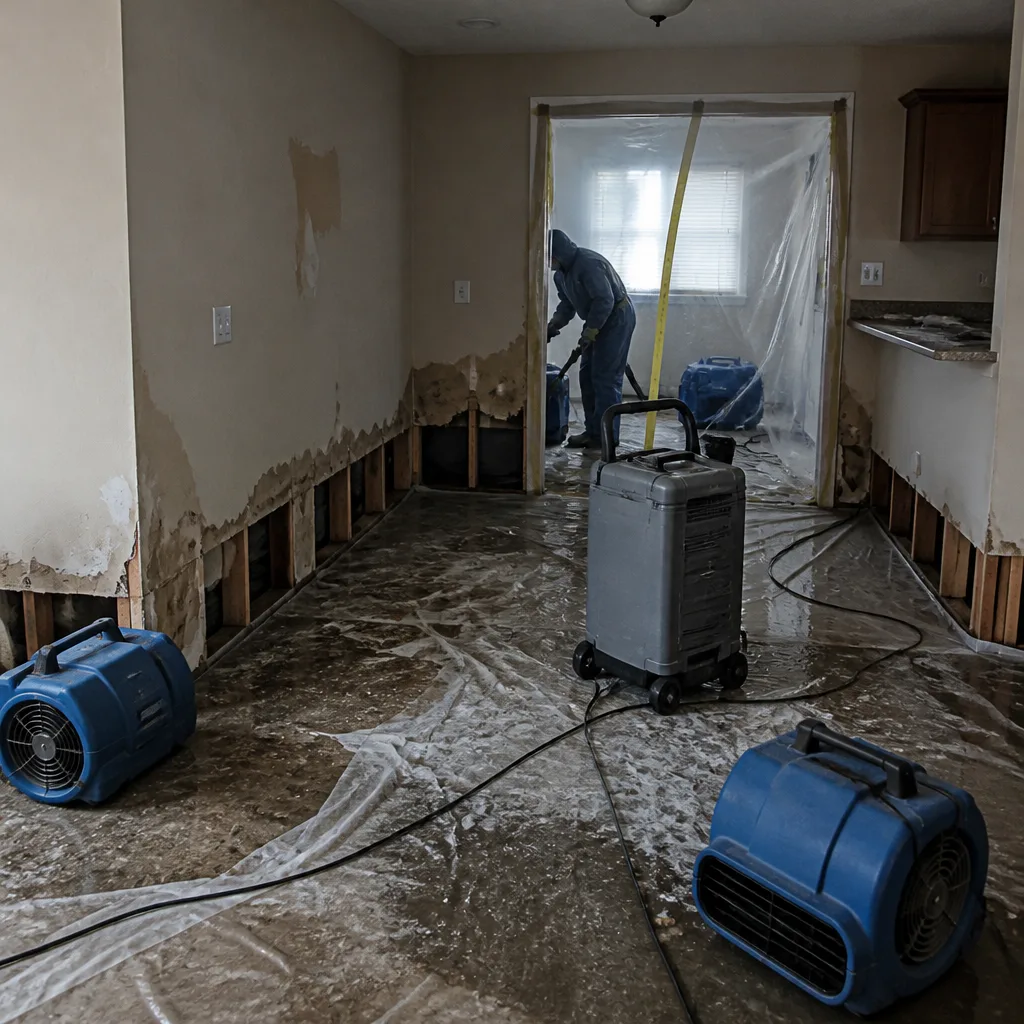 Before
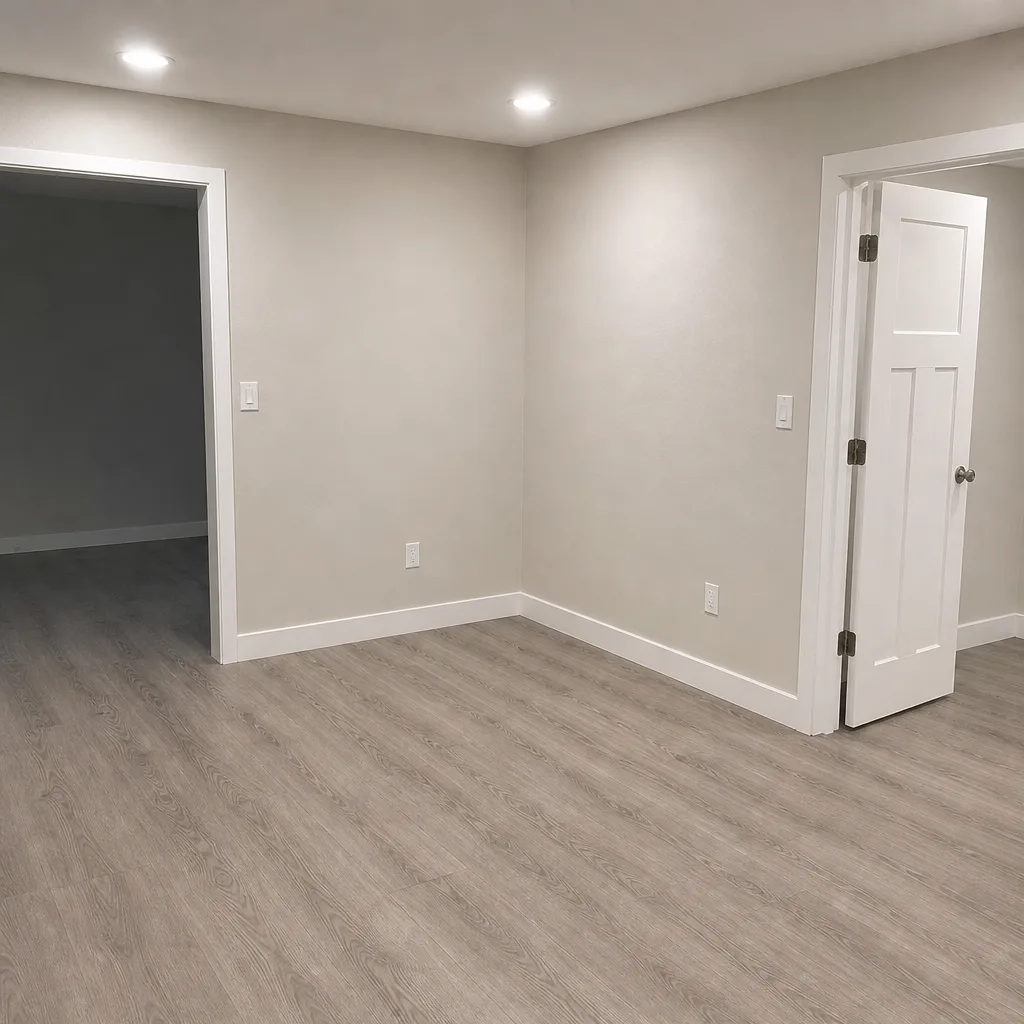 After
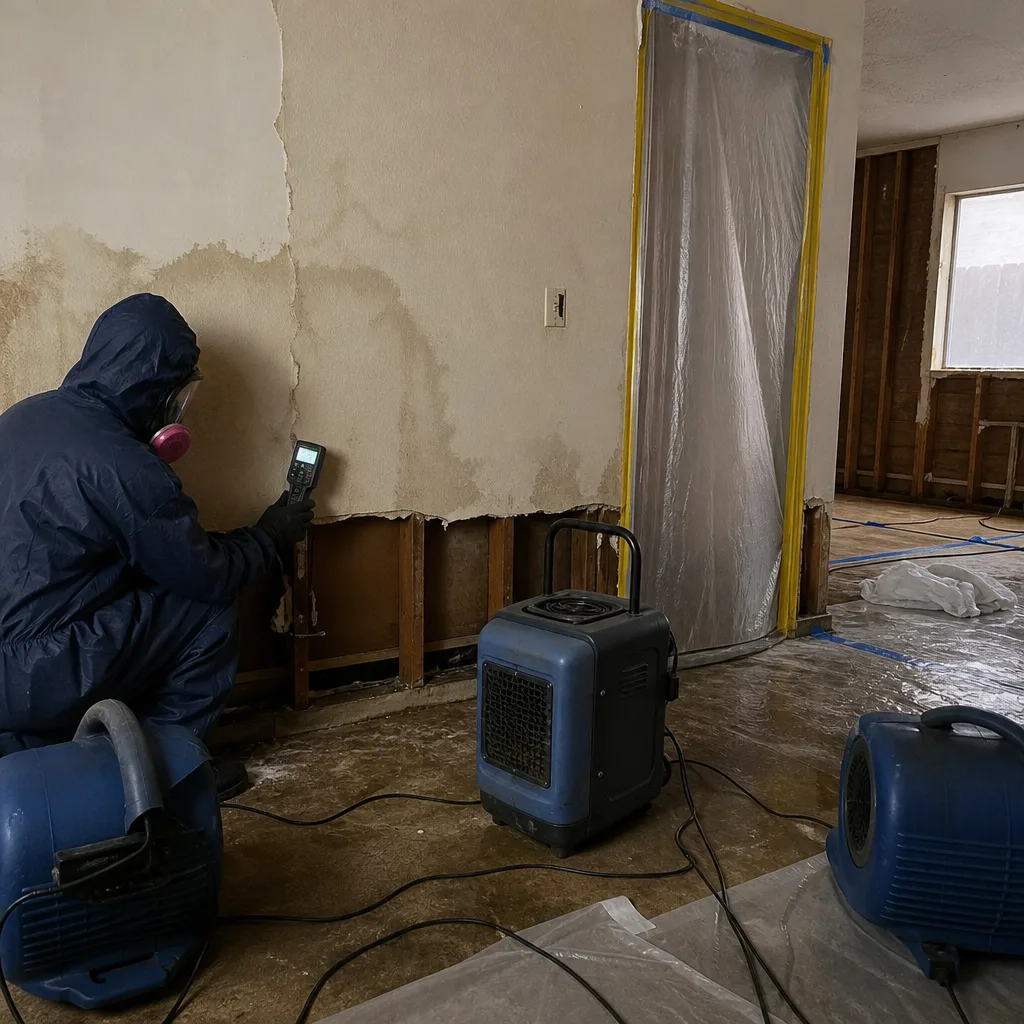 Before
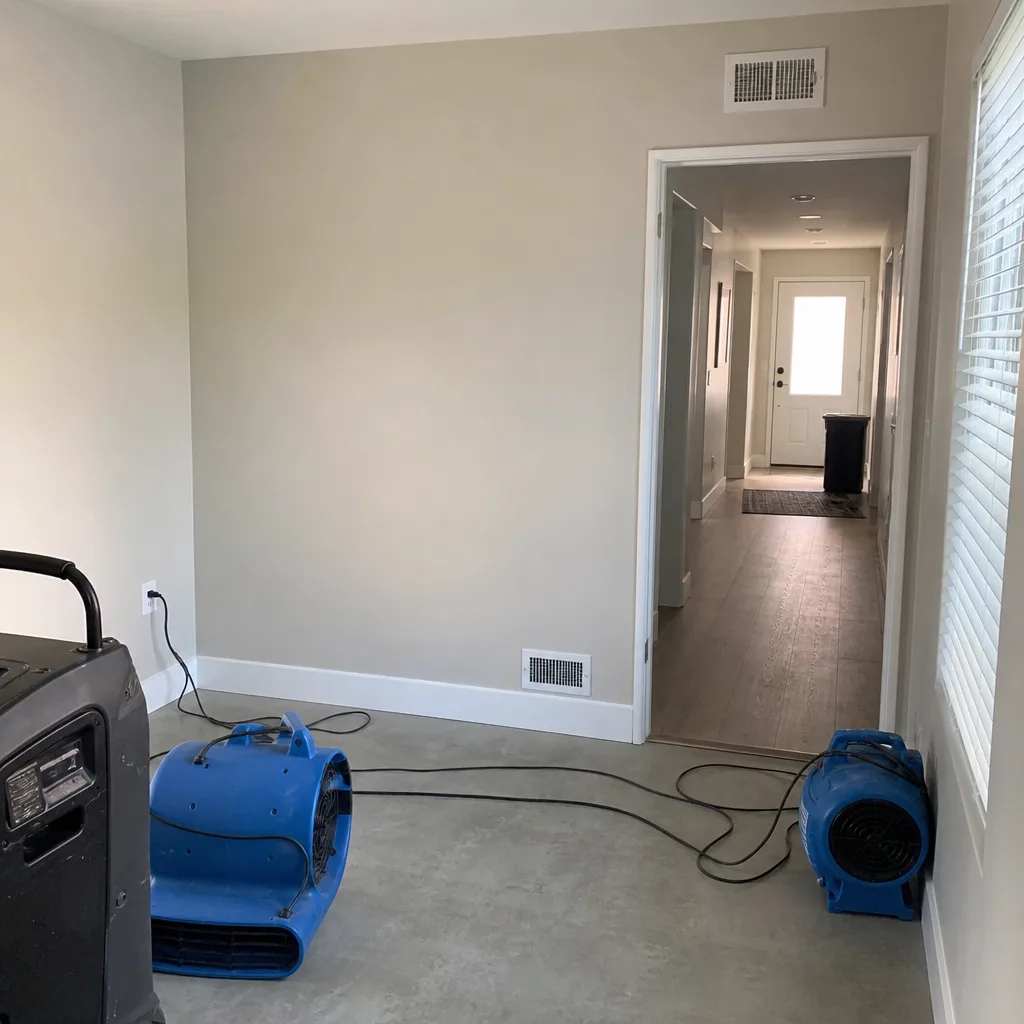 After
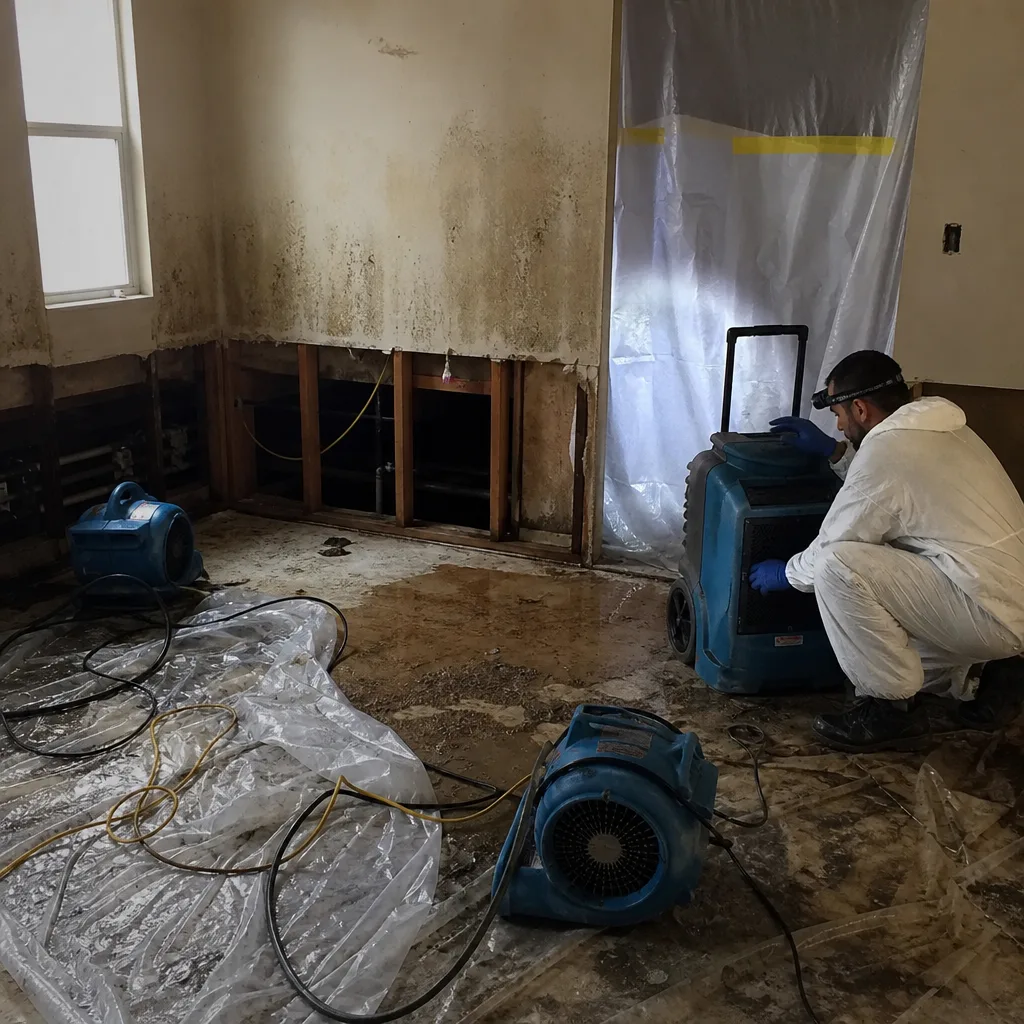 Before
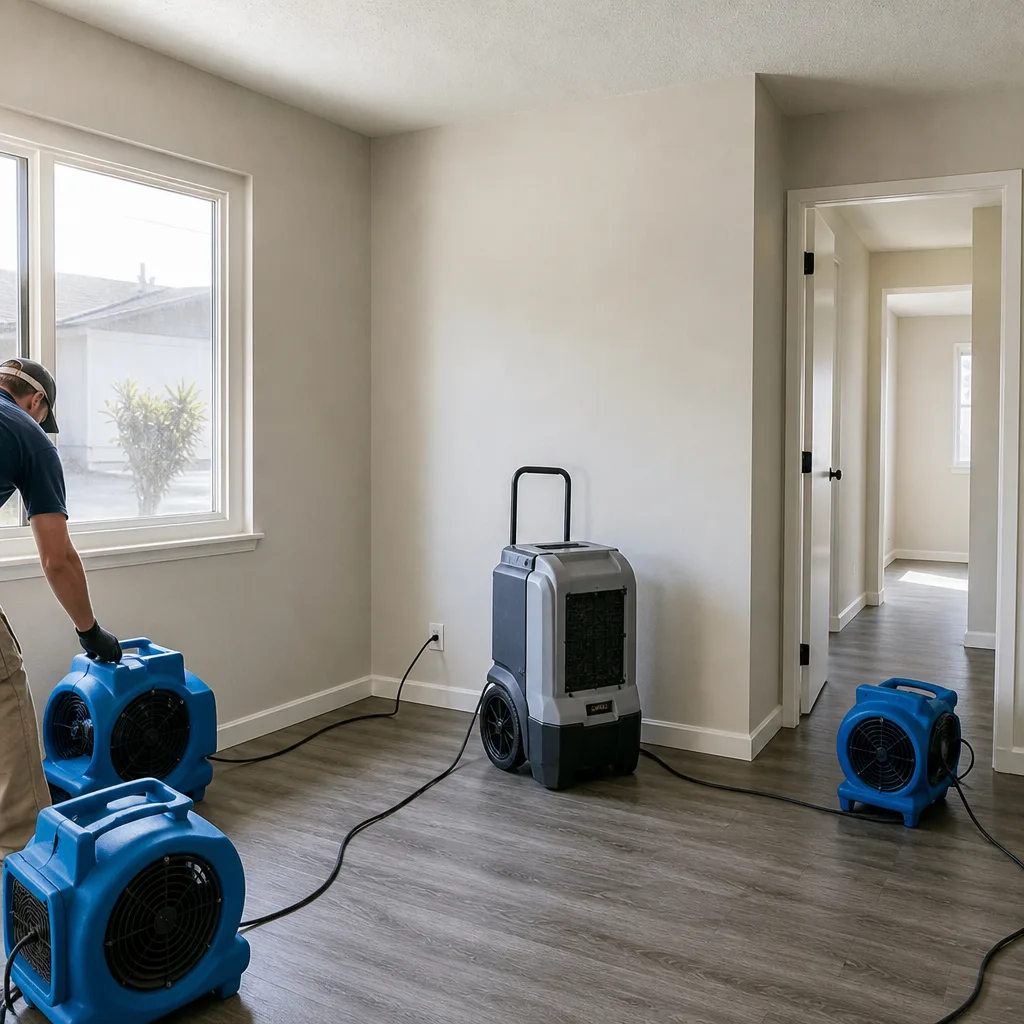 After