Last updated October 31, 2026
 Water damage drying
 Fire & smoke cleanup
 Mold remediation
 Storm response
 Sewage cleanup
 Reconstruction
Free visual inspection and a written scope of work before any mitigation begins - photos, moisture readings, and drying logs go in your claim file
The scope we write is the scope we bill. Anything new gets shown to you, in writing, before we touch it.
Get your free estimateDamage Restoration Permits, Codes & Inspections in CA: What You Need to Know
Here’s a fact most California homeowners only discover during escrow: a water leak itself doesn’t create a permit problem. The structural repair that follows often does. A restoration job that skips the permit because “it’s just drying” can legally become a material defect on your real estate disclosure if drywall was replaced, framing was altered, or electrical was touched. In Fontana and across San Bernardino County, we’ve had sellers call us from escrow to ask why their buyer’s inspector flagged a repair from three years ago. This guide explains California’s permit triggers for damage restoration, how emergency permit rules actually work, how to verify your contractor can legally pull permits, and how to close out a job so it never haunts your property record. For more guides & resources on protecting your Fontana home, explore our blog.
Quick Answer
In California, water damage restoration and mold remediation typically require no building permit when the work is limited to drying, cleaning, and replacing materials like-for-like without structural alteration. A permit is required when repairs involve structural framing, modifying electrical or plumbing systems, relocating walls, or changing the building’s footprint. Emergency repair permits in San Bernardino County allow work to begin before the permit is issued, but the permit application must still be filed and finalized. Verify your restoration contractor’s license on the CSLB website before any work begins.
Restoration work we handle
Table of Contents
- When California Requires a Building Permit for Restoration Work
- Restoration Work That Does Not Require a Permit
- How Emergency Repair Permits Work in San Bernardino County
- The CSLB’s Role: Who Can Legally Pull a Permit
- How Inspections Work After Restoration Repairs
- Why Unpermitted Drywall Replacement Shows Up on Home Inspections
- Verifying a Restoration Job Is Properly Closed Before You Sell
- California Building Codes That Affect Restoration Work
When California Requires a Building Permit for Restoration Work
The California Building Standards Code (Title 24) governs what requires a permit, and the trigger is structural alteration, not the water event that started the problem. A flooded kitchen that only needs drying and paint doesn’t require a permit. The same flooded kitchen that requires removing and replacing wall studs because they rotted does.
Here are the specific restoration scopes in California that typically require a building permit:
- Structural framing repair or replacement: Any time wall studs, floor joists, ceiling joists, or roof rafters are cut out and replaced, a permit is required. This is non-negotiable under the California Residential Code.
- Foundation work: If water or mold damaged a foundation wall, pier, or slab and repair involves excavation, patching, or reinforcement, the work requires a permit and often an engineer’s stamp.
- Electrical system modification: Replacing an outlet that got wet with a like-for-like outlet is repair. Running new wiring, moving a panel, or adding circuits because fire or water damaged the existing system requires an electrical permit.
- Plumbing system changes: Replacing a section of failed pipe with the same material and size is often classified as repair. Re-routing drain lines, changing pipe sizing, or relocating fixtures requires a plumbing permit.
- Wall relocation or removal: If restoration involves opening a load-bearing wall and a header or beam needs replacement, that’s structural. If a non-load-bearing partition wall is removed entirely and that changes the building’s layout, the building department usually wants a permit.
- Window and door opening changes: Replacing a damaged window with a same-size unit doesn’t need a permit. Enlarging an opening to meet egress requirements after a fire does.
The distinction matters because California’s real estate disclosure process asks specifically about work done without required permits. If you sell the property later, unpermitted structural work is a disclosure item. If you don’t disclose it and the buyer discovers it, you have a liability problem. In Fontana, where many homes were built between the 1950s and 1980s, we’ve seen restoration work on older framing trigger additional code requirements because the building department now requires the entire opened section to meet current seismic standards, not just the original construction method. Homeowners should review our Damage Restoration Warning Signs: A Fontana Homeowner’s Reference Guide to catch these issues early.
Restoration Work That Does Not Require a Permit
Most emergency restoration work falls into the no-permit category, and understanding this boundary saves homeowners unnecessary fees and delays. The California Residential Code exempts repairs that replace materials with equivalent materials and don’t alter the structure.
Work that typically does not require a permit in California:
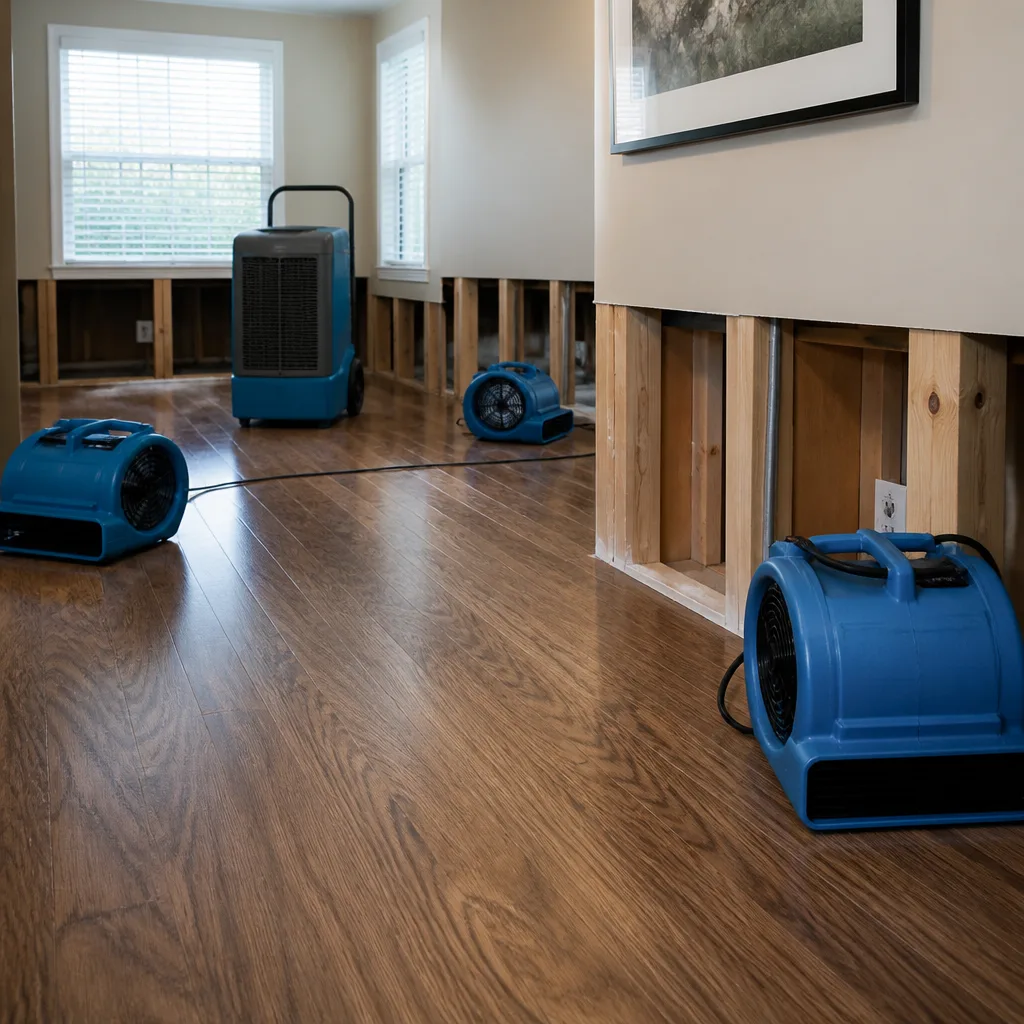
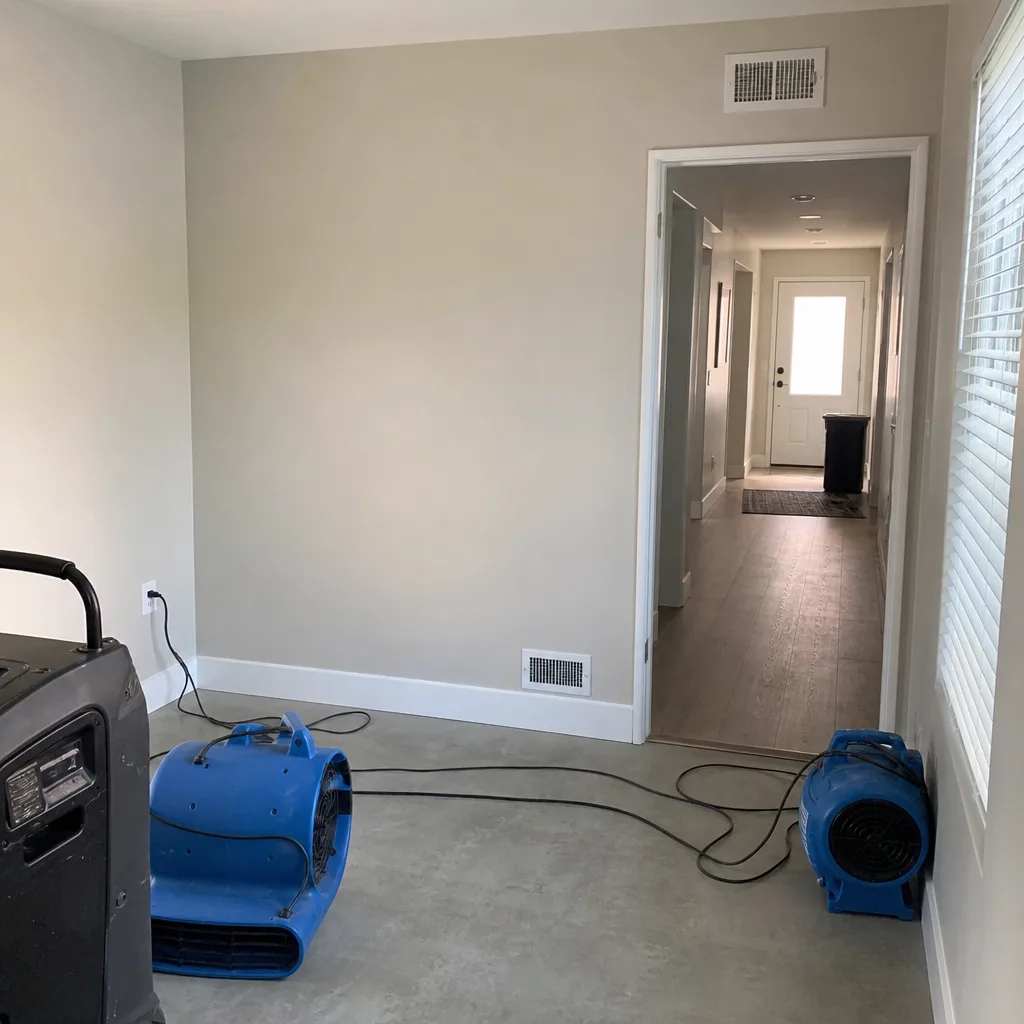
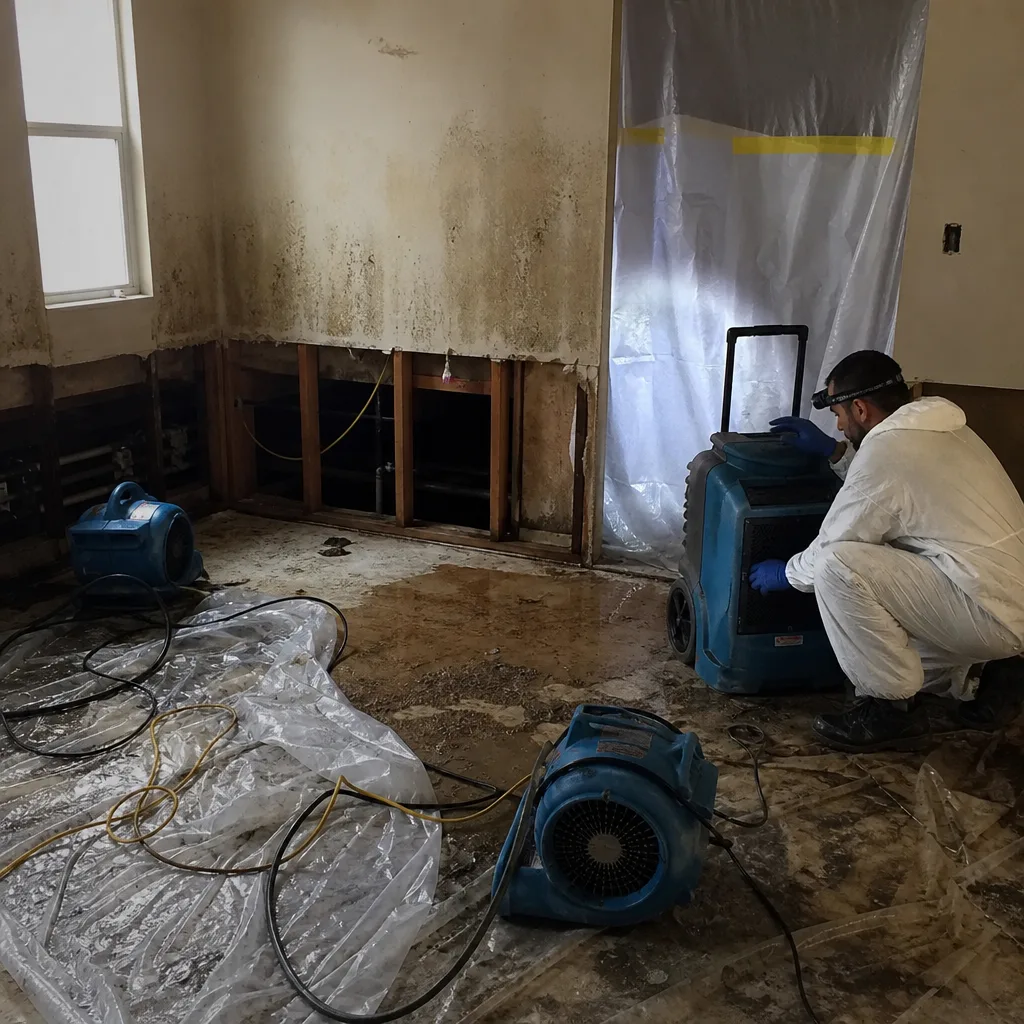
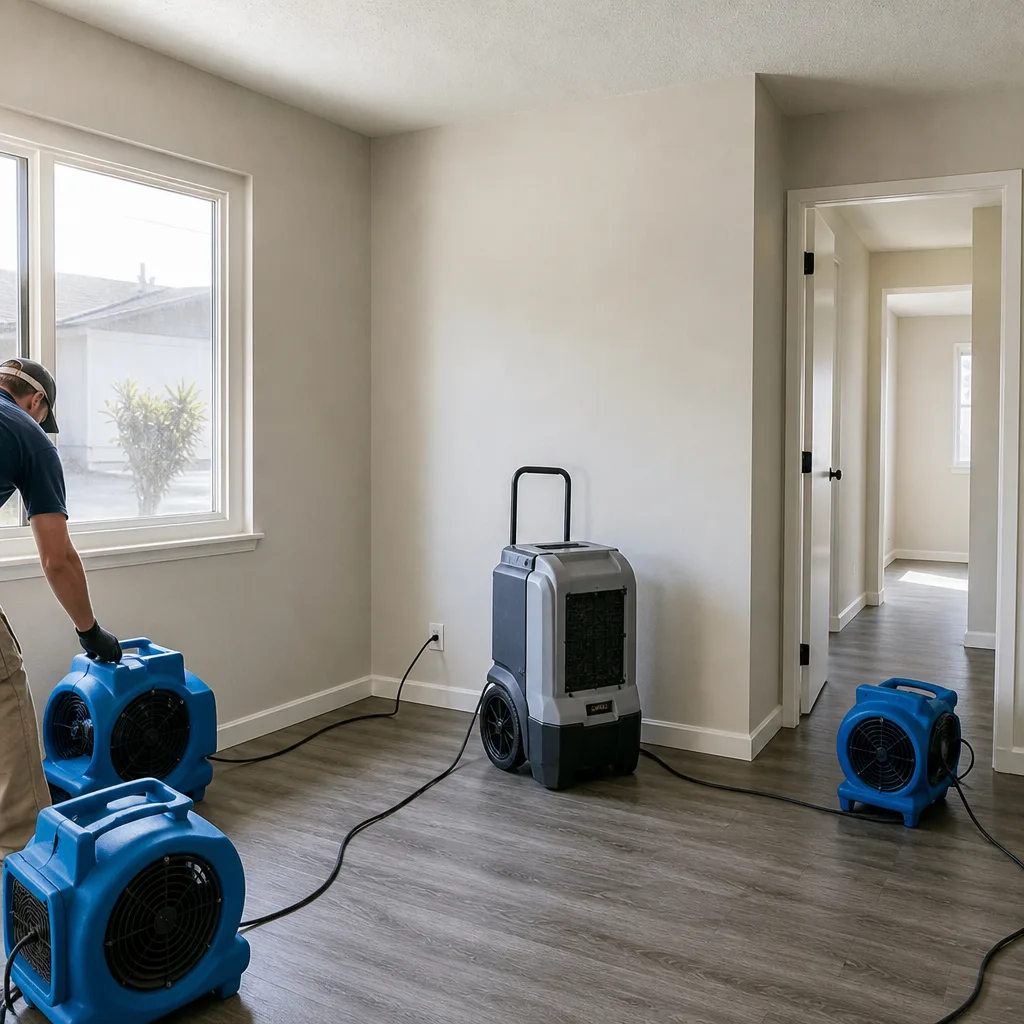
- Water extraction and structural drying: Setting up Dri-Eaz dehumidifiers and Phoenix air movers to dry a structure requires no permit. This is the core of water damage restoration and it’s entirely unregulated from a building code perspective.
- Drywall replacement in kind: Cutting out water-damaged drywall and hanging new drywall of the same thickness does not require a permit as long as no framing behind it is altered. This is the most common restoration scope, and it’s permit-exempt.
- Flooring replacement: Removing damaged carpet, pad, hardwood, or tile and installing equivalent flooring is a repair. No permit needed unless you’re changing the floor structure itself (like replacing a subfloor section that ties into structural framing).
- Mold remediation of surface materials: Containment, HEPA vacuuming, and removal of moldy drywall and insulation without structural alteration falls outside the permit scope. This is an environmental health process, regulated by the California Department of Public Health for assessment standards, not by building departments.
- Painting and finish work: Priming and painting repaired surfaces never requires a permit.
- Cabinet and countertop replacement: Replacing water-damaged kitchen or bathroom cabinets with same-footprint units is repair work.
Our team has handled hundreds of Fontana water damage jobs where the permit question came up, and in the majority of cases, the answer was straightforward: dry the structure, replace like for like, document everything, no permit needed. The complication emerges when drying reveals hidden structural damage that was not visible at the initial assessment. That’s when a permit conversation needs to happen before work proceeds, not after. A competent restoration contractor should flag this the moment it becomes apparent. If yours doesn’t mention it, ask directly: “Does any of this work touch framing, wiring, or plumbing?” For help deciding whether to tackle repairs yourself or call in professionals, see our DIY vs Professional Damage Restoration: The Fontana Homeowner’s Decision Guide.
How Emergency Repair Permits Work in San Bernardino County
San Bernardino County’s building department treats emergency repair permits differently from standard remodel permits in one critical way: you can start work before the permit is issued. The California Building Code includes a provision that allows emergency work to proceed when delay would create additional danger or damage. But “start before the permit” doesn’t mean “skip the permit.”
Here’s the step-by-step process for emergency repair permits in San Bernardino County:
- Document the emergency: Take photos of the damage, note the date and time, and keep a log of what happened. The building department will want evidence that the work was truly urgent.
- Notify the building department: Call San Bernardino County Building and Safety or the City of Fontana’s Building division (if the property is within incorporated Fontana city limits) as soon as possible. Describe the damage and the work that needs to happen immediately.
- Submit the permit application: The application still needs to be filed, typically within a specified window after emergency work begins. San Bernardino County generally expects the application within days, not weeks.
- Complete the immediate stabilization work: This includes water extraction, structural shoring, temporary weatherproofing, and anything needed to prevent further damage or hazards.
- Schedule the required inspection: Even for emergency work, the building department will likely require a field inspection to verify the repair matches the permit and meets code.
- Close out the permit: Once the inspection passes and fees are paid, the permit is finalized. This closed permit is what protects you at resale.
A common misconception is that emergency work is “permit exempt.” It’s not. What’s different is the sequencing. The emergency provision allows you to stabilize the property immediately, but the paper trail needs to catch up. In Fontana specifically, we’ve worked with both the city and county permitting offices depending on the property’s location, and the message has been consistent: they’ll work with you on timing for a true emergency, but they won’t waive the inspection requirement for structural work.
The CSLB’s Role: Who Can Legally Pull a Permit
The California Contractors State License Board (CSLB) governs who can legally perform construction and restoration work in California, and this matters for permits in two ways. First, the contractor pulling the permit must hold the correct license classification for the work. Second, the license must be active and in good standing at the time the work is performed.
Here’s what to check before any restoration contractor pulls a permit on your property:
- Verify the license number exists: Go to the CSLB’s license lookup at cslb.ca.gov. Enter the contractor’s license number. If they won’t give you the number, that’s a red flag.
- Check the classification: Water damage restoration generally falls under the General Building Contractor (Class B) license, which authorizes work involving two or more unrelated trades. Many restoration companies also hold specialty classifications. The license classification must match the permit scope.
- Confirm the status is “Active”: Suspended, revoked, or expired licenses cannot pull permits. The CSLB lookup shows the current status and any disciplinary actions.
- Look at the bond and insurance history: The CSLB requires a contractor’s bond. If the bond has lapsed, the license is typically suspended. Worker’s compensation insurance must also be in place if the contractor has employees.
- Check for RME or RMO designation: Some restoration companies operate through a Responsible Managing Employee or Responsible Managing Officer because the owner doesn’t hold the license personally. This is legal, but you should understand who the licensed individual is and whether they’re actually supervising your project.
The CSLB does not issue permits. Building departments issue permits. But the CSLB determines whether a contractor is legally authorized to perform the work that a permit covers. If an unlicensed worker or a contractor with the wrong classification does structural repair on your Fontana home, the building department may reject the permit application entirely, which means the work is unpermitted by default. We’re an IICRC-certified restoration operation, but our team also works alongside licensed general contractors on structural scopes specifically because the CSLB’s rules are unambiguous about who can legally pull those permits. The IICRC certification proves restoration competence; the CSLB license proves legal authorization. They’re different things, and both matter.
How Inspections Work After Restoration Repairs
Once a restoration permit is issued and the repair work is underway, the building department schedules inspections at specific milestones. Understanding the inspection sequence helps you know what the inspector will be looking for and why some restoration timelines include wait periods.
The typical inspection sequence for restoration permits in Fontana and San Bernardino County:
- Rough framing inspection: After structural members are replaced but before insulation and drywall go up, the inspector verifies that the framing meets code. This includes stud spacing, header size, fire blocking, and connection hardware. For seismic reinforcement in Fontana, inspectors also check shear wall nailing patterns and anchor bolt placement.
- Electrical rough inspection: If wiring was replaced, the inspector verifies wire gauge, junction box placement, GFCI protection, and grounding before anything is covered.
- Plumbing rough inspection: If plumbing was altered, the inspector checks pipe material, slope, venting, and connection integrity before walls are closed.
- Insulation inspection: In some jurisdictions, the building department verifies insulation R-value and placement before drywall goes on.
- Final inspection: After all work is complete, including drywall, paint, and finish, the inspector does a final walkthrough to verify the permit scope is fully covered and compliant.
Each inspection has a fee, and the total permit cost depends on the scope of work. For a typical water damage restoration that includes structural repair, the permit cost in San Bernardino County often runs between $300 and $1,500 depending on the extent of framing, electrical, or plumbing work. That’s the cost of doing it right. The cost of skipping it is far higher at resale.
A note on documentation: our IICRC-certified process includes moisture documentation at every stage, but that’s a restoration record, not a building department inspection record. Both matter. The building department inspection closes the permit. The restoration documentation proves the drying process met industry standards like the IICRC S500 water damage standard. If you have both, you have a complete file for any future buyer or insurance adjuster.
Why Unpermitted Drywall Replacement Shows Up on Home Inspections
Here’s the scenario we see repeatedly in Fontana: a homeowner has a water leak under a sink in 2019. A restoration company or handyman cuts out the damaged drywall, replaces it, paints it, and moves on. No permit. Four years later, the home goes on the market. The buyer’s home inspector notices something subtle: the drywall texture is slightly different in one section, the paint sheen doesn’t quite match, or the baseboard reveals a seam that shouldn’t be there. The inspector notes it. The buyer asks for a disclosure. The seller doesn’t have one. Now a $900 repair from 2019 has become a negotiation point worth thousands.
Why does this happen? Because home inspectors are trained to look for signs of past water damage and repair. They don’t need to see a permit to spot evidence. Common indicators include:
- Mismatched drywall texture in an isolated area
- Visible seams or tape lines that indicate section replacement
- Slightly different paint color or sheen on one wall
- Baseboard or crown molding that doesn’t align perfectly
- Moisture meter readings that show elevated levels behind a repair area
- Newer material in an older home that’s otherwise consistent
The inspector’s job is to flag potential issues, not to determine permit status. But once flagged, the buyer’s agent typically pulls the permit history for the address. If no permit exists for the repair and the repair involved structural work, the sale can stall.
The remedy is straightforward: if you discover unpermitted work from a past restoration, you can apply for a retrofit permit, schedule an inspection, and bring the work into compliance. The building department may require opening a section of wall to verify the work behind it. That’s invasive, but it resolves the disclosure issue. We’ve helped Fontana sellers through this process, and in most cases, the work itself was sound. The documentation was simply missing. If the inspector opens the wall and verifies that the framing is solid and the drying was complete, the permit gets issued and the sale moves forward. The fear is usually worse than the remediation.
Verifying a Restoration Job Is Properly Closed Before You Sell
If you’re preparing to sell a Fontana home that had water, mold, or fire damage at any point during your ownership, proactive verification is far cheaper than reactive disclosure. Here’s the step-by-step process we recommend:
- Pull the permit history for your address: For Fontana city properties, contact the City of Fontana Building and Safety Division. For unincorporated areas, contact San Bernardino County Building and Safety. Request a copy of all permits associated with your parcel number.
- Check each permit’s status: A permit that was issued but never finalized (no final inspection recorded) is an open permit. Open permits are disclosure items and can complicate a sale.
- Cross-reference restoration dates: If you had a water loss in 2021 and there’s no permit from 2021, determine whether the work was permit-exempt. This is where your restoration contractor’s documentation matters. A detailed drying log and repair scope can demonstrate that no structural work was performed.
- CSLB verification of the contractor: Look up the restoration contractor who performed the work. If their license is now suspended or revoked, that doesn’t retroactively invalidate the work, but it may prompt the buyer’s agent to question whether the work was done by a qualified party at the time.
- Request a current inspection: If there’s any doubt about the condition of previously restored areas, have a licensed inspector or a restoration professional evaluate the area now. Moisture meters, thermal imaging, and visual inspection can confirm the repair has held.
- Compile a disclosure package: Gather permits, inspection reports, restoration documentation, moisture readings, and contractor license information into one file. Include this in your seller disclosures. A well-documented repair history is a selling point, not a liability.
In Fontana’s current real estate market, buyers have time to dig. Gone are the days of waived inspections and rushed closings. Today’s buyers ask more questions, request more documentation, and their agents know what to look for. A seller who can produce a clean permit file and restoration documentation has a tangible advantage over one who can’t.
California Building Codes That Affect Restoration Work
Restoration work in California must comply with the California Residential Code (CRC) and the California Existing Building Code (CEBC), both part of Title 24. The CEBC is particularly relevant because it addresses work on existing structures, including repairs and alterations. Unlike new construction, which must meet all current code requirements, restoration work is evaluated based on the scope of the repair and whether the work is classified as a repair, alteration, or reconstruction.
Key code provisions that restoration contractors need to know:
- CEBC Section 501-506 (Repairs): Repairs can be made with like materials without triggering full code compliance for the entire structure. However, if the damaged area exceeds a certain threshold, the building department may require the repaired section to meet current seismic standards.
- California Green Building Standards (CALGreen): Any permitted work must comply with CALGreen requirements, which include moisture control provisions, low-VOC materials, and construction waste diversion. This is why restoration contractors in California should be using materials that meet CALGreen standards on permitted work.
- Moisture and mold provisions: The California Building Code includes specific requirements for moisture control, including vapor barriers, ventilation, and drainage. If restoration work opens a wall cavity and the building department inspects it, they’ll verify that the moisture source is corrected and the cavity is properly dried before closure.
- Fire-resistance requirements: Fire damage restoration that involves replacing drywall or structural members in fire-rated assemblies must restore the fire rating. This includes using Type X drywall where required and proper fire caulking. In Fontana, many multi-family and attached single-family homes have fire-rated walls between units, and restoration work must maintain that rating.
We’ve also seen building departments in San Bernardino County require seismic anchoring upgrades when restoration work exposes foundation connections. If a water loss required removing a section of exterior wall sheathing, and the inspector sees that the original sill bolts don’t meet current seismic requirements, they can require an upgrade as a condition of the permit. That adds cost, but it’s non-negotiable once the inspector makes the determination. A restoration contractor with deep experience in Fontana knows to anticipate this and flag it before work begins, not after the inspector calls it out.
Common Mistakes to Avoid
- Assuming all restoration work is permit-exempt because it’s “just repairs.” The California Building Code draws a line between repair (like-for-like) and alteration (structural change). Restoration that crosses into alteration requires a permit regardless of how urgent the initial response was.
- Starting emergency stabilization without notifying the building department. The emergency permit provision allows immediate work, but only if the building department is notified. If you skip the notification and try to file retroactively months later, the building department may treat it as unpermitted work, not emergency work.
- Using a restoration contractor who isn’t licensed for the structural scope. IICRC certification is valuable, but it doesn’t authorize a contractor to pull a structural permit in California. That’s a CSLB function. Verify both.
- Leaving the permit open after the work is done. An open permit is as bad as no permit at resale. Schedule the final inspection, pay the fees, and get the permit closed. In Fontana, open permits from years past are a common escrow discovery.
- Letting the restoration contractor handle the permit without confirming closure. Contractors sometimes walk away before the final inspection happens. The homeowner is the one who carries the disclosure obligation at sale. Confirm the permit was finalized yourself.
- Replacing damaged materials without documenting the moisture condition behind them. If you close a wall without documenting that the cavity was dry, you’ve created a future mold question with no answer. Our Injectidry structural-drying systems are designed specifically to dry wall cavities and floor assemblies without opening every surface, but if the wall is open, a documented moisture reading before closure is non-negotiable.
See the difference
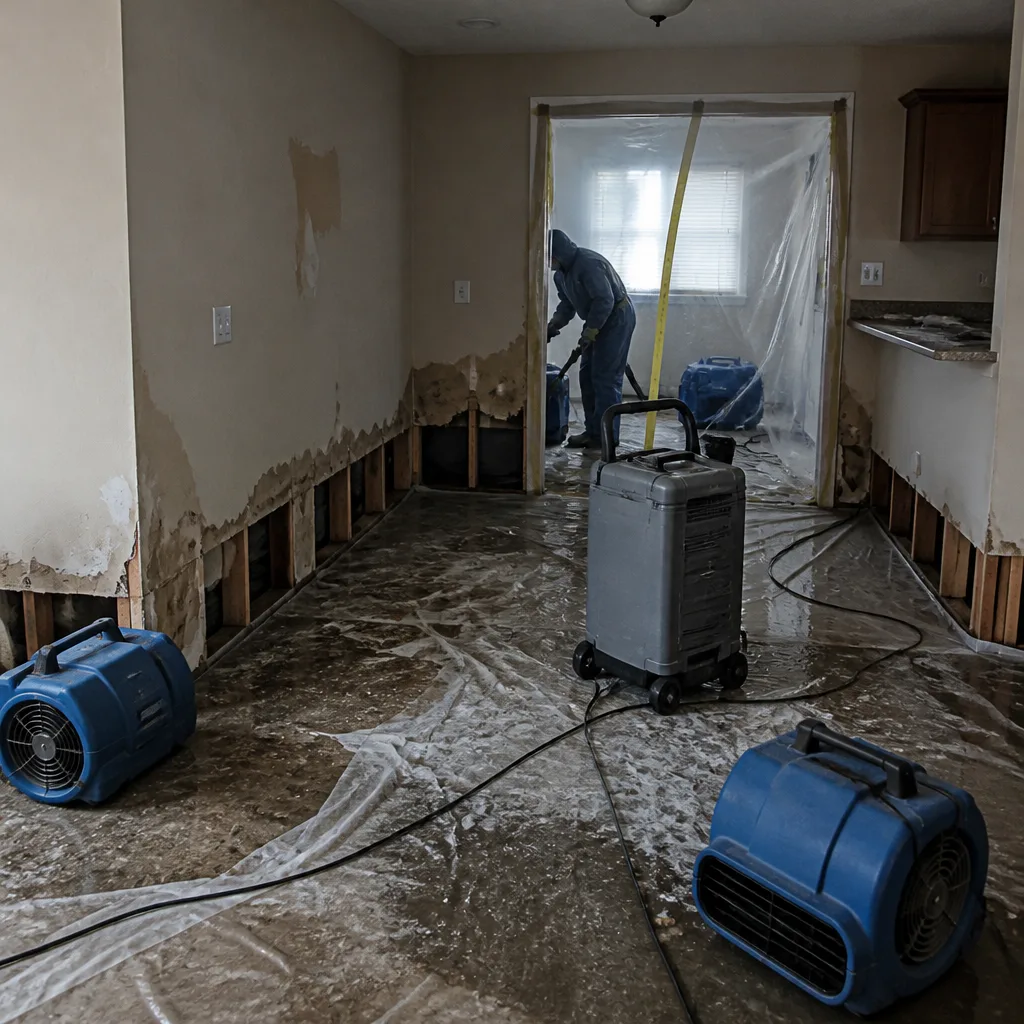 Before
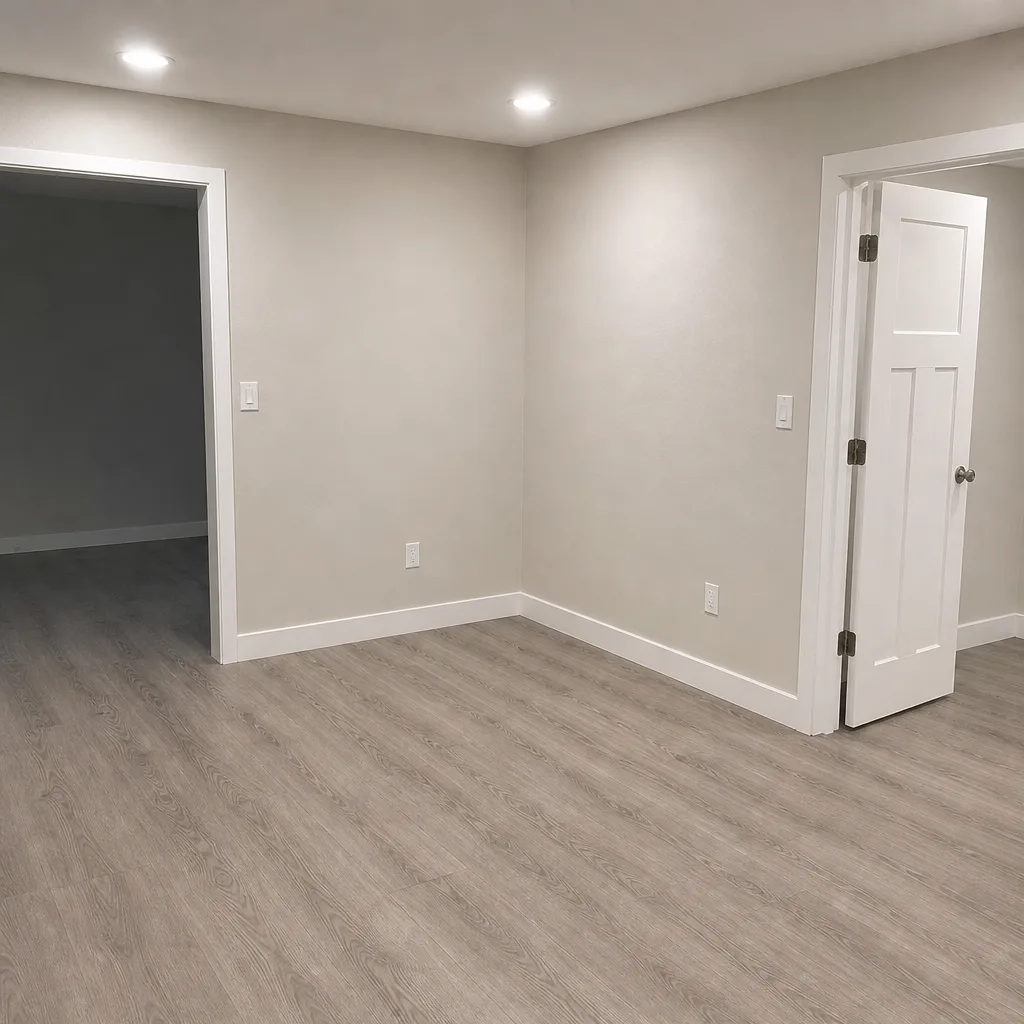 After
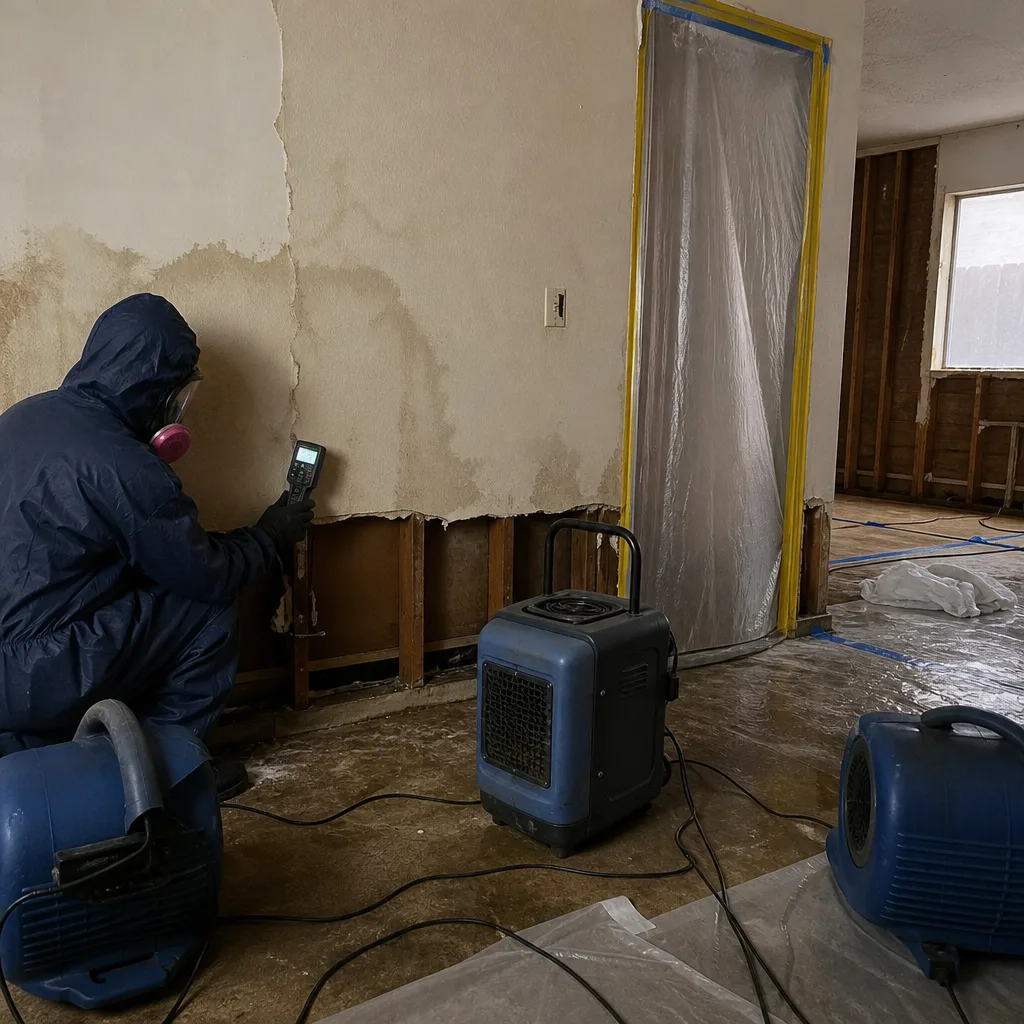 Before
 After
 Before
 After
When to Call a Professional
If your Fontana home has experienced water, mold, or fire damage and you’re uncertain whether the restoration scope requires a permit, call before the work gets deeper. The earlier a restoration professional evaluates the damage, the clearer your options are. Structural work that could have been classified as repair at the outset often becomes a larger permitted scope once framing deteriorates further. If you’ve inherited an unpermitted repair from a previous owner and you’re preparing to sell, a professional can assess what remediation looks like and what documentation you need. If your insurance claim involves structural repair, the adjuster will likely want a CSLB-licensed contractor involved for the permit scope. Dry Line Water Damage offers free estimates in Fontana. Call (833) 589-5317 to have the damage assessed and the permit question answered before it becomes a disclosure problem.
Frequently Asked Questions
No permit is required for water extraction, structural drying, and like-for-like material replacement that doesn’t alter framing, electrical, or plumbing. A permit is required when restoration work involves structural changes, system modification, or wall relocation. When in doubt, ask your restoration contractor to state in writing whether any of the scope crosses the permit threshold.
Emergency repairs can begin before a permit is issued under California’s emergency work provisions, but the building department must be notified promptly and the permit application must still be filed. The permit process is deferred, not waived. San Bernardino County and the City of Fontana both follow this protocol.
Look up the contractor’s license number on the CSLB website at cslb.ca.gov. Verify the classification covers the work scope (usually a General Building Contractor Class B for multi-trade restoration) and confirm the status is active. If the contractor cannot produce a license number, do not hire them for structural work.
Mold remediation that involves containment, cleaning, and removal of surface materials does not require a building permit. If remediation exposes structural damage that requires framing repair, that repair scope requires a permit. The mold removal itself is not the permit trigger; the structural repair is.
Unpermitted work typically does not appear in the building department’s records, which is exactly the problem. Buyers’ home inspectors often spot evidence of past repairs, and when the permit history shows no corresponding permit, it becomes a disclosure issue. The absence of a record is what creates the liability.
Permit fees for restoration work in San Bernardino County vary by scope, but a typical water damage structural repair permit runs between $300 and $1,500 depending on the extent of framing, electrical, and plumbing work involved. That’s a fraction of the cost of resolving an unpermitted work disclosure during escrow. For an exact assessment of your situation, call (833) 589-5317.
The Bottom Line
California’s permit requirements for damage restoration are clear once you understand the trigger: it’s not the water, mold, or fire that requires a permit. It’s the structural repair. Knowing where your restoration work falls on that line determines whether you’re building a clean disclosure file or a future legal obligation. Emergency work can start before the permit is issued, but the paper trail must catch up. Verify your contractor’s CSLB license, close out every permit, and document the drying process so the work stands up to scrutiny. In Fontana, where real estate transactions are increasingly documentation-driven, a complete permit and restoration file is worth more than any cosmetic upgrade. If you have a restoration project or a disclosure question, call Dry Line Water Damage at (833) 589-5317 for a free assessment. We’ve helped hundreds of Fontana homeowners navigate this exact process, and we can tell you precisely where your project stands.
Written by the team at Dry Line Water Damage, serving Fontana since 2013. Learn more about our Water Damage Restoration in Fontana, Mold Remediation in Fontana, and Fire Damage Restoration in Fontana services.