Last updated October 31, 2026
 Water damage drying
 Fire & smoke cleanup
 Mold remediation
 Storm response
 Sewage cleanup
 Reconstruction
Free visual inspection and a written scope of work before any mitigation begins - photos, moisture readings, and drying logs go in your claim file
The scope we write is the scope we bill. Anything new gets shown to you, in writing, before we touch it.
Get your free estimateHow to Hire a Damage Restoration Contractor in Fontana: A Step-by-Step Guide
In California, anyone with a general contractor’s license can legally call themselves a water damage restoration company. There is no state license category specifically for restoration work. That means the burden of verifying that a contractor actually knows how to dry a structure, not just patch drywall, falls entirely on you. This guide walks through the credential checks, contract protections, and equipment questions that separate restoration specialists from general contractors moonlighting in an emergency. For common problems and how to fix them, see our troubleshooting resource. In Fontana, where summer heat accelerates mold growth and older housing stock hides water lines behind decades of remodels, getting this wrong costs more than money.
Quick Answer
Hire a restoration contractor in Fontana by verifying current IICRC certifications (WRT for water, ASD for structural drying, AMRT for mold), confirming they run commercial-grade drying equipment, and demanding a written scope of work with documented drying goals before any invoice is issued. The right contractor dries to a measurable standard and hands you a moisture log at the end. The wrong one dries until it looks fine and hopes you don’t ask questions.
Restoration work we handle
Table of Contents
- The Credential Gap: Why a Contractor’s License Isn’t Enough
- Questions to Ask Before You Sign Anything
- How to Spot an Equipment-Serious Contractor
- Three Contract Clauses That Protect You from Scope Creep
- What a Legitimate Moisture Log Looks Like
- Why the Lowest Emergency Quote Usually Isn’t
- Working With Your Insurance Adjuster: What to Document
- Fontana-Specific Factors That Change the Calculus
The Credential Gap: Why a Contractor’s License Isn’t Enough
California’s Contractor State License Board issues classifications for roofing, plumbing, electrical, and dozens of other trades. It does not issue a specific license for water damage restoration, mold remediation, or fire damage cleanup. Anyone holding a general B, C-61, or C-36 license can legally perform this work. The state license verifies that a business is legal, not that it is competent at structural drying.
That’s why the restoration industry built its own credentialing system. The Institute of Inspection, Cleaning and Restoration Certification (IICRC) runs the most rigorous third-party training and certification programs in the trade. Specifically, you want to verify three certifications for water damage work:
- WRT (Water Damage Restoration Technician): The baseline credential. Covers the science of drying, extraction, and contamination categories.
- ASD (Applied Structural Drying): Goes beyond WRT. Focuses on drying wall cavities, subfloors, and structural components without unnecessary demolition.
- AMRT (Applied Microbial Remediation Technician): Required for mold remediation. Covers containment, air scrubbers, and proper removal protocols.
Many contractors earn a WRT once, let it lapse, and continue listing it on their website. Ask for the certification number and verify it on the IICRC website. A current certification means the tech has completed continuing education credits. A lapsed one means they passed a test years ago and never updated their training. We’ve watched homeowners in Fontana hire crews with decade-old credentials that were no longer listed in the IICRC registry. It’s the easiest check to make and the most commonly skipped.
Beyond IICRC, ask about memberships in the Restoration Industry Association (RIA). RIA members agree to a published code of ethics and ongoing professional development standards. It’s not a substitute for IICRC certification, but it signals that the company participates in the broader restoration community rather than operating in isolation. When you call Dry Line Water Damage home to our team, these are the questions we answer without hesitation.
Questions to Ask Before You Sign Anything
You’re likely calling a restoration contractor during one of the worst days of your homeownership. The water is spreading, the adjuster hasn’t called back, and someone on the phone wants your signature. That’s exactly when you need a short checklist of disqualifying questions. A contractor who can’t answer these crisp, clear questions is one you shouldn’t hire, regardless of their price.
- “Are your WRT and ASD technicians currently certified with the IICRC, and can I verify that online right now?” Any pause, deflection, or “we’re trained” answer without actual certification numbers is a disqualifier. Current means you can look it up and see it.
- “What drying equipment are you bringing, and how many pieces per affected room?” A real answer is specific: one dehumidifier at X pints per day, two air movers per affected wall, an Injectidry panel for this cavity. A vague answer means equipment-light or planning to rent from a big-box store after you sign.
- “What’s your documented drying standard?” The correct answer is a target moisture content reading against a dry unaffected area in the same building. The wrong answer is “we’ll dry it until it feels dry.”
- “Will you provide a written scope of work before starting, and will the final invoice match that scope unless I sign a change order?” Any hesitation here is a warning. Restoration companies that bill on time and materials without a locked scope are the source of most insurance claim disputes.
- “Who handles the moisture monitoring, and how often?” Legitimate drying requires daily readings on a log, not a one-time check at the end. If the answer isn’t daily monitoring with recorded moisture meter readings, walk away.
- “Are you doing the work with your own crew, or subcontracting portions of it?” Subcontracting is common and not inherently bad, but it means responsibility gets fragmented. You want to know who is actually walking through your door and whose insurance covers what.
In Fontana, the stress of a water heater failure on a Saturday morning can make you feel like you must hire whoever answers first. But these six questions take two minutes on the phone, and they eliminate the operators who cause the horror stories everyone hears about. For a deeper look at what comprehensive water work involves, read our detailed breakdown of Water Damage Restoration in Fontana.
How to Spot an Equipment-Serious Contractor
There’s a simple, observable difference between a restoration contractor who owns serious drying equipment and one who rents whatever Home Depot has in stock. Ask for the equipment manifest before they start. An equipment-serious contractor can tell you exactly what’s being deployed, because the equipment is in their warehouse, not on a rental counter.
Here’s what professional-grade drying gear looks like in practice:
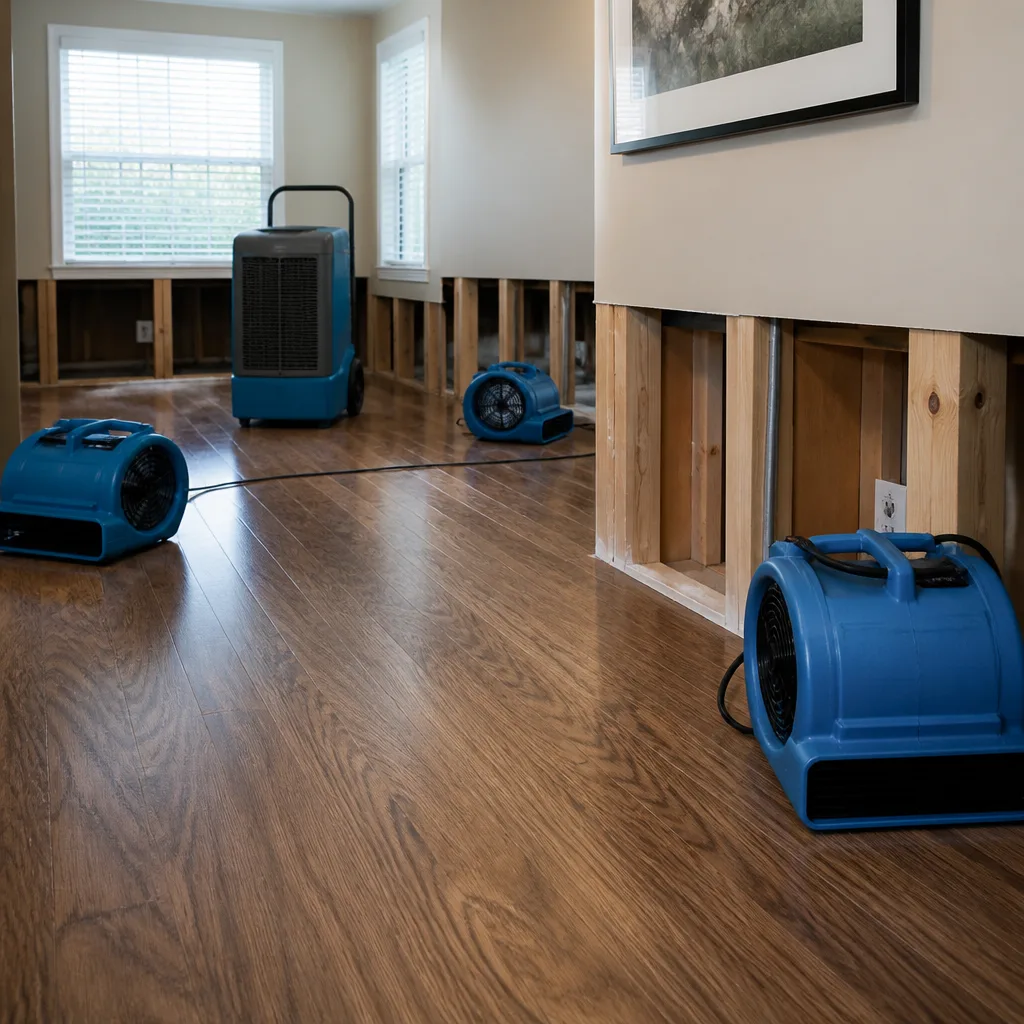
- Commercial dehumidifiers: Look for Dri-Eaz or Phoenix units. These are low-grain refrigerant (LGR) dehumidifiers that pull significantly more water from the air than consumer units. They’re designed for 24/7 operation in flooded structures.
- High-volume air movers: Professional air movers from XPOWER or B-Air move air across wet surfaces at rates that small rental fans simply can’t match. The difference is measured in cubic feet per minute, not how loud it is.
- Injectidry or similar cavity-drying systems: This is the biggest tell. Injectidry panels push dry air into enclosed wall and floor cavities through small injection ports, drying the interior of the structure without cutting out drywall. If a contractor has never heard of Injectidry, they’re likely defaulting to demolition as their drying method.
- Specialty extraction tools: Weighted extraction heads, subfloor flood extractors, and accessory tools that pull water from carpet pads and hardwood seams. Not just a shop vac.
An equipment-light crew relies on towel-drying, rental fans, and time. That approach leaves hidden moisture in wall cavities and subfloors. In Fontana’s dry climate, the surface may feel bone-dry in 48 hours while the interior of a wall cavity still holds enough moisture for mold to bloom three weeks later. The equipment manifest is not a formality. It’s the difference between drying to documented standards and hoping for the best. Our crews run Dri-Eaz and Phoenix dehumidifiers alongside Injectidry systems specifically because structural drying without unnecessary demolition saves homeowners money and preserves the building materials they’d otherwise have to replace.
Three Contract Clauses That Protect You from Scope Creep
Restoration billing disputes are rarely about the initial emergency work. They’re about what happens afterward, when the invoice arrives and the line items have multiplied. Three contract clauses, if you insist on them before signing, protect you from the most common billing traps.
Clause 1: The written change order requirement. Your contract should state that any work beyond the initial written scope requires a written change order signed by you before that work begins. No verbal agreements, no “we had to open the wall further so we just did it.” This single sentence prevents the contractor from expanding the job and billing you for it after the fact. It also forces the contractor to document why the expansion was necessary, which helps your insurance claim.
Clause 2: The drying goal standard. The contract should define the completion standard for drying, not just the activities performed. For example: “Drying is complete when moisture content readings in affected materials are within 2-3% of the dry standard established from an unaffected area in the same building.” A contract that only lists “provide drying services for up to 5 days” gives no measurable endpoint. A goal-standard clause means the contractor has to hit a number, not just run the equipment for a while.
Clause 3: The photo and documentation deliverable. Demand that the contract includes daily photographs of the affected areas, moisture meter readings on a log, and a final drying report delivered within 48 hours of job completion. This protects you two ways. It forces the contractor to actually document the work as they go, and it gives your insurance adjuster exactly what they need to process your claim without delays. Contractors who resist documentation clauses are usually worried about what the documentation will show.
What a Legitimate Moisture Log Looks Like
A drying report isn’t a single page that says “dry.” It’s a daily record that tracks specific readings from specific locations over the course of the job. Here’s what to request as a contract deliverable before signing:
- Baseline readings taken before drying starts: Each affected room should have moisture content readings recorded from the floor, walls, and any affected cavities. These establish the starting point.
- A dry standard reference: At least one unaffected area in the same building should be tested to establish what “dry” means for that specific material in that specific building. Drywall in Fontana, where ambient humidity runs low most of the year, will have a different baseline than drywall in a coastal city.
- Daily monitoring entries: The same locations should be re-tested daily, with readings logged against the dry standard. A daily log shows the drying curve trending downward. A log with three readings over two weeks suggests the contractor wasn’t actually there.
- Equipment placement records: The log should note which dehumidifier and air mover units are positioned where, and how many are running. This ties the drying effort to the drying outcome.
- Completion confirmation: The final entry should show affected materials within the agreed tolerance of the dry standard, signed and dated by the technician who took the readings.
If the contractor’s drying report is a single page that says “dry to the touch” with no numbers and no dates, that’s not a moisture log. That’s an opinion. Demand the data.
Why the Lowest Emergency Quote Usually Isn’t
When you’re looking at a water heater that flooded two rooms, the lowest quote feels like the smart choice. But in emergency restoration, the lowest quote almost always reflects a shorter planned dry time, not genuine efficiency. Here’s the math that most homeowners never see:
Drying a structure properly requires enough dehumidification to pull moisture from the air and the materials simultaneously. That takes equipment capacity, and equipment capacity costs money to run. A contractor who plans to dry your Fontaine home in three days with two air movers and a small dehumidifier is planning to leave moisture in the walls. The surface will feel dry. The invoice will look reasonable. Then, three weeks later, the baseboards start to warp and you smell mildew.
A legitimate dry time for a moderate water event is typically five to seven days with proper equipment. The alternative quote that seems too expensive usually includes more equipment, more days of monitoring, and a documented drying standard. The cheap quote includes fewer of all three. Ask any low-bidder to explain their drying plan. If the answer is “we’ll dry it fast, don’t worry,” understand that you’re essentially paying extra later for the same job done right, plus mold remediation.
This pattern is even more visible with mold work. A low bid for mold remediation often means no third-party clearance testing, no negative air containment, and no HEPA vacuuming of the affected area. The Mold Remediation in Fontana process, done correctly, includes containment and clearance testing. Skipping those steps cuts the price by half and guarantees the mold returns. For more on why that’s particularly risky in Fontana’s summer heat, keep reading.
Working With Your Insurance Adjuster: What to Document
Your insurance company is going to ask for documentation. The more documentation you have, the smoother the claim goes. The key is that documentation has to come from a contractor who understands what adjusters actually need to see.
Photo documentation is non-negotiable. Before any demolition or drying begins, every affected surface should be photographed. Not a few snapshots. Systematic, room-by-room, close-up and wide-angle coverage. Digital photos with time stamps. The adjuster needs to see the extent of the damage as it existed before work started, because after work starts, the evidence is gone.
Moisture readings tie the damage to the event. Daily moisture logs, described in the section above, are the primary evidence that the contractor actually dried the structure. Adjusters approve faster when they see a clear drying curve with specific readings.
A detailed itemized invoice with the drying equipment listed matters. “Drying services, 4 days, $2,800” will get questioned. “LGR dehumidifier, 2 units, 130 pints/day each, 4 days; air movers, 6 units, 4 days; moisture monitoring, daily with documented readings” will get approved faster because it matches what the adjuster expects from a professional restoration contractor.
Our teams coordinate directly with adjusters in Fontana. We know what they’re looking for, and we structure our documentation to match their review process. That doesn’t mean we advocate for less than the full scope of work. It means we document everything so the claim isn’t delayed by missing information. If you’re dealing with fire damage, the documentation demands are different and more intense. Read through our Fire Damage Restoration in Fontana page for the specifics on smoke damage documentation and content cleaning.
Fontana-Specific Factors That Change the Calculus
Restoration work in Fontana is shaped by factors that don’t appear in a generic national guide. Understanding these makes you a sharper negotiator and a better consumer of restoration services.
Summer heat accelerates mold growth faster than most people realize. Fontana’s inland valley heat means daytime summer temperatures regularly sit in the 90s and low 100s. Mold that might take a week to colonize in a coastal city can establish itself in three days in a heated Fontana home that’s holding moisture in its walls. The window between “water event” and “mold problem” is significantly shorter here. That makes fast response not a convenience but a structural necessity. If you have a water leak in July and someone tells you it’s fine to wait a few days for drying, they don’t understand the local biology.
Older housing stock hides water lines behind layers of remodels. Fontana’s growth happened in waves, with many homes built in the 1970s and 1980s and subsequently remodeled multiple times. Water supply lines, drain lines, and plumbing runs often sit in locations that don’t match the original framing plans. A restoration contractor who doesn’t account for this can easily miss a hidden leak source or misjudge how wet a cavity has become.
Hard water takes a toll on pipes and appliances. Fontana’s water supply is notably hard, which shortens the lifespan of water heaters, washing machine supply lines, and plumbing connections. Mineral buildup accelerates corrosion and weakens joints. This means water heater failures and supply line bursts are statistically more common in Fontana than in areas with softer water. A restoration contractor who has worked in Fontana for years knows to check the whole affected system, not just the visible failure point.
Slab foundations and valley drainage patterns create specific water movement issues. Many Fontana homes sit on slab foundations, where water from a leak moves laterally through the slab instead of finding a basement or crawl space to drain into. This pushes moisture up through flooring materials and can wick into wall cavities far from the original leak point. Proper structural drying for a Fontana slab home often requires Injectidry-style cavity drying in locations that don’t look wet from the outside.
Wind-blown dust creates post-fire cleaning complications. When fire damage occurs in Fontana, the smoke and soot mix with the valley wind patterns that carry dust and particulate matter. This produces a greasy, embedded residue that is more difficult to clean than dry smoke damage. Our fire restoration crews in Fontana adjust their cleaning protocols specifically for this dust-and-soot combination, because generic smoke cleaning methods leave behind a residue that continues to off-gas odors weeks later.
Common Mistakes to Avoid
- Assuming “licensed contractor” means “restoration specialist.” California has no specific restoration license, so the B-licensed contractor who does bathroom remodels can legally dry your flooded living room. Verify IICRC certifications separately.
- Signing a work authorization without reading the payment terms. Emergency work authorizations often include language that assigns insurance benefits to the contractor or authorizes “all necessary work” without a defined maximum. Read the whole page and demand a written scope before signing.
- Accepting “looks dry” as a completion standard. Surface drying is not structural drying. If the contractor doesn’t provide moisture readings, you have no way to know if the wall cavity is still wet.
- Choosing the lowest quote because the emergency feels urgent. The urgent decision is getting the water extracted and drying started. The quote evaluation is secondary. But a quote that’s 40% lower than everyone else is planning to do 40% less drying.
- Not asking who actually does the work. Some restoration “companies” are marketing fronts that subcontract everything to unknown crews. Ask for the names and certifications of the technicians who will be in your home.
- Failing to document the pre-existing condition of the home. Take your own photos before the crew arrives. This protects you if damage disputes come up later about what was caused by the event versus what was already there.
- Hiring a water damage specialist for mold remediation without verifying AMRT certification. Water and mold are related but distinct disciplines. A WRT-certified water tech is not automatically qualified to perform mold remediation. Check for the right certification for the job.
See the difference
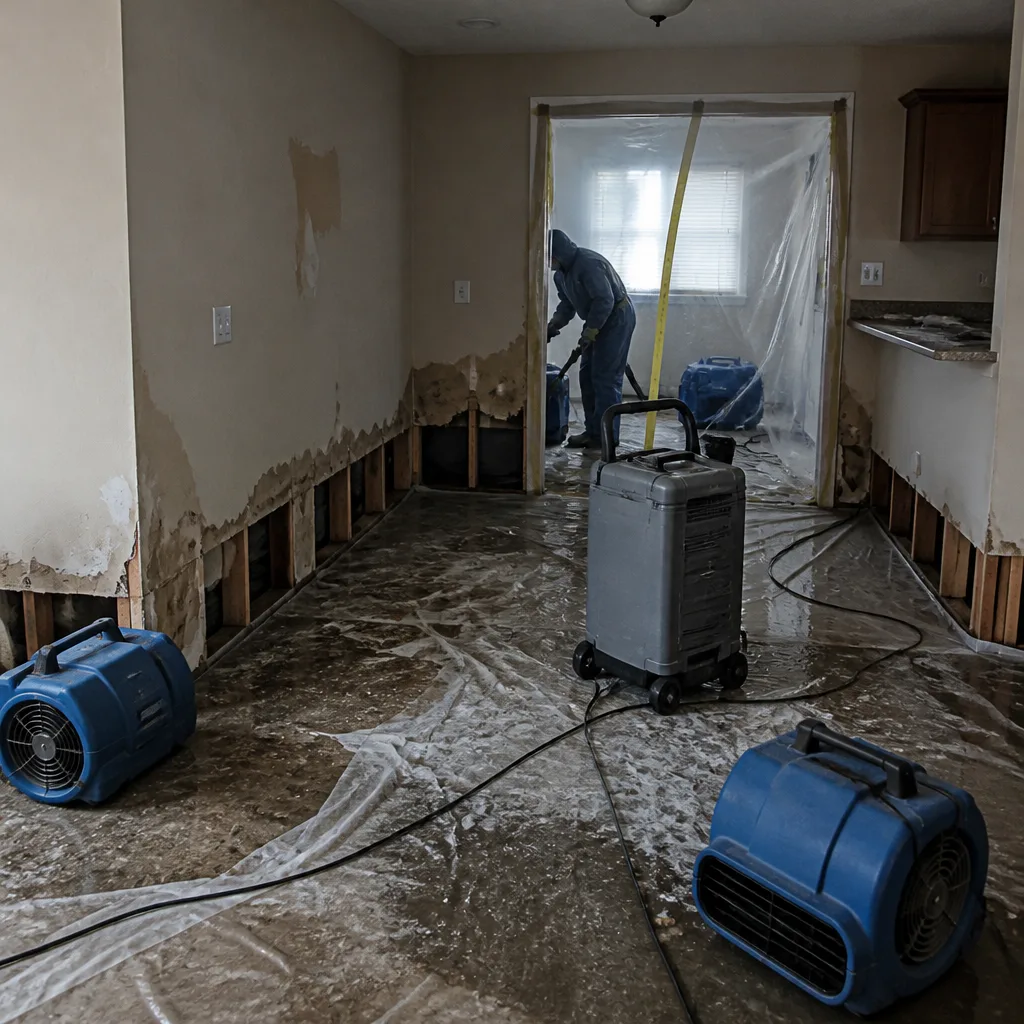 Before
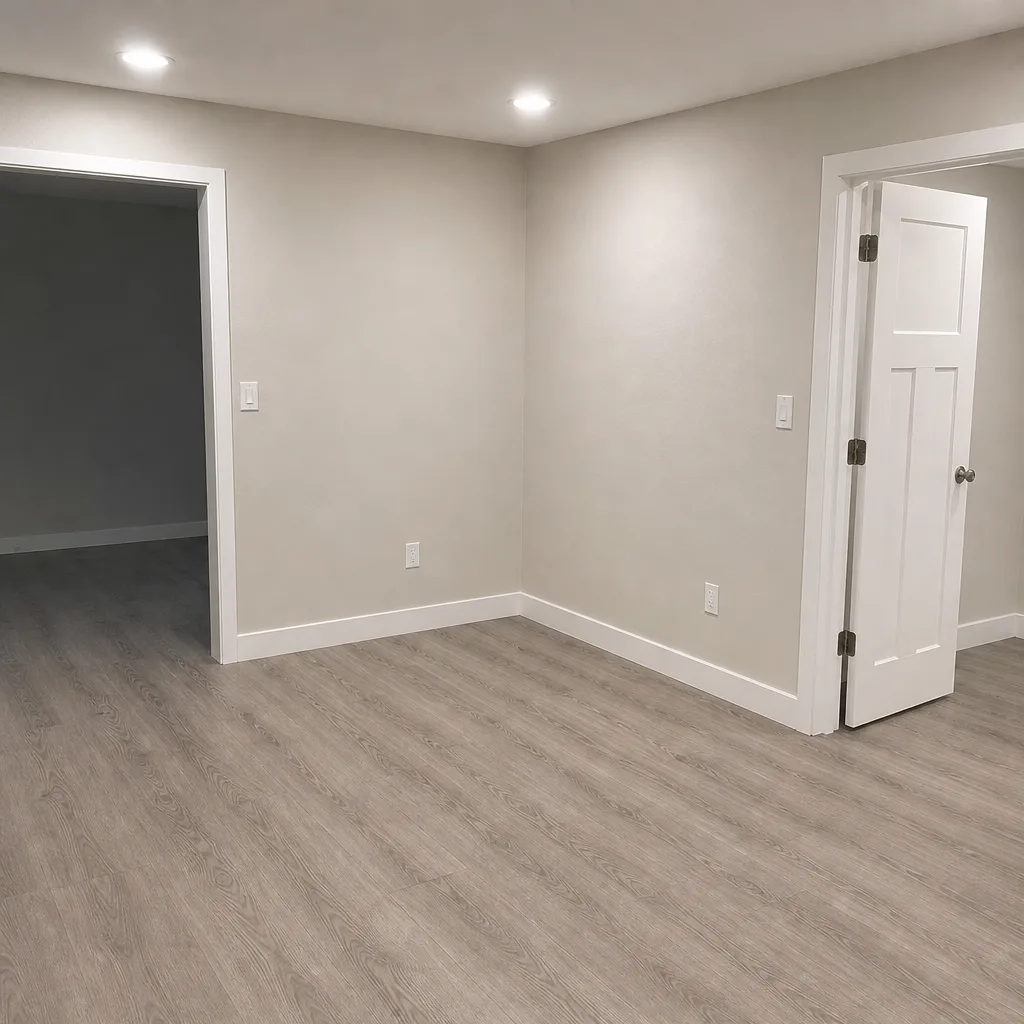 After
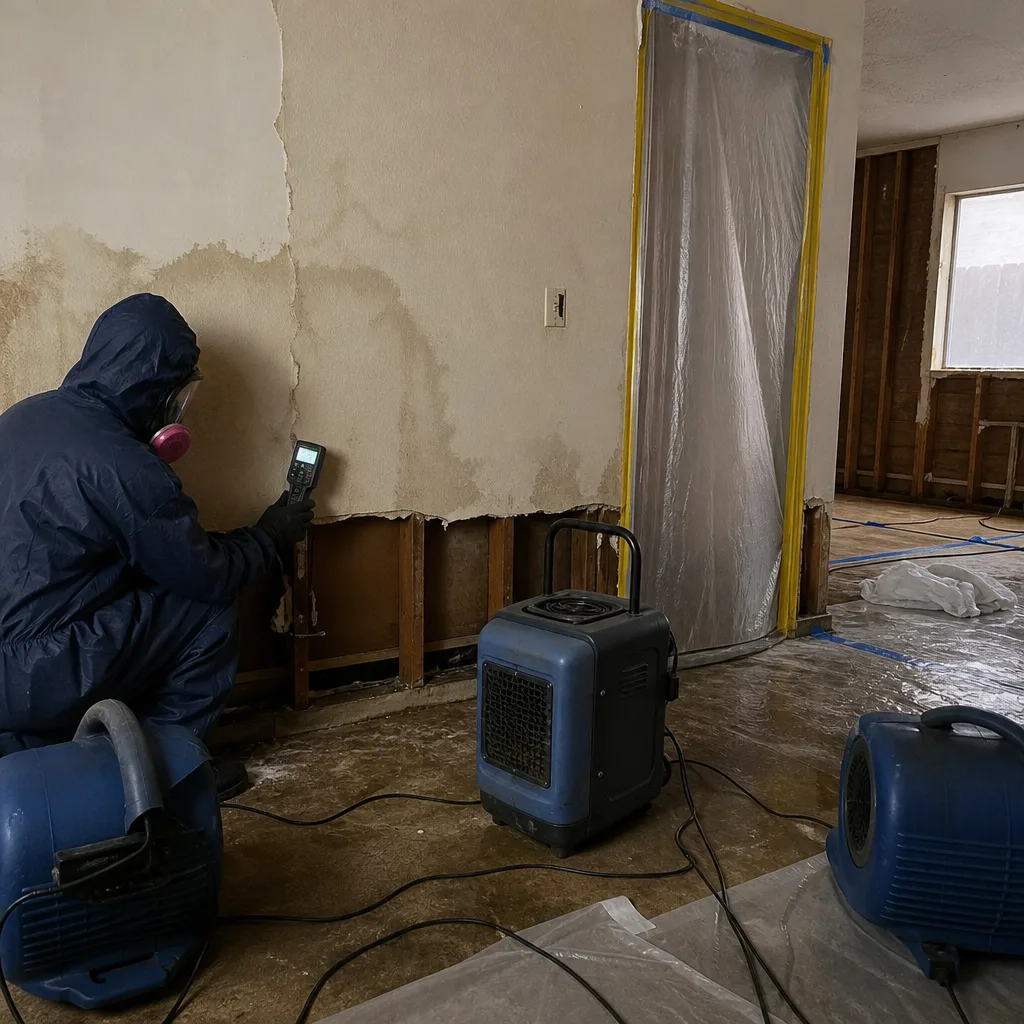 Before
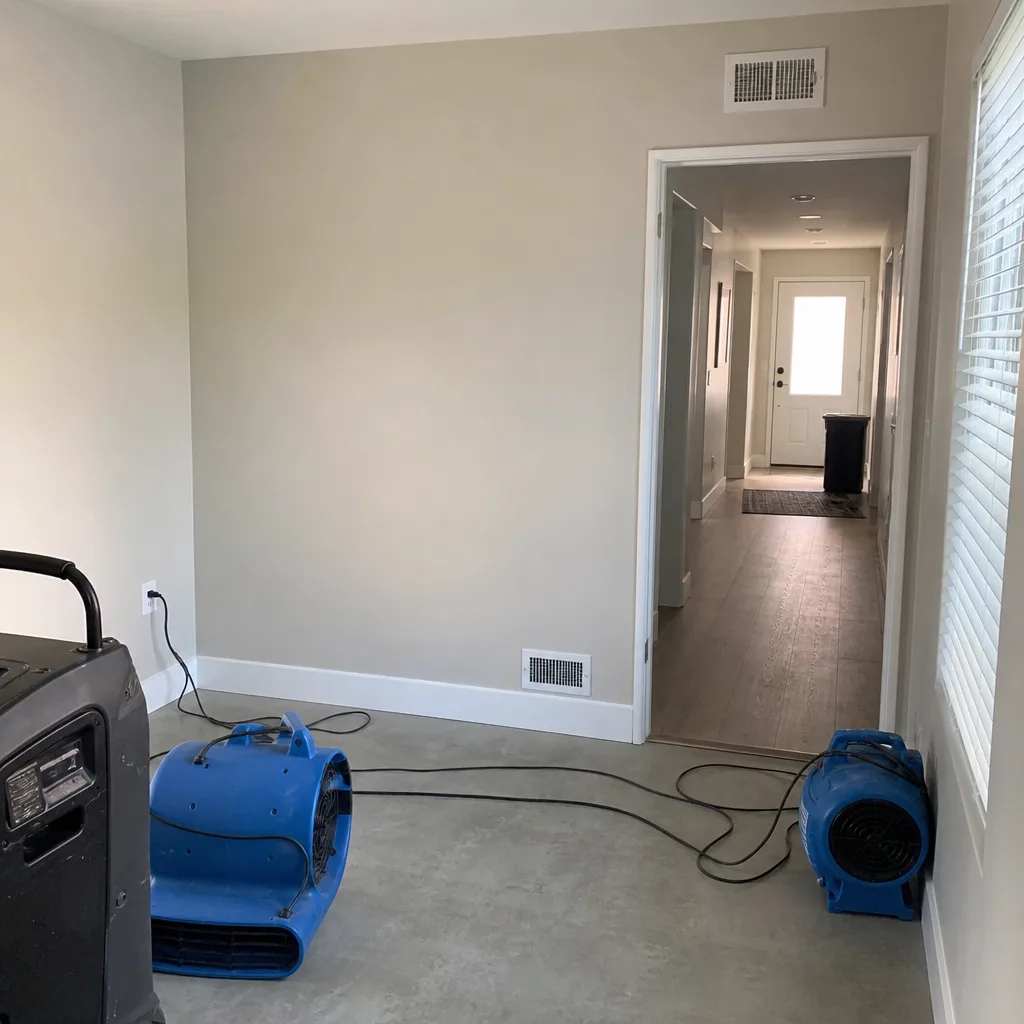 After
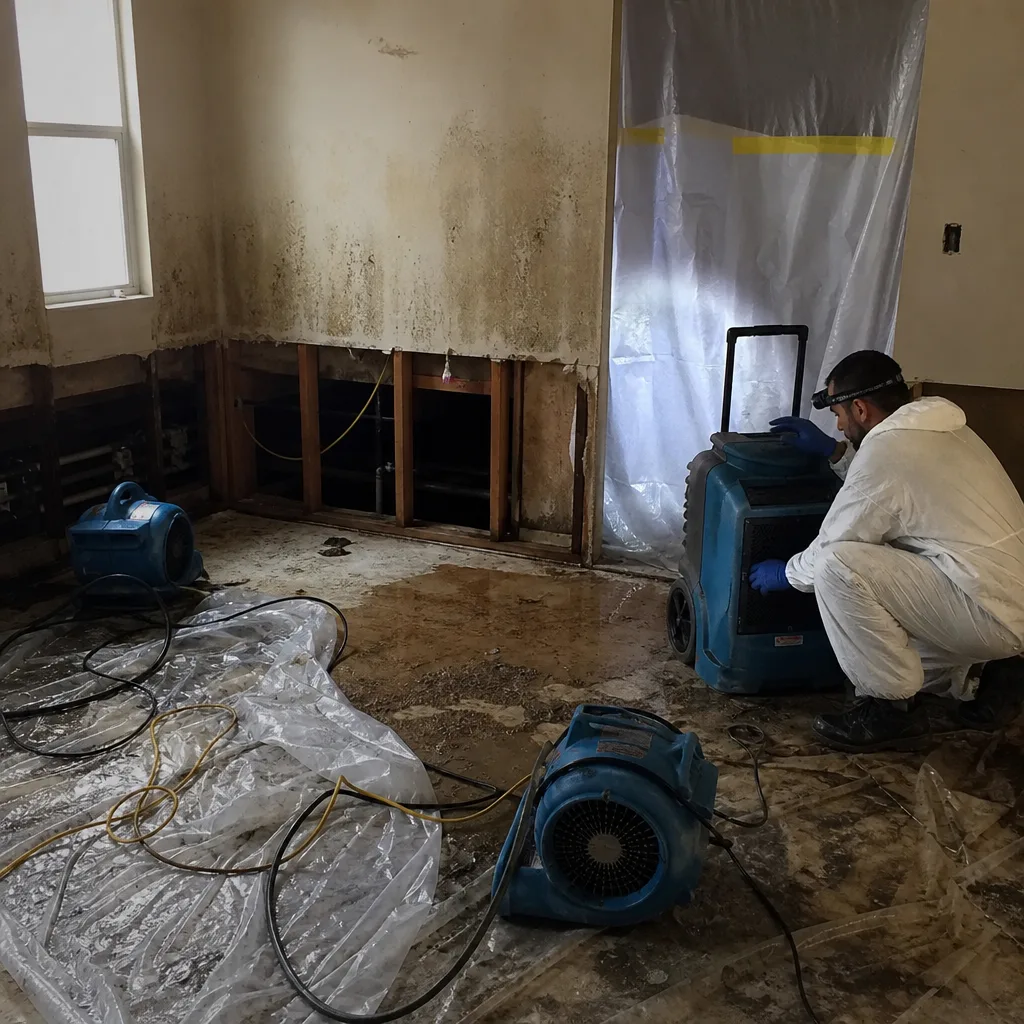 Before
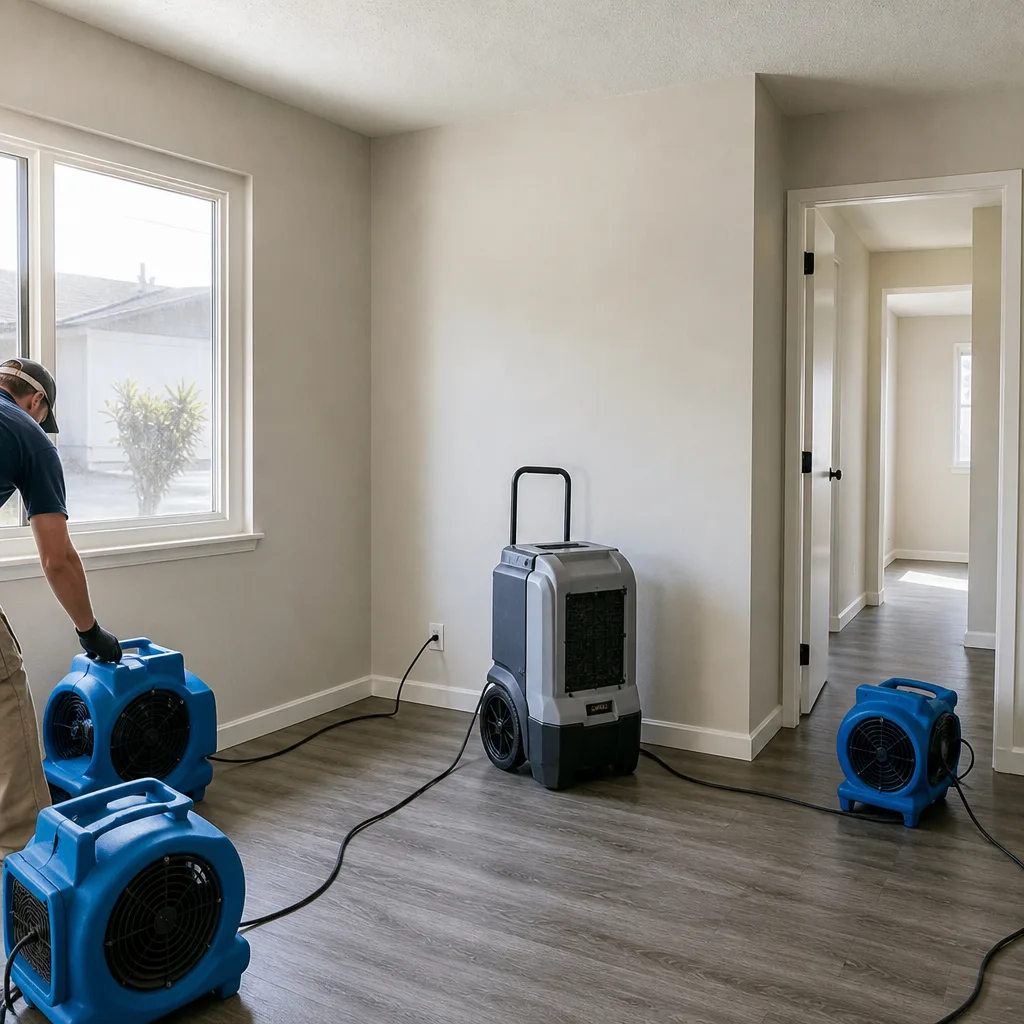 After
When to Call a Professional
Any water event that penetrates beyond surface wetting of easily movable items warrants a professional assessment. A slow leak under a sink that you catch early may be a DIY cleanup. A water heater that empties into two rooms, a toilet overflow that reaches into adjacent carpet, a roof leak that travels down a wall cavity, or any water that’s been sitting for more than 24 hours is a professional job. Hidden moisture in wall cavities, under flooring, or in subfloor surfaces will not dry on its own in a timeframe that prevents mold growth, especially in Fontana’s warm months. For mold, any visible growth larger than about ten square feet, any growth in your HVAC system, or any growth that returns after cleaning warrants containment and professional remediation. For fire, any smoke event that involves electrical, insulation, or structural charring requires professional assessment before any cleaning begins. Dry Line Water Damage offers free estimates in Fontana. Call (833) 589-5317 and we’ll walk through what you’re seeing before we ever schedule anything.
Frequently Asked Questions
Water damage restoration in Fontana typically runs $2,500 to $7,000 for a moderate single-room event involving extraction, structural drying, and documentation. Larger events spanning multiple rooms or involving Category 3 (sewage) water can reach $15,000 or more. The biggest variable is dry time: longer monitored drying with commercial equipment costs more upfront but prevents the hidden secondary damage that leads to mold remediation costs. Call (833) 589-5317 for a free estimate based on your specific event.
Most restoration contractors in Fontana can have a technician on-site within a few hours during normal business conditions. The critical window is the first 48 hours. Water extraction and drying equipment placement should start within that window to prevent mold colonization, which can begin in as little as 48-72 hours in Fontana’s warm climate. If a contractor says they can’t send anyone for three or four days, call someone else.
Most homeowners insurance policies in Fontana cover sudden and accidental water damage, including pipe bursts, water heater failures, and appliance malfunctions, subject to your deductible and policy limits. Gradual leaks or long-standing moisture problems are more likely to be disputed. Mold remediation coverage varies widely by policy. Fire damage restoration is typically covered under standard policies. Your restoration contractor should document everything in ways that support your claim, not just hand you an invoice at the end. Direct adjuster coordination prevents most delays.
If the water source was clean water (supply line, water heater) and drying starts within 24 hours, remediation is often limited to structural drying without demolition. If the water sat for more than two days, includes sewage or ground contamination, or has already produced visible mold, full remediation is typically required. A superficial cleaning will not address moisture that has wicked into wall cavities or subfloor. The only way to know is moisture testing and an honest assessment. Call (833) 589-5317 and we’ll tell you what you’re actually dealing with, not what we can bill for.
Ask for the certification number and verify it on the IICRC website’s certification lookup tool. Any legitimate technician can give you this number in seconds. Lapsed certifications simply won’t appear in the current registry. A contractor who hesitates or tells you their certification is “with the company, not the individual” is not meeting the standard you need.
Yes. We work throughout Fontana, from the older neighborhoods near city hall to newer developments south of the 210. Our crews respond to water, mold, and fire damage events across the city. Free estimates are available by calling (833) 589-5317.
The Bottom Line
Hiring a damage restoration contractor in Fontana requires you to verify credentials that no state license will guarantee for you. Current IICRC certifications, commercial-grade drying equipment, a written scope of work with documented drying goals, and a daily moisture log are non-negotiable elements of a legitimate restoration job. Equipment-serious contractors will answer your questions directly and show you the documentation before you ask. Equipment-light operators will deflect, delay, and hope the surface dries before the mold blooms. In Fontana’s heat, that’s a gamble you can’t afford. The right contractor dries to a documented standard, works with your adjuster, and hands you a final report that proves the work was done right. Water Damage Restoration in Fontana doesn’t have to be a mystery when the process is documented from the first reading to the final entry.
Written by the team at Dry Line Water Damage, serving Fontana since 2013. Explore more guides & resources on our blog.