Last updated October 31, 2026
 Water damage drying
 Fire & smoke cleanup
 Mold remediation
 Storm response
 Sewage cleanup
 Reconstruction
Free visual inspection and a written scope of work before any mitigation begins - photos, moisture readings, and drying logs go in your claim file
The scope we write is the scope we bill. Anything new gets shown to you, in writing, before we touch it.
Get your free estimateWater Damage Restoration Troubleshooting: Common Problems and How to Fix Them
If you’re smelling musty odor two weeks after a restoration company pulled their equipment and declared the job done, that smell is data. It points to one of three specific drying failures, and none of them are random. In Fontana, where summer temperatures regularly push past 100 degrees and create aggressive drying conditions on the surface while hiding moisture in wall cavities and subfloors, incomplete restorations are more common than most homeowners realize. This guide—along with The Complete Guide to Damage Restoration in Fontana—walks you through the diagnostic framework our IICRC-certified crews use to identify exactly where a restoration went wrong, how to document it, and what your options are when a contractor has already signed off and left.
Quick Answer
Water damage restoration fails when moisture is trapped in hidden cavities, equipment was undersized for the affected square footage, or drying was declared complete based on surface readings alone. The fix is to identify which failure pattern you’re dealing with through moisture mapping and psychrometric data, then either reopen the claim with documentation or hire an IICRC-certified firm to correct the drying process with commercial-grade equipment like Dri-Eaz dehumidifiers and Injectidry structural-drying systems.
Restoration work we handle
Table of Contents
- The Musty Smell That Won’t Go Away: Three Failure Patterns
- Soft or Buckling Flooring After a Signed-Off Restoration
- When Surface Moisture Readings Lie: The Cavity Problem
- Was Your Dehumidifier Undersized? The Grain-Per-Pound Question
- Documenting a Failed Restoration for Insurance Supplements
- Reopening a Closed Claim: What Adjusters Actually Need
- Why Equipment Class Determines Whether Drying Actually Happens
- Fontana-Specific Drying Challenges Most Contractors Miss
The Musty Smell That Won’t Go Away: Three Failure Patterns
Musty odor after restoration almost always traces back to one of three specific failures. Understanding which one you’re dealing with determines your next move. The smell itself is microbial volatile organic compounds, which means moisture is still present somewhere supporting growth. Surface cleaning won’t fix it, because the problem is behind or beneath the surface.
Failure Pattern One: Inadequate Dehumidifier Capacity
The contractor set up a dehumidifier, but it was too small for the affected cubic footage or the moisture load. This is the most common failure we see in Fontana, where the inland heat drives surface evaporation quickly and creates a false sense of progress. A consumer-grade or small commercial dehumidifier can drop the visible humidity reading on a gauge while leaving wall cavities and flooring at elevated moisture content. The tell: humidity in the affected room reads normal, but the musty smell persists, especially in the morning when the space has been closed up overnight.
Failure Pattern Two: Missed Cavity Drying
Water migrated into wall cavities, under cabinets, or into subfloor spaces that no one opened or treated. This happens when a restoration crew relies on ambient drying without Injectidry-style systems that create negative pressure inside cavities to pull moisture out through small access points. The tell: the smell worsens when you walk past a specific wall or corner, or when a cabinet door has been closed for a few hours.
Failure Pattern Three: Premature Equipment Removal
The equipment was pulled before the structure actually reached its dry standard. This happens when a contractor schedules equipment pickup based on a calendar rather than moisture readings. An IICRC-certified process requires documented daily moisture readings showing a consistent downward trend before equipment is removed. The tell: the smell appeared within days of the equipment leaving, not weeks.
If you’re anywhere near this situation, our Water Damage Restoration in Fontana page covers what a properly documented drying process looks like from start to finish.
Soft or Buckling Flooring After a Signed-Off Restoration
Soft flooring after a restoration company has signed off is a structural moisture problem, not a cosmetic one. When engineered wood, laminate, or vinyl plank feels spongy underfoot, the subfloor beneath it is still holding moisture. Hardwood that’s buckled or cupped means the wood fibers swelled and then contracted unevenly during an incomplete drying cycle.
The key question is whether the floor is still wet or already damaged. A moisture meter with a penetrating probe can tell you in seconds. If the reading in the subfloor is above 12 to 14 percent for wood, it’s still wet and needs active drying. If the reading is low but the floor is deformed, the damage happened during the drying window and is now a repair issue.
What you should know about reopening the claim: it is entirely possible. Insurance companies process supplement claims for failed restorations regularly. What they require is documentation showing that the original drying was incomplete. This means:
- Moisture readings showing elevated levels in the affected area
- Photos or video of the visible damage with timestamps
- The original contractor’s final report, if you can get it
- A written assessment from a second restoration contractor that identifies the specific drying failure
In Fontana’s slab-on-grade construction, subfloor moisture after a water event often comes from water that wicked under flooring from a wall or plumbing leak. If the original crew never lifted or vented the flooring, that moisture has been trapped there the entire time, which our Dry Line Water Damage home guide explains in the context of how structural drying should actually work.
When Surface Moisture Readings Lie: The Cavity Problem
A drywall surface can read completely dry on a non-invasive meter while the cavity behind it holds enough moisture to support mold growth. This is not a rare edge case. It happens constantly, and it’s the reason the restoration industry distinguishes between surface readings and penetrating readings.
Non-invasive meters send a signal into the material and give you a relative reading. They’re fast and useful for initial assessment, but they can be fooled by vapor barriers, metal studs, insulation density, and the simple fact that drywall is a poor conductor when it’s only wet on one side. A wall that was soaked from inside the cavity, say from a roof leak that traveled down inside a wall before anyone noticed, can have a bone-dry exterior surface and a saturated interior.
Two tools would have caught this during the original drying:
- Thermal imaging. Moisture changes the thermal conductivity of materials, and an infrared camera shows temperature anomalies that correspond to wet areas. A trained thermographer can identify moisture patterns behind walls, under floors, and above ceilings without opening anything.
- Penetrating moisture probes. These use two pins driven into the material to measure electrical resistance between them. They give a direct moisture content reading for the material at that depth. They leave tiny holes that are easy to patch, and they tell you the truth about what’s inside the wall.
If your original contractor never used either tool, that’s a documentation gap. An IICRC-certified process includes moisture mapping that documents readings across the entire affected area, not just spot checks on visible surfaces.
Was Your Dehumidifier Undersized? The Grain-Per-Pound Question
Dehumidifier capacity is measured in pints of water removed per day at a standard set of conditions. But the number that actually matters for restoration is grains per pound, a psychrometric measurement that tells you how much water vapor is suspended in a pound of dry air. This is the measurement an IICRC-certified technician uses to calculate the dehumidifier class and size required for a given cubic footage and moisture load.
Here’s what you can request from any restoration contractor to verify whether equipment was properly sized:
- Initial psychrometric readings. Temperature, relative humidity, and grains per pound in the affected area and the ambient environment before equipment was placed.
- Daily readings. The same measurements taken every 24 hours while drying was in progress. A properly sized system will show a consistent decline in grains per pound and a narrowing gap between the affected area and ambient conditions.
- Cubic footage calculation. The square footage of the affected area times ceiling height, which determines the air volume the dehumidifier needed to condition.
- Equipment class and AHAM rating. The dehumidifier’s published capacity in pints per day at AHAM standard conditions, which tells you whether the machine could move enough water.
As a reference point, a 50-pint consumer dehumidifier might remove 30 pints per day under actual operating conditions. A commercial Dri-Eaz dehumidifier in the same space might remove 80 to 130 pints per day. When the moisture load is hundreds of gallons, that capacity gap means the difference between dry in four days and never dry at all.
If your contractor cannot produce this data, that’s a strong signal the drying was not monitored to any recognized standard. The Mold Remediation in Fontana page on our site goes deeper into how incomplete drying becomes a mold problem, which is the natural next stage of a failed water restoration.
Documenting a Failed Restoration for Insurance Supplements
The window to reopen a claim doesn’t close when the restoration crew drives away. Insurance companies process supplement claims for exactly this scenario, and they respond to documentation, not emotion. Here’s how to build a file that gives you leverage.
Step 1: Stop assuming this is your fault or your problem alone. A failed restoration is a contractor performance issue. Your insurance policy covered the loss, and the mitigation work is part of that coverage. If the mitigation was incomplete, the claim isn’t properly resolved.
Step 2: Gather the original documentation. Request the complete job file from the original contractor, including daily moisture logs, psychrometric readings, equipment schedules, and the final invoice. Many contractors will provide this. Some will resist, and their resistance is itself useful information for your adjuster.
Step 3: Document the current condition. Take photos and video of visible damage with timestamps. Record the musty odor if it’s present, including where it’s strongest and whether it fluctuates. If flooring is soft or buckled, capture that. Write down the date you first noticed each issue.
Step 4: Get a second assessment. Hire an IICRC-certified restoration firm to perform a moisture assessment of the affected areas. Ask for written findings that include specific moisture readings, the tools used, and a professional opinion on whether the original drying was complete. This document is the core of a supplement claim.
Step 5: Submit the supplement through your adjuster. Present the second assessment alongside your original claim documentation. Be specific about what was missed and what remediation is now required. Adjusters speak the language of documentation, and a professional second opinion gives them what they need to approve additional work.
Through all these steps, never lose leverage. Don’t sign anything from the original contractor. Don’t accept a cash settlement offer without understanding what the actual required repair scope will cost. Don’t let anyone remove evidence of the failed work until the claim is resolved.
Reopening a Closed Claim: What Adjusters Actually Need
Adjusters reopen claims every week for this exact reason. What makes the difference is whether the new information meets the threshold of new evidence rather than a simple dispute about the original scope.
Here’s what new evidence means in practical terms:
- Documented moisture readings from a licensed or certified third party. A written report that says “floor joists in the affected bathroom at 19 percent moisture content” carries weight. A complaint that “it still smells” does not.
- Visible damage that emerged after the original claim closed. Buckled flooring, peeling paint, baseboard separation, visible mold growth. Take photos with dates.
- Professional opinion that the original drying was incomplete. An IICRC-certified firm stating in writing that the original equipment was undersized or the drying was terminated early gives your adjuster a professional basis to reopen.
What adjusters do not respond to is repeated phone calls expressing frustration. Build the file first, then make the call. The documentation is what changes the outcome.
A note for Fontana homeowners: because our local market has a high concentration of restoration contractors after major storm years and the 2019 and 2023 flooding events, there’s wide variance in how thoroughly local firms document their work. A second opinion from an IICRC-certified operation that uses the same methodology the insurance industry recognizes carries more weight than an opinion from a contractor who doesn’t hold the standard, as explained in Choosing the Right Damage Restoration Brand: A Buyer’s Guide for Fontana.
Why Equipment Class Determines Whether Drying Actually Happens
Not all drying equipment is created equal, and the difference is not subtle. Consumer rental dehumidifiers and box fans move air around a room. Commercial restoration equipment changes the psychrometric conditions inside wall cavities, under flooring, and behind cabinets.
The relevant distinction is equipment class. The restoration industry uses classes of water damage to describe the extent of absorption, and each class requires a specific approach:
- Class 1: Minimal absorption. Low-porosity materials. Small affected area.
- Class 2: Significant absorption into carpet, cushion, and lower wall portions. Larger affected area.
- Class 3: Water came from above, saturating walls, insulation, and ceilings. The greatest water volume.
- Class 4: Deep absorption into dense materials like hardwood, plaster, and concrete. Requires low-humidity, high-heat systems and often extended drying times.
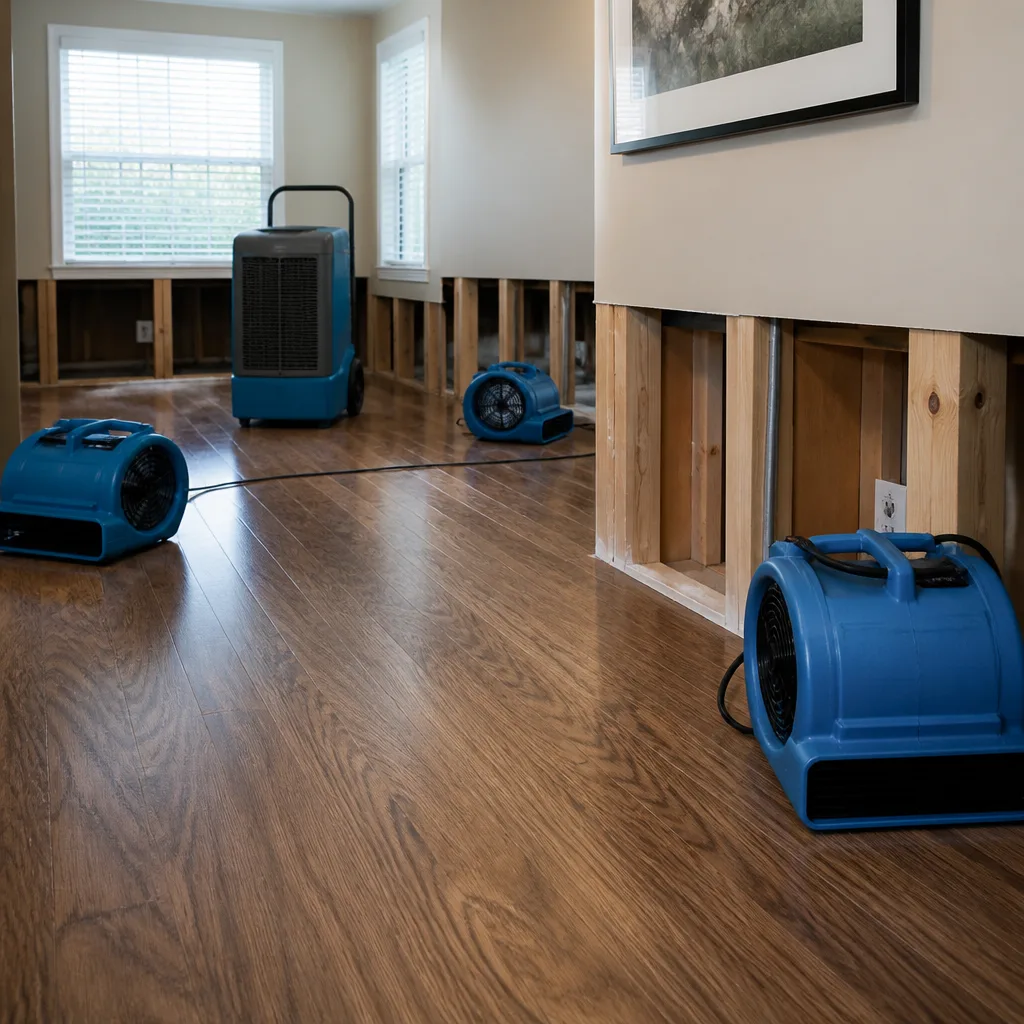
A Class 3 loss in Fontana, say a supply line ruptured on the second floor while no one was home for a weekend, saturates wall cavities and the ceiling below. A consumer dehumidifier and some air movers will not dry that structure. It requires commercial LGR dehumidifiers like Dri-Eaz units, high-volume axial air movers, and Injectidry panels to pull air through saturated cavities. The equipment does the work. The technician’s job is to configure it correctly and verify with daily psychrometric readings.
This is where the RIA code of ethics becomes practically relevant. A firm bound by professional association standards has a documented process requirement that a volume-driven subcontractor may not. When you’re choosing between restoration firms, ask about equipment brands and daily moisture monitoring before anything is signed.
For homeowners dealing with a water event that also involved fire suppression, the drying equation changes because the affected materials are different. Our Fire Damage Restoration in Fontana page covers the interaction between water used to extinguish a fire and the structural drying that must follow.
Fontana-Specific Drying Challenges Most Contractors Miss
Fontana’s climate creates specific drying conditions that national franchise playbooks don’t account for. The combination of summer temperatures above 100 degrees, single-digit relative humidity on the hottest days, and slab-on-grade construction in most of the city’s housing stock means a room can feel bone dry while the slab itself holds enough moisture to support mold under flooring.
Here’s what we see repeatedly in Fontana homes:
- Rapid surface drying masks substrate moisture. The air is so dry in summer that surface materials dry fast, which looks like progress. But water that migrated under tile or into the slab keeps feeding moisture upward for weeks. A contractor pulling equipment after four days because the carpet feels dry is walking away from a still-wet structure.
- Slab wicking in ground-floor units. When a water event occurs in a ground-floor room on a concrete slab, water moves horizontally under flooring and vertically up into drywall. The surface meter can read dry while the bottom plates of walls sit at elevated moisture for a month. This requires probing, not just scanning.
- Drywall with trapped moisture in exterior walls. Fontana’s hot exterior walls create a thermal gradient that pulls moisture outward, but stucco finishes trap vapor behind them. An exterior wall that looks dry from inside can be saturated in the cavity behind the stucco. Thermal imaging from the exterior side is the only way to catch this quickly.
What this means for homeowners is that Fontana restorations need longer drying windows on slab construction, more aggressive cavity treatment, and documentation that includes penetrating probe readings, not just surface scans. If your contractor treated your Fontana home like a house in a coastal climate, the drying was probably cut short.
Common Mistakes to Avoid
- Accepting a “visual dry” determination. Moisture hides in cavities and under flooring. If the contractor didn’t produce moisture readings before packing up equipment, the job isn’t documented as dry.
- Letting the original contractor do the second assessment. That contractor has no incentive to find a failure in their own work. Hire a separate IICRC-certified firm for the second opinion.
- Waiting too long to document. Musty odors and buckling floors get worse if ignored. The sooner you document, the stronger your supplement claim.
- Ripping out damaged materials before documenting. Once you tear out the evidence, the adjuster has nothing to assess. Document first, then remove only what’s necessary to prevent further damage.
- Using consumer drying equipment to fix a failed restoration. A rental dehumidifier won’t correct a structural drying failure. It’ll just run up your electric bill.
- Signing a release from the original contractor. Any document that waives your right to pursue a supplement or dispute the original work should go to an attorney, not a signature line.
- Assuming the claim window has closed. In California, property insurance supplement windows are more flexible than homeowners assume. Check your policy and talk to your adjuster before assuming you’re out of luck.
See the difference
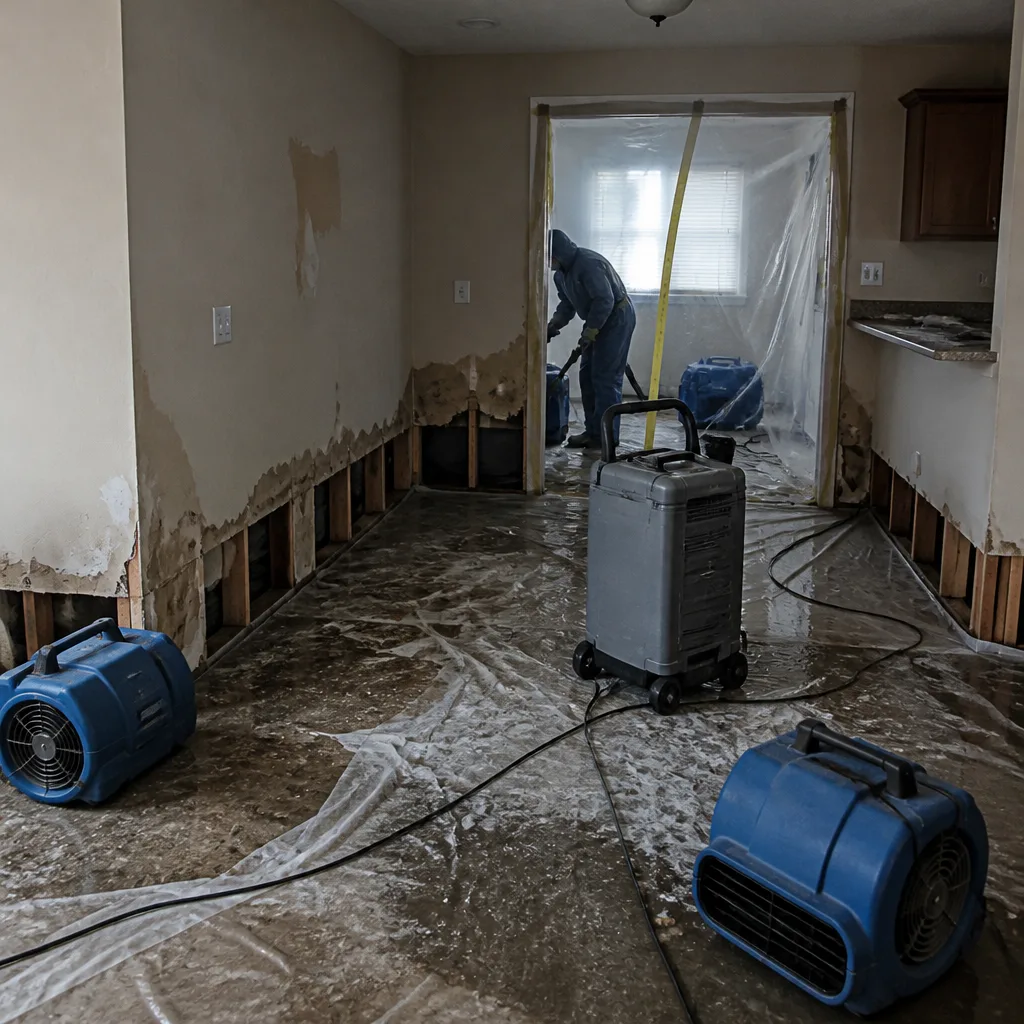 Before
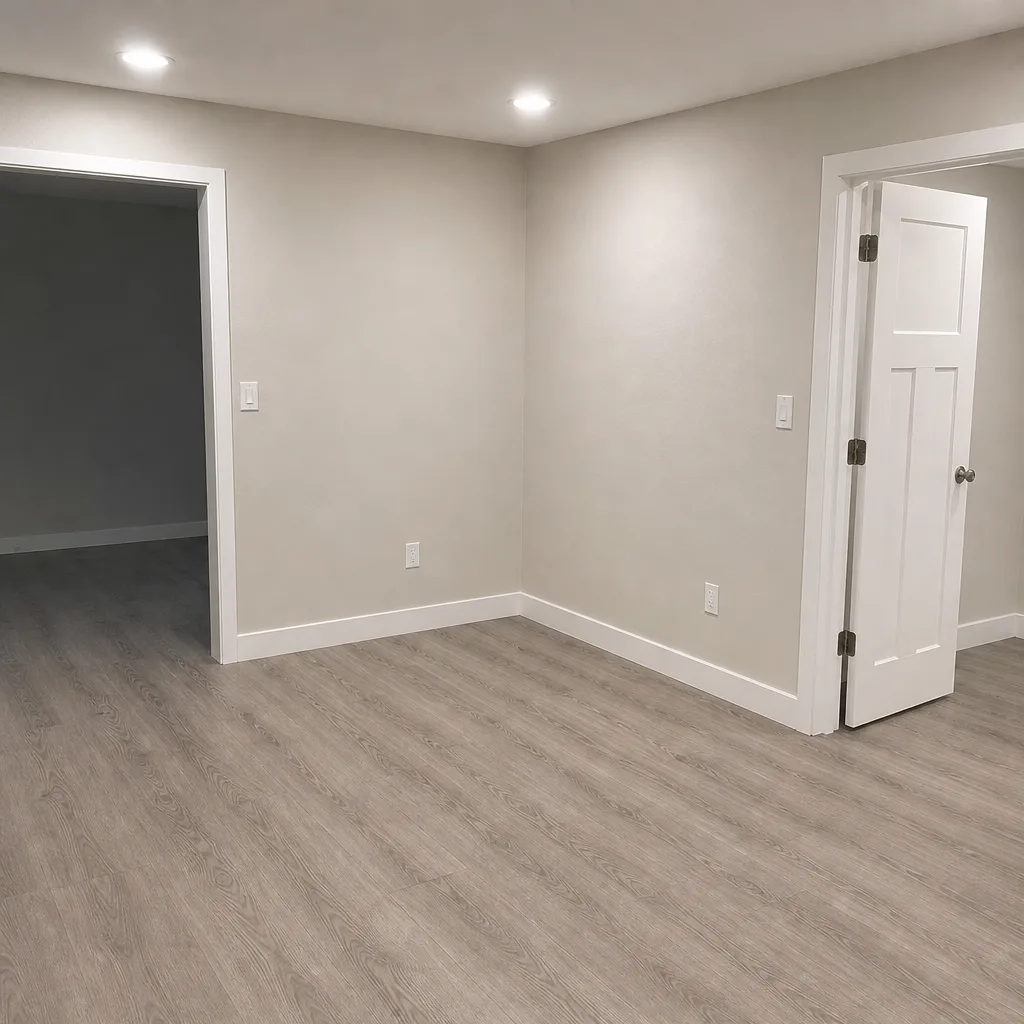 After
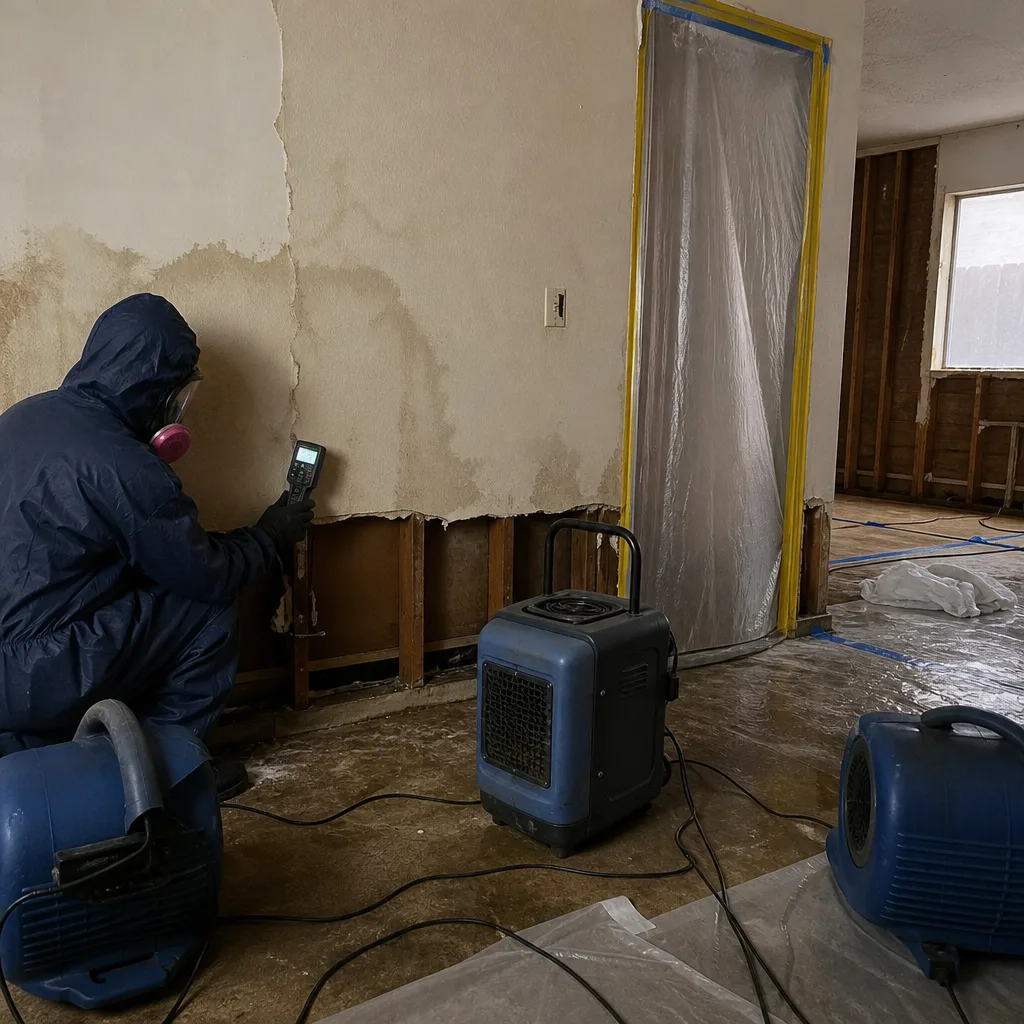 Before
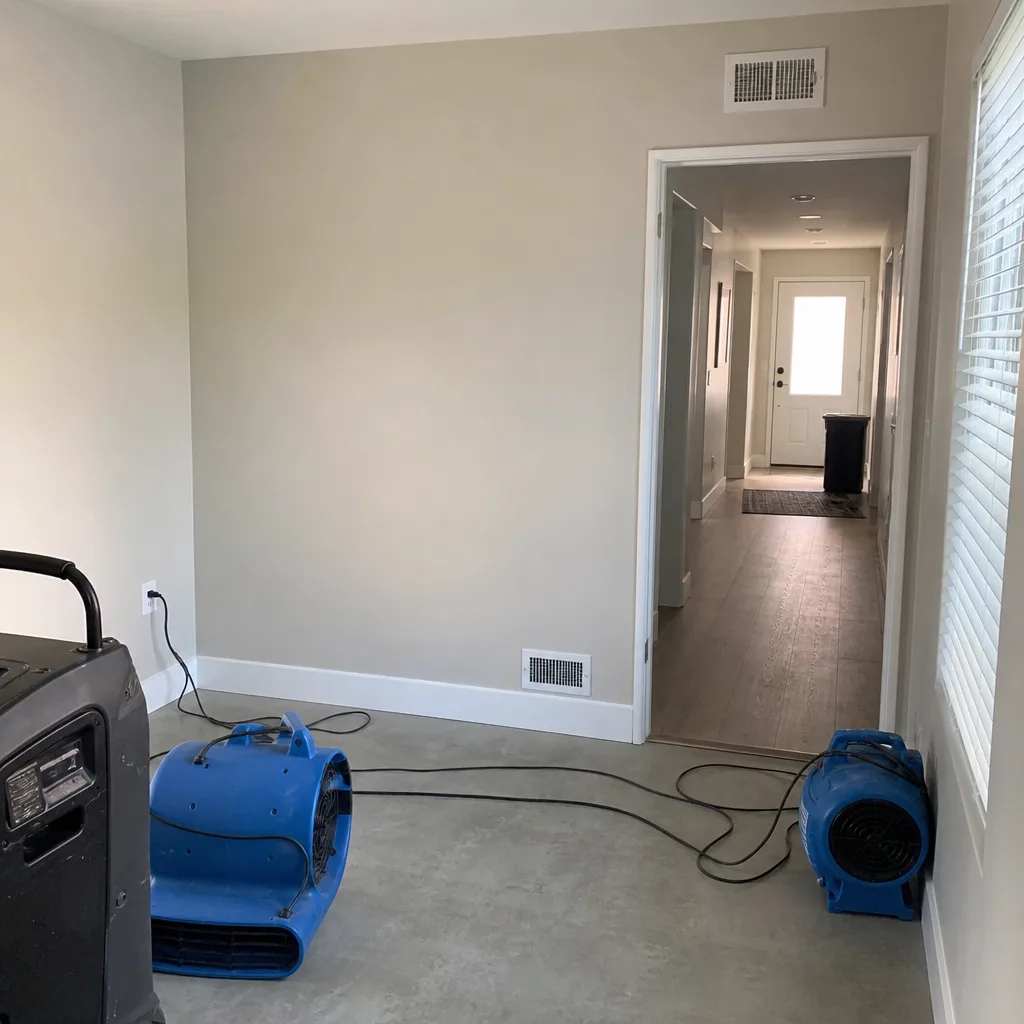 After
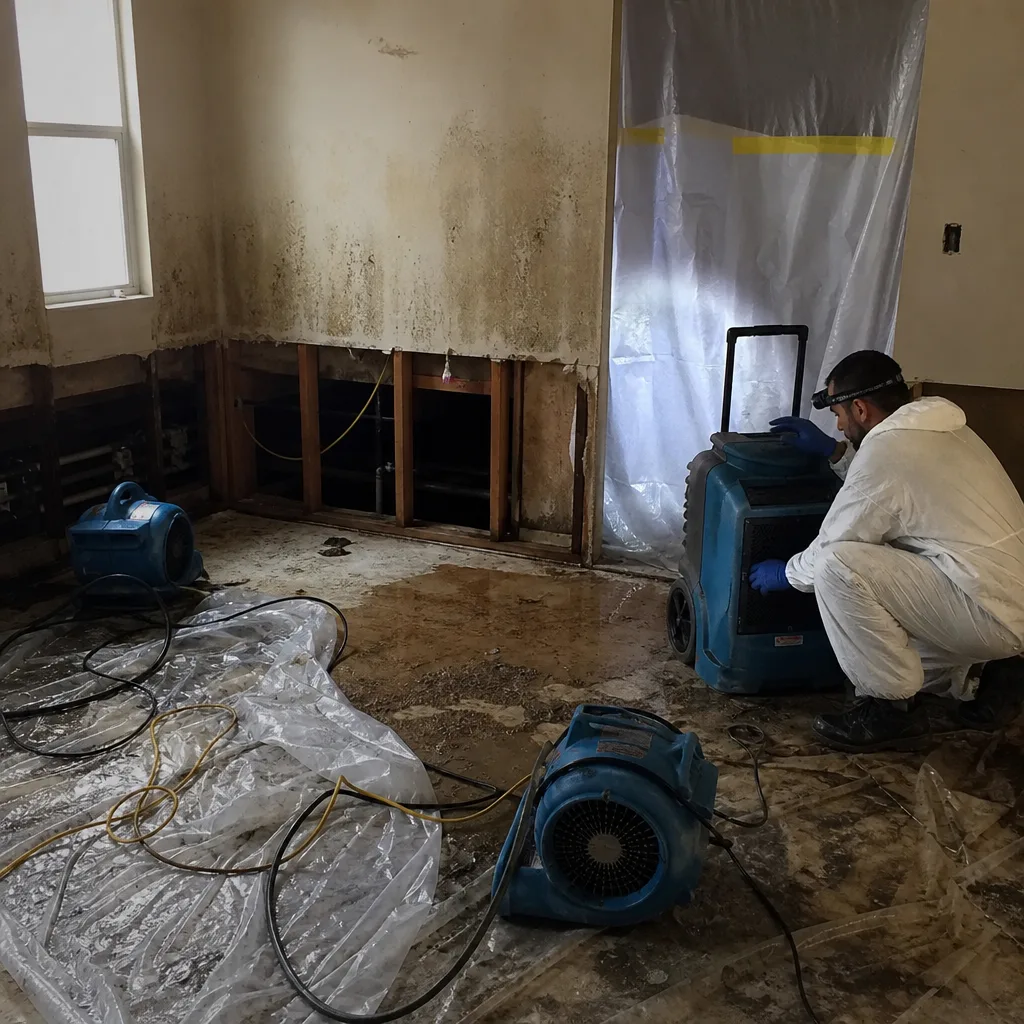 Before
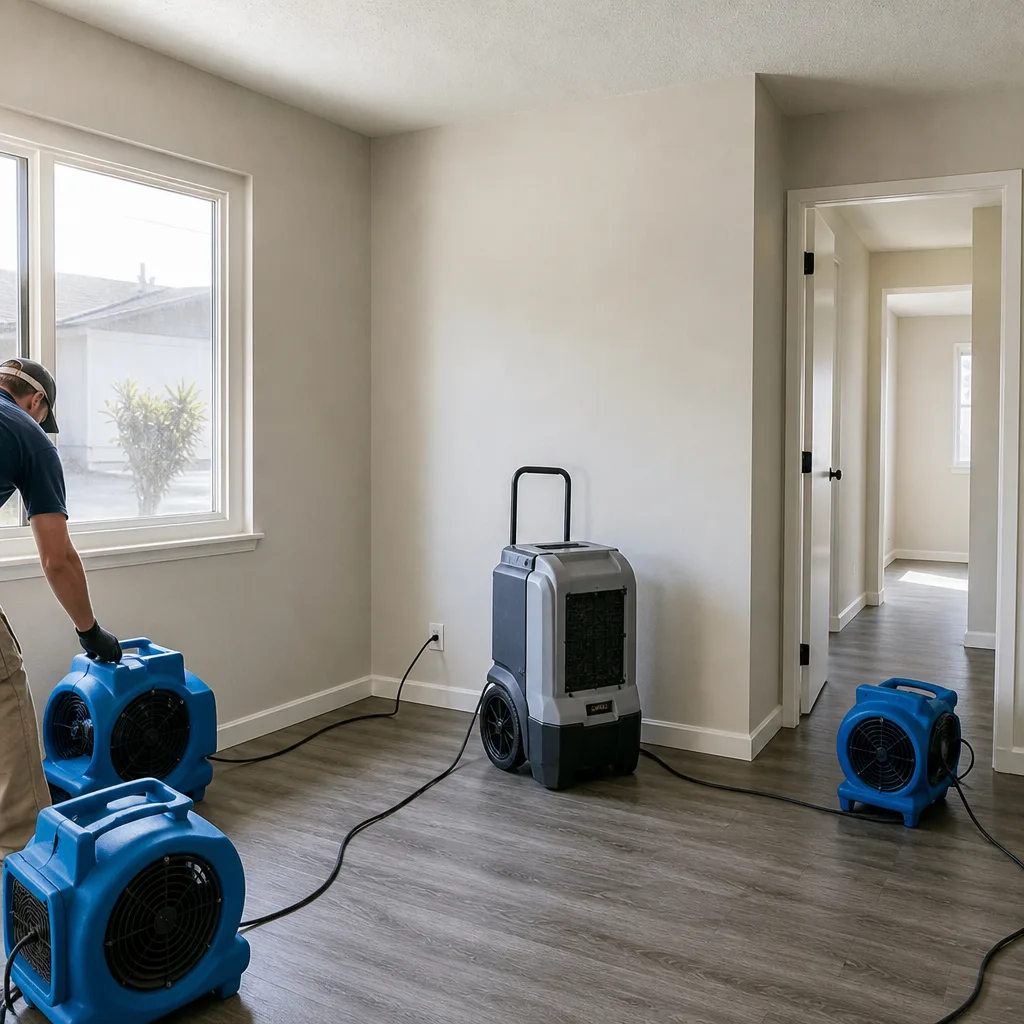 After
When to Call a Professional
Call a professional when the smell persists more than 48 hours after you’ve aired out the space, when flooring feels soft or looks deformed, when you see staining or paint bubbling on walls or ceilings, or when you have any doubt that the original drying was complete. A failed restoration is a professional failure, and the fix requires professional equipment and professional documentation—see more guides & resources for additional help. If you’re in Fontana and dealing with any of the failure patterns described here, Dry Line Water Damage offers free estimates, call (833) 589-5317 to have an IICRC-certified technician assess your property and provide written findings.
Frequently Asked Questions
A musty smell after restoration means moisture is still present somewhere in the structure, almost always in a wall cavity, under flooring, or in another hidden space that wasn’t properly dried. The three most common causes are undersized dehumidifiers, missed cavity drying, and premature equipment removal. Call (833) 589-5317 for a moisture assessment that will pinpoint the source.
Request the daily psychrometric readings from your original contractor. If the grains-per-pound measurement in the affected area never showed a consistent decline, or if the contractor can’t produce readings at all, the equipment was likely undersized or the drying wasn’t monitored. A commercial restoration dehumidifier removes two to four times more water per day than a consumer unit.
Yes, insurance companies process supplement claims for failed restorations regularly. You’ll need documented evidence of the failure, including moisture readings from a third-party certified firm, photos of visible damage, and a written professional opinion that the original drying was incomplete.
For wood framing and subfloors, readings below 12 percent are generally considered dry. Drywall should read below 10 percent. Concrete slabs can take much longer and require different measurement tools. In Fontana’s slab-on-grade construction, a “dry” surface reading is inadequate, penetrating probes into wall bottom plates and subflooring are required for accurate assessment.
If musty odor is present and moisture has been trapped for more than 48 to 72 hours, microbial growth has likely begun. A mold assessment is the safe next step. Mold remediation is a separate scope from water restoration and requires its own process and documentation.
In most cases, yes. A supplement claim for incomplete drying is a recognized part of the claims process. The key is providing your adjuster with new evidence from an independent certified assessment, not just a disagreement with the original contractor’s work.
The Bottom Line
Failed water damage restorations follow recognizable patterns. An undersized dehumidifier leaves moisture behind because the equipment was never capable of handling the load. A missed cavity leaves moisture behind because the drying configuration never reached the space. A premature equipment removal leaves moisture behind because the documentation didn’t support a dry standard. Each of these failures is identifiable through psychrometric data, thermal imaging, and penetrating moisture probes. If you’re in Fontana and dealing with any of these signs, get a certified second opinion before the moisture becomes a mold problem. The evidence you document today is the leverage you have tomorrow.
Written by the team at Dry Line Water Damage, serving Fontana since 2013.