
Last updated October 31, 2026
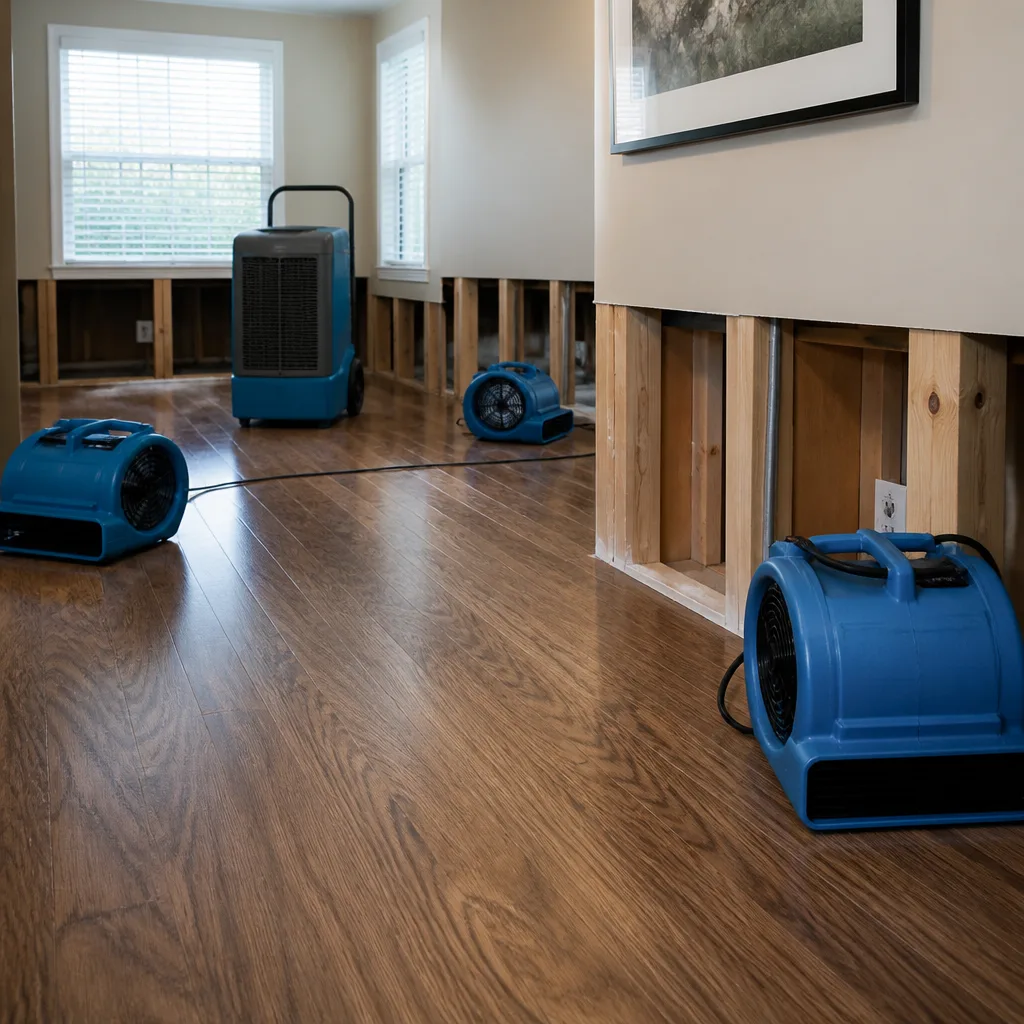 Water damage drying
 Fire & smoke cleanup
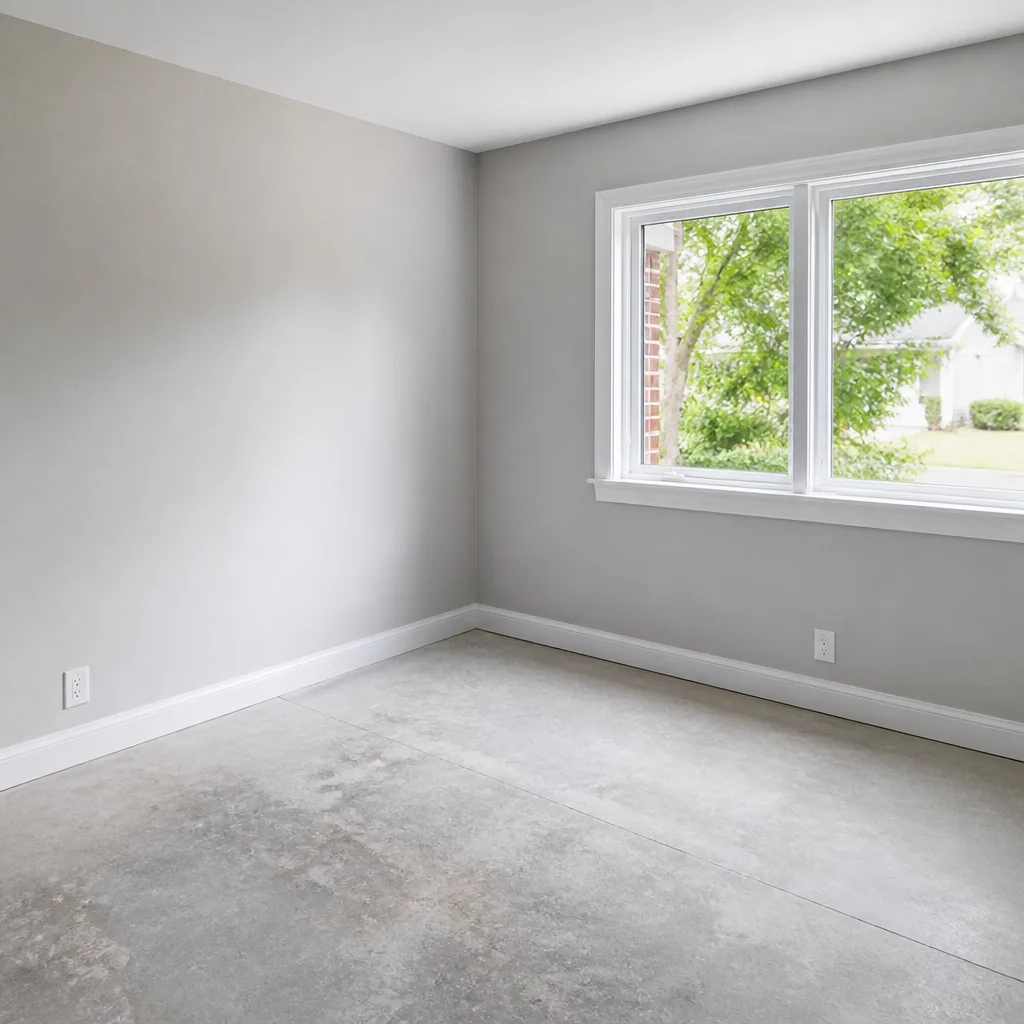 Mold remediation
 Storm response
 Sewage cleanup
 Reconstruction
Free visual inspection and a written scope of work before any mitigation begins - photos, moisture readings, and drying logs go in your claim file
The scope we write is the scope we bill. Anything new gets shown to you, in writing, before we touch it.
Get your free estimateSeasonal Damage Restoration Care for Fontana: Year-Round Homeowner’s Guide
Most seasonal home-care guides tell you to clean gutters in spring and wrap pipes before winter. That calendar gets Fontana homeowners into trouble. Our restoration crews run more emergency calls between October and February than any other stretch of the year, and the damage we find usually started accumulating months earlier, during the Santa Ana wind season that most national checklists never mention. This guide maps restoration risk to Fontana’s actual weather patterns: the wind-driven debris of late fall, atmospheric river windows in late winter, and the thermal stress of triple-digit summers. You’ll learn what to inspect, when to inspect it, and which warning signs mean the difference between a $400 drying job and a $40,000 structural repair.
Quick Answer
Seasonal damage restoration care in Fontana means protecting your home against three distinct risk windows: Santa Ana wind damage and gutter blockage from October through December, atmospheric river flooding and hydrostatic pressure from January through March, and HVAC condensate and supply-line failures during summer’s peak cooling load. The single highest-value action for most Fontana homeowners is following our Water Damage Restoration Maintenance Checklist for Fontana Homeowners with a thorough roof, gutter, and drainage inspection in late September or early October, before wind season begins.
Restoration work we handle
Table of Contents
- Fontana’s Real Seasons: A Month-by-Month Risk Calendar
- Why Santa Ana Winds Are Fontana’s Most Overlooked Restoration Threat
- October Gutter and Roof Inspection: Why Fall Beats Spring in Fontana
- Atmospheric Rivers and Fontana’s Clay Soil: The Hydrostatic Pressure Problem
- Summer-Specific Risks: Thermal Expansion and HVAC Condensate Failures
- Post-Storm Inspection Protocol for Fontana Homes
- Early Warning Signs of Hidden Moisture Damage
- When to Call a Professional
- Frequently Asked Questions
- The Bottom Line
Fontana’s Real Seasons: A Month-by-Month Risk Calendar
Fontana doesn’t have four seasons in the sense a Chicago or Seattle homeowner would recognize. We have a wind season, a rain season, a heat season, and a brief transition period where temperatures swing hard enough to stress materials. Each of these carries specific restoration risks, and the calendar below reflects what our crews actually respond to in this city, month by month.
January – February: Atmospheric River Peak
Late winter is when Fontana receives most of its meaningful rainfall, often in concentrated atmospheric river events that drop more water in 48 hours than the rest of the year combined. The ground is already saturated from December rains, and the city’s clay-heavy soil expands dramatically. Watch for: water intrusion at foundation walls, slab-edge seepage, patio and walkway movement that redirects runoff toward the house, and roof leaks at flashing points that were compromised months earlier.
March – April: Transition and Drying
Rain tapers off, and the soil begins its slow contraction. This drying cycle can widen existing cracks in concrete slabs and stucco, creating new entry points for pests and moisture. It’s also the season we get called for “mystery” water damage that turns out to be a slow leak that started months earlier and was hidden behind saturated soil or rain-swelled building materials.
May – June: First Heat Surge
Temperatures climb into the 90s, and air conditioning systems run hard for the first time since fall. Condensate drain lines that accumulated debris during spring dust storms clog, overflow, and soak drywall or carpet adjacent to air handlers. Supply lines under pressure expand more than they did in cooler months, and weak fittings fail. This is the start of Fontana’s second-busiest restoration window.
July – September: Peak Thermal Load
Sustained triple-digit heat keeps HVAC systems running near-continuously. Condensate overflow, expansion-related pinhole leaks in copper and PEX supply lines, and water heater failures become weekly calls for our team. Attic temperatures exceed 140°F, stressing roof membranes and causing thermal cycling that loosens fasteners and sealant bonds. Any water that does escape into a wall cavity dries fast on the surface but remains trapped in framing, setting up mold conditions within 48 to 72 hours.
October – December: Santa Ana Wind Season
Santa Ana winds arrive with sustained gusts that can exceed 60 mph in Fontana’s foothill neighborhoods and canyon-adjacent streets. These winds strip roofing granules, lift shingle edges, tear flashing, and deposit dry leaves, twigs, and debris into gutters and downspouts. When the first winter rains arrive in December, those blocked drainage paths send water over gutter edges and into walls. The roof damage from October shows up as a ceiling stain in January. Our Water Damage Restoration in Fontana calls spike within 72 hours of every major December rain event, and most of those jobs trace back to October wind damage that went unaddressed.
Key Takeaways
- October to December is the preventive window that determines whether January rains enter your home.
- Summer heat creates hidden moisture in walls and attics that may not surface for months.
- The soil cycle of winter expansion and spring contraction is unique to Fontana’s clay-heavy geology and is a major contributor to foundation-adjacent water intrusion.
Why Santa Ana Winds Are Fontana’s Most Overlooked Restoration Threat
Ask a homeowner in Fontana what worries them most, and they’ll typically mention rain, maybe earthquakes. Almost nobody names wind. But in our experience, Santa Ana winds are the single largest upstream cause of winter water damage in this city. Here’s how the chain of events works.
Santa Ana winds blow from the high desert toward the coast, pulling dry air through the Cajon Pass and across the Fontana plain. The sustained nature of these winds, often gusting for 36 to 72 hours straight, does three things to a roof system. First, the wind lifts shingle edges repeatedly, breaking the adhesive seal that holds them flat. A shingle that survives one wind event with a broken seal becomes a water entry point during the next rain. Second, wind-driven debris, including palm fronds, tumbleweed fragments, and desert sand, scours the roof surface and settles into valleys, drains, and gutters. Third, flashing around vents, chimneys, and skylights gets worked loose by the persistent vibration. Once flashing separates even slightly from the roof plane, water follows the gap during rain.
The damage pattern we see most often in Fontana neighborhoods like Southridge and Hunter’s Ridge follows a consistent timeline. Wind event in October or November weakens the roof envelope. Debris accumulates in gutter runs. The homeowner’s busy fall schedule means no one looks at the roof until a December rain exposes every weakness at once. The first sign is usually a water stain on a bedroom ceiling or a damp patch in a garage wall. By that point, insulation is saturated and the drywall is already wicking moisture upward from the framing.
Our restoration crews approach every wind-season inspection with the understanding that what we’re really looking for is not current damage but future water entry points. A roof that looks fine in November may be one rain event away from significant intrusion.
October Gutter and Roof Inspection: Why Fall Beats Spring in Fontana
National home-care calendars push gutter cleaning to spring, which makes sense in regions where autumn leaves are the primary debris source and rain falls consistently through winter. Fontana’s deciduous tree coverage is limited; our primary gutter concern is not foliage but wind-deposited debris that arrives precisely when Santa Ana season begins. By the time spring rolls around, the damage from blocked gutters has already occurred.
A Fontana gutter in October is accumulating sand, palm debris, and small branches driven by offshore winds. These materials are often denser than leaves and less likely to flush through a downspout on their own. They compact under their own weight, form a dam at the downspout elbow, and turn the gutter into a raised planter bed. When winter rain arrives, the water has nowhere to go but over the gutter lip, down the fascia, and into the wall cavity or foundation perimeter.
Here’s a step-by-step pre-wind-season protocol we recommend for every Fontana homeowner, and you can find more guides & resources in our blog:
- Schedule the inspection for late September or the first week of October. This puts you ahead of the first major Santa Ana event rather than reacting to it.
- Clear all gutter runs and downspouts completely. Use a garden hose to verify water flows through the full path. Check downspout outlets for buried blockages; Fontana’s sandy wind debris often compacts into a plug that a visual check from above misses.
- Inspect the roof surface for lifted shingles, granule loss, and loose flashing. Pay close attention to the wind-facing slope, typically the north and east elevations in Fontana during Santa Ana events.
- Check for debris accumulation in roof valleys and behind chimneys. These areas trap wind-driven material and hold moisture against the roof deck.
- Evaluate tree overhang. Branches that are safe during calm weather become projectiles during 60-mph gusts. Prune any limb that could contact the roof surface or gutter line.
- Verify that garage and foundation drains are clear. Wind debris doesn’t stop at the roofline; it piles against garage doors and fills area drains.
This protocol catches the problems that lead to the majority of our winter water damage restoration calls in Fontana. The hour or two it takes pays for itself many times over.
Atmospheric Rivers and Fontana’s Clay Soil: The Hydrostatic Pressure Problem
Atmospheric river events, concentrated bands of subtropical moisture that can drop 2 to 5 inches of rain in a single day, are the primary winter flood driver in Southern California. Fontana’s position at the base of the San Gabriel Mountains means these systems get an orographic boost as they move inland. The rainfall totals are higher here than in downtown Los Angeles or coastal Orange County.
What most flood guides miss is what happens when that water hits Fontana’s clay-heavy soil. This soil type has very low permeability; water infiltrates slowly and sits on the surface or in shallow subsurface layers. As the clay becomes saturated, it expands significantly. That expansion creates lateral and upward pressure against foundation walls and slabs, a force engineers call hydrostatic pressure. Water under pressure will find the path of least resistance, and in an older Fontana home, that path is often a hairline crack in the foundation or the joint where the slab meets the stem wall.
The result is water intrusion that has nothing to do with gutters or leaky windows. It comes up through the floor or in through the base of a wall, driven by pressure that persists for weeks after the rain stops. Homeowners often mistake this for a plumbing leak, but no plumbing repair fixes it because the source is groundwater pressure, not a broken pipe.
The profile of an atmospheric-river intrusion looks like this: water appears at floor level within 24 to 48 hours after heavy rain begins. It may appear on the downhill side of the house or adjacent to areas where hardscape directs water toward the foundation. The floor covering, often carpet or laminate in older Fontana homes, wicks the moisture outward in a pattern that radiates from the wall base or a crack in the slab.
If you see this pattern, time matters. Hydrostatic water brings fine silt and organic matter with it, and the trapped moisture inside wall cavities can support visible mold growth within days. Our Mold Remediation in Fontana team most frequently treats wall bases and flooring adjacent to foundation penetrations in homes that experienced slab intrusion during the February and March 2024 atmospheric river sequence.
Summer-Specific Risks: Thermal Expansion and HVAC Condensate Failures
Fontana’s summer restoration calls don’t usually follow a storm. They follow the thermometer. Two specific failure modes dominate our hot-weather workload, and both are directly tied to the sustained high temperatures that define this city between June and September.
Thermal expansion stress on supply lines. Every material used in residential plumbing expands when heated and contracts when cooled. Copper, PEX, and CPVC all have different expansion coefficients, and the joints where they transition create stress concentration points. Fontana’s daily temperature swings, particularly the 30-degree-plus swing between overnight lows in the 60s and afternoon highs above 100, put supply lines through repeated expansion-contraction cycles every single day. Over time, this fatigue weakens fittings, particularly in garages, attics, and exterior walls where temperature swings are most extreme. A fitting that survived years of service fails suddenly at the weakest point in the cycle, often when water pressure is highest, typically in the early morning when demand spikes. The result is an uncontained supply-line rupture that can dump hundreds of gallons before anyone notices.
HVAC condensate drain failures. During peak cooling season, your air conditioner removes gallons of moisture from the indoor air daily. That condensate drains through a narrow PVC line that exits the air handler and runs to a drain point. Two things go wrong in Fontana summers. First, the drain line clogs. The primary cause is biological growth and hard-water scale that builds up when the line runs constantly during the cooling season. Second, the drain line exits into a space that can’t handle the volume, often a floor drain that is itself partially blocked or a condensate pump that fails during a long run. When the line clogs or the pump fails, the condensate backs up into the drip pan. If the drip pan is cracked, rusted, or has no secondary drain, water overflows and soaks whatever is beneath the air handler. In a Fontana home with the air handler in an interior closet, that often means water between floors, which travels far before it becomes visible.
We respond to more of these calls in July and August than any other single category. The damage pattern is often subtle at first: a soft spot in the ceiling below a second-floor air handler, warped baseboards near a closet, a musty odor that appears only when the AC runs. By the time the odor or the stain is visible, the water has usually been active for weeks.
Post-Storm Inspection Protocol for Fontana Homes
After any rainfall event that drops more than half an inch on Fontana in a 24-hour period, a structured inspection is warranted. This threshold matters because Fontana’s soil saturates quickly and drainage systems get overwhelmed at relatively modest rainfall totals when storm intensity is high. Here is the protocol we recommend, developed from the patterns we see on every post-rain restoration call in this city.
- Walk the exterior within 24 hours. Look for pooling water that remains next to the foundation more than a few hours after rain stops. Check that downspouts are directing water away from the structure and that extenders haven’t been knocked loose. Note any areas where soil has eroded or shifted.
- Inspect the interior perimeter. Walk every room and check the corners, particularly along exterior walls and at the floor/wall junction. Look for dampness, discoloration, or a musty smell that wasn’t present before the storm. Use a moisture meter if you have one; surface touch is unreliable for detecting moisture that has soaked into drywall or flooring.
- Check attic and ceiling surfaces. Use a flashlight to inspect the underside of the roof deck for water staining or active drips. Pay close attention around penetrations: vents, chimney chases, skylight wells. A small drip entering the attic can travel along a rafter and reappear far from the entry point.
- Test floor drains and sumps. If your Fontana home has a slab foundation with a perimeter drain system, verify that the drains are flowing. Any standing water in a floor drain after rain has stopped suggests a blockage or overwhelmed capacity.
- Document everything. Take photos and notes of anything suspicious, even if it doesn’t seem urgent. Insurance claims for water damage are easier to substantiate when the first documented sign is close in time to the storm event.
If the inspection reveals active water intrusion, isolate the area and call a restoration professional immediately. The clock on mold growth starts when the water contacts building materials, not when you discover the damage. For documented-dry restoration work, our crews bring Dry Line Water Damage home process to every job: industrial-grade air movers from Dri-Eaz and Phoenix, dehumidification systems, and Injectidry structural drying panels that pull moisture from wall cavities without unnecessary demolition. The goal is measurable dryness, confirmed by moisture readings, not just a surface that looks dry.
Early Warning Signs of Hidden Moisture Damage
Most water damage that requires restoration in Fontana has been active for longer than the homeowner realizes. Here are the signs that indicate moisture has found its way into places it shouldn’t be, even if no visible leak is present.
Odor changes
A musty, earthy, or sour smell that appears in a room and doesn’t clear with ventilation is the most reliable early indicator of hidden moisture. It’s the smell of biological growth, and it often appears before any staining or softness is visible. Pay attention to how the smell changes when your HVAC runs; if it gets stronger, the moisture may be in the duct system or the mechanical closet.
Subtle surface changes
Paint that begins to bubble, peel, or develop a faint shadow. Baseboards that pull away from the wall at the bottom. Flooring that feels spongy or sounds hollow when tapped. Drywall that feels cool or damp to the touch in a specific area. Any of these signals warrant investigation with a moisture meter rather than a wait-and-see approach.
Unexplained humidity or condensation
Fontana’s climate is dry most of the year, which means indoor humidity above about 50% is a signal, not a normal condition. Condensation on windows that never formed before, a bathroom exhaust fan that drips, or a general clammy feeling in a room are all indicators that moisture is present somewhere in the envelope.
Pest activity
Insects, particularly silverfish, earwigs, and pill bugs, are attracted to damp areas. Ant trails that keep returning to the same wall void, termite activity, or a sudden increase in spider populations in a corner of the house all point to a moisture source inside the wall.
If you notice any of these signs, act quickly. A water damage professional can perform a moisture assessment that maps the extent of wet building materials and identifies the likely source. In many cases, early intervention means drying and repair in place without the demolition and replacement that become necessary once active mold growth is established.
When to Call a Professional
Some situations are manageable with a shop vac and a few box fans. Most are not, and the line between the two is easy to cross. Call a professional restoration contractor when any of the following apply: water has contacted drywall, insulation, or flooring for more than 24 hours; the source of the water is unknown; water has entered wall cavities or between floors; you smell a musty odor that wasn’t present before; visible mold growth appears; the water is from a sewage backup or exterior flood with contaminated runoff; or your insurance company is involved and will require documentation. In any of these cases, the cost of a professional assessment is minimal compared to the cost of incomplete drying that requires re-remediation later. Dry Line Water Damage offers free estimates in Fontana, call (833) 589-5317.
Frequently Asked Questions
Inspect gutters and the roof surface at minimum twice a year: once in late September or early October before Santa Ana wind season, and once in January or February after the first major winter rain events. If your Fontana home is within a mile of the foothills or adjacent to undeveloped land, add a third inspection after any significant wind event with gusts over 40 mph.
Yes. Fontana receives an average of 13 to 15 inches of rain annually, but most of that falls in concentrated atmospheric river events between December and March. The intensity of these events matters more than the annual total; 2 inches in 24 hours on clay-saturated soil creates conditions for hydrostatic pressure intrusion that a slow-draining coastal property never faces. Water damage restoration in Fontana is primarily an event-driven service, not a chronic-leak market.
No. Bleach is not an effective mold remediation agent on porous materials like drywall, insulation, and wood framing. It kills surface spores but does not eliminate the root structure of mold colonies, and it adds moisture that feeds regrowth. Mold remediation requires containment, air filtration, controlled removal of affected porous materials, and post-remediation verification testing. IICRC-certified mold remediation follows a published standard, the S520, that specifies containment and clearance protocols to protect the rest of the home from cross-contamination.
Mold growth can begin within 48 to 72 hours under the right conditions. Fontana’s dry air slows surface growth compared to humid climates, but water trapped inside wall cavities, under flooring, or behind baseboards creates a microclimate that supports growth regardless of exterior humidity. The critical window for professional drying is 24 to 48 hours after the water event; after that, the risk of fungal establishment increases significantly.
Homeowner’s insurance typically covers water damage from wind-driven rain, plumbing failures, and roof leaks, but it does not cover groundwater flooding through a foundation crack unless you carry a separate flood insurance policy. The distinction matters. If water entered through the roof or a window during an atmospheric river event, that’s usually a covered peril. If it rose up through the slab from saturated soil, that’s flood damage under most policies. Document everything and have a restoration contractor assess the source before you file your claim. Experienced contractors know how to document the entry point in ways that help adjusters make accurate coverage decisions.
A restoration contractor—see our tips on Choosing the Right Damage Restoration Brand: A Buyer’s Guide for Fontana—is trained and certified to dry structures to a documented, verifiable standard using industrial-grade equipment and moisture instrumentation. A general contractor builds and remodels; most do not have the drying equipment, moisture mapping tools, or specific IICRC training to handle water and mold damage properly. Restoration contractors work to published industry standards and produce the documentation that insurance adjusters require. If a water loss is repaired by someone who doesn’t verify dryness before closing the work, the homeowner inherits the risk of hidden mold and structural degradation.
See the difference
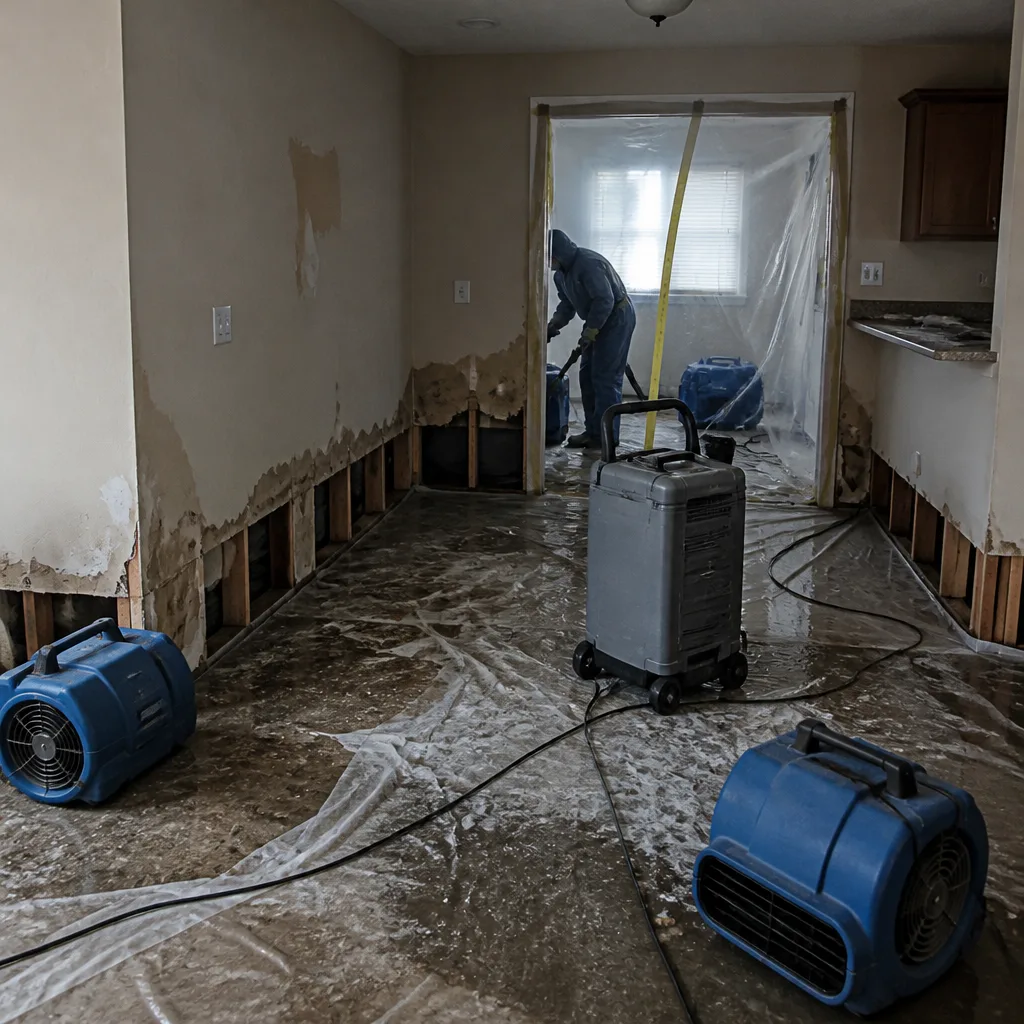 Before
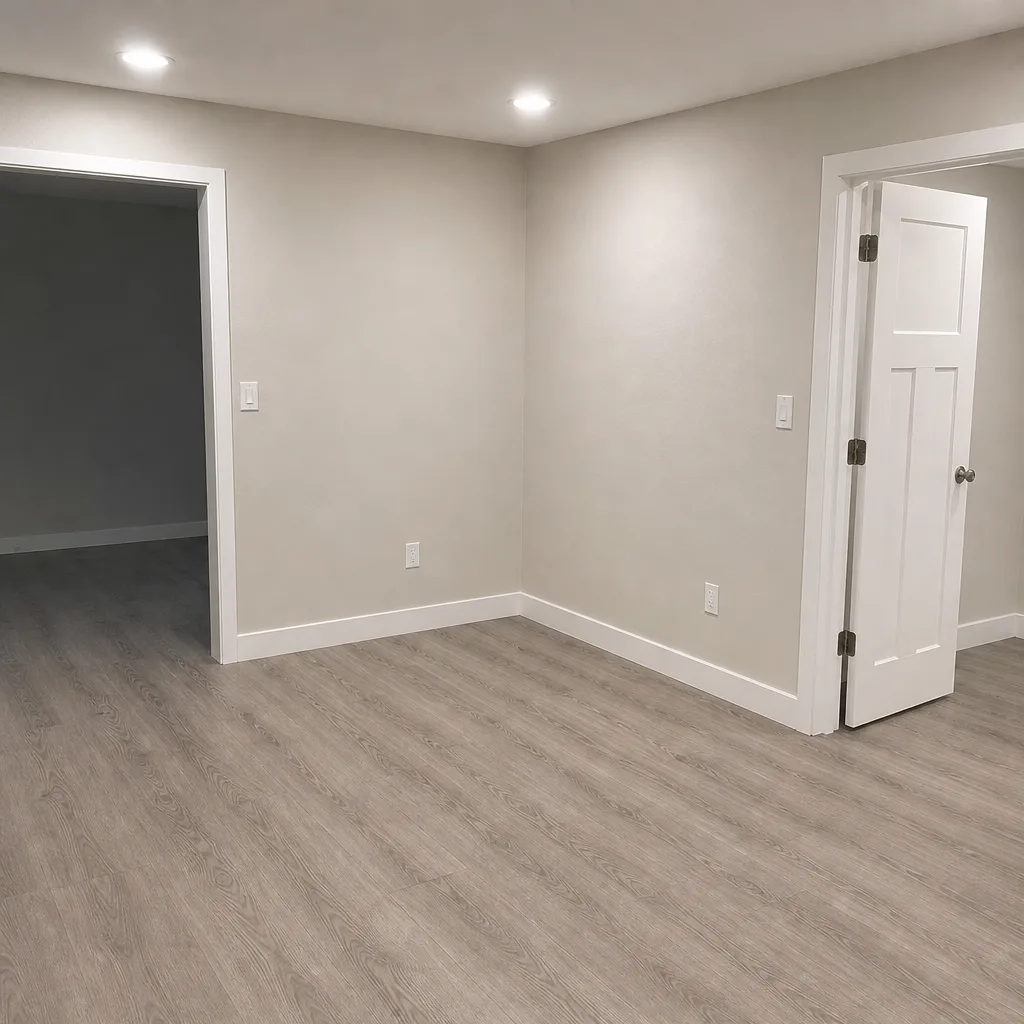 After
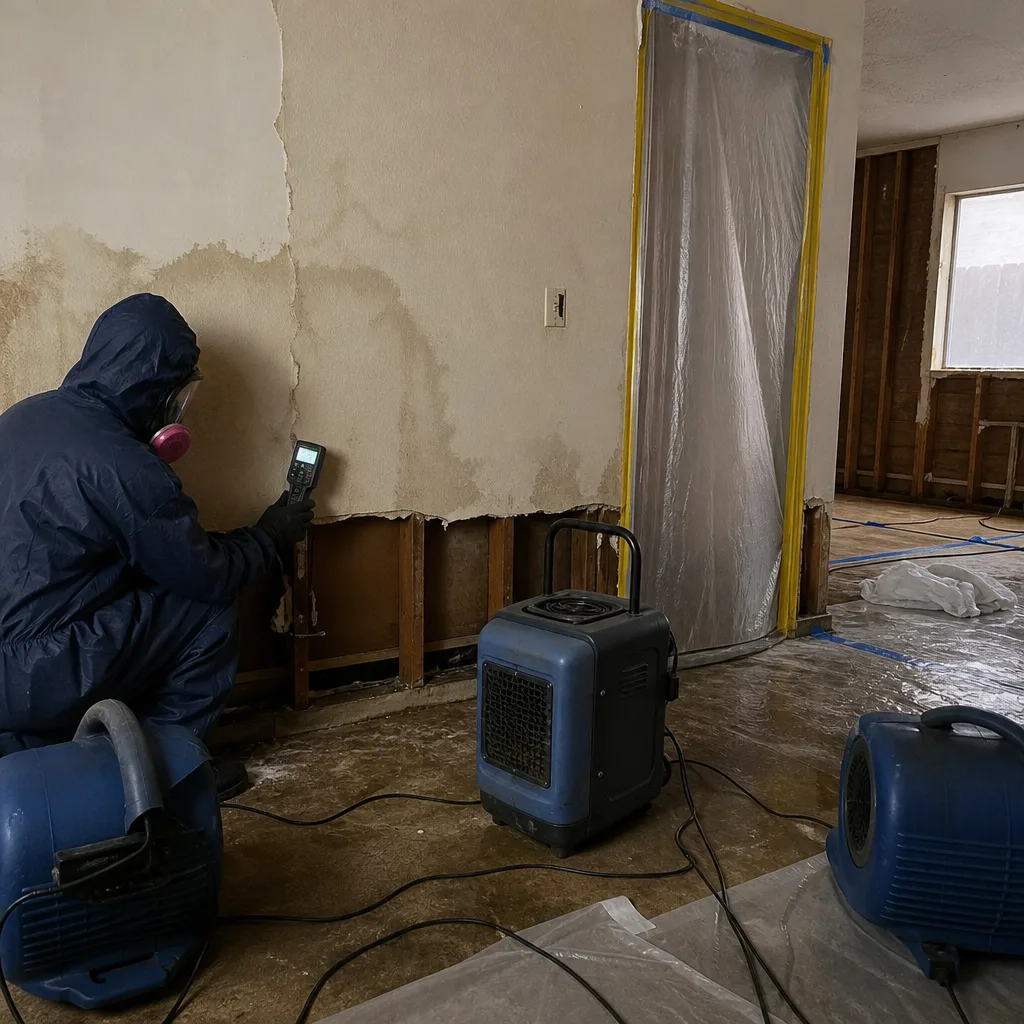 Before
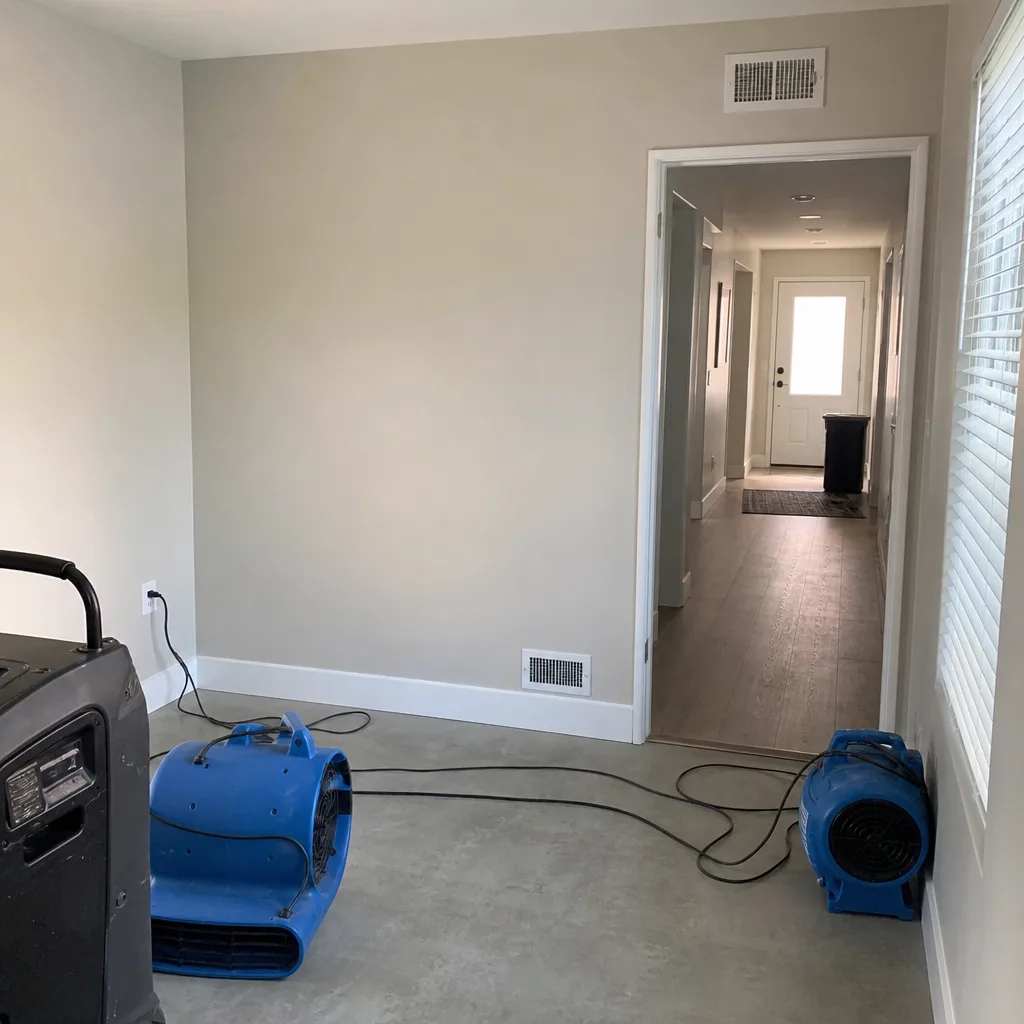 After
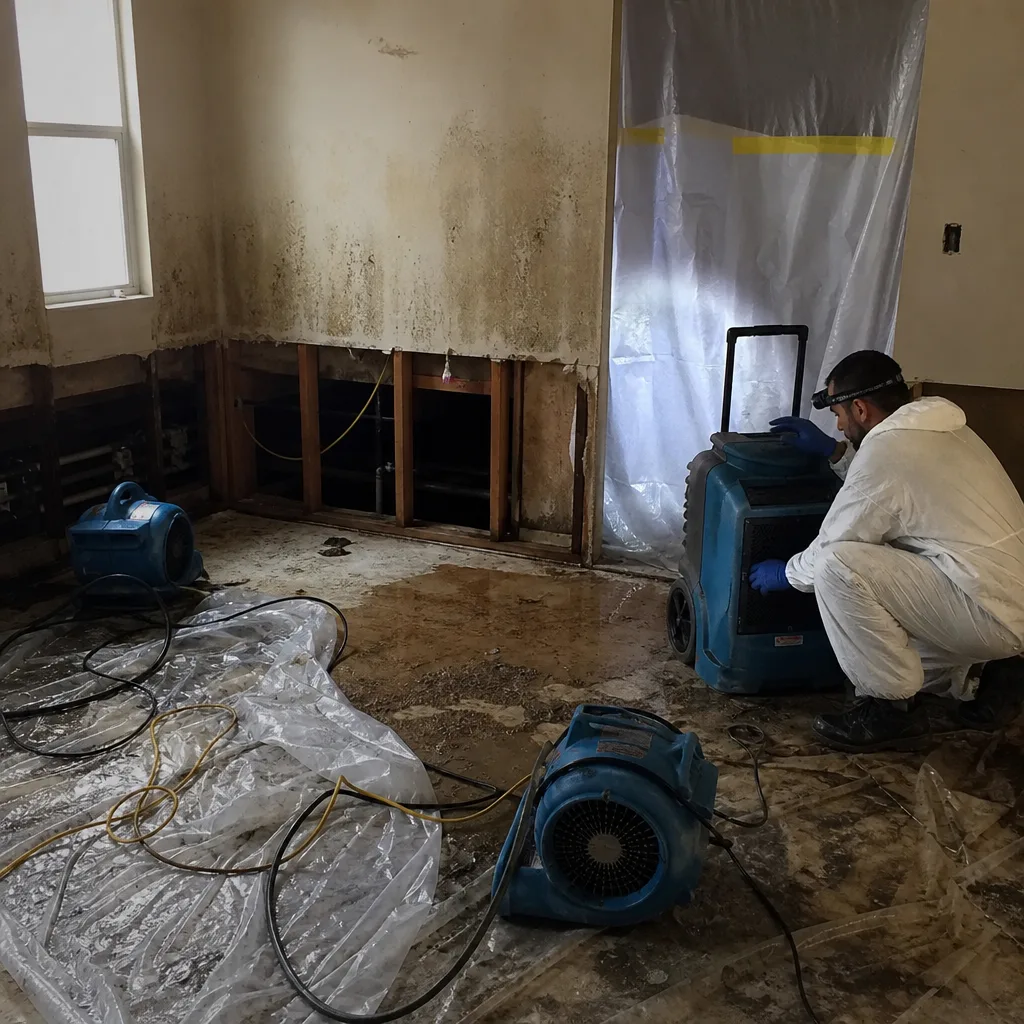 Before
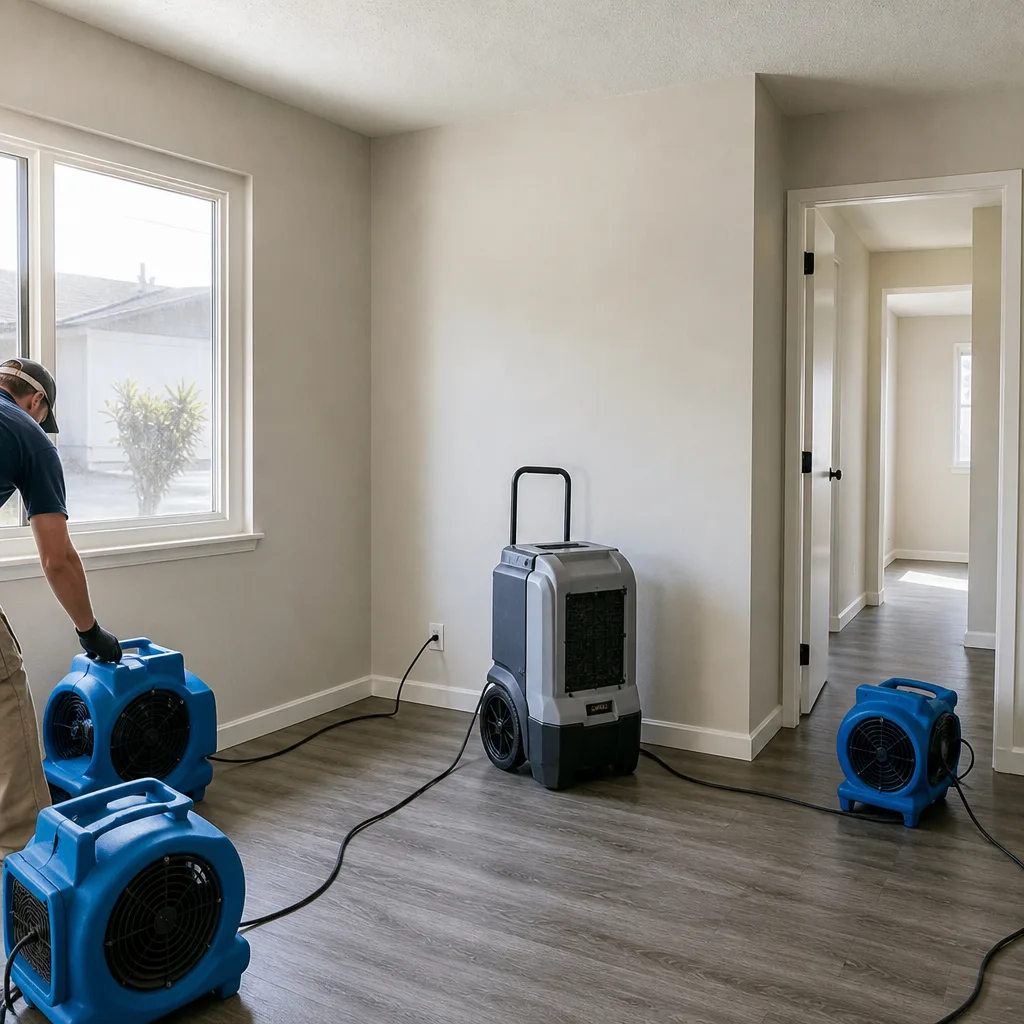 After
Common Mistakes to Avoid
- Waiting until spring to inspect and clean gutters. Fontana’s risk window is October through February, and a spring inspection only tells you what damage already happened during winter rain events.
- Treating a ceiling stain as a paint problem. A stain means water has saturated drywall and likely insulation above it. Painting over it seals moisture in the cavity and accelerates mold growth.
- Using a shop vac and box fans on Category 2 or 3 water. Water from washing machine overflows, dishwasher leaks, or exterior flooding contains contaminants. Consumer drying equipment can’t dry wall cavities or subflooring, and inadequate drying leaves conditions for mold.
- Assuming a roof that survived last year’s rains is fine this year. Santa Ana winds degrade the roof envelope every season. Each year’s wind event incrementally weakens seals and flashing until the failure point is reached.
- Ignoring water that appears at the base of a wall after rain because “it dried on its own.” The visible water is the part that made it to the surface. The larger wet area inside the wall cavity remains and supports hidden mold growth for months.
- Filing an insurance claim before a restoration contractor has assessed and documented the source. Once materials are removed or repairs begin, the evidence that helps your adjuster determine coverage becomes harder to preserve. A documented assessment first protects the claim.
The Bottom Line
Fontana’s damage restoration calendar is not the national calendar. The risks here are driven by three forces: Santa Ana winds that compromise roofs in October and November, atmospheric river storms that stress clay-saturated foundations from December through March, and sustained summer heat that pushes plumbing and HVAC systems to their failure point. The homeowner who acts on these seasonal realities, cleaning gutters in October, inspecting after every half-inch rain event, and investigating every unexplained odor or stain, will catch most problems before they become insurance claims. The homeowner who waits for the national spring-cleaning schedule will meet us under worse circumstances. If you see something that concerns you, call (833) 589-5317 for a free estimate. We’ll tell you what you’re dealing with, even if the answer is that you don’t need us yet.
Written by the team at Dry Line Water Damage, serving Fontana since 2013.