


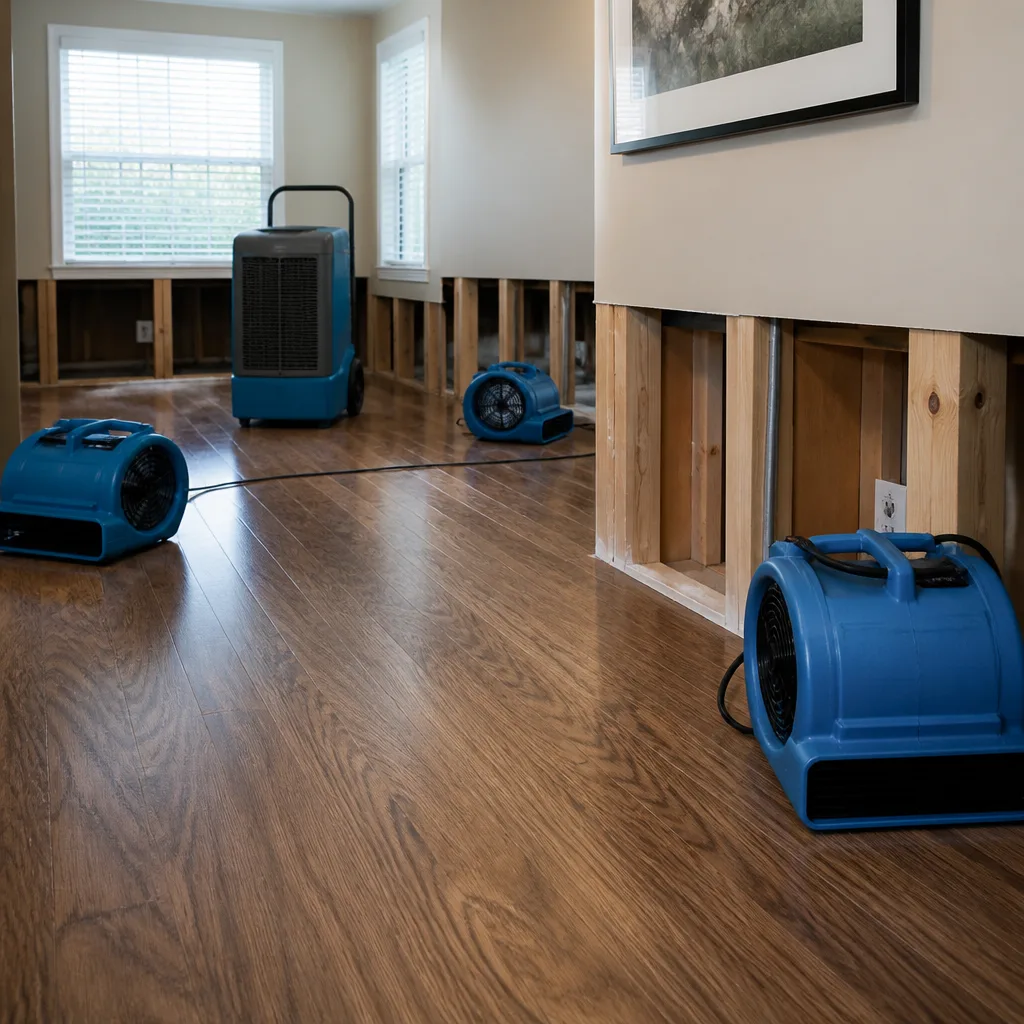
 Water damage drying
 Fire & smoke cleanup
 Mold remediation
 Storm response
 Sewage cleanup
 Reconstruction
Free visual inspection and a written scope of work before any mitigation begins - photos, moisture readings, and drying logs go in your claim file
The scope we write is the scope we bill. Anything new gets shown to you, in writing, before we touch it.
Get your free estimateFast, Reliable Mold Remediation Across Laguna Hills
Mold remediation in Laguna Hills typically costs between $1,200 and $4,800 depending on the square footage affected and whether the growth sits behind walls or in an attic. Most jobs here take two to four days from containment to final air-scrub clearance. If you’re seeing discoloration, smelling musty air, or dealing with a recent wind-driven rain event, call Dry Line Water Damage at (833) 589-5317 for a documented scope of work and honest pricing.
We work throughout the 92653 and 92654 ZIP codes, from the Nellie Gail Ranch hillsides down through the older tract housing near the Alicia Parkway corridor. Our crew knows the stucco-over-wood construction that dominates this city, and we know where moisture hides in it. When a Laguna Hills homeowner calls us about a bathroom ceiling stain, we’re already thinking about the attic above it.
Why Dry Line Water Damage Is Laguna Hills’s Preferred Mold Remediation Company
Our Mold Remediation team has worked enough jobs in Laguna Hills to know the local failure pattern cold: wind-driven rain pushes through attic vents, moisture sits in fiberglass insulation and roof sheathing, and mold grows overhead while the living space stays bone-dry. That’s the inland Saddleback Valley signature. Coastal cities deal with chronic humidity. Laguna Hills deals with sudden, event-driven moisture that nobody sees until the smell shows up weeks later.
We’re an IICRC-certified operation, which means our process follows a published, third-party standard, not a handyman’s best guess. When Glen Pacheco’s crew sets up containment in a Laguna Hills attic, we’re running the same protocol a large-loss insurance contractor would run. That includes moisture mapping across the roof sheathing, pressure differentials on the containment zone, and daily drying logs your adjuster can actually use.
Response time matters here because the Santa Ana window is real. A wind event passes through, the house feels dry within 48 hours, and the mold clock starts ticking anyway. We dispatch to Laguna Hills from our Fontana base without routing through coastal traffic on the 5. That saves time when a homeowner finally pulls down the attic ladder and sees what’s been growing overhead.
Restoration work we handle
Bathroom Mold Removal in Laguna Hills
Bathroom Mold Removal in Laguna Hills usually starts with the obvious: dark spotting on ceiling corners, discoloration behind the toilet, or swelling baseboards near the tub. But in this city, we always check above the bathroom first. Many older 92653 homes have bathroom exhaust fans that vent into the attic rather than through the roof, and every shower sends a little more moisture into the framing. After enough cycles, the mold isn’t coming from the shower at all – it’s coming from above the ceiling.
Typical bathroom mold removal in Laguna Hills runs between $500 and $1,800 when the growth is surface-level and contained to grout lines, drywall corners, or a single wall cavity. If the ceiling drywall is soft or the exhaust fan has been dumping humid air into the attic for years, that number moves into the $2,000 to $4,000 range because the job now includes attic remediation.
Ceiling and Exhaust Fan Assessment
We check two things on every Laguna Hills bathroom mold call: whether the vent fan actually terminates outside, and whether the ceiling drywall around the fan has gone soft from long-term moisture. Faulty venting is the single most common cause of recurring bathroom mold in this city’s older housing stock. Fixing the mold without fixing the vent means the same call again next year.
Wall Cavity Treatment Without Unnecessary Demolition
When mold sits inside a wall cavity behind a tub surround or vanity, we use Injectidry panels and moisture probes to dry the framing before we recommend opening walls. Not every Laguna Hills bathroom mold job needs tile demolition. Where the cavity has dried to a documented standard, we treat the surface and log the numbers. Where the framing is compromised, we open only what the moisture map says needs opening.
Mold Removal Service in Laguna Hills
Mold Removal Service in Laguna Hills almost never stays in the room where you found it. In this city, the stack effect does real work: warm air rises through the house, pulls moisture up through wall cavities, and deposits it in the attic. By the time a homeowner sees a living room ceiling stain, the mold surface inside the attic can be three times larger than what’s visible below.
We scope every Laguna Hills mold removal job with a written protocol. Containment goes up first, negative air keeps spores from migrating through the rest of the house, and then we remove affected drywall, insulation, or trim. After removal, we dry the structure with Dri-Eaz and Phoenix equipment, apply antimicrobial treatment to the framed cavities, and run air scrubbers until clearance readings come back within range. You get the drying logs and post-remediation verification, not just a verbal “looks good.”

Attic Mold After Wind-Driven Rain
A wind event pushes rain sideways into ridge and eave vents, and the water settles into insulation batts and the top side of the ceiling drywall. This is the Laguna Hills pattern: no interior flooding, no visible leak, and mold blooming in the attic three to six weeks later. We map moisture across the full roof deck, not just the wet corner, because wind-driven rain spreads unevenly across the sheathing.
Containment and Clearance Documentation
Every mold removal service we run in Laguna Hills ends the same way: third-party clearance testing, a written scope of work, and photo documentation. That matters for two reasons. First, you shouldn’t take a contractor’s word that the mold is gone; the air sample should say so. Second, if you’re filing an insurance claim, the adjuster wants to see containment protocol and daily logs, not a single after photo.
Trusted Brands We Service in Laguna Hills
Dry Line Water Damage runs Dri-Eaz and Phoenix dehumidification equipment, XPOWER air movers, and Injectidry structural drying panels – the same brands commercial restoration contractors use on large-loss jobs across Orange County. We don’t swap in consumer-rental machines for Laguna Hills attics and hope for the best. Our IICRC-certified process pairs the equipment with the documentation that insurance adjusters expect. When we run an Injectidry panel on a stucco-over-wood wall cavity in a Moulton Ranch home, we’re pulling documented moisture readings from inside the framing, not just waving a meter at the surface and saying it’s dry.
See the difference
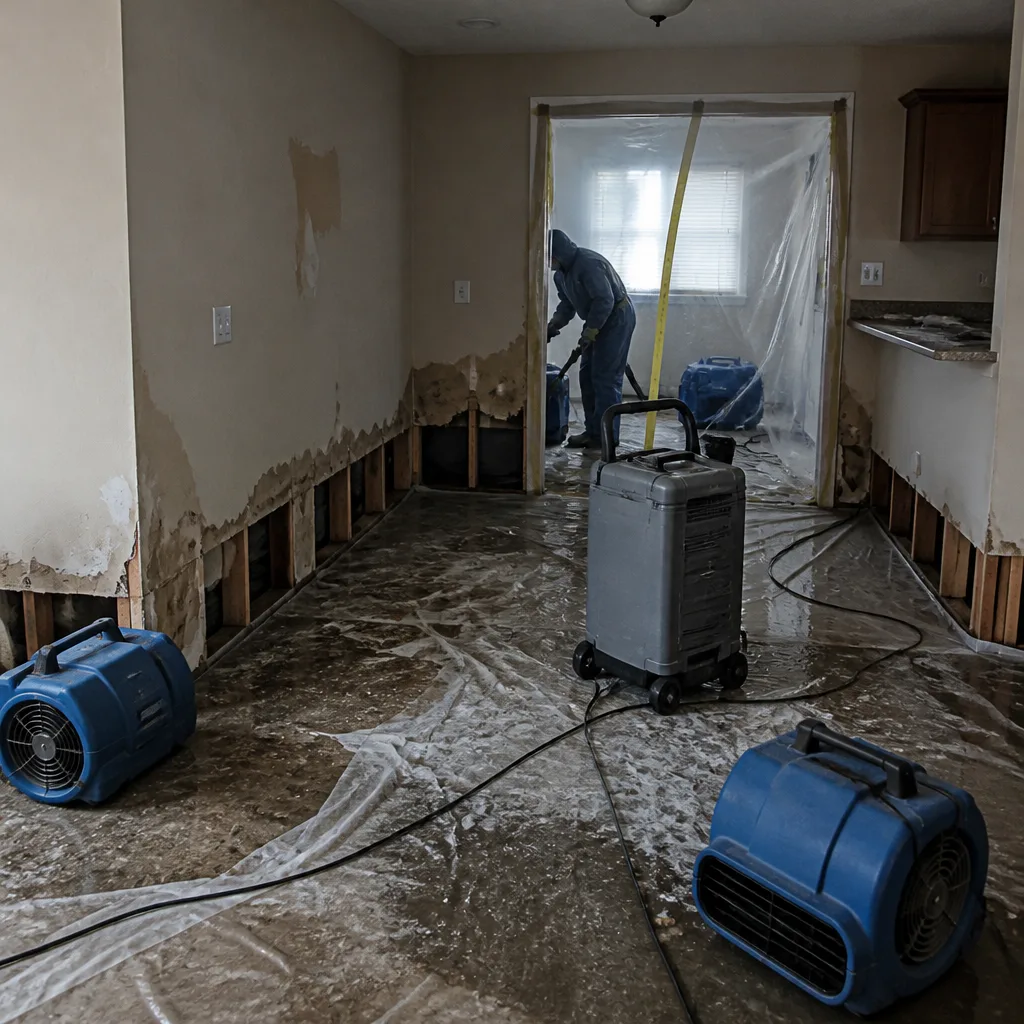 Before
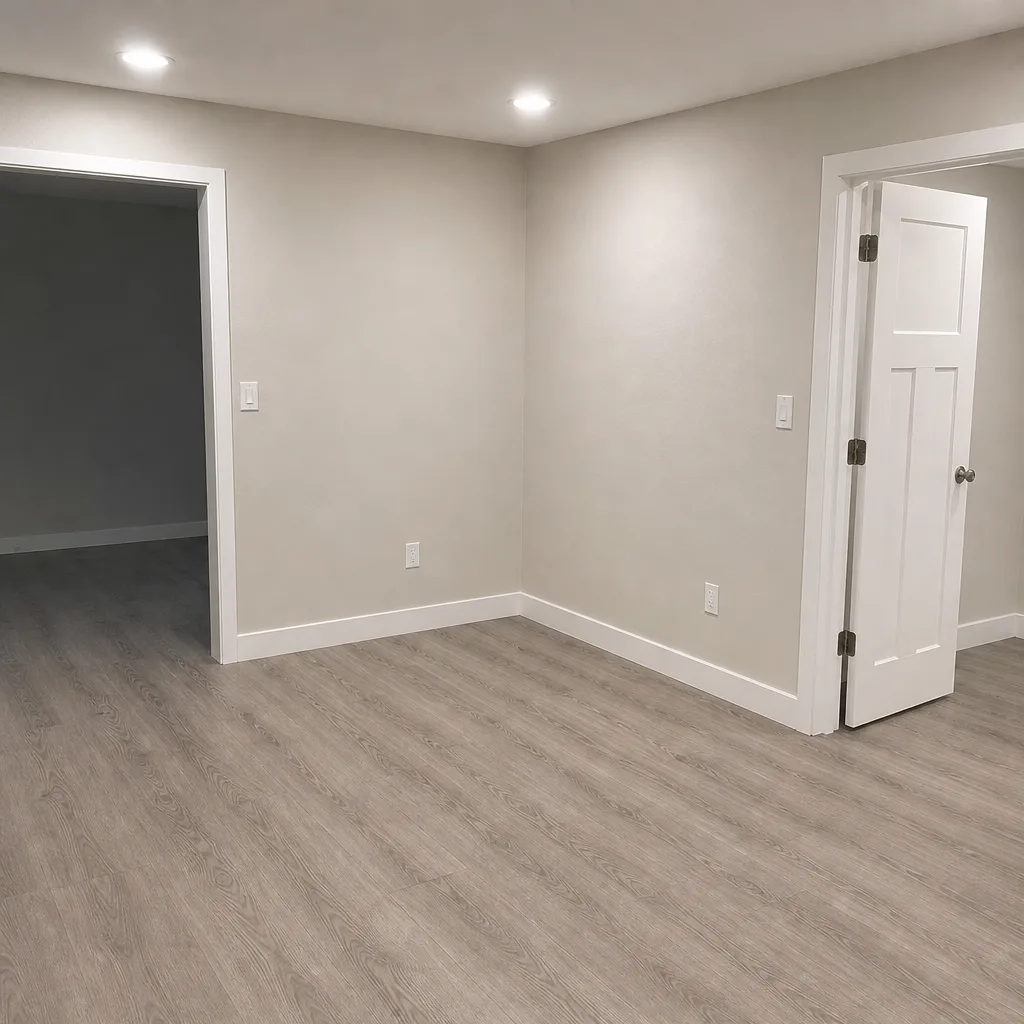 After
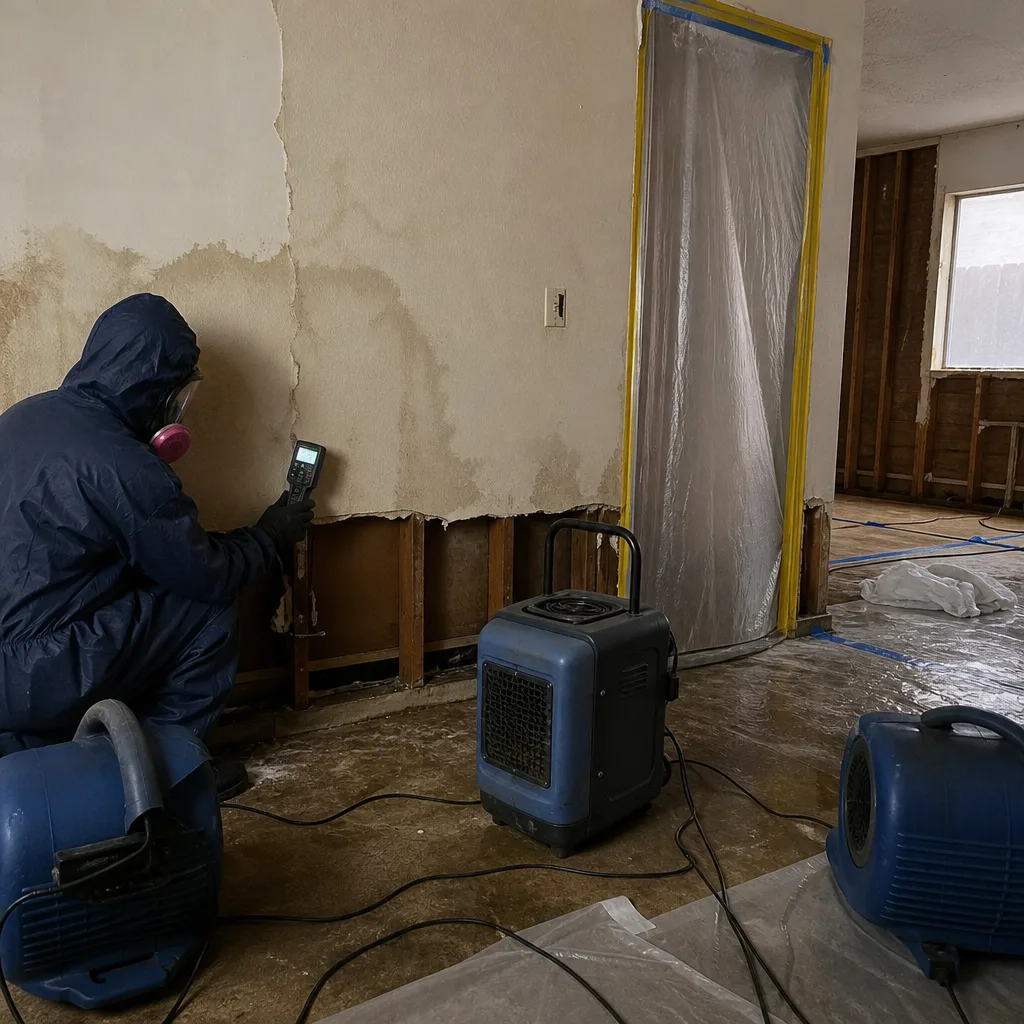 Before
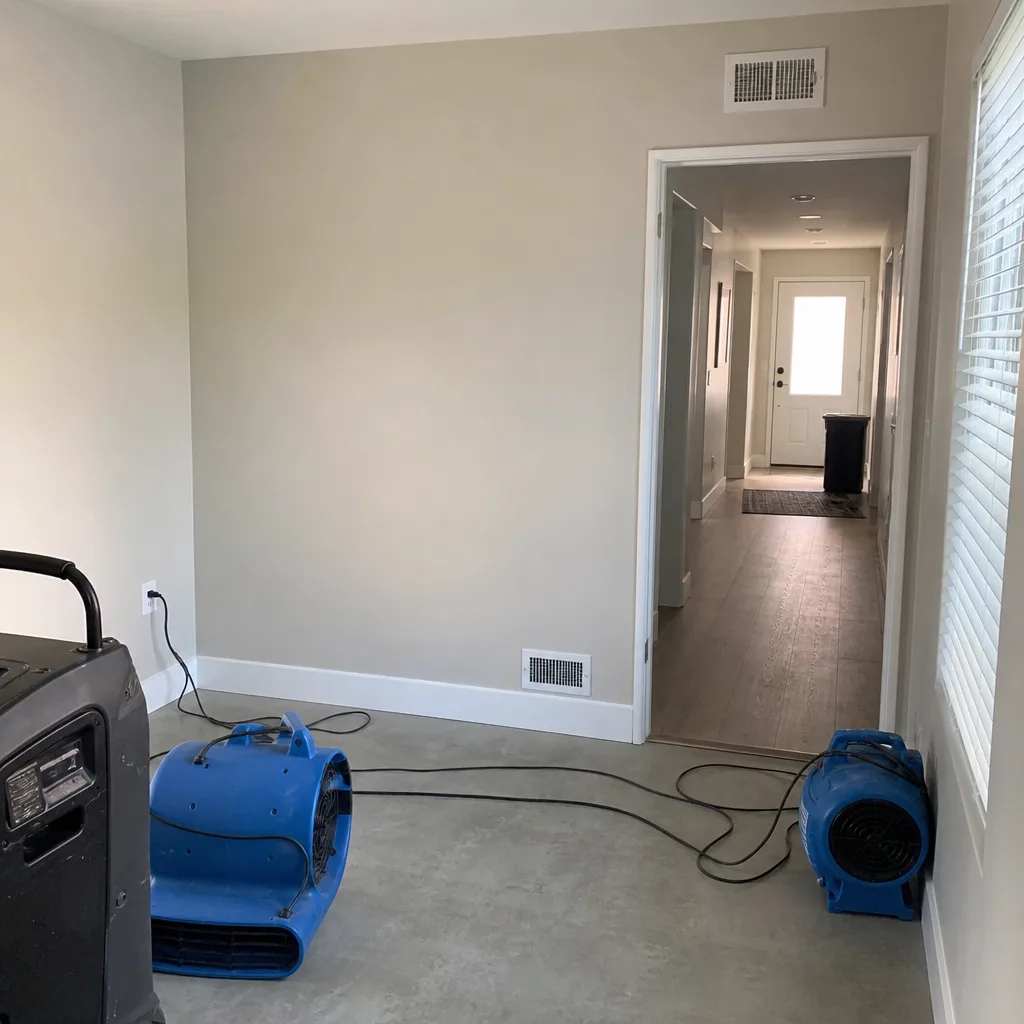 After
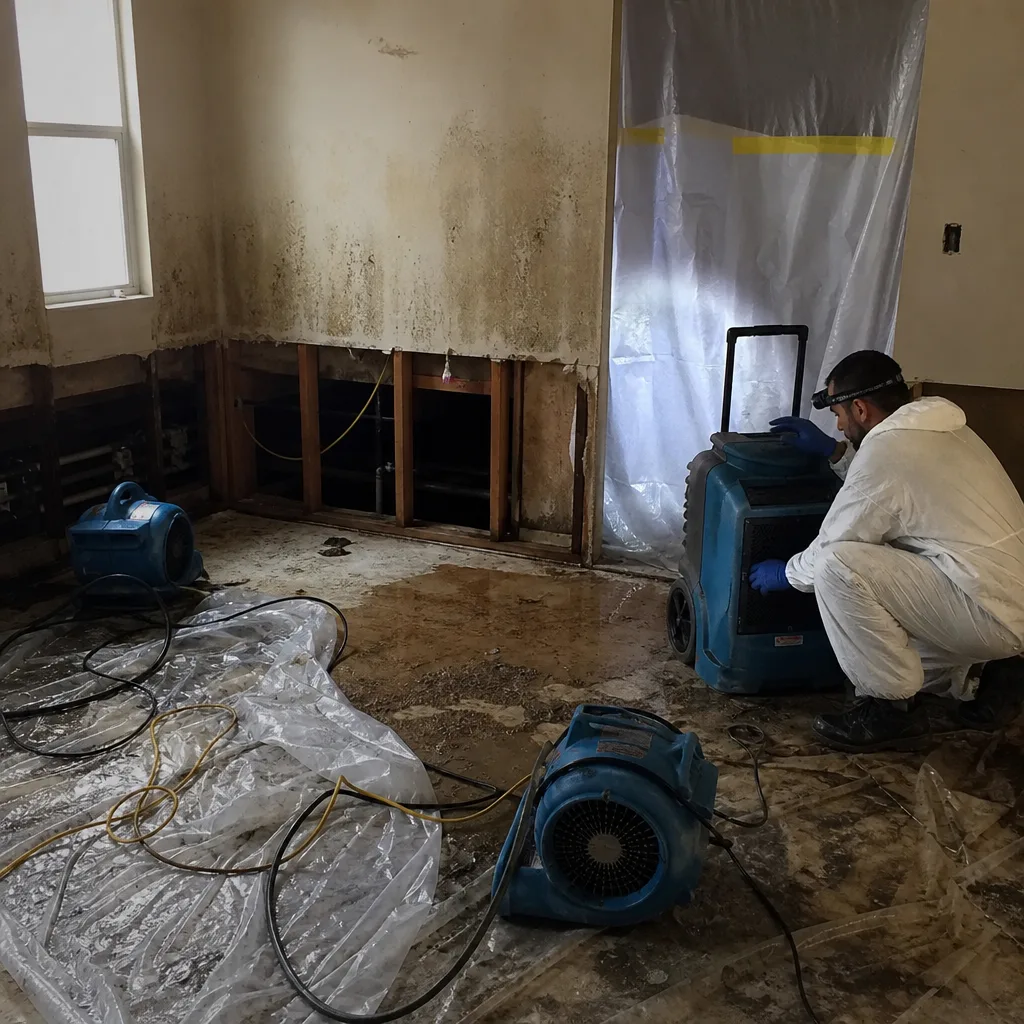 Before
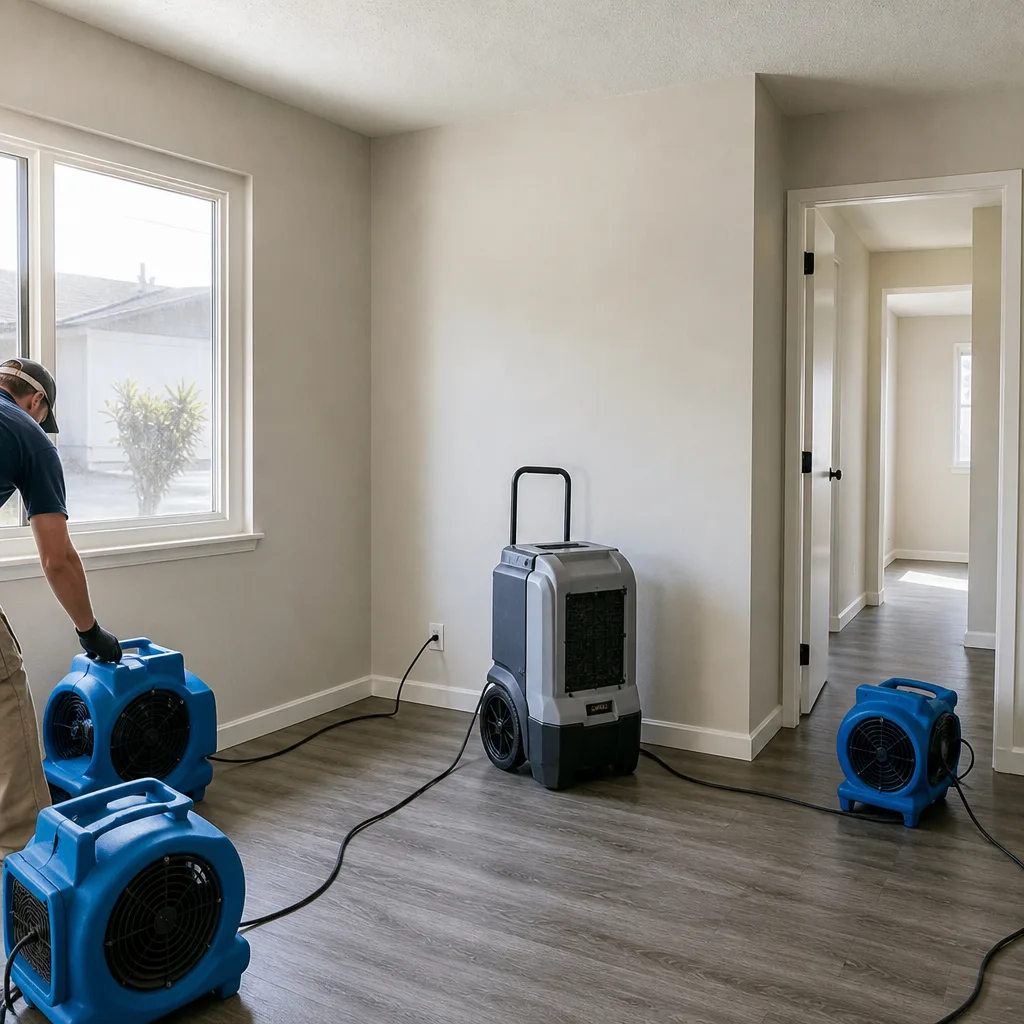 After
Common Mold Remediation Problems We See in Laguna Hills Homes
- Attic-first mold after Santa Ana wind events. Wind-driven rain pushes through ridge and eave vents into stucco-over-wood construction, soaking insulation and roof sheathing. Homeowners don’t check the attic because nothing inside the house looks wet.
- Moisture trapped behind EIFS-style exteriors. Many 1970s and 1980s homes in 92653 have synthetic or modified stucco systems that hold water against the sheathing. The exterior face looks fine while the wall cavity stays damp for weeks. Mold grows on the back side of the drywall and shows up as a musty smell long before visible staining.
- Faulty bathroom exhaust venting into the attic. Older Laguna Hills tract homes often have bathroom fans that terminate in the attic instead of outside. Every shower sends warm, humid air into the insulation. Ceiling mold below is the symptom; attic mold above is the actual problem.
- Slow-to-appear odor with no visible source. Because dry Santa Ana air speeds surface evaporation, moisture hides behind tile roofs and stucco while the living space feels fine. By the time the musty odor reaches a bedroom or hallway, mold has usually been growing for weeks. A moisture map of the attic and eaves is the fastest way to find it.
Pricing for Mold Remediation in Laguna Hills, CA
A bathroom mold removal in Laguna Hills runs $500 to $1,800 for surface-level growth. An attic remediation after wind-driven rain starts around $2,500 and typically lands between $3,500 and $6,000 when insulation removal, sheathing treatment, and air scrubbing are included. Whole-home containment jobs involving multiple rooms or wall cavities run $6,000 to $15,000. The biggest cost drivers are square footage, whether insulation needs replacement, and whether we’re working in a confined attic with limited access. Every job gets a written scope and line-item estimate before any work starts. Call (833) 589-5317 for a free on-site assessment in Laguna Hills.
We Also Serve Cities Near Laguna Hills
Our Laguna Hills service area extends to the surrounding communities: Laguna Woods and Lake Forest to the north and east, Mission Viejo to the south, and Coto De Caza up in the foothills. If you’re in the Saddleback Valley, we’re already close. Give us a call at (833) 589-5317.
Serving Laguna Hills, CA — Our Local Coverage Area
We’re based in the Laguna Hills area and know this community well. Use the map below to see our service coverage — if you’re nearby, we can almost certainly help.
FAQs About Mold Remediation in Laguna Hills
Start in the attic, specifically around ridge vents, eave gaps, and the north-facing roof sheathing. Wind-driven rain enters through those openings even when no interior leak appears. Look for darkened or water-stained insulation batts, discoloration on the underside of the roof deck, and condensation on exposed ducting. If you smell mustiness in a hallway but can’t place it, the attic is the first place we check. Call (833) 589-5317 and we’ll run a moisture map before you spend money on remediation.
Because the dry Santa Ana air evaporates surface moisture fast while leaving water trapped behind stucco, tile roofs, and inside insulation. The living space feels normal within a day or two, but the attic cavity stays damp because it’s sealed and slow to dry. Mold reaches the point where it produces detectable odor in three to six weeks. The fix is moisture mapping immediately after a wind event, not waiting for the smell.
Yes. In coastal cities, bathroom mold is usually a chronic humidity problem. In Laguna Hills, it’s often a ventilation problem, because many older homes vent bathroom fans into the attic instead of through the roof. We always inspect the vent termination and the ceiling cavity above the bathroom. Surface cleaning won’t solve a mold problem that’s being fed from above.
Document everything before you disturb it – photos, date stamps, the weather event, and a written description of where you found mold and when you first noticed odor. Then call a certified remediation contractor who produces daily drying logs, containment protocol, and moisture readings. Adjusters accept claims more readily when the documentation comes in the form they’re trained to review. We work directly with adjusters and provide the full paper trail.
Yes. Stucco-over-wood is the standard construction type across much of 92653 and 92654, and we’ve remediated hundreds of attics built that way. The key is Injectidry panels and moisture probes that measure moisture inside the framing cavities, not just on the stucco face. We set up containment in the attic, remove affected insulation and drywall, dry the sheathing to a documented standard, treat the framing, and verify with clearance testing. Call (833) 589-5317 for an exact scope and price.
Written by Glen Pacheco, Owner at Dry Line Water Damage, serving Laguna Hills and the Saddleback Valley with IICRC-certified mold remediation.