


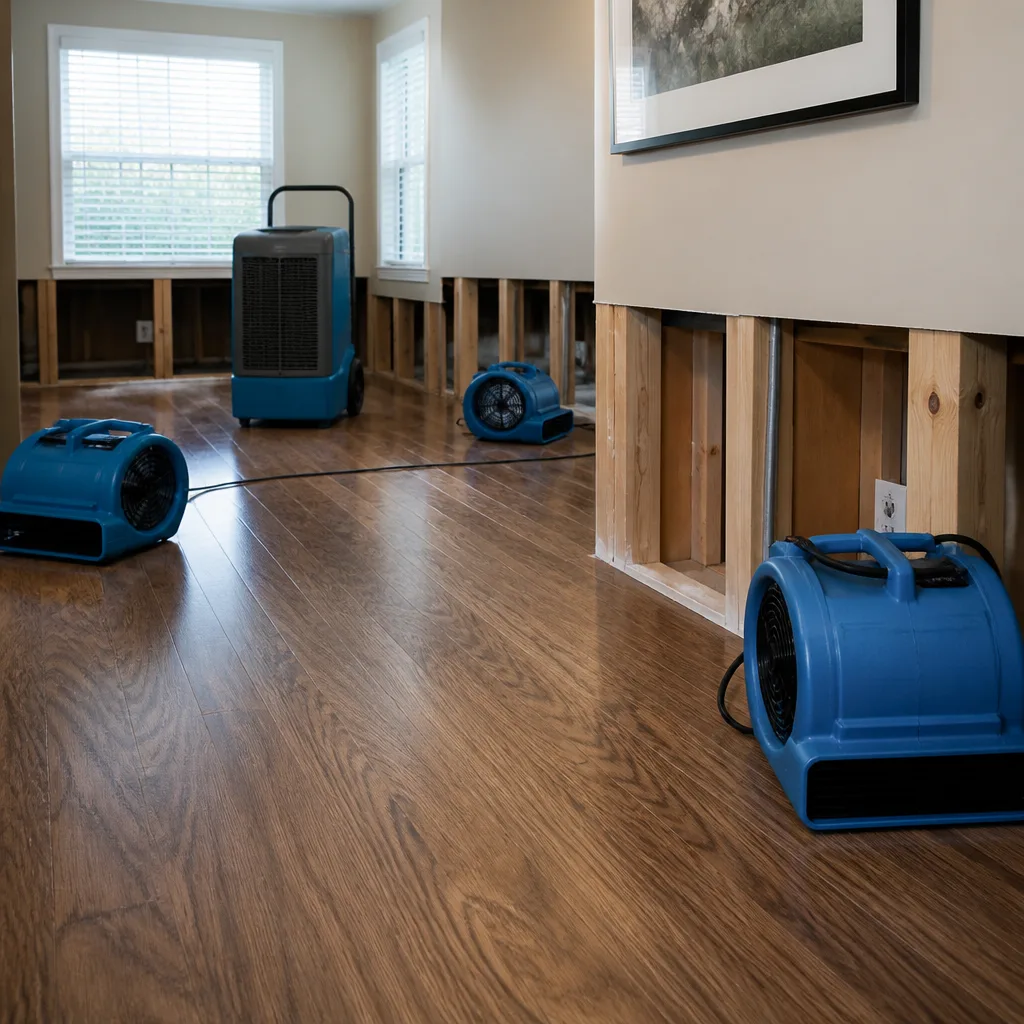
 Water damage drying
 Fire & smoke cleanup
 Mold remediation
 Storm response
 Sewage cleanup
 Reconstruction
Free visual inspection and a written scope of work before any mitigation begins - photos, moisture readings, and drying logs go in your claim file
The scope we write is the scope we bill. Anything new gets shown to you, in writing, before we touch it.
Get your free estimateFast, Reliable Mold Remediation Across Mission Viejo
Mold remediation in Mission Viejo typically costs between $1,800 and $6,500 depending on containment complexity, square footage affected, and whether the colony sits behind drywall or inside a shared condo wall. Most jobs in the 92691 and 92692 ZIP codes we handle are caused by pinhole leaks in original polybutylene supply lines or slow drain-line seepage that went unnoticed for weeks. We’re the crew that shows up with commercial-grade drying systems and a written scope before any demolition starts. Call (833) 589-5317 for a free estimate from a team that knows Mission Viejo’s tract-home construction quirks better than most.
Why Dry Line Water Damage Is Mission Viejo’s Preferred Mold Remediation Company
Mission Viejo is a master-planned community built almost entirely between 1966 and 1990 by the Mission Viejo Company. That means every home in a given tract shares the same wall assemblies, the same slab-on-grade foundation details, and the same original plumbing materials. We get calls from homeowners in Madrid, Casta del Sol, and Painted Trails who describe near-identical failures: a gray polybutylene pinhole behind the kitchen sink, a corroded copper elbow under a second-floor bathroom, or a drain line that’s been weeping into the sole plate for a decade. When you call us, you’re not explaining your house to someone who’s never seen one. We already know the layout logic.
Glen Pacheco runs our operation, and his approach is direct: document the moisture, contain the mold, dry the structure to a measurable standard, and leave you with a report your HOA and your insurer can both read. That matters in Mission Viejo more than most places, because so much of the city is HOA-governed. The Madrid neighborhood, for example, has architectural review requirements that can slow down visible repairs if the scope isn’t submitted properly. We handle that paperwork before we cut drywall. It’s one less thing for you to fight about while you’re already dealing with a mold problem.
We work across all three Mission Viejo ZIP codes: 92690 (Lake Mission Viejo and the lakefront tracts), 92691 (Madrid, Deane Homes, and the central corridor), and 92692 (Casta del Sol, Pacific Hills, and the southern ridges). Our Mold Remediation team carries IICRC-certified protocols and Dri-Eaz dehumidifiers sized for whole-home drying, not just single-room rental units. The response time to Mission Viejo from our base is consistent, and we don’t ask you to wait days for a moisture assessment when mold is actively spreading.
Restoration work we handle
Professional Mold Removal in Mission Viejo
Professional mold removal in Mission Viejo involves more than spraying a biocide and wiping surface stains. The job starts with moisture mapping to find the water source, then setting up containment so spores don’t cross into clean rooms, then removing affected drywall or insulation, then drying the framing to a documented standard. A typical single-room removal in a stucco-over-woodframe Mission Viejo home runs $1,500 to $3,800. The price climbs when the colony sits behind two walls or under a slab-grade bathroom floor.
Containment and Removal
We run negative-air machines and six-mil poly containment on every demolition job. That’s not theater; it’s the only way to keep spores out of your HVAC return while we pull out wet drywall and insulation. In a 1970s tract home with a single central return, skipping containment can push mold spores into every bedroom in under an hour.
Drying to a Documented Standard
We don’t stop when the wall “looks dry.” We use moisture meters and thermo-hygrometers to track drying progress, and we hand you readings before we close the wall back up. In Mission Viejo’s semi-arid climate, the ambient air helps us dry faster than coastal cities, but slab-on-grade homes still trap moisture in bottom plates and kick plates. The Injectidry system lets us pull water out of wall cavities without gutting the entire run, which saves drywall and keeps the repair scope smaller.
Mold Inspection in Mission Viejo
Mold inspection in Mission Viejo homes usually starts because a homeowner smells something musty near a shared wall, spots discoloration under a window, or gets flagged during a pre-sale inspection. A visual inspection with moisture mapping and a surface or air sample typically runs $400 to $900 in the 92690, 92691, and 92692 ZIP codes, depending on how many rooms we’re testing and whether lab analysis is included. We don’t sell inspections as a standalone product; we use them to figure out whether you need remediation at all.
When Sampling Makes Sense
You don’t always need air sampling. If we can see the colony and trace the water source, the scope writes itself. Sampling earns its cost when mold is suspected but not visible, when a family member has respiratory symptoms, or when a shared-wall condo dispute in a complex like the clubs off Marguerite Parkway requires objective lab results to prove origin. We send samples to an independent lab and include the report with our written scope.
Tract-Specific Water Sources
The inspection doesn’t end at visible mold. In Mission Viejo, we look hard at original polybutylene supply lines, early copper elbows at bathroom fixtures, and the drain-line penetrations under slab-on-grade floors. A mold bloom on a baseboard in a late-1970s tract is often just the visible symptom of a plumbing failure that’s been active for months. We map the moisture so the repair decision is data-driven, not guesswork.

Trusted Brands We Service in Mission Viejo
We run Dri-Eaz dehumidifiers and Phoenix axial air movers sized for full-home drying, the same equipment you’d see on a commercial large-loss job. For structural drying in tight Mission Viejo wall cavities and slab-on-grade floors, we use Injectidry panels and manifolds that pull moisture out without gutting every stud bay. Because Mission Viejo’s housing stock is so uniform, we already know which equipment fits the wall thicknesses and drywall profiles used in the 1966 – 1990 tracts, which cuts setup time on site.
Common Mold Remediation Problems We See in Mission Viejo Homes
- Polybutylene pinhole leaks behind kitchen and bath walls. The gray supply pipe used in 1970s and early-1980s tracts degrades from the inside out, so the first visible sign is often mold on the back side of drywall rather than an obvious puddle. If one line has failed, the rest of the home’s original plumbing is usually on the same schedule.
- Shared-wall moisture migration in condo and townhome clusters. In the large late-1970s and 1980s clusters along Alicia Parkway and Marguerite, a leak in one unit’s wall cavity can wick into the adjacent unit’s framing. HOA rules dictate who pays for what, and we provide the documentation adjusters and boards need to settle that.
- HOA architectural review complications after visible repairs. Many Mission Viejo associations, including those governing Madrid and the lakefront tracts, require design review before drywall patch, texture, or repaint work is visible from common areas. We write scopes that match community standards so you don’t get a violation notice after we leave.
- Slab-on-grade moisture trapped in bottom plates and kick plates. Mission Viejo’s graded slopes and drainage swales concentrate runoff toward lower-lying tracts, and any planter bed or downspout pointing at a foundation wall can feed mold inside a slab home for years before it shows. We check exterior drainage as part of every mold inspection because in this city, the water source is often outside the wall.
See the difference
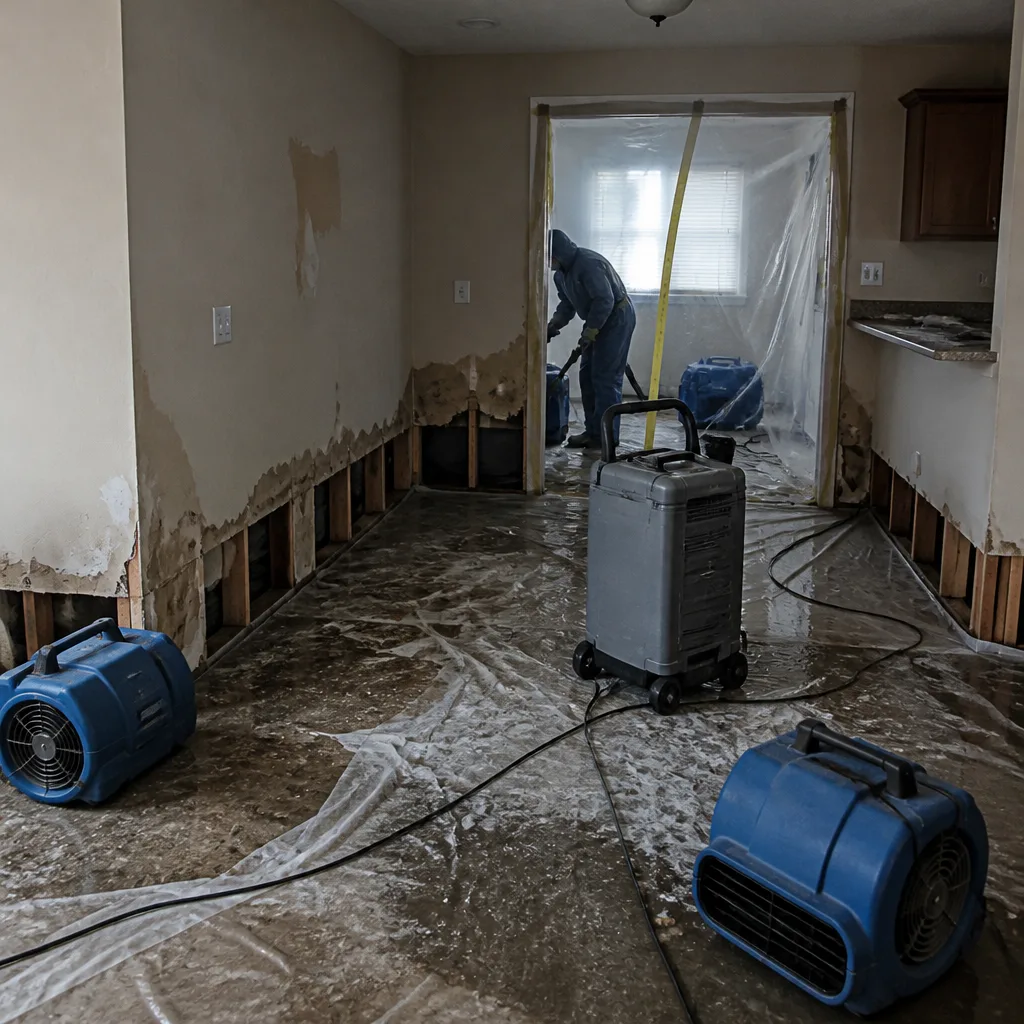 Before
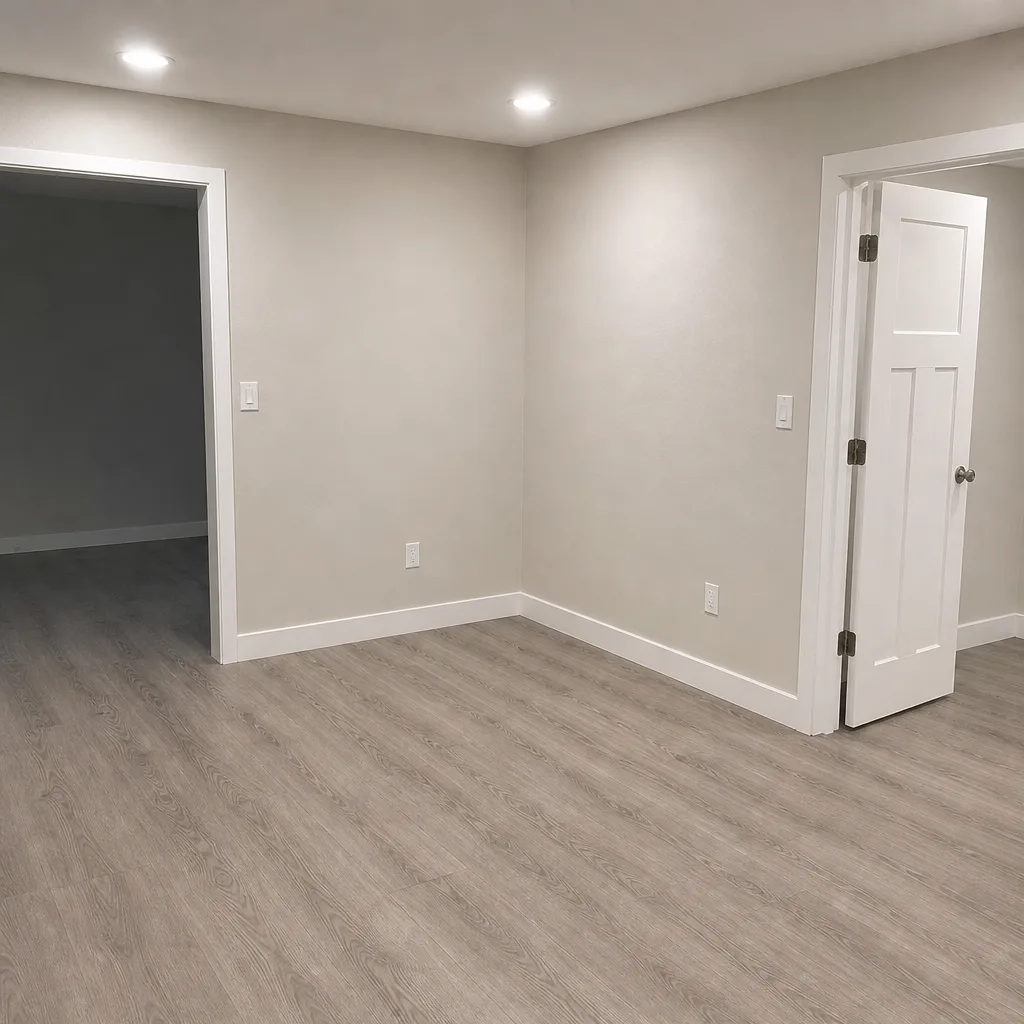 After
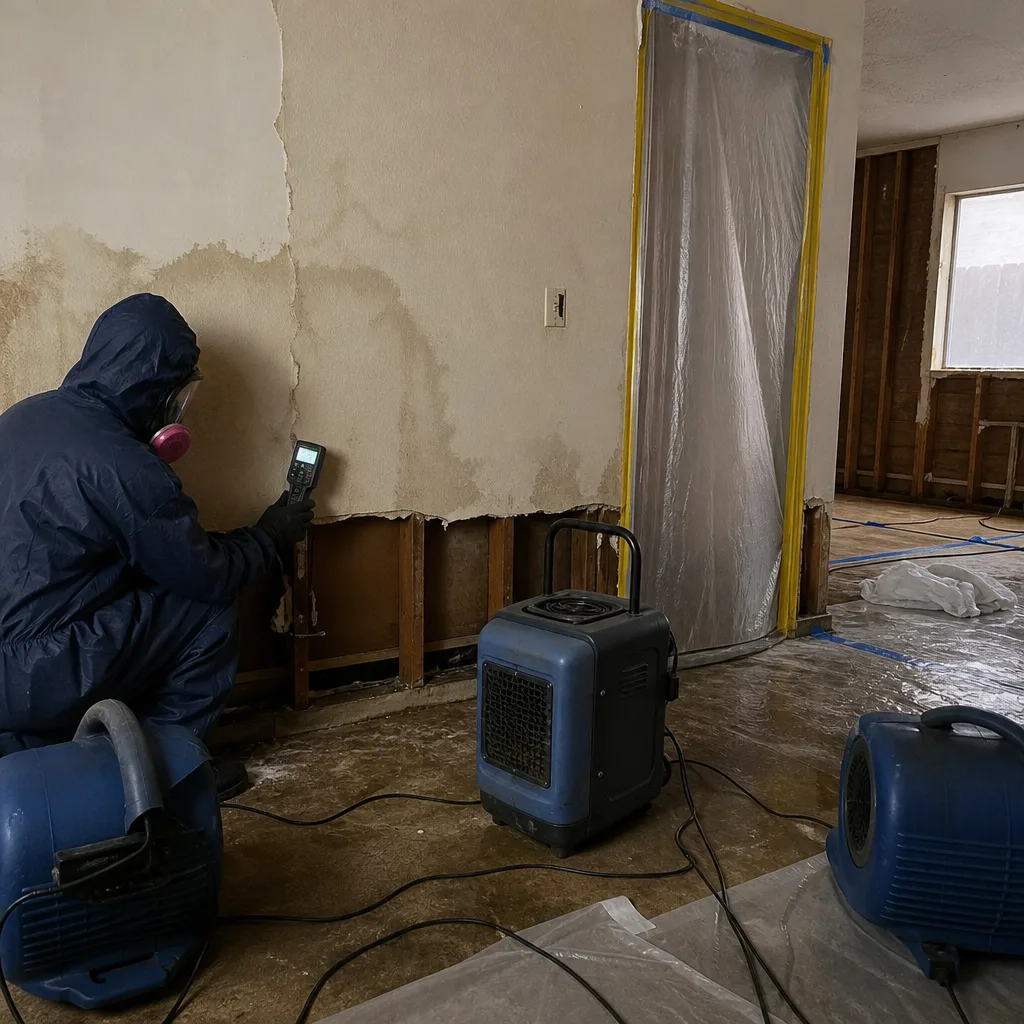 Before
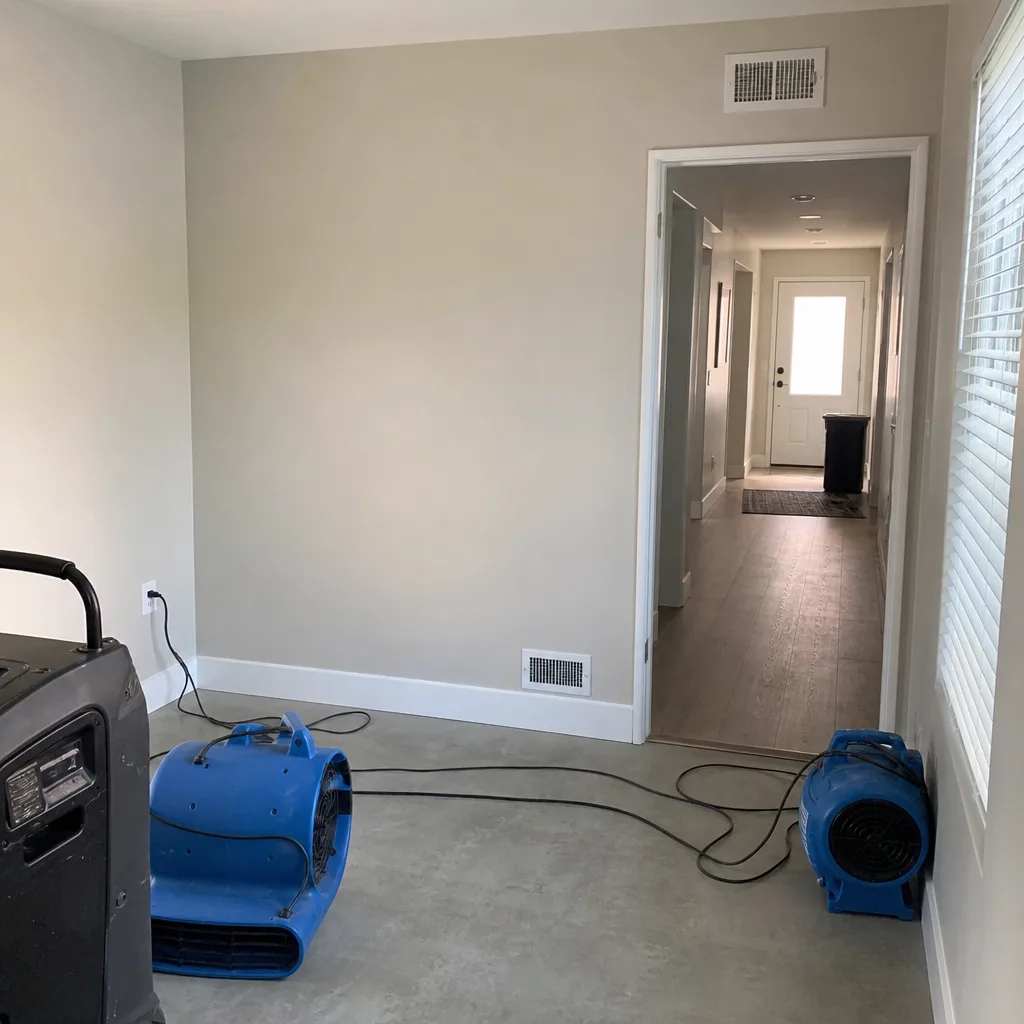 After
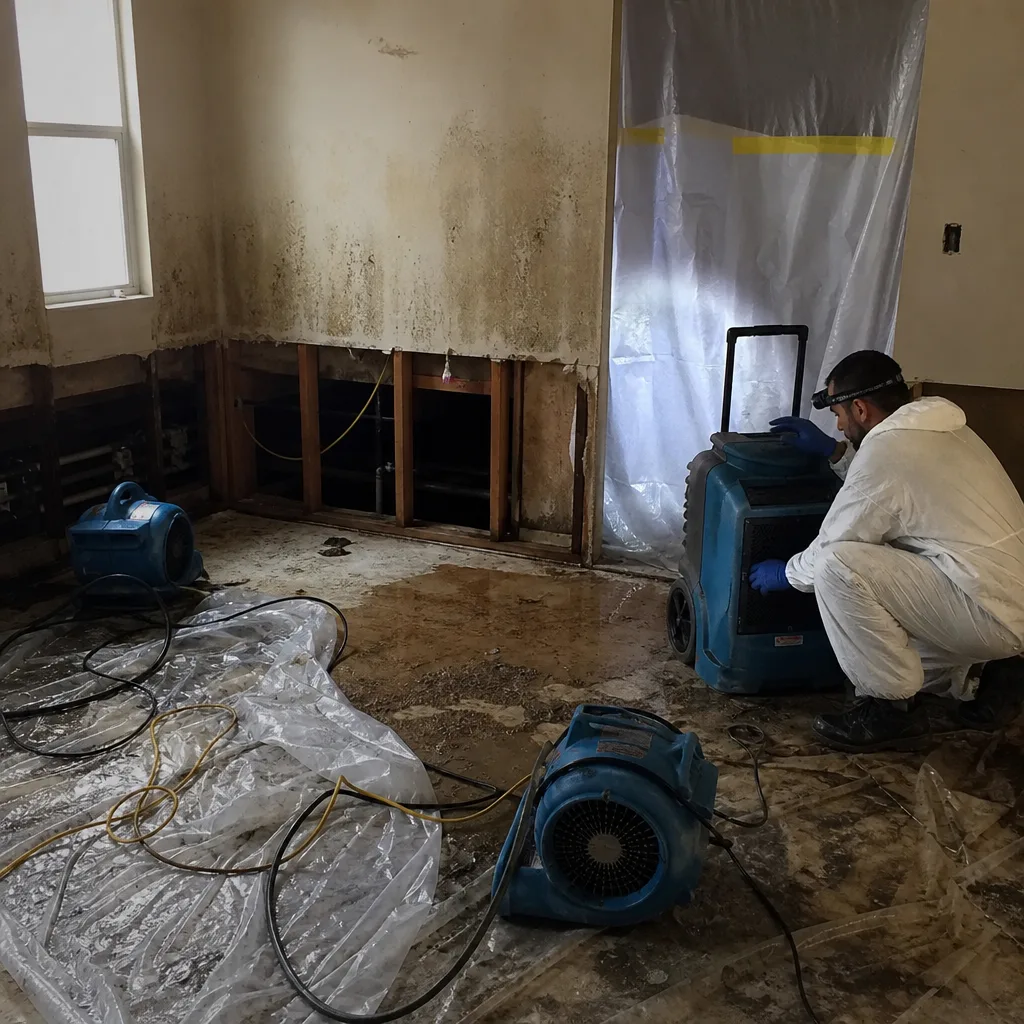 Before
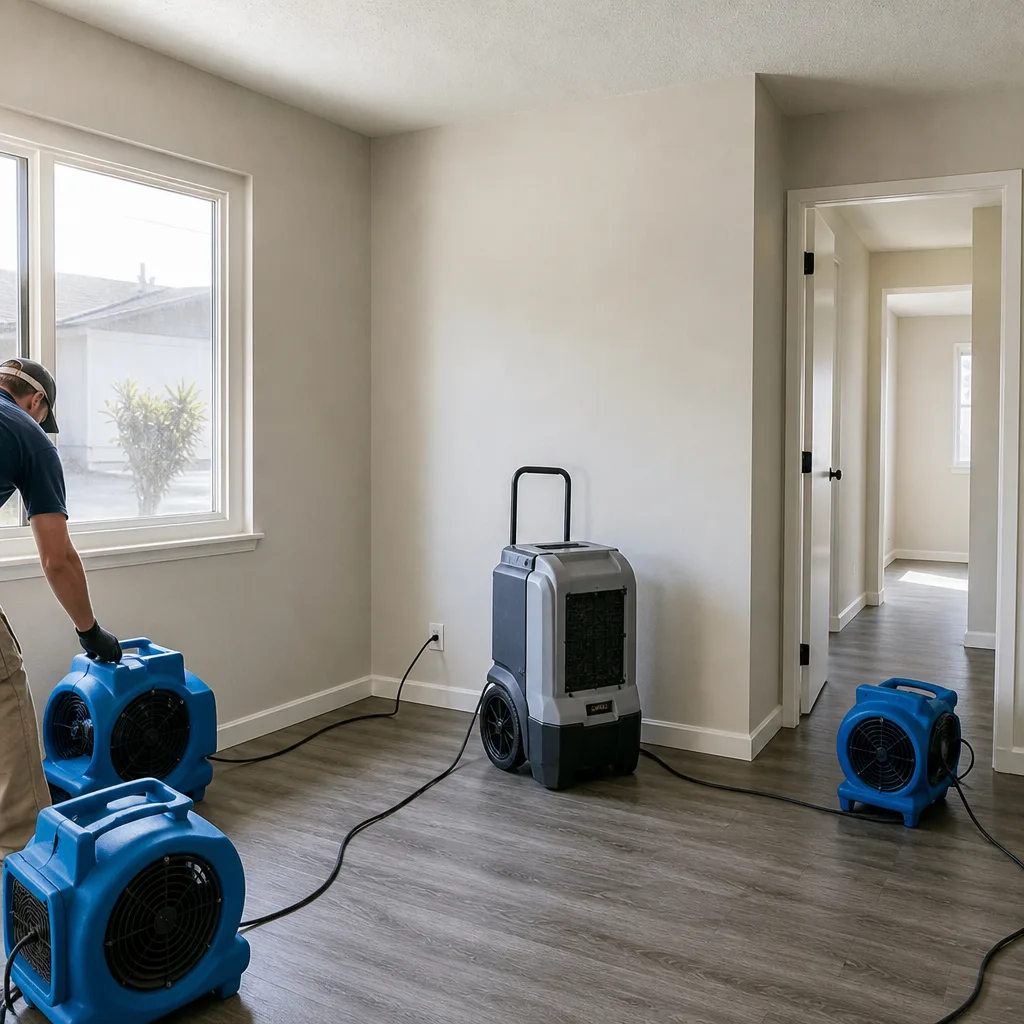 After
Pricing for Mold Remediation in Mission Viejo, CA
A small, contained mold removal in a Mission Viejo bathroom or under-sink cabinet runs $900 to $2,200. A full room with containment, drywall removal, structural drying, and antimicrobial treatment typically lands between $2,500 and $4,800. A multi-room job involving shared walls, HOA coordination, or slab-floor moisture can reach $6,500 to $9,000+. Mold inspection and lab-based air sampling adds $400 to $900 depending on scope. The biggest cost driver in Mission Viejo is access: plumbing failures behind tiled showers or inside shared condo walls cost more to open, dry, and close than open wall cavities. Call (833) 589-5317 for a written quote. We don’t charge for the estimate, and we won’t pad the scope with demolition you don’t need.
We Also Serve Cities Near Mission Viejo
We handle mold jobs across the south Orange County corridor, including Coto De Caza, Lake Forest, Laguna Hills, and Rancho Santa Margarita. If you’re looking for Mold Remediation in Mission Viejo or the surrounding master-planned communities, one call covers the full service area. Each city has its own HOA and construction patterns, but the equipment and process stay consistent.
Serving Mission Viejo, CA — Our Local Coverage Area
We’re based in the Mission Viejo area and know this community well. Use the map below to see our service coverage — if you’re nearby, we can almost certainly help.
FAQs About Mold Remediation in Mission Viejo
It depends on the association’s architectural guidelines, but visible exterior or common-area repairs often do require design review board approval. Interior drywall and paint work inside your unit doesn’t usually need approval, but anything visible from a common walkway or a shared wall repair in a condo cluster likely does. We’ve worked with boards in Madrid, the lakefront tracts, and large complexes off Marguerite Parkway, and we submit the scope and finish specs before we cut. Call (833) 589-5317 and we’ll tell you what your specific HOA requires.
Mold can begin colonizing wet drywall within 24 to 48 hours in Mission Viejo’s warm semi-arid climate, especially during summer months when interior temperatures stay above 75 degrees. That’s why we recommend a moisture assessment within 24 hours of discovering a leak, not a week later when the smell is obvious. Early containment costs a fraction of full remediation.
Yes, and we do it routinely because almost every Mission Viejo home was built in the same 1966 – 1990 window with a limited set of texture styles, mainly orange peel and knock-down in the later tracts. We work with local painters who know the exact sheen and pigment lines used by the Mission Viejo Company’s original finish schedules. When an HOA reviews the repair, the match already meets their standard.
We use Injectidry structural drying panels inside wall cavities before we ever set up loud air movers. The Injectidry system pulls moisture out under negative pressure, which is dramatically quieter than banked air movers and often makes it possible to dry a shared-wall cavity without tearing out the entire common wall. When we do need air movement in a condo cluster, we run equipment during permitted hours and stage it away from shared bedroom walls to avoid neighbor complaints and HOA fines.
Yes, and we document the moisture profile on both sides of the wall before anyone opens it up. Shared-wall mold in Mission Viejo’s 1970s and 1980s townhome clusters usually means two units are involved, which means two HOAs or one HOA and a neighbor’s insurer may need to split responsibility. We provide photo documentation, moisture logs, and a written scope that makes the origin clear so you don’t get stuck paying for a neighbor’s leak. Call (833) 589-5317 and we can walk you through the process.
Contact Dry Line Water Damage in Mission Viejo
If you’ve found mold in your Mission Viejo home, don’t wait for it to spread while you figure out HOA rules or insurance paperwork. Call (833) 589-5317 for a free estimate. We’ll send someone to map the moisture, explain what actually needs to come out, and give you a written scope before any work starts. Glen Pacheco and the crew at Dry Line Water Damage handle water, mold, and fire damage restoration with the same IICRC-certified process on every job.
Written by Glen Pacheco, Owner at Dry Line Water Damage, serving Mission Viejo with IICRC-certified mold remediation and structural drying.