

 Water damage drying
 Fire & smoke cleanup
 Mold remediation
 Storm response
 Sewage cleanup
 Reconstruction
Free visual inspection and a written scope of work before any mitigation begins - photos, moisture readings, and drying logs go in your claim file
The scope we write is the scope we bill. Anything new gets shown to you, in writing, before we touch it.
Get your free estimateFast, Reliable Mold Remediation Across Palm Springs
Mold remediation in Palm Springs typically runs $1,800 – $6,500 depending on how far the moisture has migrated and whether containment is required. Most jobs take 3 – 7 days from initial inspection to post-remediation clearance. If you’re seeing dark staining at the baseboards, catching a musty odor in a closed-up room, or dealing with a swollen section of terrazzo floor, don’t wait for the weekend. Our crew runs IICRC-certified remediation with commercial-grade drying equipment, and we know the specific ways mid-century homes here fail. Call (833) 589-5317 and we’ll walk you through what’s happening.
Palm Springs mold problems almost never come from rain. They come from original galvanized plumbing letting go under a slab, from a swamp cooler line that’s been dripping inside a wall chase since June, or from pool equipment that’s been sweating against a stucco wall. When it’s 112°F outside, that unseen moisture doesn’t sit idle. It feeds rapid fungal growth inside wall cavities and under flooring, and within 48 hours you can have a full bloom that requires containment, not a cleaning. That’s the reality of mold remediation in Palm Springs, and it’s why we don’t treat this city like every other desert market.
Why Dry Line Water Damage Is Palm Springs’s Preferred Mold Remediation Company
We’ve worked in Palm Springs long enough to know the housing stock. Deepwell, Twin Palms, Racquet Club Estates, Vista Las Palmas. These aren’t generic tract homes. They’re architectural mid-century properties where a slab leak under a terrazzo floor behaves completely differently than a leak under a carpeted slab in a 1990s build. The materials matter. Concrete block, original steel plumbing, flat roofs, clerestory windows, open beams. Our IICRC-certified process starts with understanding what was built in 1958 and how moisture moves through it now.
Homeowners in Palm Springs call us because the work gets documented. Moisture readings, drying logs, scope documents, post-remediation verification. When an adjuster asks why the baseboards on the west wall were removed but not the east wall, there’s a moisture map that answers it. Glen Pacheco, who leads our operation, built the company around the idea that restoration work should hold up to third-party scrutiny. That matters here, where insurance claims routinely involve hidden water migration under original flooring.
Response time to Palm Springs from our Fontana base is straightforward: we schedule inspections within 24 – 48 hours for active mold or water intrusion, and we can dispatch same-day for a flooding event or a sewage backup. For a slow slab leak that’s been building for weeks, a day or two of scheduling won’t change the scope. For a monsoon-season flash flood through a patio door in 92264, it will.
Restoration work we handle
Mold Inspection in Palm Springs
Mold Inspection in Palm Springs starts with a visual examination and moisture mapping of the affected area, but the real question is always where the water came from and where it went. A Palm Springs homeowner needs a mold inspection when there’s visible staining around a baseboard, a persistent musty odor in one room, elevated humidity inside a closed-up mid-century home, or evidence of a past leak that was dried but never verified. A visual inspection with moisture mapping typically runs $250 – $450 in this market. Adding air sampling or surface sampling for suspected hidden mold expands that to $500 – $900 depending on the number of samples and whether lab analysis is included.
We don’t run mold inspections as a sales pitch. If moisture readings come back dry and there’s no visible growth, we’ll tell you that in writing. If you need a clearance test after remediation, we can arrange that too.
What We Test and Measure
We use moisture meters and thermal imaging to trace hidden moisture behind original plaster and under terrazzo. In a 1958 build in Deepwell, the visible staining on a baseboard is rarely the point of origin. The moisture usually started at a pinhole leak in galv steel plumbing under the slab, then wicked through the walls. Air sampling is ordered only when we suspect the growth is hidden and we need to prove it without tearing open walls blindly.
When an Inspection Becomes Urgent
If you can smell mold in a closed-up room with the air conditioning running, that’s not a monitoring situation. In Palm Springs, swamp cooler lines and evaporative cooling systems keep interior humidity high enough that spores can bloom quickly even when outdoor humidity is in the teens. An inspection becomes urgent when the odor is constant, when multiple rooms are affected, or when anyone in the home has respiratory symptoms that improve away from the house.
Mold Removal Specialist in Palm Springs
A Mold Removal Specialist in Palm Springs has to contend with open floor plans and materials that don’t respond to standard demo techniques. Palm Springs homeowners need a remediation specialist when the growth has extended beyond what’s visible on a single wall, when the moisture source involves a slab leak or a flat-roof failure, or when the affected area includes original finishes like terrazzo, wood ceilings, or built-in cabinetry. Small contained removal jobs in this market start around $1,800 – $3,500. Full containment with air scrubbing, material removal, and structural drying typically runs $4,500 – $6,500 before any rebuild.
That gap between $1,800 and $6,500 is real, and it’s driven by how far the spores have traveled and whether original materials need to come out. We give you a written scope before work starts so you know exactly what’s being removed and why.
Containment in Open-Plan Mid-Century Homes
Mid-century modern homes in Twin Palms and Deepwell weren’t built with compartmentalized rooms. Clerestory windows, open beams, and continuous sight lines mean that air moves freely from one end of the house to the other. During remediation, that’s a hazard. If you disturb a mold colony without proper containment, spores move through the entire structure. We set up negative air pressure and physical containment barriers before any contaminated material is disturbed. That’s non-negotiable in this housing stock.
Drying Before Removal
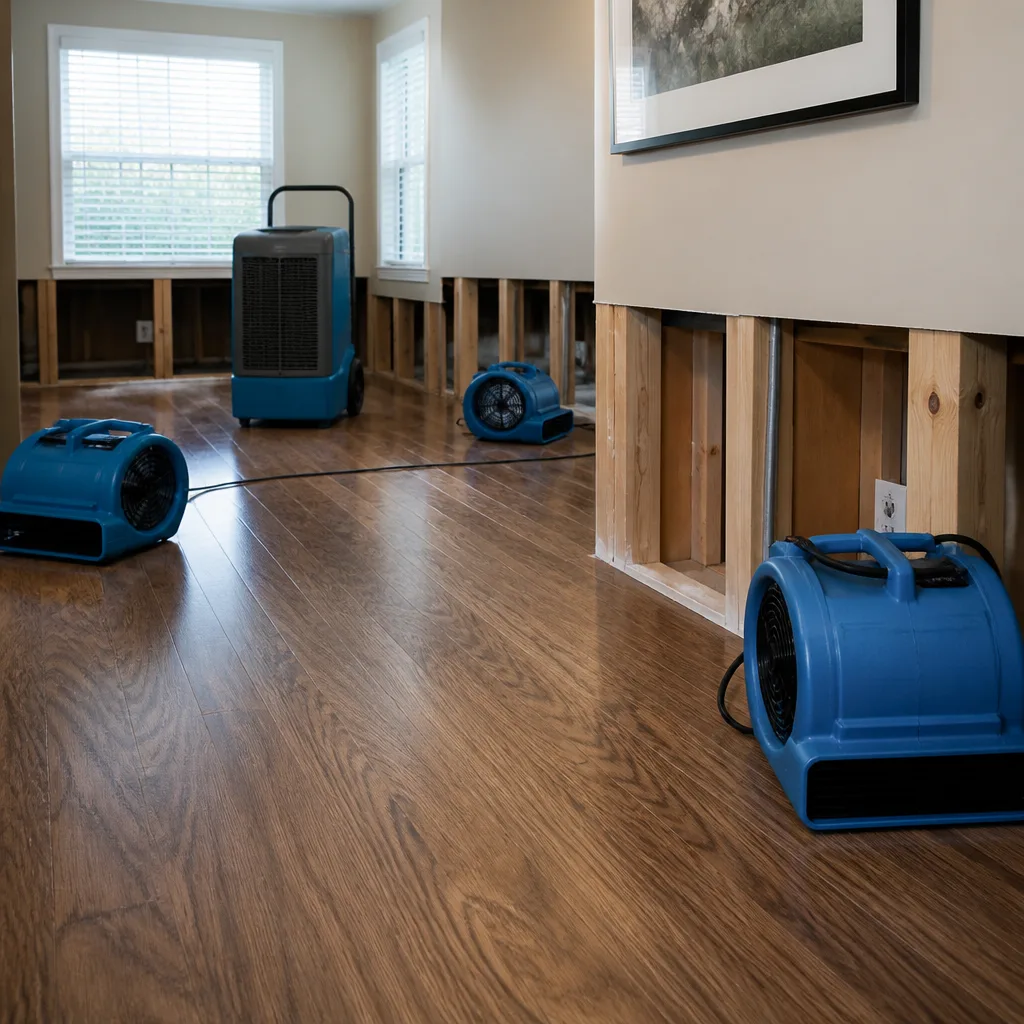
You cannot remediate mold while the framing is still wet. Our crews run Dri-Eaz dehumidifiers and commercial air movers to pull moisture from wall cavities and slab edges before removal starts. On a recent job in Twin Palms, a homeowner’s original 1958 galvanized line had pinhole-leaked under the slab for weeks, buckling the terrazzo and sending moisture up the baseboards. Our crew used moisture mapping to trace the hidden migration, then set up containment and structural drying with Dri-Eaz dehumidifiers and air movers to stabilize the space before mold remediation. The post-remediation verification showed no detectable spores, and we documented drying logs for the homeowner’s insurance.
Trusted Brands We Service in Palm Springs
We run our own equipment, which means we don’t rent consumer-grade machines from a hardware store and hope they pull moisture. The drying systems we bring into Palm Springs homes are Dri-Eaz and Phoenix commercial units, the same gear used on large-loss commercial jobs. For structural drying in tight wall cavities and under slab edges, we use Injectidry systems that extract moisture without ripping out every sheet of drywall or terrazzo tile. Because we’re an IICRC-certified operation with RIA membership, the process follows an external standard, not whatever the crew decides looks right. You’ll see the same equipment names in the drying logs we hand to your adjuster.
See the difference
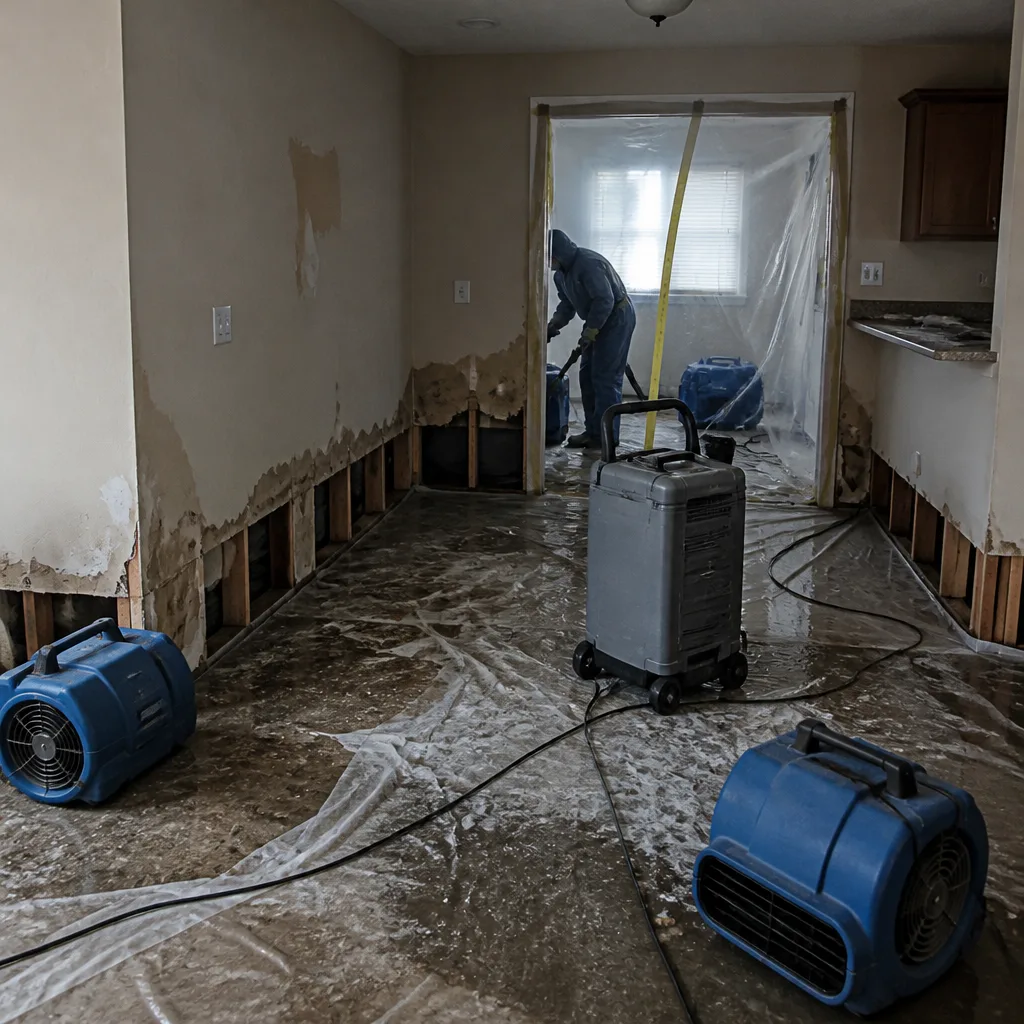 Before
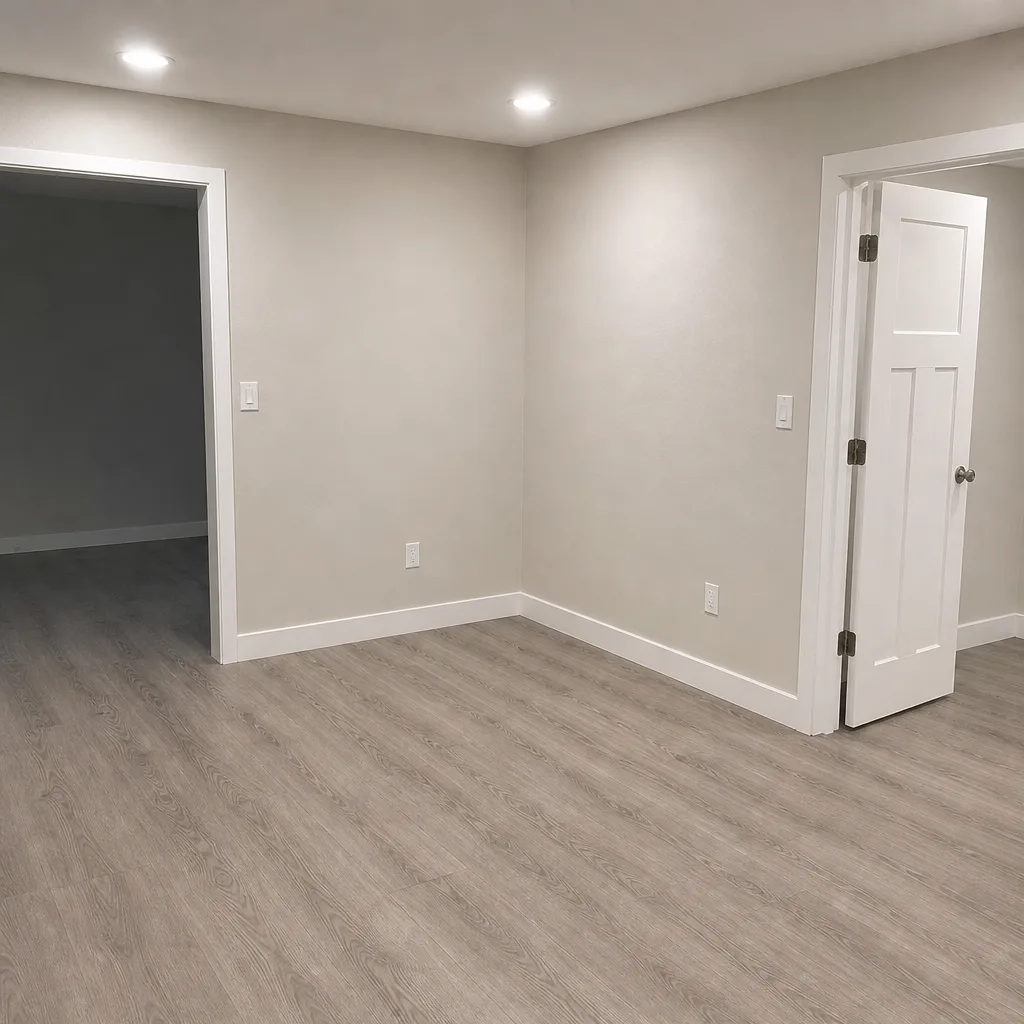 After
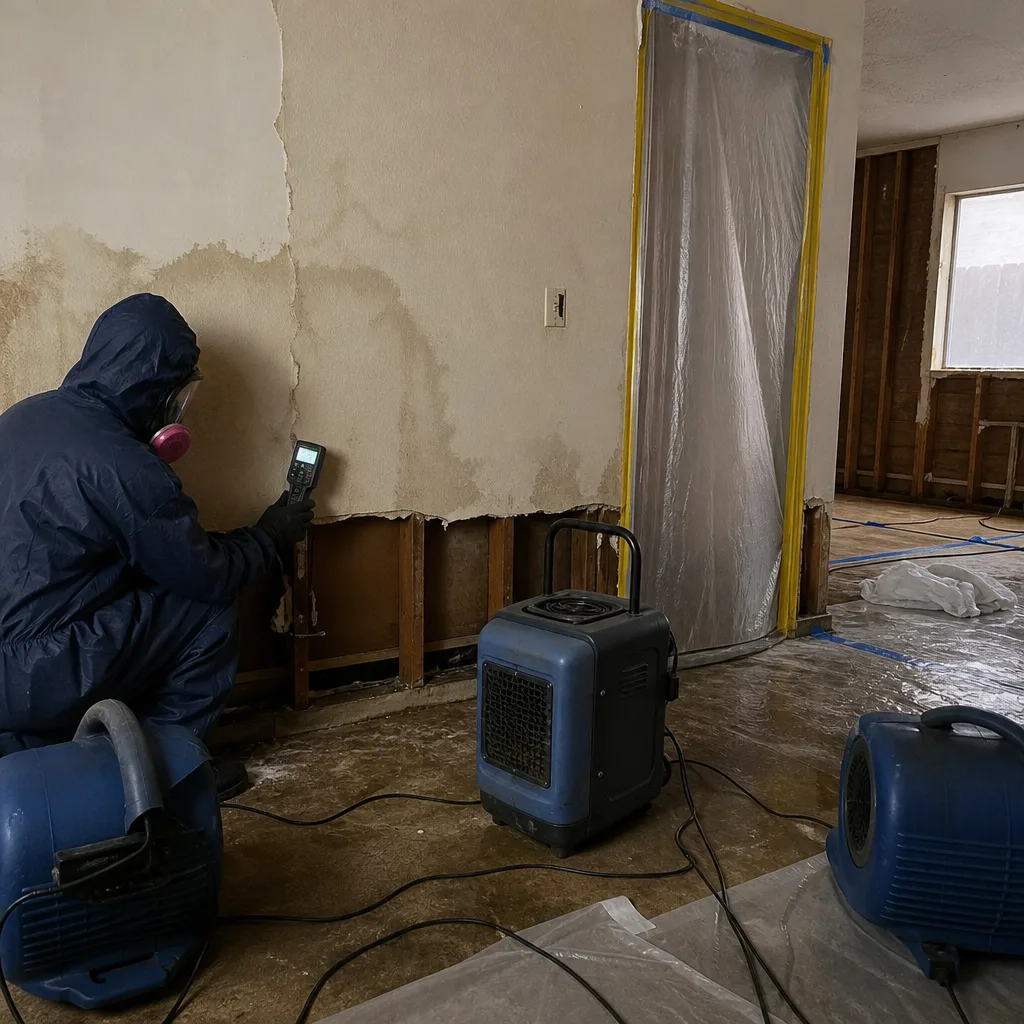 Before
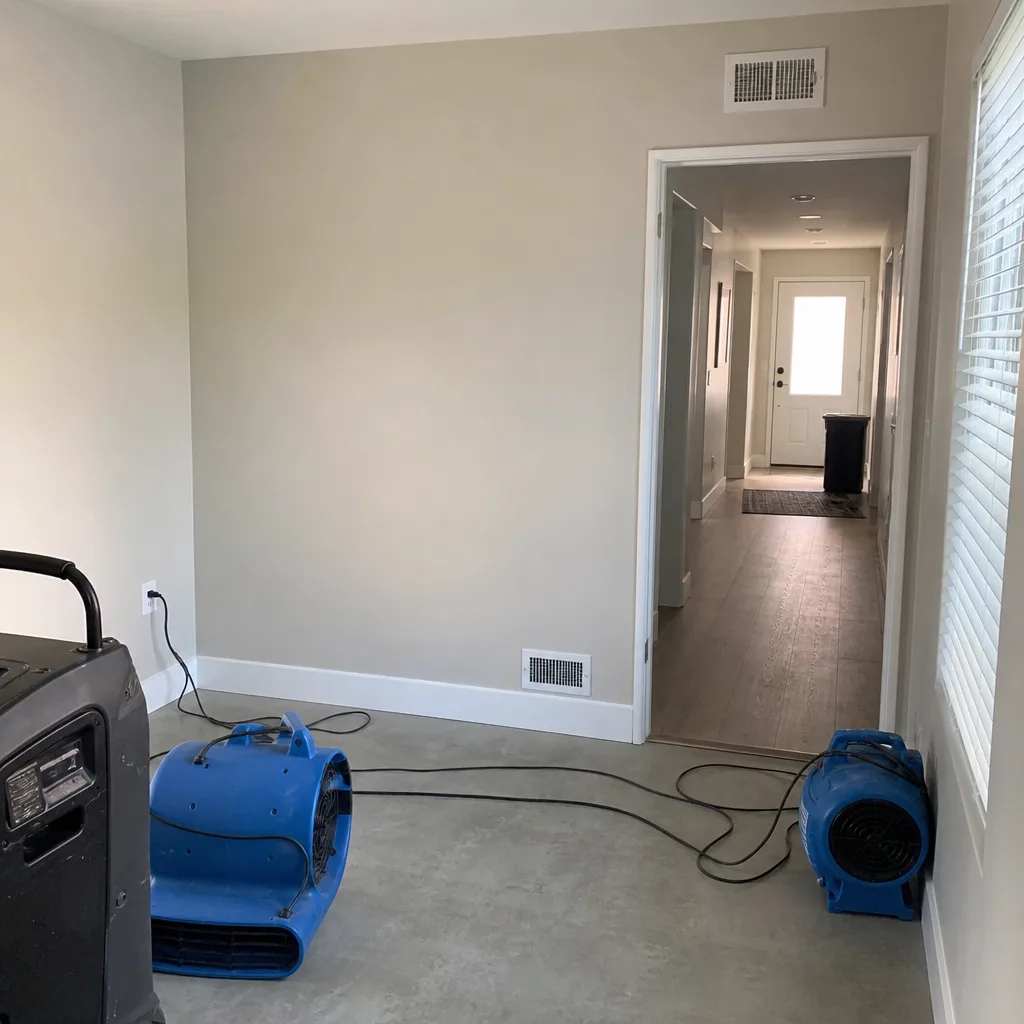 After
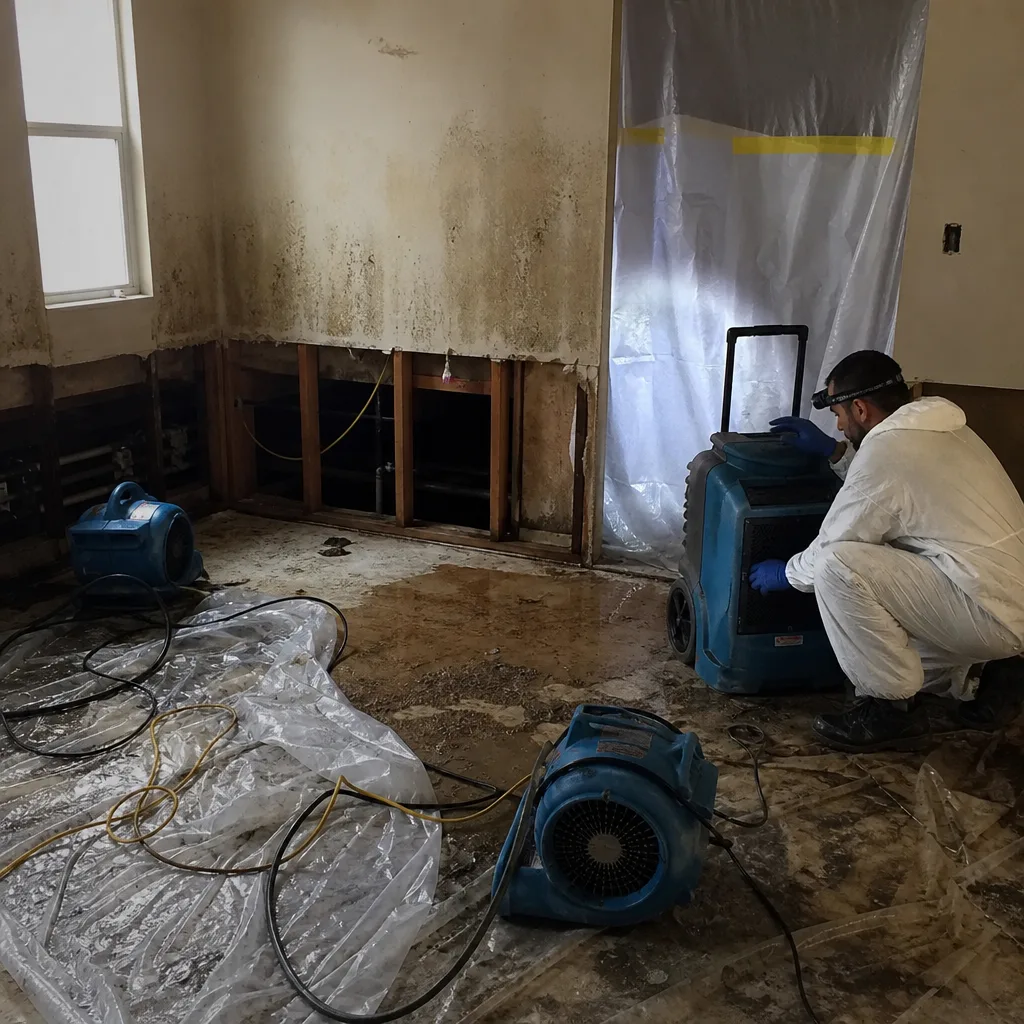 Before
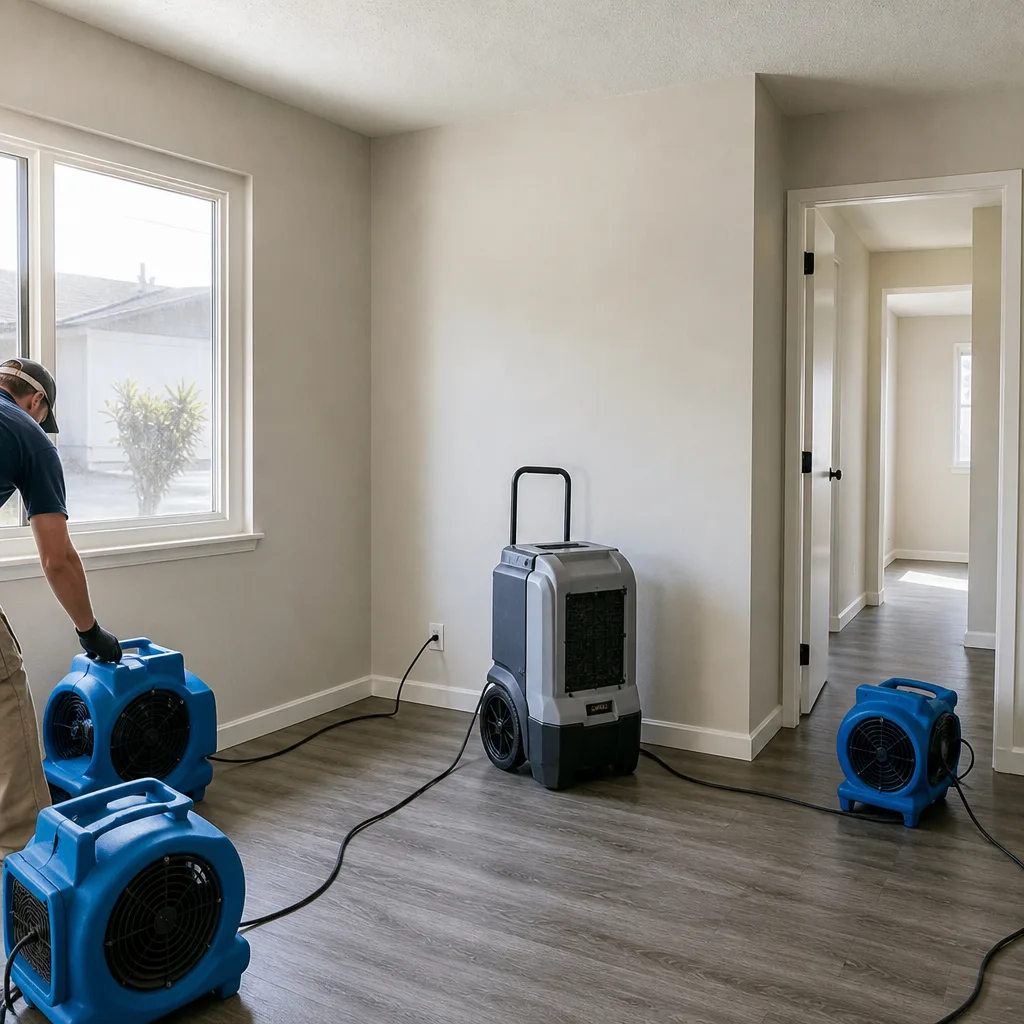 After
Common Mold Remediation Problems We See in Palm Springs Homes
- Slab leaks hiding under original terrazzo. A pinhole leak in 1950s galvanized steel plumbing can run for weeks underneath a terrazzo floor without any visible water. By the time the floor starts buckling, mold has already moved into the baseboards and the bottom plates of the walls.
- Swamp cooler lines and evaporative cooling moisture. The dry desert air doesn’t protect a home that’s actively leaking from a cooler line inside a wall. Constant moisture in a closed-up mid-century house creates exactly the conditions Stachybotrys and Aspergillus need, even when Palm Springs humidity reads 12% outside.
- Open floor plans causing cross-contamination. Mid-century homes with clerestory windows and open beams were designed for airflow, not compartmentalization. Disturbing a mold colony in one wing of a Twin Palms home without containment spreads spores into rooms that were never wet.
- Monsoon-season water through patio doors and garages. July through September brings sudden downpours that flat roofs and desert drainage weren’t sized for. Flash flooding through patio doors and into attached garages soaks drywall and slab edges, and the 115°F heat accelerates mold growth within 48 hours.
Pricing for Mold Remediation in Palm Springs, CA
We Also Serve Cities Near Palm Springs
Our mold remediation crews handle Palm Springs and the surrounding Coachella Valley communities, including Cathedral City, Rancho Mirage, Garnet, and Desert Hot Springs. If you’re managing a property near the Palm Springs border, read more about our Mold Remediation process and how we approach valley-wide water sources like swamp coolers, pool plumbing, and monsoon roof failures. The same IICRC-certified team covers the entire area. See our Mold Remediation in Palm Springs service details for specifics on your neighborhood.
Serving Palm Springs, CA — Our Local Coverage Area
We’re based in the Palm Springs area and know this community well. Use the map below to see our service coverage — if you’re nearby, we can almost certainly help.
FAQs About Mold Remediation in Palm Springs
Yes, and it does more often than any other single source. Original galvanized steel plumbing in 1950s – 1970s Palm Springs homes fails slowly, leaking moisture under slabs and inside wall cavities for weeks before you see anything. The heat accelerates growth, so a pinhole leak that started in June can have a full mold bloom behind the baseboards by July. We map the moisture, identify the leak source, and stabilize the area before remediation starts. Call (833) 589-5317 for an inspection.
Visible mold growth can start within 24 – 48 hours when an evaporative cooler line leaks inside a wall or ceiling cavity, even though Palm Springs outdoor humidity stays very low. The closed cavity holds moisture against drywall and framing, and the 100°+ heat provides the temperature range that fungal spores need. If you notice water staining near a cooler pad or ceiling register, treat it as active moisture and schedule an inspection right away.
Category 1 water is clean water from a supply line or pool fill line. Category 2 water contains contaminants from detergents or runoff, often what you see when pool equipment leaks after chemicals have been added. Category 3 water is grossly contaminated from sewage or storm overflows. A pool plumbing leak is usually Category 1 or 2, but the remediation approach changes because Category 2 requires disinfection of affected materials, not just drying. We’ll classify the water during the inspection and write the scope accordingly.

Mid-century homes in Palm Springs were built with open sight lines and continuous airflow, which means mold spores travel easily from one room to another when remediation disturbs them. Flat roofs drain poorly during monsoon-season storms, sending water into ceiling cavities and down walls. Clerestory windows add height and light but make containment setup more complex. We account for the architecture, not just the mold.
Yes. We inspect and remediate homes with original terrazzo flooring throughout Palm Springs, including Deepwell, Twin Palms, and Vista Las Palmas. Terrazzo hides moisture underneath the slab surface, so we use moisture mapping to determine whether mold is feeding from a slab leak before any flooring is cut or removed. Drying logs document the entire process for your insurance file.
If you’re seeing signs of mold, smelling something that shouldn’t be there, or dealing with a slab leak that’s gone unaddressed, call (833) 589-5317 today. We’ll set up an inspection, map the moisture, and give you a written scope before any work starts.
Written by Glen Pacheco, Owner at Dry Line Water Damage, serving Palm Springs and the Coachella Valley.