Last updated October 31, 2026
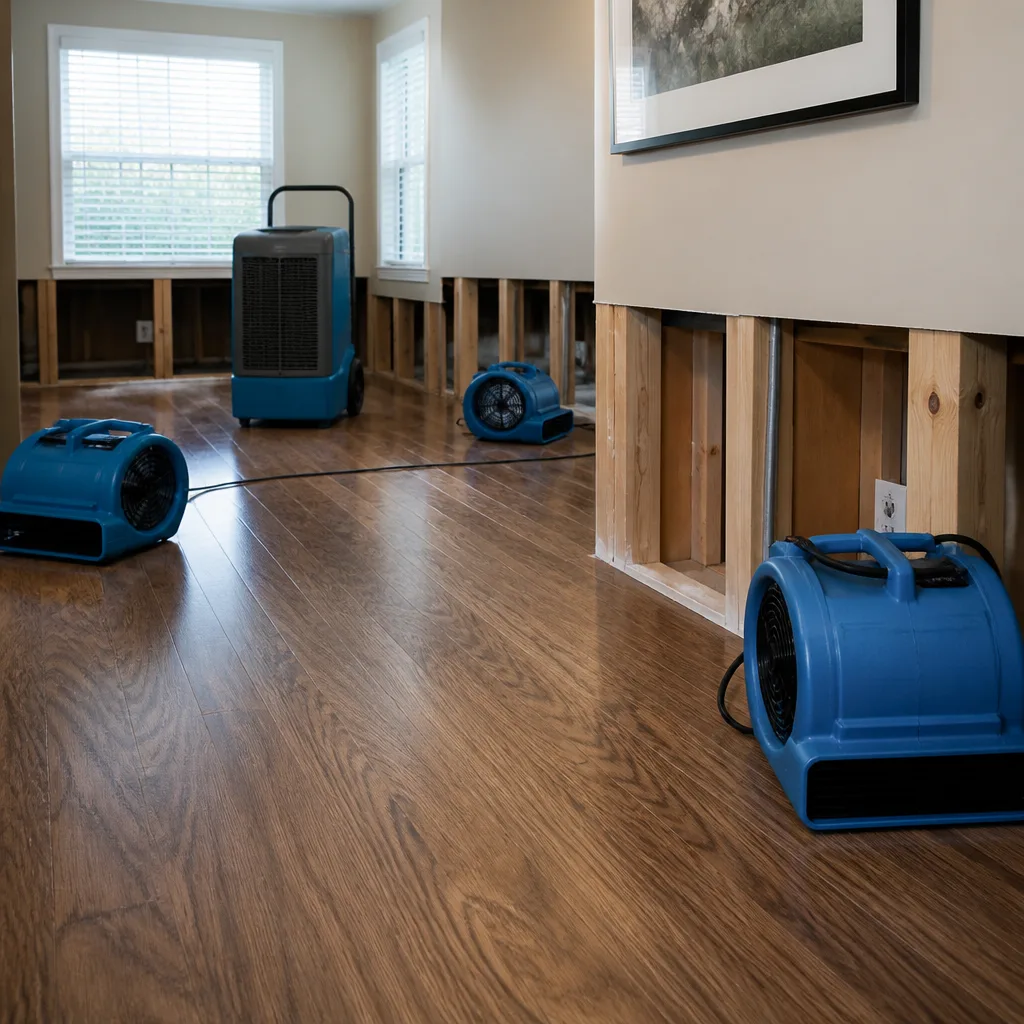 Water damage drying
 Fire & smoke cleanup
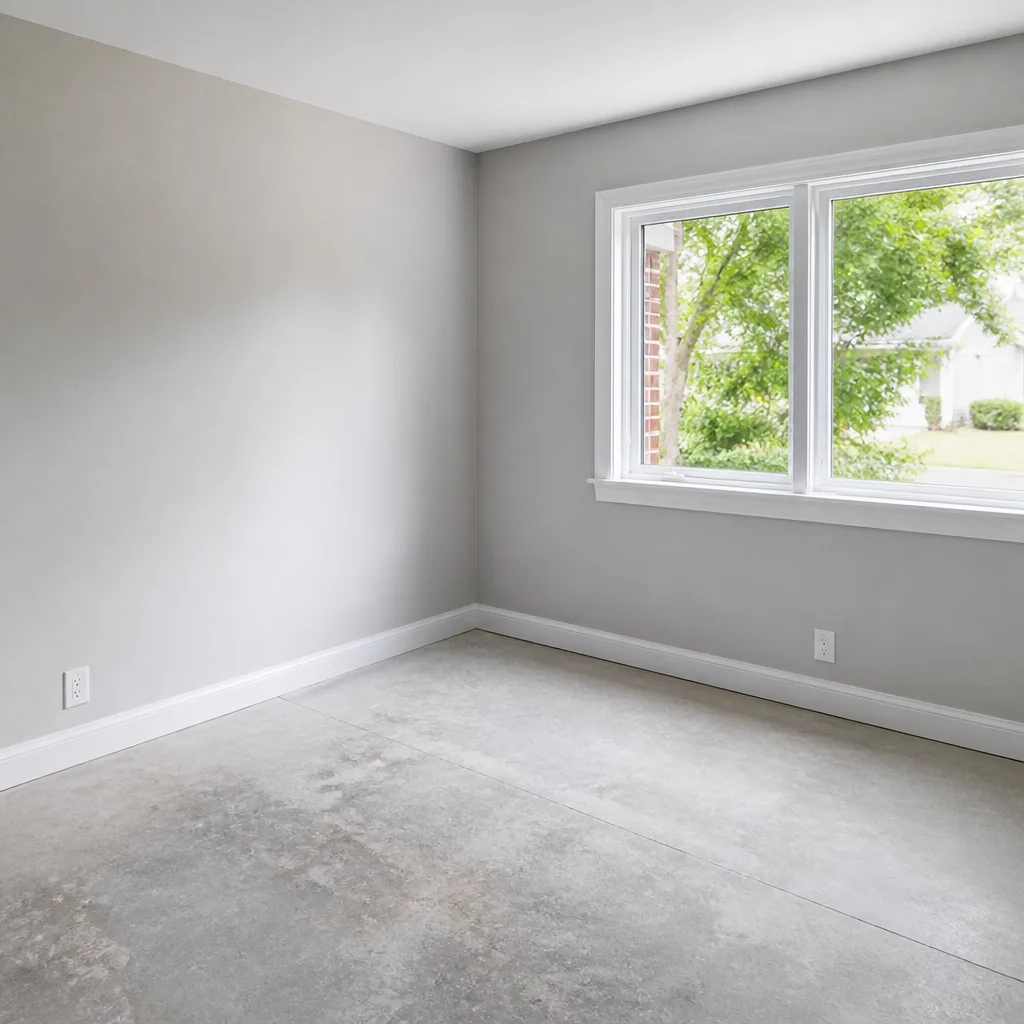 Mold remediation
 Storm response
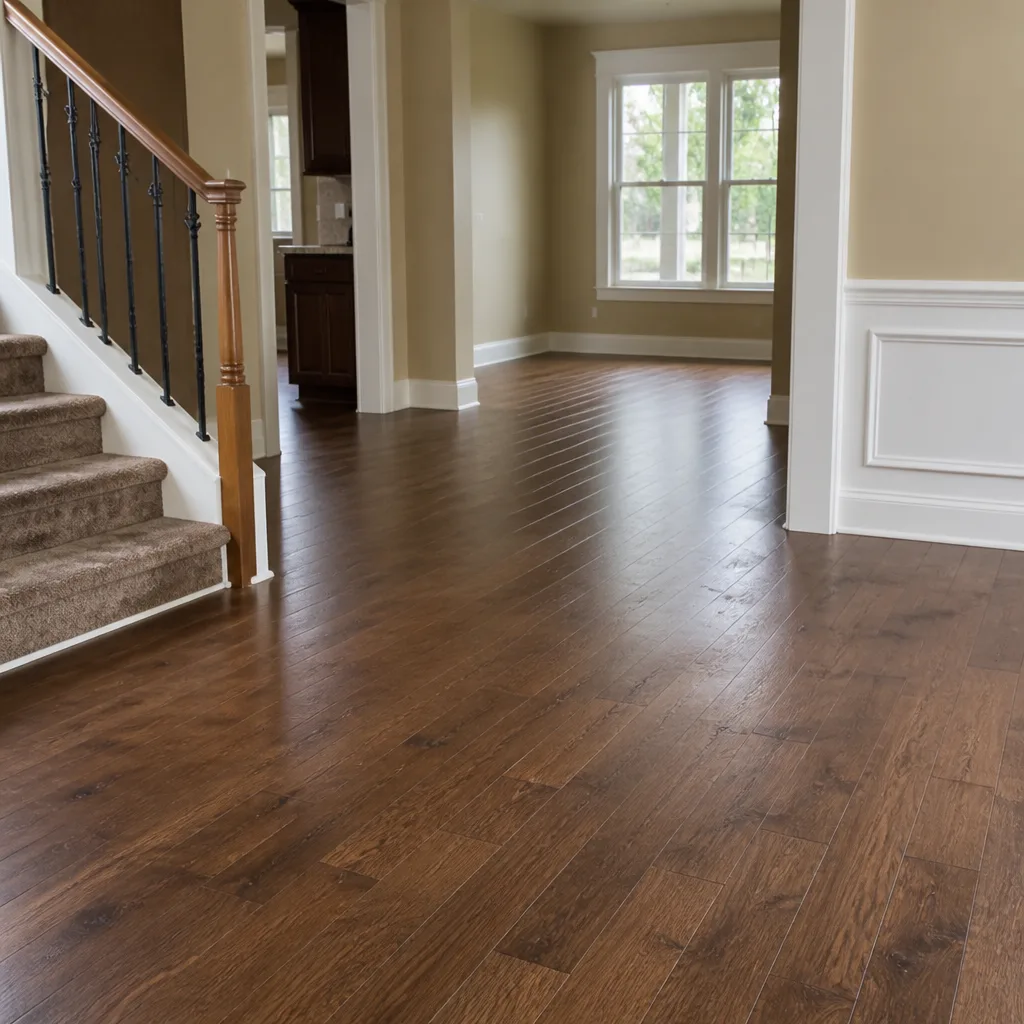 Sewage cleanup
 Reconstruction
Free visual inspection and a written scope of work before any mitigation begins - photos, moisture readings, and drying logs go in your claim file
The scope we write is the scope we bill. Anything new gets shown to you, in writing, before we touch it.
Get your free estimateDamage Restoration Warning Signs: A Fontana Homeowner’s Reference Guide
A buckled baseboard in a Fontana home is almost never a finishing defect. It’s a moisture reading in wood form. What you’re seeing is fiber swelling caused by elevated relative humidity at the wall base, sustained long enough to deform the material. That means the leak source has been active for days, sometimes weeks, before the baseboard ever told you anything was wrong.
This guide teaches you to read your Fontana home the way a restoration technician does, and you can find more guides & resources on our blog. We’ll cover the physical signals of water, mold, and fire damage, how to connect visible symptoms to their actual source, when the problem is active versus old, and what to do with what you find. Fontana’s specific construction patterns create predictable moisture pathways, and once you understand them, most warning signs stop being mysterious.
Restoration work we handle
Quick Answer
The most common water damage warning signs in Fontana homes are buckled or swollen baseboards, persistent musty odors that sharpen in specific rooms, visible efflorescence on concrete, soft or spongy flooring, and unexplained humidity spikes. Any one of these, combined with Fontana’s slab foundations and stucco exteriors, typically points to a hidden water source that has been active for weeks, not days.
Table of Contents
- Reading Physical Evidence: What Your House Is Actually Saying
- Active Leaks vs. Old Damage: The Triage Distinction That Changes Everything
- What Musty Odor Location Tells You About Moisture Source
- Fontana Construction Patterns That Hide Water Damage
- Using a Consumer Moisture Meter: Readings That Actually Matter
- The Five Warning Signs That Appear 30-90 Days Before a Major Water Event
- Mold and Fire Warning Signs Fontana Homeowners Miss
- Common Mistakes to Avoid
- When to Call a Professional
- Frequently Asked Questions
- The Bottom Line
Reading Physical Evidence: What Your House Is Actually Saying
Every material in your home has a failure signature. Drywall doesn’t sag for no reason. Tile doesn’t crack randomly. Paint doesn’t bubble unless something underneath is pushing against it. The skill in restoration work is connecting the visible failure to the moisture source that caused it. That’s the part most Fontana homeowners skip.
Here’s how a restoration technician reads common materials:
- Baseboards: Swelling, warping, or separation from the wall indicates sustained moisture at the floor level. In Fontana slab homes, this often means a plumbing leak inside or under the slab, or water wicking up from a foundation crack.
- Drywall: Soft spots, bubbling paint, or a chalky texture are signs of saturation. Drywall loses structural integrity at roughly 40% moisture content. Before that, you might see only a slight discoloration that most people mistake for a scuff mark.
- Hardwood and laminate: Cupping (edges higher than center) means moisture from below. Crowning (center higher than edges) means moisture from above. Both are directional clues about the leak source.
- Tile and grout: Loose tile, cracked grout, or efflorescence (white powdery deposits) indicate water moving through the substrate. Tile itself is waterproof; the substrate underneath is not.
- Concrete: Dark staining that doesn’t dry, persistent dampness, or mineral deposits are signs of hydrostatic pressure or a plumbing leak beneath the slab.
None of these signs appear overnight. By the time you notice them, the water has been present long enough to cause material failure. That’s the single most important thing to internalize: visible damage is late-stage damage.
In Fontana specifically, we see a pattern where homeowners attribute these signs to “just an old house” or “settling.” The house is telling you something specific. The question is whether you’re listening.
Active Leaks vs. Old Damage: The Triage Distinction That Changes Everything
Not every water stain is an emergency. Some are historical artifacts from a leak that was fixed years ago. The distinction matters because it determines whether you need mitigation now or simply cosmetic repair later. Here’s how to tell them apart.
Visual Indicators of Active Moisture
- Color: Active water stains are typically darker, with a defined edge that continues to expand. Old, dried stains are lighter and have a stable boundary.
- Texture: Active damage feels cool or damp to the touch. Old damage is dry, often flaky or powdery.
- Odor: Active moisture produces a sharp, musty smell. Old damage that has fully dried may retain a faint odor but nothing that intensifies on humid days.
- Metallics: Active leaks around plumbing often leave rust-colored staining. If that staining is still spreading, the leak is ongoing. If it’s stable and dry, the source may have been addressed.
The Touch Test
Place the back of your hand against the stained area, then against a clean area of the same material. A temperature difference of even a few degrees indicates retained moisture. Evaporation is a cooling process. Wet surfaces feel cooler than dry ones.
The Tape Test
- Cut a 12-inch square of clear plastic sheeting.
- Tape it tightly over the suspect area, sealing all four edges.
- Wait 24 hours.
- If condensation appears on the inside of the plastic, you have active moisture moving through that surface.
This test costs a dollar and tells you more than most visual inspections can. We’ve had Fontana homeowners run this test and discover active leaks beneath “old” stains they’d been ignoring for seasons.
What Musty Odor Location Tells You About Moisture Source
Musty smell is not evenly distributed. It originates from the mold colony or damp material that produces it, and it moves through your home along air currents. That means the location where the odor is strongest is a directional pointer toward the source.
Here’s the field technique we use, adapted for a homeowner:
- Close all doors and windows for 2-4 hours. You want to eliminate outside air and let indoor air patterns stabilize.
- Walk the home slowly, breathing through your nose. Note where the odor first becomes noticeable and where it intensifies.
- Get low. Mold spores and the microbial volatile organic compounds (MVOCs) that create musty odor are heavier than air. The smell is often stronger near the floor.
- Check the perimeter of each room. Odor often concentrates along baseboards, inside closets, and behind furniture – places where air movement is restricted and moisture has time to accumulate.
- Follow the gradient. If the odor is stronger in one corner of a room, the moisture source is almost always on the other side of that wall, floor, or ceiling plane.
The key insight: chasing the smell almost always leads to the origin. Odor doesn’t come from nowhere. It comes from a colony of something actively growing on a wet surface. Find the strongest point, and you’re typically within a few feet of the real problem.
In Fontana’s dry climate, one of the most misleading scenarios we see is when homeowners tell us the musty smell “comes and goes.” What’s actually happening is that the moisture source is intermittent, not absent. A leak that only flows when a fixture is used, a drain line that weeps only under specific conditions, or condensation that forms seasonally. The odor appears when moisture is present, and fades when the area dries. It never fully resolves.
Fontana Construction Patterns That Hide Water Damage
Fontana’s housing stock has specific characteristics that create predictable moisture pathways. Understanding these helps you anticipate where problems will show up before they do.
Slab Foundations
The majority of Fontana homes built after 1960 sit on concrete slab foundations. This is both a blessing and a liability. Slab homes have no crawlspace where leaks announce themselves. Water from a slab-embedded plumbing line travels upward through the concrete, into the flooring material, and eventually into the baseboard. By the time you see it, the water has already been moving through the slab for weeks.
The classic Fontana setup is copper or PEX plumbing running through the slab. When a line develops a pinhole leak, the first sign is usually a warm spot on the floor (if it’s a hot water line), a spike in the water bill, or a persistent damp area with no visible source. Hot spots are the most reliable early indicator, and they’re almost always missed because homeowners don’t go around feeling their floors.
Stucco Exteriors
Fontana is stucco country. Stucco is an excellent exterior cladding in a dry climate, but it has one critical weakness: it’s porous. When stucco is properly installed with a drainage plane behind it, moisture that penetrates the surface can drain and evaporate. When it’s not, or when the stucco develops cracks, water gets trapped between the stucco and the framing.
Trapped moisture behind stucco often presents as:
- Indoor paint bubbling on exterior-facing walls
- Persistent musty odor in specific rooms despite no visible leak
- Efflorescence on exterior stucco surfaces
- Staining around window frames and door frames
In Fontana, stucco cracks are often dismissed as cosmetic because the climate is dry. Homeowners think, “It never rains enough to matter.” But the water that damages stucco-clad homes in Fontana is not primarily rainwater. It’s irrigation overspray, plumbing leaks inside the wall cavity, and condensation from air conditioning lines. Those sources run regardless of weather.
Tile Roofs
Many Fontana neighborhoods feature tile roofs, which are durable but create specific failure points. Tile roofs rely on the underlayment beneath the tile for waterproofing. When that underlayment ages or tears, or when tiles crack and shift, water gets through. The leak path is often indirect, traveling along the roof deck before it finds a penetration point into the living space.
Ceiling stains near exterior walls, particularly in rooms under valleys or roof penetrations, are the classic indicator. The stain appears far from the actual roof damage because water travels laterally before it drops. This is why a “small roof leak” can produce water damage in a room that doesn’t seem connected to the roof at all.
Using a Consumer Moisture Meter: Readings That Actually Matter
A consumer-grade pin-type moisture meter costs $30 to $60 and gives you objective data instead of guesswork. But most people use them wrong. They take surface readings, get a low number, and conclude the area is dry. That conclusion can be completely wrong.
What the Numbers Mean
Different materials have different safe moisture levels. Here’s the baseline a restoration technician works from:
- Wood framing: 6% to 14% moisture content is dry. Above 16% is wet enough to support mold growth. Above 20% is actively deteriorating.
- Drywall: Anything above 1% is considered wet. Drywall is very dry material. A reading of 5% means saturated.
- Concrete: Concrete is always somewhat moist. You’re looking for relative differences, not absolute numbers. A slab reading 20% in one area and 40% in another is telling you something.
- Flooring: Wood flooring above 12% is typically considered wet. Laminate and engineered materials vary by manufacturer.
The Right Way to Take Readings
- Take baseline readings first. Measure areas you know are dry. This establishes your home’s normal moisture level for each material type.
- Measure the surface, then measure below. For walls, use a pin-type meter to take readings at the baseboard, mid-wall, and near the ceiling. The reading pattern matters more than any single number. A wall that reads dry at the top and wet at the bottom indicates water wicking upward.
- Map the readings. Write down numbers on a simple floor plan. You’re looking for gradients, not isolated readings. Moisture follows pathways. The readings should lead you somewhere.
- Check the wall cavity if possible. This is where consumer meters hit their limit. A surface reading of 8% on drywall can conceal a wall cavity at 40% humidity or higher, with framing that’s actively wet. The injectable probes used in professional restoration can reach into the cavity. Consumer units cannot.
This is a crucial point we want Fontana homeowners to understand: surface readings miss cavity saturation. The most destructive water damage in slab-built Fontana homes occurs inside wall cavities, under flooring, and behind cabinets. If your readings suggest moisture but you can’t find a visible source, the problem is almost certainly in a concealed space.
Professional restoration uses penetrating and non-penetrating meters in combination with thermal imaging to map moisture inside cavities. At Dry Line Water Damage, our Water Damage Restoration in Fontana process includes cavity readings on every job because surface-only checks are how damage gets missed and mold gets a head start.
The Five Warning Signs That Appear 30-90 Days Before a Major Water Event
Major water damage events rarely happen without warning. In review of hundreds of Fontana water loss cases, these are the five signals that appeared most consistently in the weeks and months before homeowners called us in an emergency. Every single one was overlooked or deferred.
- A slowly rising water bill with no change in usage. Fontana’s water utility bills show monthly consumption. A 10-15% increase that persists for two or three consecutive months is a leak signature, not a lifestyle change. This is the earliest and most ignored indicator of slab leaks, toilet flange leaks, and irrigation line failures.
- Intermittent warm spots on flooring. Hot water lines under slab produce localized warm areas that cycle on and off with water heater use. Most homeowners notice these in winter when the temperature difference is more pronounced, then forget about them when summer arrives.
- Doors and windows that begin to stick or become difficult to close. Moisture causes framing lumber to swell. In Fontana’s stucco homes, water intrusion at window penetrations shows up first as subtle operation changes, long before visible staining appears. A door that used to close smoothly and now scrapes the jamb is a moisture reading, not a settling issue.
- Increased indoor humidity readings despite running the AC. Fontana’s climate is dry. Normal indoor relative humidity ranges from 30% to 50%. If you’re running the air conditioning and still seeing humidity above 60%, water is being introduced somewhere inside the building envelope.
- A soft spot in flooring that feels different underfoot. The subfloor or slab has been wet long enough to affect the flooring material. In slab homes, this often presents as a slight “give” in laminate flooring or a change in how the floor feels under bare feet. Most people file this under “imagination” and move on.
These five signals share a common thread: each one is subtle enough to ignore and persistent enough to matter. The cost of investigating is minimal. The cost of ignoring is a full-scale water damage event that requires professional structural drying and possibly demolition.
Mold and Fire Warning Signs Fontana Homeowners Miss
Water damage is the most common restoration need in Fontana, but mold and fire both have their own early warning profiles. Here’s what to watch for.
Mold Development Indicators
Mold needs three things: a food source (any organic material), a temperature between 40°F and 100°F, and moisture. Fontana provides the temperature year-round. Your home provides the food. Moisture is the only variable you can control.
Warning signs of developing mold include:
- Musty odor that intensifies when air conditioning or heat runs
- Discoloration on walls, ceilings, or baseboards in colors other than the original paint
- Visible speckling or staining in grout lines that returns after cleaning
- New allergy symptoms, particularly respiratory irritation, that improve when away from home
- A history of water damage that was never professionally dried
The most consequential mold scenario in Fontana homes is post-water-damage mold that develops because the structural drying was incomplete. If an area was “fixed” without professional drying equipment, the surface may look fine while the wall cavity remains wet. Mold develops in the cavity, and what you eventually see is only the visible edge of a much larger colony. Our Mold Remediation in Fontana work frequently starts with a customer who thought a previous issue was resolved.
Fire Damage Precursors
Fire damage warning signs are different in kind. They’re about electrical systems, ignition sources, and conditions that make a fire more likely or more severe:
- Circuit breakers that trip repeatedly, especially on one circuit
- Flickering lights that aren’t traced to a specific fixture or bulb
- Warm or discolored outlet covers
- Burning plastic smell with no identifiable source
- Dryer vents that haven’t been cleaned in years
These aren’t damage warning signs in the same sense as water damage, but they represent elevated fire risk. If a fire does occur, the restoration process is different. Fire Damage Restoration in Fontana requires addressing smoke damage, soot contamination, and water damage from fire suppression, often simultaneously.
Common Mistakes to Avoid
- Interpreting stains as cosmetic and painting over them. Paint does not stop moisture. It seals it in, allowing damage to progress invisibly against the interior of the paint film. The stain will return, and the damage will have worsened in the interim.
- Using consumer dehumidifiers as a restoration solution. A big-box dehumidifier can handle everyday humidity. It cannot dry a saturated wall cavity or a wet slab. The water load from even a small plumbing leak exceeds the capacity of consumer equipment.
- Removing water-damaged materials without addressing the moisture source. Demolition exposes the framing, but if the leak is still active, the new materials will fail the same way the old ones did.
- Trusting “it feels dry” as a drying standard. Materials can feel dry on the surface and be saturated in the core. The only reliable standard is measurable moisture content. This is what “documented dry” means in professional restoration.
- Assuming tile or vinyl flooring protects the subfloor. Tile and vinyl are moisture barriers in one direction. Water that gets underneath them is trapped, not blocked. The subfloor rots while the surface looks fine.
- Delaying the call because “it’s not that bad yet.” Water damage is progressive. Every day of delay means more material absorption, increased mold risk, and a larger repair scope.
When to Call a Professional
If you’ve confirmed active moisture, call. If you see visible mold growth larger than a few square feet, call. If you’ve had a water event that involved a plumbing leak, roof leak, or appliance overflow, call even if it looks dry. The damage you cannot see is the damage that compounds.
If you’re in Fontana and you’re seeing warning signs you can’t fully interpret, Dry Line Water Damage offers free estimates. We’re an IICRC-certified operation using Dri-Eaz and Phoenix commercial drying equipment, with Injectidry systems for non-invasive structural drying. Call (833) 589-5317 and we’ll tell you honestly whether you have a problem that needs professional attention or a clean bill of health. That clarity is worth the phone call.
Frequently Asked Questions
Water damage restoration in Fontana typically ranges from $1,500 to $6,000 for a contained leak with professional drying, while slab leaks or whole-room saturation can run $8,000 and up depending on scope. The variables are the size of the affected area, the number of days the water has been active, and whether demolition is required. Call (833) 589-5317 for a free estimate with a written scope before any work begins.
Most homeowners policies in Fontana cover sudden and accidental water damage, such as a burst pipe or appliance failure, but typically exclude gradual leaks that were ongoing. Regardless of your policy language, photo documentation and a written loss report from a restoration professional strengthen your claim. Dry Line Water Damage works directly with adjusters and provides the documentation insurers expect.
In an active water event, same-day response matters because every hour of continued moisture expands the affected area and increases mold risk. We prioritize mitigation calls from Fontana homeowners and typically have technicians on site the day you call. For reconstruction work after the emergency is stabilized, scheduling is based on written scope and timeline, not emergency dispatch.
The distinction comes down to moisture readings, not visible appearance. If materials are saturated, mold is present, or structural drying is incomplete, cleaning alone will not resolve the problem. A professional moisture assessment gives you objective data to make that call. Call (833) 589-5317 for an evaluation that tells you what you actually need.
You can, but you don’t have to go it alone. Dry Line Water Damage provides written documentation, photo evidence, and moisture readings that meet industry standards, and we coordinate directly with adjusters on scope and pricing. The homeowner’s role is to approve the work; the technical justification is our job.
Consumer rental machines are designed for mild humidity control. The Dri-Eaz and Phoenix equipment we use moves significantly more air and removes significantly more moisture per day, with the capacity to dry structural cavities, not just room air. Injectidry systems specifically address the hidden spaces inside walls and under flooring that rentals simply cannot reach. When we certify an area as dry, we have the documentation to back it up.
The Bottom Line
Your Fontana home gives you warning signs long before water, mold, or fire damage becomes catastrophic. Buckled baseboards, musty odors, sticking doors, rising water bills, and unexplained humidity are not random quirks. They are physical evidence of an active problem that will not self-resolve. Learn to read the signs, take baseline moisture readings, and act on the data. When the evidence points to a concealed leak or structural saturation, call a certified professional before the damage expands. The cost of investigation is minor. The cost of delay is a full restoration project that will disrupt your home for weeks. Dry Line Water Damage has been helping Fontana homeowners navigate these situations for over a decade. Call (833) 589-5317 when you need honest answers and professional work.
Written by the team at Dry Line Water Damage, serving Fontana since 2013.
See the difference
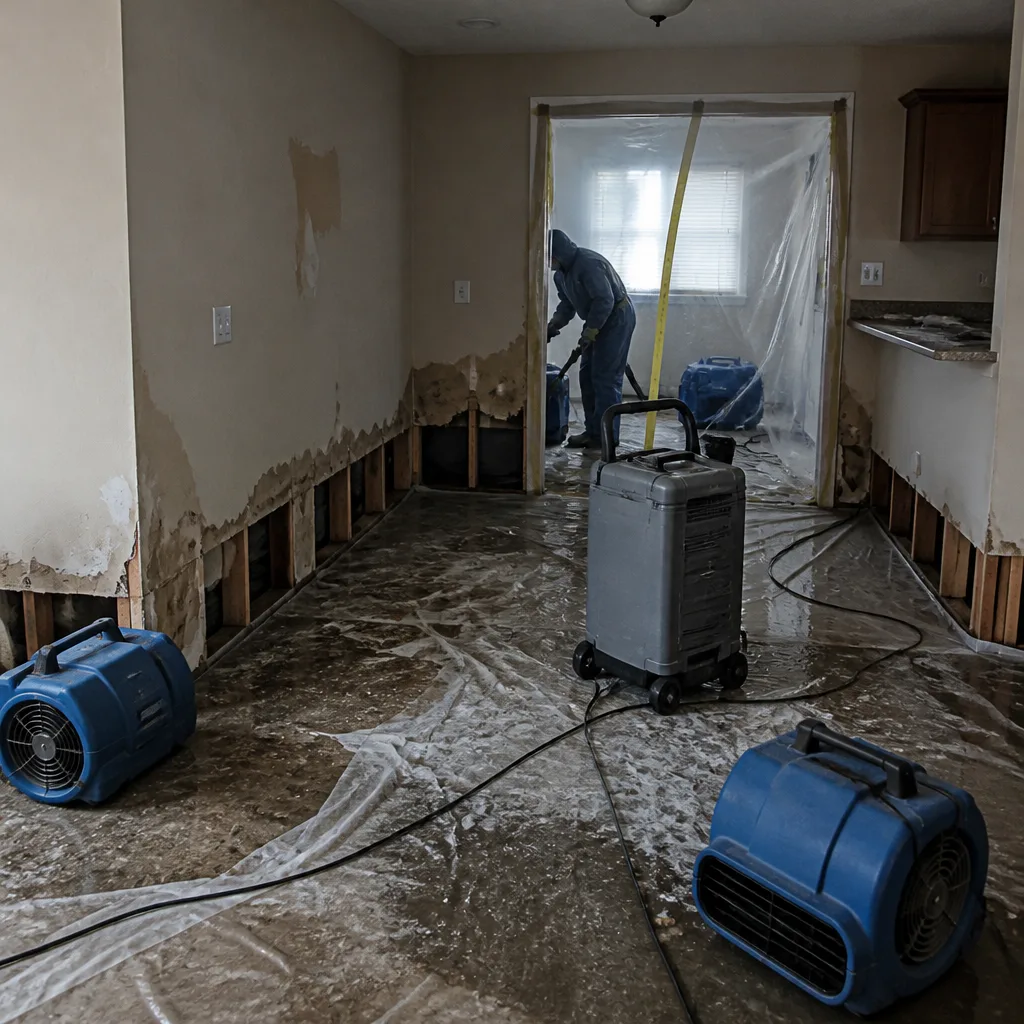 Before
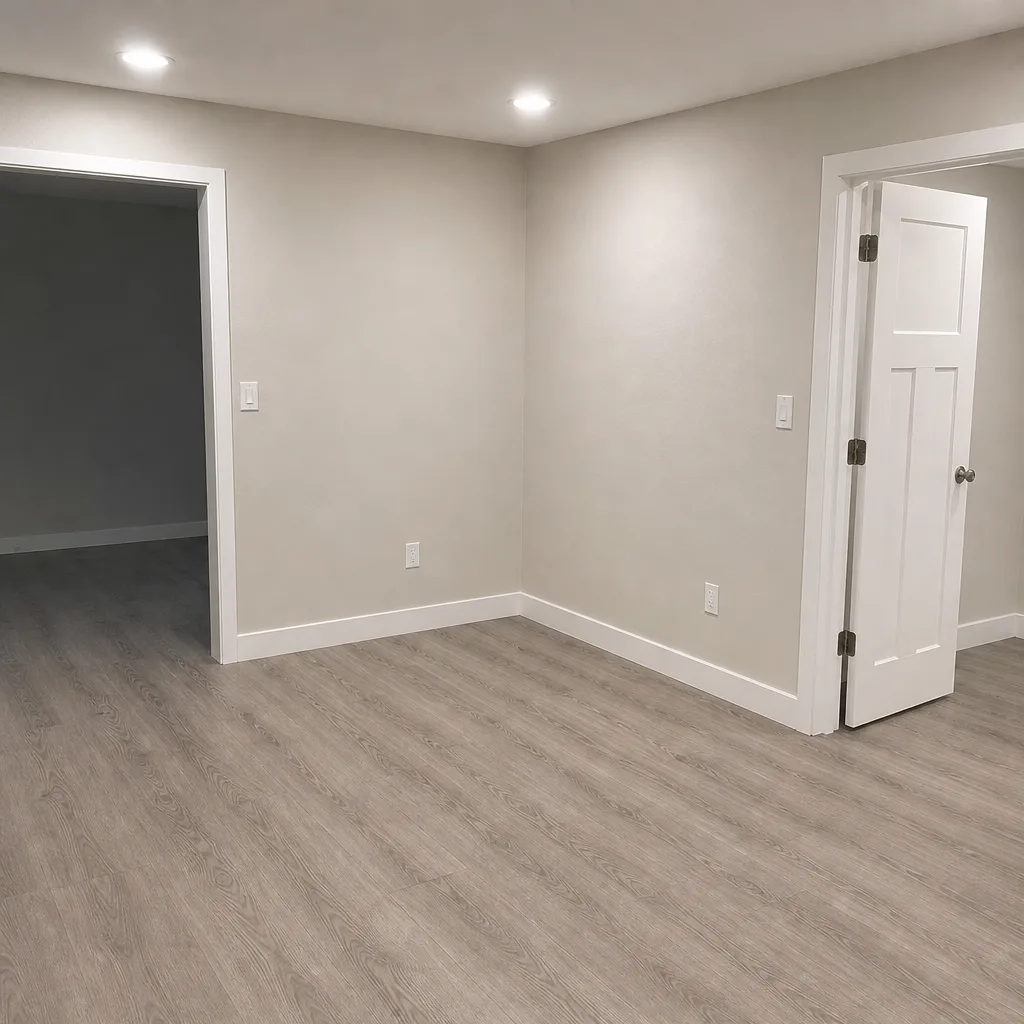 After
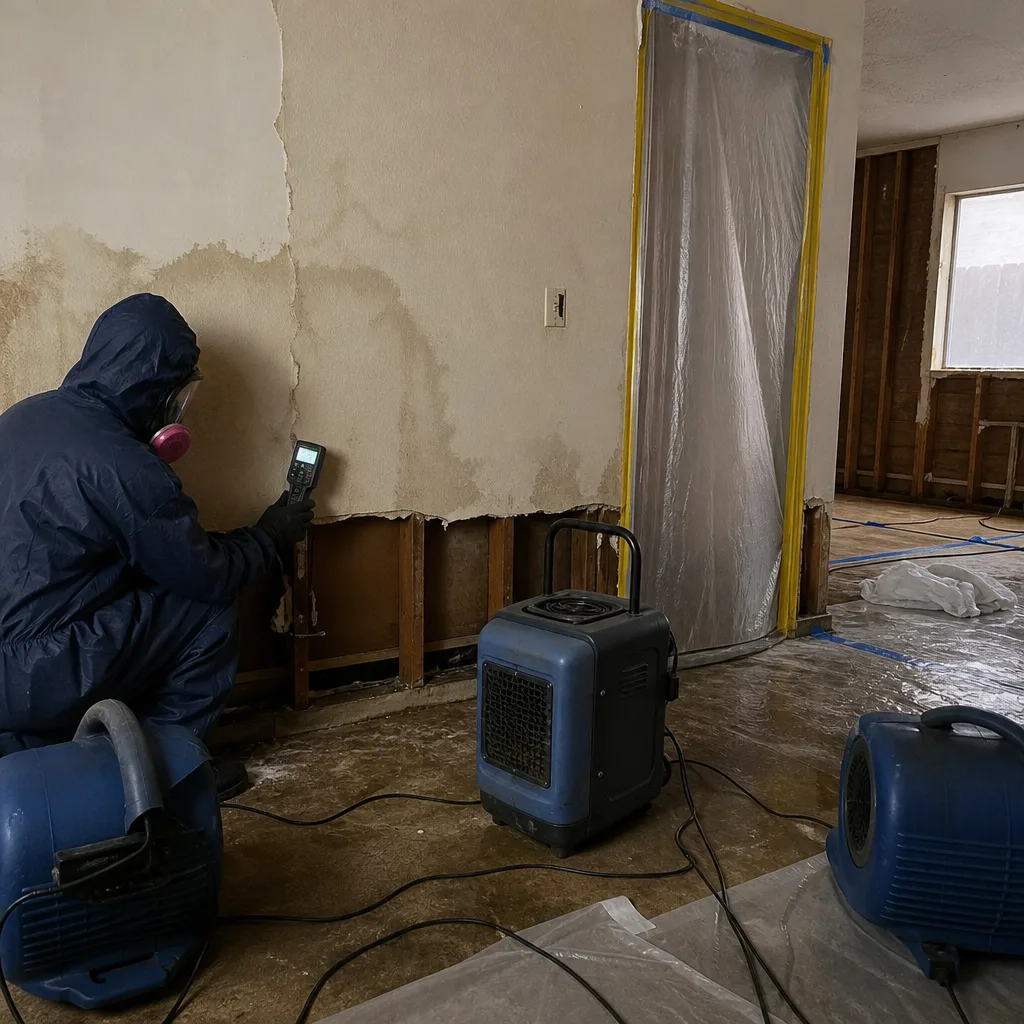 Before
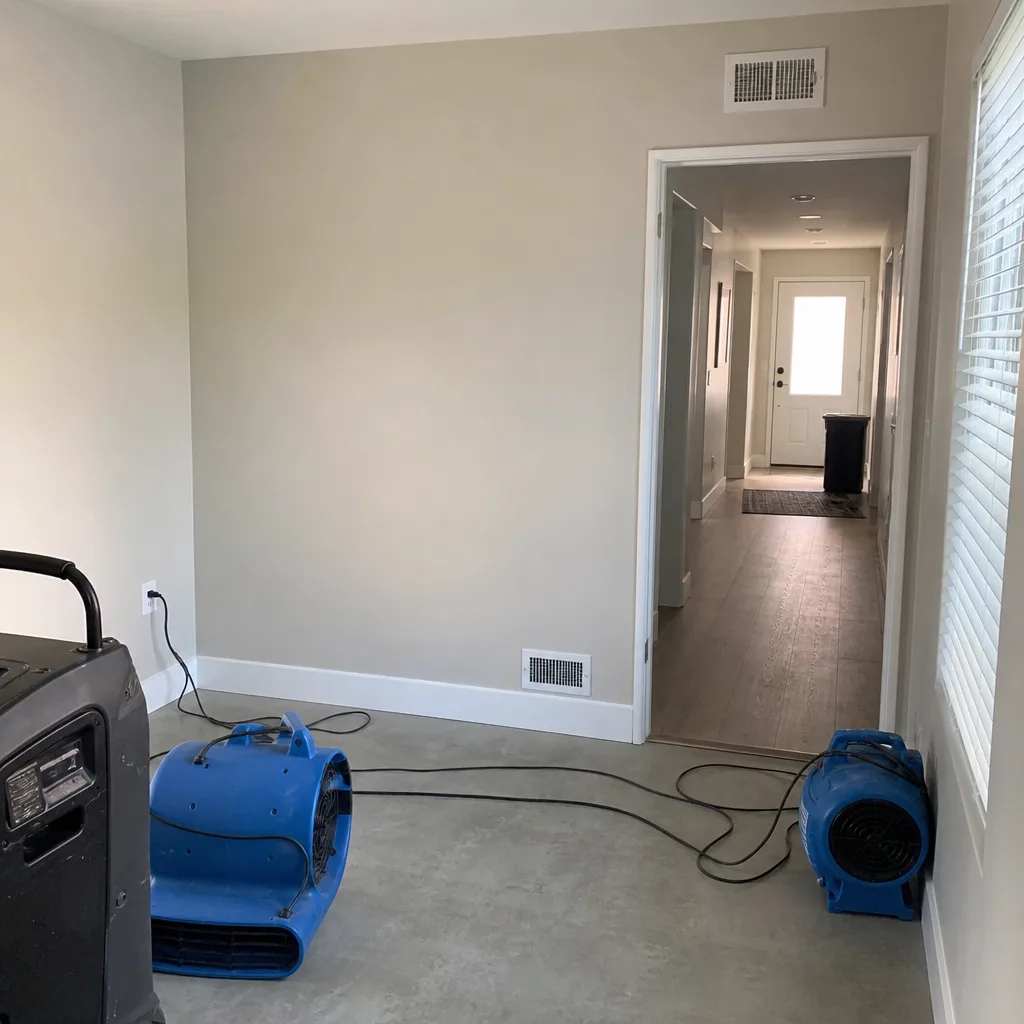 After
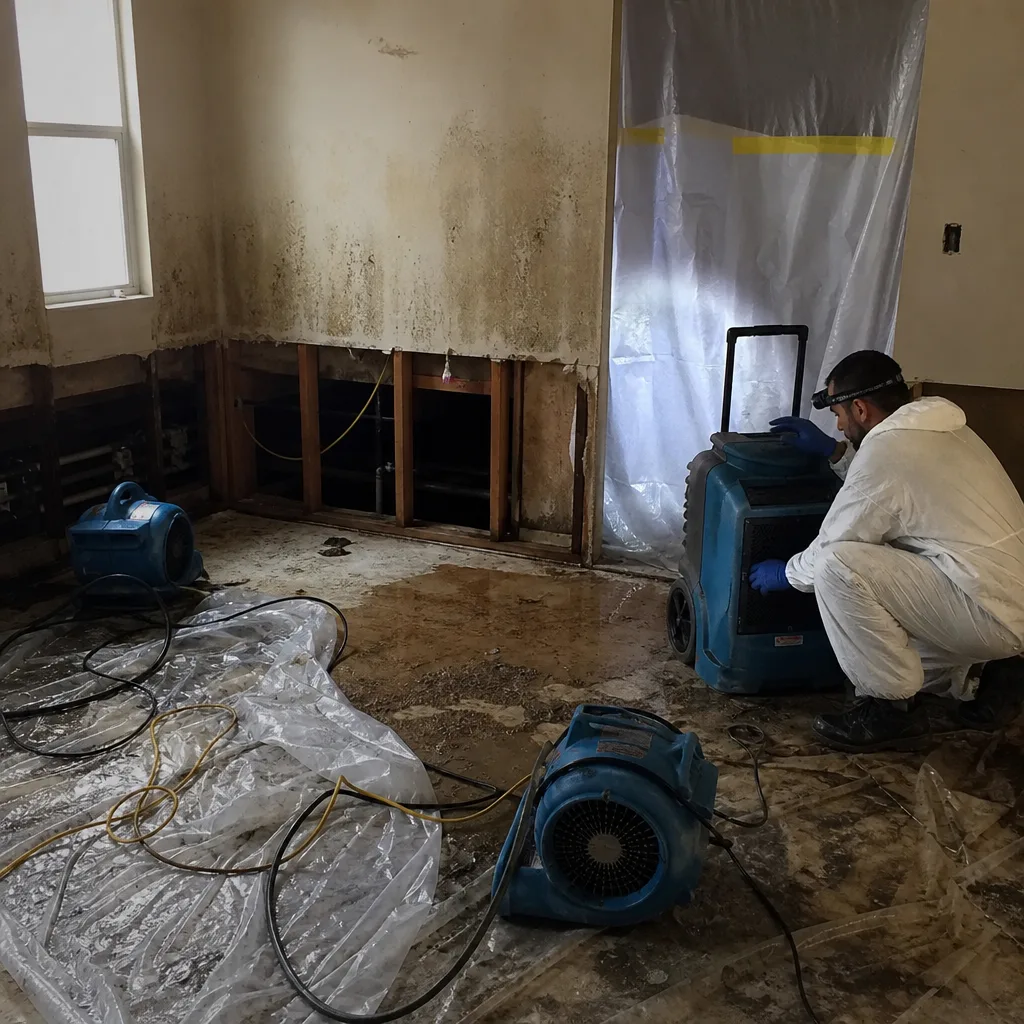 Before
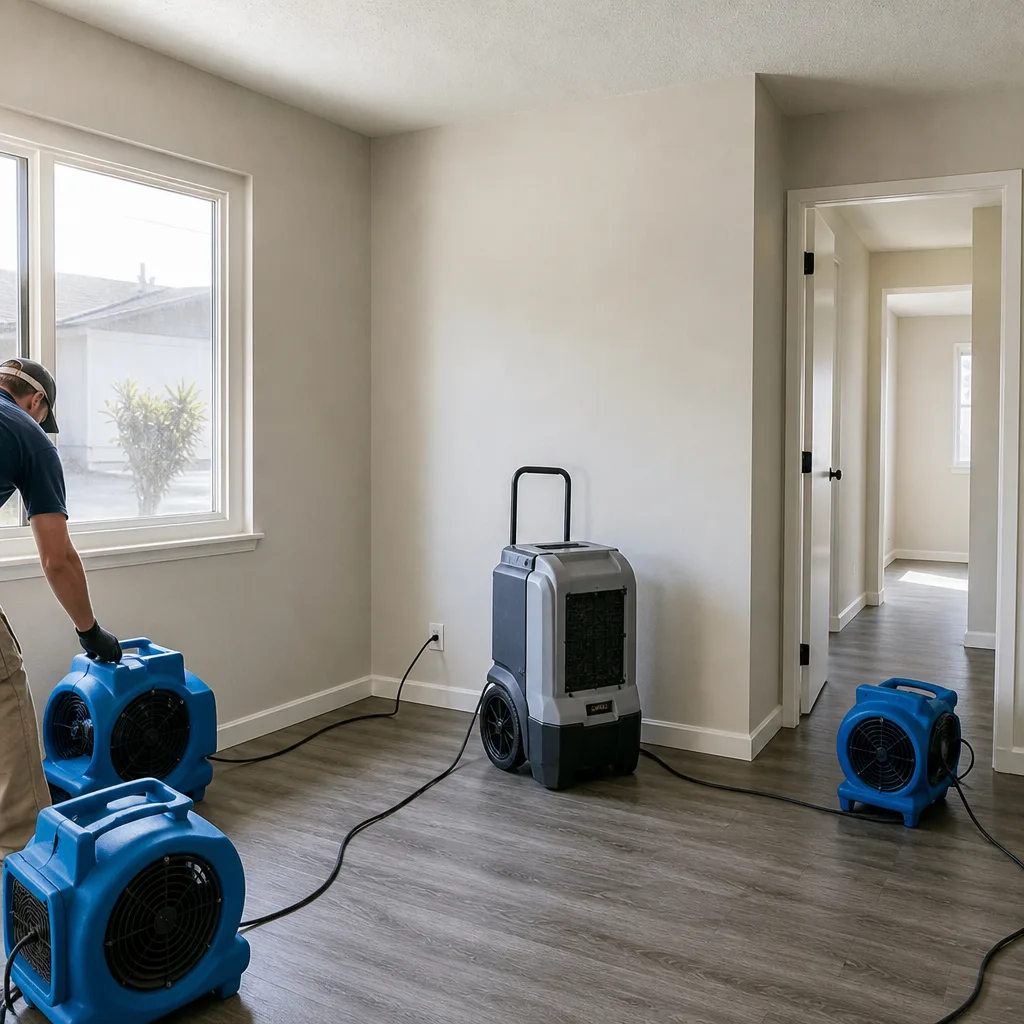 After