Last updated October 31, 2026
 Water damage drying
 Fire & smoke cleanup
 Mold remediation
 Storm response
 Sewage cleanup
 Reconstruction
Free visual inspection and a written scope of work before any mitigation begins - photos, moisture readings, and drying logs go in your claim file
The scope we write is the scope we bill. Anything new gets shown to you, in writing, before we touch it.
Get your free estimateDamage Restoration Cost Breakdown: The Fontana Homeowner’s Reference for 2026
Two Fontana homes with the same square footage and the same water intrusion event can produce restoration invoices that differ by $8,000 or more. The reason has almost nothing to do with square feet. What actually drives the bill is the category of water involved, how many equipment days the drying plan required, and whether mitigation started in the first 24 hours or sat for four days while a homeowner waited for a call back. This guide walks through how restoration costs are actually built in Fontana in 2026, so you can read an estimate the way an adjuster does: line by line, not as one lump sum. For Damage Restoration Warning Signs: A Fontana Homeowner’s Reference Guide, see our companion resource.
Quick Answer
Water damage restoration in Fontana runs roughly $2,400 to $8,500 for typical single-room incidents in 2026; whole-home losses or Category 3 water can reach $18,000 to $35,000. Mold remediation generally lands between $1,800 and $9,000 depending on containment zones and affected material removal. Fire damage restoration starts around $4,000 for light smoke cleanup and climbs past $40,000 when structural rebuild enters the scope. The single biggest factor in your final cost is not the size of the room. It is material category, equipment-days, and whether mitigation begins before water migrates into drywall cavities and subflooring.
Restoration work we handle
Table of Contents
- How Fontana Restoration Costs Are Actually Built
- Why IICRC Water Categories Control Your Labor Rate
- 2026 Cost Per Affected Zone: Bathroom, Kitchen, Living Area, Crawl Space
- Equipment Days: The 30-40% Line Item Nobody Explains
- Xactimate vs. Flat-Rate Quotes: What Each One Signals
- Reading Your Adjuster’s Scope Against a Contractor’s Estimate
- Mold Remediation Costs in Fontana: Containment Changes Everything
- Fire Damage Restoration: When Soot Becomes a Structural Project
How Fontana Restoration Costs Are Actually Built
Restoration pricing does not work like remodeling pricing. A kitchen remodel charges by square foot, fixture grade, and labor hours. Restoration charges by material affected, category of water, drying equipment required, and containment setup. A 12-by-12 bedroom with wet carpet and baseboards might bill at $1,900. A 12-by-12 bedroom where water sat for six days and wicked four feet up into the drywall might bill at $7,000 or more. Same square footage. Different scope. Homeowners in Fontana who understand this distinction stop asking the wrong question – “What is your per-square-foot rate?” – and start asking the right one: “What materials are affected, and what does your drying plan look like?”
Fontana’s climate adds another layer. Our summers regularly hit the high 90s and low 100s, which means a water event in July or August accelerates mold growth faster than the same event in January. Relative humidity inside a closed-up Fontana home after a supply-line failure can exceed 70% within 48 hours in summer. That changes the drying plan, which changes the equipment count, which changes the cost. A contractor who understands this will write a different drying plan in August than they would in February. The estimate reflects that.
Five Factors That Actually Move the Number
- Water category (1, 2, or 3): clean water versus contaminated water changes PPE requirements, disposal costs, and labor rates.
- Materials affected: carpet and pad are cheap to remove and replace. Hardwood, tile underlayment, and plaster are expensive to dry or remove.
- Equipment days: each dehumidifier and air mover bills per day. A 5-day dry-out costs twice what a 2-day dry-out costs, even if the room is identical.
- Containment requirements: mold and sewage work require sealed containment zones with negative air pressure. That setup alone can add $1,200 to $3,000.
- Response time: water that gets extracted and dried within 24 hours rarely migrates past the surface layer. Water that sits for a week migrates into cavities, subflooring, and wall framing.
We have seen two nearly identical tract homes in North Fontana – built by the same developer, same floor plan, same water event from a failed water heater supply line. One owner called a restoration crew the same afternoon. The other waited five days hoping it would dry on its own. The first bill came in just under $3,000. The second crossed $11,000 because the water had wicked through the wall cavities into the adjacent bedroom and saturated the subfloor. The difference was not the contractor. It was the clock. If you are facing an active loss right now, Fontana water damage restoration costs climb by the hour, not by the day.
Start here: Dry Line Water Damage home dispatch is built around getting eyes and equipment on a loss the same day it is called in.
Why IICRC Water Categories Control Your Labor Rate
The IICRC classifies water damage into three categories. This is not an academic exercise. The category determines what a restoration crew wears, how the affected material gets handled, where the extracted water goes, and what the disposal charges run. The category is stamped into the first page of any legitimate estimate, and if it is not there, ask why.
Category 1: Clean Water
Category 1 water comes from a sanitary source: a supply line, a faucet that overflowed with tap water, a broken pipe behind a wall. No significant contamination is present. Affected carpet and pad can sometimes be dried in place if the water was extracted quickly. Drying plans are straightforward. Labor rates sit at the base level because technicians are not working in contaminated conditions.
In Fontana, Category 1 is the most common starting point for slab leaks and water heater failures. Early response Category 1 jobs are the least expensive restoration work you will ever see: often under $3,000 for a contained single-room loss.
Category 2: Gray Water
Category 2 water carries significant contamination. Sources include washing machine discharge, dishwasher overflow, and toilet overflow with urine only. This water requires antimicrobial application after extraction. Affected carpet and pad are typically removed and replaced rather than dried, because the contamination does not leave the material even after drying. Technicians need higher PPE. Disposal charges tick up.
Fontana homes built in the 1980s and early 1990s often run washing machines in garages or upstairs hall closets. A burst supply line to a second-floor laundry machine sends Category 2 water through the ceiling, into the wall cavity, and down into the floor assembly below. That is a multi-room Category 2 loss, and the estimate reflects the contamination protocol, not just the drying.
Category 3: Black Water
Category 3 is grossly contaminated. Sewage backup, floodwater from outside, and toilet overflow with feces fall here. Every affected porous material gets removed. No attempt is made to dry carpet, pad, or upholstery that Category 3 water touched. Crews wear full PPE including respirators and protective suits. All extracted water goes into a sanitary sewer connection, not a storm drain. Disposal gets billed as contaminated waste. Labor rates are the highest in the industry because the hazard is real.
Fontana’s older neighborhoods near the 10 and 15 freeways have aging sewer laterals. We have responded to sewage backups in South Fontana homes where the main line backed up through multiple floor drains. Category 3 work is not a drying job. It is a controlled demolition and sanitation job with drying attached. The cost difference between Category 1 and Category 3 on the same size room can be triple. A legitimate estimate will state the category and explain the protocol. If a contractor gives you a flat rate without referencing water category, they are not doing IICRC-certified work.
2026 Cost Per Affected Zone: Bathroom, Kitchen, Living Area, Crawl Space
Restoration estimates are built by room or zone, not by total square footage. Here is what homeowners in Fontana should expect to see on a 2026 estimate for common affected zones. These ranges assume a mid-range loss: water has been present for under 48 hours, no structural rebuild required, and the work is performed by an IICRC-certified contractor running commercial-grade drying systems.
Bathroom: $1,800 to $5,500
Bathrooms concentrate plumbing in a small footprint, so failures here are common. A supply line behind a toilet or under a vanity that fails while the homeowner is at work sends water into the subfloor and often through to the ceiling below. Typical scope includes cabinet removal, baseboard removal, extraction from the subfloor, and drying the floor assembly with an Injectidry-style system that pulls moisture from the cavity without tearing out the tile. If tile remains, drying may run 4 to 6 equipment days. If the tile gets removed, framing gets exposed and dried faster, but tile replacement pushes the project into reconstruction costs.
Fontana bathrooms built in the 2000s often have acrylic shower pans and MDF vanities. MDF wicks water aggressively and cannot be dried – it gets replaced. That disposal and replacement line item is often the surprise in a bathroom estimate.
Kitchen: $2,200 to $7,000
Kitchen losses frequently start at the dishwasher, the refrigerator ice-maker line, or the sink supply. The complication is cabinetry. Particleboard cabinet boxes absorb water at the toe-kick and swell rapidly. If the water was caught early, we can dry behind and under cabinets using low-profile air movers and desiccant dehumidifiers. If the toe-kicks are swollen, the cabinets are coming out. That single change moves the estimate from drying territory into reconstruction territory, adding $2,000 to $5,000 depending on cabinet grade.
Tile and vinyl floors fare better than wood-look laminate, which delaminates when wet and cannot be salvaged. Fontana homes built in the last 10 years commonly use water-resistant vinyl plank, which recovers well if drying starts fast. Homes from the 1970s and 1980s often have original hardwood in kitchens. Wet hardwood is salvageable only with aggressive, early drying using a premium system like Injectidry mats laid directly across the flooring to pull moisture down through the boards.
Living Area: $1,500 to $6,500
A living area loss usually enters through an exterior wall, a sliding door leak, or a ceiling from second-floor plumbing above. Carpet and pad get extracted and evaluated; pad is almost always replaced, while carpet can sometimes be dried, cleaned, and reinstalled if the water was Category 1. Drywall below the water line typically gets cut at 12 to 24 inches above the visible wet mark, dried, and patched. If insulation behind the drywall is saturated fiberglass batts, it gets removed and replaced – drying it in place is not practical.
Fontana’s single-story ranch homes from the 1960s and 1970s with original wood-frame construction are particularly prone to exterior wall leaks during heavy winter rains, especially on west-facing elevations against the Santa Ana winds. Those wall cavities hide moisture well. An infrared camera inspection should be part of the initial assessment, not an add-on.
Crawl Space: $2,000 to $9,000
Crawl spaces under Fontana homes present a different problem set. A supply line failure under the house saturates the soil, the framing, and the subfloor insulation – often for days before anyone notices. Standing water gets extracted with truck-mounted systems. The framing gets dried with high-volume air movers positioned in the crawl access points. The insulation gets stripped and replaced. Vapor barrier gets removed, the soil stabilized, and new barrier installed.
This is one of the most undervalued restoration scopes in Southern California. Homeowners look at a crawl space and see a dirt pit, so they assume the fix is cheap. The opposite is true: crawl spaces have poor airflow, no natural drying help, and lots of surface area across the entire floor plan. A crawl space dry-out in Fontana can run 6 to 10 equipment days. If the crawl space was tight access, the labor line climbs too.
Equipment Days: The 30-40% Line Item Nobody Explains
On a typical water damage estimate, equipment line items – dehumidifiers, air movers, injection drying systems, and monitoring visits – run 30 to 40 percent of the total invoice. Most homeowners see those lines and assume they are padding. They are not. They are the daily rental cost of commercial-grade drying equipment, and they are how a restoration contractor actually removes water from materials you cannot see.
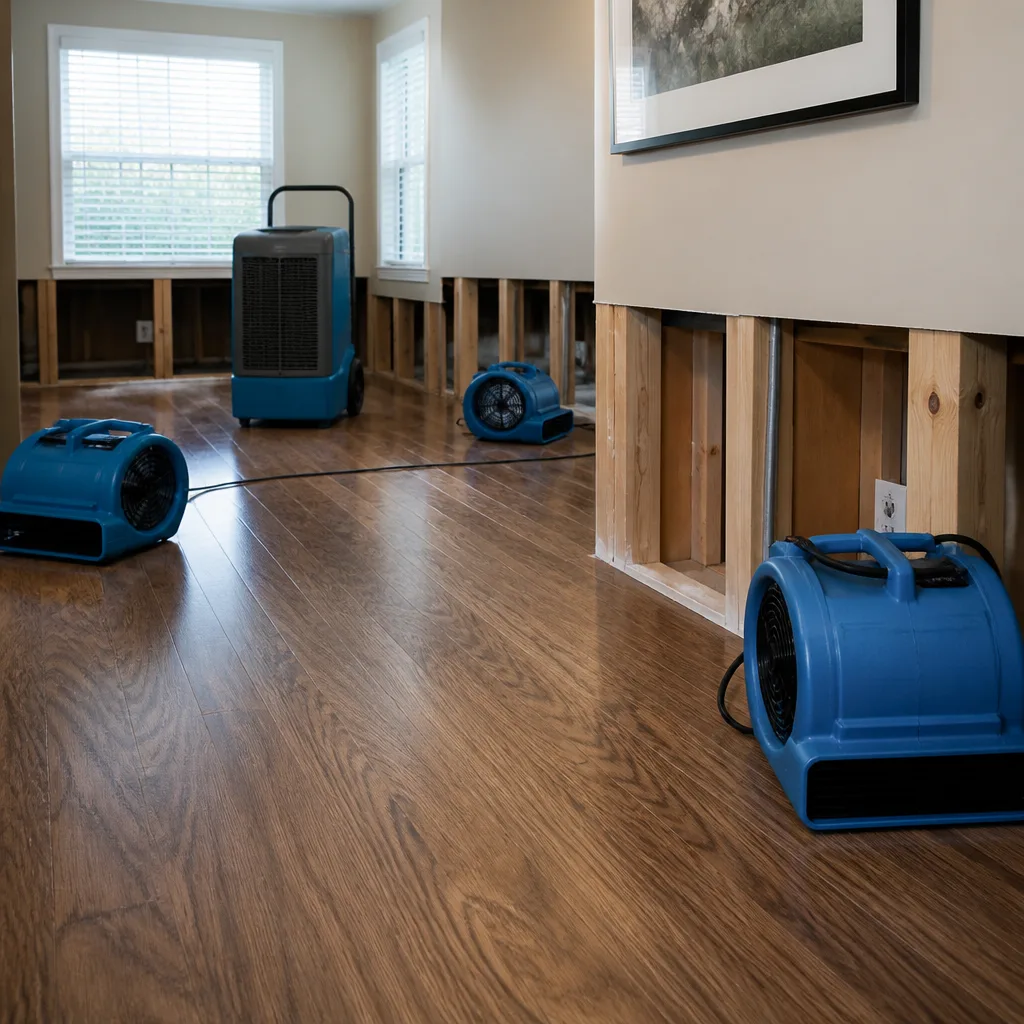
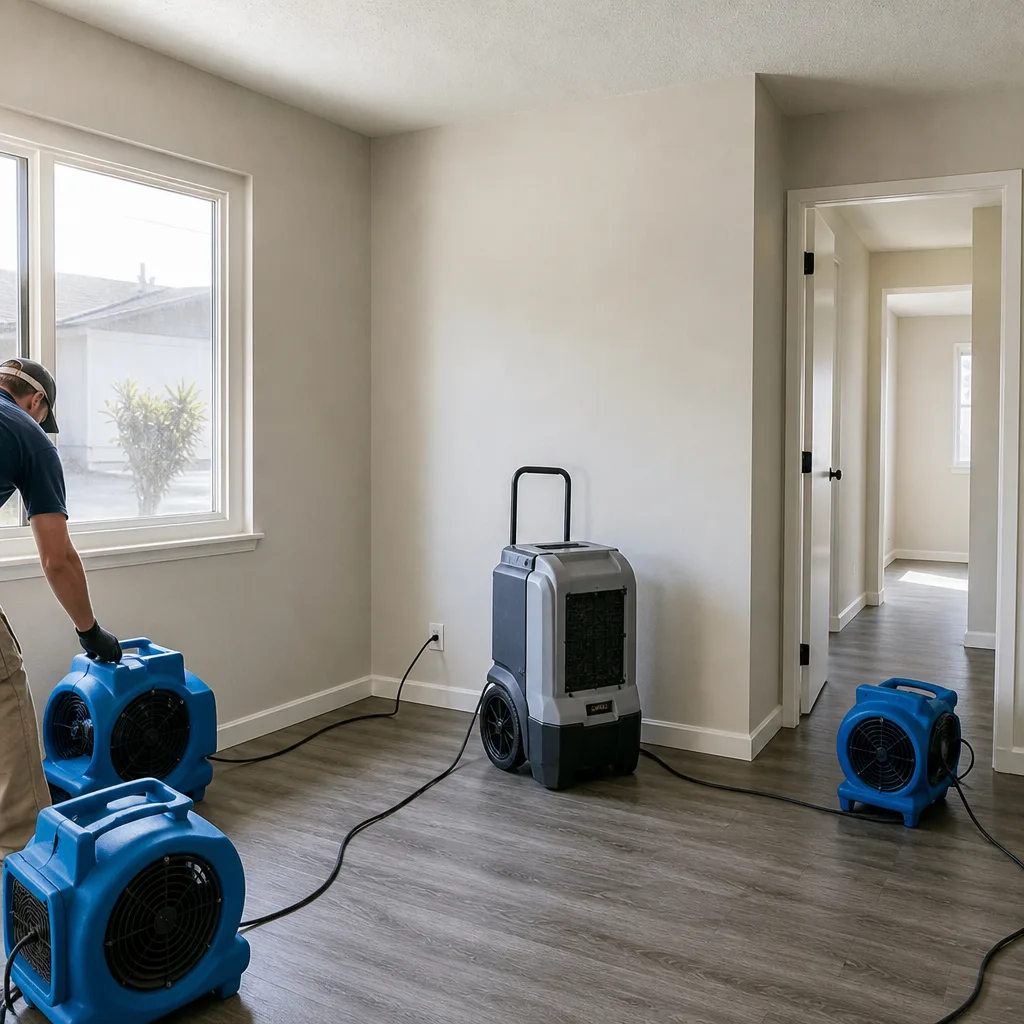
Here is how it works. A standard bedroom loss might call for two air movers at $35 to $55 per day each, one large dehumidifier at $130 to $190 per day, and daily moisture monitoring at $75 to $125 per visit. Over five days, that is $1,600 to $2,300 in equipment and monitoring alone – before any demolition, disposal, cleaning, or reconstruction. A contractor running Dri-Eaz, Phoenix, and B-Air commercial units is running equipment that pulls 70 to 140 pints of water per day out of the air. A homeowner with a consumer dehumidifier from a hardware store pulls maybe 10 to 20 pints. The equipment cost is not a fee; it is what actually dries the structure.
How to verify the equipment was actually on site: ask for the daily moisture log. A legitimate IICRC-certified contractor documents the starting moisture content of each affected area, records the equipment placed, notes the readings each day, and removes equipment when the structure reaches a documented dry standard. If a contractor cannot produce a drying log, they cannot prove the equipment days they billed. That is a red flag on any Fontana estimate, from any company.
How Equipment Days Get Counted
- Day 1 – extraction and setup: standing water removed, equipment placed, initial moisture readings recorded.
- Days 2 through 4 – active drying: equipment runs continuously, readings taken each day, air movers repositioned as moisture migrates.
- Day 5 or 6 – verification: moisture content verified against a dry standard for each affected material, equipment removed, drying log delivered.
- Days 7+ – extended drying: only when materials were saturated deeply or crawl spaces were involved. Each extra day adds cost, and the log shows why.
For Fontana homeowners, the takeaway is this: the equipment line items on your estimate are not a place to negotiate. They are a place to verify. A proper drying plan will state the equipment count, the expected duration, and the method of verification. A Fontana water damage restoration contractor who cannot show you a drying log is not doing the job to a standard your insurance adjuster will accept.
Xactimate vs. Flat-Rate Quotes: What Each One Signals
When you get a restoration estimate, the format matters as much as the number. Most legitimate restoration contractors build their estimates in Xactimate, the same estimating software your insurance adjuster uses. It produces a line-by-line scope with current market pricing for your zip code. It shows material categories, labor hours, equipment days, and unit costs. It is transparent because it has to be: your adjuster will cross-reference every line against the same software.
A flat-rate quote – “we can do the whole thing for $4,200” written on a piece of letterhead – tells you the contractor is not pricing to an industry standard. That may not be a problem on a small, simple loss. It becomes a problem the moment the adjuster needs to compare scopes, or when the drying plan changes and there is no baseline to adjust from. Flat rates also tend to underbid complex work because the contractor has not actually priced the affected materials. Underbidding restoration work in Fontana usually means the drying gets cut short and the homeowner discovers mold months later.
What a Legitimate Xactimate-Based Estimate Shows You
- Water category stated on page one, with the IICRC reference.
- Affected materials listed by room – carpet, pad, drywall, baseboard, insulation – each with removal or drying cost.
- Equipment line items with daily rates and estimated duration.
- Antimicrobial and biocide applications for Category 2 and 3 water.
- Containment setup if mold or sewage is involved.
- Monitoring and documentation visits listed as separate line items.
If you are handed a flat number with none of that detail, ask for a scope. In our experience, the flat-rate contractors tend to disappear when the adjuster asks for documentation. The Xactimate contractors survive those conversations because the work is already itemized to the same standard the insurance carrier uses.
Reading Your Adjuster’s Scope Against a Contractor’s Estimate
Here is a process that saves Fontana homeowners real money. When you file a claim, your insurance adjuster writes a scope of loss. That document details what the carrier will pay to remediate and repair. When your restoration contractor writes their estimate, it should be compared to the adjuster’s scope line by line before work begins, not after. Here is how to do that comparison methodically.
- Compare water categories first. If the adjuster wrote Category 2 and your contractor documented Category 3, that changes every downstream line. The contractor needs to submit photo and moisture evidence for the higher category before work starts.
- Compare equipment counts. The adjuster’s scope may assume two air movers and one dehumidifier. The contractor’s plan may require five and two. If the contractor cannot justify the higher count with moisture data, the gap is real but resolvable – the adjuster needs the data, not a phone call.
- Compare affected room lists. The adjuster may scope the kitchen and hall. The contractor’s infrared inspection may show moisture migrating into the living room subfloor. The contractor needs to document that with moisture readings and photographs, and submit a supplement request.
- Confirm the dry standard. The industry dry standard for most materials is within a few percentage points of the unaffected baseline reading. Your contractor should record that baseline during the initial inspection. If they cannot produce a dry standard, they cannot prove the structure is actually dry.
- Flag disagreements in writing. If the contractor says something is beyond repair and the adjuster’s scope says to clean it, get the contractor’s reasoning in writing with photos. That documentation is what the adjuster needs to revise the scope. Anything verbal gets lost.
The critical timing point: this review happens before demo and drying start. Once materials are removed, the evidence disappears. A restoration contractor who knows how to work with adjusters will document everything, submit supplements when the data supports them, and keep you copied on the communication. That is the difference between a smooth claim and a homeowner filing a complaint with the state.
Mold Remediation Costs in Fontana: Containment Changes Everything
Mold remediation is billed differently from water restoration, and the number that moves the estimate most is containment. A visible mold patch on a single wall with no air handler involvement runs $1,800 to $3,500 in Fontana. Mold that has spread behind walls, into ductwork, or across a crawl space can run $8,000 to $15,000 before reconstruction starts.
The cost driver is the containment protocol. IICRC standards require sealed containment zones with negative air pressure for mold work. That means plastic sheeting, HEPA-filtered negative air machines, and often a transition chamber for technicians entering and leaving the work area and disposing of contaminated material. The setup alone is $1,200 to $2,800 on a typical multi-room project. Homeowners who see that line item and think it is unnecessary are underestimating the risk – mold spores released into the air during careless demolition spread the problem into rooms that were never affected.
Fontana’s summer heat contributes here too. When an attic heats to 130 degrees in August, any moisture trapped in insulation or framing feeds mold growth quickly. Attic mold remediation in Fontana often requires removing contaminated insulation, treating the framing with antimicrobials, and sometimes replacing portions of the roof decking. That scope pushes past $10,000 easily. For a deeper walkthrough of what this work involves, see Mold Remediation in Fontana.
Mold Cost Ranges by Project Type, Fontana 2026
- Single bathroom wall, under 10 sq ft of visible mold: $1,800 to $3,200 including containment setup.
- Multi-room mold from a slow leak behind cabinets: $4,500 to $9,000 with containment, material removal, and drying.
- Attic mold from condensation or roof leak: $7,000 to $14,000 depending on insulation volume and decking condition.
- Crawl space mold with vapor barrier replacement: $5,000 to $12,000 including soil treatment and new barrier installation.
- Whole-home mold from a long-standing Category 3 event: $18,000 to $35,000, with substantial reconstruction outside the remediation scope.
Fire Damage Restoration: When Soot Becomes a Structural Project
Fire restoration in Fontana runs the widest cost range of the three disciplines, from about $4,000 for light smoke cleanup to well past $40,000 when kitchen fires or garage fires compromise framing and require partial rebuilds. The price difference between a smoke-only job and a structural job is driven by what the fire actually touched. Light smoke from a pot left on the stove migrates through the home, but it does not damage framing. A kitchen fire that burns cabinets and reaches the ceiling leaves charred framing that must be removed or sandblasted, and that pushes the estimate into construction territory.
Soot is the hidden cost on fire jobs. It is oily, it gets into HVAC ducts, it settles into wall cavities through electrical outlets, and it must be cleaned or sealed before painting – otherwise the odor returns within months. A legitimate fire restoration scope includes duct cleaning, thermal fogging or ozone treatment for odor, and sealing charred surfaces with an odor-blocking primer before repainting. If an estimate skips those lines, the contractor is not delivering a complete clean-up. For a full scope overview, see Fire Damage Restoration in Fontana.
Fire Restoration Cost Drivers Beyond Soot Removal
- Board-up and tarping: if the fire broke windows or burned through a roof section, the home needs emergency securing before restoration starts. $800 to $3,500 depending on openings.
- Water damage from fire suppression: the same fire department water that saved the structure now requires Category 1 or 2 extraction and drying. This is always part of the estimate and frequently surprises homeowners.
- Smoke penetration in the HVAC system: if the system ran during the fire, soot is now in the ductwork. Duct cleaning and possibly replacement push the cost up by $1,500 to $6,000.
- Material removal and disposal: charred drywall, insulation, and cabinetry get cut out and disposed of. Disposal in Fontana for fire-damaged material runs higher than standard construction debris due to the hazard classification.
- Reconstruction: once the damaged material is out, the rebuild starts. This is scoped, scheduled, and priced in writing – like a remodel, not an emergency call. Costs here track Fontana construction market rates for framing, drywall, cabinetry, and finish work.
Common Mistakes to Avoid
- Waiting to see if it dries on its own. In Fontana’s summer heat, a wet wall cavity becomes a mold farm within 48 to 72 hours. The drying window closes fast, and the cost of waiting is measured in thousands.
- Comparing estimates by total price instead of scope. A $4,000 flat rate and a $6,000 Xactimate estimate may be pricing entirely different scopes. Read the line items, not the bottom line.
- Paying for equipment that was never on site. Demand the drying log with daily moisture readings. No log, no proof. No proof, no payment.
- Accepting a water category without explanation. If the estimate says Category 1 but the water came from a sewage backup, the contractor is pricing the wrong protocol and you will pay for it later.
- Letting demolition happen before the adjuster sees the loss. Once wet drywall and carpet are in a dumpster, the evidence is gone. Photograph everything and involve the adjuster before demo starts.
- Hiring separate vendors for water, mold, and fire work. When one contractor dries the structure, another removes the mold, and a third handles the rebuild, any problem becomes someone else’s fault. One accountable scope beats three vendors pointing fingers.
- Assuming insurance will cover everything. Most Fontana homeowner policies cover sudden and accidental water damage, but sewer backup riders vary by carrier. Read your policy’s water damage section before the loss, not after.
See the difference
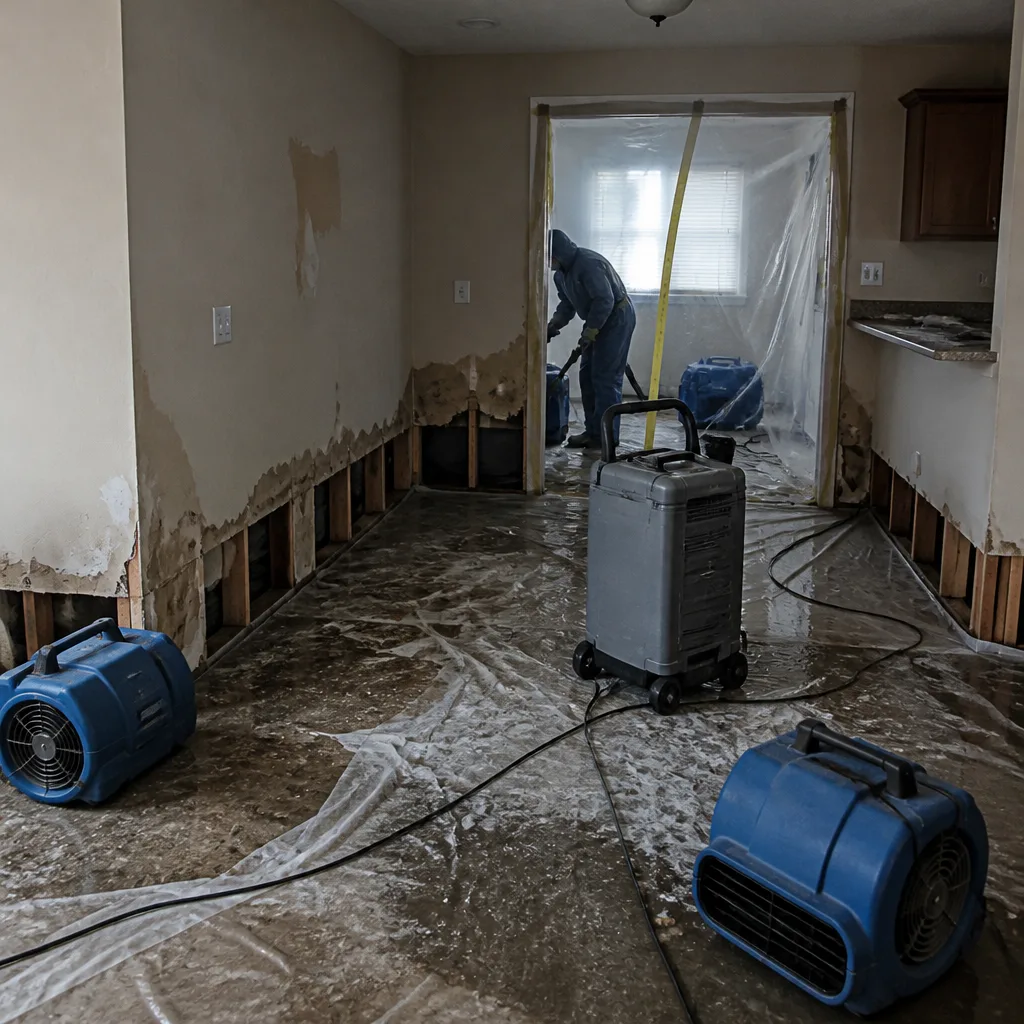 Before
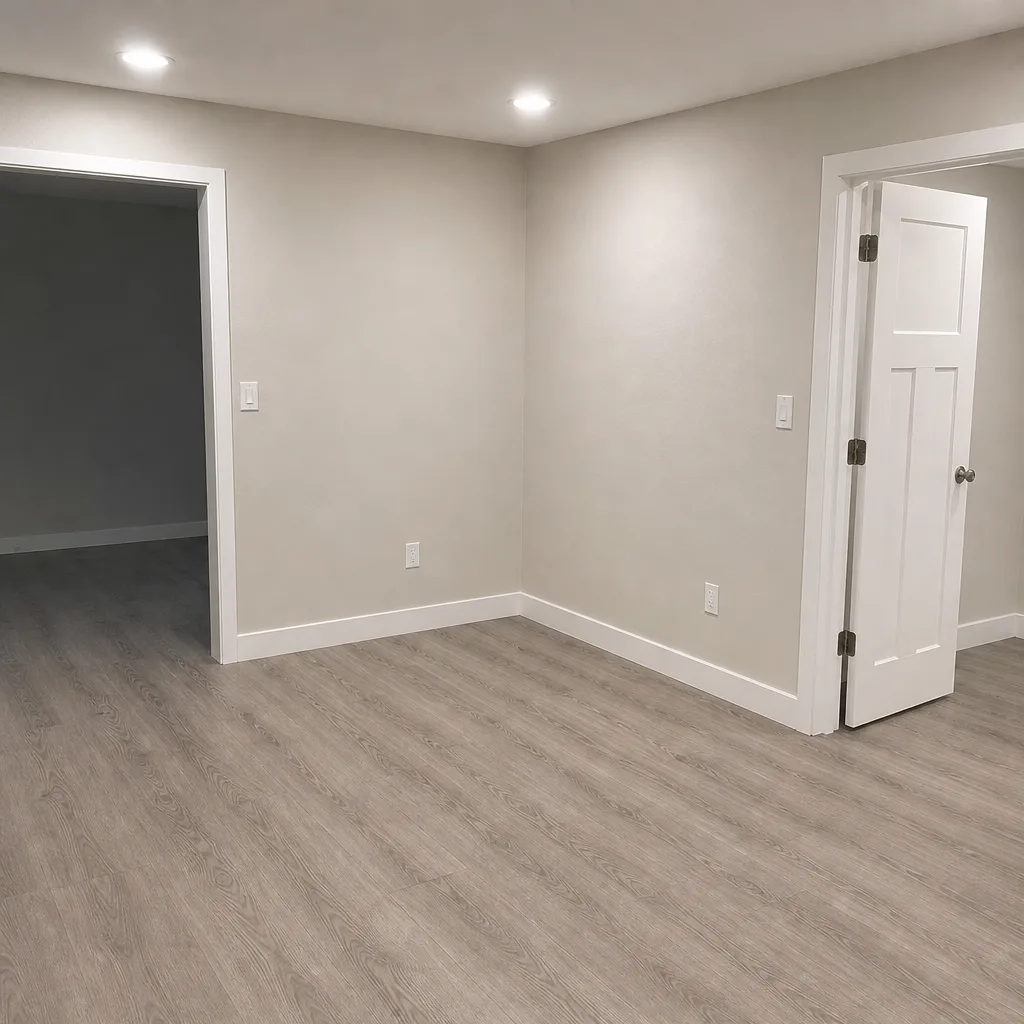 After
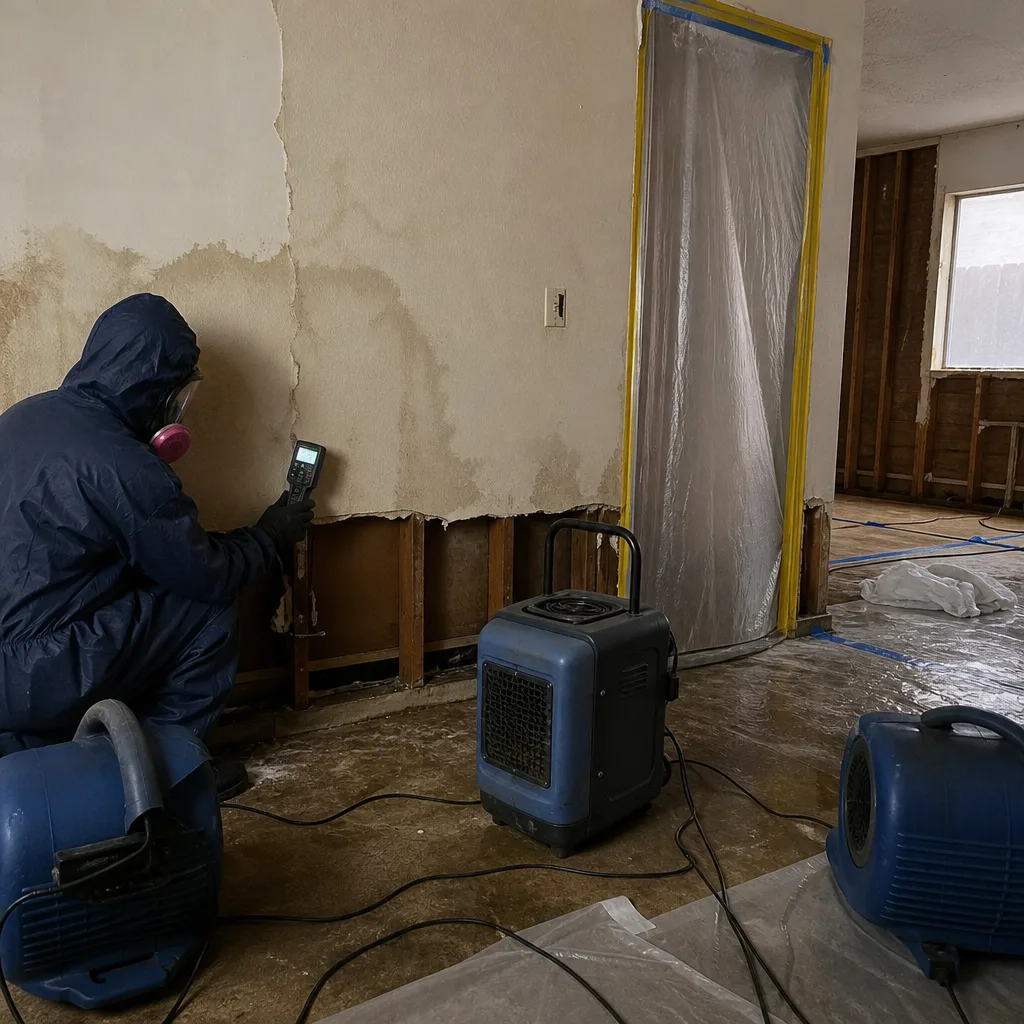 Before
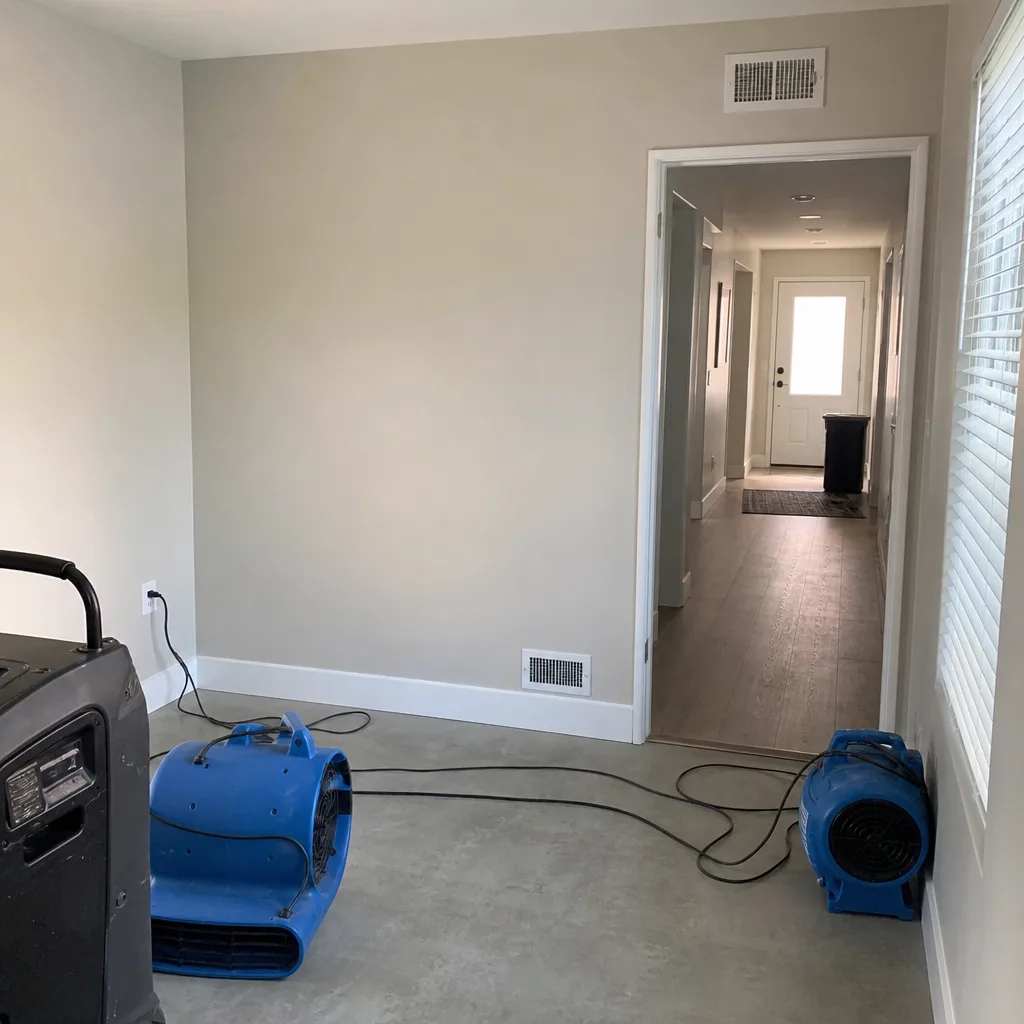 After
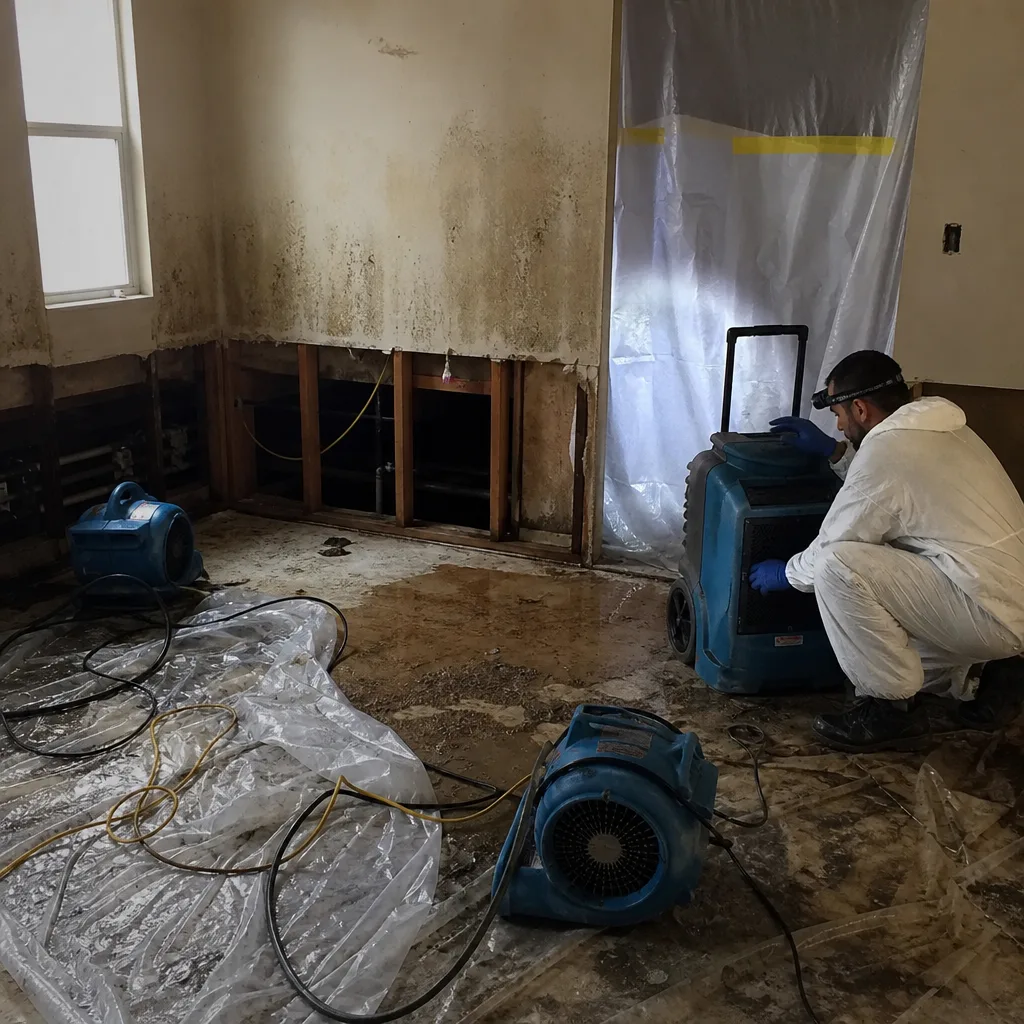 Before
 After
When to Call a Professional
Call a restoration professional the day you discover the loss. If water has been running for more than a few hours, if the affected area includes walls, floors, or crawl space framing, or if the water category is anything other than a clean supply-line failure, waiting is the expensive option. Mold growing inside a wall cavity or soot migrating through an HVAC system are not homeowner-remedial problems. They require containment, commercial drying equipment, and documented verification that the structure is actually dry and safe. Dry Line Water Damage offers free estimates in Fontana – call (833) 589-5317 to get a technician on site and a documented scope in hand. Browse more guides & resources on our blog for additional homeowner support.
Frequently Asked Questions
Most single-room water losses in Fontana run $2,400 to $8,500, with whole-home or Category 3 losses reaching $18,000 to $35,000. The exact number depends on water category, affected materials, equipment days, and how quickly mitigation started.
Most Fontana homeowner policies cover sudden and accidental water damage from supply-line failures, appliance malfunctions, and fire suppression. Sewer backup and flood damage often require specific riders. Your adjuster’s scope of loss determines what the carrier pays; a restoration contractor who documents everything to Xactimate standards helps maximize that payout.
Same-day dispatch is standard in the restoration industry, including for Fontana properties. Dry Line Water Damage answers calls at (833) 589-5317 and schedules initial assessments immediately for active water, mold, or fire losses.
If visible mold covers more than about 10 square feet, or if it is inside wall cavities, in ductwork, or in the attic, a surface cleaning is not enough. IICRC standards require containment and proper removal for anything beyond incidental surface growth. A visual inspection with moisture readings will tell you which scope applies.
Ask for the daily drying log. It should show starting moisture readings, equipment placed, daily readings taken, and final verification showing the structure reached a documented dry standard. Contractors who bill equipment days without logs are billing for work they cannot prove.
The cheap contractor cuts the drying plan short, runs consumer equipment, and skips the documentation. The IICRC-certified contractor runs Phoenix, XPOWER, and B-Air commercial systems, dries to a verified standard, and produces the paperwork your insurer needs. The invoice looks lower upfront but the mold problem that follows costs more.
The Bottom Line
Fontana restoration costs in 2026 are built from material categories, equipment days, and response time – not from square footage. Read your estimate line by line. Demand the water category in writing. Verify equipment days with a drying log. Compare the adjuster’s scope against the contractor’s estimate before demolition starts. And when you hire, hire one crew that handles water, mold, and fire under the same accountable standard. For emergency planning, see our Damage Restoration Emergency Preparedness Guide for Fontana Homes. That is the difference between a loss that gets resolved and a loss that gets rediscovered six months later behind a painted wall.
Written by the team at Dry Line Water Damage, serving Fontana since 2013.