Last updated October 31, 2026
 Water damage drying
 Fire & smoke cleanup
 Mold remediation
 Storm response
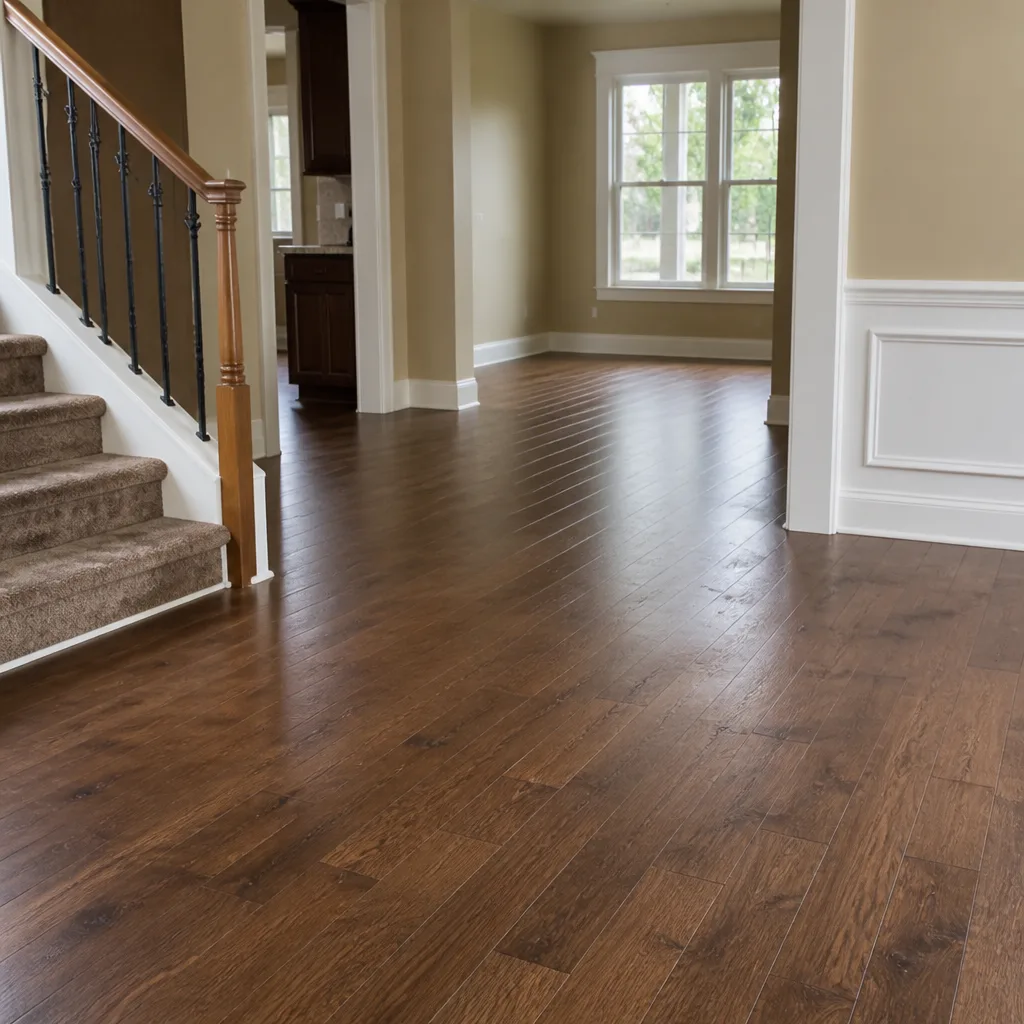 Sewage cleanup
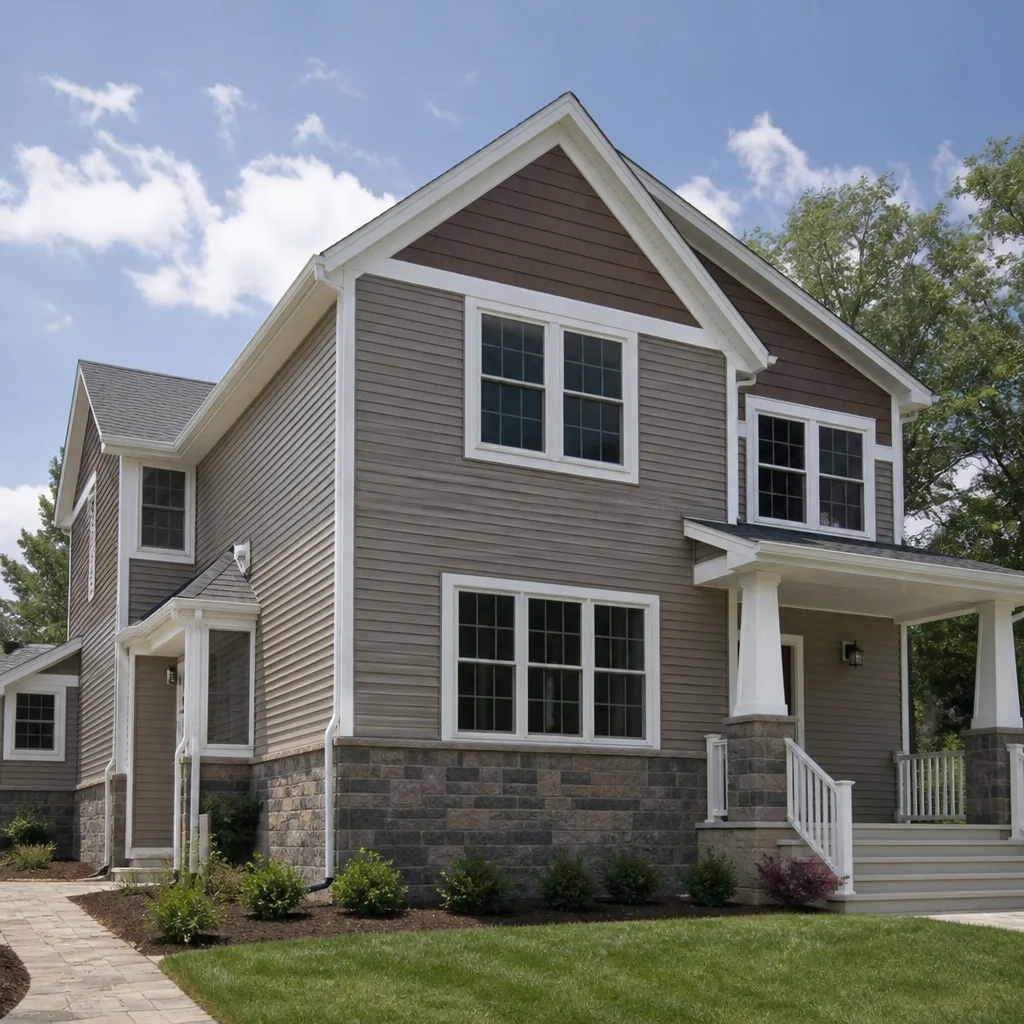 Reconstruction
Free visual inspection and a written scope of work before any mitigation begins - photos, moisture readings, and drying logs go in your claim file
The scope we write is the scope we bill. Anything new gets shown to you, in writing, before we touch it.
Get your free estimateDIY vs Professional Damage Restoration: The Fontana Homeowner’s Decision Guide
A $400 consumer dehumidifier running for five days moves less moisture than a single commercial LGR (low-grain refrigerant) unit removes in 24 hours. That gap isn’t just about speed. It’s about whether the structural cavities inside your Fontana home ever actually reach the dryness threshold that prevents mold colonization. This guide walks through the exact lines that separate a defensible do-it-yourself drying project from a loss that requires certified equipment, documented moisture readings, and a process your insurance adjuster will accept without friction.
Quick Answer
DIY restoration is defensible only for Category 1 clean water events affecting a small, contained area (under roughly 10 square feet of wet drywall or flooring) that you can dry within 48 hours. Everything beyond that – Category 2 or 3 water, any water that has touched a wall cavity, any fire or smoke residue, or any visible mold growth larger than a dinner plate – belongs with an IICRC-certified restoration contractor in Fontana who can document moisture levels and dry the structure to a verifiable standard. For guidance on selecting the right professional, see our How to Hire a Damage Restoration Contractor in Fontana: A Step-by-Step Guide.
Restoration work we handle
Table of Contents
- Understanding the Three Water Damage Categories
- Moisture Content Thresholds Your Rental Equipment Cannot Reach
- Why Fontana’s Climate and Construction Make DIY Drying Harder
- What You Should Do Yourself in the First Hour
- How DIY Mitigation Affects Your Insurance Claim
- Mold and Fire Damage: Where DIY Crosses Into Dangerous Territory
- True Cost Comparison: DIY Equipment vs Professional Scope
- Common Mistakes to Avoid
Understanding the Three Water Damage Categories
The restoration industry – and your insurance carrier – classifies water damage into three categories defined by the IICRC S500 standard. This classification, not the square footage or visible damage, determines whether you can reasonably manage the response yourself. In Fontana homes, we respond to all three categories regularly, and the distinction matters for your health, your claim, and your repair bill.
Category 1: Clean Water. Water from a supply line, a failed water heater tank, an overflowing bathtub, or a faucet left running. This water originates from a sanitary source. If the affected area is small and you respond within hours, Category 1 is the only classification where informed DIY drying is genuinely defensible.
Category 2: Gray Water. Water with significant biological, chemical, or physical contamination. This includes dishwasher overflow, washing machine discharge, aquarium leaks, and toilet overflows containing urine but no solid waste. Do not manage Category 2 yourself. The contaminants multiply rapidly in Fontana’s heat, and consumer-grade drying equipment cannot sanitize affected surfaces.
Category 3: Black Water. Grossly contaminated water containing pathogenic agents. Sewer backups, flooding from the Santa Ana River basin, toilet overflows with solid waste, and any standing water that has begun supporting microbial growth. Category 3 requires full containment, disinfection, and disposal of affected porous materials. No consumer product makes this safe to handle yourself.
The line that moves a job out of Category 1 is time. Clean water that sits in a Fontana home for 48 to 72 hours in summer temperatures begins degrading through Category 2 toward Category 3. Our Water Damage Restoration Maintenance Checklist for Fontana Homeowners outlines steps to prevent this escalation. The degradation happens faster here than in coastal communities because ambient indoor temperatures during summer regularly exceed 85°F, accelerating bacterial growth. A slow response converts a clean-water event into a contamination event.
Moisture Content Thresholds Your Rental Equipment Cannot Reach
The dry standard most restoration professionals target is below 16% moisture content in structural wood and below 12% in drywall, measured with a calibrated moisture meter. These aren’t arbitrary numbers. They represent the moisture levels at which mold spores cannot germinate and wood-destroying organisms cannot establish. The problem with DIY drying is that consumer equipment rarely reaches those thresholds behind baseboards, inside wall cavities, or within subfloor layers.
A typical residential dehumidifier removes 15 to 30 pints of water per day under ideal conditions. A single commercial LGR dehumidifier from Dri-Eaz or Phoenix removes 70 to 130 pints per day in the same conditions, while also maintaining the low vapor pressure needed to pull moisture bound inside building materials to the surface. The physics matter: moisture trapped inside drywall or structural framing won’t migrate to the surface fast enough to be captured unless the ambient relative humidity is driven below 40%. Consumer units at the $300 to $500 price point often struggle to hold a room below 50% relative humidity during the first 48 hours of drying.
What we see in Fontana when a homeowner has dried for a week with rental equipment: the surface feels dry, the visible drywall reads dry, but probing moisture meters reveal 20% to 28% moisture content in the bottom six inches of wall framing. That trapped moisture is exactly where mold colonizes – inside the wall, invisible, producing spores that enter living areas through electrical outlets and trim gaps. The homeowner believes the job is done. The wall is actively growing mold.
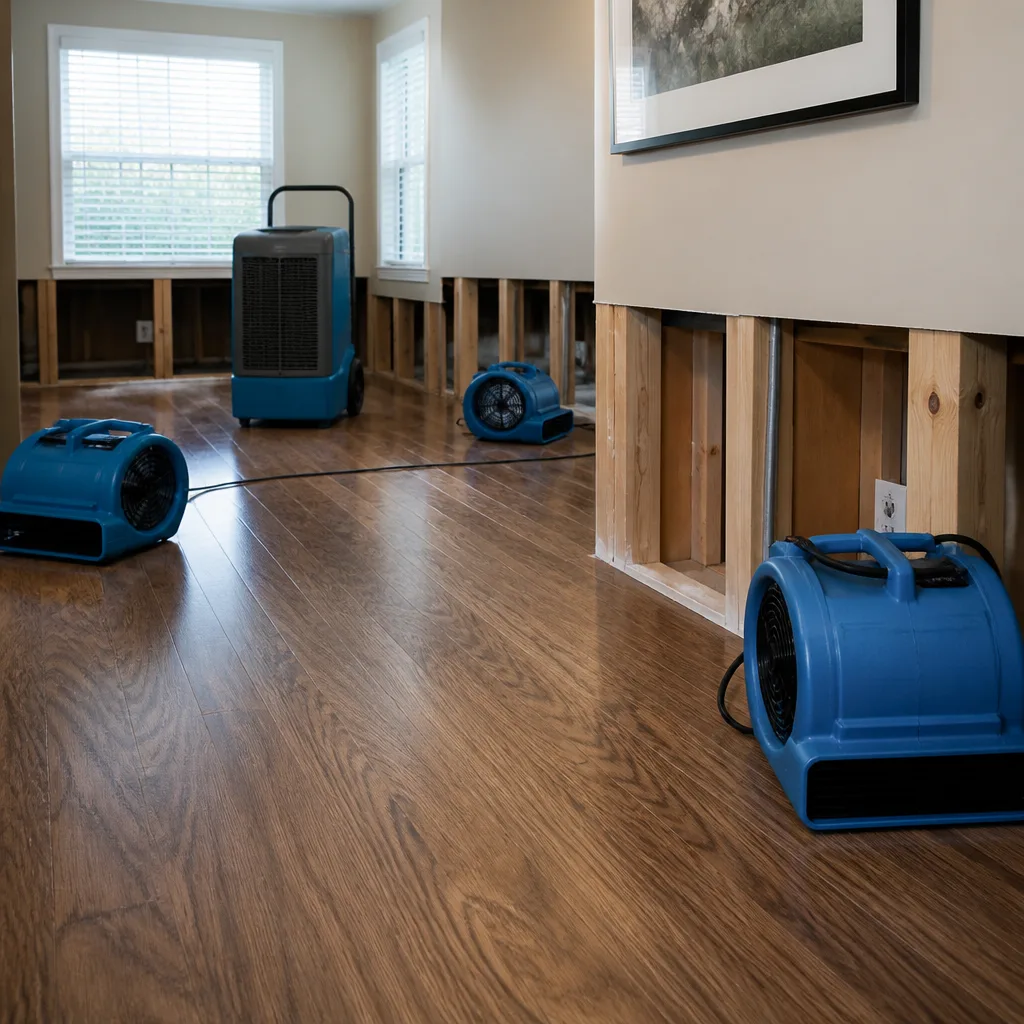
Commercial structural drying systems, including the Injectidry systems we operate, solve this by creating negative air pressure inside wall cavities and under flooring. Dry air is pulled through the cavity, capturing and removing moisture a surface-focused consumer unit can never touch. This is not a marginal improvement. It is the difference between drying the structure and drying the room around the structure.
Why Fontana’s Climate and Construction Make DIY Drying Harder
Fontana sits in the Inland Empire, where summer highs routinely exceed 95°F and indoor temperatures in unconditioned spaces climb past 85°F. Heat accelerates mold germination. A spore that needs 48 to 72 hours to colonize a damp surface in a cool coastal home can establish in under 24 hours inside a Fontana garage or south-facing room in July. The window for DIY drying closes faster here than in nearly any Southern California market.
Construction type compounds the problem. Most Fontana homes built since the 1970s use stucco exterior walls over wood framing with interior drywall. Stucco is vapor-permeable in both directions, which means exterior humidity and irrigation water can slow interior drying even when the damage originates indoors. The interior wall cavity becomes a microclimate: damp from the inside leak, warm from exterior heat, and sealed from airflow by stucco on one side and painted drywall on the other. Consumer drying equipment cannot create the air exchange needed inside those cavities.
Slab foundations dominate Fontana residential construction. When water runs across a slab floor and reaches walls, it wicks upward through the bottom plate – the wooden member that anchors the wall framing to the concrete. The bottom plate sits directly on concrete, sandwiched between slab and drywall, and dries only through engineered airflow directed into the wall cavity. A homeowner with a box fan and a rental dehumidifier will not dry that bottom plate to below the 16% threshold. This is the most common failure point we document in DIY drying attempts in Fontana.
The city’s hard water chemistry also leaves mineral residue after drying. Fontana water contains dissolved calcium and magnesium that remain behind as water evaporates. Those crystalline deposits attract and hold atmospheric moisture, creating persistent damp micro-zones even after the bulk water is removed. Professional restoration includes cleaning or replacing affected surfaces, not just drying them.
What You Should Do Yourself in the First Hour
The first hour of a water event in Fontana is yours, regardless of whether you later hire a professional. What you do in that hour meaningfully changes the outcome, the cost, and the insurance claim. Here is what a homeowner can and should handle before any contractor arrives.
- Stop the water source. Shut off the fixture valve, the appliance supply, or the main water shutoff at the street. Know where your main shutoff is before you need it. In Fontana, the city water main typically runs through a meter box near the sidewalk with a customer-side shutoff valve.
- Kill the electricity to affected areas. Standing water and electrical outlets are a lethal combination. If the water has reached any wall outlet, switch off the corresponding breakers at the panel. Do not stand in water while touching the panel.
- Document everything before you move anything. Take wide-angle photos of every affected area, then close-up photos of the water source, visible damage, and any standing water. Your insurer will need these. If you’re filing a claim, document before any extraction.
- Remove standing water with a wet-dry vacuum. A consumer wet-dry vac removes bulk water from hard surfaces effectively. Extract everything you can reach. Stop when standing water is gone – do not attempt wall or flooring extraction.
- Move dry belongings out of the affected area. Furniture, rugs, boxes, clothing. Elevate what you cannot move on blocks or foil.
Stop there. The next step is the decision point: if the affected drywall exceeds roughly 10 square feet, if water has reached a wall cavity, if flooring shows curling or discoloration, or if the water is Category 2 or 3, call an IICRC-certified contractor in Fontana. Everything beyond the first-hour steps involves structural drying physics, moisture metering, and documentation protocols that consumer equipment cannot provide. Our Water Damage Restoration in Fontana service handles the full structural drying scope with documented moisture readings at every stage.
How DIY Mitigation Affects Your Insurance Claim
Insurance adjusters expect documentation. When a professional restoration contractor handles mitigation, the file includes initial moisture readings, daily drying logs, psychrometric readings, and a final moisture content verification report. When a homeowner handles mitigation, none of that exists. The claim outcome changes accordingly.
The most common scenario we encounter in Fontana: a homeowner discovers a supply-line leak, mops it up, runs fans for four days, and decides the damage is minor. Two weeks later, musty odors appear. The homeowner calls their insurer and us. The adjuster now has a problem: four to six weeks have passed between the loss event and professional intervention. The insurer may reasonably argue that secondary damage – mold growth, delaminated flooring, damaged baseboards – resulted from inadequate initial mitigation, not from the original covered peril. The claim gets reduced or partially denied.
The documentation gap matters even when the homeowner did everything right. Moisture mapping, drying progress measurements, and equipment usage logs are evidence. Facebook marketplace fans and a retail dehumidifier produce no evidence. The insurer cannot verify that the structure was dried to an acceptable standard, so they apply a conservative standard: untreated equals potentially mold-contaminated. That means ripping out more material during repairs, not less.
If you have already begun DIY mitigation and now believe you need a professional, call us before you call your insurer. We can assess what happened, correct the moisture condition, and document everything from the date of our involvement forward. The claim won’t look pristine, but it will look like a homeowner who acted reasonably and then escalated when the situation exceeded their capability. That sequence is defensible. The reverse – DIY for weeks, then calling – is where claims go sideways.
Direct adjuster coordination is part of what we do on every Dry Line Water Damage home restoration scope. Photo-documented assessments and written scopes before work starts keep your claim moving cleanly through the insurance process.
Mold and Fire Damage: Where DIY Crosses Into Dangerous Territory
Water damage has a narrow DIY window. Mold and fire do not. The dividing line is not difficulty; it’s safety. Mold remediation and fire damage restoration both involve respirable hazards that require containment, negative pressure environments, and appropriate personal protective equipment. The equipment to do this safely is not available for rent at any Fontana home improvement store.
Mold growth releases spores and microscopic fragments into the air. Scrubbing visible mold without containment spreads those particles throughout the home. The EPA guidance for mold areas exceeding 10 square feet recommends professional remediation with containment. Below that threshold, a homeowner can clean non-porous surfaces with detergent solution while wearing an N95 mask, gloves, and eye protection. But here is the Fontana-specific complication: by the time visible mold appears on drywall, the growth behind that drywall is typically three to five times the visible area. Surface cleaning addresses the symptom, not the reservoir inside the wall cavity. Our Mold Remediation in Fontana team includes full containment, air scrubbing, and post-remediation clearance verification.
Fire damage is categorically professional. Smoke residue contains fine particulates, volatile organic compounds, and in older Fontana homes, potentially asbestos fibers from disturbed building materials. Cleaning smoke damage without proper HEPA filtration drives those particles deeper into soft goods and HVAC ductwork. Soot is acidic and begins etching surfaces within 72 hours. The first hour after a fire is about securing the property, ventilating what you can, and not touching anything you want the adjuster to see. Everything after that is Fire Damage Restoration in Fontana scope of work.
One additional note for Fontana homeowners in wildfire-adjacent zones: smoke from exterior fires behaves differently than smoke from a structural fire. It infiltrates through attic vents, window seals, and HVAC intakes, depositing fine ash on surfaces throughout the home. No amount of consumer cleaning removes wildfire smoke odor from insulation and ductwork. That requires specialized equipment and, in many cases, attic insulation replacement.
True Cost Comparison: DIY Equipment vs Professional Scope
The DIY pitch is simple: a $45 daily rental for a dehumidifier and three box fans for five days costs under $300. A professional restoration company might charge several thousand dollars. The comparison seems obvious until you factor in what the DIY route actually buys and what it risks.
Here is the real cost structure for a typical Fontana water event, a Category 1 supply-line leak affecting one 12-by-14-foot room with wet drywall up to 18 inches and soaked carpet pad:
- DIY equipment rental (7 days): $250 to $420 for a residential dehumidifier and fans from a rental counter. These units pull 15 to 25 pints per day and cannot dry wall cavities.
- Professional structural drying (5 to 7 days): $2,800 to $4,500 for a single-room scope including LGR dehumidifiers, high-velocity air movers, cavity drying with Injectidry panels where needed, daily moisture monitoring, and final verification documentation. Most homeowner’s policies cover this mitigation cost after the deductible.
The DIY numbers only work if the job succeeds. If the homeowner dries for a week, fails to remove cavity moisture, and mold develops three weeks later, the remediation cost (typically $1,500 to $3,500 for a contained single-room remediation in Fontana) gets added on top of the original water mitigation and the eventual reconstruction. The insurance carrier may decline the mold remediation entirely because the loss file shows homeowner-performed mitigation without documentation.
The professional scope looks expensive measured as a line item. Measured as an insurance-covered intervention that returns a documented dry structure, it’s the cheapest path through the event. Our approach at Dry Line Water Damage is a written scope agreed before work starts, photo-documented at every phase, and a final moisture verification report that satisfies the adjuster and closes the claim cleanly.
Common Mistakes to Avoid
- Drying to the touch instead of to a moisture standard. Surface dry is not structurally dry. The relevant thresholds are below 16% moisture content in framing and below 12% in drywall, measured with a moisture meter. If you don’t own a moisture meter, you don’t know whether you’re done.
- Using heat to dry a flooded room. Blasting a space heater drives moisture deeper into materials and accelerates mold growth. Fontana summers provide enough ambient heat. Professional drying uses controlled airflow and dehumidification, not heat.
- Painting over a water stain. A stain indicates moisture penetrated the drywall. Paint seals the surface but locks moisture inside the cavity, where mold grows invisibly. The drywall or the moisture condition must be resolved before any paint touches the wall.
- Pulling up carpet pad but leaving the carpet in place. Wet carpet pad must be removed and discarded. Wet carpet can sometimes be saved if dried professionally, but the pad never survives. Leaving wet pad under carpet in a Fontana summer creates a mold incubator within 48 hours.
- Not documenting before demo. Cutting out wet drywall before photographing the loss destroys the evidence the adjuster needs to approve the claim. Photos first, then any removal.
- Waiting to see if it “dries on its own.” In Fontana’s summer heat, it won’t. It will grow mold. The time value of water damage is measured in hours, not days.
When to Call a Professional
Call a professional the moment any of the following is true: water has touched a wall cavity, the affected drywall exceeds 10 square feet, the water is Category 2 or 3, you smell mustiness within 48 hours, visible mold is growing, a fire or smoke event has occurred, or you are filing an insurance claim and want the mitigation documented properly. None of these conditions improve with time or consumer equipment. Dry Line Water Damage offers free estimates in Fontana – call (833) 589-5317 and we’ll assess the scope in a single visit, usually the same day you call.
See the difference
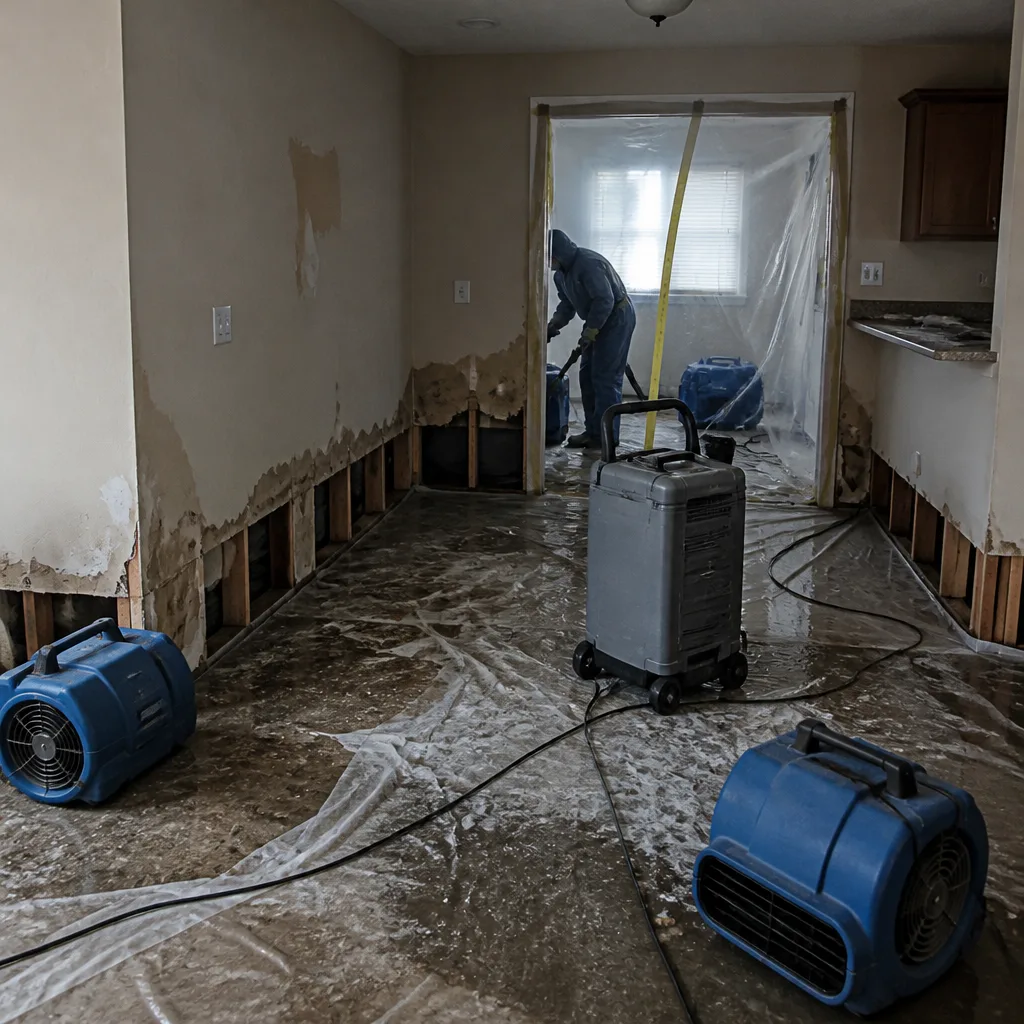 Before
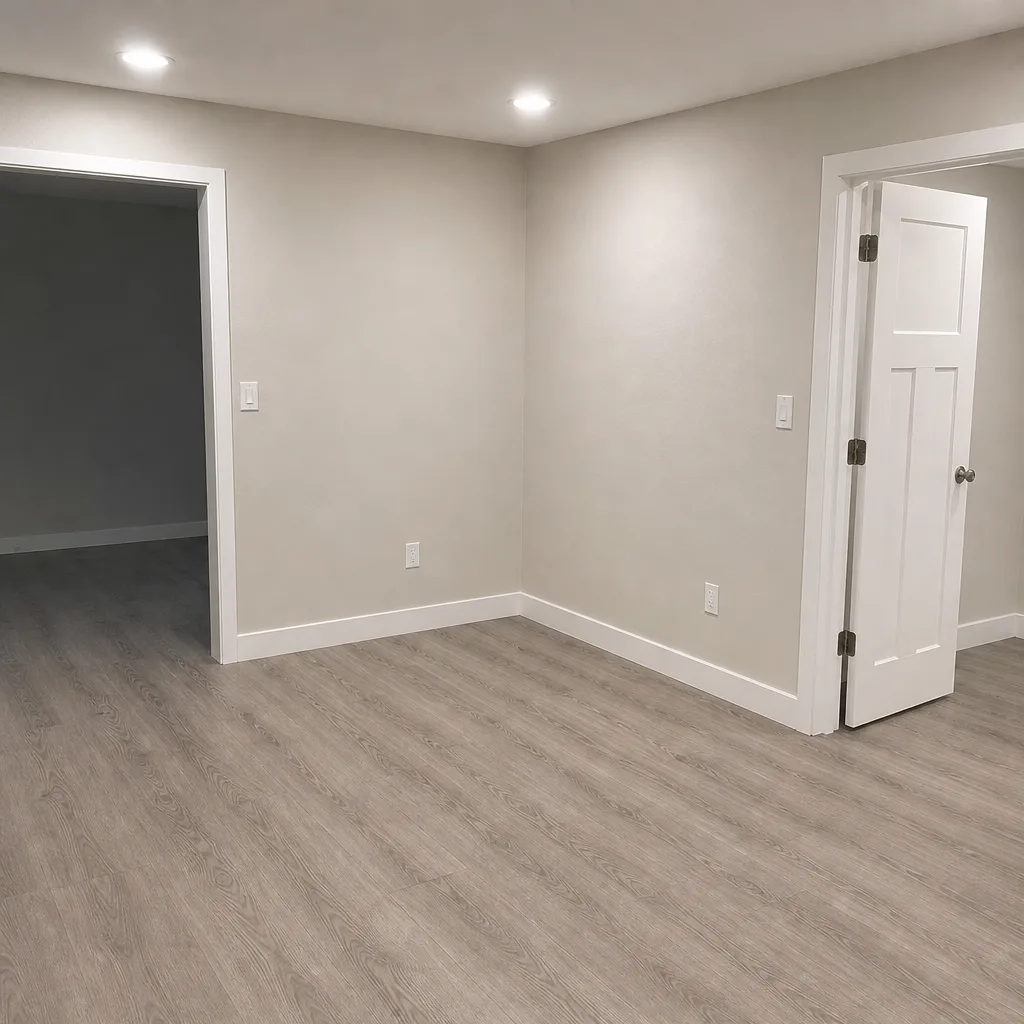 After
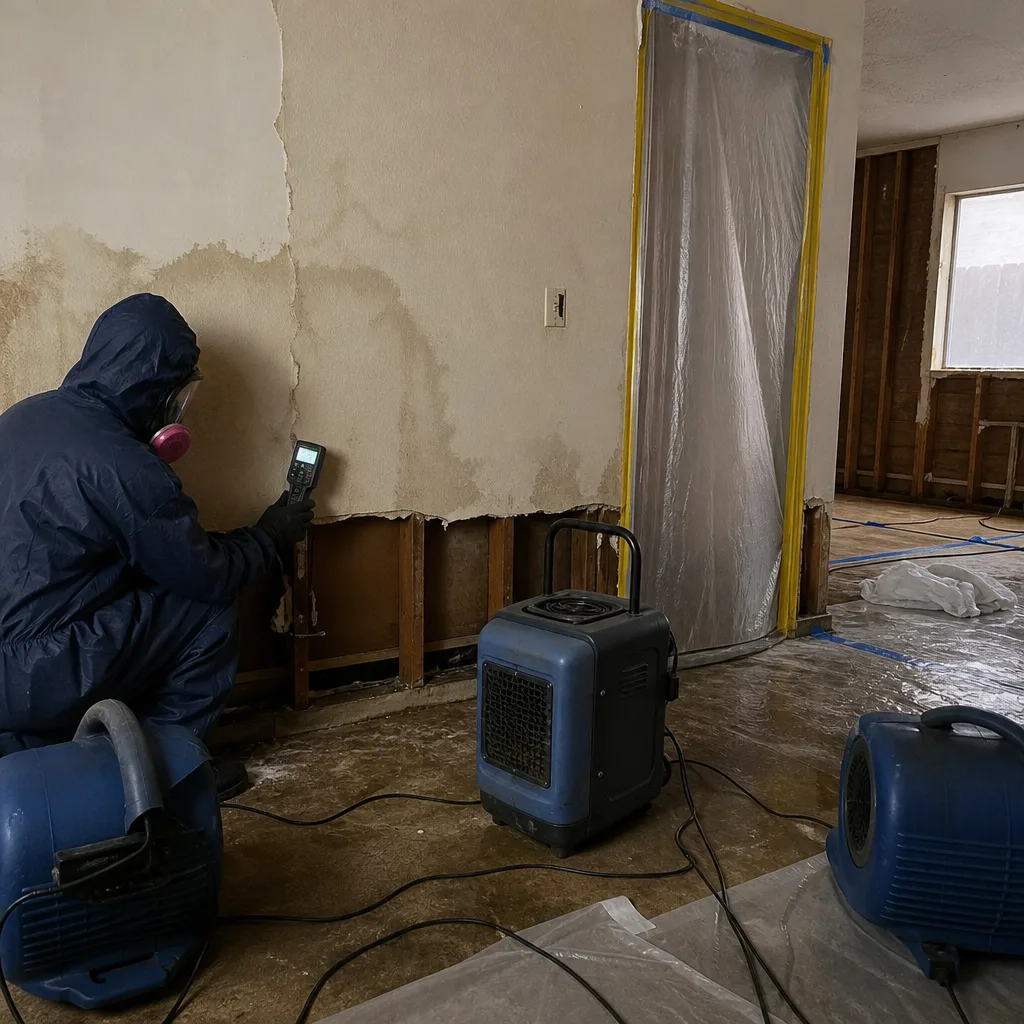 Before
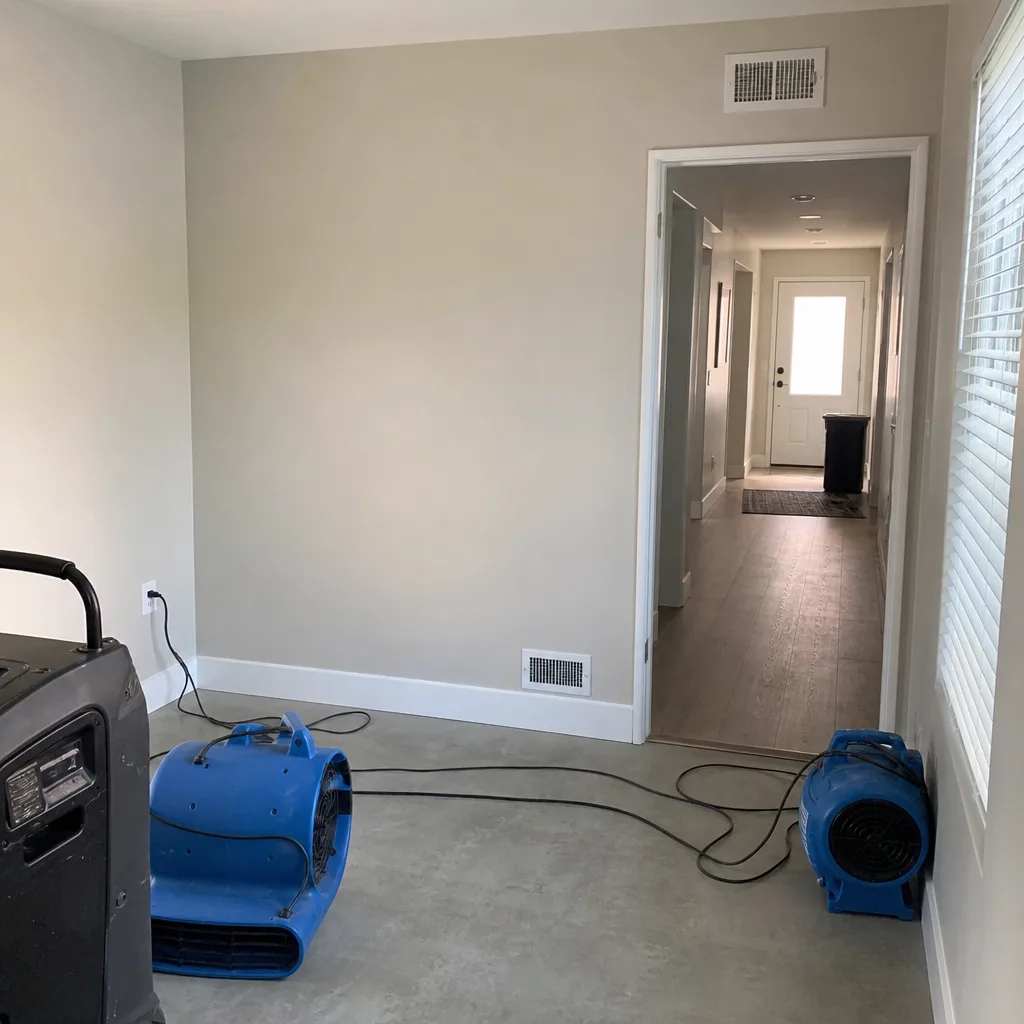 After
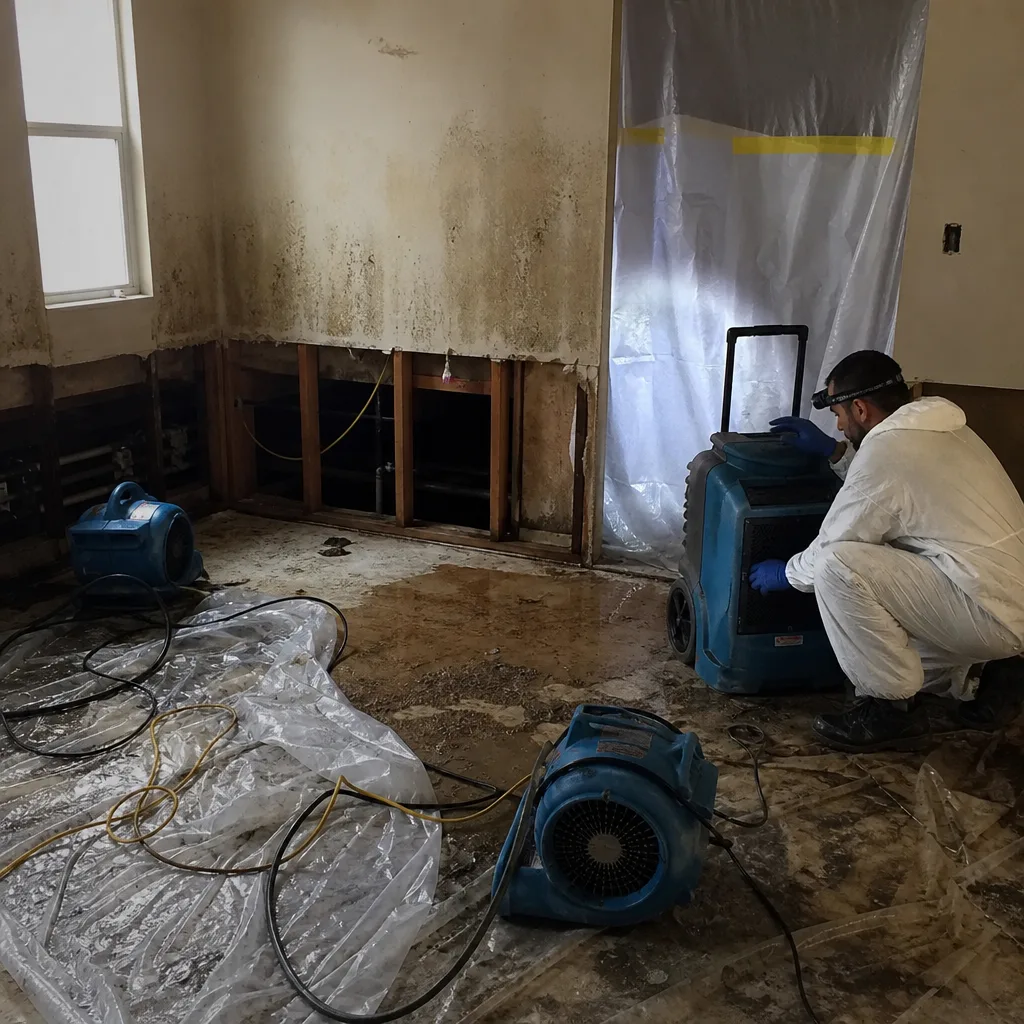 Before
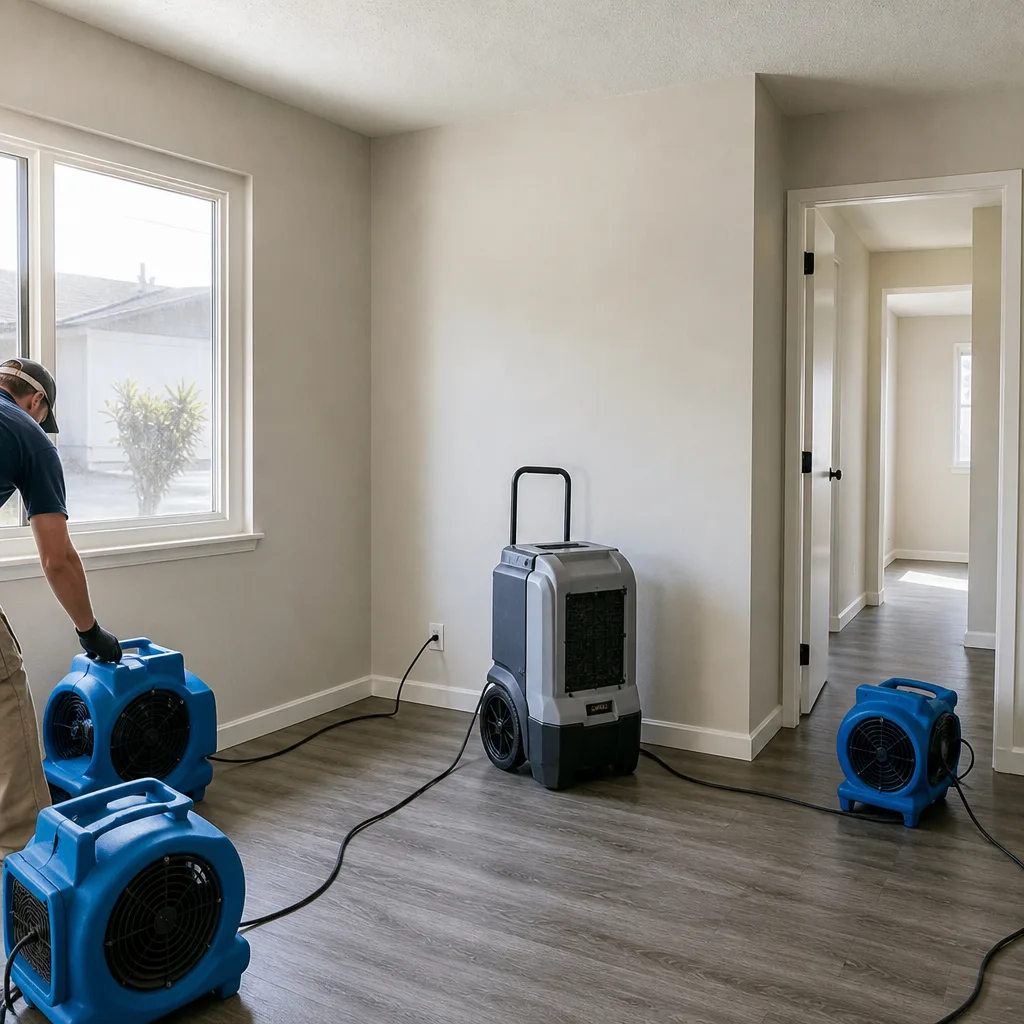 After
Frequently Asked Questions
You can legitimately dry a small Category 1 clean water event – under 10 square feet of wet drywall, no wall cavity penetration, no flooring delamination – using a wet-dry vac, fans, and a dehumidifier running continuously for 48 to 72 hours. Anything beyond that scope needs commercial LGR equipment to reach structural moisture thresholds. If you’re near the line, call us at (833) 589-5317 and we’ll tell you straight whether a professional scope is warranted.
You know with a calibrated moisture meter inserted into the drywall and framing. Surface touch is not a measurement. Professional restoration uses penetrating and non-penetrating meters to confirm readings below 16% in wood and 12% in drywall. If you don’t own a meter, you’re guessing, and guessing wrong on moisture means mold later.
Insurance reimburses reasonable homeowner mitigation costs only when the work is documented well enough for the adjuster to verify. Receipts for rental equipment, photographs before and during drying, and a log of daily moisture readings (if you took any) are the minimum. Undocumented DIY work typically is not reimbursed, and uncovered secondary damage is commonly excluded from the claim. Professional mitigation through a certified contractor creates the documentation trail insurers expect.
Bleach kills surface mold on non-porous materials but does not penetrate porous surfaces like drywall or wood, where the mold’s root structure lives. The EPA does not recommend bleach as a standalone mold remediation method. On drywall, the contaminated area must be removed or professionally remediated. Bleach adds moisture and fumes without solving the reservoir problem.
We dispatch from Fontana and respond to emergency water losses the same day in most cases. A technician can arrive within hours of your call for active water events. Call (833) 589-5317 and we’ll give you an honest arrival window for your specific situation.
Most single-room water losses in Fontana reach the dry standard within 3 to 5 days of professional drying with commercial LGR dehumidifiers and air movers. Injectidry cavity drying may extend the timeline by a day or two when wall cavities are involved. The timeline is driven by moisture readings, not a calendar – we monitor daily and provide the final verified documentation the insurer needs.
The Bottom Line
The DIY vs professional restoration decision in Fontana hinges on classification, scale, and documentation. Category 1 clean water in a contained area can be owner-managed in the first 48 hours if you work quickly and verify results with a moisture meter. Everything beyond that – contaminated water, wall cavity penetration, mold, fire, or an active insurance claim – belongs with an IICRC-certified contractor running commercial-grade equipment and documenting every stage. Fontana’s heat and stucco-slab construction make the consequences of incomplete drying faster and more expensive than in most markets. A written scope, documented dry, and a clean insurance file is the cheapest outcome for every category except the smallest clean-water events.
For water, mold, or fire damage in Fontana, call (833) 589-5317 for a free estimate. We’ll assess honestly, scope in writing, and do the work to a documented, verifiable standard.
Written by the team at Dry Line Water Damage, serving Fontana since 2013. Explore more guides & resources on protecting your home.